Key takeaways
- AI search engines like ChatGPT, Perplexity, and Google AI Overviews now handle enormous volumes of local queries -- "best dentist in Austin," "top accountant near me in Chicago" -- and most local businesses are invisible in those answers.
- Local AI visibility requires a different approach than traditional local SEO: you need city-specific content, structured data, consistent NAP signals, and genuine third-party mentions that AI models can pull from.
- Monitoring where you appear (and where you don't) across AI engines is the starting point. Without that data, you're optimizing blind.
- The tactics below are ordered by impact, not complexity. Start with the foundational ones before moving to the more advanced.
Something changed in how people find local businesses, and it happened faster than most marketers expected.
When someone asks ChatGPT "who's the best immigration lawyer in Denver?" or "which plumber in Seattle actually shows up on time?", they're not getting a list of blue links. They're getting a synthesized recommendation -- a confident answer that names specific businesses, sometimes with reasons, sometimes with caveats. And if your business isn't in that answer, you don't exist for that person.
Google AI Overviews now appear on roughly 15% of all search queries, and ChatGPT processes over 3.8 billion monthly visits. A meaningful chunk of those are local intent queries. The businesses showing up in those answers aren't there by accident.
Here's what actually moves the needle.
1. Build city-specific landing pages with real substance
Generic "we serve the greater metro area" pages don't cut it anymore. AI models are looking for content that explicitly and specifically addresses a location -- not just a city name dropped into a template.
A good city page for local AI visibility covers:
- The specific neighborhood or district you serve within that city
- Local context: references to local landmarks, neighborhoods, or community specifics that signal genuine local knowledge
- Services tailored to local needs (what does a Seattle homeowner need from a roofer that's different from a Phoenix homeowner?)
- Local social proof: reviews, case studies, or testimonials from customers in that city
The difference between a page that gets cited and one that doesn't is usually specificity. "We've helped over 200 families in the Capitol Hill neighborhood of Seattle" beats "We serve Seattle and surrounding areas" every time.
If you're managing multiple locations, tools like Promptwatch can help you identify which city-specific prompts your competitors are winning and where your content gaps are.

2. Optimize your Google Business Profile -- it still feeds AI
This one surprises people. Google Business Profile (GBP) data flows directly into Google AI Overviews and influences how Gemini and Google AI Mode describe local businesses. It also gets indexed and referenced by other AI models through web crawling.
The basics that most businesses skip:
- Complete every field, including business description (use natural language that describes what you do and who you serve)
- Add services with descriptions, not just service names
- Upload photos regularly -- AI models can't see them, but fresh photos signal an active, legitimate business
- Respond to every review, including negative ones. AI models synthesize review sentiment.
- Use the Q&A section to pre-answer common questions in a way that mirrors how people prompt AI engines
One thing worth doing: read your reviews and identify the specific phrases customers use to describe you. Those phrases are often exactly what AI models pull when generating recommendations.
3. Get cited on the sources AI models actually trust
AI models don't make up recommendations from nothing. They pull from sources they've indexed and trust. For local businesses, those sources include:
- Yelp, Google Reviews, Tripadvisor (for consumer businesses)
- Houzz, Angi, Thumbtack (for home services)
- Avvo, Martindale (for legal)
- Healthgrades, Zocdoc (for medical)
- Local news sites and city-specific blogs
- Reddit (especially city-specific subreddits like r/Austin or r/Seattle)
Getting a mention in a "best plumbers in Portland" article on a local news site is worth more for AI visibility than most backlinks. The same goes for being discussed in a city subreddit thread. These are the exact sources ChatGPT and Perplexity pull from when answering local queries.
Reddit is particularly underrated here. When someone asks ChatGPT for a recommendation and the model has seen multiple Reddit threads where locals recommend your business, that signal compounds.
4. Structure your content so AI can extract it cleanly
AI models use Retrieval-Augmented Generation (RAG) -- they retrieve relevant passages and synthesize them into answers. If your content is buried in JavaScript, loaded behind tabs, or written in a way that buries the key facts, it won't get extracted cleanly.
Practical fixes:
- Use clear H2/H3 headings that mirror how people ask questions ("How much does a kitchen remodel cost in Austin?")
- Put the direct answer in the first sentence after the heading, not three paragraphs in
- Use FAQ sections with genuine questions, not keyword-stuffed ones
- Implement LocalBusiness schema markup with address, phone, hours, and service area
- Make sure your city and service are in the page title, meta description, and first paragraph
Schema markup matters more for local AI visibility than most people realize. When you mark up your NAP (name, address, phone) data consistently across your site and third-party listings, AI models have a reliable signal to pull from.
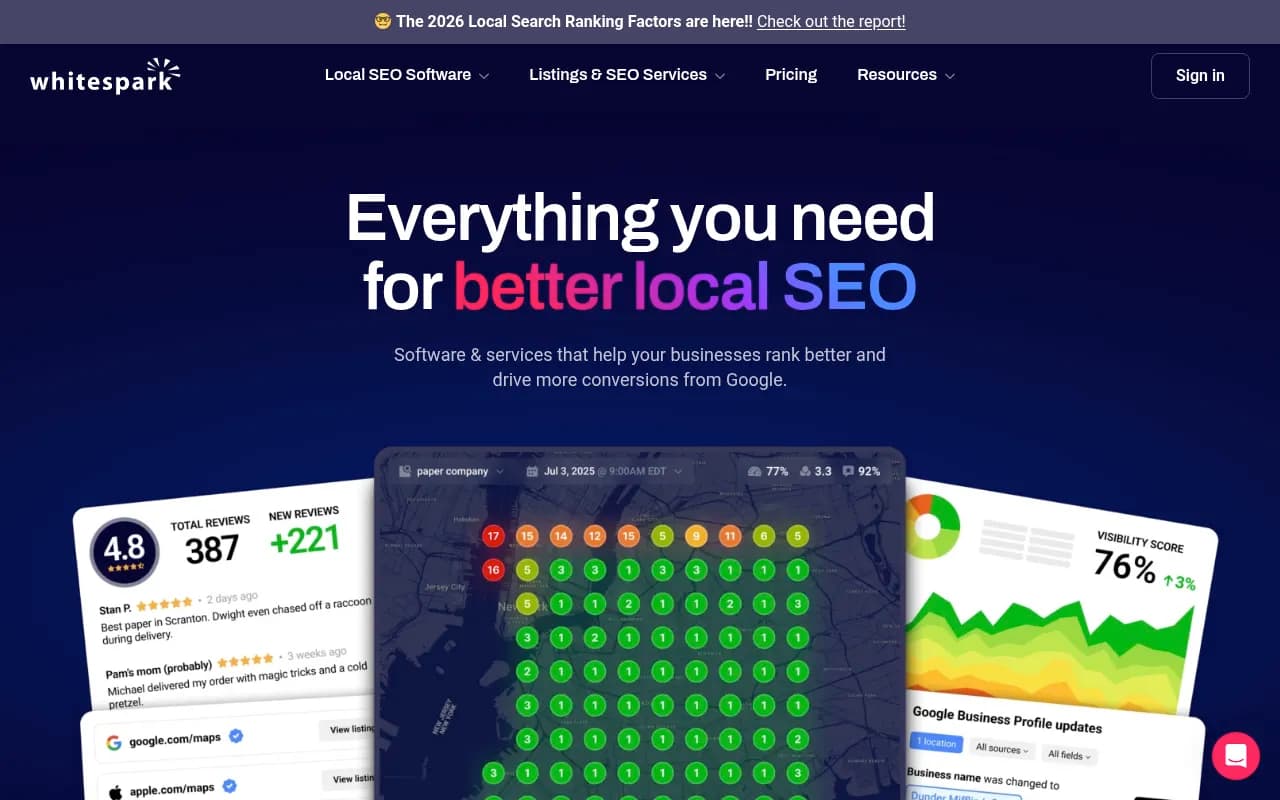
5. Build NAP consistency across every directory
Name, Address, Phone. If these three things aren't identical everywhere your business appears online, AI models get confused -- and confused models don't recommend you.
This means:
- Exact same business name (no "LLC" on some listings and not others)
- Exact same address format (Suite vs Ste, abbreviations vs full words)
- Exact same phone number format
Run an audit across Google Business Profile, Yelp, Bing Places, Apple Maps, Facebook, and any industry-specific directories. Inconsistencies that seem minor to a human are meaningful noise to an AI model trying to verify your business is real and trustworthy.
6. Create content that answers hyper-local questions
"What's the average cost of a roof replacement in Denver in 2026?" is a better page topic than "roof replacement services." The first one answers a specific question a Denver homeowner would ask ChatGPT. The second is a generic service page.
Think about what people in your specific city would ask an AI assistant:
- Cost-of-service questions with local context
- "Best [service] for [specific neighborhood or demographic] in [city]"
- Comparisons between local options
- Questions about local regulations, permits, or requirements
Each of these is a prompt someone might type into ChatGPT. If you have a page that directly answers it, you have a shot at being cited.
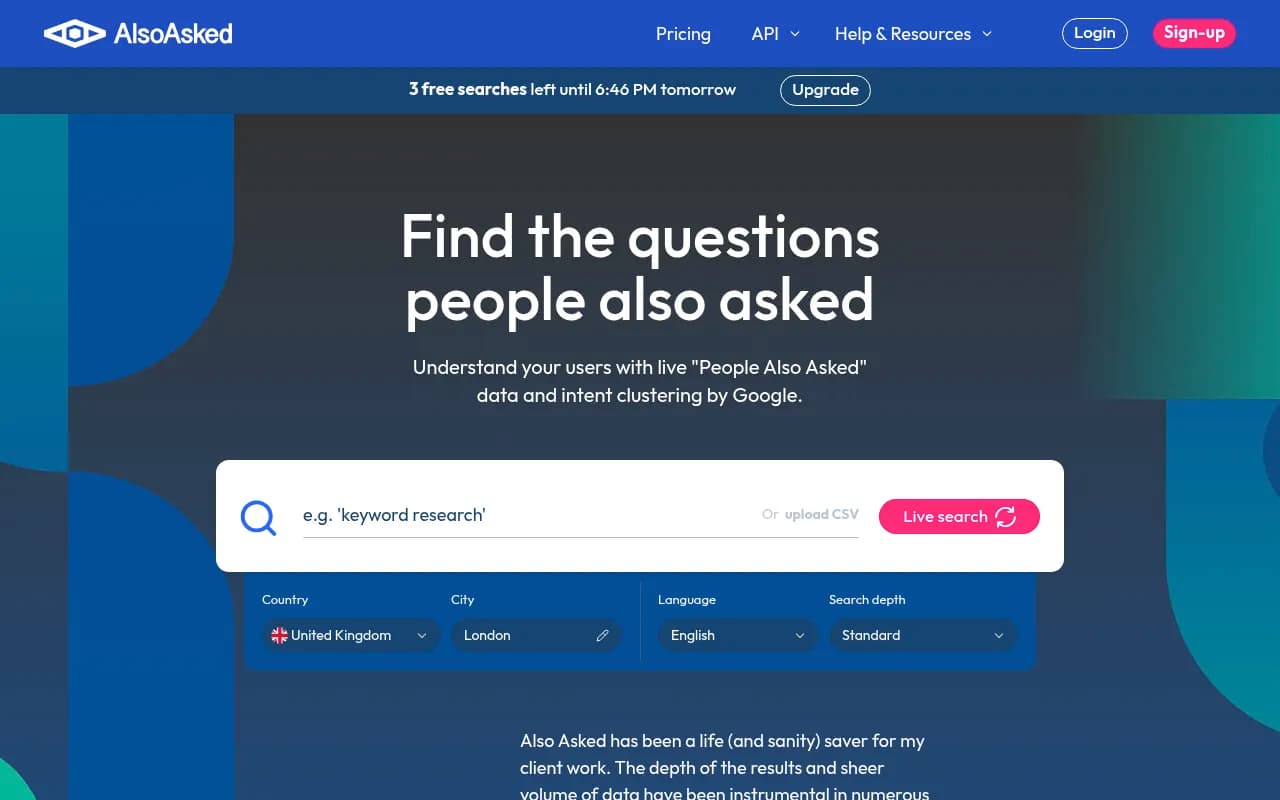
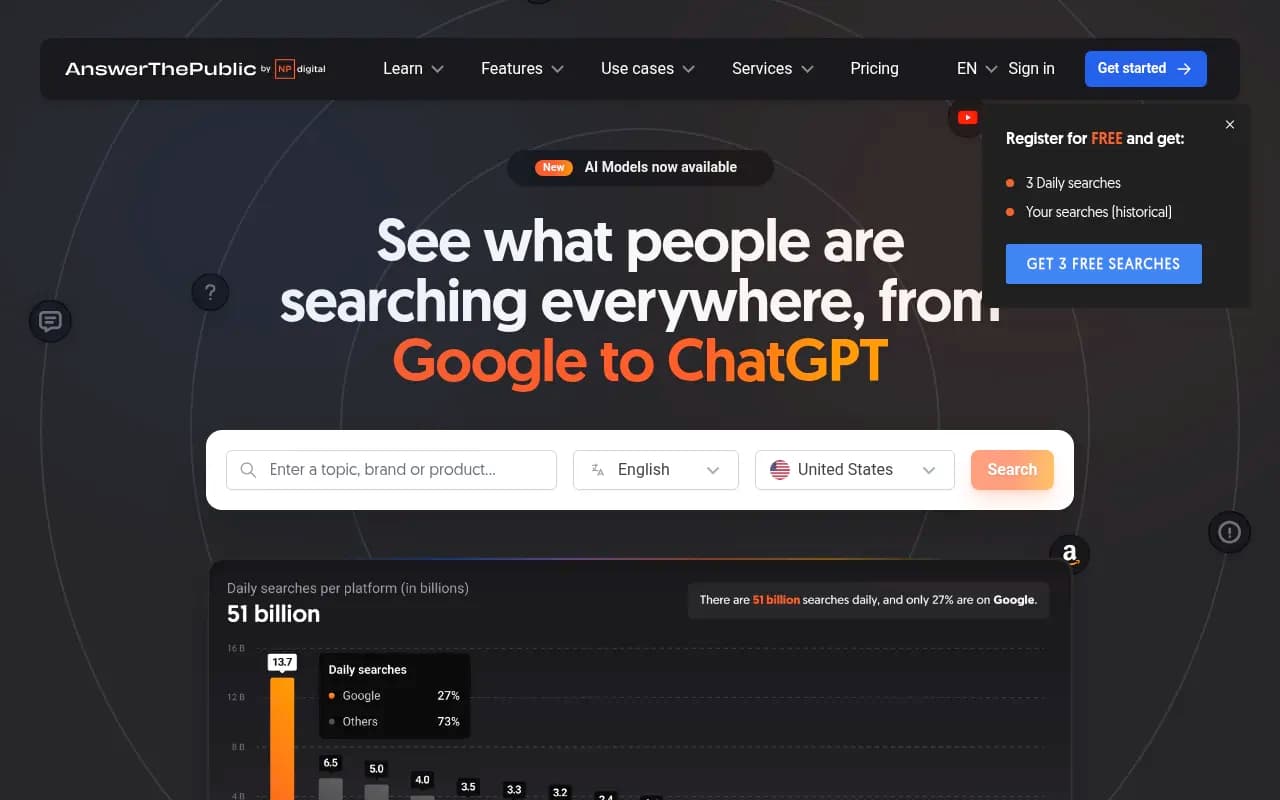
The research process here is worth doing properly. Look at what questions come up in local Reddit threads, Google's "People Also Ask" for city-specific queries, and what your competitors' pages cover (or don't).
7. Track your AI visibility by city and prompt
You can't improve what you can't see. Most businesses have no idea whether they appear in ChatGPT's answer when someone in Boston asks for their service category. They're optimizing blind.
The right approach is to set up tracking for the specific prompts your target customers would use, in the specific cities you serve. That means queries like:
- "Best [your service] in [city]"
- "Who should I call for [problem] in [city]?"
- "Recommend a [your business type] in [neighborhood]"
Then track whether you appear, how often, and what the AI says about you when it does mention you. This is where dedicated AI visibility platforms earn their keep.
| Tool | Local tracking | City-level prompts | Content gap analysis | AI models covered |
|---|---|---|---|---|
| Promptwatch | Yes | Yes | Yes | 10+ |
| BrightLocal | Yes | Limited | No | Limited |
| Local Rank Tracker | Yes | No | No | None |
| Moz Local | Listings only | No | No | None |
For AI-specific local tracking, Promptwatch is the most complete option -- it lets you set custom prompts by city, tracks which AI models cite you, and shows where competitors are winning visibility you're not.
8. Earn mentions in local editorial content
AI models weight editorial mentions differently from directory listings. A local news article that mentions your business in context ("three Austin contractors who specialize in storm damage repair") is a strong citation signal.
Ways to get this kind of coverage:
- Pitch local journalists with genuinely useful data or angles (local market reports, seasonal tips with local context)
- Offer expert commentary on local issues in your industry
- Sponsor or participate in local events that get covered by local media
- Write guest posts for local business associations or chamber of commerce blogs
- Get listed in "best of [city]" roundups from local publications
The goal isn't just the backlink. It's getting your business name associated with your service category and your city in text that AI models will index and trust.
9. Use city-specific FAQ content to capture conversational queries
ChatGPT and Perplexity handle conversational queries differently from keyword-based search. When someone asks "is it worth hiring a financial advisor in Chicago or can I just use an app?", the model is looking for content that engages with that specific framing.
FAQ sections on your city pages should include:
- Questions that include the city name naturally
- Questions that reflect real objections or concerns local customers have
- Questions that compare options (your service vs DIY, your service vs competitors)
- Questions about local specifics (local regulations, local pricing, local timing)
Write these in the same natural language your customers use, not in keyword-optimized corporate speak. AI models are good at detecting when FAQ content is written for algorithms rather than humans.
10. Monitor what AI engines say about you -- and fix it
This is the step most businesses skip entirely, and it's arguably the most important. AI models sometimes say things about your business that are wrong, outdated, or incomplete. They might cite an old address, describe your services inaccurately, or -- worse -- not mention you at all when recommending competitors.
Regular monitoring lets you:
- Catch inaccurate information before it influences customer decisions
- Identify which prompts your competitors are winning that you should be targeting
- See which AI models are citing you vs ignoring you
- Track whether your optimization efforts are actually moving the needle
When you find gaps -- prompts where competitors appear and you don't -- that's your content roadmap. Create the pages that answer those prompts, build the citations that support those pages, and track whether visibility improves.
Otterly.AI


Putting it together: a practical local AI visibility workflow
The tactics above work best as a system, not a checklist. Here's a practical sequence:
- Audit your current AI visibility -- run the key local prompts for your top cities and see where you appear
- Fix the foundations -- NAP consistency, GBP completeness, schema markup
- Build city-specific content -- landing pages and FAQ content for each priority city
- Earn third-party mentions -- local editorial coverage, directory listings, Reddit presence
- Track and iterate -- set up monitoring for your target prompts and measure improvement monthly
The businesses winning local AI visibility in 2026 aren't doing anything exotic. They're doing the fundamentals consistently, in a way that's specifically designed for how AI models retrieve and synthesize information.
Local SEO hasn't gone away -- it's evolved. The signals that made you rank in Google Maps still matter. But now they need to be combined with content that AI models can actually extract, cite, and trust. That combination is what gets you into the answer when someone in your city asks ChatGPT who to call.