Key takeaways
- ChatGPT and other AI models return location-specific recommendations, meaning your brand might appear in New York but be invisible in Dallas or Phoenix.
- Tracking AI visibility across 50 cities manually is impractical -- you need a platform that handles multi-location prompt monitoring at scale.
- The goal isn't just tracking: it's understanding why you're missing from certain cities and fixing it with targeted content.
- Tools like Promptwatch support city-level and state-level tracking with persona customization, so you can see exactly how ChatGPT responds to a user in Chicago versus Miami.
- Visibility gaps across cities often come down to missing local content, lack of locally-relevant citations, and thin coverage in third-party sources AI models trust.
Why city-level ChatGPT tracking matters in 2026
Here's something most businesses haven't figured out yet: ChatGPT doesn't give the same answer to everyone.
Ask "what's the best accounting firm in Denver?" and you'll get a very different response than if you ask the same question from a Seattle IP address, or if you phrase it as "top accounting firms near me" with a Chicago location context. AI models like ChatGPT, Perplexity, and Gemini factor in location signals, local citation data, and regionally-relevant sources when generating recommendations.
This matters enormously for any business with a physical presence, a service area, or a regional focus. A restaurant group operating in 12 cities, a law firm with offices across the Southeast, a franchise brand with 200 locations -- all of them could be appearing in ChatGPT for some markets and completely absent in others. And without systematic tracking, they'd never know.
The shift is real. ROI Amplified reported that one of their commercial lending clients now gets 15% of all sales calls directly from ChatGPT queries -- customers who never touched Google at all. If that client had only tracked their AI visibility in one city, they'd have a dangerously incomplete picture.
So how do you actually monitor what ChatGPT says about your business across 50 US cities at the same time? That's what this guide covers.
Understanding how ChatGPT generates local recommendations
Before setting up any tracking system, it helps to understand what's actually driving ChatGPT's local recommendations.
ChatGPT doesn't have a live database of businesses. It draws on its training data -- which includes review sites, local directories, news articles, Reddit discussions, industry publications, and web content indexed before its knowledge cutoff. When a user asks for a local recommendation, the model synthesizes what it "knows" about businesses in that area based on those sources.
What this means practically:
- Businesses with strong Yelp, Google Business Profile, and TripAdvisor presence tend to appear more often in AI recommendations
- Brands mentioned in local news, regional blogs, and industry publications get cited more frequently
- Reddit threads discussing "best [service] in [city]" directly influence AI responses -- these are weighted heavily
- Thin or outdated web content about your business in a specific city means lower visibility there
The implication for multi-city tracking is that your visibility gaps are usually content gaps. You might rank well in cities where you've invested in local content and earned local press, and poorly in cities where your digital footprint is thin.
Setting up a 50-city tracking framework
Step 1: Define your prompt set
The first thing you need is a list of prompts that represent how real customers ask about your category. These aren't just keywords -- they're full conversational questions.
For a home services company, that might look like:
- "Who are the best HVAC companies in [city]?"
- "What HVAC company should I call in [city] for emergency repair?"
- "Is [brand name] a good HVAC company in [city]?"
For each city you're tracking, you'll want at least 5-10 prompts covering:
- Category-level discovery ("best [service] in [city]")
- Problem-based queries ("who can help with [problem] in [city]")
- Brand-specific queries ("[your brand] reviews [city]")
- Comparison queries ("best alternatives to [competitor] in [city]")
Across 50 cities with 10 prompts each, you're looking at 500 prompt-city combinations. That's not something you can run manually in ChatGPT -- you need a platform built for this.
Step 2: Choose a tracking platform that supports city-level monitoring
Most AI visibility tools track at the national level. A handful support state-level tracking. Very few support city-level granularity across multiple locations simultaneously.
Here's how the main options compare:
| Tool | City-level tracking | Multi-location | Prompt volume data | Content generation | AI models covered |
|---|---|---|---|---|---|
| Promptwatch (Professional+) | Yes | Yes (up to 5 sites) | Yes | Yes (built-in AI writer) | 10+ |
| Profound | Limited | Yes | No | No | 9+ |
| Otterly.AI | No | Limited | No | No | 4 |
| AthenaHQ | No | Yes | No | No | 5 |
| LLM Pulse | No | No | No | No | 4 |
| Rankshift | Limited | No | No | No | 3 |
For true 50-city tracking at scale, Promptwatch's Professional and Business tiers include state/city-level tracking with customizable personas -- meaning you can simulate a user in Austin asking a question versus a user in Boston asking the same question, and see how ChatGPT responds differently to each.

Step 3: Configure location-specific personas
This is where most teams skip a step. Tracking "what does ChatGPT say about my brand" is different from tracking "what does ChatGPT say when a 35-year-old homeowner in Phoenix asks about HVAC companies."
Persona configuration lets you specify:
- Geographic location (city, state)
- User type (consumer, business buyer, professional)
- Query context (mobile, desktop, conversational)
When you run the same prompt across 50 cities with city-specific personas, you get a genuinely accurate picture of your local AI visibility -- not a generic national average.
Step 4: Establish a tracking cadence
AI models update their training data and behavior over time. A snapshot from January tells you nothing about April. For meaningful city-level tracking, you want:
- Weekly monitoring for your top 10-15 priority cities
- Monthly monitoring for the remaining cities
- Immediate re-checks after publishing new local content (to see if it moves the needle)
Reading your city-level visibility data
Once you have data coming in, you'll see patterns quickly. Some cities where you have strong local content and press coverage will show high visibility. Others -- often cities where you operate but haven't invested in local digital presence -- will show gaps.
The useful data points to look at:
Mention rate by city: What percentage of prompts in a given city include your brand in the response? A 60% mention rate in Chicago but 8% in Houston is a clear signal.
Position in response: Are you mentioned first, third, or buried at the bottom of a list? Position matters -- the first recommendation in a ChatGPT response gets disproportionate attention.
Competitor comparison: Which competitors are appearing in the cities where you're not? This tells you what content and citation sources they have that you're missing.
Prompt-level breakdown: Which specific prompts are you winning, and which are you losing? "Best [service] in [city]" might be a win, while "most affordable [service] in [city]" might be a consistent loss.
Diagnosing why you're invisible in specific cities
When you find cities where your visibility is low, the diagnosis usually falls into a few categories.
Missing local content
If your website has no pages specifically addressing your services in a given city -- no location pages, no local case studies, no city-specific blog content -- AI models have nothing to cite. They can't recommend you for Denver if there's nothing on your site or in third-party sources connecting your brand to Denver.
Weak third-party citation footprint
ChatGPT draws heavily on sources it trusts: review platforms, local directories, news sites, and community discussions. If your Google Business Profile for a specific location is sparse, your Yelp listing is unclaimed, and no local news has ever mentioned you in that city, your AI visibility there will be near zero regardless of how good your national content is.
Competitor dominance in local sources
Sometimes the issue isn't what you're missing -- it's what competitors have. If a competitor has been featured in the local business journal, has 200 five-star reviews on Yelp, and has been mentioned in three Reddit threads about the best [service] in that city, they'll consistently appear in AI responses and you won't.
Reddit and YouTube gaps
This one surprises people. AI models cite Reddit discussions and YouTube content at surprisingly high rates when generating local recommendations. If there are active Reddit threads in r/[city] discussing your category and your brand isn't mentioned, that's a gap. Tools that surface these discussions -- Promptwatch tracks Reddit and YouTube citations specifically -- can show you exactly which community conversations are influencing AI recommendations in each city.
Fixing visibility gaps city by city
Tracking is only useful if it leads to action. Here's the fix sequence for a city where your visibility is low:
1. Create or improve location-specific content
For each priority city where you have gaps, you need content that:
- Directly addresses the prompts you're losing (if you're losing "best [service] in Austin," you need a page that answers that question authoritatively)
- Includes local context: neighborhoods, local regulations, local events, local customer stories
- Gets indexed and cited by the sources AI models trust
The content doesn't have to be long, but it has to be specific. Generic "we serve Austin" landing pages don't move the needle. Detailed guides, local case studies, and comparison content do.
2. Build local citation sources
For each city, prioritize:
- Claiming and fully completing your Google Business Profile for that location
- Getting listed in local business directories and chamber of commerce sites
- Pursuing local press coverage (even a single mention in a local business publication can improve AI visibility)
- Encouraging reviews on Yelp, Google, and industry-specific platforms
3. Engage in local community discussions
This is uncomfortable for some brands, but it works. Participating authentically in local Reddit communities, answering questions on Quora with local context, and creating YouTube content that addresses local questions all create the citation footprint AI models draw from.
4. Track the results
After publishing new content or building new citations for a specific city, re-run your prompts for that city after 4-6 weeks. You should see movement. If you don't, the content isn't being indexed or cited by the sources AI models trust -- which is a signal to investigate your technical setup (crawlability, structured data, etc.).
Tools worth knowing for multi-city AI visibility
Beyond Promptwatch, a few other tools are worth mentioning depending on your specific needs:
For local SEO foundations that feed AI visibility:
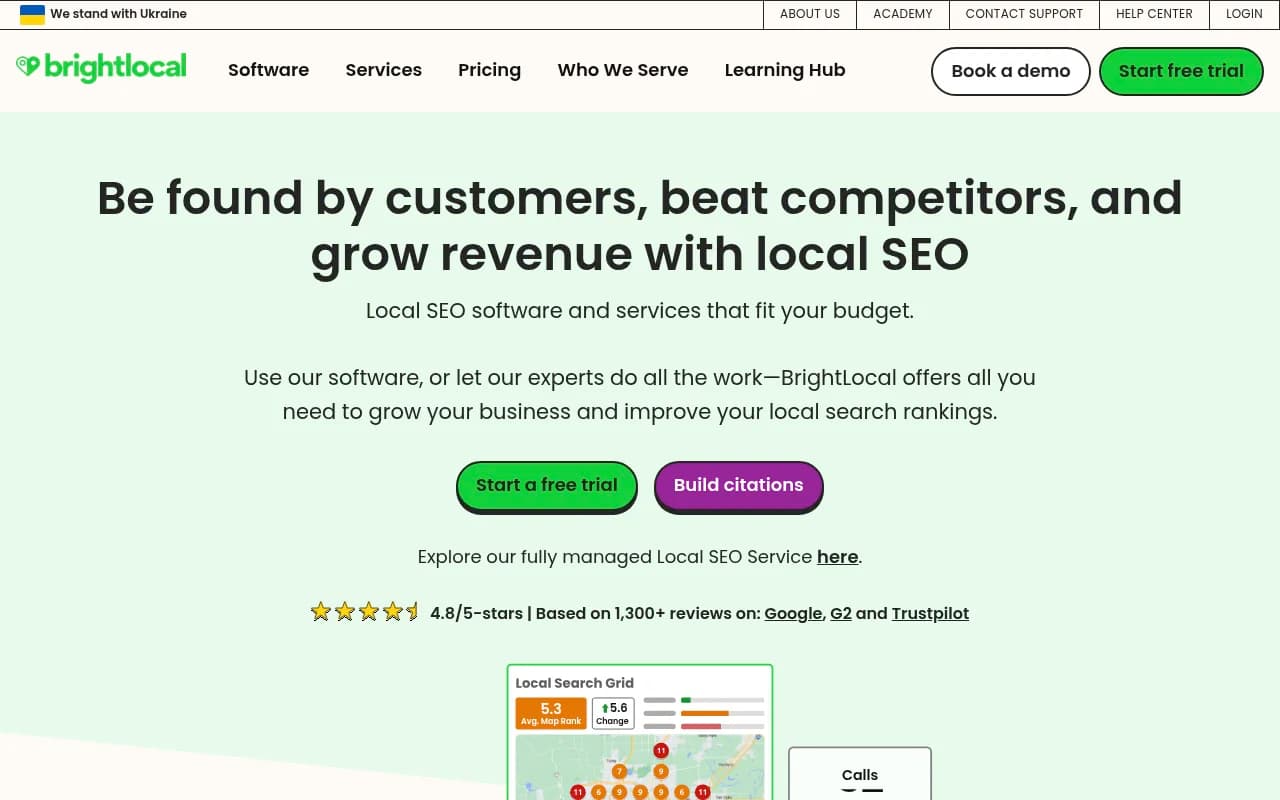
BrightLocal is strong for managing the local citation infrastructure -- listings, reviews, and local search performance -- that indirectly drives AI visibility. Getting your local data right across 50 cities is a prerequisite for AI visibility, and BrightLocal handles that at scale.
For tracking brand mentions across AI models:
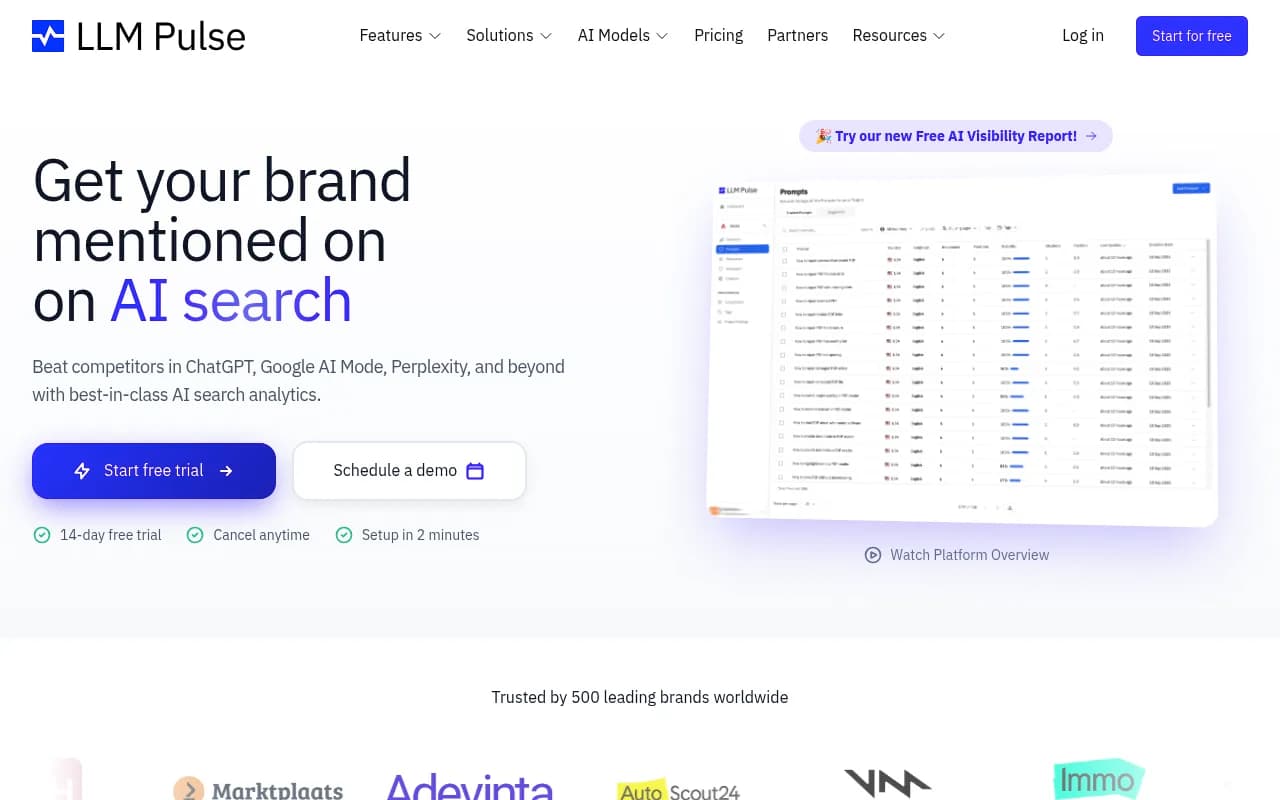
LLM Pulse covers the basics of AI visibility monitoring across ChatGPT, Perplexity, and a few others. It won't give you city-level granularity or content generation, but it's a reasonable starting point for teams with smaller budgets.
Profound

Profound is a solid enterprise option with broad AI model coverage. It's more expensive and doesn't include content generation, but the monitoring depth is good for large brands.
For content creation to fill the gaps:
Once you know which cities and prompts you're losing, you need to create content fast. Promptwatch has a built-in AI writing agent that generates content grounded in citation data. For teams that want a standalone content tool:
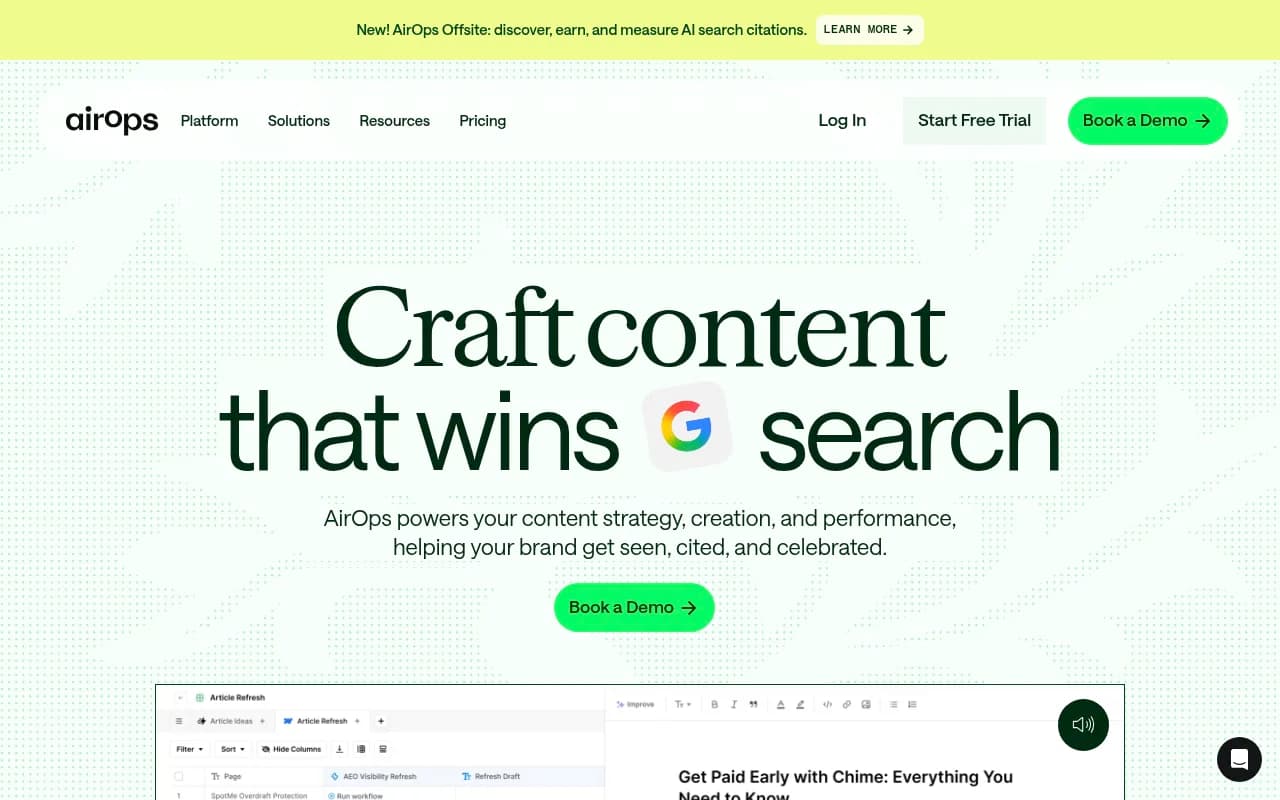
AirOps is built specifically for AI search visibility content -- it generates articles, FAQs, and comparison content designed to get cited by LLMs, not just rank on Google.
A practical 90-day rollout plan
If you're starting from scratch with 50 cities, here's a realistic timeline:
Days 1-14: Setup and baseline
- Configure your tracking platform with city-specific personas for all 50 cities
- Run your initial prompt set to establish baseline visibility scores
- Identify your top 10 priority cities (highest business value + lowest current AI visibility)
Days 15-45: Content and citation sprint
- Create or improve location pages for your top 10 priority cities
- Audit and complete local listings for those cities
- Identify and address Reddit/YouTube gaps in priority markets
Days 46-90: Measure, expand, repeat
- Re-run prompts for priority cities to measure movement
- Expand content and citation work to the next 10 cities
- Establish a monthly monitoring cadence for all 50 cities
The businesses seeing the best results treat this as an ongoing program, not a one-time project. AI model behavior changes, competitors publish new content, and new prompts emerge. Monthly tracking keeps you from falling behind.
What "good" looks like
To give you a benchmark: for a well-optimized multi-location business, you'd expect to see mention rates of 40-60% across your core prompts in cities where you have strong local presence. In cities where you've done targeted AI visibility work, that can climb higher.
The ROI Amplified case study mentioned earlier -- 15% of sales calls coming directly from ChatGPT -- represents what's possible when a business has genuinely strong AI visibility in the markets they care about. That kind of result doesn't happen by accident. It comes from systematic tracking, targeted content creation, and consistent citation building across the cities that matter.
The businesses that build this infrastructure now, while most competitors are still ignoring AI visibility, will have a durable advantage. The ones who wait will spend the next few years trying to catch up.