Key takeaways
- Agent Skills are saved, repeatable workflows. Instead of retyping a long prompt every Monday, you run one skill and get the same structured analysis each time.
- Promptwatch's Agent Chat ships with ready-made skills for the 7-day GEO briefing, competitor gap analysis, citation research, content sprints and newsjacking, and you can schedule them in-app or in Slack.
- Skills only work as well as the data under them. Agent Chat reads your live prompts, citations, crawler logs, traffic and search data, so the output is grounded rather than guessed.
- Match the skill to the content's shelf life. Promptwatch Data shows news pages lose half their ChatGPT citations in about five weeks, while landing pages and docs hold on for months.
- The best custom skills answer a short list of questions: context, steps, quality checks, and when to stop and ask a human.
What an agent skill actually is
A skill is a packaged set of instructions. It tells a general-purpose agent how to do one specific job the way you would do it: which data to pull, in what order, what good output looks like, and when to ask before acting.
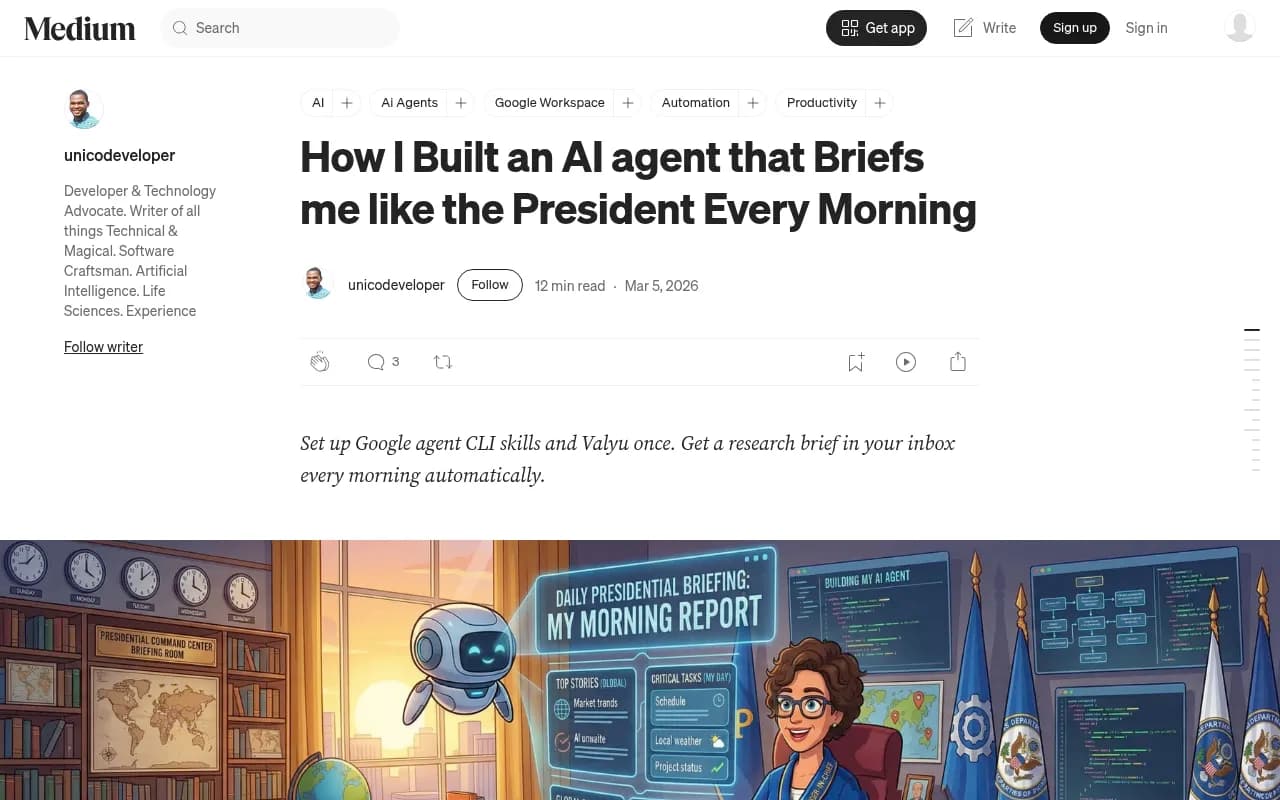
The idea is not unique to marketing. Developers have been writing skills for coding agents (there is even a CLI pattern, npx skills add <repo>, for installing them). A Medium walkthrough from March 2026 by unicodeveloper shows the same idea applied to a personal workflow: install a couple of skills once, and a research brief lands in your inbox every morning. The author's closing point is the one that matters: the gap between having information and using it to decide better is mostly friction.
GEO has the same friction problem. The data exists in a dozen dashboards. Nobody has time every week to pull visibility numbers, compare competitors, check which pages AI cited, and decide what to write. A skill removes the pulling and the deciding-what-to-look-at, so the human only reviews.
Where skills fit in Promptwatch
Promptwatch is an end-to-end AI visibility platform: it monitors what ChatGPT, Gemini, Claude, Perplexity, Google AI Overviews and others say about your brand, traces which sources they cite, acts on the gaps, and measures whether the fixes worked. Agent Chat is the conversational analyst layer over all of that data.

Agent Chat digs through prompts, citations, competitors, crawler logs, traffic and Search Console data, runs multi-step workflows, delegates research to read-only subagents, renders charts, and builds dashboards or PDF reports on request. The ready-made Agent Skills are the shortcut version: a button instead of a paragraph of instructions. Chats can also be scheduled and delivered in-app or in Slack, and a page-aware side panel (Cmd+J) sits next to dashboards, Trends, Prompts, Query Fanouts, the Action Board and the content editor.
Agent Credits power it. Every paid plan includes them (500 to 6,500 per month depending on plan), with more available as an add-on. Check promptwatch.com/pricing for current numbers.
The 7 workflows
Promptwatch lists five named skills: the 7-day GEO briefing, competitor gap analysis, citation research, content sprints and newsjacking. The headline count of seven comes from how teams actually use them in practice, so I have split the two broadest ones (the briefing and the gap analysis) into the separate jobs they really do. Treat the first five as the named skills and the last two as common variants you can ask for in the same chat.
1. The 7-day GEO briefing
This is the one to schedule first. It summarizes the last week: Visibility Score movement, Share of Voice against competitors, position changes, sentiment shifts, new citations, and anything unusual in crawler logs or AI-referred traffic.
The value is not the numbers themselves. It is the ordering. A good briefing tells you the one thing that changed most and the one thing you should do about it. Schedule it for Monday morning in Slack and read it with coffee, similar to the morning-brief pattern people build by hand with CLI skills and a Google Doc, except this one already sits on your tracking data.
How to read it: low Share of Voice is a coverage problem, late Position is a prominence problem, mentions without self-citations point to a content or crawlability problem, and weak sentiment is a reputation problem. Ask the agent to label each finding with one of those four diagnoses.
2. Competitor gap analysis
This skill compares your visibility with named competitors across topics, models, countries or personas, then points at where they appear and you do not. The usual output is a list of prompts where a rival is cited and you are absent, plus the pages doing the citing.
Use it quarterly at minimum, and after any competitor launch. It pairs naturally with the heatmap view, which puts brands, models and topics on either axis.
3. Citation research
Here the agent asks a different question: not whether you are mentioned, but what AI reads before it answers. It lists the domains and URLs cited for your tracked prompts, where your pages land in the source list, and which Reddit threads, YouTube videos or LinkedIn posts show up.
Be careful about assumptions here. Promptwatch Data found that ChatGPT drew only 0.46% of its citations from social platforms between Sep 28 and Oct 4, 2026, while Google AI Overviews drew 12.2% (social media citations by AI model, October 2026). A Reddit-heavy plan that works for AI Overviews may do little in ChatGPT. Reddit's share of ChatGPT citations also fell from roughly 4% to 0.5% on August 14, 2026 (Reddit citations are dropping in ChatGPT). Ask the citation skill to split results by model for exactly this reason.
4. Content sprints
A content sprint turns the gaps into a batch of articles. The agent picks the highest-value uncovered prompts, queues content, and (on Business and Enterprise plans with the Content Agent) can plan, write and publish to WordPress, Webflow or Framer through a review inbox. You approve, edit or decline each piece, or run it hands-off.
The key design decision is which content type to write. In Promptwatch's data for Sep 28 to Oct 4, 2026, ChatGPT's citations broke down like this (content type report):
| Content type | Share of ChatGPT citations |
|---|---|
| Product pages | 22.4% |
| Landing pages | 16.8% |
| Listicles | 13.6% |
| How-to guides | 8.7% |
| Documentation | 7.5% |
| General articles | 6.1% |
| Comparisons | 5.9% |
| News | 5.7% |
| FAQ pages | 3.3% |
| Reviews | 1.7% |
Product and landing pages together take about 39%. If your sprint is only blog posts, you are competing for the smaller slice. Ask the agent to mix page types by prompt intent. For commercial prompts, product pages (26.0%), landing pages (20.6%), listicles (15.0%) and comparisons (7.9%) make up almost 70% of citations. For informational prompts, how-tos (10.7%) and docs (8.5%) matter more.
5. Newsjacking
Newsjacking means attaching your expertise to a breaking story while people are still searching for it. In the LinkedIn world it is a known growth tactic: Diandra Escobar's March 2026 video describes a client getting 208,000 impressions from a single newsjacking post that took 20 minutes to write, with the hard part being finding the right story at the right time. Her setups range from a no-code research assistant to n8n workflows to a 24/7 autonomous agent.
The Agent Chat version works from your visibility data: it finds the news angles connected to topics you track, drafts the piece, and queues it. The warning for GEO is shelf life. Promptwatch's half-life data shows that of pages ChatGPT cited on July 6, 2026, news lost half its pages within 36 days, while landing pages and docs stayed cited longest (content half-life). Newsjacking is a spike tactic, so use it for reach and social traffic, and do not expect it to anchor your AI citations for months.
6. Query fan-out gap check (a variant)
This is a gap analysis run at the sub-question level. One prompt triggers several hidden web searches, and your page has to answer the sub-questions, not just the headline. Promptwatch's fan-out data shows the average moved from 2.15 fanouts per response in early December 2025 to about 1.84 by early March 2026, and average query length fell from about 117 characters to the high 80s, then to roughly 53 characters (six to eight words) in April (ChatGPT query fanouts). Treat those figures as a snapshot and check the live page, since it updates daily.
The practical advice from that report is useful to feed into the skill: cover "X vs Y", pricing, alternatives and how-to sub-questions, build focused page clusters instead of one mega-page, and write headings that read like keyword queries. ChatGPT also began using the site: operator at scale on August 8, 2026, jumping from about 0.4% to about 17% of fanout queries (site: operator report), so branded, findable page structure matters more than before.
7. Crawl-to-citation triage (a variant)
When a page is published but not cited, you need to know whether AI cannot read it or just does not like it. Ask Agent Chat to check IP-verified crawler logs (Agent Analytics) against citations per page. No crawl means an access problem: robots rules, CDN blocks, errors. Crawled but never cited means a content problem. You can verify the access side yourself with the free Agentic Readiness Check.
Quick comparison of the seven
| Workflow | Best cadence | Main output | Needs |
|---|---|---|---|
| 7-day GEO briefing | Weekly | Ranked list of changes and one action | Any paid plan |
| Competitor gap analysis | Monthly or quarterly | Prompts where rivals win | Competitors tracked |
| Citation research | Monthly | Cited domains and URLs by model | Prompt monitors running |
| Content sprint | Weekly or biweekly | Queued articles | Content Agent (Business and up) |
| Newsjacking | As news breaks | Time-sensitive drafts | Topics defined, Brand Book |
| Fan-out gap check | After major model updates | Missing sub-question pages | Query fan-outs data |
| Crawl-to-citation triage | When a page underperforms | Access vs content diagnosis | Crawler logs set up |
Designing your own skill
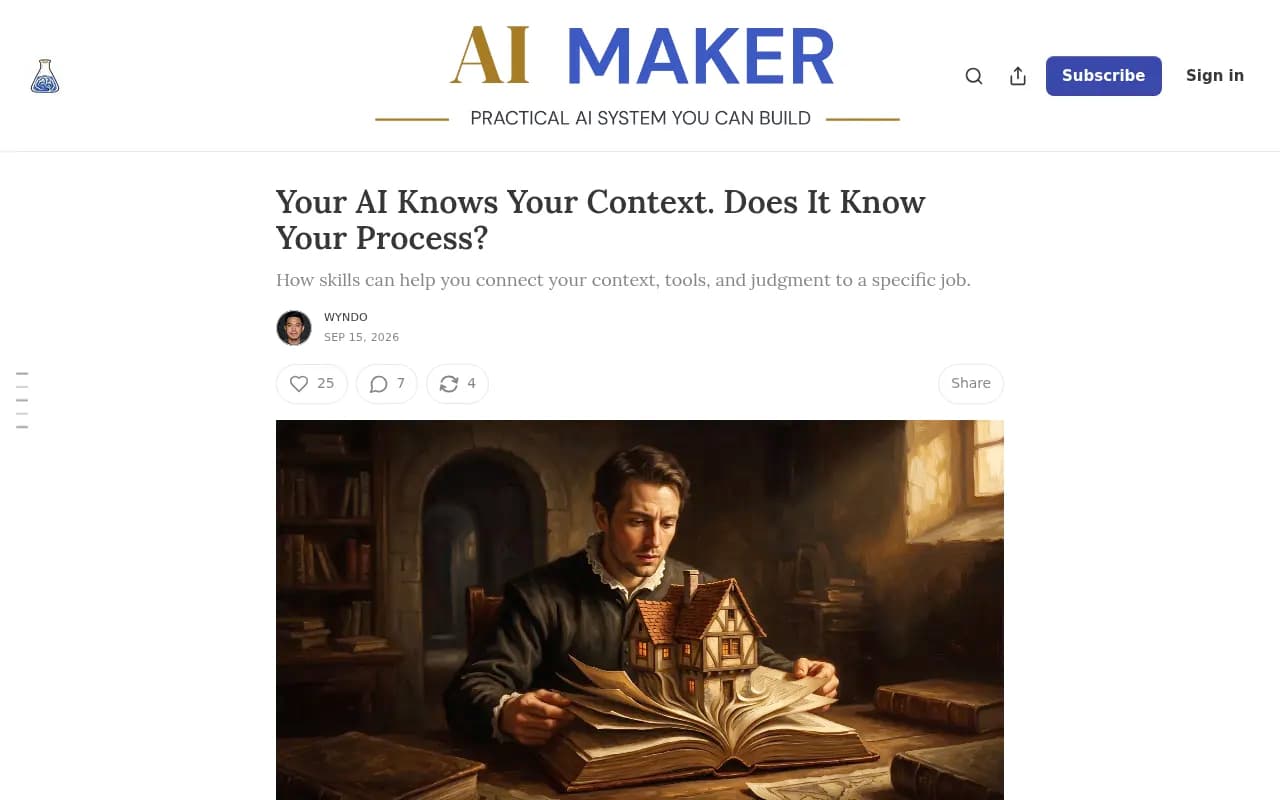
The ready-made skills cover most weeks. Eventually you will want one that knows your process. A Substack post from The AI Maker (Sep 2026) frames this well: your AI may know your context, but does it know your process? Its approach is a set of seven questions that define context, steps, quality checks, and when the agent should stop and ask.
In my own words, the useful version for GEO looks like this:
- What is the job, in one sentence?
- What data must it read first?
- What are the steps, in order?
- What does a good result look like (and a bad one)?
- What should it never do without asking?
- Who gets the output, and where?
- How will you know it worked next month?
Agent Chat helps with number five out of the box. When a request is unclear it asks a short multiple-choice question first, and before it changes anything it asks for every value it needs. That is the behavior you want from anything allowed to touch an Action Board or queue content.
Tips that save credits and frustration
- Start with the briefing. Run it for four weeks before adding anything else, so you learn what normal looks like.
- Keep monitors clean. Language and location are fixed once a monitor is created, so separate markets stay separate and the skills do not mix them.
- Use Brand Book instructions to define what counts as a mention if your brand name is also a common word.
- Close the loop. After a content sprint, ask the agent two weeks later whether each page was crawled, cited and clicked. Page Tracker and visitor analytics hold those answers.
- Do not over-index on one model. Almost half of ChatGPT responses cite 10 or more unique domains (unique domains report), so being one source among many is normal. Focus on breadth of coverage.
Alternatives and adjacent tools
Most GEO tools stop at a dashboard. If you want to compare, the GEO software directory at bestgeosoftware.com lists the field. For automation around skills, workflow tools such as n8n and Zapier can fetch news or push summaries into Slack, though they have no native view of AI citations.
Promptwatch's own comparison pages (vs Profound, vs Peec) cover how monitoring-only platforms differ: they report a score and leave the work to you, whereas the skills here end in queued actions and content.
Where to start
Pick the weekly briefing, schedule it into Slack, and read it for a month. Then add a quarterly gap analysis and one content sprint tied to the gaps it finds. If you want to see your baseline first, run the free AI visibility report or start the 7-day trial at promptwatch.com/pricing. For deeper background on how the underlying numbers are collected, the Promptwatch Academy covers metrics and data collection.