Key takeaways
- Ahrefs Brand Radar has an impressive 263M+ prompt database but costs $199/mo per AI index on top of an existing Ahrefs subscription, making it one of the most expensive options in the category.
- Multiple independent reviews in 2026 have flagged accuracy gaps between Brand Radar's data and what dedicated GEO platforms report.
- Most competitors in this space are monitoring-only tools — they show you where you're invisible but don't help you fix it.
- Platforms like Promptwatch close that loop with content gap analysis, AI writing tools, and crawler logs that most competitors lack entirely.
- For teams that need to act on AI visibility data (not just observe it), the choice of platform matters a lot.
Ahrefs has been a cornerstone of SEO tooling for over a decade. When they launched Brand Radar, it felt like a natural extension — a familiar interface, a huge database, and the credibility of a brand that serious SEOs already trust. So it's worth asking honestly: does Brand Radar actually deliver on AI visibility, or is it a legacy SEO tool trying to fit into a new category?
This guide breaks down what Brand Radar does well, where it falls short, and how it compares to the platforms that were built specifically for GEO and AI search visibility from the ground up.
What Ahrefs Brand Radar actually is
Brand Radar is Ahrefs' answer to the growing demand for AI search monitoring. It tracks how brands appear in AI-generated responses across platforms like ChatGPT, Perplexity, and Google AI Overviews. The core pitch is scale: Ahrefs claims a database of 263M+ monthly prompts, which is genuinely large.
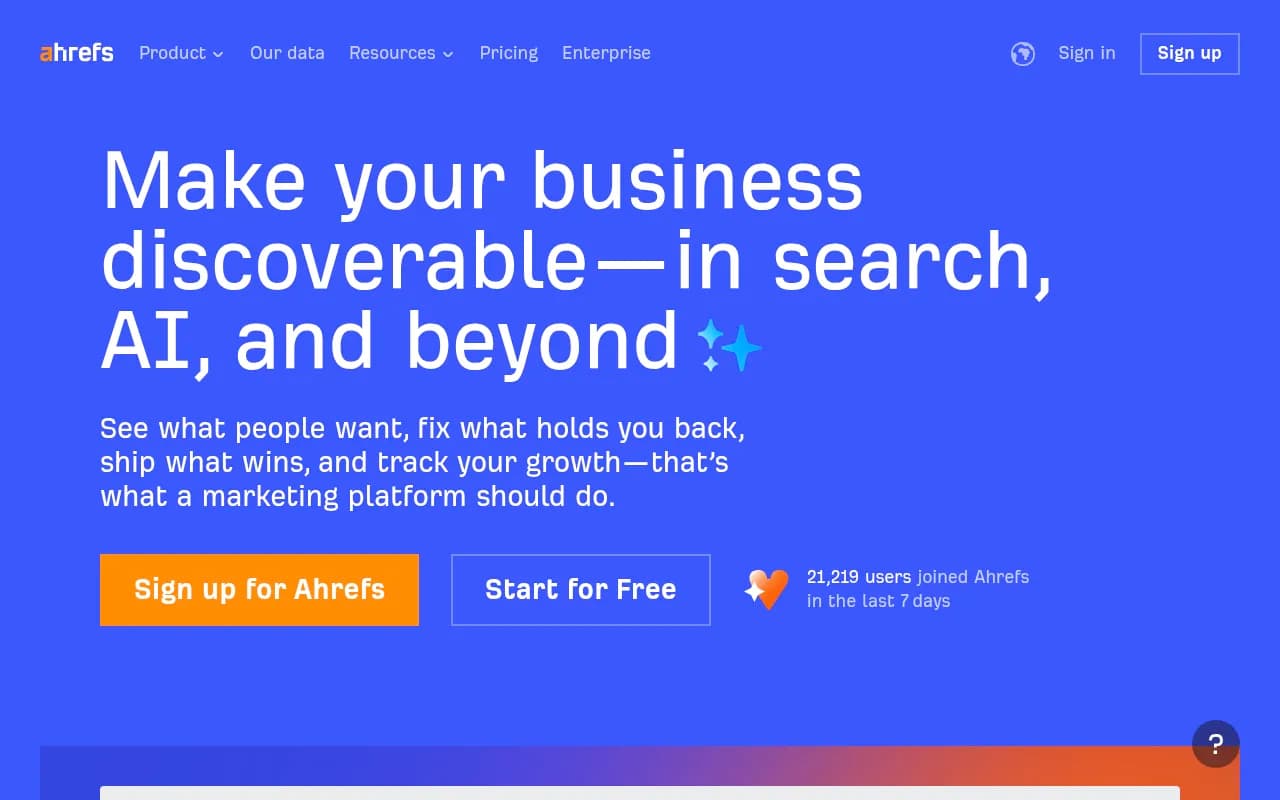
The feature set includes:
- Brand mention tracking across AI engines
- Competitor visibility comparisons
- Integration with Ahrefs' existing YouTube and Reddit data
- Topic-level visibility tracking
On paper, that's a solid foundation. The problem is what happens when you look closer.
The pricing problem
Brand Radar isn't a standalone product. It's an add-on to an existing Ahrefs subscription (which starts at $129/mo). From there, you pay $199/mo per AI index, or $699/mo for a 6-platform bundle. For a marketing team tracking visibility across multiple AI engines, you're looking at $900+ per month before you've done anything with the data.
That's a significant commitment, especially when the platform's primary function is monitoring — not optimization.
The accuracy gap
This is where things get uncomfortable. A 2026 Reddit thread in r/DigitalMarketing surfaced a direct comparison: "The difference in data we saw between Ahrefs Brand Radar and Profound/Promptwatch was crazy." That's not a minor discrepancy. When your core product is data, accuracy isn't optional.
The Overthink Group's 2026 ranking of AI visibility tools gave Brand Radar a final score of 1.1 out of 10, calling it "the biggest surprise" — not in a good way. For a tool from a company with Ahrefs' reputation, that's a significant gap between brand equity and actual product performance in this specific category.
What it's missing
Brand Radar doesn't generate content. It doesn't show you which specific pages are being cited by AI models. It doesn't give you AI crawler logs. There's no prompt volume scoring, no query fan-out analysis, and no traffic attribution to connect AI visibility to actual revenue. You can see that you're invisible in certain AI responses, but the platform doesn't help you do much about it.
The broader landscape: how the category breaks down
Before comparing specific tools, it helps to understand the two fundamentally different types of products in this space.
Monitoring-only platforms track where your brand appears (or doesn't) in AI-generated responses. They give you dashboards, share-of-voice metrics, and competitor comparisons. Most tools in this category fall here.
Optimization platforms do all of the above, but also help you close the gaps they find. They identify missing content, generate articles engineered for AI citation, track crawler behavior, and connect visibility changes to traffic and revenue.
The distinction matters because monitoring without action is just expensive reporting.
Head-to-head comparison
Here's how the major platforms stack up across the dimensions that matter most for a GEO program in 2026:
| Platform | AI engines tracked | Content gap analysis | AI content generation | Crawler logs | Traffic attribution | Pricing (entry) |
|---|---|---|---|---|---|---|
| Promptwatch | 10 | Yes | Yes (built-in agent) | Yes | Yes (GSC, snippet, logs) | $99/mo |
| Ahrefs Brand Radar | 6 (bundle) | No | No | No | No | $328+/mo (base + add-on) |
| Profound | 9+ | Partial | No | No | Limited | Higher |
| Scrunch AI | Multiple | No | No | No | No | ~$300/mo |
| Otterly.AI | Multiple | No | No | No | No | Lower |
| Peec AI | Multiple | No | No | No | No | Lower |
| Semrush | Multiple | No | No | No | No | $139+/mo |
Platform-by-platform breakdown
Promptwatch
Promptwatch is the platform that most directly addresses the gap between monitoring and action. It tracks 10 AI models (ChatGPT, Perplexity, Claude, Gemini, Google AI Overviews, Grok, DeepSeek, Copilot, Meta AI, Mistral) and builds a complete optimization loop around that data.

The Answer Gap Analysis is what separates it from most competitors. It shows you exactly which prompts your competitors are visible for that you're not — not just a general "you're missing here" signal, but the specific questions AI models are answering with competitor content instead of yours. From there, the built-in AI writing agent generates articles grounded in citation data from 880M+ analyzed citations, targeting the specific gaps identified.
The crawler logs are a feature most platforms don't offer at all. You can see in real time which AI crawlers (GPTBot, ClaudeBot, PerplexityBot) are hitting your site, which pages they're reading, and what errors they're encountering. That's the kind of technical visibility that lets you fix indexing problems before they become visibility problems.
Pricing starts at $99/mo for the Essential plan (1 site, 50 prompts, 5 articles), $249/mo for Professional (2 sites, 150 prompts, 15 articles, crawler logs), and $579/mo for Business (5 sites, 350 prompts, 30 articles). Compared to what Ahrefs Brand Radar costs for monitoring alone, the value calculation is pretty clear.
Profound
Profound is the other platform that gets mentioned alongside Promptwatch in serious GEO conversations.
Profound

It's genuinely strong on the enterprise side — deep analytics, governance features, and solid "why did we appear?" diagnostics. The data quality is generally well-regarded. The tradeoff is price (it's one of the more expensive options) and the fact that it's still primarily a monitoring and analysis platform. Content generation and optimization guidance aren't core features. For large enterprise teams with dedicated content resources who just need the data layer, Profound is worth evaluating. For teams that need the full loop, it stops short.
Scrunch AI
Scrunch has built a reputation as a solid monitoring command center — good breadth of AI engine coverage, clean dashboards, and reporting that works well for stakeholder presentations.
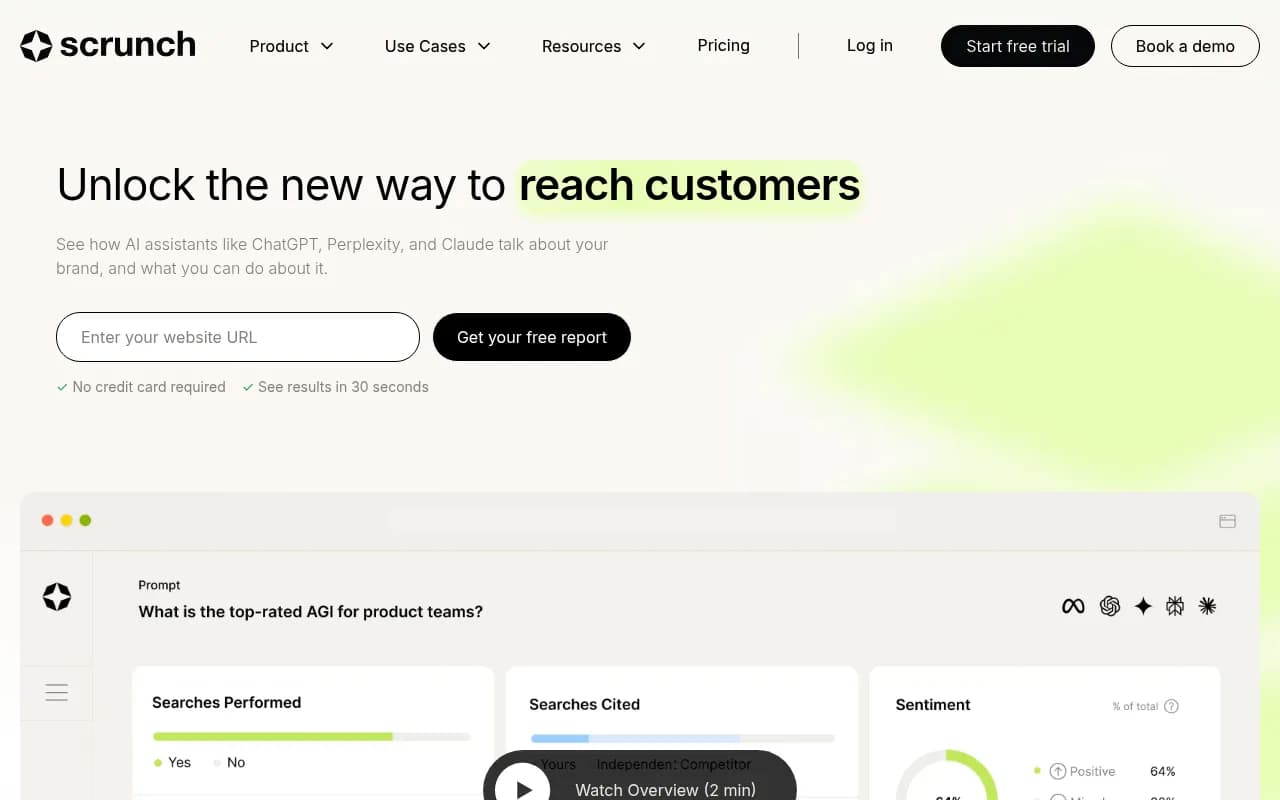
The limitation is the same one that affects most monitoring tools: it shows you what's happening but doesn't tell you what to do next. If you have a content team that can act on the data independently, Scrunch is a reasonable choice. If you need the platform to guide the optimization work, you'll hit a ceiling quickly.
Otterly.AI
Otterly is one of the more accessible entry points into AI visibility monitoring — lower price point, straightforward setup, and decent coverage of the major AI engines.
Otterly.AI

It's a monitoring tool, full stop. No content gap analysis, no AI writing, no crawler logs, no traffic attribution. For teams just starting to track AI visibility and not ready to invest in a full optimization platform, it's a reasonable starting point. But it's not a platform you grow into — it's one you grow out of.
Peec AI
Similar positioning to Otterly — basic monitoring across ChatGPT, Perplexity, and Claude with a relatively low barrier to entry.

The same ceiling applies. It's useful for getting a directional read on AI visibility without a major budget commitment, but it doesn't help you act on what you find.
Semrush
Semrush has added AI visibility features to its existing platform, which makes sense given its position as the dominant traditional SEO suite.
The issue is that the AI tracking uses fixed prompts rather than dynamic prompt discovery. You're monitoring a predetermined set of queries rather than finding the actual prompts your target audience is using. There's no AI traffic attribution, no content generation for AI search, and no crawler logs. For teams already deep in the Semrush ecosystem who want a basic read on AI visibility without switching tools, it's convenient. For teams that want to actually optimize for AI search, it's not built for that.
What the independent reviews say
The 2026 landscape of independent reviews is pretty consistent on a few points:
The Overthink Group's ranking gave Brand Radar a 1.1/10, noting the gap between Ahrefs' brand reputation and the actual performance of this specific product in the AI visibility category. The EWR Digital review called it "powerful but pricey," with documented accuracy issues and a lack of actionable optimization guidance. The frictionai.co comparison of 12+ AI visibility tools categorized most competitors as monitoring dashboards, with only a handful offering anything approaching a full optimization workflow.
The Reddit r/DigitalMarketing thread is worth highlighting again because it's unfiltered: practitioners comparing tools in real conditions found significant data discrepancies between Brand Radar and dedicated GEO platforms. When you're paying a premium for a data product, that's the kind of feedback that matters.
How to choose the right platform for your situation
The right tool depends on what stage you're at and what you actually need to do with the data.
If you're just starting to track AI visibility and want to understand the landscape before committing budget, a lower-cost monitoring tool like Otterly or Peec gives you a starting point. Don't expect to optimize from it, but it'll show you the shape of the problem.
If you're already invested in the Ahrefs ecosystem and need directional AI visibility data alongside your existing SEO workflow, Brand Radar is the path of least resistance. Just go in with realistic expectations about accuracy and understand you're getting monitoring, not optimization.
If you're running a serious GEO program and need to close the loop between visibility gaps and content that actually gets cited, you need a platform built around that workflow. Promptwatch is the most complete option at a price point that doesn't require enterprise budget. Profound is worth evaluating if you're at the enterprise end and have dedicated content resources.
If you're an agency managing AI visibility for multiple clients, the economics shift. Promptwatch's agency pricing and multi-site support make more sense than paying per-index fees across multiple client accounts.
The core question: monitoring or optimization?
Most of the tools in this comparison are monitoring platforms. They're useful. Knowing where you're invisible is the first step. But in 2026, with AI search eating an increasing share of zero-click queries, knowing you're invisible and staying invisible aren't acceptable outcomes.
The platforms that will matter most are the ones that help you find the gaps, create content engineered to fill them, and track whether it worked. That's a short list. Most tools stop at step one.
If you're evaluating AI visibility platforms right now, that's the question worth asking about every option: does this tool help me fix what it finds, or does it just show me the problem?
Quick reference: which platform for which use case
| Use case | Recommended platform |
|---|---|
| Full optimization loop (find gaps, create content, track results) | Promptwatch |
| Enterprise monitoring with deep analytics | Profound |
| Broad monitoring with clean reporting | Scrunch AI |
| Budget entry-level monitoring | Otterly.AI or Peec AI |
| Already in Ahrefs ecosystem, want directional AI data | Ahrefs Brand Radar |
| Traditional SEO + basic AI visibility in one tool | Semrush |
The category is moving fast. Tools that were leading in early 2025 have been overtaken by platforms that took optimization seriously from the start. Whatever you choose, make sure it's built to do more than show you a dashboard.