Key takeaways
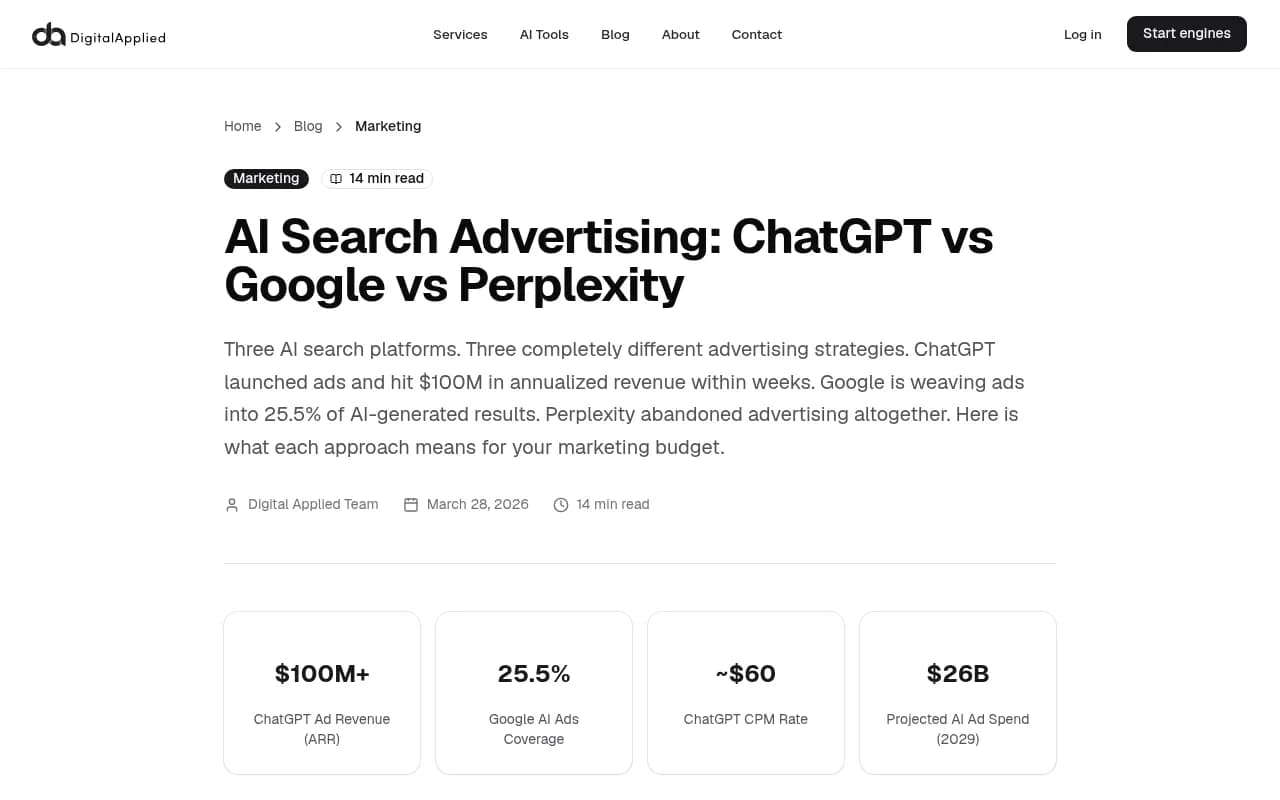
- ChatGPT launched ads in February 2026 and hit roughly $100M in annualized revenue within two months, running at CPMs around $60 to 800M+ weekly users
- Ads in ChatGPT show up as clearly labeled, lightly tinted boxes below the AI's answer, separated by a thin divider, never woven into the actual response text
- Perplexity tested sponsored follow-up questions for over a year, then pulled all ads in February 2026, betting instead on subscription revenue and an "ad-free" positioning
- Google's AI Mode now shows ads in about a quarter of AI-generated responses, up from roughly 5% in early 2025, plus new shopping ads with Direct Offers
- Getting cited organically and showing up as a sponsored result for the same query compound each other, which is why AEO and paid strategy are starting to overlap
Why this is happening right now
A year ago, "advertising inside a chatbot" sounded like a hypothetical someone would raise in a strategy meeting and then table for later. It isn't hypothetical anymore. OpenAI turned on ads in ChatGPT in February 2026, and within roughly eight weeks the program was already generating around $100M in annualized revenue, according to reporting compiled by Digital Applied. That's a faster ramp than most people expected, and it puts real pressure on every other AI platform to figure out its own monetization story, or explain why it's holding back.
Google didn't hold back. Ads now appear in about 25.5% of AI Mode responses, a jump from roughly 5.17% in early 2025. That's not a rounding error, that's Google deciding AI search should carry the same ad load as its regular search results, just wrapped in a different UI.
And then there's Perplexity, which went the opposite direction. After experimenting with sponsored follow-up questions through 2024 and 2025, the company pulled all advertising in February 2026, citing user trust concerns, and is now leaning hard into subscription revenue with a reported target of $500M in annualized subscription income. Three major AI platforms, three completely different bets on how to make money. If you're a marketer trying to plan a 2026 budget, that divergence is the whole story.
How ChatGPT ads actually look and work
If you've used ChatGPT recently and seen a small tinted box appear under an answer with a "Sponsored" label, that's the ad unit. It sits below the AI's complete response, separated by a thin divider, and includes a brand name, a headline, body copy, sometimes an image, and a call-to-action button. OpenAI has been explicit that ads don't get to influence the actual answer content, the sponsored box is a separate element that shows up after the organic response finishes generating.
Mechanically, here's the rough flow: ChatGPT reads contextual signals from the conversation (the topic, apparent intent, how deep the user has gone into a subtail), matches those signals against advertiser targeting parameters, then runs something like a real-time auction weighing CPM/CPC bids against a relevance score. It's a familiar auction-based model if you've run Google Ads, just applied to a much newer surface.
A few practical notes for anyone budgeting for this channel:
- Ads currently show in the standard ChatGPT free tier and ChatGPT Go, not inside every custom GPT. Third-party GPT ad placements, with revenue sharing for creators, are rolling out gradually starting late 2026.
- OpenAI removed minimum spend requirements when it launched a self-serve Ads Manager in May 2026, so small businesses can test the channel without a huge upfront commitment.
- Reported CPMs sit around $60, which is high relative to a lot of display inventory, but reflects the intent-rich nature of a chat conversation versus a passive scroll.
Perplexity: the platform that said no
Perplexity's story is worth sitting with for a second, because it's a genuinely contrarian bet. The company tested two ad formats over roughly a year: sponsored follow-up questions inside the "Related Questions" section (reportedly showing on around 40% of platform queries, where clicking generated an AI-approved answer), and video ads placed alongside responses, labeled "sponsored."
Then, in February 2026, Perplexity killed the whole program. Brafton's coverage frames it as a direct response to user trust concerns, and there's data backing that instinct up: an Ipsos survey found that 63% of US adults say ads in AI search results make them trust the results less. That's a big number for a product whose entire value proposition is being the citation-first, "I'll show you my sources" alternative to ad-supported search.
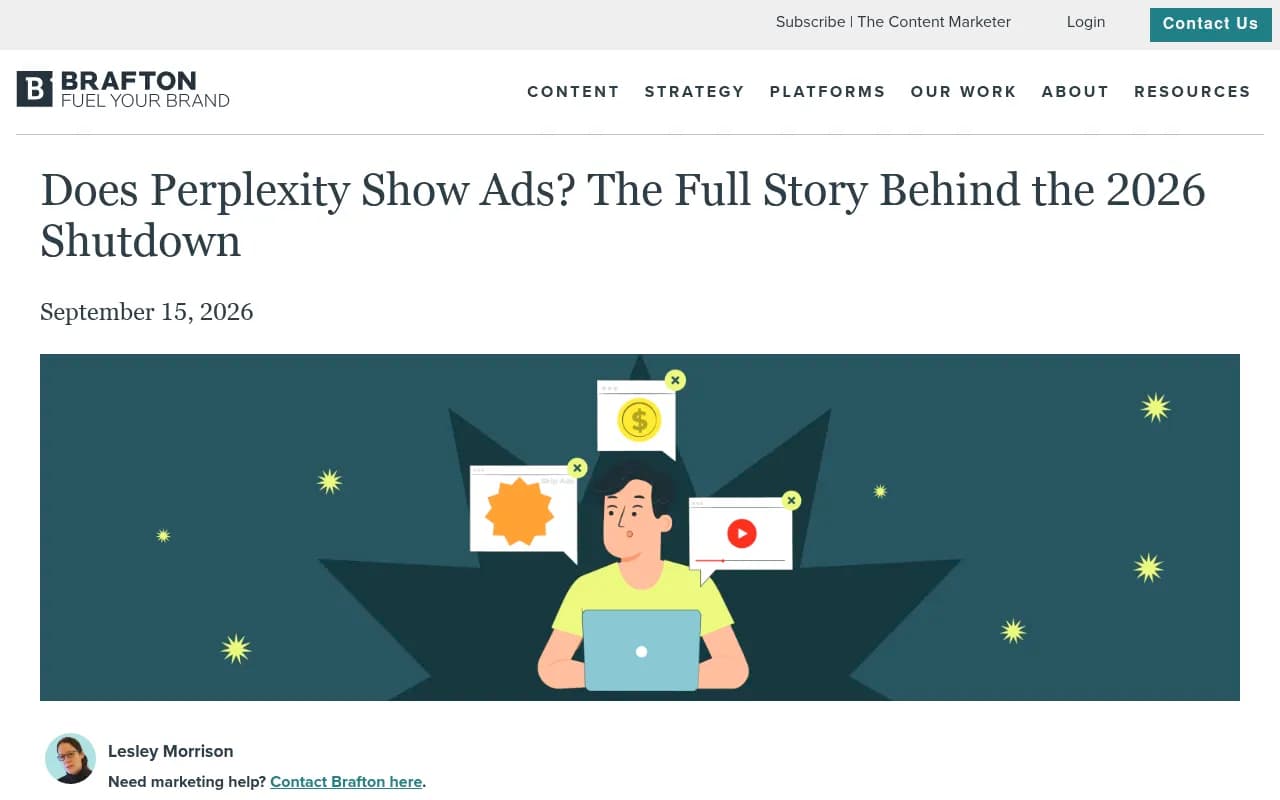
What this means practically: if your paid strategy assumed Perplexity would be an ad channel, it isn't one right now, and there's no public roadmap suggesting it's coming back soon. The only path to visibility on Perplexity is organic, meaning your content actually gets cited in answers. That raises the stakes on citation-focused optimization for anyone whose audience overlaps with Perplexity's research-heavy, professional user base.
Google AI Mode: ads at Google Search scale
Google took the least surprising path of the three, essentially porting its existing search ads muscle into AI Mode. Ads now appear in roughly a quarter of AI Mode responses, and Google has added shopping ads with "Direct Offers" inside AI Mode results, which lets retailers surface product cards directly in the AI-generated answer.
This matters because Google already has the advertiser relationships, the auction infrastructure, and the measurement tooling from twenty-plus years of Search ads. It doesn't need to build trust in the ad format the way OpenAI does, it just needs to extend an existing muscle to a new surface. That's probably why AI Mode ad coverage climbed from 5.17% to 25.5% so quickly, there wasn't a cold start problem.
Side-by-side comparison
| Platform | Ad status (2026) | Format | Placement | Notable data point |
|---|---|---|---|---|
| ChatGPT | Live since Feb 2026 | Sponsored box: headline, copy, image, CTA | Tinted box below the answer, thin divider | ~$100M ARR within two months, ~$60 CPM |
| Google AI Mode | Live, expanding | Text ads + shopping ads with Direct Offers | Embedded within AI Mode response | Ad coverage up from 5.17% to 25.5% |
| Perplexity | Discontinued Feb 2026 | N/A (formerly sponsored follow-ups, video ads) | N/A | 63% of users say AI search ads reduce trust (Ipsos) |
What this means if you're planning a 2026 budget
The honest answer is that AI search advertising is still small relative to traditional search, but it's growing at a pace that traditional channels haven't matched in years. Digital Applied's analysis projects US AI search ad spend growing from about $1B in 2025 to $25.9B by 2029, which would put it at roughly 13.6% of total search ad spend. If that trajectory holds even loosely, the marketers who build platform fluency now, understanding auction mechanics, creative formats, and where the trust ceiling sits, get a head start most competitors won't have.
A few things I'd actually do with this information:
First, don't treat ChatGPT ads like a scaled-down version of Google Ads. The intent signal is different, the format is more conversational, and the trust dynamics matter more because users are mid-conversation with something they perceive as helpful, not scrolling past banner inventory. Creative that reads like a normal Google text ad is going to feel jarring in that context.
Second, don't write off Perplexity just because it has no ad product. Its user base skews toward research-heavy, professional use cases, and organic citation there is arguably more valuable than a paid placement would have been anyway, because it comes with the platform's implicit endorsement. If your product fits that audience, invest in being cited, not in waiting for an ad slot that may never exist.
Third, treat organic AI visibility and paid AI visibility as complementary rather than separate budgets. Being cited in an organic ChatGPT answer and then also showing up as the sponsored box below it, for the same query, is a real compounding effect that most brands aren't thinking about yet. AEO complements advertising here rather than competing with it.
Tracking your visibility across all three platforms
The tricky part with this three-way split is that you now need visibility into organic citations on Perplexity, ad performance on ChatGPT, and ad coverage plus organic mentions on Google AI Mode, and none of the platforms give you a unified view across all three on their own.
This is the exact gap tools like Promptwatch are built to close. It tracks how your brand shows up across ChatGPT, Perplexity, Google AI Overviews, AI Mode, Gemini, Claude, Grok, and more, and includes a dedicated ChatGPT Shopping and Ads Radar module that shows which competitors are bidding on your prompts, what their ad copy looks like, and how they're positioning against you. Since it monitors the actual user-facing interfaces rather than relying only on APIs, it catches the same sponsored boxes and citation patterns a real user would see, not a sanitized API response.

For day-to-day monitoring of ad frequency trends specifically, Promptwatch's data on ChatGPT ads over the last 90 days breaks down the daily percentage of citation-enabled ChatGPT Search responses that include ads, plus a split by prompt type, useful if you want to know which query categories are most likely to trigger a sponsored placement before you commit ad spend.
If you want to go deeper into general AI visibility tooling beyond ads specifically, the GEO software directory at bestgeosoftware.com is a good place to compare platforms side by side, and ai-rank-tools.com covers rank tracking tools focused specifically on AI search positions.
Where this settles by the end of 2026
My guess, and it's just a guess, is that ChatGPT keeps scaling ads aggressively because the revenue growth is too good to slow down, Google keeps extending its existing ad machinery into AI Mode because that's the path of least resistance, and Perplexity holds its ad-free line as long as its subscription numbers keep climbing toward that $500M target. If Perplexity's subscription bet stalls, don't be shocked if ads reappear there in some quieter form, a sponsored follow-up question is a lot less jarring than a banner ad, and the company has already built that format once.
What won't change is the trust tension underneath all of this. Nearly two out of three users already say ads reduce their trust in AI search results. Every platform running ads is making a calculated bet that the revenue is worth that trust cost. Whether that bet pays off long term is the actual story to watch here, not the ad formats themselves.