Key takeaways
- Most GEO tools stop at monitoring. A smaller group deploys schema, rendering fixes or machine-readable layers for you, and that is the category worth paying attention to.
- Automated fixes fall into four buckets: structured data, crawl and rendering access, edge or CDN delivery, and content patches. Each carries a different level of risk.
- Markdown mirrors for AI search are mostly a distraction. Promptwatch Data found .md files make up 0.05% of AI search citations.
- Before automating anything, check your AI crawler logs. A provider that is big in the public data but near zero in your logs usually means you are blocked.
- Run changes in a 4-week pilot with a rollback plan. Be careful with anything that serves AI bots different content than humans see.
What counts as an automated technical GEO fix
Most GEO software answers one question: was my brand mentioned? That is useful, but it leaves you with a spreadsheet of problems and no deployed changes. The Findrix comparison of 11 tools makes the same point. It splits GEO work into four fix types: technical on-site patches (content AI crawlers cannot read, broken structure), new content topics, off-site work on cited sources, and corrections of factual errors in AI answers. Most products, it argues, stop at tracking.
This guide only covers the first type, and a slice of the fourth. Specifically, tools that do one of these things without you opening a code editor:
- Generate and deploy structured data (JSON-LD, FAQ, product, organization schema)
- Fix crawl and rendering problems so AI bots can read your pages
- Serve a machine-readable layer at the CDN or edge
- Patch on-page content and metadata at scale
A caveat on sources. Several of the comparisons I read are vendor-run. Findrix ranks itself first, and Lightsite's technical GEO comparison ranks Lightsite first. I treat their feature claims as claims, not verdicts. Verify against current docs and pricing pages before buying.
Step zero: find out whether AI crawlers can reach you
Schema is worthless if the bot never arrives. Before deploying anything, look at who is actually hitting your site.
Promptwatch's AI crawler traffic data tracked IP-verified requests from OpenAI, Anthropic, Google, Perplexity and Mistral between June 8 and September 6, 2026. OpenAI accounted for 79.8% of verified requests in the week of August 31 to September 6, down from 94.8% in the week of June 8. You can read the full breakdown in Promptwatch's AI crawler traffic report. Only requests matching the operator's published IP ranges are counted, so spoofed user agents are excluded.
The practical use: compare your own logs to that mix. If a provider is a large share in the chart but close to zero in your logs, you are probably blocked at robots.txt, the CDN or the WAF. Fix that first. No amount of schema will help a page that gets a 403.
One more wrinkle. Provider totals hide whether the traffic is training crawlers or answer-time fetchers, and those matter differently. A training crawl does not mean you will be cited.
Promptwatch is one option for this step. Its crawler logs are IP-verified and work with Cloudflare, Vercel, Fastly and raw server logs, and it flags crawl errors in plain language.

If you want a lighter option focused on agent traffic, Siteline AI is worth a look.
Category 1: schema and structured data deployment
This is the most mature automation category and the lowest-risk one. The Quattr pilot guide puts entity and schema fixes in week 2 of a 4-week GEO pilot: add or clean up structured data, including FAQ, product schema and policy pages.
Tools that handle this in different ways:
- WordLift builds a knowledge graph from your content and, per Lightsite's comparison, ships an MCP server and an Agent WordLift Skill (v1.1.0). It is one of two vendors in that comparison with real developer docs.
- Writesonic's GEO product is listed by Findrix as drafting page rewrites, schema and FAQ content, from $199/mo. Drafting is not the same as deploying, so check whether changes publish directly to your CMS.

- Schema App is described in Lightsite's comparison as an enterprise content knowledge graph with entity linking and schema governance. It is not in our catalog, so I will not say more than that.
- CMS plugins like Yoast SEO and Rank Math handle baseline schema on WordPress. They are not GEO-specific, but for many sites they cover 80% of the need.


My opinion: automated schema is worth it when it is governed. The failure mode I would worry about is a tool that generates FAQ schema for FAQs that are not on the page. That is a mismatch between markup and visible content, and it creates exactly the inconsistency problem Wrodium describes in enterprise audits, where mismatched facts across pages, PDFs and docs were the most common GEO failure, not bad writing.
Category 2: crawl and rendering fixes
If your site is a JavaScript app that ships an empty shell, AI retrieval systems may see nothing. Promptwatch's own advice on this is blunt: fix heavy client-side rendering first. A page a retrieval system cannot parse loses citations because it is unreadable, not because it is not markdown.
Prerendering tools solve this by serving a fully rendered HTML snapshot to bots:
- Prerender.io is the established option for JavaScript rendering and crawling.
- DataJelly prerenders JavaScript apps so bots see real content.
- LovableHTML targets sites built with AI site builders that ship client-rendered pages.
- SEO4Ajax is a dynamic rendering option for JavaScript sites.

- Netlify Prerender is the natural pick if you already host on Netlify.

For finding the problems in the first place, a classic crawler still does the job. Screaming Frog, Sitebulb and JetOctopus all surface broken links, orphaned pages and rendering gaps, though none deploys the fix.

For auto-fixing on-page problems, Search Atlas and MEGA SEO both position themselves as automation that fixes and publishes. ClickRank AI automates metadata optimization. Treat these as speed tools and review a sample of changes before approving bulk runs.


Category 3: edge and CDN delivery
This is the newest and riskiest category. The idea: put a layer at the CDN or on a parallel path of your domain that gives AI agents a cleaner, machine-readable version of your content.
Per Lightsite's comparison (a vendor ranking itself first, so read accordingly):
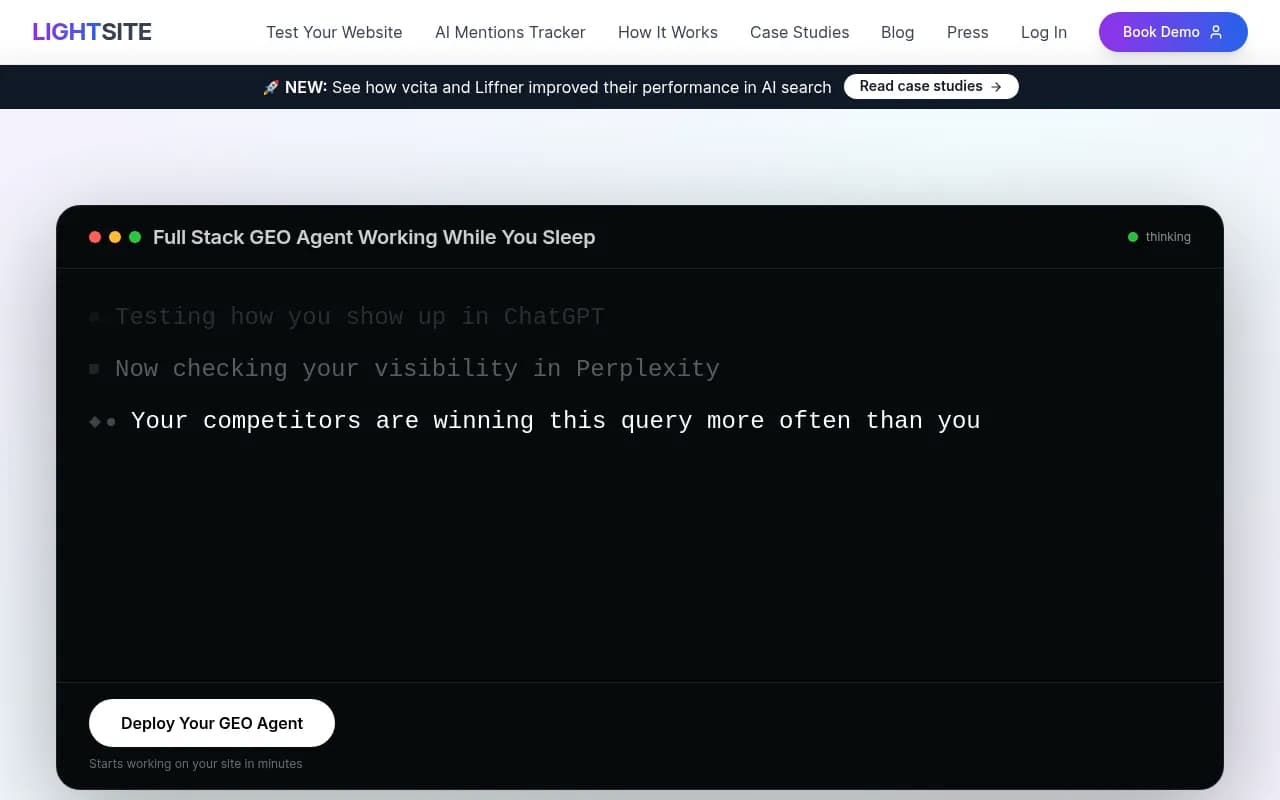
- LightSite AI builds a parallel machine-readable layer on the customer's domain, with JSON-LD, an AI sitemap, agent manifests and callable Skills.
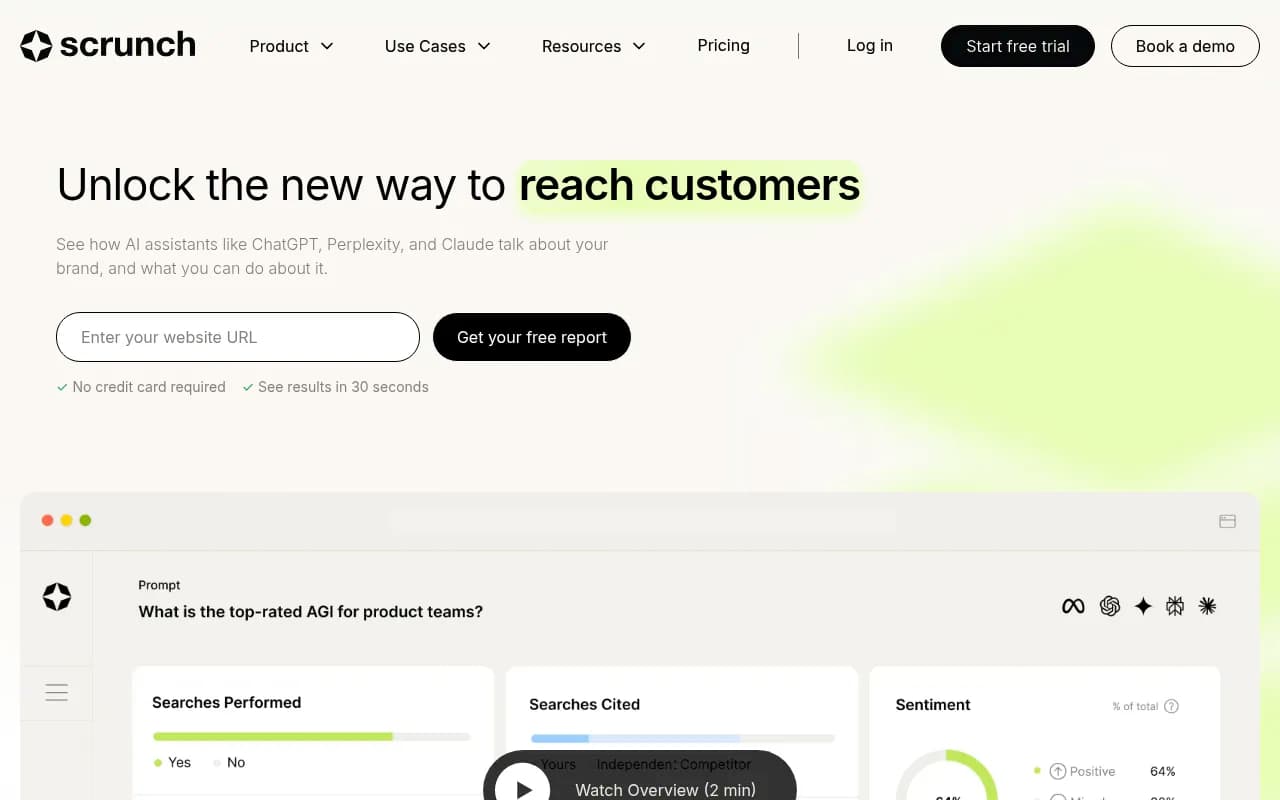
- Scrunch delivers AI-specific content at the CDN, plus agent traffic and AI referral measurement.
- Profound offers verified server and CDN AI traffic analytics with bot-purpose classification.
Profound

The LightSite implementation details are unusually specific, which I appreciate. Skills are generated per customer and gated by content coverage: faq.answer needs at least 3 FAQs, products.search at least 1 category, testimonials.list at least 2 testimonials, qa.search at least 5 structured prompts and pages.browse at least 5 mirrored pages. The published contract has a 65,536-byte max response, a 300-second cache TTL and content negotiation across ld+json, json and html. Its extraction quality score runs 0 to 1 across four equal factors: HTTP 200, a body of at least 1,500 bytes, a JSON content type and the presence of @type and @context.
That is a transparent scoring model, but it also shows how narrow the definition of quality is. A score of 1.0 means the response is well-formed, not that an AI will cite you.
The cloaking question
I did not find a statement from Google or OpenAI in my research on serving different content to AI bots, so I cannot tell you where the line sits. The conservative rule: the machine-readable layer should carry the same facts as the human-visible page. If the edge layer says something the page does not, you have built a cloaking risk and an inconsistency problem at once. Ask any vendor in this category how they guarantee parity.
Skip the markdown mirror
Some edge tools offer to auto-generate .md versions of every page. Promptwatch's Markdown in AI search data, based on 7 days of citations, found HTML pages took 99.94% of citations across ChatGPT, Claude, Perplexity and AI Overviews. Markdown files took 0.05%, and images 0.015%. That is roughly 2,000 to 1.
Where markdown does matter is coding agents. In the same sample, Claude's bot and OpenAI's bot were crawling docs .md files heavily, with the top docs paths at 3,241, 2,870 and 1,934 requests. So reserve .md endpoints for developer documentation, and put your effort into heading hierarchy, semantic markup and direct answers on the HTML.
Category 4: platforms that find, fix and verify
The pure fix tools above do not tell you whether the fix worked. The platforms that close the loop combine crawl data, citation data and action lists.
Promptwatch pairs IP-verified crawler logs and weekly site audits (21 checks) with an Action Board of prioritized to-dos and a Content Agent that publishes to WordPress, Webflow or Framer. Its value in this context is the verification: published pages are tracked through crawls, citations and AI traffic, and underperformers come back as actions.
Others worth knowing:
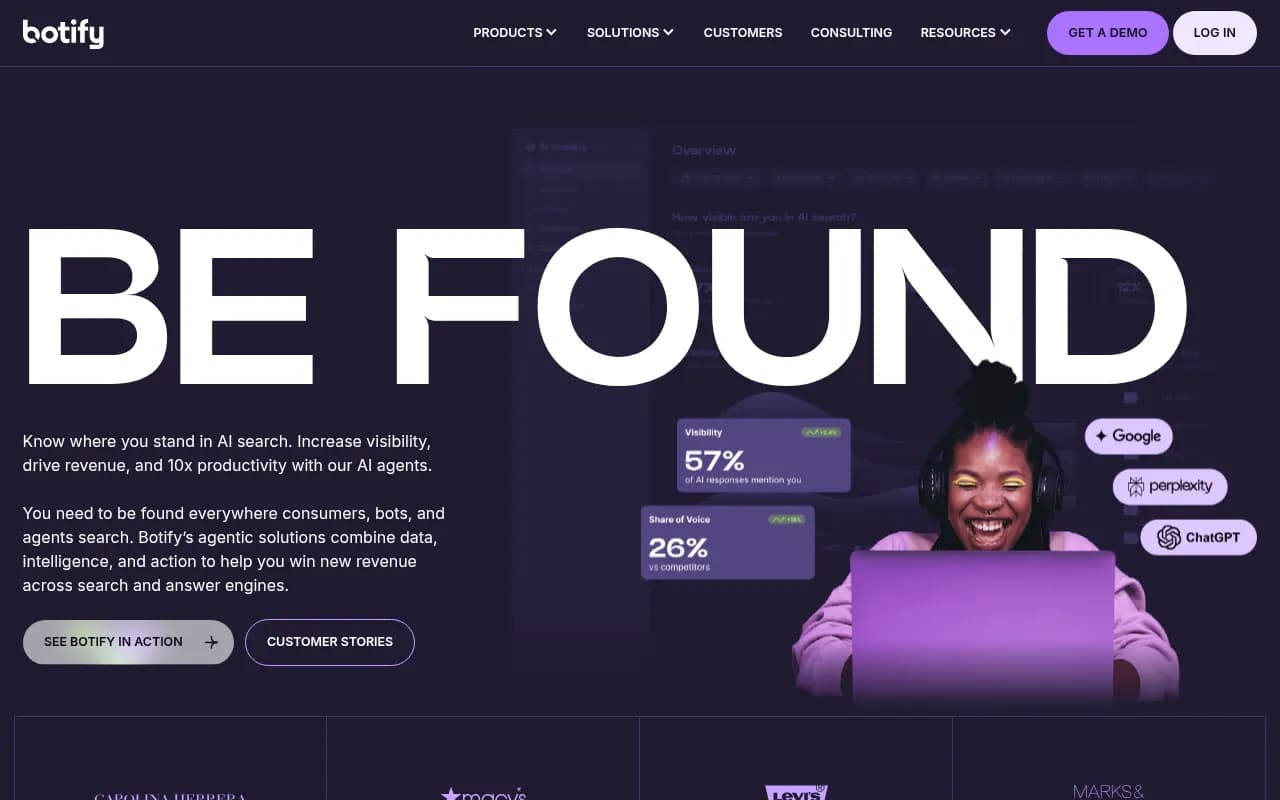
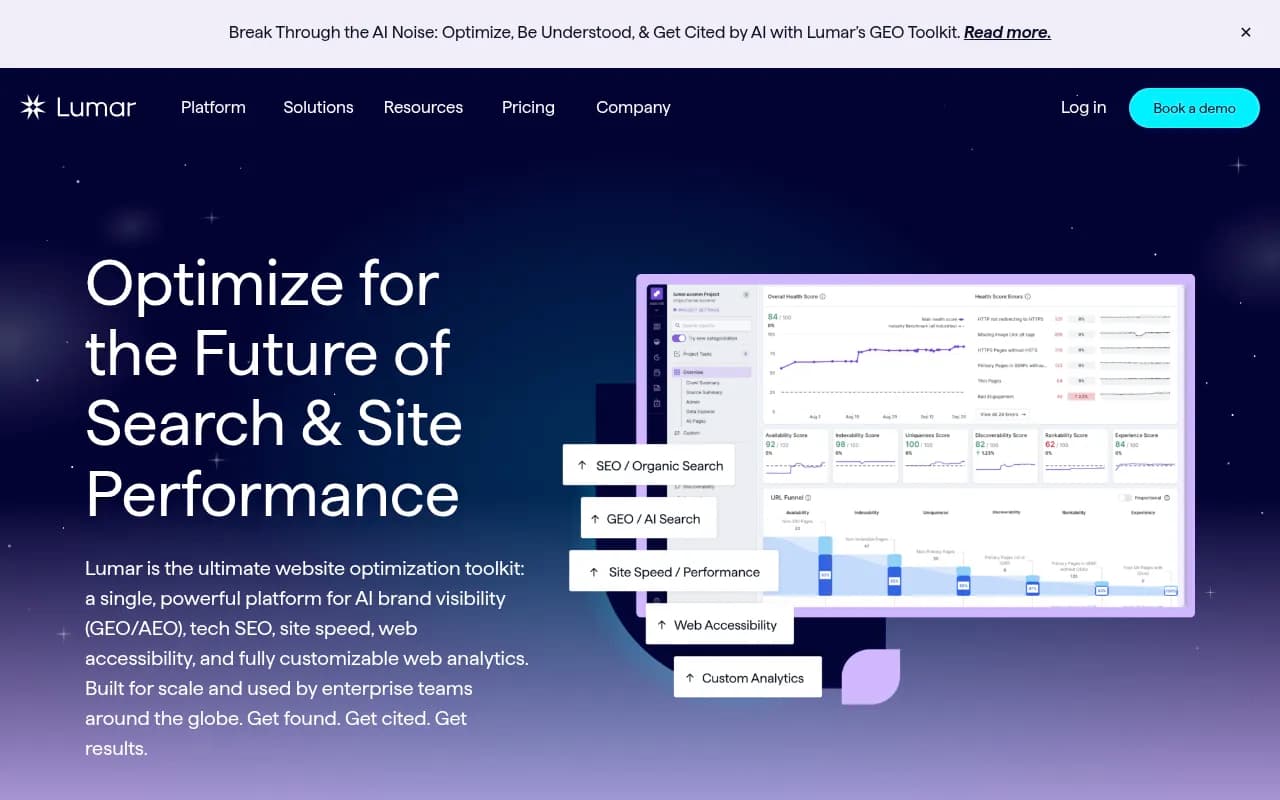
- Botify and Lumar are enterprise technical SEO platforms that now position around GEO and crawl optimization.
- Conductor adds schema audits and crawl optimization for technical GEO enablement, per the Wrodium roundup.
- Evertune and Goodie AI offer audits and bot analytics. Goodie is described in our catalog as monitoring-heavy.
- Relixir and Dageno AI pitch end-to-end or autonomous agent execution.
- Quattr positions as AI search presence optimization.




Comparison table
| Tool | Main fix type | Deploys changes? | Risk level | Best for |
|---|---|---|---|---|
| Promptwatch | Crawl diagnostics, audits, content publishing | Publishes content to CMS; audits flag technical fixes | Low | Teams that want fix plus verification |
| WordLift | Schema, knowledge graph | Yes, via graph and MCP | Low to medium | Entity-heavy sites |
| Writesonic GEO | Schema, FAQ, rewrites | Drafts; check publishing | Low | Content teams |
| Prerender.io / DataJelly | Rendering | Yes, at serve time | Medium | JavaScript apps |
| LightSite AI | Parallel machine-readable layer | Yes | Medium to high | Teams comfortable with edge layers |
| Scrunch | CDN content delivery | Yes | Medium to high | Enterprise with CDN control |
| Botify / Lumar | Technical crawl and audit | Mostly recommends | Low | Large sites |
| Search Atlas / MEGA SEO | On-page automation | Yes | Medium | Fast bulk changes |
I left pricing out because I did not find verified current prices for most of these, aside from Findrix's listed figures (Findrix from $49/mo, Writesonic GEO from $199/mo). Check each vendor's pricing page.
Run a 4-week pilot, not a big-bang rollout
Quattr's pilot structure is a sensible template. Adapted for technical fixes:
Week 1: baseline
Pull crawler logs, run a full technical audit and record current citations for a fixed set of prompts. Without a baseline you cannot tell whether anything worked.
Week 2: make the changes
Deploy schema fixes first (FAQ, product, organization, policy pages). Resolve robots.txt, WAF and rendering blocks. Change one category at a time so you know what caused what.
Week 3: validate
Test the markup in a validator, confirm bots get HTTP 200 and complete content, and check that structured data matches visible text. Spot-check a sample of any auto-generated changes by hand.
Week 4: measure and decide
Compare crawl frequency, citations and AI-referred traffic against the baseline. Keep what moved the numbers and roll back what did not. Note that content decays at different rates in ChatGPT. Promptwatch's content half-life data found landing pages and docs stayed cited longest while news lost half its pages within 36 days, so judge a fix by page type.
What I would actually do
For most sites: start with logs, fix access, deploy clean schema with a plugin or governed tool, add prerendering only if your pages are client-rendered, and hold off on edge layers until you have a reason. The edge category is interesting, but the evidence of real-world results is thin. I found none in my research, and I would rather say that than invent a case study.
If you want to browse more options, the GEO software directory at bestgeosoftware.com lists tools by category. And if you would rather hand the whole program to specialists, 1001 SEO Media runs technical SEO and GEO work for brands.
Questions to ask any vendor
- Does the tool deploy changes, or only recommend them?
- How do you guarantee the machine-readable layer matches the visible page?
- Can I roll back in one click?
- Do you publish developer docs, or only marketing pages?
- How do you prove a fix worked: crawler logs, citations, traffic, or just a score?
If the answers are vague, that is your answer.