Key Takeaways
- Citation-optimized tools analyze what AI models actually cite (real data from ChatGPT, Perplexity, Claude) and help you create content engineered to get referenced — not just ranked in Google
- Spam generators automate generic content production without understanding what makes AI engines trust and cite a source
- The best platforms combine gap analysis (what prompts you're invisible for), content generation grounded in citation data, and tracking to measure results
- Look for tools that monitor AI crawler behavior, analyze competitor citations, and provide prompt intelligence — not just keyword volume
- Promptwatch leads the category by closing the action loop: find gaps, generate optimized content, track citation improvements

The Problem: Most AI Content Tools Are Just Repackaged SEO Spam Generators
Here's what happened in 2025-2026: traditional SEO tools slapped "AI" on their product names and started selling the same keyword-stuffed content generation, just faster. As one Reddit user put it bluntly: "Most 'AI SEO' tools just automate content production, which is already the least valuable part of SEO and the easiest way to create junk."
The issue isn't that these tools use AI — it's that they optimize for the wrong outcome. They're built around Google's traditional ranking factors (keyword density, readability scores, word count) when the real game has shifted to citation optimization for AI search engines like ChatGPT, Perplexity, Claude, and Gemini.
When a user asks ChatGPT "What are the best project management tools for remote teams?", the model doesn't crawl your site in real-time. It references content it's already indexed, analyzed, and deemed authoritative. If your content isn't structured to be citation-worthy — specific, factual, well-sourced, and topically comprehensive — you're invisible, no matter how many articles you publish.
What Makes a Tool Citation-Optimized vs Spam-Focused?
Citation-Optimized Tools:
- Analyze real citation data: They track which pages, domains, and content types AI models actually cite across millions of prompts
- Identify content gaps: Show you exactly which prompts competitors rank for but you don't — and what content you're missing
- Generate content grounded in citation patterns: Use insights from 880M+ citations (in Promptwatch's case) to structure articles that AI models trust
- Monitor AI crawler behavior: Track when ChatGPT, Claude, and Perplexity bots visit your site, which pages they read, and errors they encounter
- Measure citation outcomes: Show you which pages get cited, how often, and by which models
Spam-Focused Tools:
- Automate generic content production: Churn out articles based on keyword lists without understanding what makes content citation-worthy
- Focus on volume over quality: Prioritize publishing speed and word count over factual accuracy and topical authority
- Ignore AI search engines entirely: Optimize only for Google's traditional SERP, missing the shift to AI-mediated search
- Lack citation tracking: No visibility into whether AI models actually reference your content
- No gap analysis: Can't tell you what you're missing or why competitors get cited instead of you
The Action Loop: How Citation-Optimized Platforms Work
The best platforms don't just monitor — they help you take action. Here's the cycle that actually improves AI visibility:
1. Find the Gaps
Answer Gap Analysis is the starting point. Tools like Promptwatch show you:
- Which prompts competitors are visible for but you're not
- The specific content angles and questions AI models want answers to
- Prompt volumes and difficulty scores to prioritize high-value, winnable queries
- Query fan-outs that reveal how one prompt branches into sub-queries
This isn't guesswork — it's based on analyzing what AI models actually cite across hundreds of millions of prompts.
2. Create Content That Gets Cited
Once you know the gaps, you need content engineered for citations. Citation-optimized tools generate:
- Articles grounded in real citation data: Not generic SEO filler, but content structured around what AI models trust
- Competitor-informed angles: See which pages competitors get cited for and create better, more comprehensive alternatives
- Persona-targeted content: Match how your actual customers prompt AI engines
- Factual, well-sourced material: AI models prioritize accuracy and verifiable information
Promptwatch's built-in AI writing agent, for example, uses 880M+ citations analyzed to generate content that's optimized for AI search from the start.
3. Track the Results
Page-level citation tracking shows you:
- Which pages AI models are citing
- How often they're cited and by which models (ChatGPT, Claude, Perplexity, etc.)
- Visibility score improvements over time
- Traffic attribution connecting citations to actual revenue
Most competitors (Otterly.AI, Peec.ai, AthenaHQ) stop at monitoring. They show you the data but leave you stuck. Citation-optimized platforms close the loop by helping you create content, then tracking whether it works.
Key Features That Separate Citation-Optimized Tools from Spam Generators
AI Crawler Logs
Real-time logs of AI crawlers (ChatGPT, Claude, Perplexity) hitting your website. You see:
- Which pages they read
- Errors they encounter
- How often they return
- Indexing issues that block citations
This is critical for understanding how AI engines discover your content. Most spam-focused tools lack this entirely.
Citation & Source Analysis
See exactly which pages, Reddit threads, YouTube videos, and domains AI models cite in their responses. Know where to publish and what to optimize.
For example, if AI models consistently cite Reddit discussions about your product category, you need a strategy for those channels — not just more blog posts.
Reddit & YouTube Insights
Surface discussions that directly influence AI recommendations. This is a channel most competitors ignore entirely, but it's increasingly important as AI models reference community-driven content.
ChatGPT Shopping Tracking
Monitor when your brand appears in ChatGPT's product recommendations and shopping carousels. This is especially valuable for e-commerce brands and SaaS products.
Prompt Intelligence
Volume estimates and difficulty scores for each prompt, plus query fan-outs. Prioritize high-value, winnable prompts instead of guessing.
Spam generators just give you keyword lists. Citation-optimized tools show you the full prompt landscape and how to navigate it.
Multi-Language & Multi-Region Support
Monitor AI responses in any language, from any country, with customizable personas that match how your actual customers prompt. This is essential for global brands.
Tools That Actually Optimize for Citations
Promptwatch: The Leader in Citation Optimization
Promptwatch is the only platform rated as a "Leader" across all categories in a 2026 comparison of 12 GEO platforms. The core difference: it's built around the action loop.
What makes it different:
- Answer Gap Analysis: See exactly which prompts competitors rank for but you don't
- AI Content Generation: Built-in writing agent that creates citation-worthy content grounded in 880M+ citations analyzed
- AI Crawler Logs: Real-time monitoring of ChatGPT, Claude, and Perplexity bots
- Citation Tracking: Page-level visibility into which content gets cited and by which models
- Traffic Attribution: Connect citations to actual revenue with code snippet, GSC integration, or server log analysis
- 10 AI Models Tracked: ChatGPT, Perplexity, Google AI Overviews, Claude, Gemini, Meta/Llama, DeepSeek, Grok, Mistral, Copilot
Pricing: Essential $99/mo (1 site, 50 prompts, 5 articles), Professional $249/mo (2 sites, 150 prompts, 15 articles, crawler logs), Business $579/mo (5 sites, 350 prompts, 30 articles)
Other Citation-Focused Tools
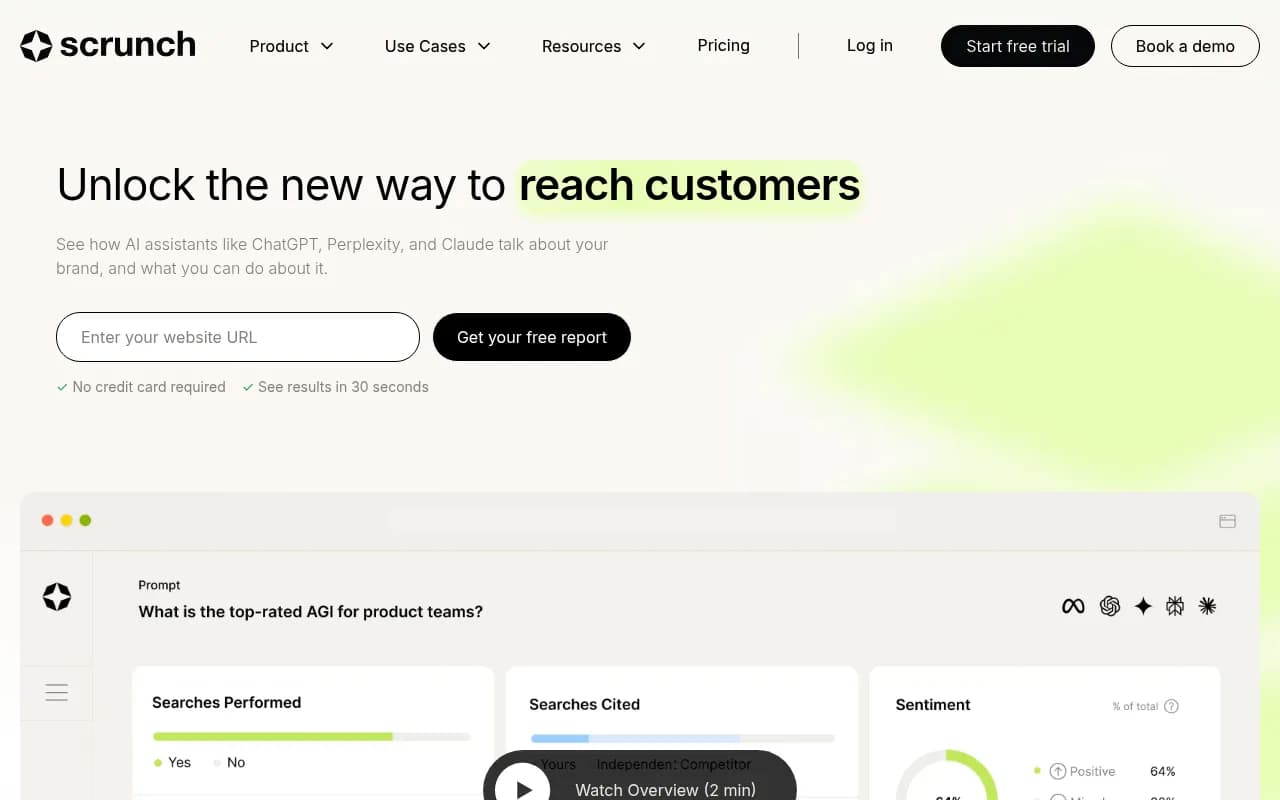
Profound and Scrunch offer strong feature sets but at higher price points, without Reddit tracking or ChatGPT Shopping monitoring.
Profound

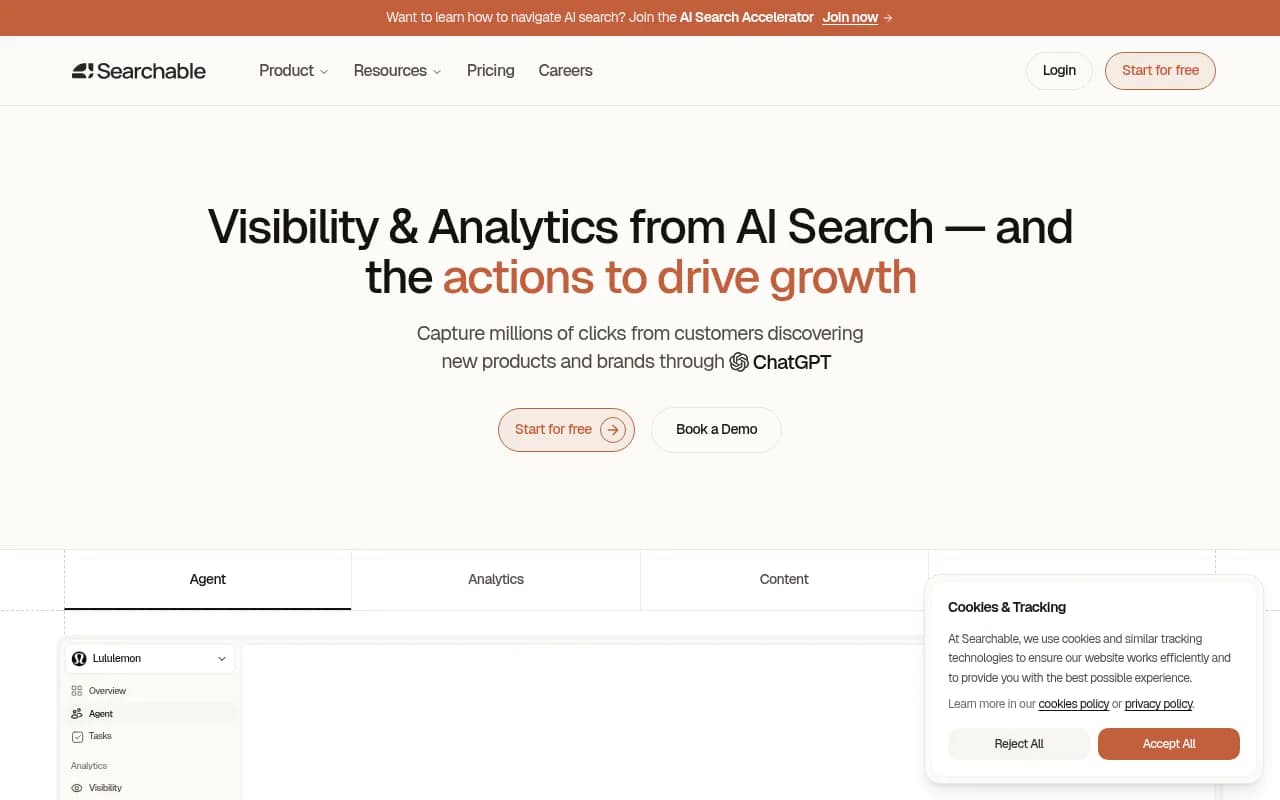
Searchable combines AI search visibility tracking with built-in content generation, though it lacks the depth of crawler logs and citation analysis that Promptwatch provides.
MarketMuse uses AI to analyze your content inventory and map out topic clusters that boost topical authority. It's strong for content strategy but doesn't focus specifically on AI search citations.
Tools That Generate Spam (What to Avoid)
Generic AI Writing Tools
Tools like Jasper, Copy.ai, and Rytr are built for speed and volume, not citation optimization. They generate content based on templates and keyword inputs without understanding what makes AI models trust and cite a source.
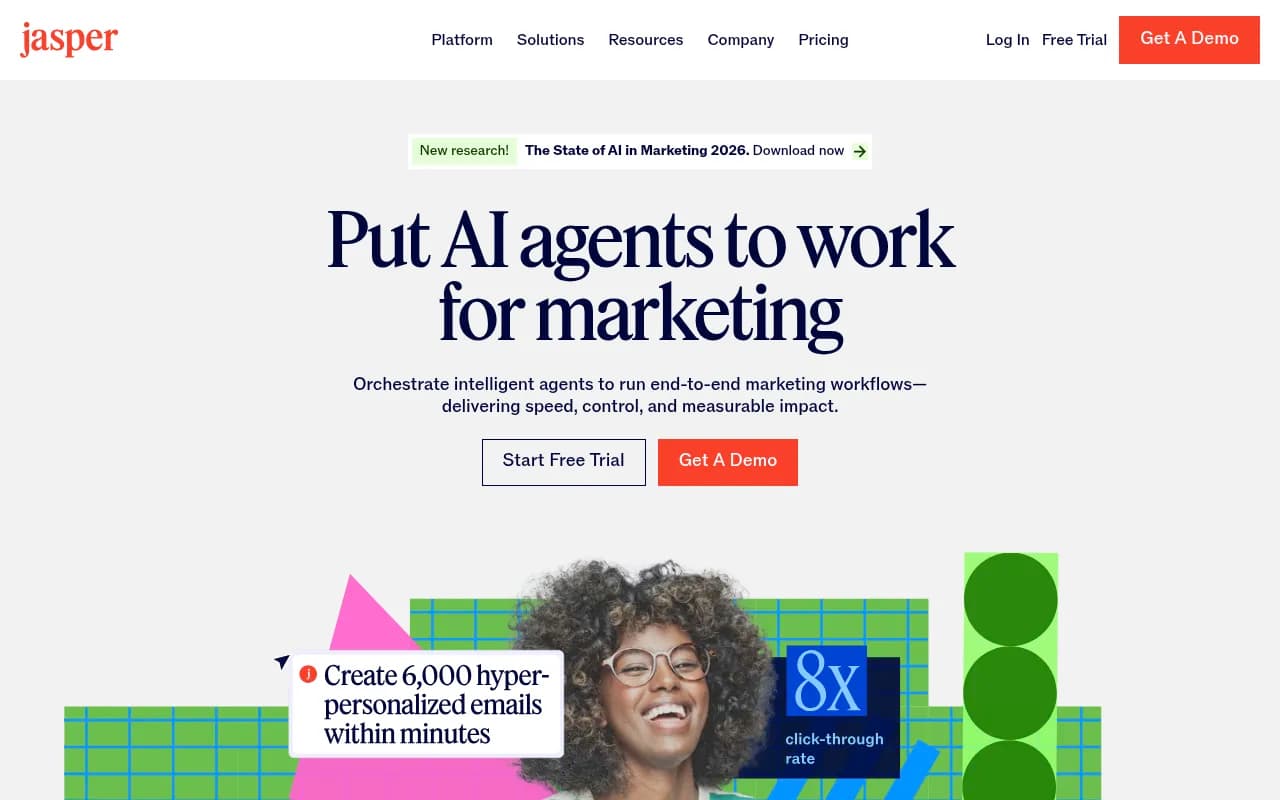

These tools have their place for social media captions or ad copy, but they're not designed to help you rank in AI search.
Traditional SEO Tools with "AI" Slapped On
Many traditional SEO platforms added "AI content generation" features in 2025-2026 without rethinking their approach. They still optimize for Google's traditional SERP, not for citations in ChatGPT or Perplexity.
Semrush and Ahrefs are powerful for traditional SEO but their AI search capabilities are limited. Semrush uses fixed prompts, and Ahrefs Brand Radar has fixed prompts with no AI traffic attribution.
Monitoring-Only Dashboards
Tools like Otterly.AI, Peec.ai, and AthenaHQ show you where you're invisible but don't help you fix it. They lack:
- Content gap analysis
- AI content generation
- Crawler logs
- Visitor analytics
Otterly.AI



You see the problem but you're stuck without a solution.
How to Evaluate AI Content Tools in 2026
When evaluating tools, ask these questions:
1. Does it analyze real citation data?
Look for platforms that track what AI models actually cite across millions of prompts, not just keyword volume estimates.
2. Can it identify content gaps?
The tool should show you exactly which prompts competitors rank for but you don't, and what content you're missing.
3. Does it generate citation-optimized content?
Content generation should be grounded in citation patterns, competitor analysis, and prompt intelligence — not just keyword stuffing.
4. Does it monitor AI crawler behavior?
You need visibility into when ChatGPT, Claude, and Perplexity bots visit your site, which pages they read, and errors they encounter.
5. Can it track citation outcomes?
Page-level tracking should show which content gets cited, how often, and by which models. Bonus if it connects citations to traffic and revenue.
6. Does it support multiple AI models?
At minimum, track ChatGPT, Perplexity, Claude, and Google AI Overviews. Ideally, also Gemini, Meta/Llama, DeepSeek, Grok, and Mistral.
7. Does it offer Reddit and YouTube insights?
AI models increasingly reference community discussions. You need visibility into these channels.
8. Can you customize personas and regions?
Monitor AI responses in any language, from any country, with personas that match your actual customers.
The Cost of Using Spam Generators
Publishing generic AI-generated content has real costs:
- Wasted resources: You're paying for content that doesn't get cited or drive traffic
- Brand damage: Low-quality content erodes trust with both users and AI models
- Opportunity cost: Every generic article you publish is a missed opportunity to create something citation-worthy
- Competitive disadvantage: While you're churning out spam, competitors using citation-optimized tools are gaining AI visibility
The Future: Citation Optimization Becomes Table Stakes
By late 2026, AI-mediated search is no longer emerging — it's mainstream. Users ask ChatGPT, Perplexity, and Claude for recommendations before they ever open Google. Brands that aren't visible in AI search are invisible to a growing segment of their audience.
Citation optimization will become as fundamental as traditional SEO. The tools that win will be the ones that close the action loop: find gaps, generate optimized content, track results. Monitoring-only dashboards and spam generators will fade as marketers demand platforms that actually move the needle.
Conclusion: Choose Tools That Help You Take Action
The AI content landscape has split into two camps: tools that help you earn citations in ChatGPT, Perplexity, and Claude, and tools that just pump out generic filler.
Citation-optimized platforms like Promptwatch analyze real citation data, identify content gaps, generate optimized content, and track results. They close the action loop instead of leaving you stuck with monitoring-only dashboards.
Spam generators automate content production without understanding what makes AI models trust and cite a source. They optimize for volume, not citations.
When evaluating tools in 2026, look for:
- Real citation data analysis
- Content gap identification
- AI content generation grounded in citation patterns
- AI crawler logs
- Page-level citation tracking
- Multi-model support (ChatGPT, Perplexity, Claude, etc.)
- Reddit and YouTube insights
- Traffic attribution connecting citations to revenue
The brands that win in AI search will be the ones that invest in citation optimization, not content spam. Choose your tools accordingly.