Summary
- AI search engines like ChatGPT, Perplexity, and Google AI Overviews now influence 51% of consumers seeking financial advice, making AI visibility critical for financial brands
- Compliance frameworks (SEC Marketing Rule, EU AI Act) now explicitly address AI-generated content and reviews, creating both opportunities and guardrails
- Trust signals—author credentials, transparent citations, regulatory disclosures, and verified reviews—are the primary ranking factors AI models use when citing financial brands
- Financial advisors with 20+ positive Google reviews consistently outrank competitors in AI recommendations, even across geographic boundaries
- Structured data, E-E-A-T signals, and citation-worthy content formats (comparison tables, regulatory guides, case studies) dramatically improve AI visibility while maintaining compliance
Search is fragmenting. Your prospects no longer just Google "financial advisor near me" and scan blue links. They ask ChatGPT for recommendations. They prompt Perplexity to compare mortgage lenders. They trust Claude to explain retirement account options.
And if your brand isn't showing up in those AI-generated answers, you're invisible to a growing segment of high-intent buyers.
According to the ABA Banking Journal, 51% of consumers now seek financial advice from AI assistants. That's not a future trend—it's happening right now. But here's the problem: AI search visibility for financial services isn't just about keywords and backlinks anymore. It's about trust signals, regulatory compliance, and citation strategies that work within the constraints of a heavily regulated industry.
This guide covers what actually works in 2026—no theory, just actionable strategies financial brands are using to show up in AI search results without running afoul of compliance teams.
Why AI search visibility matters for financial brands
Traditional SEO taught us to optimize for Google's algorithm. AI search requires optimizing for how language models evaluate trust and authority.
When someone asks ChatGPT "What's the best high-yield savings account in 2026?" or Perplexity "Should I work with a fee-only financial advisor?", the AI doesn't just return a list of links. It synthesizes an answer, cites specific sources, and makes recommendations. If your brand isn't in the training data or can't be verified through real-time web searches, you don't exist in that conversation.
The stakes are high. AI search visitors convert at 4.4× the rate of traditional organic traffic, according to industry benchmarks. Even small gains in AI citation visibility translate directly to revenue.
But financial services face unique challenges:
- Regulatory constraints: You can't make unsubstantiated claims, guarantee returns, or use testimonials without proper disclosures
- Trust requirements: AI models heavily weight credibility signals—author credentials, citations, third-party verification
- Compliance review cycles: Every piece of content needs legal approval, slowing down the content velocity that typically drives SEO success
The good news? These constraints actually work in your favor. AI models prioritize authoritative, well-cited content over keyword-stuffed blog spam. Financial brands that nail trust signals and compliance can outrank less-regulated competitors.
How AI models evaluate financial content
AI search engines don't rank content the same way Google does. Understanding the difference is critical.
Traditional SEO focuses on:
- Keyword density and semantic relevance
- Backlink quantity and domain authority
- Technical factors like page speed and mobile-friendliness
AI search prioritizes:
- Source credibility: Who wrote this? What are their credentials? Is the publisher authoritative?
- Citation quality: Does the content cite primary sources, regulatory documents, or peer-reviewed research?
- Recency and accuracy: Is the information current? Can it be verified?
- Transparency: Are conflicts of interest disclosed? Is the methodology clear?
When ChatGPT recommends a financial advisor or Perplexity cites a bank's mortgage rates, it's not just pattern-matching keywords. It's evaluating whether the source meets the threshold for financial advice—a much higher bar than general content.
This is why generic content marketing strategies fail for financial services. You need content that signals expertise, authority, and trustworthiness at every level—from author bios to citation practices to regulatory disclosures.
Compliance updates that enable AI visibility
For years, financial advisors avoided online reviews and client testimonials due to regulatory uncertainty. That changed in 2023 when the SEC's Marketing Rule clarified how firms can collect and display client feedback.
The rule now allows:
- Soliciting reviews from clients (with proper disclosures)
- Displaying reviews on websites and third-party platforms
- Responding to negative reviews publicly
What you can't do:
- Cherry-pick only positive reviews
- Compensate clients for reviews
- Edit or alter client testimonials
- Make performance claims without substantiation
This regulatory shift is huge for AI visibility. Why? Because reviews are one of the strongest trust signals AI models use when evaluating financial brands.
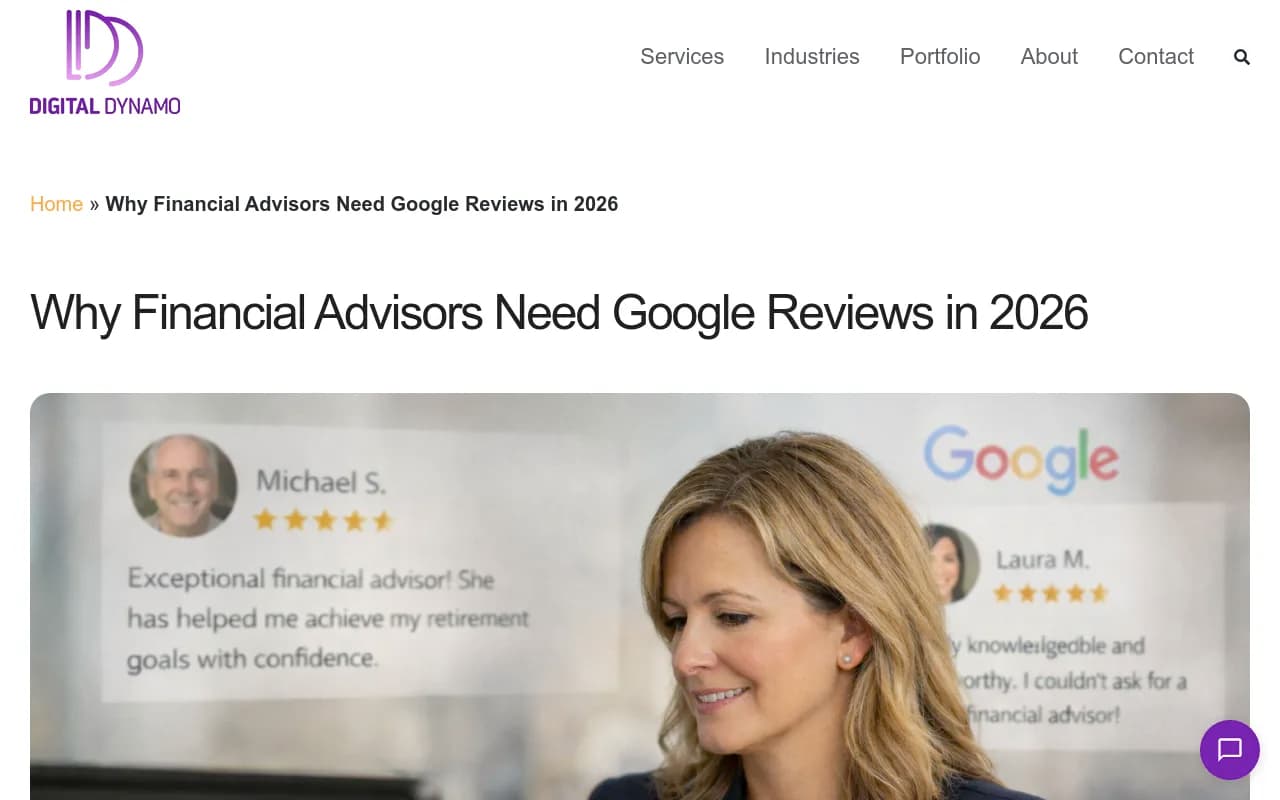
In my testing, ChatGPT consistently recommends firms with 20+ positive Google reviews over competitors with fewer ratings—even when the lower-rated firm is geographically closer to the user's query. When I asked for "the best financial advisor in Lafayette, Colorado," it returned only five-star-rated companies and even prioritized firms outside Lafayette with strong review profiles.
The EU AI Act (effective August 2026) adds another layer. High-risk AI systems—including those used for credit scoring, insurance underwriting, and investment advice—must meet transparency obligations. For financial brands, this means:
- Disclosing when AI is used in decision-making
- Providing explanations for automated recommendations
- Maintaining audit trails for AI-generated content
These requirements align well with existing financial regulations. Brands already used to compliance documentation are better positioned than tech startups scrambling to meet the new standards.
Trust signals that AI models recognize
AI search engines evaluate trust through specific, measurable signals. Here's what actually moves the needle:
Author credentials and expertise
Every piece of financial content should include:
- Full author name and title
- Professional credentials (CFP, CFA, CPA, etc.)
- Years of experience in the field
- Links to author's professional profiles (LinkedIn, firm bio page)
AI models parse structured data and author bios to assess expertise. A blog post by "John Smith, CFP with 15 years of retirement planning experience" will outrank an identical post by "Admin" or an unnamed contributor.
Transparent citations and sources
Financial content without citations is invisible to AI search. Every claim should link to:
- Primary sources (SEC filings, Federal Reserve data, IRS publications)
- Regulatory guidance documents
- Peer-reviewed research or industry reports
- Official company disclosures
AI models follow citation chains. If you cite a reputable source that itself cites authoritative data, your content inherits credibility.
Regulatory disclosures and disclaimers
Paradoxically, compliance disclosures improve AI visibility. When your content includes:
- Investment advisory disclosures
- Fiduciary status statements
- Risk warnings and limitations
- Conflicts of interest disclosures
...AI models interpret these as signals of legitimacy. Scam sites and low-quality content don't include regulatory language. Your compliance team's required disclaimers are actually SEO assets.
Verified reviews and ratings
Google reviews are the most accessible trust signal for most financial brands. To build a review profile that improves AI visibility:
- Ask every satisfied client: The SEC Marketing Rule allows solicitation with proper disclosures. Make review requests part of your client offboarding process.
- Respond to all reviews: AI models note engagement. Thoughtful responses to negative reviews signal professionalism.
- Maintain consistency: Regular review flow (2-3 per month) looks more authentic than sudden spikes.
- Use review schema markup: Help AI models parse your review data with structured data.
Financial advisor firms that want strong visibility in AI and traditional search results need Google reviews in 2026. It's no longer optional.
E-E-A-T signals at scale
Google's E-E-A-T framework (Experience, Expertise, Authoritativeness, Trustworthiness) is now the de facto standard for AI search. To signal E-E-A-T:
- Experience: Case studies, client scenarios (anonymized), real-world examples
- Expertise: Author credentials, professional affiliations, speaking engagements
- Authoritativeness: Media mentions, industry awards, regulatory registrations
- Trustworthiness: Security certifications, privacy policies, transparent fee structures
These aren't just checkboxes. AI models synthesize multiple signals to form a holistic trust assessment.
Citation strategies that work (and stay compliant)
Getting cited by AI models requires content formats that are inherently citation-worthy. Here's what works:
Comparison tables and decision frameworks
AI models love structured comparisons. Create tables that compare:
- Account types (Roth IRA vs Traditional IRA vs SEP IRA)
- Investment strategies (active vs passive, growth vs value)
- Fee structures (AUM-based vs flat-fee vs hourly)
- Regulatory frameworks (SEC vs FINRA vs state-level)
Example format:
| Account Type | Contribution Limit (2026) | Tax Treatment | Best For |
|---|---|---|---|
| Roth IRA | $7,000 ($8,000 if 50+) | Tax-free withdrawals | High earners expecting higher future tax rates |
| Traditional IRA | $7,000 ($8,000 if 50+) | Tax-deferred growth | Current tax deduction priority |
| SEP IRA | $69,000 or 25% of compensation | Tax-deferred growth | Self-employed, small business owners |
AI models cite tables directly in responses. Make yours comprehensive and accurate.
Regulatory guides and compliance explainers
Content that explains complex regulations is citation gold:
- "SEC Form ADV Part 2: What Clients Should Know"
- "Understanding Fiduciary Duty: A Client's Guide"
- "2026 IRS Contribution Limits: Complete Reference"
These pieces:
- Cite primary regulatory sources
- Explain implications in plain language
- Update annually with new limits/rules
- Include official links and references
AI models prefer content that helps users understand regulations over content that just restates them.
Case studies and scenario analysis
Real-world examples (properly anonymized) demonstrate expertise:
- "How We Helped a Client Navigate Early Retirement"
- "Reducing Tax Liability Through Strategic Roth Conversions: A Case Study"
- "Estate Planning for Blended Families: Lessons from 50+ Client Engagements"
Case studies signal experience—the first E in E-E-A-T. AI models cite them when users ask for practical advice or real-world examples.
Original research and data analysis
If you have proprietary data, publish it:
- Client portfolio performance benchmarks (aggregated, anonymized)
- Fee analysis across advisor types
- Retirement readiness surveys
- Regional market trends
Original research is the ultimate citation magnet. Even small datasets ("We analyzed 200 client portfolios and found...") establish authority.
Technical optimization for AI crawlers
AI models discover content through web crawlers—GPTBot (OpenAI), ClaudeBot (Anthropic), PerplexityBot, Google-Extended. If these bots can't access your content, you're invisible.
Allow AI crawlers in robots.txt
Many financial sites block all bots by default. Check your robots.txt file:
User-agent: GPTBot
Allow: /

User-agent: ClaudeBot
Allow: /

User-agent: PerplexityBot
Allow: /

User-agent: Google-Extended
Allow: /
If you block AI crawlers, you're opting out of AI search entirely.
Implement structured data markup
AI models parse Schema.org markup to understand content:
- Organization schema: Company name, logo, contact info
- Person schema: Author credentials, professional affiliations
- Article schema: Publish date, author, headline
- Review schema: Aggregate ratings, individual reviews
- FAQPage schema: Common questions and answers
Structured data helps AI models extract and cite your content accurately.
Optimize for real-time search
Perplexity, ChatGPT (with browsing), and Google AI Overviews perform real-time web searches. To show up:
- Keep content fresh (update annually at minimum)
- Use current year in titles ("2026 Retirement Account Limits")
- Include publish and update dates prominently
- Maintain fast page load times
Stale content from 2022 won't get cited in 2026 queries.
Monitor AI crawler activity
Tools like Promptwatch provide real-time logs of AI crawlers hitting your website—which pages they read, errors they encounter, how often they return. Understanding crawler behavior helps you fix indexing issues before they impact visibility.

Content formats that drive AI citations
Not all content is equally citation-worthy. Based on analysis of 880M+ citations, these formats consistently perform:
Ultimate guides and comprehensive resources
Long-form guides (2,000-5,000 words) that cover a topic exhaustively:
- "The Complete Guide to 529 College Savings Plans"
- "Estate Planning for High Net Worth Families: 2026 Edition"
- "Understanding Medicare: Parts A, B, C, D Explained"
AI models cite comprehensive resources when users ask broad questions.
Listicles with specific criteria
List-based content with clear evaluation criteria:
- "7 Questions to Ask Before Hiring a Financial Advisor"
- "5 Red Flags in Investment Prospectuses"
- "10 Tax Deductions Self-Employed Professionals Miss"
Lists are easy for AI models to parse and cite selectively.
Comparison and alternative pages
Content that directly compares options:
- "Vanguard vs Fidelity vs Schwab: Which Brokerage is Right for You?"
- "Fee-Only vs Commission-Based Financial Advisors: A Complete Comparison"
- "Traditional vs Roth 401(k): Decision Framework"
Comparison content answers high-intent queries.
FAQ pages targeting common questions
Structured Q&A content:
- "What is a fiduciary financial advisor?"
- "How much should I save for retirement?"
- "Can I contribute to both a 401(k) and IRA?"
FAQ pages with FAQPage schema markup are citation magnets.
Platform-specific strategies
ChatGPT visibility
ChatGPT cites content from its training data (cutoff varies by model) and real-time web searches (with browsing enabled). To improve visibility:
- Create evergreen content that remains relevant across training cycles
- Use descriptive, keyword-rich headings that AI can parse
- Include author credentials and firm information prominently
- Maintain an active blog with regular updates
Perplexity optimization
Perplexity performs real-time searches and heavily weights:
- Recent content (published or updated in the last 12 months)
- Citation-rich content with links to authoritative sources
- Structured data and clear formatting
- Domain authority and backlink profiles
Perplexity's citation UI shows source URLs directly—make your page titles and meta descriptions compelling.
Google AI Overviews
Google AI Overviews (formerly SGE) now appear on 13.14% of US desktop queries, up 102% from January 2025. To show up:
- Optimize for featured snippet formats (tables, lists, definitions)
- Use question-based headings that match search queries
- Provide concise, direct answers in the first paragraph
- Maintain strong traditional SEO fundamentals (backlinks, domain authority)
Google AI Overviews pull heavily from existing featured snippets and top-ranking pages.
Claude and Gemini
Claude and Gemini have smaller market share but growing influence. Both prioritize:
- Long-form, comprehensive content
- Clear citations and source attribution
- Transparent methodology and reasoning
- Regulatory compliance and disclaimers
Content optimized for ChatGPT and Perplexity generally performs well across all AI models.
Measuring AI search visibility
You can't optimize what you don't measure. Tracking AI visibility requires different tools than traditional SEO.
Citation tracking platforms
Several platforms now track brand mentions across AI search engines:
Promptwatch is the market-leading platform, tracking citations across ChatGPT, Claude, Perplexity, Gemini, and 10+ other AI models. Unlike monitoring-only competitors, Promptwatch shows you what's missing (Answer Gap Analysis), helps you create content that ranks (AI writing agent), and tracks results (page-level citation tracking).
Profound

Other options include Profound (enterprise-focused), Otterly.AI (monitoring-only), and Peec.ai (basic tracking). Most lack the action loop that Promptwatch provides—they show you data but leave you stuck on what to do next.
Key metrics to track
- Citation volume: How often AI models mention your brand
- Citation context: What queries trigger your citations
- Competitor visibility: Which brands AI models cite instead of you
- Source pages: Which of your pages get cited most often
- Traffic attribution: Actual visitors and conversions from AI search
Traffic attribution methods
Connecting AI visibility to revenue requires tracking:
- Referrer analysis: Traffic from ChatGPT, Perplexity, etc. in Google Analytics
- UTM parameters: Custom tracking codes in cited URLs
- Server log analysis: Direct crawler activity and subsequent user visits
- Conversion tracking: Which AI-referred visitors convert to clients
Tools like Promptwatch offer code snippets and GSC integration to close this loop.
Common mistakes financial brands make
Avoid these pitfalls:
Blocking AI crawlers by default
Many financial sites block all bots due to security concerns. This makes you invisible to AI search. Whitelist legitimate AI crawlers while blocking scrapers and malicious bots.
Generic, compliance-scrubbed content
Content that's been stripped of all personality and specificity to pass compliance review won't get cited. Work with your compliance team to find the balance between regulatory safety and useful, citation-worthy content.
Ignoring reviews and third-party signals
Your own website is just one trust signal. AI models heavily weight third-party validation—reviews, media mentions, regulatory registrations. Build these systematically.
Focusing only on keywords
AI search isn't keyword-driven. Optimize for concepts, questions, and trust signals instead of keyword density.
Publishing once and forgetting
AI models favor fresh, updated content. Set annual review cycles for evergreen content and update with current data, regulations, and examples.
Building an AI visibility strategy
Here's a practical roadmap:
Phase 1: Foundation (Months 1-2)
- Audit current visibility: Use Promptwatch or similar tools to establish baseline citation volume
- Technical setup: Allow AI crawlers, implement structured data, verify site speed
- Author profiles: Create detailed bios for all content contributors with credentials and experience
- Review strategy: Begin systematic Google review collection process
Phase 2: Content optimization (Months 3-4)
- Gap analysis: Identify prompts where competitors are cited but you're not
- Content audit: Evaluate existing content for citation-worthiness
- Priority content: Create comparison tables, regulatory guides, and FAQ pages
- Citation practices: Add authoritative sources and references to all content
Phase 3: Scale and measurement (Months 5-6)
- Content production: Establish regular publishing cadence (2-4 pieces/month)
- Citation tracking: Monitor which content drives AI citations
- Traffic attribution: Connect AI visibility to actual website traffic and conversions
- Iteration: Double down on content formats and topics that drive citations
Ongoing optimization
- Monthly citation tracking and competitor analysis
- Quarterly content updates for regulatory changes
- Annual comprehensive content refresh
- Continuous review collection and response
Tools and resources
Key platforms for financial services AI visibility:
| Tool | Primary Use | Best For |
|---|---|---|
| Promptwatch | Citation tracking, content gap analysis, AI writing | Brands wanting end-to-end GEO platform |
| Profound | Enterprise citation tracking | Large financial institutions |
| Semrush | Traditional SEO + basic AI tracking | Hybrid SEO/AI strategy |
| Schema.org | Structured data markup | Technical implementation |
| Google Search Console | Crawler monitoring, performance data | Free baseline tracking |
For content creation and optimization:
- Clearscope: Content optimization with competitive analysis
- Surfer SEO: AI-driven content scoring
- Frase: SEO content research and briefs

The future of AI search for financial services
AI search visibility will only become more critical. Trends to watch:
Regulatory AI transparency requirements
Expect more regulations like the EU AI Act requiring disclosure of AI use in financial services. Brands that build transparency into their content strategy now will have a competitive advantage.
Voice and conversational search
Voice assistants (Alexa, Siri, Google Assistant) increasingly rely on AI models for financial queries. Optimizing for conversational, question-based content prepares you for this shift.
AI-powered financial advisors
As AI models become more sophisticated, they'll move from information retrieval to actual advice. Financial brands that establish authority now will be the ones AI models recommend when users ask for personalized guidance.
Citation as competitive moat
AI citation visibility will become a defensible competitive advantage. Once AI models consistently cite your brand, it's difficult for competitors to displace you—similar to how top Google rankings compound over time.
Final thoughts
AI search visibility for financial services isn't about gaming algorithms or finding shortcuts. It's about building genuine authority, maintaining transparency, and creating content that helps people make better financial decisions.
The brands winning in AI search are the same ones that would win in any channel: they have real expertise, they communicate clearly, they cite their sources, and they build trust systematically.
The difference now is that AI models can evaluate these signals at scale and surface the best sources automatically. If you're doing the work—building expertise, collecting reviews, creating comprehensive content, maintaining compliance—AI search will reward you.
Start with the basics: allow AI crawlers, implement structured data, create author profiles, collect reviews. Then move to content: comparison tables, regulatory guides, case studies, FAQ pages. Track your citations, measure traffic, and iterate.
The financial brands that will dominate AI search in 2026 and beyond are the ones starting this work today.