
Key takeaways
- AI visibility vendors sell five different units: prompts, responses, credits, checks and domains. Headline prices only compare once you convert them to cost per response.
- On published third-party figures, cost per response runs from about $0.008 to $0.08. Credit plans where 1 credit equals 1 response can cost several times more than per-prompt plans.
- Extra engines, extra countries, extra seats and extra users are where bills grow. Check what each one consumes before you buy.
- A "response" is not a fixed unit of work. Promptwatch Data shows engines differ a lot in how many searches and sources sit behind one answer.
- Pricing figures below come from third-party comparisons and conflict in places. Confirm every number on the vendor's pricing page before budgeting.
Why AI visibility pricing is hard to compare
Open five pricing pages and you get five vocabularies. One vendor sells prompts. Another sells credits. A third sells "checks", and a fourth wants you on a sales call before it shows a number. Some include every engine in the base price, others charge per engine, and the seat rules vary just as much.
This guide is for budget owners, not feature shoppers. It sorts the pricing models, converts them to a common unit, and gives a realistic bill for a solo marketer, an in-house team and an agency. I also try to be honest about the shaky parts. Most of the competitor numbers here come from secondary sources that disagree with each other, and I flag where.
For wider tool discovery, the GEO software directory at bestgeosoftware.com and the rank tracker list at ai-rank-tools.com are good places to browse alternatives.
The five pricing models
A Peak Answer breakdown of 28 tools groups the market into per seat, per brand or domain, per prompt, credits, and per request. In practice, four of these matter for most buyers.
Per prompt
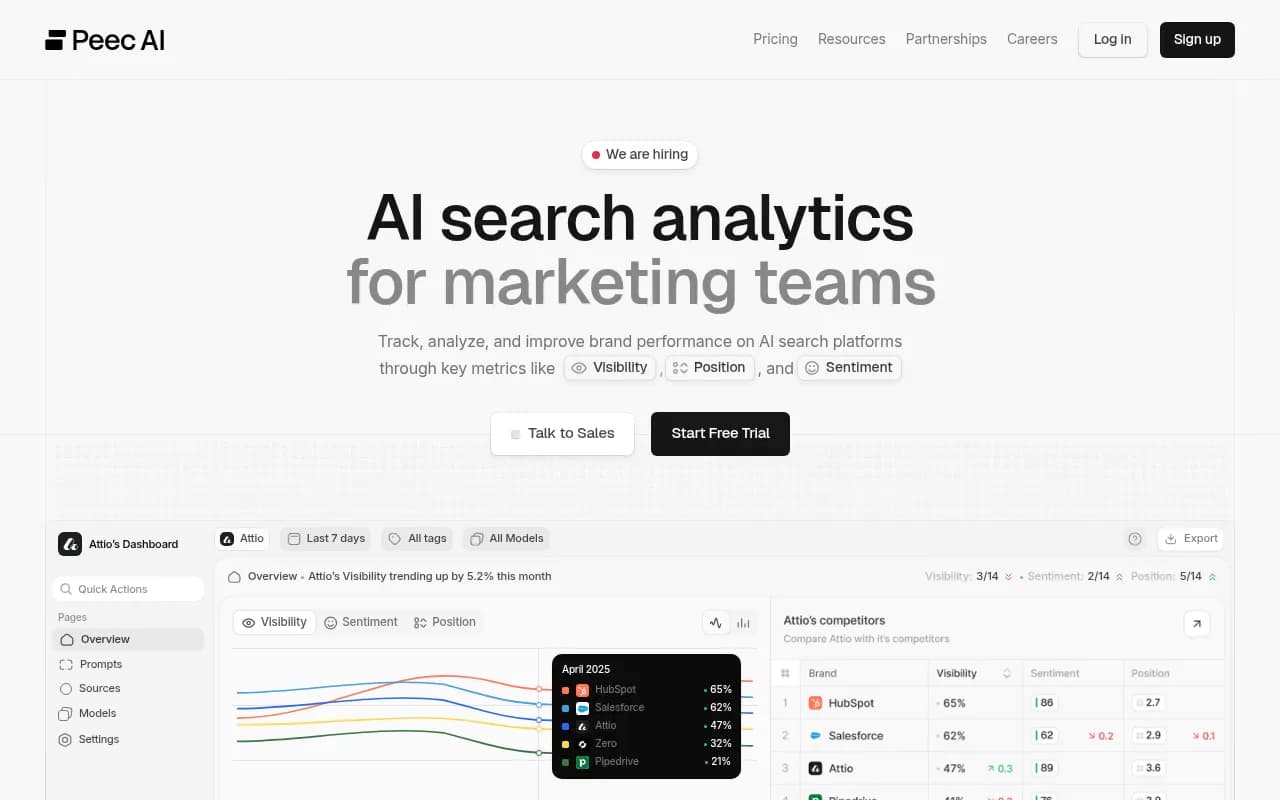
You pay for a set number of tracked questions, usually run daily. This is the most common model and the easiest to reason about. Peec AI Starter is listed at 50 prompts for $95 a month, and Otterly Standard at 100 prompts for $189.
The catch is what the prompt count does not include. Peec AI includes three models and charges extra for more. Otterly now reportedly prices extra engines and prompts as credits, with Claude costing 3 credits against 1 for other engines. That last detail is unverified, so check Otterly's page.
Per response
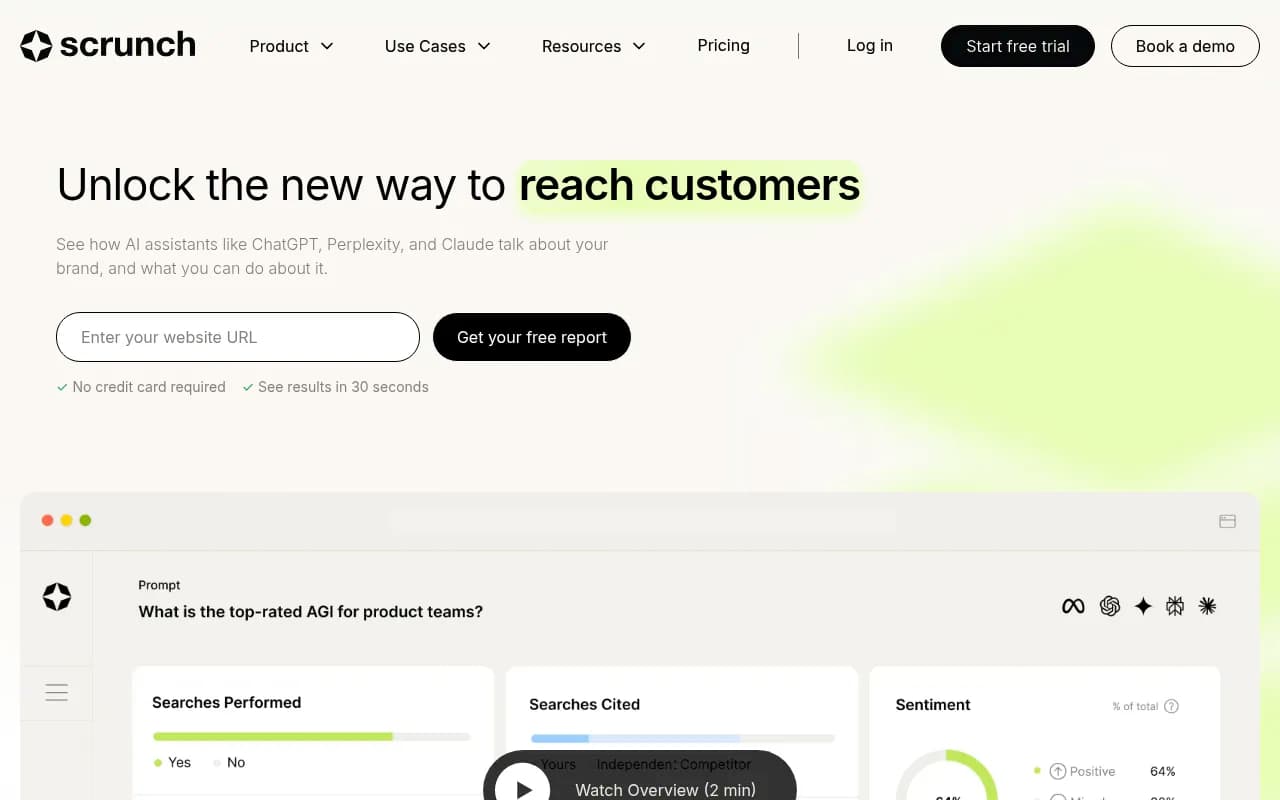
Here you buy answers, not questions. Scrunch Core is listed at $250 a month for 5,000 responses in one source, while another lists 15,000 responses across 8 platforms. These conflict, which is a good reason to read the plan page itself.
Credits
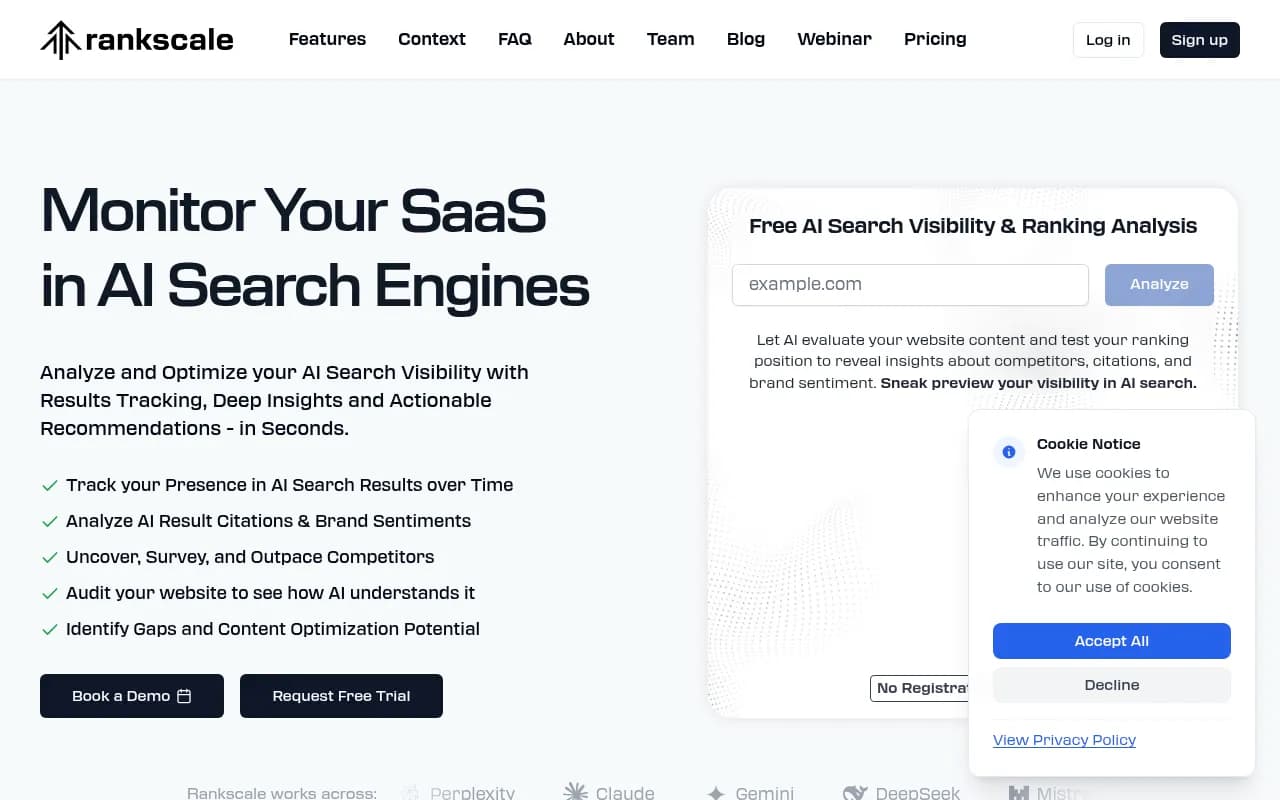
AthenaHQ sells credits where one credit equals one AI response: 3,600 on Starter for $295. Rankscale sells credits too, roughly four answers per credit on its listed plans. Peak Answer prices in credits from a free 300 to $9 for 1,500.
Credits are only as clear as their exchange rate. When 1 credit is 1 response, the math is simple and often expensive. When a credit buys several answers or varies by engine, you need a calculator.
Checks, domains and seats
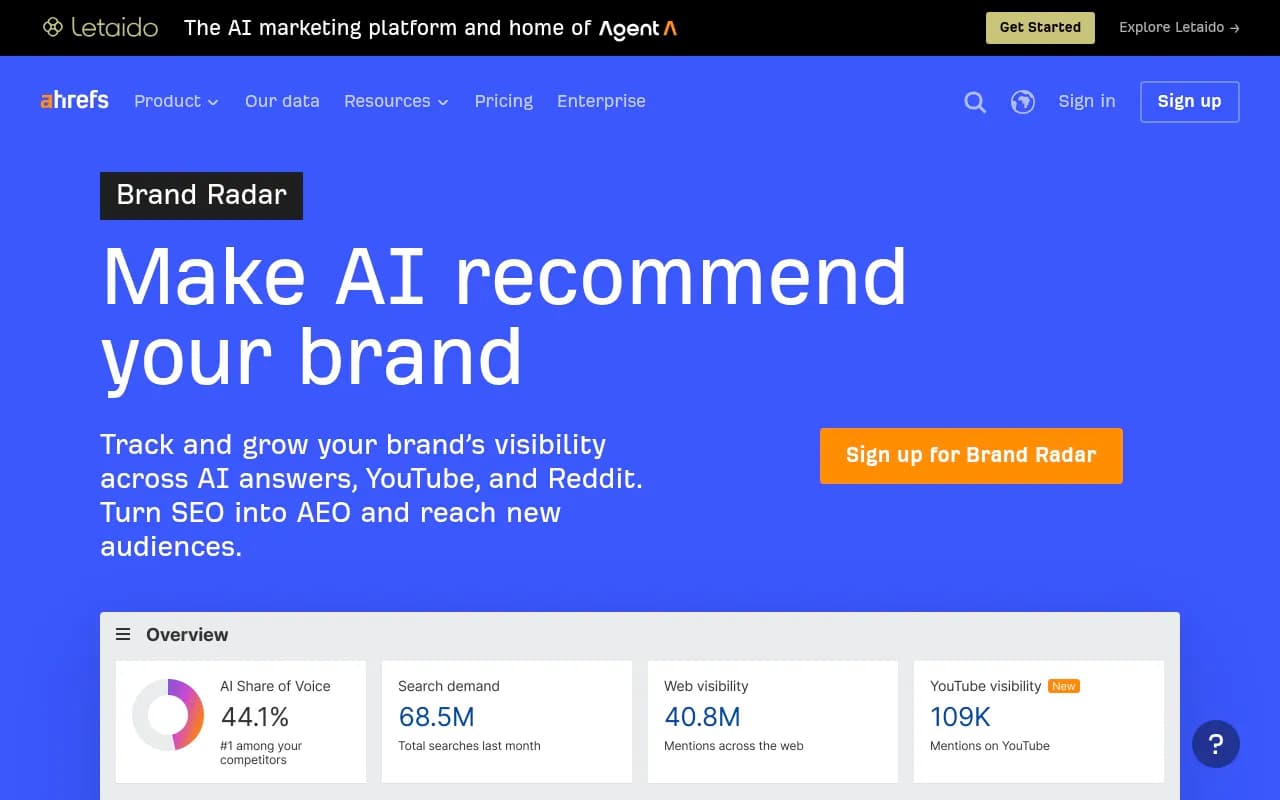
Ahrefs Brand Radar sells prompt packs measured in checks, where one check is one prompt on one platform in one location. Packs are listed at $50, $100 and $250 on top of a base plan. Semrush's AI Visibility Toolkit is priced per domain at $99 a month for 25 daily prompts, and extra users need their own license.
Converting everything to cost per response
The cleanest common unit is cost per response. For prompt plans, assume daily tracking (30 runs a month) across the included engines. For credit and response plans, use the vendor's stated count.
Formula: monthly price divided by (prompts x engines x 30).
| Plan | Monthly price | Responses per month (est.) | Cost per response |
|---|---|---|---|
| Otterly Lite | $29 | 1,800 | $0.016 |
| Otterly Standard | $189 | 12,000 | $0.016 |
| Otterly Premium | $489 | 48,000 | $0.010 |
| Peec AI Pro | $245 | 13,500 | $0.018 |
| Rankscale Pro | $99 | up to 4,800 | $0.021 |
| Rankscale Enterprise | $780 | up to 48,000 | $0.016 |
| Scrunch Core | $250 | 5,000 | $0.050 |
| AthenaHQ Starter | $295 | 3,600 | $0.082 |
| Ahrefs pack (Scale) | $250 | 25,000 checks | $0.010 plus base plan |
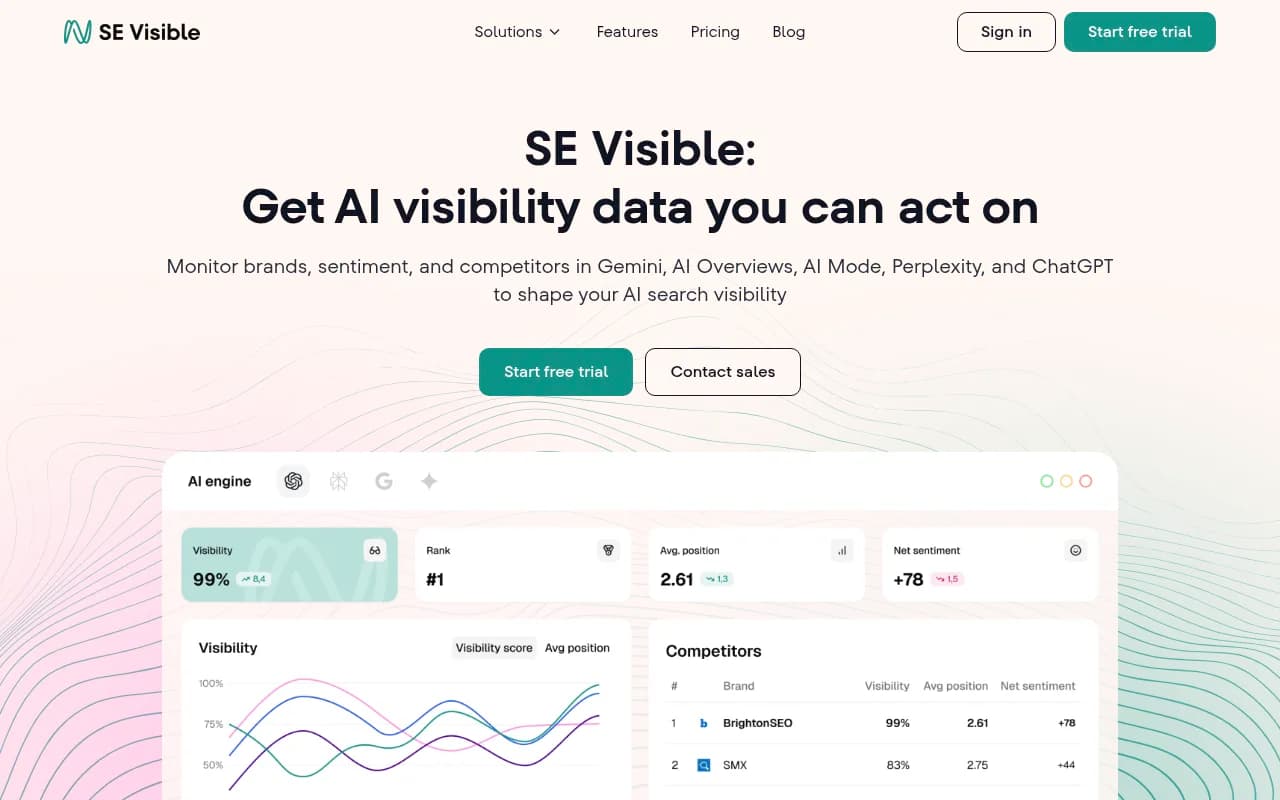
| SE Visible (entry) | $89 | about 11,250 | $0.008 |
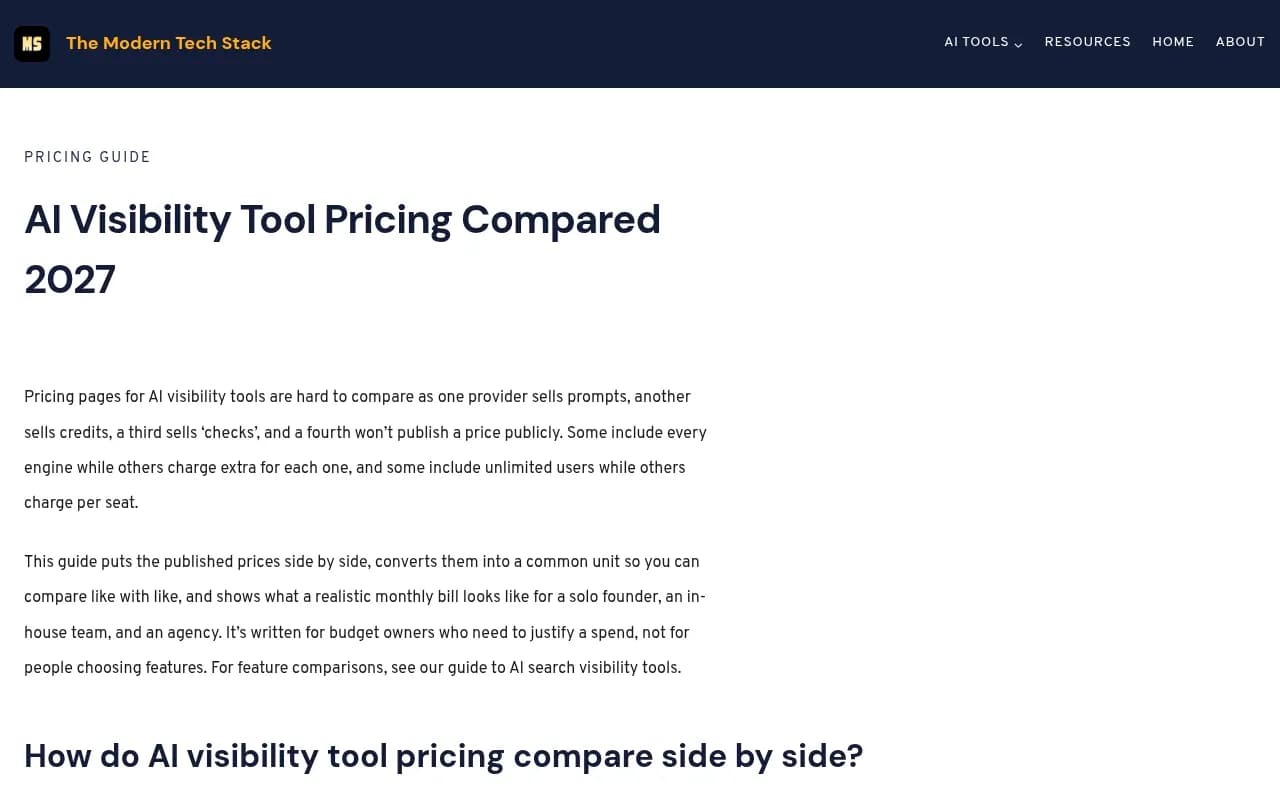
Source: themoderntechstack.com's 2027 pricing guide and Asky's comparison. Treat the figures as estimates.
Three things stand out. First, per-prompt plans with several engines tend to land between one and two cents per response. Second, credit-per-response plans are a lot pricier on paper, though they may include content actions the cheaper trackers lack. Third, the cheapest cost per response is often attached to a plan that needs a second subscription, as with Ahrefs packs.
What a response actually contains
Cost per response looks tidy, but a response is not a standard unit. Promptwatch Data's ChatGPT Query Fanouts report shows that one prompt can trigger 3 to 8 or more separate searches in theory, while the tracked average sat around 2.15 searches per response in early December and eased to roughly 1.84 by early March. The retrieval work behind an answer moves, and vendors who meter per response charge for the answer regardless.
The citation side varies by engine too. Promptwatch's Average Sources Per Response data puts ChatGPT at about 5 sources per web-search answer, Google AI Overviews at about 10, and Perplexity at almost exactly 10 every day. Copilot swung from under 2 to nearly 17 within weeks. So a dollar spent on a Perplexity response buys roughly twice the citation evidence of a ChatGPT one. If your decision depends on citations, compare cost per citation slot, not just per answer.
What else moves the bill
| Cost driver | How it shows up | Examples from published pricing |
|---|---|---|
| Extra engines | Per-model add-on or extra credits | Peec AI charges extra per model beyond three; Otterly lists Claude, Gemini and AI Mode as add-ons |
| Countries and locations | Each location uses a prompt or slot | SE Visible, Asky and Otterly count countries against allowances |
| Seats | Unlimited on most, per-seat on suites | Semrush toolkit needs extra licenses; Ahrefs Lite adds users at $40 each |
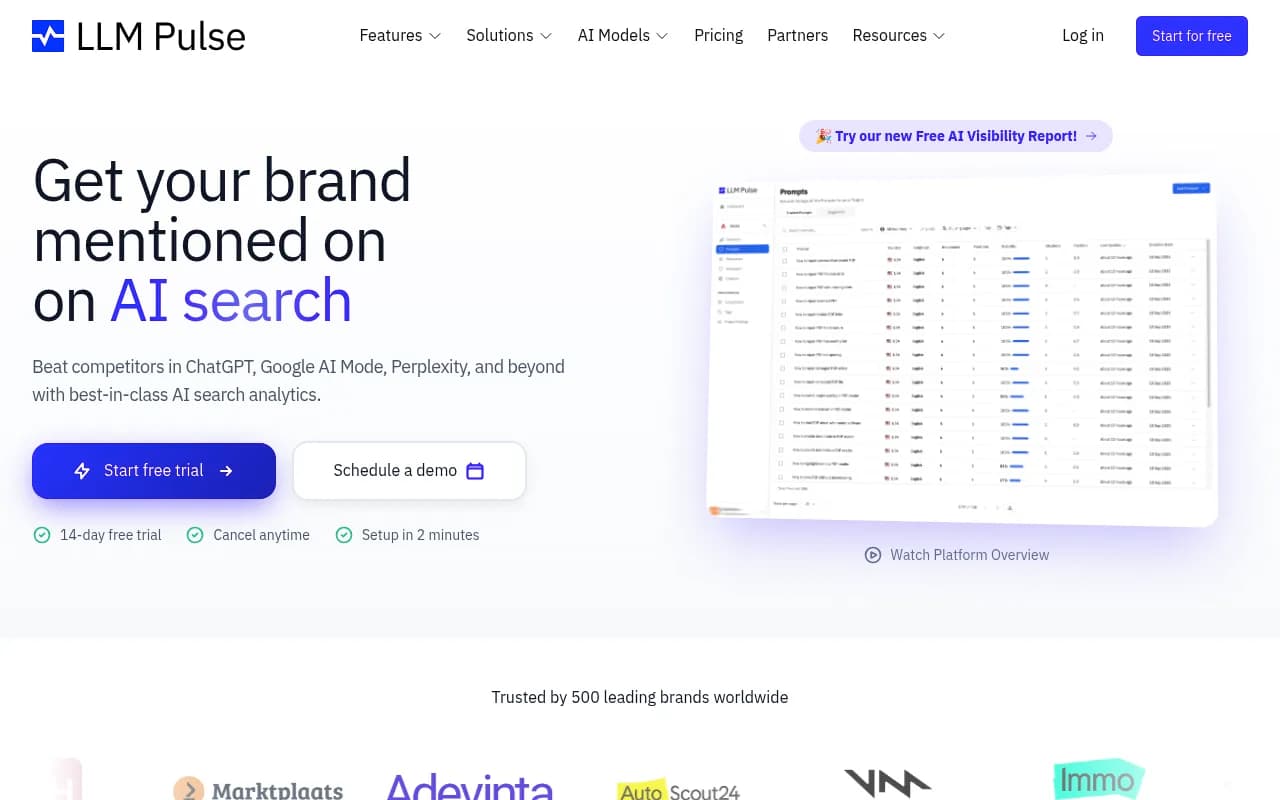
| Frequency | Weekly vs daily vs hourly | LLM Pulse lists weekly at a lower price than daily |
| Annual billing | Roughly 15% to 17% off | Peec AI and Otterly cite 15% off annually |
| Add-on suites | Base plan required | Ahrefs prompt packs sit on top of a plan |
Agencies get hit hardest by country and project multipliers. A 25-prompt client tracked in three markets is 75 slots on tools that count locations as prompts.
Realistic monthly bills by team size
Solo marketer or small brand
Fifteen to fifty prompts is enough to learn what your buyers see. Otterly Lite at $29 covers 15 prompts, Peec AI Starter at $95 covers 50, and HubSpot AEO and Ahrefs packs start at $50 in published listings. Expect $30 to $100.
In-house team with 100 to 250 prompts
Asky's comparison puts self-serve plans for this range at roughly $100 to $500 a month. Otterly Standard is around $189, SE Visible Core covers 200 prompts for $189, and Peec AI Pro covers 150 for $245. Platforms that include crawler logs, visitor analytics and content tools cost more than trackers but replace other line items.
Agency with 5 to 10 clients
Two sources run the numbers for ten client brands:
| Option | Monthly cost | Per client | Notes |
|---|---|---|---|
| Temso Growth (250 prompts) | $349 | $34.90 | Unlimited brands and seats |
| Peec AI Agency Growth | $495 | $49.50 | 10 projects |
| Otterly Premium | $489 | $48.90 | Confirm project limits |
| Semrush toolkit plus packs | $1,290 | $129 | Per-domain pricing multiplies |
Note the source for the agency table sells one of the tools it ranks first, so read it with that in mind.
Where the tools sit by what they do beyond tracking
Price per response means little if you also need content fixes, crawler data or traffic attribution. A rough grouping of the tools in our catalog:
| Category | Examples | Pricing pattern |
|---|---|---|
| Prompt trackers | Otterly.AI, Peec AI, Rankscale | Prompts or credits, cheapest per response |
| Credit-based with actions | AthenaHQ | Credits at 1 per response, higher unit cost |
| Suite add-ons | Semrush, Ahrefs Brand Radar | Per domain or prompt packs on a base plan |
| Enterprise | Profound | Sales-led, no published price |
| Full platforms | Promptwatch | Tiered plans with tracking plus content and analytics |
Otterly.AI


Profound

Where Promptwatch fits
If you want tracking plus the work of fixing what you find, Promptwatch prices by tier and bundles all supported AI models on every plan. Published list prices are Essential at $95 a month (50 prompts, 6,000 responses), Professional at $245 (150 prompts, 18,000 responses) and Business at $579 (350 prompts, 42,000 responses, plus the Content Agent, faster-than-daily tracking and Fact Check). The response counts are stated up front, so the per-response math is simple: Essential works out to about $0.016 and Professional to about $0.014. Agency plans start at $199 for Kick-off with unlimited projects and prompts. Confirm current numbers at promptwatch.com/pricing.

The free Explore plan is ChatGPT only with 10 prompts, so it is an evaluation, not a working setup. The 7-day free trial on the paid tiers is the better test.
What I expect for 2027 pricing
These are my read of the pattern, not guaranteed outcomes.
- Per-response disclosure becomes normal. Buyers already convert everything to cost per response, and vendors that publish the count win trust.
- Engine multipliers stay. Claude costing 3 credits to another engine's 1 suggests vendors will price by engine cost, not flat rates.
- Seats keep dropping out of pricing. Unlimited users is the default among trackers, and the suites that charge per seat look dated next to them.
- Entry plans keep shrinking in price while serious plans do not. A $29 tier teaches you the category but 15 prompts cannot support a decision.
- Execution gets bundled. The gap between $0.016 per response for a tracker and $0.08 for a credit plan is partly content actions, so expect more vendors to price tracking cheap and charge for fixing.
How to pick a pricing model
- If you track a stable list of buyer questions, choose per prompt with engines included.
- If you track many markets or languages, avoid plans where every country consumes a prompt slot, or model the multiplier first.
- If your usage is bursty, credits or packs fit, but only if the exchange rate is stated.
- If you are an agency, price per client with locations included, then test the project limits.
- If frequency matters, check whether hourly or 6-hour tracking exists and which tier unlocks it. Daily is enough for most prompts. Averaging several runs matters more than checking more often.
Questions to ask before you sign
- What does one prompt, response or credit consume across engines and countries?
- Are extra seats, users or domains priced separately?
- What happens at the limit: throttling, overage or forced upgrade?
- Is the annual discount real, and can I start monthly?
- Do crawler logs, traffic attribution and content tools sit inside the price?
For the numbers in this guide, verify against vendor pages. Discrepancies I found across sources include Otterly Standard at $189 monthly versus $160 annual, AthenaHQ at 9 versus 11 models, and Peec AI Starter at $95 monthly versus $80 annual. These are likely billing-cycle and timing differences, but only the vendor can settle it.
FAQ
What is the cheapest AI visibility tool?
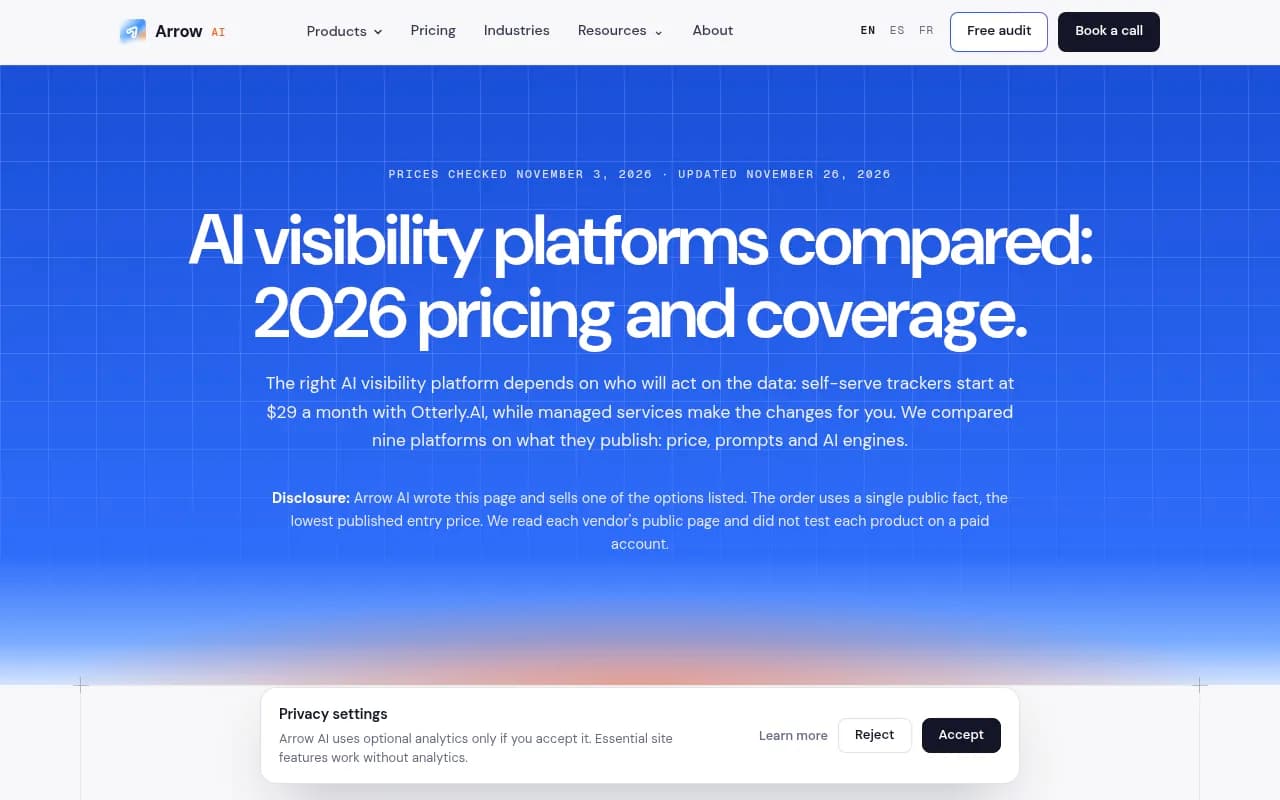
Otterly.AI has the lowest published entry price at $29 a month for 15 prompts, followed by HubSpot AEO and Ahrefs Brand Radar at $50 a month, per Arrow AI's November 2026 check. Cheap entry does not mean cheap per response at scale.
Is per-prompt or per-response pricing better?
Per prompt is easier to forecast. Per response is more honest about volume. Convert both to cost per response and compare on that basis.
Do daily runs matter?
For most prompts, no. Daily earns its price on the few questions closest to a purchase. Weekly tracking is cheaper on some plans, such as LLM Pulse.
How much should a mid-sized B2B team budget?
About $100 to $500 a month for 100 to 250 prompts on three or four engines, based on Asky's comparison of self-serve plans. Budget more if you want content creation, crawler logs and visitor analytics in the same product.
Prompt volumes and citation behavior shift month to month, so the Promptwatch Data hub is worth checking when you revisit your plan.