Key Takeaways
- Real-time crawler logs show exactly which AI models (ChatGPT, Claude, Perplexity, etc.) are accessing your website, which pages they read, and how often they return — this data is critical for understanding and fixing AI indexing issues
- Only three platforms currently offer true AI crawler log tracking: Promptwatch, Scriptbee, and Evertune — most competitors (Otterly.AI, Peec.ai, AthenaHQ, Search Party) lack this capability entirely
- Promptwatch is the only platform that combines crawler logs with content gap analysis and AI-powered content generation — it closes the action loop from diagnosis to optimization, while competitors stop at monitoring
- Scriptbee offers unlimited domains with crawler monitoring at a lower price point — but lacks the optimization tools and citation intelligence that drive actual visibility improvements
- Evertune positions itself as an enterprise solution with GEO insights — but provides limited technical details about its crawler tracking implementation and optimization capabilities
Why AI Crawler Logs Matter in 2026
When a user asks ChatGPT, Claude, or Perplexity a question, these AI models don't generate answers from memory alone. They actively crawl and read websites to gather current information. If AI models can't access your content, they can't cite you in their responses.
This is where AI crawler logs become essential. Traditional web analytics tools like Google Analytics show you human visitors. AI crawler logs show you which AI models are reading your site, which pages they access, how often they return, and what errors they encounter.
Think of it as server logs specifically filtered for AI crawlers. You see:
- Which AI models are crawling your site (ChatGPT, Claude, Perplexity, Gemini, etc.)
- Which pages they read and how deeply they explore your content
- How frequently they return to check for updates
- What errors they encounter (404s, timeouts, blocked resources)
- Whether they can access your JavaScript-rendered content
This data reveals indexing problems that directly impact your AI visibility. If ChatGPT's crawler is hitting 404 errors on your key product pages, those pages won't appear in ChatGPT's responses. If Perplexity's crawler can't render your JavaScript content, it's missing critical information.
Most AI visibility platforms ignore this layer entirely. They track citations and mentions in AI responses but can't tell you why certain pages aren't being cited. Crawler logs close that gap.

The Three Platforms with AI Crawler Log Tracking
As of February 2026, only three platforms offer real-time AI crawler log tracking: Promptwatch, Scriptbee, and Evertune. Let's examine each one.
Promptwatch: The Action Loop Platform
Promptwatch is the only platform that combines crawler logs with content optimization and generation. It's built around a three-step action loop:
1. Find the gaps. Answer Gap Analysis shows exactly which prompts competitors are visible for but you're not. You see the specific content your website is missing — the topics, angles, and questions AI models want answers to but can't find on your site.
2. Create content that ranks in AI. The built-in AI writing agent generates articles, listicles, and comparisons grounded in real citation data (880M+ citations analyzed), prompt volumes, persona targeting, and competitor analysis. This isn't generic SEO filler — it's content engineered to get cited by ChatGPT, Claude, Perplexity, and other AI models.
3. Track the results. See your visibility scores improve as AI models start citing your new content. Page-level tracking shows exactly which pages are being cited, how often, and by which models.

AI Crawler Logs in Promptwatch:
Promptwatch's crawler logs show real-time activity from 10 AI models: ChatGPT, Perplexity, Google AI Overviews, Google AI Mode, Claude, Gemini, Meta/Llama, DeepSeek, Grok, and Mistral. You see:
- Exact timestamps of when each crawler accessed your site
- Full request paths showing which pages were crawled
- HTTP status codes revealing errors and access issues
- Crawler user agents identifying which AI model made the request
- Return frequency patterns showing how often each model checks for updates
This data integrates directly with Promptwatch's visibility tracking. When a page isn't being cited, you can check the crawler logs to see if AI models are even accessing it. If they're hitting errors, you know exactly what to fix.
Beyond Crawler Logs:
What separates Promptwatch from Scriptbee and Evertune is what happens after you identify the problem:
- Citation & Source Analysis: See exactly which pages, Reddit threads, YouTube videos, and domains AI models cite in their responses. Know where to publish and what to optimize.
- Reddit & YouTube Insights: Surface discussions that directly influence AI recommendations — a channel most competitors ignore entirely.
- ChatGPT Shopping Tracking: Monitor when your brand appears in ChatGPT's product recommendations and shopping carousels.
- Competitor Heatmaps: Compare your AI visibility vs competitors across LLMs. See who's winning for each prompt and why.
- Prompt Intelligence: Volume estimates and difficulty scores for each prompt, plus query fan-outs that show how one prompt branches into sub-queries.
Pricing:
- Essential: $99/mo (1 site, 50 prompts, 5 articles)
- Professional: $249/mo (2 sites, 150 prompts, 15 articles, crawler logs, state/city tracking)
- Business: $579/mo (5 sites, 350 prompts, 30 articles)
- Agency/Enterprise: Custom pricing
Crawler logs are available starting with the Professional plan. Free trial available.
Who it's for: Marketing teams, SEO teams, and digital agencies that want to not just track AI visibility but actively improve it through content optimization and generation.
Scriptbee: Unlimited Domains, Basic Tracking
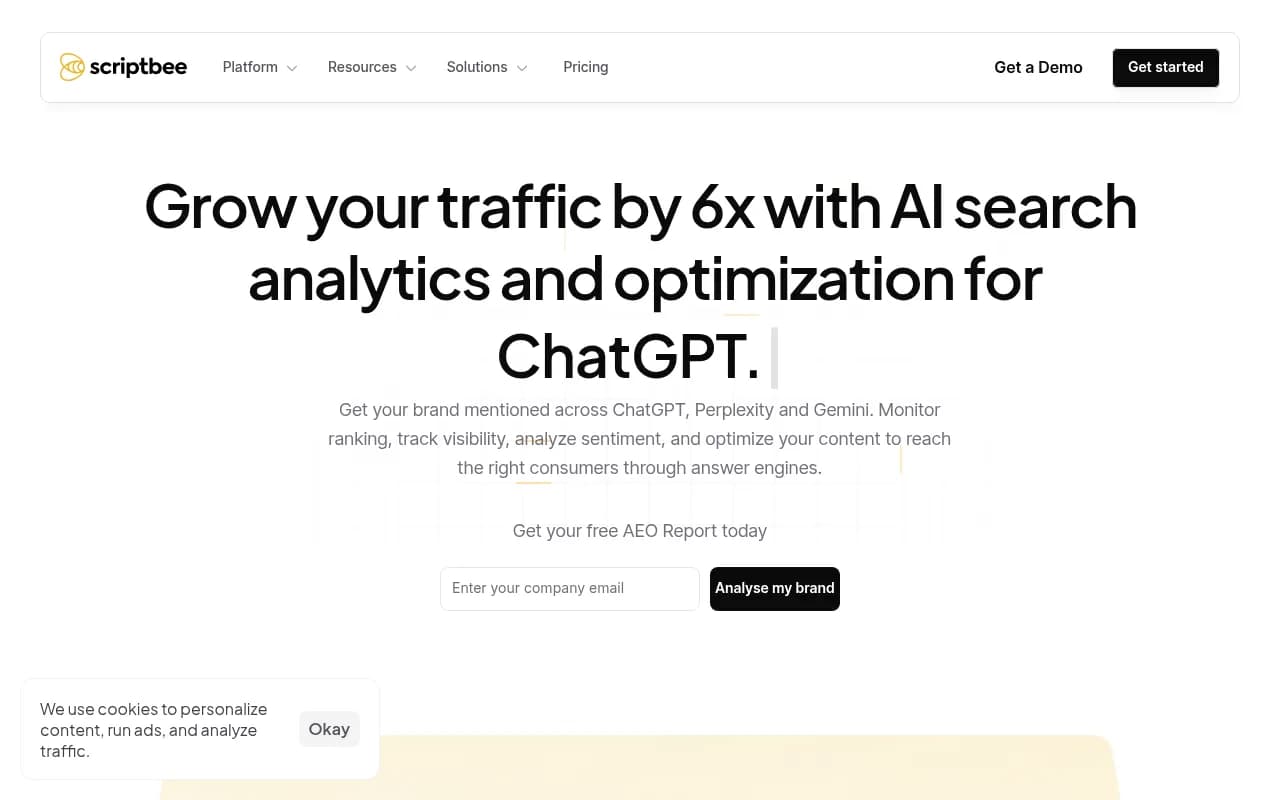
Scriptbee positions itself as the cost-effective option for AI crawler monitoring. Its primary differentiator is unlimited domain tracking — you can monitor as many websites as you want without per-site pricing tiers.
AI Crawler Logs in Scriptbee:
Scriptbee tracks AI crawler activity across your domains, showing which models are accessing your content and how frequently. The platform provides basic log data including:
- Crawler identification (which AI model made the request)
- Page access logs showing which URLs were crawled
- Timestamp data for tracking crawler activity over time
However, Scriptbee's crawler logs lack the depth and integration you get with Promptwatch. There's no connection between crawler data and citation tracking, no content gap analysis, and no optimization recommendations based on what the logs reveal.
What's Missing:
Scriptbee is a monitoring tool, not an optimization platform. It shows you crawler activity but doesn't help you act on it:
- No content generation to fill gaps AI models are looking for
- No citation analysis to understand which content types get cited
- No prompt intelligence to prioritize high-value opportunities
- No Reddit or YouTube tracking to see what influences AI recommendations
- No traffic attribution to connect visibility to revenue
If you need basic crawler monitoring across many domains and have your own optimization workflow, Scriptbee's unlimited domain model might work. But if you want to actually improve your AI visibility, you'll need additional tools.
Pricing:
Scriptbee's pricing isn't publicly listed on their website. Based on competitor research and third-party sources, it appears to offer a flat-rate model with unlimited domains, which could be cost-effective for agencies managing many client sites.
Who it's for: Agencies or businesses managing multiple domains that need basic AI crawler monitoring without per-site fees, and have existing optimization processes in place.
Evertune: Enterprise GEO with Limited Details
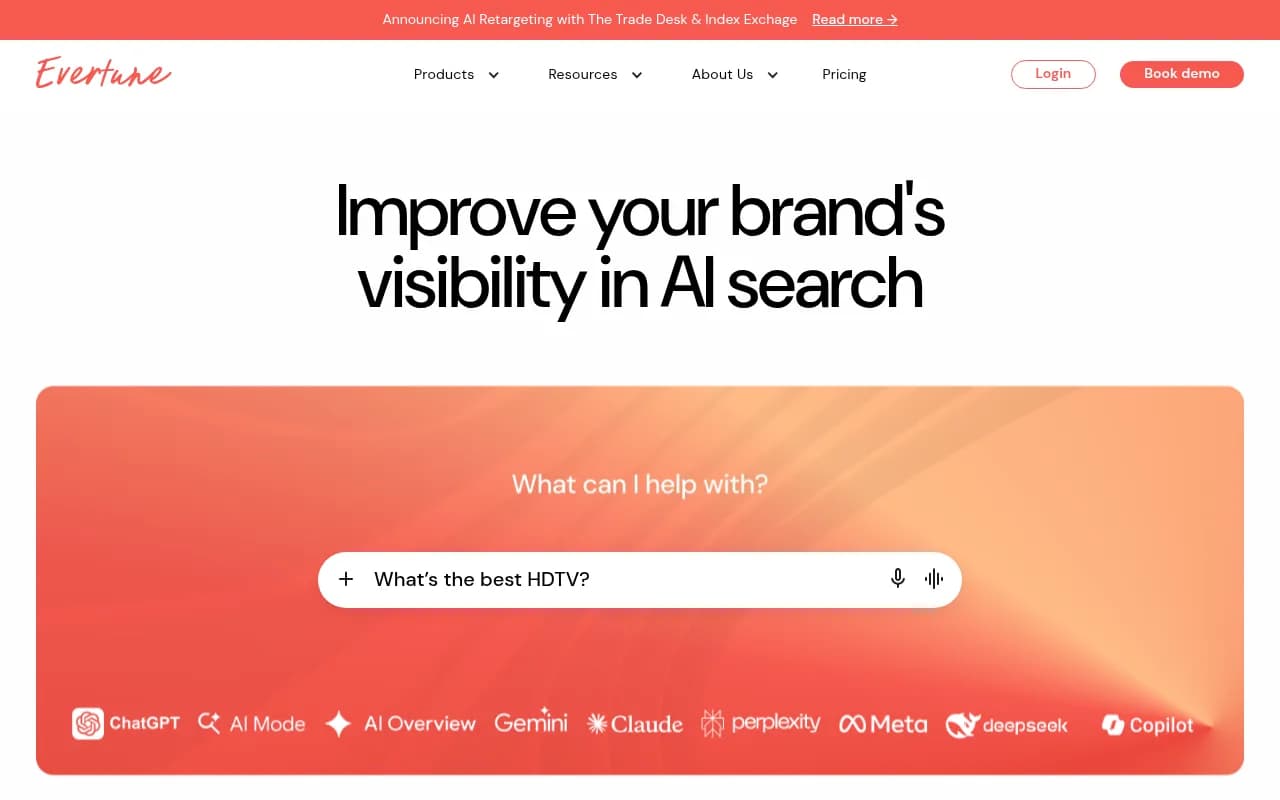
Evertune markets itself as an enterprise AI visibility platform with "unmatched GEO insights." The platform claims to help Fortune 500 brands optimize how they appear in AI-generated answers.
AI Crawler Logs in Evertune:
Evertune's documentation mentions crawler tracking as part of its platform, but provides limited technical details about implementation. Based on available information, the platform appears to offer:
- AI crawler identification and monitoring
- Integration with broader GEO optimization features
- Enterprise-focused reporting and analytics
However, Evertune's public materials focus heavily on high-level positioning ("leading 2026 with unmatched GEO insights") rather than specific technical capabilities. It's unclear how their crawler logs compare in depth and actionability to Promptwatch's implementation.

Enterprise Focus:
Evertune positions itself as an enterprise solution, which typically means:
- Higher price points than mid-market tools
- Custom implementations and white-glove service
- Focus on large brands with complex needs
The platform emphasizes GEO strategy and insights over tactical execution. If you're a Fortune 500 brand looking for strategic guidance and willing to pay premium prices, Evertune might be worth evaluating. But for most businesses, the combination of limited public information and enterprise positioning makes it difficult to assess value.
What's Unclear:
Evertune's marketing materials raise more questions than they answer:
- How deep is the crawler log data? Do you get request-level details or just high-level summaries?
- Which AI models are tracked? The platform mentions "AI answers" but doesn't specify which engines.
- What optimization tools are included? Is there content generation, gap analysis, or just monitoring?
- How does pricing work? No public pricing information is available.
Who it's for: Enterprise brands with large budgets looking for strategic GEO consulting and willing to navigate custom pricing and implementations.
Feature Comparison: What Each Platform Offers
Here's how the three platforms compare across key capabilities:
AI Crawler Log Tracking
Promptwatch: Real-time logs showing exact timestamps, request paths, HTTP status codes, user agents, and return frequency for 10 AI models. Logs integrate with visibility tracking and content gap analysis.
Scriptbee: Basic crawler monitoring showing which models accessed which pages and when. Unlimited domains. Logs are standalone without optimization integration.
Evertune: Crawler tracking mentioned but limited technical details available. Enterprise-focused implementation.
AI Models Monitored
Promptwatch: 10 models — ChatGPT, Perplexity, Google AI Overviews, Google AI Mode, Claude, Gemini, Meta/Llama, DeepSeek, Grok, Mistral, Copilot.
Scriptbee: Specific models not publicly listed. Appears to cover major AI search engines.
Evertune: Specific models not publicly listed. Marketing materials reference "AI answers" generically.
Content Optimization & Generation
Promptwatch: Built-in AI writing agent generates articles, listicles, and comparisons based on 880M+ citation data, prompt volumes, and competitor analysis. Answer Gap Analysis shows exactly what content you're missing.
Scriptbee: No content generation or optimization features.
Evertune: GEO insights and strategy guidance. Unclear if content generation is included.
Citation & Source Analysis
Promptwatch: Full citation tracking showing which pages, Reddit threads, YouTube videos, and domains AI models cite. Reddit and YouTube insights included.
Scriptbee: No citation analysis.
Evertune: Citation tracking mentioned but details unclear.
Traffic Attribution
Promptwatch: Multiple attribution methods — code snippet, Google Search Console integration, server log analysis. Connect visibility to actual revenue.
Scriptbee: No traffic attribution.
Evertune: Attribution capabilities unclear.
Prompt Intelligence
Promptwatch: Volume estimates, difficulty scores, query fan-outs showing how prompts branch into sub-queries. Prioritize high-value opportunities.
Scriptbee: No prompt intelligence.
Evertune: Prompt insights mentioned but details unclear.
Pricing Transparency
Promptwatch: Publicly listed pricing starting at $99/mo. Free trial available.
Scriptbee: Pricing not publicly listed. Appears to offer flat-rate unlimited domain model.
Evertune: No public pricing. Enterprise custom pricing.
The Action Loop: Why Crawler Logs Alone Aren't Enough
Crawler logs tell you what's happening. They don't tell you what to do about it.
Imagine your crawler logs show that ChatGPT's bot is hitting 404 errors on your product pages. That's valuable information. But what's the next step?
- Which pages should you fix first? Not all 404s matter equally.
- What content should those pages contain? You need to know what AI models are looking for.
- How do you create content that actually gets cited? Generic fixes won't improve visibility.
This is where most platforms leave you stuck. They show you the problem but provide no path to solving it.
Promptwatch closes this loop:
- Crawler logs reveal indexing issues (ChatGPT can't access certain pages)
- Answer Gap Analysis shows what content is missing (competitors rank for prompts you don't)
- AI writing agent generates optimized content (articles engineered to get cited)
- Visibility tracking confirms improvement (your citations increase as AI models discover new content)
- Traffic attribution connects to revenue (visibility translates to actual business results)
Scriptbee and Evertune stop at step one. You get crawler data but no optimization workflow.
How to Choose the Right Platform
Your choice depends on what you need to accomplish:
Choose Promptwatch if:
- You want to actively improve AI visibility, not just monitor it
- You need content gap analysis showing exactly what you're missing
- You want AI-powered content generation based on real citation data
- You need to track results and connect visibility to revenue
- You want a complete action loop from diagnosis to optimization
Choose Scriptbee if:
- You manage many domains and need unlimited crawler monitoring
- You have existing optimization processes and just need log data
- You want basic AI crawler tracking at a lower price point
- You don't need citation analysis, content generation, or traffic attribution
Choose Evertune if:
- You're a Fortune 500 brand with enterprise budget
- You want strategic GEO consulting and white-glove service
- You're comfortable with custom pricing and implementations
- You prioritize brand positioning over tactical execution
The Competitive Landscape: What Other Tools Miss
Most AI visibility platforms don't offer crawler logs at all. Here's what you get from popular alternatives:
Otterly.AI, Peec.ai, AthenaHQ: Monitoring-only dashboards showing citation counts and mentions. No crawler logs, no content optimization, no generation capabilities.
Otterly.AI

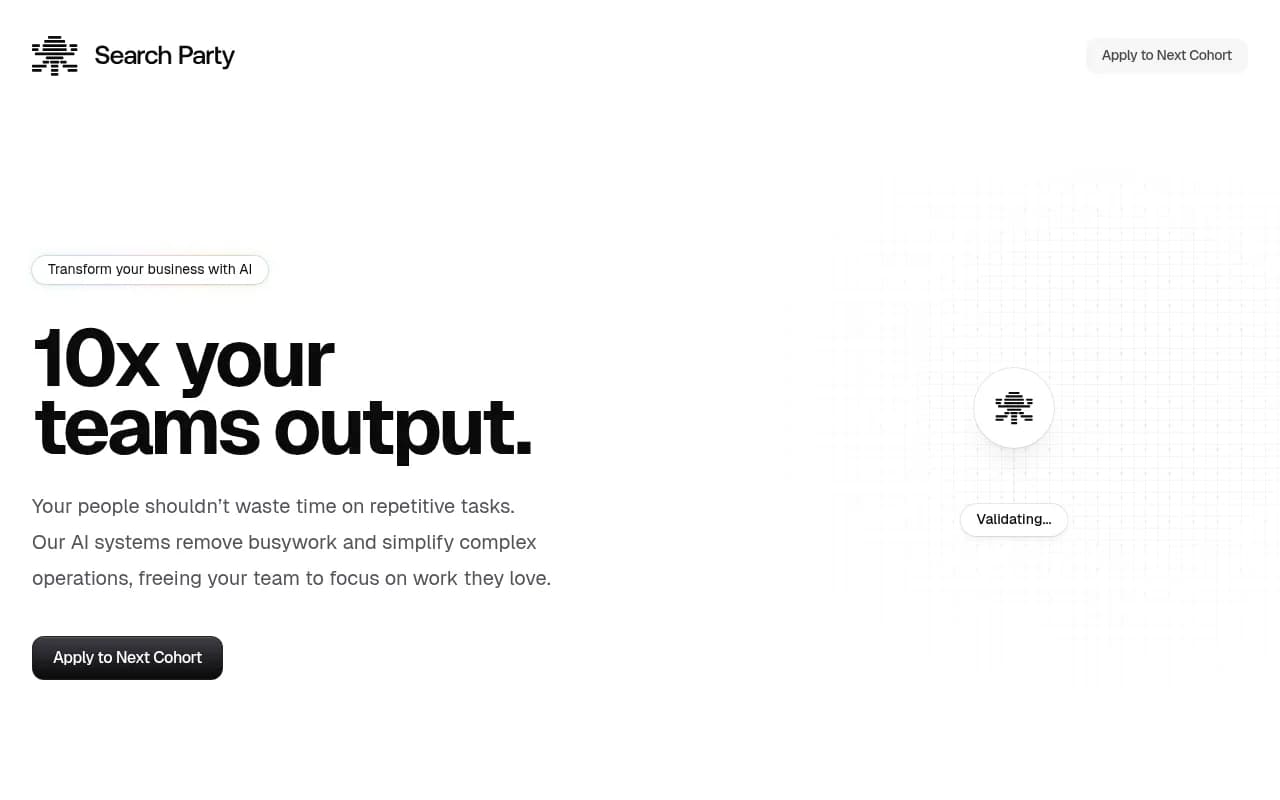
Search Party: Agency-oriented platform with limited prompt metrics and no content gap analysis. No crawler log tracking.
Search Party
Profound, Scrunch: Strong feature sets but higher price points. No Reddit tracking, no ChatGPT Shopping, and no crawler logs in standard plans.
Profound

Semrush, Ahrefs Brand Radar: Traditional SEO tools that added AI search features. Fixed prompt sets, no crawler logs, limited AI traffic attribution.
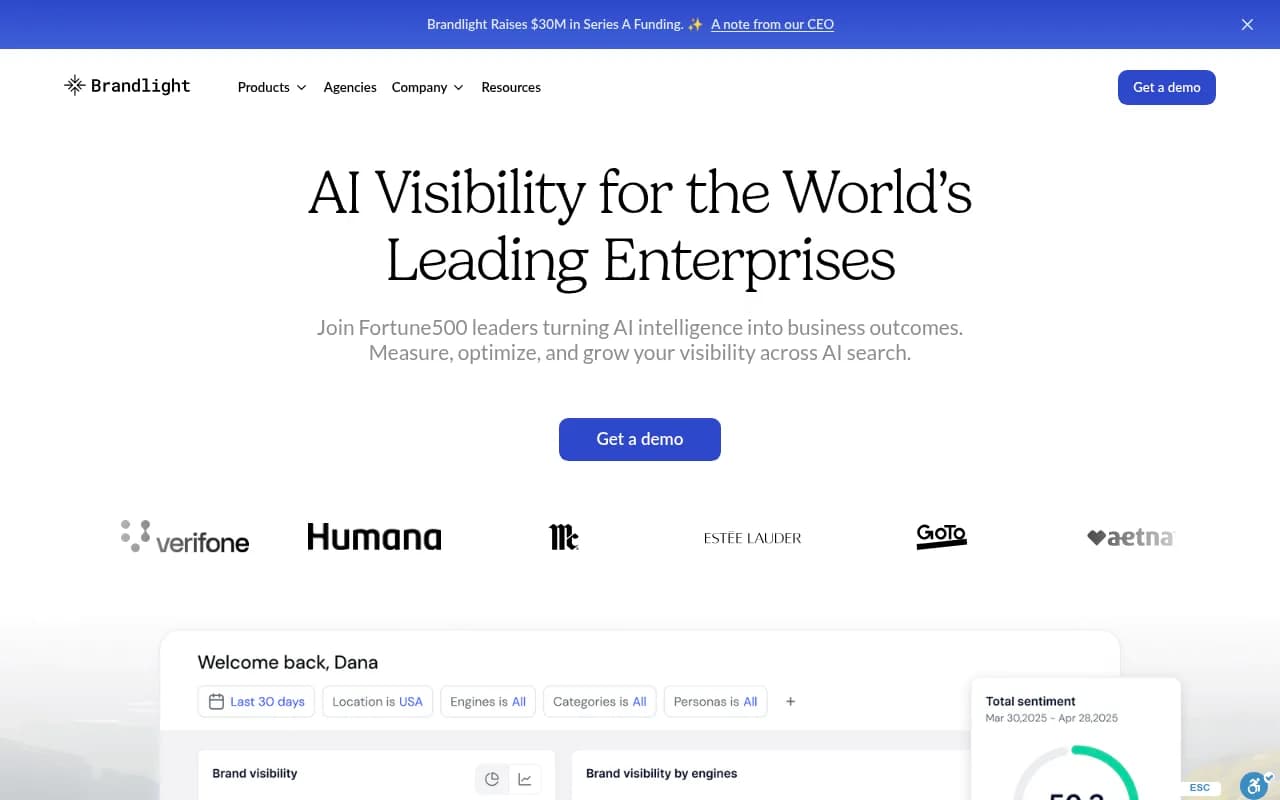
Brandlight.ai, Bluefish, Searchable: Niche players with limited feature sets. No crawler log tracking.
The pattern is clear: most platforms show you where you appear in AI responses but can't tell you why certain pages aren't being cited or how to fix it. Crawler logs are the missing piece that connects visibility data to technical optimization.
Real-World Use Cases for AI Crawler Logs
Here are specific scenarios where crawler logs become essential:
Diagnosing Citation Drops
Your brand was appearing in ChatGPT responses for key prompts, then suddenly disappeared. Crawler logs reveal that ChatGPT's bot started encountering 503 errors on your server. Your hosting provider had implemented aggressive rate limiting that blocked AI crawlers. Fix the rate limits, citations return.
Without crawler logs, you'd be guessing why visibility dropped.
Optimizing JavaScript-Heavy Sites
Your site uses React with client-side rendering. Google's crawler can handle it, but you notice Perplexity rarely cites your content. Crawler logs show Perplexity's bot is accessing your pages but only seeing loading spinners — it's not waiting for JavaScript to render.
You implement server-side rendering for AI crawlers. Perplexity citations increase 300% in two weeks.
Prioritizing Technical Fixes
You have 200 pages with indexing issues. Which ones matter for AI visibility? Crawler logs show which pages AI models are actually trying to access. You fix the 15 pages that ChatGPT, Claude, and Perplexity are hitting most frequently. Citations improve immediately.
Without crawler logs, you'd waste time fixing pages AI models don't care about.
Understanding Crawl Frequency
You publish new content daily but notice AI models still cite outdated information. Crawler logs reveal that ChatGPT only checks your site once per week. You implement a sitemap specifically for AI crawlers and submit it through OpenAI's crawler documentation. ChatGPT starts checking daily, citations reflect current content.
Detecting Crawler Blocks
Your robots.txt file accidentally blocks Perplexity's crawler. You don't notice because human traffic looks normal. Crawler logs show zero Perplexity activity. You fix robots.txt, Perplexity starts crawling, citations appear within days.
Without crawler logs, you might never discover the block.
Implementation: Getting Started with Crawler Log Tracking
If you choose a platform with crawler log tracking, here's how to make the most of it:
1. Establish Baseline Metrics
Before making any changes, document:
- Which AI models are currently crawling your site
- How frequently each model returns
- Which pages get the most crawler attention
- What errors crawlers are encountering
This baseline helps you measure improvement.
2. Identify Critical Issues
Look for patterns in the logs:
- 404 errors on important pages — fix broken links and redirects
- 503 errors or timeouts — adjust rate limiting and server capacity
- Low crawl frequency — improve site structure and internal linking
- Crawlers stuck on low-value pages — optimize crawl paths with better navigation
3. Fix Technical Barriers
Address the issues that prevent AI crawlers from accessing your content:
- Update robots.txt to allow AI crawler user agents
- Implement server-side rendering for JavaScript-heavy pages
- Optimize page load times so crawlers don't timeout
- Fix redirect chains that waste crawler budget
4. Monitor Impact on Citations
After fixing technical issues, track whether citations improve:
- Are AI models crawling more frequently?
- Are they accessing pages they couldn't reach before?
- Are error rates decreasing?
- Are citations increasing for the pages you fixed?
If crawler activity improves but citations don't, the problem isn't technical — it's content quality or relevance.
5. Optimize Content Based on Crawler Behavior
Use crawler logs to inform content strategy:
- Which pages do AI models visit most often? Create more content on those topics.
- Which pages do they ignore? Either improve them or deprioritize them.
- How deep do crawlers go? If they only read your homepage, improve internal linking.
The Future of AI Crawler Log Tracking
As AI search engines mature, crawler log tracking will become more sophisticated:
Crawler Intent Analysis: Future platforms will analyze not just which pages AI models access, but what information they extract. You'll see which sections of your content get cited most often.
Predictive Crawl Optimization: AI will predict when major models are likely to recrawl your site and recommend the optimal timing for publishing new content.
Automated Technical Fixes: Platforms will automatically detect and fix common crawler issues — updating robots.txt, implementing redirects, optimizing render times.
Cross-Model Crawler Coordination: As more AI models emerge, platforms will help you optimize crawl budget across all of them, ensuring your most important pages get crawled by every model.
Real-Time Crawler Alerts: Get notified immediately when a major AI model encounters errors on your site, before it impacts your visibility.
Promptwatch is already moving in this direction with its integrated optimization workflow. Scriptbee and Evertune remain focused on monitoring.
Conclusion: Monitoring vs. Optimization
The fundamental difference between these three platforms comes down to philosophy:
Scriptbee sees crawler logs as monitoring data. It shows you what's happening and leaves optimization to you.
Evertune positions crawler tracking as part of enterprise GEO strategy, but provides limited details about how it drives action.
Promptwatch treats crawler logs as the diagnostic layer in a complete optimization workflow. Logs reveal problems, gap analysis shows what's missing, content generation fixes it, and visibility tracking confirms results.
If you just need basic crawler monitoring across many domains, Scriptbee's unlimited model might work. If you're an enterprise brand seeking strategic consulting, Evertune could be worth exploring.
But if you want to actually improve your AI visibility — not just track it — Promptwatch is the only platform that closes the action loop from diagnosis to optimization. Crawler logs are just the beginning. What matters is what you do with them.