Key takeaways
- No independent, verified data exists on support response times or onboarding duration for AI visibility tools. Nearly every comparison is written by a vendor or someone affiliated with one, so treat claims accordingly.
- Product velocity is the one dimension you can measure yourself. Check changelogs, and ask how fast the vendor detected and communicated ChatGPT's March 4 and August 8, 2026 behavior changes.
- Pricing is inconsistent across sources. Profound's Growth plan and OtterlyAI's top tier both show conflicting figures, so confirm on the live pricing page before you budget.
- Onboarding quality depends on your team more than the tool. The classic mistake is buying the most expensive platform when nobody can act on the data.
- Run a two-week trial with your own buying questions and a written list of vendor responses before you sign anything annual.
Why this comparison is hard to do honestly
I went looking for hard numbers on support and onboarding for the major AI visibility platforms. First-response times, time to first dashboard, how many tickets get escalated. I found almost none. What exists is vendor-written blog posts, vendor-curated testimonials, and comparison pages from companies that sell a competing product.
That is worth saying plainly, because most "best tools" listicles gloss over it. When a vendor's own site quotes a customer saying "data started flowing at signup with zero setup," that is a selected quote, not a benchmark. When a comparison page says a rival has "limited dashboard customization reported," you should ask who reported it.
So this guide does something narrower. It sorts what can be verified (pricing structure, public shipping activity, documented platform changes) from what can't (support quality, onboarding speed), and gives you a way to test the second category yourself.
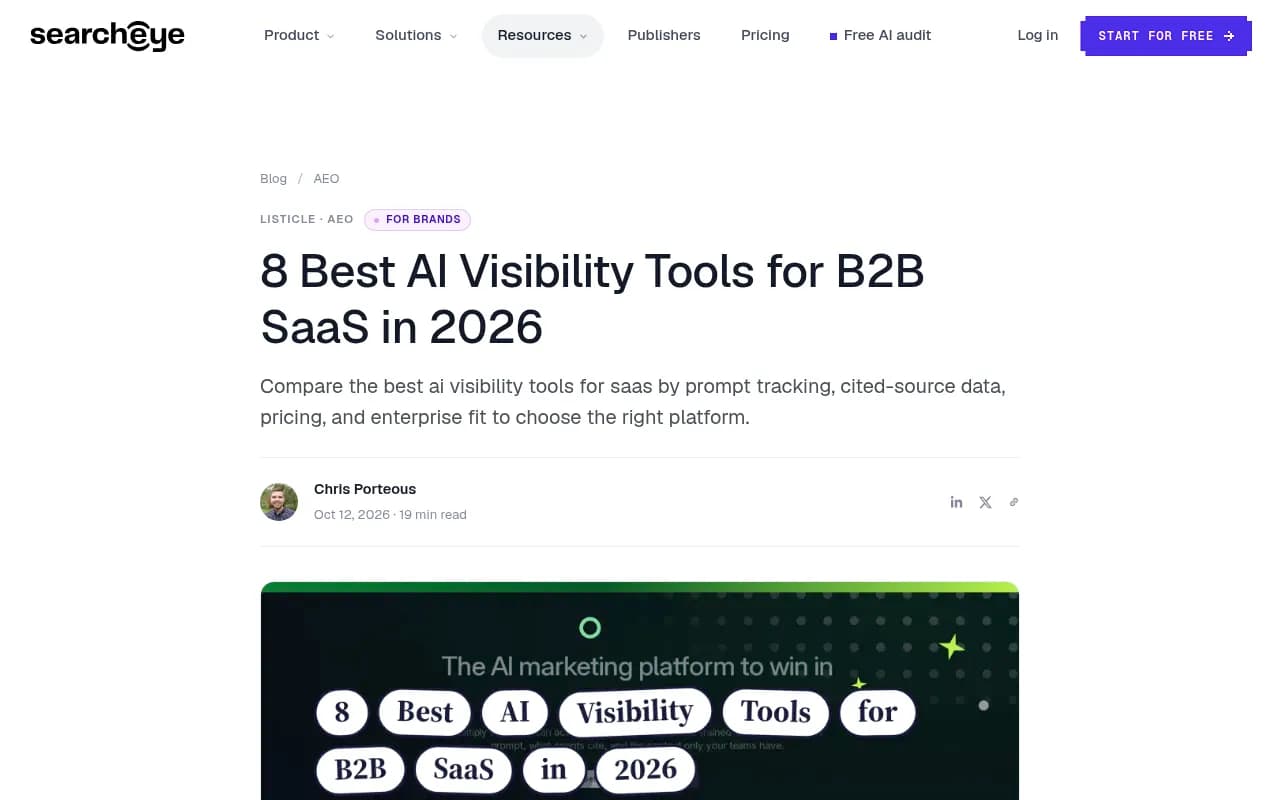
The screenshot above is a good example. It is a useful table of pros, cons and prices, and it ranks its own publisher first. Read these as input, not verdicts.
Product velocity matters more than usual in this category
AI search platforms change behavior without warning, and a visibility tool is only as good as its response to that. Two documented examples from Promptwatch's first-party data:
- Around the GPT-5.3 rollout on March 4, 2026, average citations per search-enabled ChatGPT response fell within a day. The week before, ChatGPT cited about 6.4 sources per response. By late March it had settled near 4.7 to 4.9, roughly 27% fewer, with no recovery a month later. The details are in Promptwatch Data's ChatGPT citation drop report.
- On August 8, 2026, ChatGPT began using the site: operator at scale. Those queries went from 0.37% to 16.8% of all fanout queries in a day, and average fanout queries per response rose from about 1.08 to about 1.83. See the site: operator fanout report.
The practical point: any fanout or keyword mapping built before August 8 is stale. And a team that blamed its own content for the March drop was probably wrong, since the decline hit citations everywhere.
So the velocity question is not "how many features did you ship?" It is "when ChatGPT changed on March 4 and August 8, how quickly did you notice, tell customers, and re-baseline their data?" Any vendor worth buying from should have a straight answer. If the sales rep has to go ask someone, that is information.
What each vendor's public record shows
Profound
Profound is the heavyweight on shipping. Its blog documents a steady stream of releases: support for new models as they launch, custom dashboards, Profound Sheets, an agent template marketplace, Pages, citation decay tracking, and an official Claude connector. It raised a reported $96M Series C led by Lightspeed in February 2026 and has around 228 staff, which explains the pace.
Profound

The trade-offs buyers report are the learning curve (dense data) and limited dashboard customization, though custom dashboards have since shipped, which is itself a point about velocity. Pricing is where to be careful. Third-party sources list Starter at $99/month (ChatGPT only, 50 prompts) and Growth at $399/month, yet Profound's own June 2026 content still quoted Growth at about $499. Verify on the live page.
For support and onboarding, Profound is an enterprise-oriented sales motion. Expect a sales conversation, not a self-serve signup, for anything above Starter.
Peec AI
Peec AI is the one that tends to win on first impressions. Founded in Berlin in February 2025, it raised $29M including a $21M Series A led by Singular in November 2025. Its changelog shows recent activity: Views for shareable dashboards on October 14, 2026 and Peec Agent with expanded Actions on October 22, 2026, a move from pure monitoring toward automated response.

Customer-count claims are inconsistent. One comparison says 1,300+ customers, Peec's own site says 3,500+ brands and agencies in one place and "3,000+ teams" in another. Pricing is reported inconsistently too, typically around 85 to 89 euros a month for the entry tier. The entry plan is listed with 50 prompts, 3 models and 1 project.
The testimonials on Peec's site praise zero-setup onboarding, no-nonsense customer service and in-person contact. That is encouraging, and it is also curated. Treat it as a hypothesis to test in your trial.
OtterlyAI
OtterlyAI is the budget entry point. The Lite plan is $29/month with 15 prompts. It has shipped a rebuilt free GEO Audit, AI Crawler Simulation, AI Keyword Research and Query Fan-Out tools, plus a Brand Profiling tab on October 21, 2026. Higher plans add API, MCP and Looker Studio. The Enterprise tier includes onboarding and a quarterly GEO Health Check, which is one of the few concrete onboarding commitments any vendor publishes.
Otterly.AI

There is a pricing conflict to flag. One comparison lists Premium at $489/month; Otterly's own blog lists Pro at $989/month with 1,000 prompts. Check the live page. Critics call it monitoring only, with a limited action layer.
AthenaHQ
AthenaHQ added a free Essential tier with unbundled API access. Starter is $295/month for 3,600 credits, which reviewers call high, and credit consumption needs watching. Reviewers also report bugs. It claims a 4.9 G2 rating (self-reported) and lists SoFi, Wix and ZoomInfo as customers. Vendor case studies say Lago saw +50% demos from AI search. Those are vendor numbers.

The rest of the field
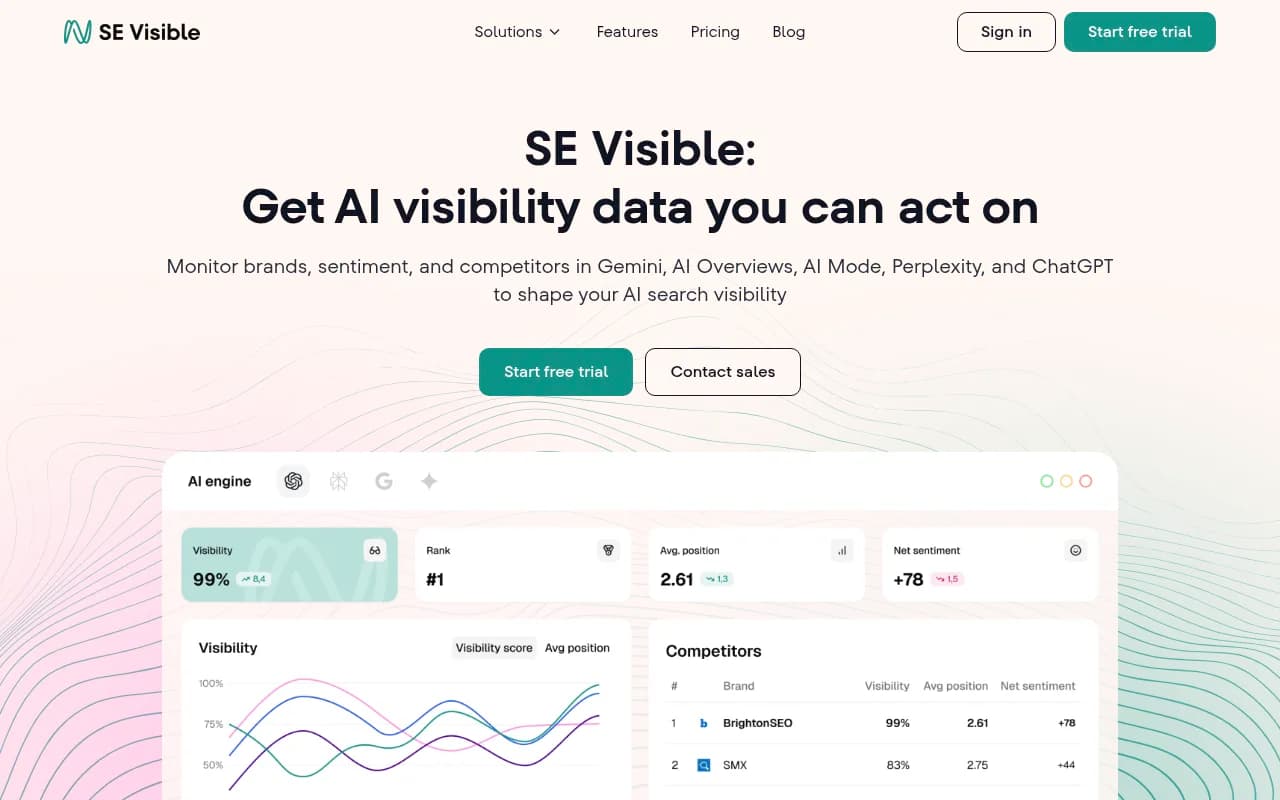
SE Visible fits teams already in conventional SEO reporting but leaves execution manual. Scrunch has strong crawler observability and SOC 2 Type II, with paid pricing unpublished. For more options, the GEO software directory at bestgeosoftware.com and the AI rank tracking tools directory list many more.

Side-by-side snapshot
| Tool | Entry price (verify live) | Public shipping signal | Onboarding evidence | Reported weak spot |
|---|---|---|---|---|
| Profound | $99/mo Starter, $399/mo Growth (a $499 figure also circulates) | Very frequent releases, new models supported quickly | Enterprise sales-led | Learning curve, dense data |
| Peec AI | About 85 to 89 EUR/mo | Views and Agent shipped October 2026 | Curated testimonials praise setup | Pricing and customer counts inconsistent |
| OtterlyAI | $29/mo Lite | Free tools, Brand Profiling tab | Enterprise includes onboarding and quarterly health check | 15 prompts on Lite, limited attribution |
| AthenaHQ | Free Essential, $295/mo Starter | Free tier, unbundled API | Not independently documented | Credit use, reported bugs |
| SE Visible | $99/mo Basic | Not verified | Not verified | Manual execution |
| Promptwatch | Free Explore, $95/mo Essential | Documented platform research, wide model coverage | 7-day trial on monthly plans | Higher tiers needed for the Content Agent |
The empty cells are the point. Where I write "not verified," nobody has independent evidence.
Where Promptwatch fits
Full disclosure: Promptwatch is the platform 1001 SEO Media uses, and it is the one I would put forward if you want the loop closed rather than just a dashboard. It pairs real-UI prompt tracking with IP-verified AI crawler logs, visitor analytics, and a Content Agent that writes and publishes to Webflow, Framer or WordPress. The Action Board and Agent Chat turn findings into tasks. It reports 1,840+ customers and a 4.7/5 on G2, and is ISO/IEC 27001 certified, which matters if procurement runs a security review.

On the velocity question specifically, Promptwatch publishes its own research on the platform changes above, which is the kind of behavior you want from a vendor: it noticed, measured and told people. Pricing is published too, from a free Explore tier through Essential at $95/month, Professional at $245 and Business at $579. Agency plans start at $199. A 7-day trial applies on monthly Essential, Professional and the agency Kick-off and Growth plans. Confirm at promptwatch.com/pricing.
How to test support and onboarding yourself
Since nobody has published the data, generate it. During a trial:
- Open a real support ticket on day two with a specific, slightly awkward question, such as why a prompt returned different results across two runs. Note the time to first human reply and whether the answer is useful.
- Ask the vendor how they detected and communicated the March 4 and August 8 ChatGPT changes. Ask for a dated changelog entry or customer email.
- Time how long it takes to get 20 of your own buying prompts running on the engines you need. Then see what happens when you exceed the plan's allowance.
- Open a response that mentions a competitor and ask the tool to show the source pages behind it. A good tool explains a missing mention rather than handing you another score.
- Check whether the plan you need is the plan being demoed. Many tools demo enterprise features on entry-level pricing.
If you want a fast first look before any trial, Promptwatch's free AI Visibility Report scans how ChatGPT, Gemini and Perplexity describe your brand without a login.
Mistakes buyers make
The Surmado guide, whose publisher sells a competing service so read it with that in mind, lists four that I think are fair:
- Starting with the most expensive tool when nobody on the team can act on the data.
- Treating AI visibility as only a measurement problem. Even tools with action layers produce suggestions that someone has to implement.
- Confusing "tracked" with "improved."
- Ignoring SEO fundamentals.
Teams already paying for Semrush or Ahrefs may find those AI modules enough to start.

If you would rather hand the work to people than buy another dashboard, an agency can handle monitoring and implementation together. 1001 SEO Media does this with no long-term contracts, which is relevant given how much of this category is annual billing.
What I would do
Start with the smallest paid plan that covers the engines you care about, run it for two weeks with real prompts, and log every support interaction. Ignore the vendor-written "best of" rankings, including this one's tables, until you have your own notes. Then choose on three things: how fast the vendor responded when something broke, whether the data explains gaps instead of just scoring them, and whether someone on your team will actually act on the output. Ask for the March 4 and August 8 answers in writing. The vendors who can produce them quickly are the ones who will still be useful in six months.
For broader research on how AI answers are built and cited, see the Promptwatch Data hub.