Key takeaways
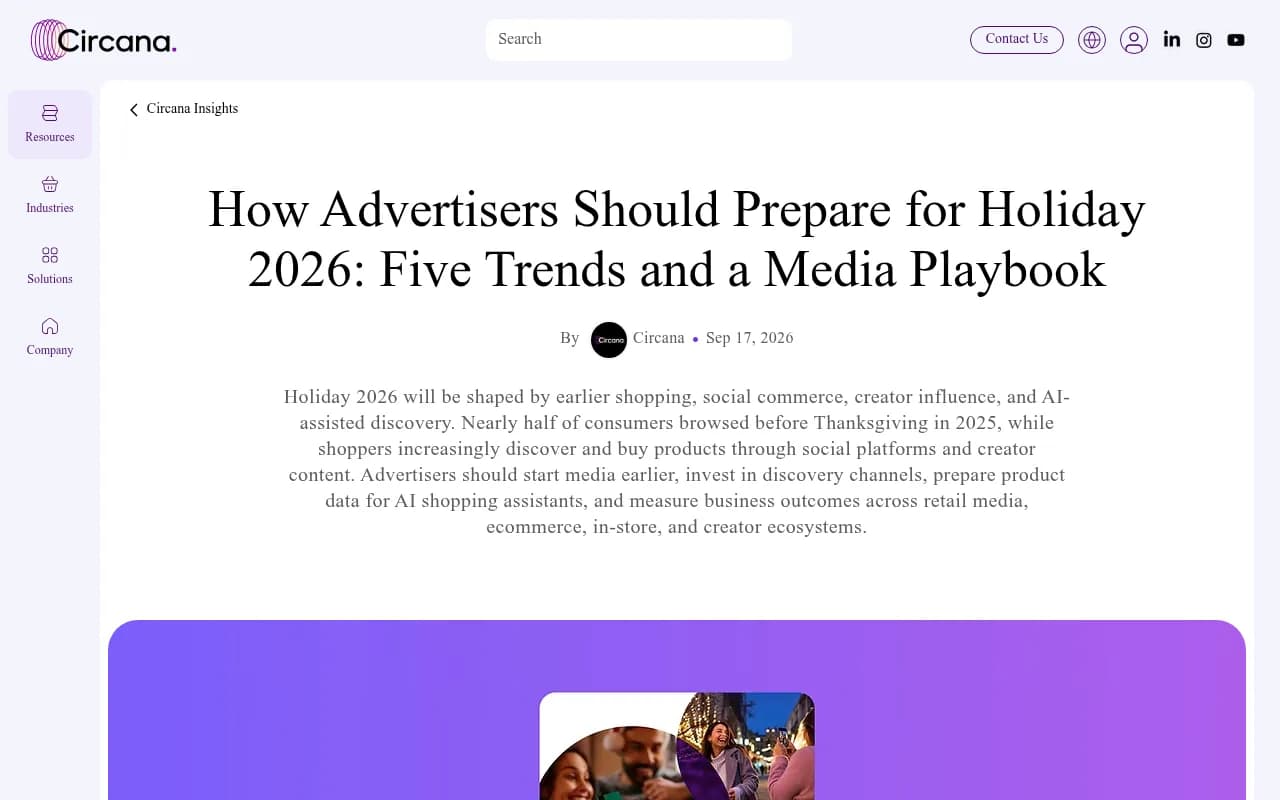
- Holiday browsing starts before Thanksgiving. Circana found 48% of consumers browsed early in 2025, and 44% planned to shop earlier overall.
- AI is now part of the gift-search path. Optimove reports 72% of U.S. consumers consult tools like ChatGPT, Claude, or Gemini for holiday gift ideas, and Adobe projects AI-driven retail traffic up 130% year over year in November and December.
- ChatGPT cites product and landing pages more than anything else (about 39% of citations combined), so your own pages need to be easy to compare and accurate on price, stock, and hours.
- Ads appeared in roughly a third of search-enabled ChatGPT responses in recent weeks, mostly on organic prompts like gift and shopping questions.
- Nobody has published clean holiday-by-city citation data yet. Treat local-specific tactics below as informed recommendations, and test them against your own prompts.
What actually changes in the holiday window
I want to be upfront about something. There is no public dataset that says, "ChatGPT recommends different local businesses in December than in July." Promptwatch Data describes current behavior and the levers around it, and it does not yet isolate a holiday or city-level shift. So this guide does not claim one.
What we do have is solid evidence on three things that change during the season: when people shop, how they use AI while shopping, and what ChatGPT tends to cite when a question has buying intent. Put those together and you get a practical prep plan, even without a headline statistic about local recommendations.
Demand arrives earlier and unevenly
Circana's October 2025 holiday survey found 48% of consumers browsed before Thanksgiving and 81% shopped online at some point in the season. Nearly half (47%) used a smartphone to browse and buy, which matters for local queries because phone searches are the ones that say "near me" and "open now."
The curve also is not stable. MikMak's holiday guide notes that 2024 built to a sharp mid-November spike, while 2025 saw stronger activity in early October and a gentler build afterward. November still held the largest single share at 25.2%. Adobe's forecast adds that discounts deepen as the season goes on: about 14% off in early November, 21% just before Thanksgiving, and 30% at Cyber Week.
For a local business, the takeaway is that your "peak" is a range of weeks, and the prompts people ask change across it. October questions are exploratory ("best gift for a coffee lover"). Late December questions are logistical ("who is open Christmas Eve near me").
More shoppers ask an AI first
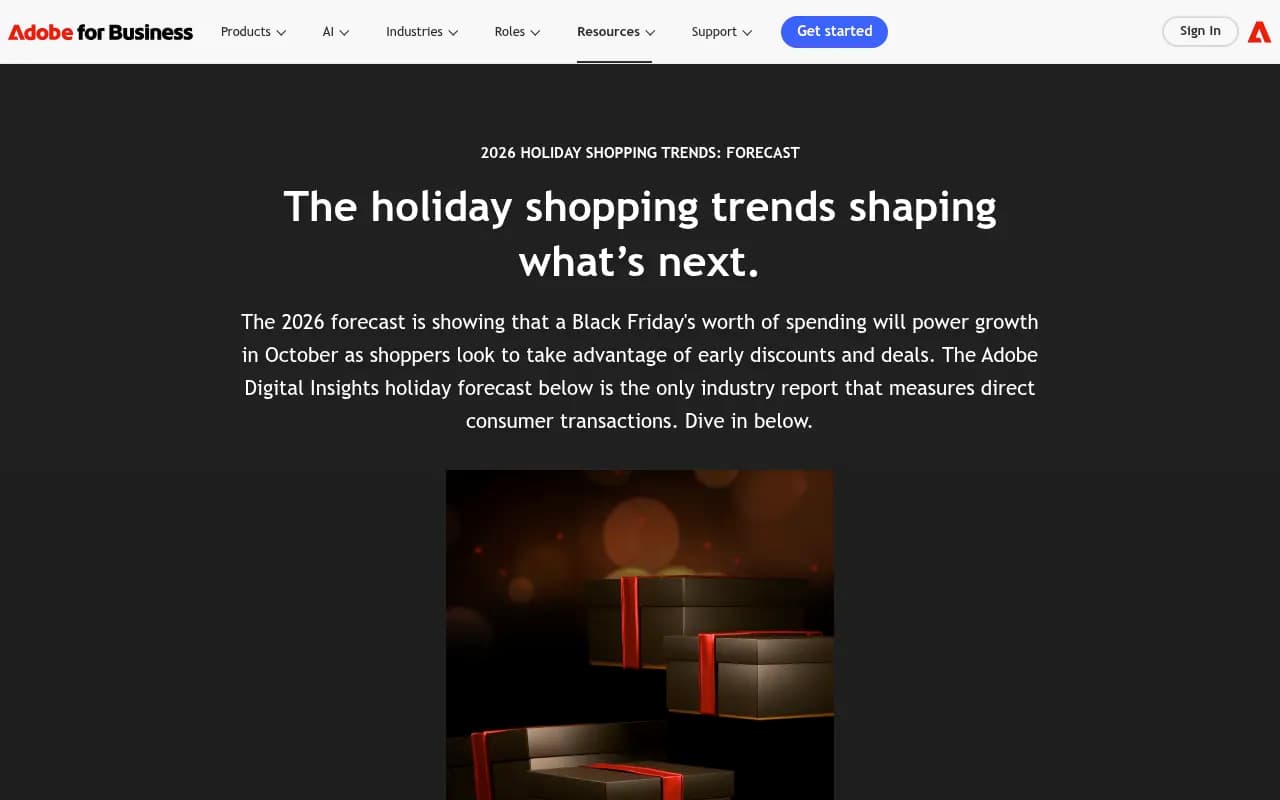
Optimove's Holiday Shopping Report 2026 says 72% of U.S. consumers regularly or occasionally consult AI tools for gift ideas, up from 49% around Mother's Day. Treat any survey number like that as directional, but the trend is consistent with Adobe's data: AI-driven traffic to retail sites grew 127% year over year in August 2026, and Adobe expects 141% growth on Thanksgiving itself. Adobe also reports that 69% of respondents say they are less likely to return an item bought with AI help, which suggests AI-assisted buyers arrive with firmer intent.
Circana's March 2026 survey found 25% of consumers had used an AI recommendation to buy a CPG product. So this is not a niche behavior anymore.
ChatGPT now has ads in the mix
This is the part I would not skip. According to Promptwatch's ChatGPT ads data (May 20 to August 17, 2026), ChatGPT served no ads until May 27, then crossed 30% of search-enabled responses on July 1. The average was 20.1% over 90 days, 29.6% over the last 30 days, and 32.4% over the last 7 days, with a daily peak of 43.9%. Of ad-bearing responses in the latest week, 73.3% came from organic prompts, 18.0% from brand-specific prompts, and 8.6% from competitor comparisons. That is a mix of what was monitored, not a measure of which prompt type triggers ads most, so read it loosely.
Still, the implication for the holidays is plain: generic gift and shopping questions are where sponsored placements are most likely to sit next to organic answers. Check across several days before you draw conclusions, since a single run can land on an outlier.
What ChatGPT cites when the question is commercial
Here is the useful part for anyone with a storefront or a product catalog. Promptwatch's content-type report (Sep 28 to Oct 4, 2026) breaks down what ChatGPT cites:
| Content type | Share of all citations | Share of commercial prompts |
|---|---|---|
| Product pages | 22.4% | 26.0% |
| Landing pages | 16.8% | 20.6% |
| Listicles | 13.6% | 15.0% |
| Comparisons | 5.9% | 7.9% |
| How-tos | 8.7% | n/a |
| Documentation | 7.5% | n/a |
| News | 5.7% | n/a |
| Reviews | 1.7% | 5.6% on branded prompts |
Product pages, landing pages, listicles, and comparisons make up almost 70% of citations on commercial prompts. See the full breakdown in Promptwatch's content-type citation data. Reviews barely register overall but jump to 5.6% on branded prompts, more than three times their overall share. If someone asks about your store by name, your reviews on trusted sites are part of the answer.
Seasonal pages decay, evergreen pages hold
Promptwatch's content half-life report tracked pages ChatGPT cited on July 6, 2026 for 90 days. Landing pages and docs stayed cited longest, while news lost half its pages within 36 days. A gift guide behaves more like news than a landing page. If you publish a "Holiday gift guide 2026" in early November and never touch it, expect its citations to fade right when December shoppers are asking.
Planning implication: keep evergreen product and category pages stable and accurate, and treat seasonal guides as living documents you refresh every couple of weeks.
Shopping cards are tuned by OpenAI, not by you
Promptwatch's ChatGPT shopping data shows product cards and price comparisons appear on only a low single-digit percentage of web-search responses overall, though far more often on commercial and transactional prompts. The rate moves in steps. It roughly doubled overnight in late May and fell back weeks later, which Promptwatch reads as OpenAI opening and closing windows. I did not find a measured holiday-window figure, so do not assume one. What you can control is the input: complete Product schema, accurate price and availability, and a clean merchant feed.
How the local angle plays out
Local recommendations are where evidence is thinnest, so here is how I would frame it. These are recommendations, not findings.
ChatGPT's answers to "near me" style questions depend on what the model can retrieve about places and businesses in a given area. During the holidays, three things typically shift for local businesses:
- Hours change. Extended hours, early closes, and holiday closures are the most common source of wrong answers. If your site says one thing and a listing says another, an AI answer may repeat either.
- Inventory and price change fast. Doorbusters and limited stock make last month's product page wrong by Black Friday.
- Competition for attention rises. Aggregators, marketplaces, and gift-guide publishers get more search activity, and with ads in about a third of search-enabled answers, paid placements compete with your organic mention.
None of that requires a special trick. It requires your facts to be consistent everywhere an AI might look: your site, your Google and Bing listings, directory profiles, and review sites.
A holiday prep timeline
Realize recommends publishing mobile-first content by October, with discovery first, consideration in November, deals during Cyber Five, and shipping deadlines and last-minute offers in December. Map your AI visibility work onto that.
Now through early November
- Audit your product and landing pages for price, availability, specs, and clear audience ("best for..."). Add or fix Product schema.
- Standardize business name, address, phone, and hours across all listings. Add holiday hours now, not on December 20.
- Build the prompt list you will monitor. Include organic gift prompts ("gift ideas for a home cook under $50"), brand prompts, and competitor comparisons, plus the local variants with your city and neighborhood names.
- Publish comparison pages of your own, since comparisons are a cited format on commercial prompts.
Mid-November through Cyber Week
- Refresh seasonal guides and deal pages weekly. Their citation life is short.
- Check which listicles and roundups ChatGPT cites for your category, and pitch to be included. Listicles are 13.6% of citations overall.
- Re-run your tracked prompts and note whether shopping cards or ads appear, and who fills them.
December
- Update shipping cutoffs, pickup windows, and last-minute availability on the page, in plain text.
- Keep reviews flowing on third-party sites. Branded prompts lean on them.
- After the season, compare which pages got cited and which fell off, and carry the lessons into January planning.
Tools that help with each part
You do not need every tool below. Pick by the job.
| Job | Example tools | Why use them |
|---|---|---|
| Track and improve AI visibility | Promptwatch, Profound, Otterly.AI | See which prompts mention you and which pages get cited |
| Local listing consistency | BrightLocal, Yext, Uberall | Keep hours and details identical across directories |
| Local rank checks | Local Falcon, Local Rank Tracker | See how visibility varies by location |
| Reviews and reputation | Birdeye, Trustpilot, Podium | Collect and respond to reviews AI may cite |
| Seasonal search demand | Google Trends | Spot when demand for gift terms starts rising |
| Search performance | Google Search Console | See which queries and pages already earn impressions |
AI visibility tracking
For tracking how ChatGPT and other assistants answer your holiday prompts, tools like Promptwatch can run your prompts daily, show which pages get cited, and flag content gaps. Its local targeting lets you pin a monitor to exact coordinates so ChatGPT answers as if asked from that spot, which is relevant for multi-location retailers. It also has AI Shopping and Ads Radar views, which fit the shopping-card and ad behavior described above.

If you want to compare options first, the GEO software directory at bestgeosoftware.com lists alternatives, and ai-rank-tools.com covers AI rank trackers.
Profound

Otterly.AI

Local listings and reputation
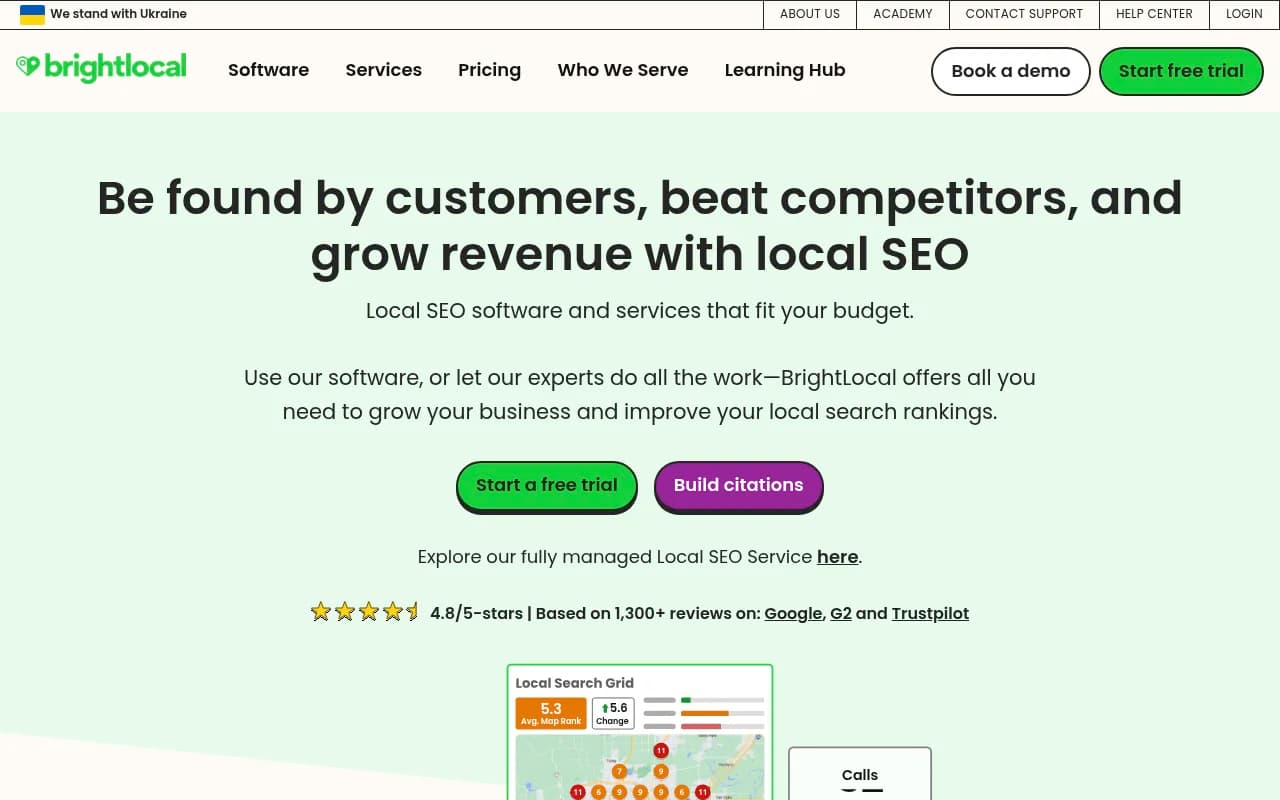
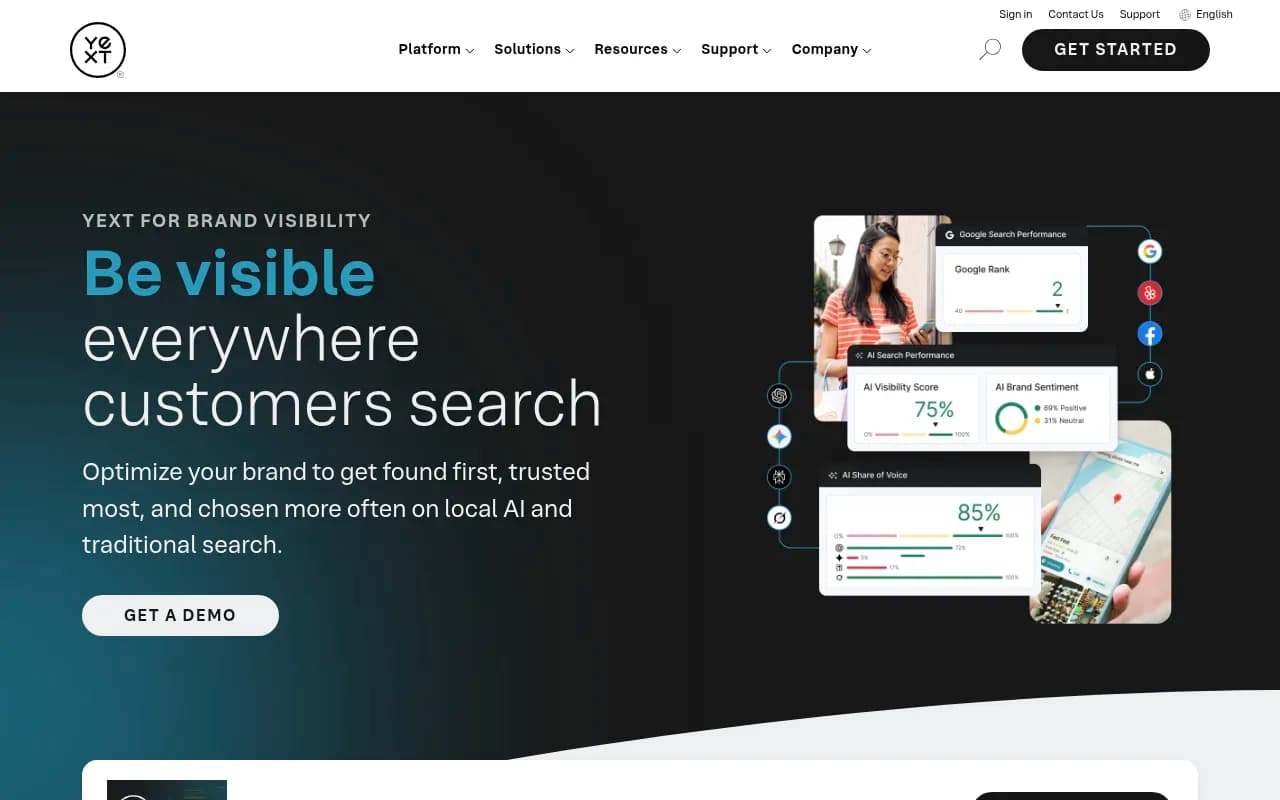
For listing consistency across many locations, BrightLocal and Yext are common choices. Yext leans enterprise and multi-location, while BrightLocal is friendlier for agencies and smaller teams.
For reviews, Birdeye and Trustpilot cover collection and display. Reviews matter more than their overall share suggests, because branded prompts cite them at 5.6%.
Seasonal demand and search data
Google Trends shows when interest in gift terms starts climbing in your market, and Google Search Console shows which pages already earn impressions that you can strengthen before the rush.
How to test local variation yourself
Since no one has published the definitive study, run a small one. It takes an afternoon.
- Write 15 to 25 prompts: gift ideas, "best [product] in [city]," "where to buy [item] near me," and a few brand and competitor comparisons.
- Run them in October, again in mid-November, and again in the first week of December.
- Record whether you are mentioned, which pages are cited, whether a shopping card or ad appears, and which competitors fill the gaps.
- Repeat for two or three locations if you have more than one. Differences between them tell you where your local data is weak.
- Repeat each prompt on a few different days. Ad and card rates shift in steps, so one run can mislead you.
You can do this by hand in ChatGPT, or let a tracker automate it. Either way, write down the dates. The point of the exercise is the comparison across the season.
What I would not do
I would not rewrite your entire site for AI in November. Promptwatch's own data says landing pages and docs hold citations for months, which means the durable work (accurate product pages, consistent listings, real reviews) beats a last-minute content sprint. I also would not assume ChatGPT will favor you because you are local. It cites what it can find and trust, and with almost half of responses citing 10 or more unique domains, per Promptwatch's unique-domains data, you are competing with a long list of sources, not one or two.
For wider context on how AI answers are built, Promptwatch's data hub is the place to check for new reports, including any that eventually cover seasonal behavior.
The short version
Shoppers are starting earlier, more of them are asking an AI for ideas, and ChatGPT's answers now share space with ads. What you can control is the quality and consistency of your pages, listings, and reviews, plus how fast you refresh anything seasonal. Fix the facts first, then monitor, then adjust week by week through Cyber Week and into December.