Key takeaways
- Reselling AI visibility reports only works if the tool has per-client workspaces, white-label exports, and data pulled from real AI interfaces rather than inferred from keyword databases.
- Report each AI engine separately. Engines offer very different numbers of citation slots, so a single blended score hides what is actually happening.
- Monitoring-only tools are fine for pitching and baseline reports, but retainers get renewed when you can show the fix and the result. That needs content, crawler, and traffic data.
- Pricing and white-label terms change often and are rarely public in detail. Verify on each vendor's pricing page before you build a margin model.
- A pilot on two or three real clients tells you more than any roundup, including this one.
Why agencies are reselling AI visibility reports
Clients are asking the same question in 2026: "What does ChatGPT say about us?" Agencies that can answer with a clean, branded report win the conversation. Agencies that answer with screenshots pasted into slides lose it to someone who can show a trend line.
The resale model is simple. You license a GEO platform, set up one workspace per client, and package the output as a monthly deliverable or an add-on to an existing SEO retainer. The margin lives in the gap between the tool cost and what you charge for interpretation and execution.
The catch is that not every tool is built for this. Some are single-brand dashboards with a login, and sharing a PDF is the closest thing to agency support. Picking the wrong one means rebuilding your reporting stack six months in.
What to check before you commit to a platform
Profound published a list of agency criteria in a January 2026 post. It is a vendor blog and Profound ranks itself first, so treat the rankings with suspicion. The criteria themselves are sensible, and I'd use most of them.
Per-client workspaces and pitch environments
Per-client workspaces are the baseline. Each client needs separate prompts, competitors, brand aliases, and users. Without this you will leak one client's competitor set into another's report, and that is an awkward email to write.
Pitch environments are the nicer-to-have that turns out to matter. You load a prospect's brand, run the prompts, and show the results live on a sales call. If they sign, the pitch converts into a real account with history intact.
Real UI data versus API output
This is where I'd spend the most diligence time. Answers from an API often differ from what a person sees in the ChatGPT or Google AI Overviews interface, especially for citations and shopping results. Some tools also infer "prompt demand" from an SEO keyword database and present it as if it came from real conversations. Ask each vendor directly where their prompt volumes come from and how responses are collected.
Engine coverage, reported separately
ChatGPT, Claude, and Google AI Overviews are the foundation. Perplexity, Gemini, Copilot, Grok, Meta AI, and DeepSeek matter depending on the client's buyers. A B2B SaaS client and a local retailer do not need the same engine list.
How you report matters as much as what you track. Promptwatch's average sources per response data shows that engines differ a lot. ChatGPT averages about 5 citations per web-search answer, Google AI Overviews about 10, and Perplexity almost exactly 10 every day. Microsoft Copilot swung from under 2 to nearly 17 within a few weeks before settling low. The page carries an older date stamp but describes recent behavior, so check it before you quote figures to a client.
The practical takeaway: never hand a client one blended "AI visibility score" and call it done. Report each engine on its own. Perplexity's stability also makes it a decent test bench when you want to isolate the effect of a content change.
Reporting, exports, and integrations
Check for PDF and scheduled reports, CSV exports, a Looker Studio connector, and an API. Then check whether the branding can be removed. Many tools say "agency" on the pricing page and still stamp their logo on every export.
Partner economics
Some vendors run partner programs with referral commission, prospecting licenses, or co-marketing funds. Others run a competing agency service and will happily pitch your client directly. Read the partner terms, and ask who owns the client relationship.
The shortlist
Pricing was not verifiable for most of these at the time of writing, and I found no confirmed white-label terms for several. Treat the table as a starting point and confirm everything on the vendor's page.
| Tool | Agency angle | Main limitation |
|---|---|---|
| Promptwatch | Agency plans with unlimited projects, pitch projects, white-label exports, and client access | Agency plans exclude the Content Agent and AEO articles |
| Profound | Agency mode with client workspaces and pitch environments | Can be more than a lightweight reporting job needs |
| Scrunch | Partner program, AI-optimized pages served to crawlers | Prompts are configured, not pulled from real conversations |
| Otterly | Fast, low-cost setup for small agencies | No real prompt volumes or content generation |
| Peec AI | Clean client dashboard, screenshot audit trails | Monitoring only |
| AthenaHQ | Action Center with next steps | Undisclosed model behind prompt volumes |
| Rankability | Built for agencies, bundles SEO and AI reporting | AI visibility is keyword-configured |
| SE Visible | Lowest entry price, multi-brand in every tier | Thinnest engine coverage |
Promptwatch
Promptwatch is the one I'd put at the top for agencies that want to do more than report. Its Agency plans (Kick-off at $199/mo, Growth at $399/mo, Scale at $799/mo) include unlimited projects, pitch projects, and prompts, 10 seats, all models, and Agent Chat. Exports and schedules can carry your branding, and clients can get branded read-only access.

What separates it from most monitoring dashboards is what sits next to the visibility numbers: IP-verified AI crawler logs, visitor analytics for AI-referred traffic, site audits, and citation tracking for Reddit, YouTube, and LinkedIn. It monitors the real interfaces of ChatGPT, Google AI Overviews, AI Mode, Gemini, Perplexity, Copilot, and others, by country and language. When a client asks "did anything actually happen?", you can show whether AI crawlers read the page, whether it got cited, and whether it sent visitors.
Honest caveats: Agency plans don't include the Content Agent, AEO articles, the Knowledge Base, 360 Insights, or Shopping Insights. Those sit on Business and Enterprise. Confirm current pricing at promptwatch.com/pricing.
Profound
Profound is the most direct competitor for agency work, with client workspaces, pitch environments, and crawler-to-conversion attribution. It claims daily tracking on 1.9B+ real user prompts, which is a vendor claim worth asking about in a demo. It is priced and positioned for larger teams.
Profound

Scrunch
Scrunch pairs monitoring with its AXP, which serves AI-optimized versions of pages to crawlers. Its partner program offers referral commission, prospecting licenses, and co-marketing funds. The tradeoffs are no content generation and configured prompts.

Otterly and Peec AI
Both suit agencies that want a quick, cheap way to produce baseline reports. Otterly is fast to set up and includes content briefs. Peec AI has a clean client dashboard, daily tracking, and screenshot audit trails, which clients like because they can see the evidence. Neither generates content or ties visibility to traffic.
Otterly.AI


AthenaHQ and Rankability
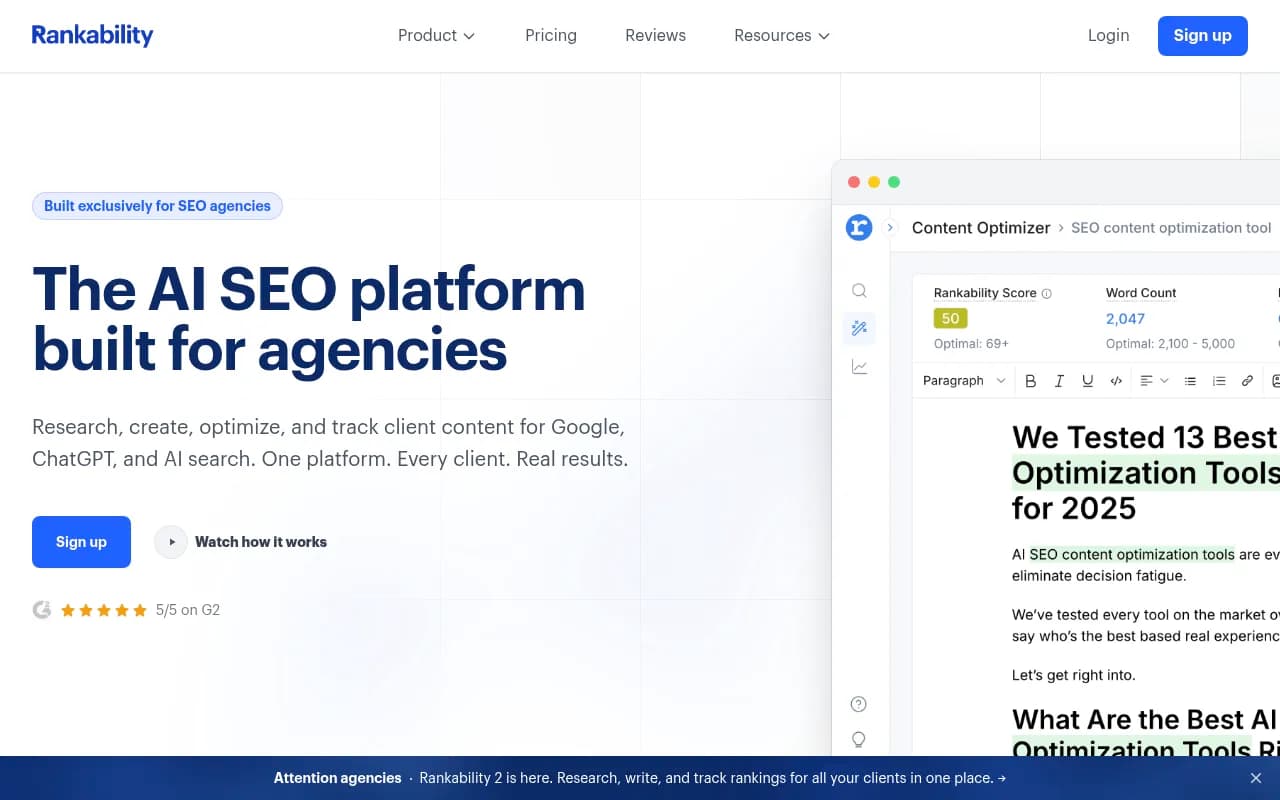
AthenaHQ's Action Center gives prescriptive next steps, though its prompt volume relies on an undisclosed model and the AI-drafted content needs heavy editing. Rankability is purpose-built for agencies and bundles SEO, AI visibility, content, and client reporting. Its AI visibility is keyword-configured, so ask how that differs from real prompt tracking.

Suite add-ons and enterprise options
Semrush and Ahrefs Brand Radar are the obvious choices if your clients already live in those suites. The tradeoff is that Ahrefs derives prompts from keywords and most engines refresh monthly, and Semrush's engine coverage is narrower than its SEO product suggests.

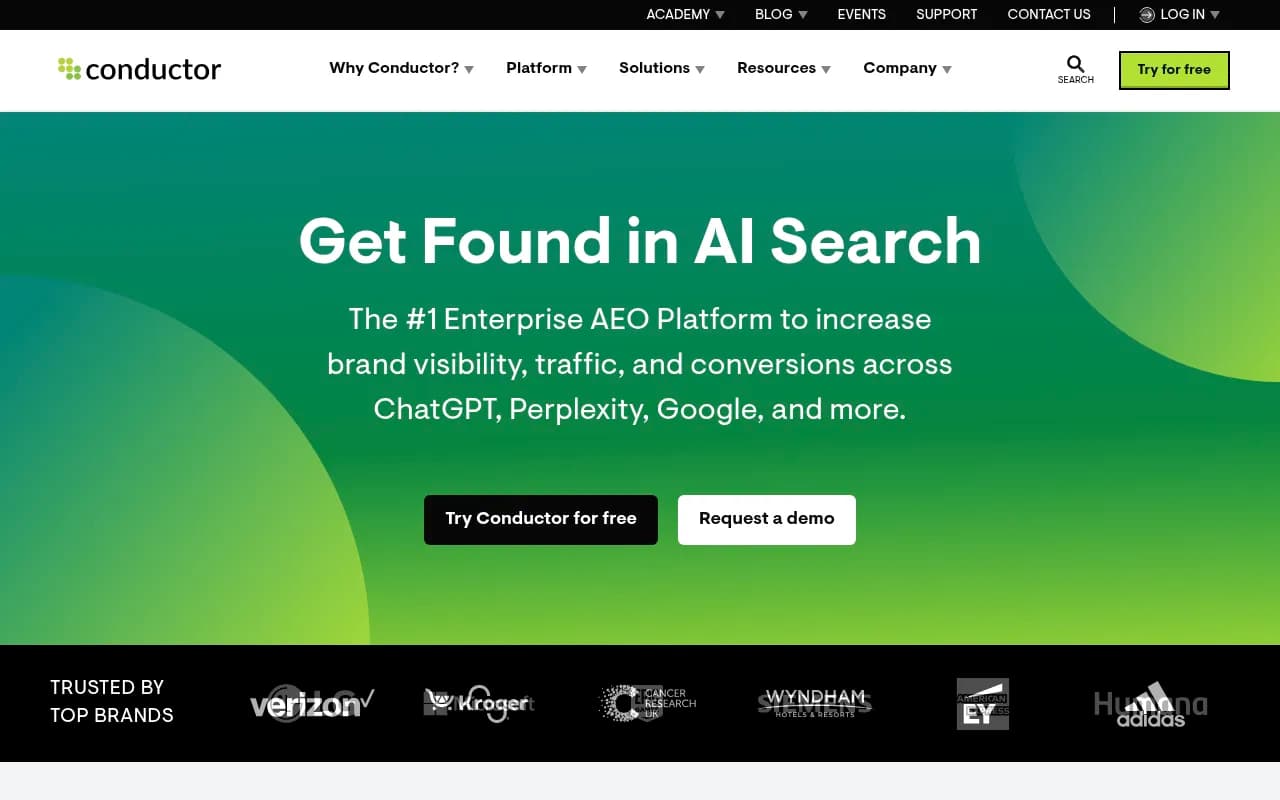
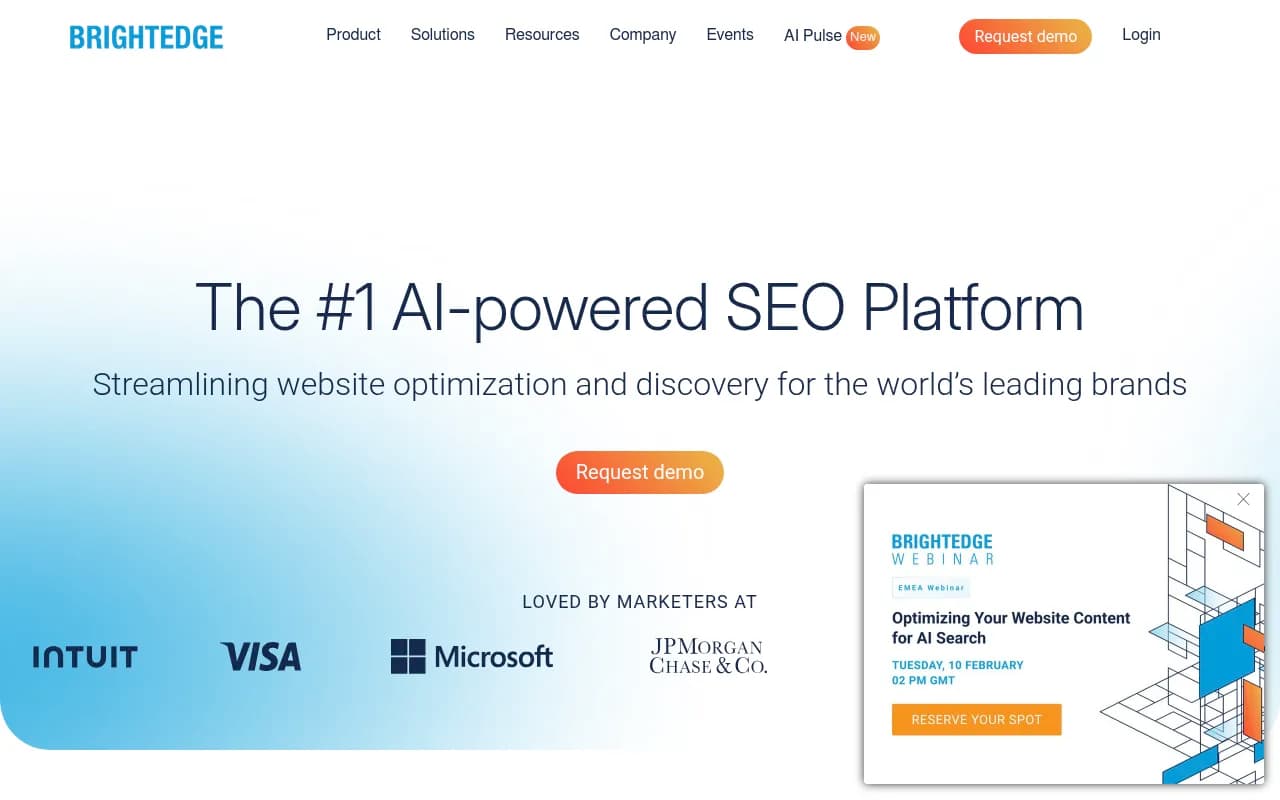
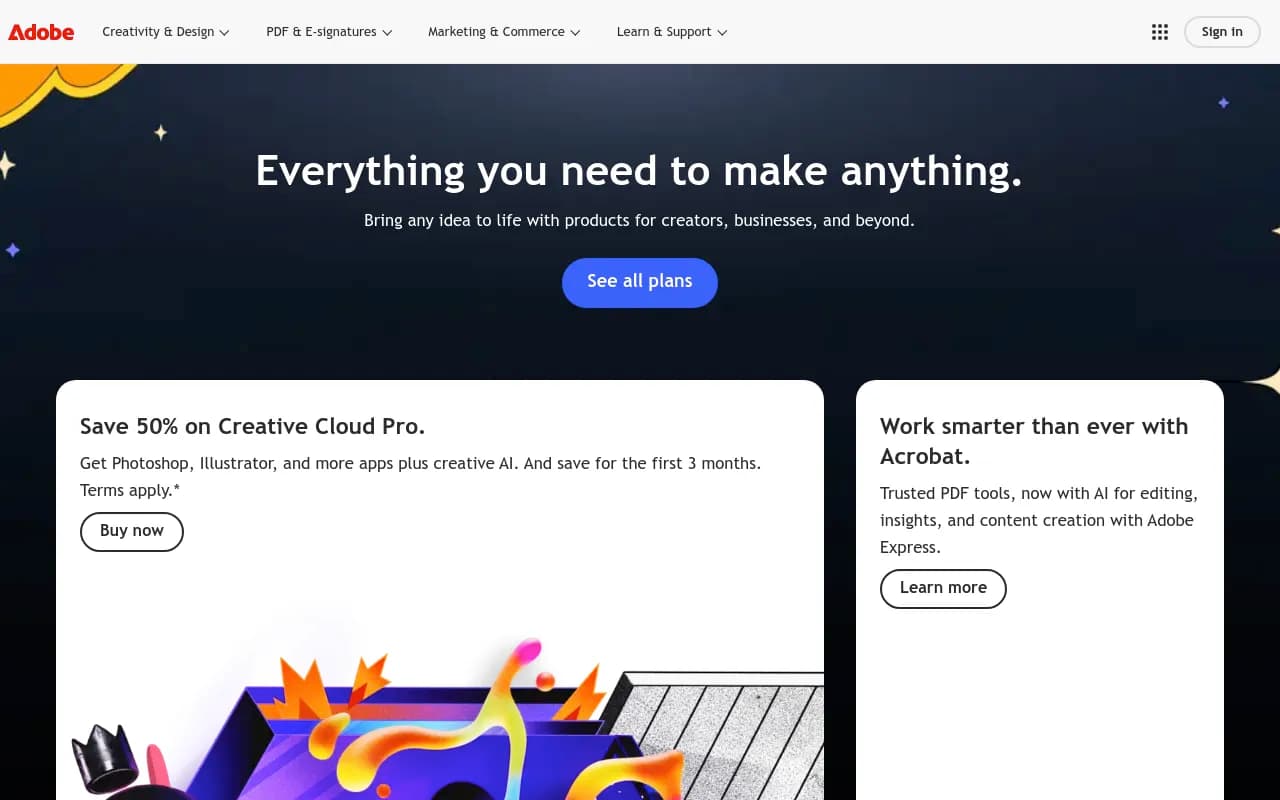
For enterprise clients, Conductor, BrightEdge, and Adobe LLM Optimizer are worth a look. Conductor's prompts are synthetic and updates land twice a week. BrightEdge is strong on entities but skews to three engines. Adobe fits clients already on the Adobe stack, though its prompt data is modelled from clickstream and search panels.
Budget and niche picks
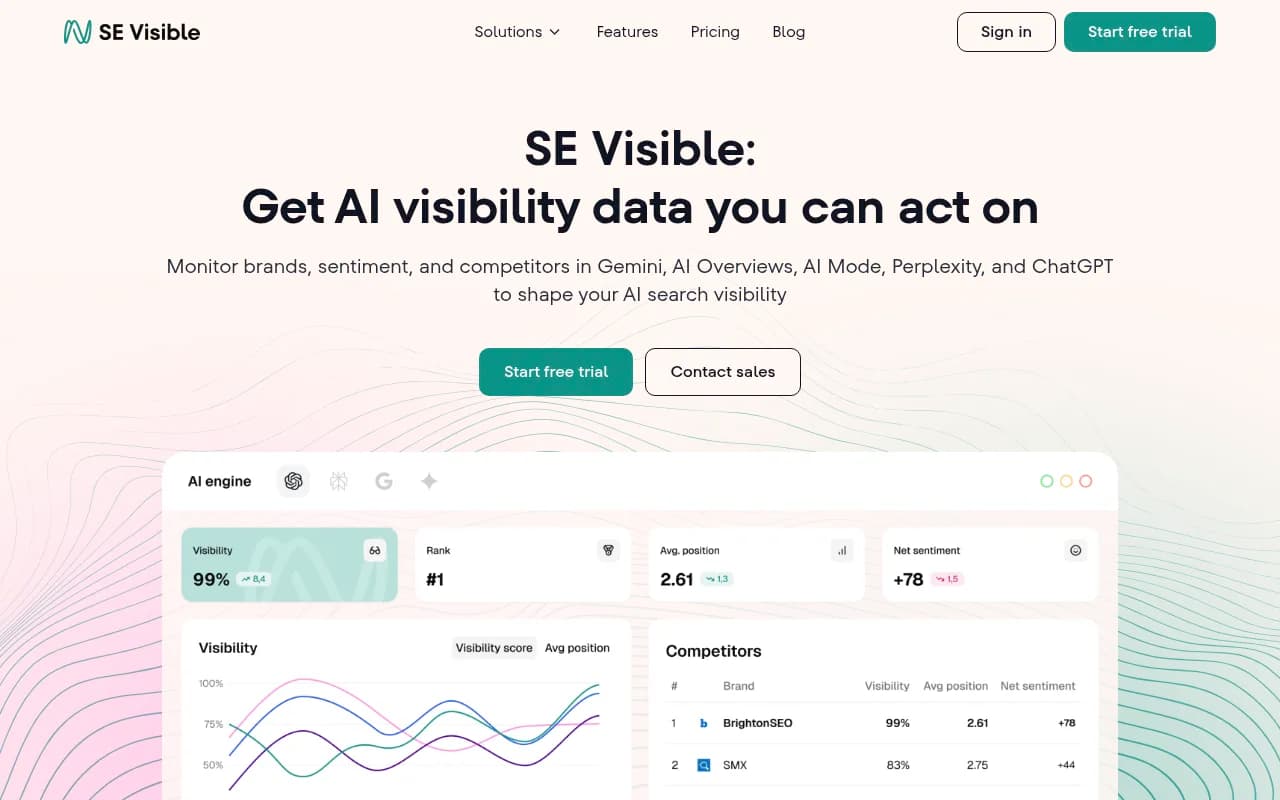
SE Visible has the lowest entry price and multi-brand support in every tier, but the thinnest engine coverage on the list. ZipTie is positioned around deep analysis and reporting. Brandlight shows which publishers shape a client's AI answers but tracks few engines. AIclicks covers 10+ engines and has partner revenue share, though it also sells a competing AI SEO service, so read the terms.
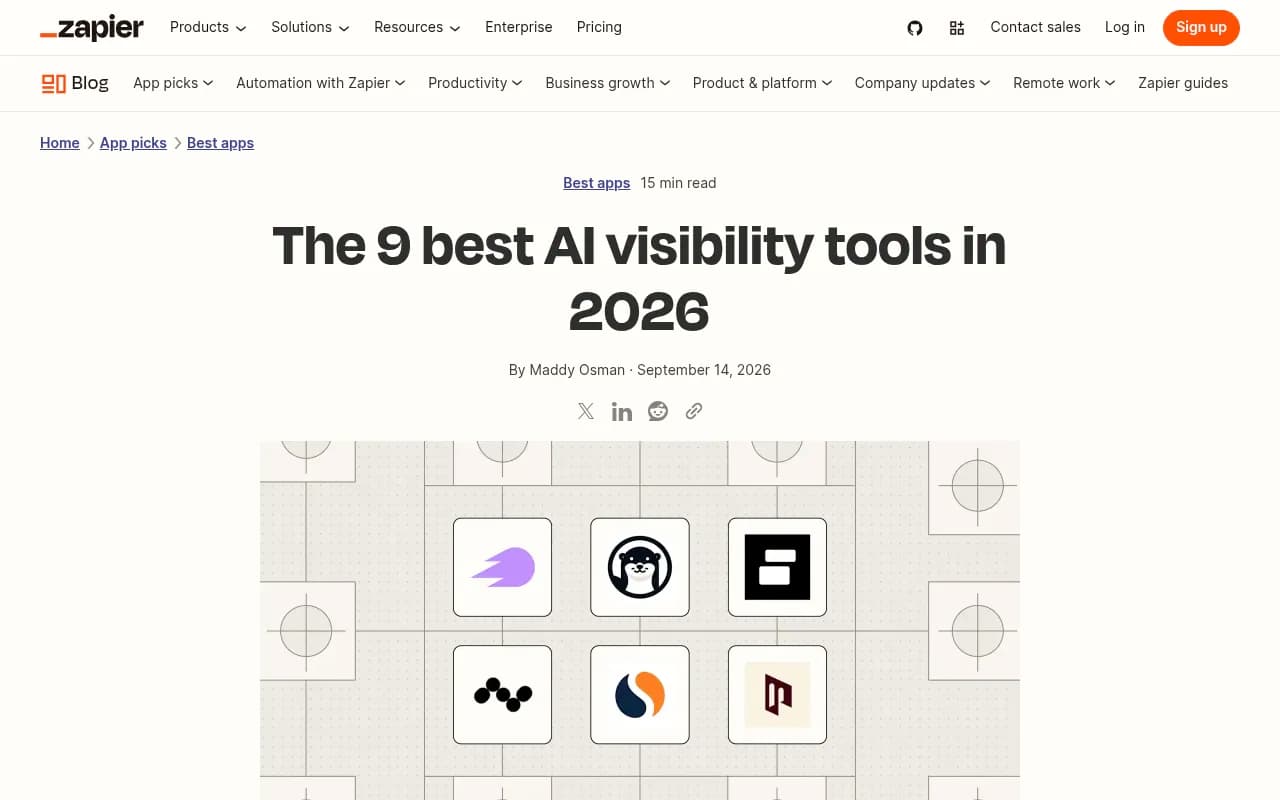
Zapier's September 2026 roundup (Maddy Osman says she researched nearly 50 tools) picks OtterlyAI for affordability, Peec AI for suggestions, ZipTie for analysis, Similarweb for side-by-side SEO and GEO, and Petra Labs for enterprise. It is a decent independent cross-check against vendor-written lists.
If you want to browse beyond this shortlist, the GEO software directory at bestgeosoftware.com and the AI rank tracker listings at ai-rank-tools.com cover far more tools.
Monitoring-only or optimization platform?
This is the decision that shapes your margins. A monitoring tool lets you sell a report. An optimization platform lets you sell outcomes, and outcomes are what retain clients past month three.
Think about the client conversation in month four. The monitoring-only version: "Your visibility score went from 31 to 34." The version that keeps the contract: "We found five prompts where competitors are cited and you aren't, published pages for them, confirmed AI crawlers read those pages, and two are now cited and sending visitors." The second needs crawler data, content tooling, and traffic attribution in the same place.
That doesn't mean monitoring-only tools are wrong. If you already run a strong content operation and only need a reporting layer, a cheaper tracker is a reasonable choice. Just be honest about what you're buying.
Questions to ask on every demo
- Where do prompt volumes come from, and are responses collected from the real interface or an API?
- Can I remove your branding from PDFs, dashboards, and scheduled emails?
- How are client workspaces billed? Per brand, per prompt, per response?
- What happens to a pitch account when I convert it?
- Do you offer a partner program, and do you also sell services to my clients?
- How often does each engine refresh: daily, weekly, monthly?
- Can I export raw prompts, responses, and citations if I leave?
- What security certifications do you hold? Enterprise clients will ask.
Building the reseller package
Tools matter less than packaging. A structure that works for most agencies:
- A one-time baseline audit using a pitch environment or a free scan, priced as a standalone deliverable.
- A monthly report that covers each engine separately, with Share of Voice against two or three named competitors.
- A short written interpretation. Clients pay for the "so what", not the chart.
- An optional execution tier covering content, technical fixes, and offsite mentions.
For claims about how AI engines behave, ground your reports in published data rather than folklore. Promptwatch's ChatGPT citation share by content type report (Sep 28 to Oct 4, 2026) found product pages were the most cited type at 22.4%, and its social media citations report found ChatGPT drew 0.46% of citations from social platforms in that period versus 12.2% for Google AI Overviews. Those differences are exactly why you report by engine. The full list lives at promptwatch.com/data.
If you'd rather hand the execution side to specialists, 1001 SEO Media works with agencies and brands on GEO and AI search, and uses Promptwatch for its own visibility tracking.
A sensible way to choose
- Pick two or three tools from the shortlist based on your client mix and how much content work you do.
- Run each on the same two clients for 30 days with identical prompts.
- Compare data quality, export quality, and how much time the reports take you to produce.
- Check pricing and white-label terms in writing before you sign.
The tool that saves you the most reporting hours while giving you something credible to say about results is the right one, regardless of which list it appeared on.