Key takeaways
- ChatGPT answers are crowded. Promptwatch Data (Sep 28 to Oct 4, 2026) shows 47.6% of responses with citations name 10 or more domains, so you are always sharing the answer with other sites.
- Product and landing pages get 39% of ChatGPT citations, so thin store and category pages cost you answers.
- Since August 8, 2026, ChatGPT searches your own domain directly with the site: operator far more often. Crawlable, indexed store pages matter more than they did a quarter ago.
- The plan below runs in four weeks: baseline, data cleanup, page fixes, then third-party mentions and measurement.
- Test location-specific prompts, not generic ones. A single prompt tells you almost nothing.
Why local ChatGPT visibility breaks for multi-location retailers
A retailer with 80 stores usually has 80 slightly different versions of itself online. One store has an old phone number on an aggregator. Another has a Google Business Profile with no hours for holidays. A third has a store page that is just an address and a map embed.
Humans tolerate that mess. A language model assembling an answer from a dozen sources does not. It either picks a competitor with cleaner signals, or it names your brand in general and skips your specific store.
There is also a structural problem. Most retail SEO teams think in terms of rankings for "[product] near me." ChatGPT does not rank ten blue links. It runs several searches behind the scenes (query fan-outs), pulls sources, and writes an answer that cites a pile of them. Promptwatch Data from Sep 28 to Oct 4, 2026 found 47.6% of responses with citations cite 10 or more unique domains, and for organic prompts where no brand is named, 52.5% do. Your store is competing for a slot in a crowded answer, not for position one.
The good news: the fixes are mostly unglamorous operational work, and a month is enough to move the needle on the things you control.
What ChatGPT actually cites for commercial and local-ish prompts
Before planning, know what you are aiming at. Promptwatch's content type data for Sep 28 to Oct 4, 2026 breaks down ChatGPT citations like this:
| Content type | Share of ChatGPT citations |
|---|---|
| Product pages | 22.4% |
| Landing pages | 16.8% |
| Listicles | 13.6% |
| How-tos | 8.7% |
| Documentation | 7.5% |
| General articles | 6.1% |
| Comparisons | 5.9% |
| News | 5.7% |
| FAQ pages | 3.3% |
| Reviews | 1.7% |
For commercial prompts, product pages hit 26.0% and landing pages 20.6%. Those two types, plus listicles and comparisons, make up almost 70% of commercial citations. For branded prompts, reviews climb to 5.6%, more than three times their overall share.
Translate that for a retailer: your product pages, your store landing pages, "best of" roundups that mention you, and review sites are where the citations come from. Social posts barely register. Promptwatch's October 2026 data puts social platforms at 0.46% of ChatGPT citations, so a Facebook post per store will not save you.
One more shift worth knowing. On August 8, 2026, ChatGPT started using the site: operator at scale. Site-scoped fan-out queries went from about 0.37% to 16.8% of all fan-outs, and the average number of fan-out queries per response rose from roughly 1.08 to 1.83. Your own domain is now a direct retrieval surface. If your store pages are thin, blocked or unindexed, ChatGPT can search your site and still come back with nothing useful.
Before you start: set up your toolkit
You need three kinds of tooling. Most teams already own one or two.
- Something that measures AI visibility across many prompts and locations.
- Something that keeps location data consistent across directories and Google Business Profiles.
- Something that shows whether AI crawlers can read your pages at all.
For the first, Promptwatch is what I would reach for in a multi-location setup. You can pin a monitor to exact coordinates so ChatGPT, Google AI Overviews and AI Mode answer as if asked from a given store's neighborhood, and its crawler logs show whether AI bots are hitting your store pages or erroring out. Local targeting at exact coordinates is on Business and above (check promptwatch.com/pricing for current plans).

If you want to compare options, the GEO software directory at bestgeosoftware.com lists more trackers. For the listings side, the multi-location platforms in our catalog are the usual suspects.
| Job | Tools to look at | Notes |
|---|---|---|
| AI visibility tracking, location-aware | Promptwatch, Profound, Otterly.AI | Promptwatch adds crawler logs and content actions |
| Listings and NAP consistency | Yext, Uberall, Synup, Moz Local, Rio SEO | Pick by store count and budget |
| Reviews and reputation | Birdeye, Reputation, Podium, Trustpilot | Reviews carry extra weight on branded prompts |
| Local rank grids | Local Falcon, BrightLocal, Whitespark | Good for the Google side of the picture |
| Local marketing automation | SOCi, Chatmeter, Partoo | Built for franchise and multi-location brands |
| Site crawling | Screaming Frog, Sitebulb | Find thin or orphaned store pages |
Week 1: baseline your local visibility
Do not touch anything yet. Measure first, because otherwise you will not know what worked.
Build a location-aware prompt set
Write 30 to 50 prompts. Mix three types:
- Organic prompts with no brand: "where can I buy running shoes near downtown Denver"
- Brand-specific prompts: "does [Brand] in Denver carry wide sizes"
- Competitor comparisons: "[Brand] vs [Competitor] in Denver for outdoor gear"
Pick 5 to 10 representative stores: a flagship, a mid-performing store, a weak store, a store in a small market, and one in a dense market where competitors are everywhere. Write prompts for each. Do not test only your best location.
The research notes from Promptwatch Data are clear on why you need volume. Brand-specific prompts most often cite just five domains, while organic ones cite ten or more. Your visibility on a single prompt swings wildly. Across 40 prompts it starts to mean something.
Record what you see
For each prompt, note:
- Whether your brand is mentioned
- Whether a specific store is named or just the brand
- Which domains are cited (yours, competitors, aggregators, review sites)
- Whether the details (address, hours, stock) are correct
- How ChatGPT describes you
A free manual pass works for the first week. Open ChatGPT, run your prompts, paste results into a spreadsheet. It is tedious. It also teaches you things a dashboard hides, like the fact that your store hours come from a three-year-old directory page.
If you already use a tracker, set up a monitor with your location-pinned prompts so you get daily runs instead of a one-off snapshot.
Check crawler access
In the same week, check whether AI crawlers can reach your store pages. Look at robots.txt, and look at your server or CDN logs for GPTBot, OAI-SearchBot and ChatGPT-User. If OAI-SearchBot is blocked or getting 403s from your WAF, nothing else in this plan will matter. Promptwatch's free Agentic Readiness Check does a quick version of this, and Screaming Frog can confirm which store pages are actually indexable.
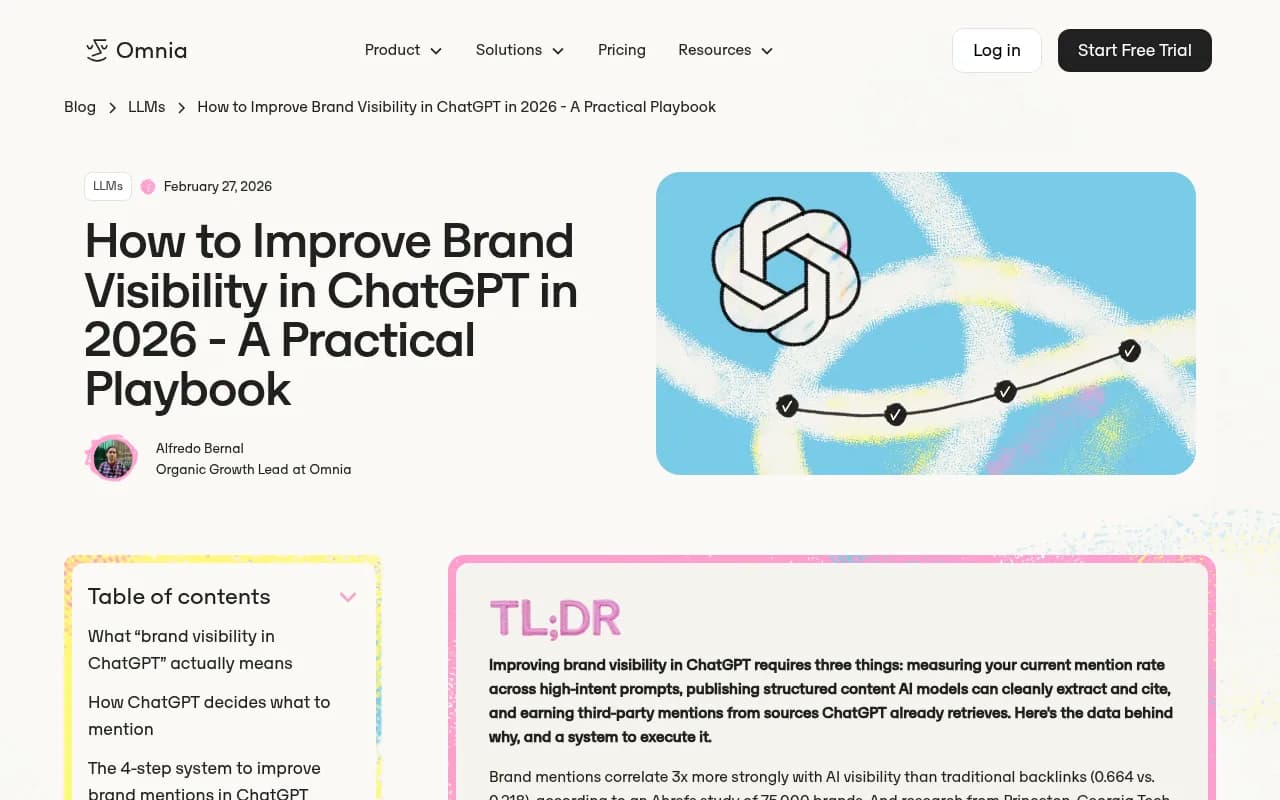
Omnia's playbook is a useful companion read for the general (non-local) side of this work. It argues brand mentions matter more than backlinks for AI visibility, citing an Ahrefs study of 75,000 brands. That figure is a vendor's secondhand citation, so treat it as directional rather than settled.
Week 2: fix your location data
Week 2 is boring and essential. Inconsistent location data is the most common reason a model hedges or gets store details wrong.
Audit Google Business Profiles first
Google Business Profile (GBP) remains the anchor for most local data, and AI answers across Google surfaces lean on it heavily. For every store, check:
- Name, address and phone are exact
- Primary and secondary categories are right
- Hours include holiday and special hours
- Fulfillment attributes (pickup, delivery, in-store) are set
- The website link goes to that store's page, not the homepage
- Photos are recent
The retail marketing automation crowd calls this out repeatedly: start with GBP completeness and accuracy at every store, including fulfillment attributes, then verify NAP (name, address, phone) consistency across directories.
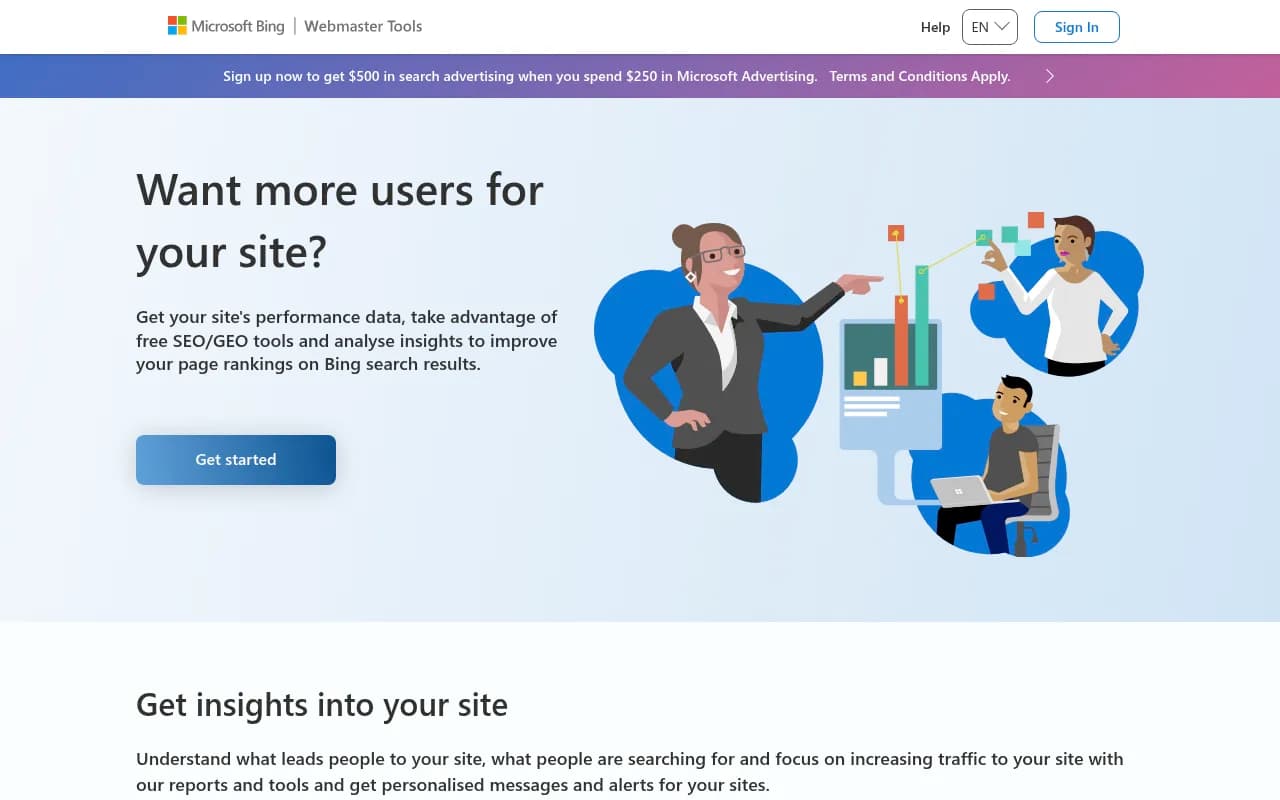
Don't forget Bing Places. ChatGPT Search draws on Bing-adjacent data, and Bing Webmaster Tools is free. Claim your listings there too.
Standardize NAP across directories
Pick one canonical format for each store and apply it everywhere. Suite numbers, "St." versus "Street," tracking phone numbers on some listings and real numbers on others: these are the small mismatches that create conflicting entities.
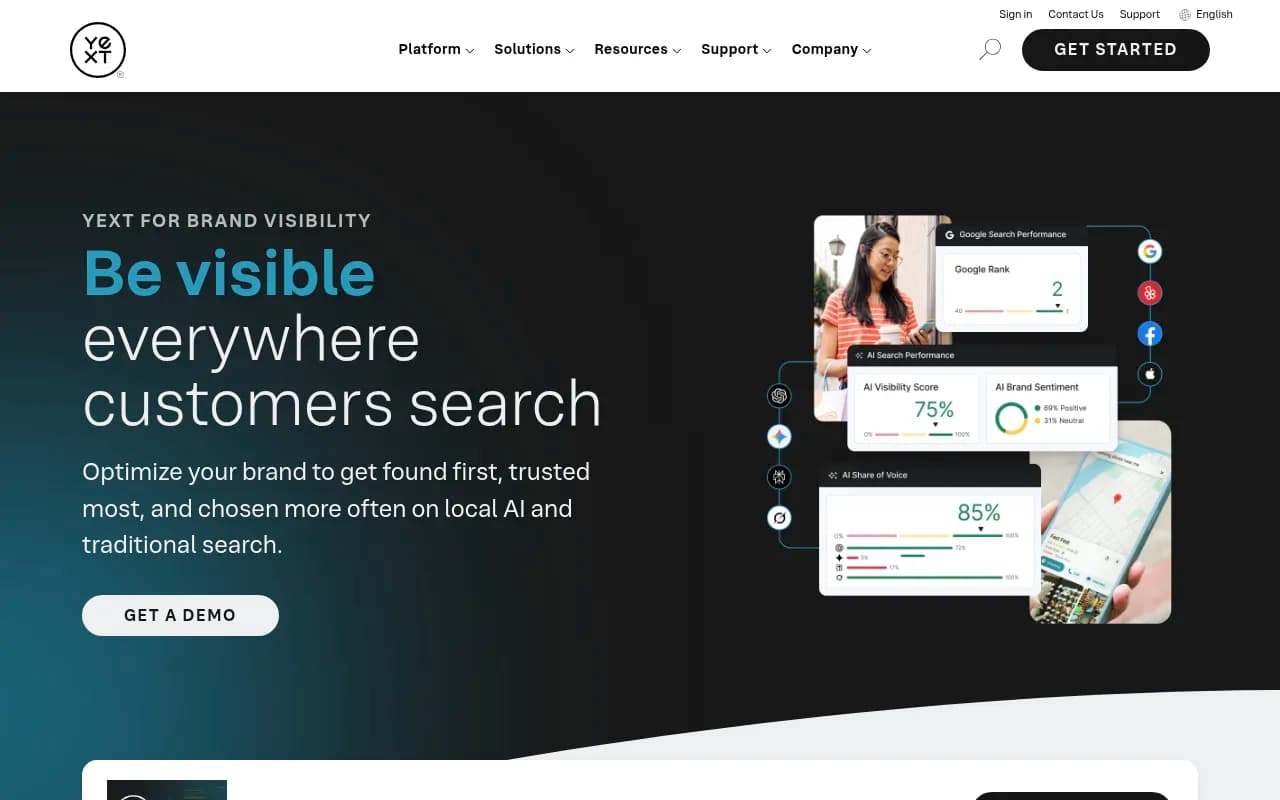
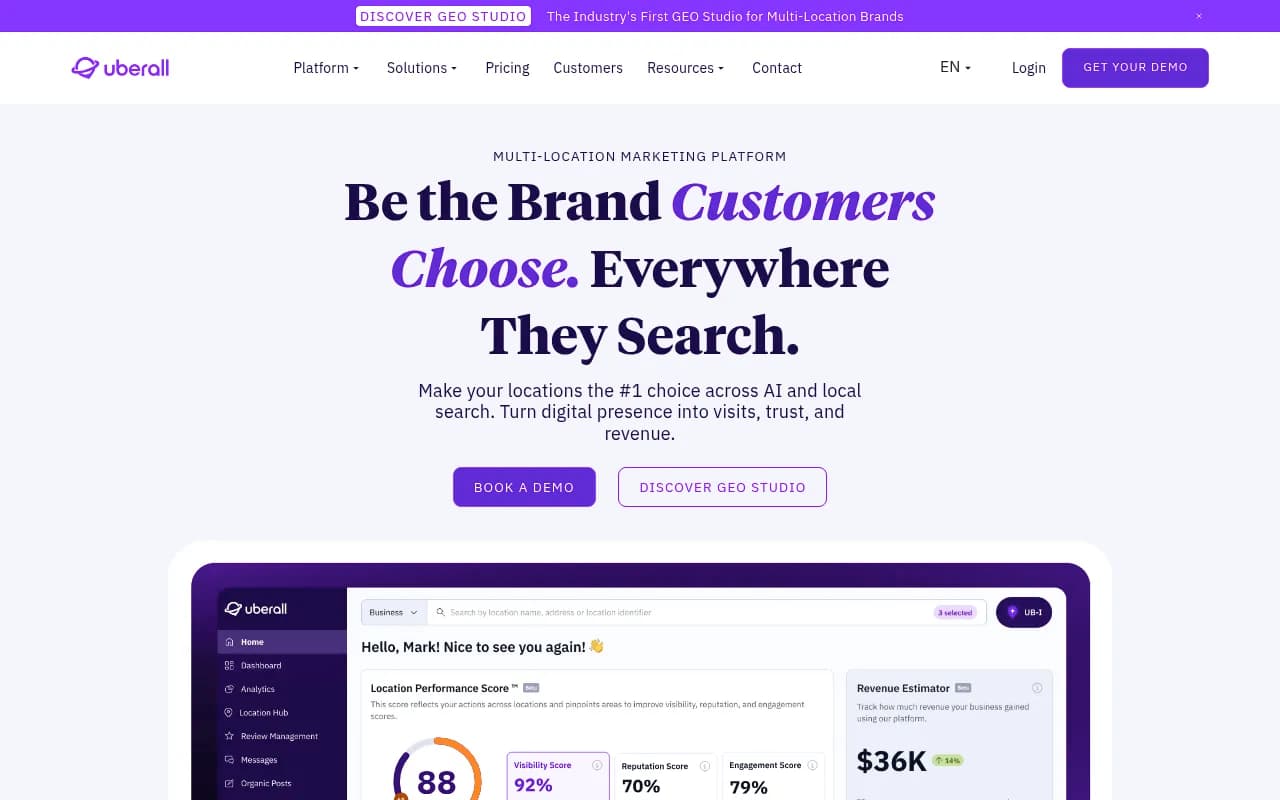
For 20 or more locations, doing this by hand is a recipe for drift. A listings platform such as Yext, Uberall, Synup or Moz Local can push a single source of truth to dozens of directories. BrightLocal and Whitespark are better for auditing what is out there now.
I would not pay for a platform before the audit. Run the audit first, see how bad it actually is, then buy accordingly.
Close duplicate and dead listings
Closed stores, old relocations and duplicate GBP entries are the quiet killers. A model that finds two addresses for the same store may name neither. Merge or remove them.
Week 3: fix your store pages and product data
This is where most of the citation upside lives, given that product and landing pages take 39% of ChatGPT citations.
Give every store its own real page
A store page should not be a map and a phone number. Each one needs unique, useful content:
- Full address, hours, phone, parking and transit notes
- Services available at that store (pickup, returns, repairs, fittings)
- Brands and categories carried locally
- Staff or manager names if you are comfortable with it
- Local FAQs ("Do you offer same-day pickup?" "Is there parking?")
- Reviews specific to that store
- LocalBusiness or Store schema markup with correct geo coordinates
Promptwatch's recommendations from its content type report are blunt and apply directly: keep specs, prices and positioning complete on product and landing pages, and add FAQ pages. FAQ pages are only 3.3% of citations overall, but they are cheap and they directly answer the questions people type into chat.
Make sure pages are crawlable and indexed
Because of the August site: operator shift, your own domain is searched directly. Check that store pages are in your sitemap, not orphaned, not noindexed by accident, and render without heavy JavaScript. If your store locator builds pages client-side, bots may see empty shells. A prerendering service can fix that, and Screaming Frog or Sitebulb will show you what a crawler sees.
Also confirm the fan-out assumptions you made earlier are not stale. Promptwatch notes that any keyword mapping built before August 8 predates the doubling of searches per response.
Tie product availability to locations
If you sell products with local stock, expose that on the page: "In stock at [Store]" with a visible text label, not just an image or widget. A language model cannot read a JavaScript inventory badge that never reaches the HTML. Feed product data to Google Merchant Center with local inventory if you are not already.
Use AI help for scale, with a human check
Writing 80 unique store pages is real work. AI writing tools can draft the structure, but unreviewed, boilerplate pages with swapped city names are exactly the thin content that does not get cited. Draft with a tool, then have someone who has been in the store add the facts that only they know. Promptwatch's Content Agent can plan and publish gap-filling content to WordPress, Webflow or Framer, but the same rule applies: put local facts in the brief.
Week 4: earn third-party mentions and reviews
With so many domains cited per answer, being named on other sites is half the game.
Reviews
Reviews are 1.7% of ChatGPT citations overall but 5.6% on branded prompts. That makes them a reputation layer: they shape how you are described when someone already knows your name. Push for fresh reviews on Google and on the platforms relevant to your category. A reputation tool such as Birdeye, Reputation or Podium can automate review requests after a purchase. Respond to reviews, especially the bad ones, because the text of your reply is also content.
Listicles and roundups
Listicles are 13.6% of citations. Find the "best [category] stores in [city]" and "best [product] retailers" pages that already show up in ChatGPT answers for your prompts. Reach out with something useful: accurate details, a local-only offer, an exclusive. Do not spam. Local blogs, city guides and regional publications are realistic targets for a 30-day push.
Local and category directories
Industry directories and local chambers of commerce still get cited. List the stores consistently, using the same NAP you standardized in week 2. For discovering where to be listed, check which directories appear in the citations for your baseline prompts. Those are the ones ChatGPT already trusts.
Skip the vanity channels
With social at 0.46% of ChatGPT citations, do not burn this week on posting. Google AI Overviews are different: Promptwatch's October 2026 data shows 12.2% of AI Overview citations come from social platforms, so if Google is a big channel for you, social has more value there.
Measure, then repeat
At day 30, rerun the same prompt set from week 1 against the same stores. Compare:
- Mention rate per store
- Share of answers where a specific store (not just the brand) is named
- Accuracy of hours, address and stock details
- Which of your domains get cited, and which third-party sites
- AI crawler hits on store pages and any error codes
- Referral traffic from AI platforms to store pages
Expect uneven results. Stores in small markets with weak competition tend to improve fastest. Dense markets take longer. And plan for change: ChatGPT's behavior has shifted overnight before (the August 8 site: change and a reported drop in Reddit citations on August 14 are two examples), so this is a monitoring job, not a one-time audit. Promptwatch's Reddit citation data shows how quickly a source can fall out of answers.
How long does content stay useful? Promptwatch's content half-life report found landing pages and docs stayed cited longest among pages ChatGPT cited on July 6, 2026, while news lost half its pages within 36 days. Store and category pages are in the durable group, which is another reason to invest there rather than in news-style posts.
A simple 30-day checklist
| Week | Focus | Deliverables |
|---|---|---|
| 1 | Baseline | 30 to 50 location-aware prompts, results log, crawler access check |
| 2 | Data cleanup | GBP and Bing Places audit, NAP standardization, duplicates removed |
| 3 | Pages | Unique store pages, schema, crawlable and indexed, local FAQs, stock labels |
| 4 | Mentions | Review campaign, roundup outreach, directory listings, rerun baseline |
Where this plan will not help
Be realistic about two limits. First, I found no public benchmark that tells you what a good local mention rate is for retail. Vendors such as SOCi have published frameworks (SOCi talks about a "% Recommended" metric), but the numbers are theirs, so build your own baseline and compare against yourself and two or three direct competitors.
Second, if you are in a category where marketplaces dominate, you may not win the generic prompts. Promptwatch's automotive data from August 2026 shows marketplaces like Autotrader and Cars.com outranking every car brand in ChatGPT citations. Retail has equivalents. In that case, your goal is a strong presence on the marketplaces and review sites that win the citation, plus owning the branded and "near me" prompts where your own pages can lead.
If you would rather hand this to specialists, an SEO and GEO agency can run the audit and execution. 1001 SEO Media works on local SEO and AI search visibility for brands, and it is a reasonable call when the store count is high and the in-house team is thin. For more tools in the category, see the rank tracking directory at ai-rank-tools.com.
Start with the baseline. Thirty prompts, five stores, one spreadsheet. By Friday you will know whether your problem is data, pages or mentions, and you can spend the other three weeks on the right one.