Key takeaways
- ChatGPT uses an approximate location from your IP address by default. Precise device location sharing is optional and off by default.
- Before searching, ChatGPT rewrites "good restaurants near me" into a text query like "top restaurants San Francisco". Your city and neighborhood signals matter more than the phrase "near me".
- A widely shared but unverified figure says multi-location brands land in Google's top three local results about 35.9% of the time, versus 1.2% for ChatGPT recommendations.
- You can't optimize for ChatGPT with a Google Business Profile alone. Listings, reviews, mentions, and clear location pages all feed the answer.
- Measure it by running the same prompts from different places, not by checking from your own desk.
What actually happens when someone types "near me" into ChatGPT
Google has spent twenty years turning "near me" into a map pack. ChatGPT does something different, and it is less magical than people assume.
According to OpenAI's help article on searching the web with ChatGPT, the default is an approximate location derived from your IP address. Nothing precise. Just roughly the city you appear to be in.
Then ChatGPT rewrites your question before sending it to search partners. OpenAI's own example: "good restaurants near me" from a San Francisco IP may become "top restaurants San Francisco". If memory is on, saved details get folded in too, so a vegan who lives in San Francisco might end up searching "good vegan restaurants San Francisco".
OpenAI also says it does not pass the IP address or account information to third-party search providers, though it may share the general location. The page names Microsoft and Shopify among those providers.
Here is the part I find most useful, and I want to be clear that it is my inference from OpenAI's example, not an OpenAI recommendation: because "near me" gets converted into a city-level text query, the stores that surface are the ones whose pages, listings, and mentions clearly say the city and neighborhood. The phrase "near me" never reaches the search index.
Approximate versus precise location
There are two location modes, and they behave differently.
| Mode | How it works | Default | What changes |
|---|---|---|---|
| Approximate (IP-based) | City-level location inferred from your IP | On | Query becomes a city-level text search |
| Precise device location | Optional sharing from your phone or browser | Off | More specific answers on nearby businesses, local news, weather |
On iOS and Android, users may be able to switch off precise location separately and still share an approximate device location. Users manage all of this under Settings, then Data controls, then Location. Mobile responses may also include a map.
SEO Sherpa covered the location-sharing rollout on May 26, 2026. Its piece is commentary without hard data, but the argument is sensible: once users share precise location, AI answers move into high-intent local territory, and the model has to decide which businesses to mention and which to put first.
Why the same query gives different stores in different places
Three things vary by location, and it helps to separate them.
- The rewritten query. A user in Austin and a user in Denver typing the identical prompt produce two different text searches. That alone changes the source pool.
- The sources that exist for that place. A city with strong local press, active review sites, and well-maintained directories gives ChatGPT more to cite than a small town with a thin web footprint.
- Personalization. With memory on, preferences get appended. Two people in the same city can see different shortlists.
I could not find first-party data on how ChatGPT results change by city, and I would be suspicious of anyone claiming a precise number. What the documentation supports is the mechanism, not a measured effect size.
OpenAI also warns that results and citations can be incomplete, outdated, or wrong, and suggests asking ChatGPT to search again with a specific source, date, or location. For a store owner, "outdated" is the word to notice. Old opening hours, a closed location still listed somewhere, a former address on a directory. Those errors travel.
The multi-location gap
This is the number that keeps circulating. Neil Patel posted on LinkedIn and elsewhere that brands with thousands of locations show up in Google's top three local results about 35.9% of the time, while ChatGPT recommends those same locations 1.2% of the time.
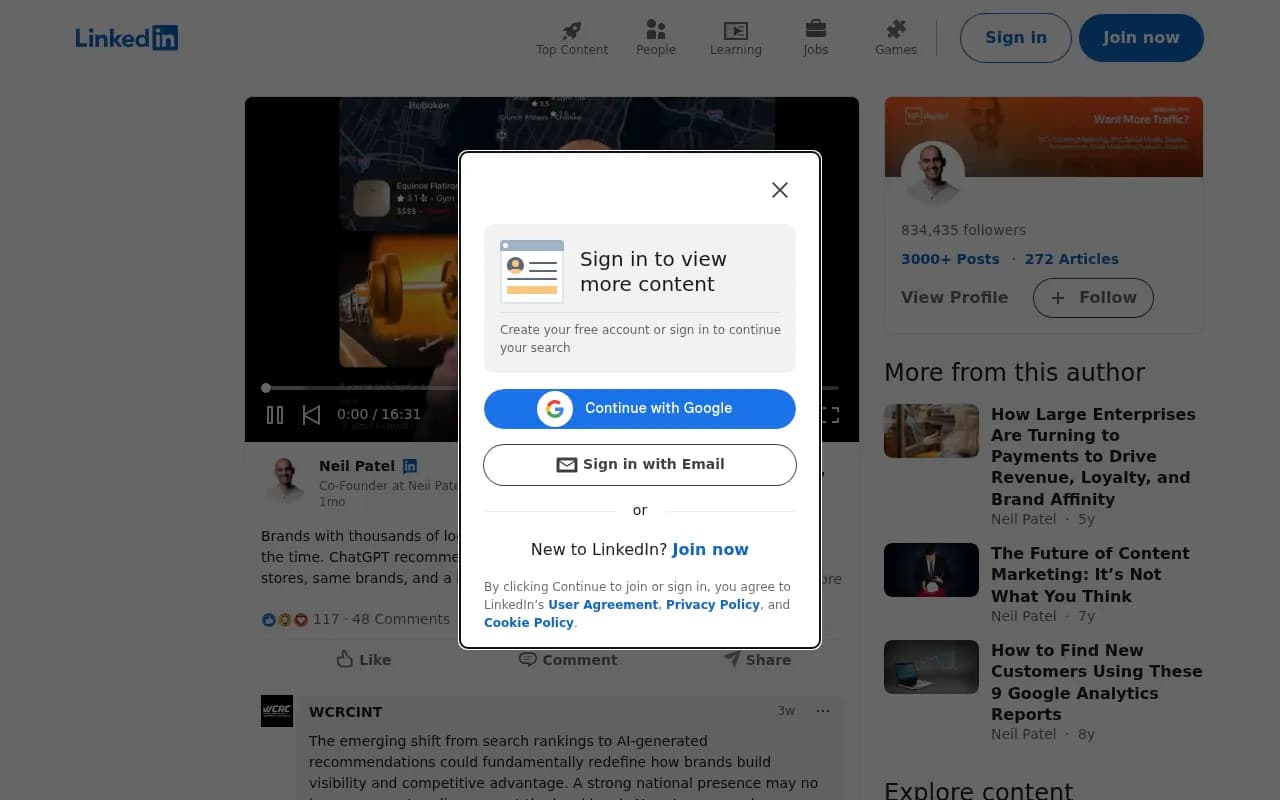
Treat that as a secondary citation. I looked for the underlying study and its methodology and could not find either, so I can't confirm how the prompts were built, how many locations were sampled, or what counted as a recommendation. The direction is plausible. The exact figures deserve caution.
Why might the gap exist? A few reasonable guesses, none of them proven:
- A chain's individual store pages are often thin, templated, and nearly identical across hundreds of cities.
- ChatGPT tends to cite listicles, roundups, and review content for "best" questions, and those rarely name individual branches.
- Knowing a brand is not the same as knowing which branch is closest and open.
For context on what ChatGPT does cite, Promptwatch Data's report on which content types ChatGPT cites the most (Sep 28 to Oct 4, 2026) found product pages at 22.4% of classified citations, landing pages at 16.8%, and listicles at 13.6%. Local store pages are not broken out as their own content type in that report, so it can't tell you how branch pages perform. It does suggest that structured, specific pages and "best of" roundups carry weight.
What local businesses can actually do
None of this is exotic. It is mostly good local SEO, pushed harder in a few directions.
Make every location page unique
A branch page that says "Welcome to our Denver location" and nothing else gives a search partner nothing to latch onto. Include the neighborhood names people use, parking and transit details, the services that branch actually offers, local staff, and real photos. Keep hours accurate.
Get named in the roundups
Answers to "best coffee shop in Portland" lean on listicles and local guides. If your shop is not on those pages, it has a much harder time appearing. Pitch local bloggers, local press, and city guides. That is a link and mention job, not a markup job.
Clean up listings and reviews
Inconsistent names, addresses, and phone numbers across directories create the contradictions that models and search partners stumble on. Review volume and recency also matter for the trust filter SEO Sherpa describes, though that is commentary rather than measured data.
Don't abandon Google Business Profile
SEO Sherpa makes the point that Google Maps isn't being replaced, but AI answers may shape a decision before anyone opens a map. Treat the two as complementary. Keep the profile accurate, and extend your visibility past it.
Check that AI crawlers can read your site
If your location pages are behind JavaScript rendering or blocked in robots.txt, none of the above helps. Run a crawler audit first.
Tools for local and multi-location teams
The tool landscape splits into two groups: classic local SEO platforms that manage listings and reviews, and AI visibility trackers that show what the models say.
Listings and reputation platforms
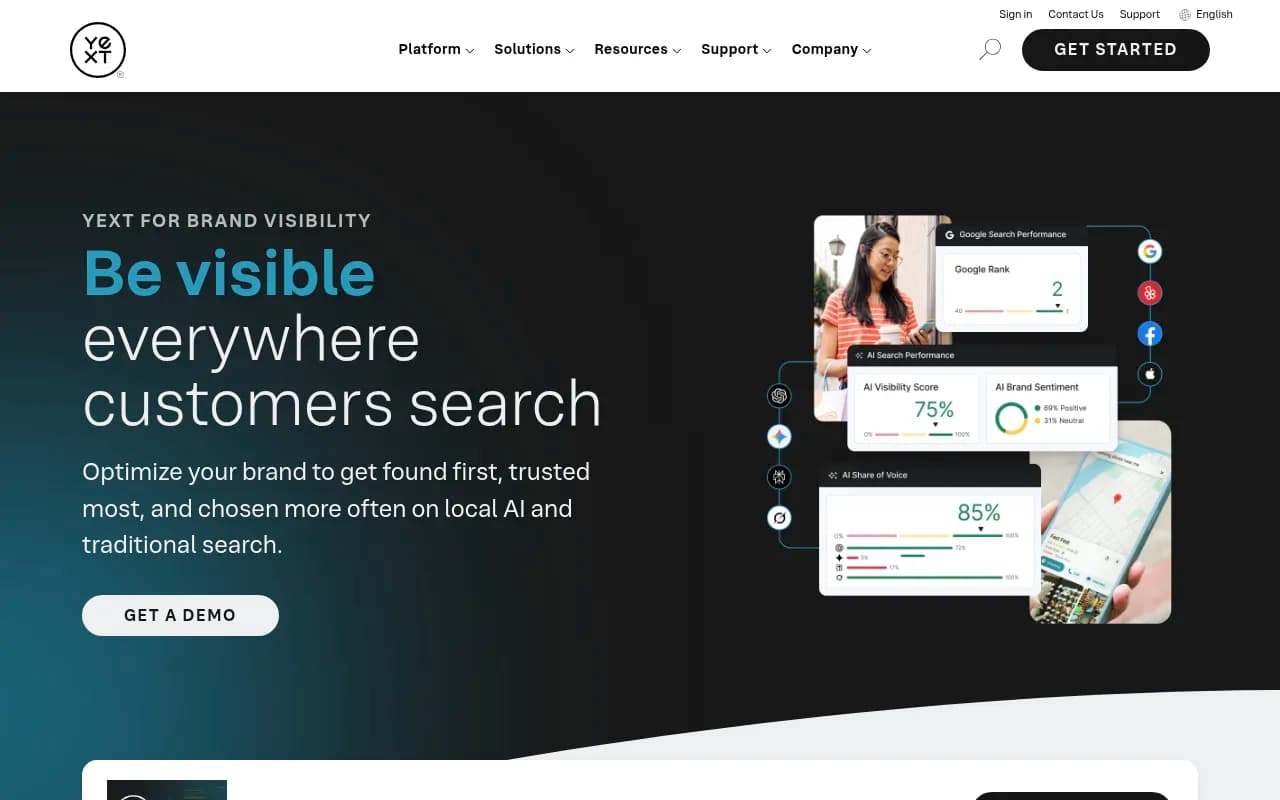
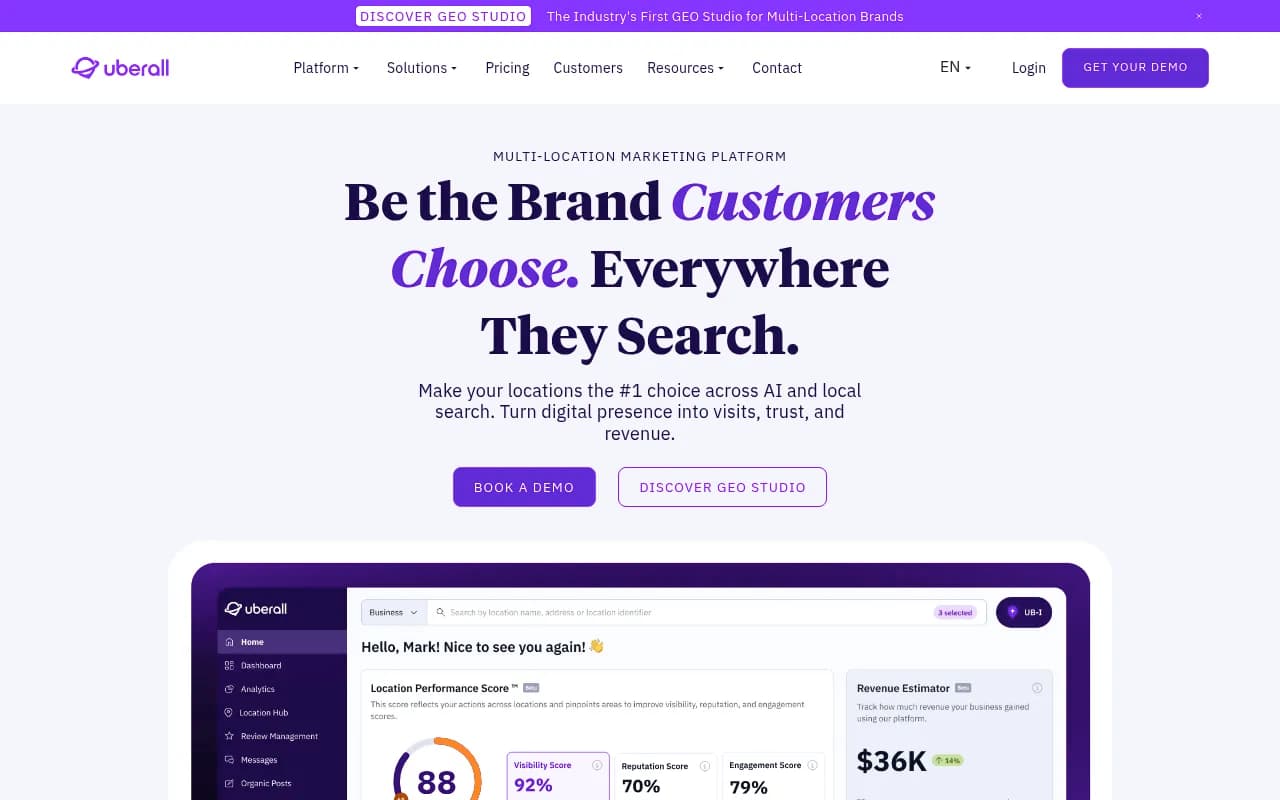
For keeping listings consistent across directories, multi-location brands tend to look at platforms like Yext and Uberall, both built for managing presence across traditional and AI search.
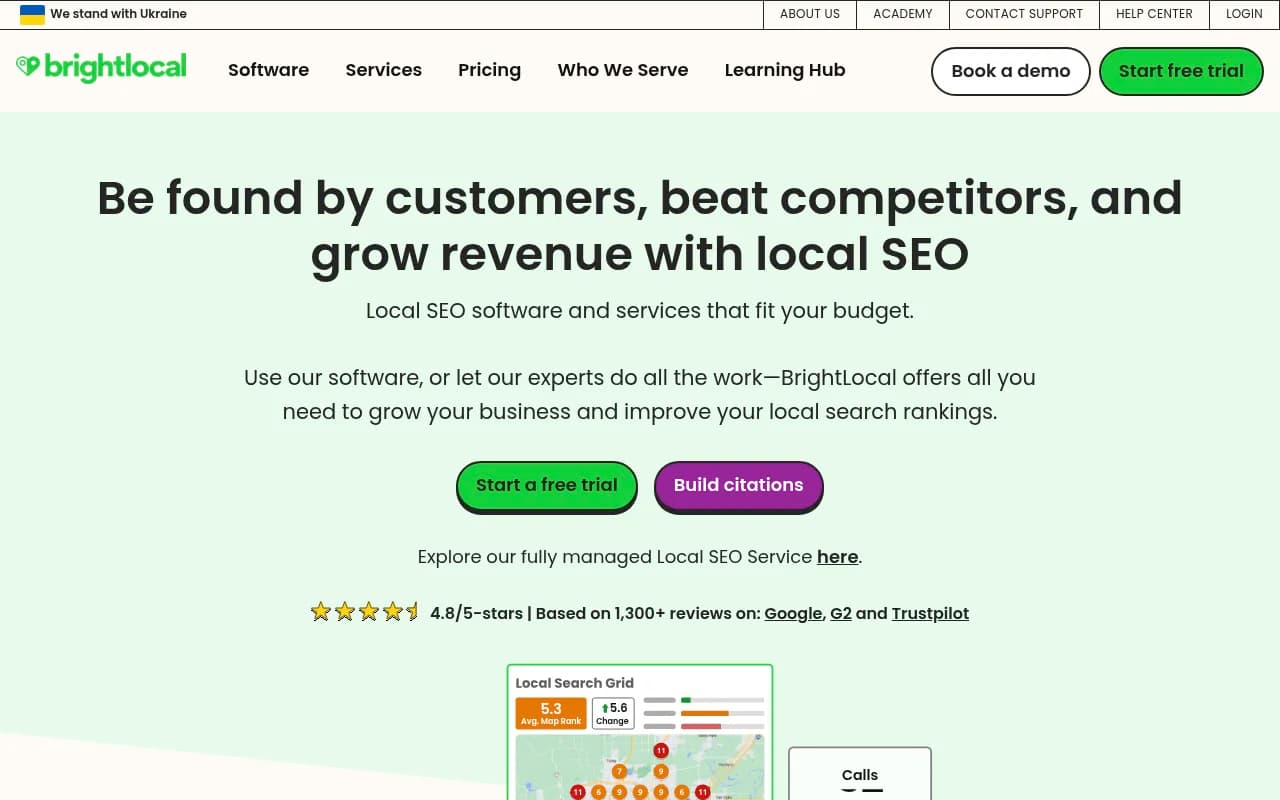
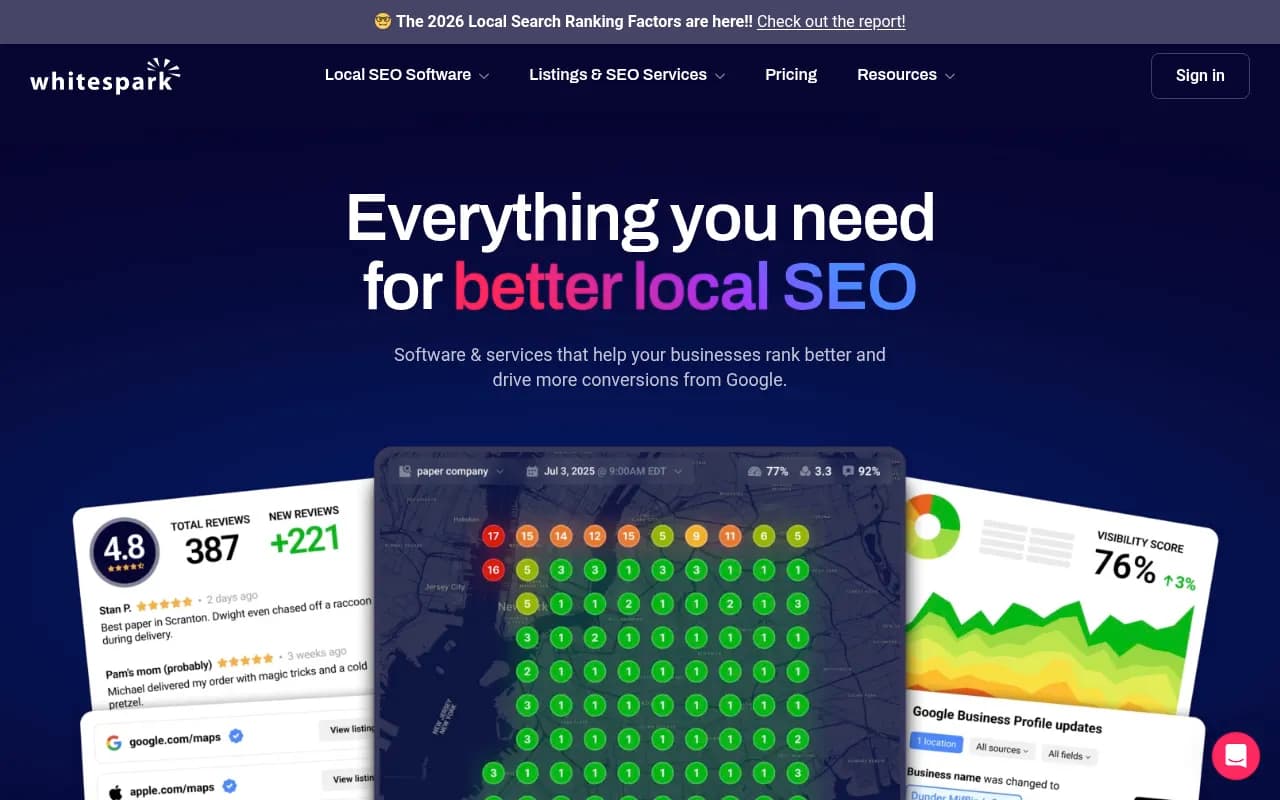
BrightLocal and Whitespark cover local rank tracking, citations, and audits, and tend to suit agencies and smaller multi-location operators.
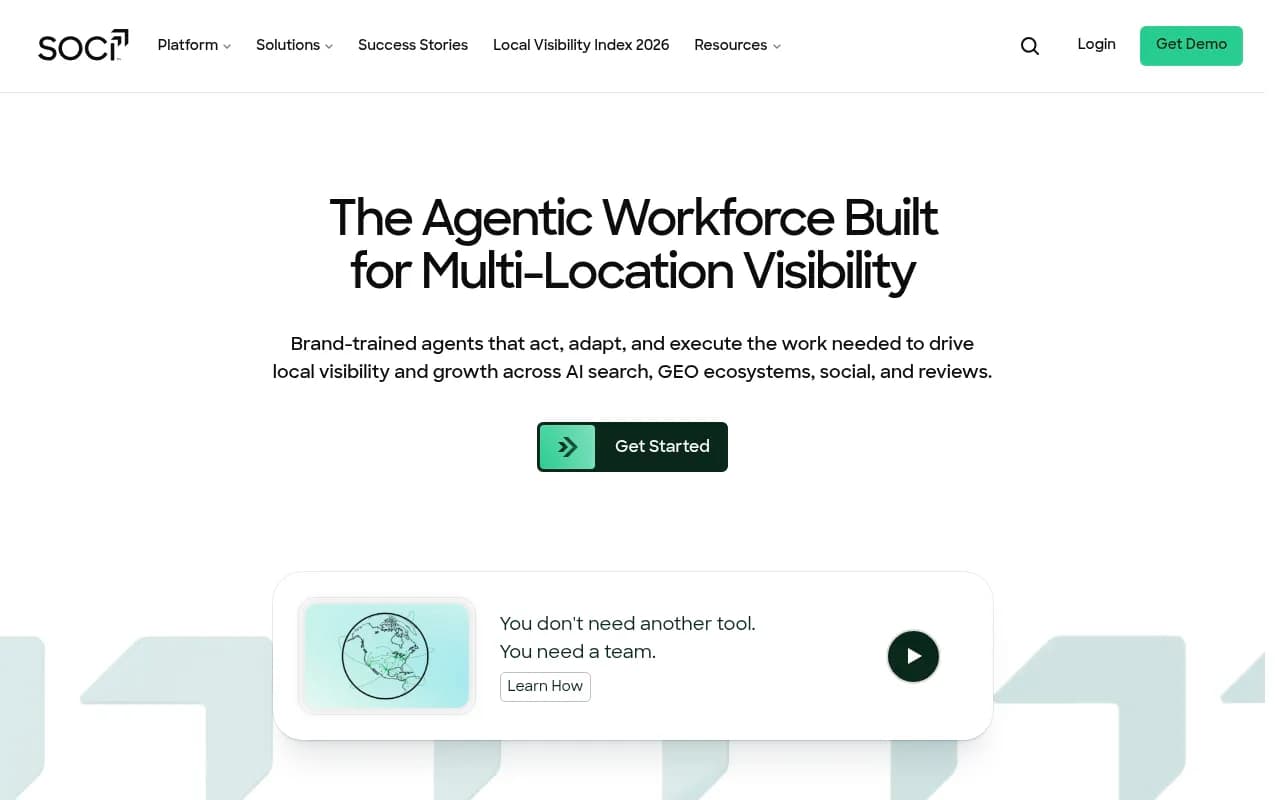
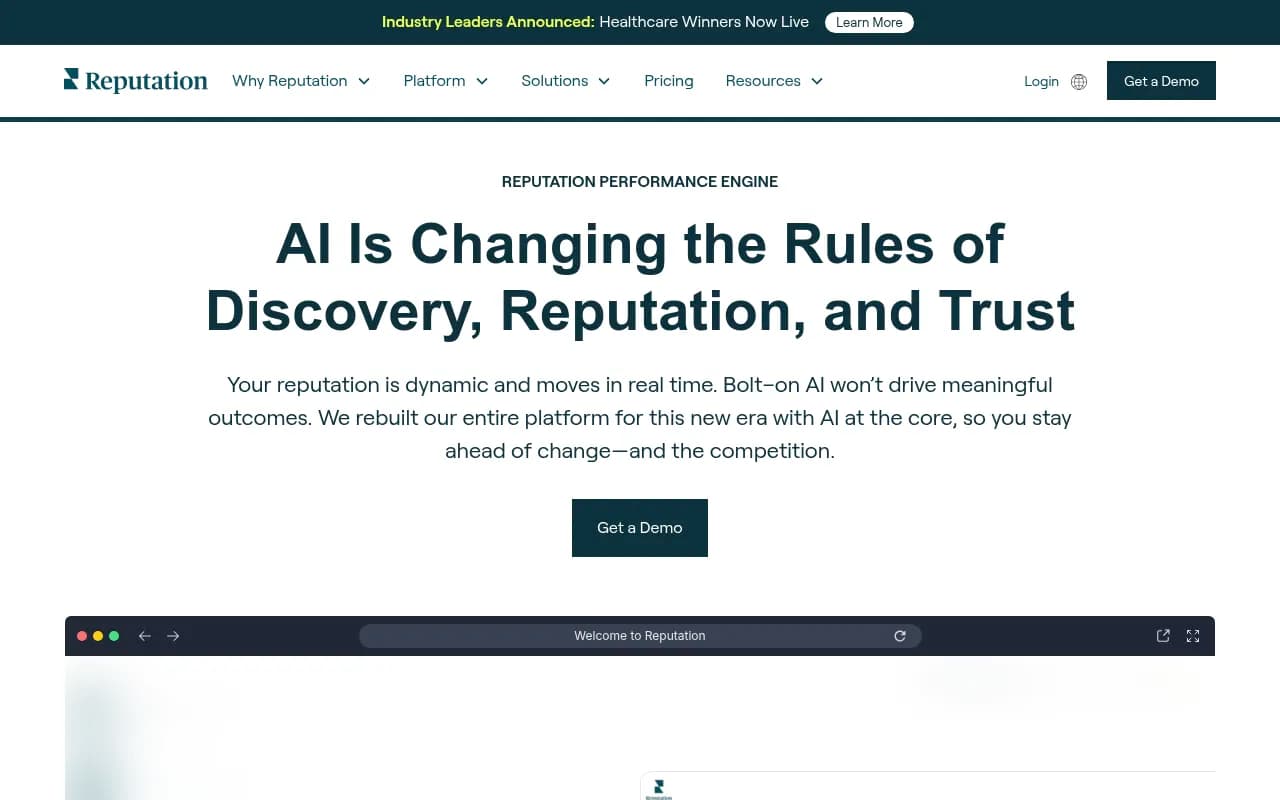
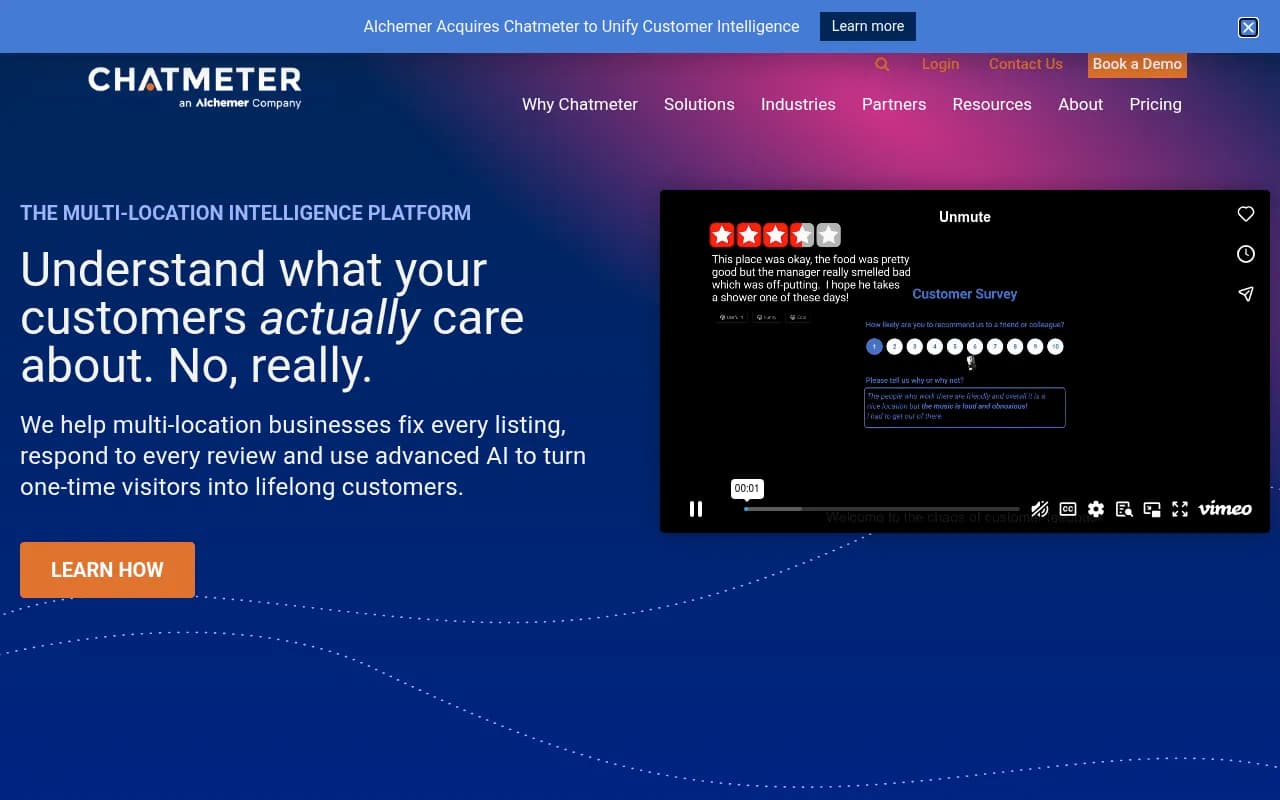
For review management and local marketing automation across many branches, SOCi, Reputation, and Chatmeter are the usual names.
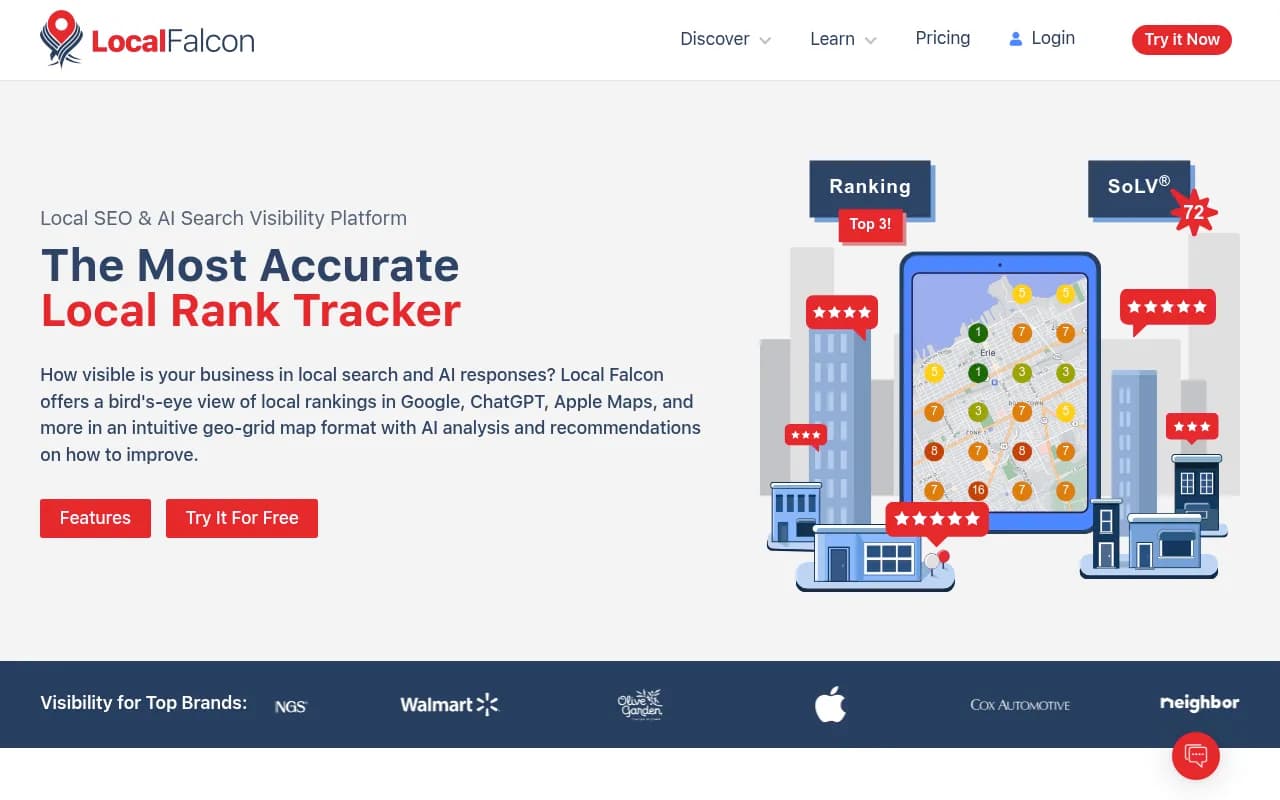
For map-style rank checks, Local Falcon gives geo-grid views of where a business shows up around a point.
AI visibility tracking with location control
The hard part of testing "near me" is that your own results are shaped by your own IP, memory, and history. You need to run the same prompt as if asked from a specific place.
Promptwatch can pin a monitor to exact coordinates, with an accuracy radius from 20 m to 5 km, so ChatGPT, Google AI Overviews, and Google AI Mode answer as if asked from that spot. It is built for store, office, and franchise queries, available on Business, Agency Scale, and Enterprise plans, and it also sits in the REST API and MCP. State and city tracking begin on Business. Confirm current plans at promptwatch.com/pricing.

That matters for the problem in this guide, because it lets you compare what a user sees at one branch with what they see at another instead of guessing. Combined with crawler logs and citation data, you can see whether your location pages are even being read. Many other trackers in the category, including Otterly.AI and Peec AI, focus on prompt monitoring at the country level, so check how each handles city or coordinate targeting before you commit.
Otterly.AI


I did not verify pricing for any of the local tracking tools above, so confirm directly with each vendor. If you want to browse the wider category, the GEO software directory lists more options.
| Need | Tool type | Examples |
|---|---|---|
| Consistent listings across directories | Listings management | Yext, Uberall, Moz Local |
| Local rank and citation audits | Local SEO | BrightLocal, Whitespark, Local Falcon |
| Reviews at scale | Reputation | Reputation, Chatmeter, SOCi |
| What AI answers say per location | AI visibility tracking | Promptwatch, Otterly.AI, Peec AI |
A simple location test you can run this week
You don't need software to get a first read.
- Pick five to ten queries a customer would type, such as "best pizza near me" or "emergency plumber near me".
- Run them in ChatGPT signed out, then signed in with memory on, then with precise location on a phone. Write down what changes.
- Repeat from a VPN endpoint or a colleague's device in another city.
- Note which sources get cited. Are your branch pages there? Is a competitor named in a roundup you are missing from?
- Ask ChatGPT to search again with a specific city and neighborhood, as OpenAI suggests, and see whether the answer improves.
Then fix the pattern you see. Usually it is one of three things: a missing roundup mention, a thin location page, or a listing with wrong data.
What I would not trust yet
A lot of confident advice is circulating about "local AI SEO", and much of it is extrapolation. I would be careful with three claims in particular:
- Any exact percentage for how location changes results. I found no first-party data on city-by-city variation.
- The 1.2% versus 35.9% comparison, until someone publishes the method.
- Schema markup as a magic switch. It may help machines read your pages, but I found no source showing it drives recommendations.
I also did not check how Google's AI Mode or Gemini handle local queries, and they may behave differently from ChatGPT. For a sense of how differently the models cite, Promptwatch Data's social media citations by AI model report (Sep 28 to Oct 4, 2026) found ChatGPT drew 0.46% of its citations from social platforms while Google AI Overviews drew 12.2%. If the models disagree that much on sources, expect local results to differ too, so test each one separately. The broader Promptwatch Data hub is the place to look for updates.
Bottom line
"Near me" in ChatGPT is a city-level text query with a map sometimes attached. Win it the unglamorous way: unique location pages, accurate listings, local roundup mentions, and crawlable pages. Then test from the places your customers actually are, because testing from your office tells you almost nothing.