Key takeaways
- Local multi-location GEO is two jobs: keeping location data accurate everywhere AI looks (listings, Google Business Profiles, reviews), and measuring what ChatGPT, AI Overviews and AI Mode actually say about each branch.
- Most local platforms (BrightLocal, Yext, Uberall, Synup, Birdeye) started as listing or reputation tools and added AI tracking. Generic AI visibility trackers do the reverse: great at prompts, weak on per-location workflows.
- Pricing model matters more than sticker price. Per-location pricing punishes growth in branches; per-prompt pricing punishes depth per branch.
- Location pages and landing pages are citation surfaces. In Promptwatch Data, product and landing pages made up about 39% of ChatGPT citations (Sep 28 to Oct 4, 2026).
- Most brands will end up with two tools: one for local operations, one for AI visibility and content action.
What GEO means when you have many locations
Generative engine optimization for a single-location business is mostly a content and reputation problem. For a brand with 40 or 400 branches it is also a data governance problem. AI answers to "best urgent care near me" or "which bank branch is open Saturday" pull from Google Business Profiles, third-party listings, review sites and your own location pages. If hours differ across those sources, the model picks one, and it may pick the wrong one.
There are really two layers:
- The operational layer: listings, GBP management, reviews, NAP consistency, local rank tracking. Classic local SEO software.
- The AI visibility layer: tracking whether ChatGPT, Gemini, Perplexity, AI Overviews and AI Mode mention and cite each location, from the right place, with the right facts.
No single tool does both perfectly. I'd be suspicious of any vendor that claims otherwise, including the ones I recommend below.
What to look for before you compare tools
A Flento guide on multi-location tooling lists the jobs that break at scale: bulk profile updates, consistency, roll-up reporting, underperformer detection and review management. Add four AI-specific requirements:
- Location-aware tracking. Answers change by place. You want prompts run as if asked from the branch's area, not from one data center.
- Per-location and roll-up reporting. Regional managers want their 12 branches. The CMO wants the brand total.
- Citation sources, not just mentions. Knowing you were named is less useful than knowing which page or directory the model cited.
- A path to fixing things. Monitoring without an action list leaves a team staring at charts.
The shortlist at a glance
| Tool | Primary strength | AI engine tracking | Pricing model | Best for |
|---|---|---|---|---|
| Promptwatch | AI visibility plus content action, local targeting | 12 AI platforms from real interfaces | Prompts and responses | Brands that want to fix AI visibility, not only watch it |
| BrightLocal | Listings, reviews, local rank tracking | ChatGPT, AI Overviews, AI Mode (up to 20 prompts per location) | Location bands | SMB-to-mid multi-location brands and agencies |
| Yext | Structured location data, listings | Yext Scout across Google, ChatGPT, Gemini, Claude, Perplexity | Quote only | Enterprise brands with data governance needs |
| Uberall | Multi-location marketing, GEO Studio | Location-level tracking on Scale plan | Prompts and engines | Brands wanting listings plus AI tracking |
| Synup | Agency-friendly local platform | AEO scoring on ChatGPT, Gemini, Perplexity | Location bands | Agencies and mid-size chains |
| Birdeye | Reviews and AI search for large networks | Brand mentions and citation sources across major engines | By location count | 100 to 10,000+ location brands |
| Local Falcon | Geo-grid map rankings | AI scans using shared credits | Credits (one per map pin) | Map visibility diagnostics |
Prices below are list prices as of September 2026 from third-party roundups, so confirm on vendor sites.
Promptwatch: the AI visibility and action layer
Promptwatch is the one I'd put first if the question is "what are AI engines saying about our locations, and what do we do about it?" It monitors the real interfaces of ChatGPT, Google AI Overviews, Google AI Mode, Gemini, Perplexity, Copilot and others, rather than relying only on API outputs, which can differ from what a customer sees.

The feature that matters most for local brands is local GEO/SEO targeting. You pin a monitor to exact coordinates (accuracy radius from 20 m to 5 km) so ChatGPT, AI Overviews and AI Mode answer as if asked from that spot. That is what a "near me" prompt needs. It is available on Business, Agency Scale and Enterprise, and state and city tracking starts on Business.
Beyond tracking:
- IP-verified AI crawler logs show whether GPTBot, ClaudeBot and others can actually read your location pages, and where they hit errors.
- Citation analytics show which of your pages get cited, plus Reddit, YouTube and LinkedIn sources, and Offsite Mentions catch third-party pages that name a branch without linking.
- The Action Board and Content Agent turn gaps into prioritized tasks and publish GEO-optimized content to WordPress, Webflow or Framer.
- Visitor analytics tie AI referrals to real traffic and conversions.
Pricing starts at $95/mo (Essential, 50 prompts, 7-day trial on monthly). Business at $579/mo is where local targeting and the Content Agent arrive. Agencies get Kick-off $199, Growth $399 and Scale $799 with unlimited projects and prompts. One caveat: on Brands plans each project tracks 4 of the 12 platforms at a time, so check the current terms at promptwatch.com/pricing. It also isn't a listings manager. You will not push hours to 70 directories from it.
BrightLocal: the practical default for listings and reviews
BrightLocal keeps showing up at the top of local roundups for good reason. A HackerNoon comparison (Sep 2026) scored it 25 out of 30 for multi-location agencies, with top marks on listings, citations and reviews.
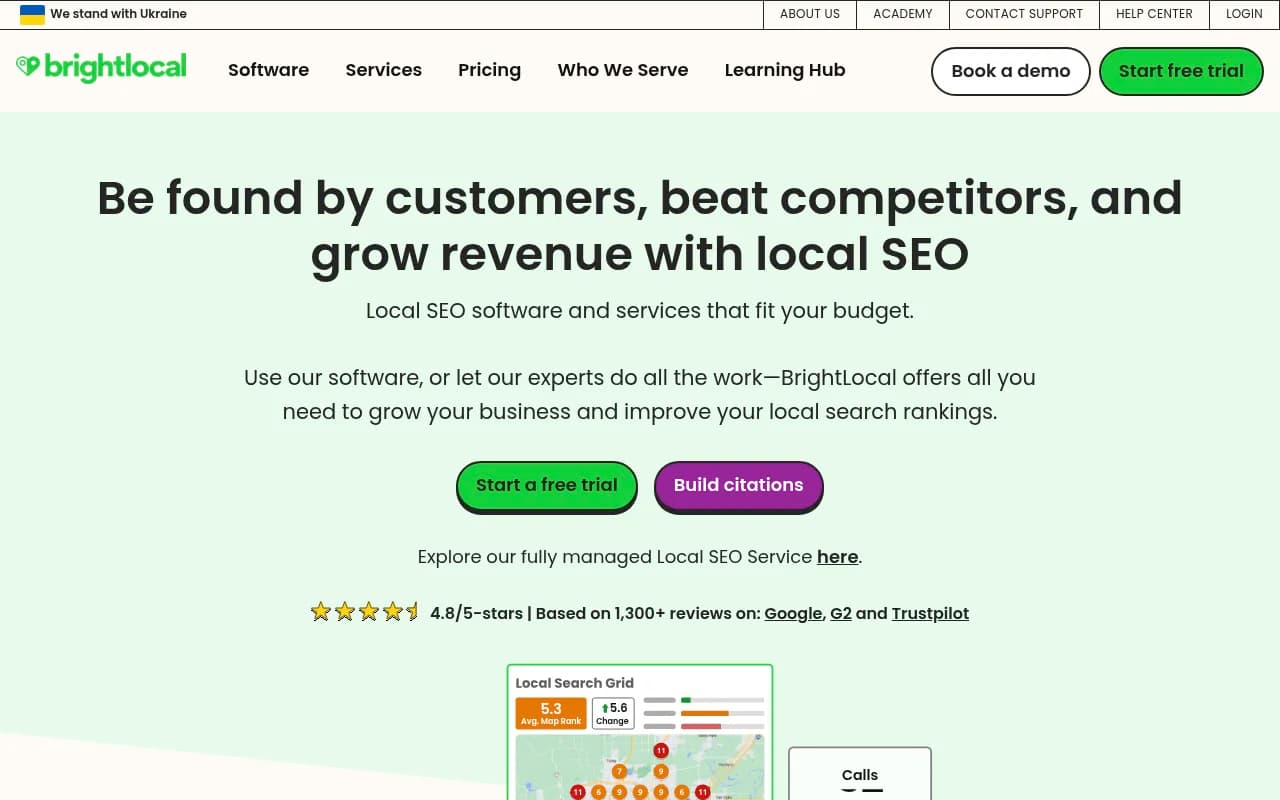
Its Track plan covers ChatGPT, AI Overviews and AI Mode with up to 20 prompts per location. List pricing is $31/mo billed annually for one location, and the 21 to 30 location band is about $156/mo ($117 annual). For a 25-location brand tracking roughly 10 questions per branch, that makes it the cheapest option that covers the volume in the research I reviewed.
Where it is thinner: content creation and crawler-level diagnostics. It tells you where you stand, and you still need a separate workflow to fix it.
Yext: structured data at enterprise scale
Yext's pitch is that location data is the source of truth, and AI engines should read it from there. Birdeye's comparison describes it as strong on structured location data, listing errors, duplicates and publisher overwrites. Yext Scout tracks Google Search, Maps, AI Overviews, ChatGPT, Gemini, Claude and Perplexity, and measures each location.
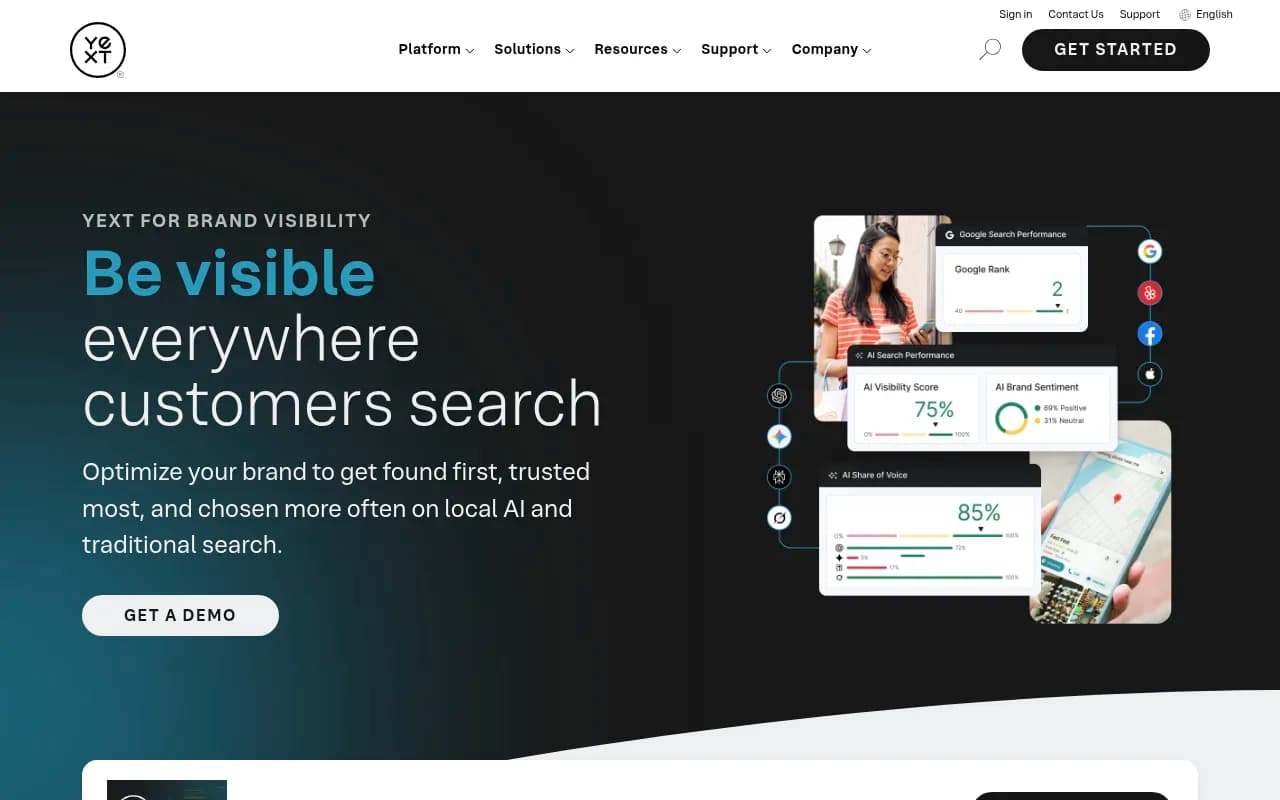
No published pricing. Expect a sales process and an enterprise contract. If you have thousands of branches and legal or compliance teams who care about accurate hours and services, it fits. For a 15-location regional chain it is probably overkill.
Uberall, Synup and the mid-market middle
Uberall's GEO Studio has a Starter at $109 (50 prompts, 3 engines) and Scale at $449 (150 prompts, 5 engines, location-level tracking).
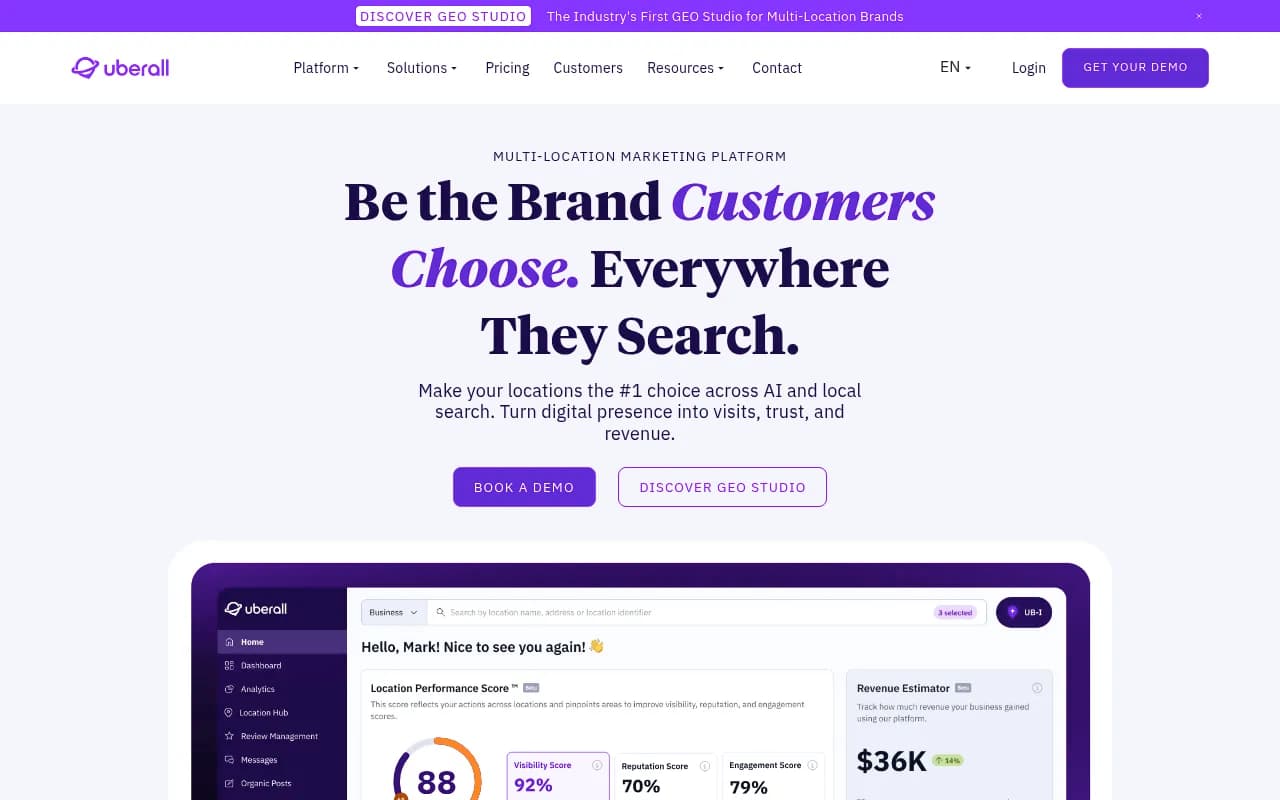
Synup prices by location band: Solo is $49/mo for one location and Pro is $499/mo for up to 25. It offers AEO scoring on ChatGPT, Gemini and Perplexity and is built with agencies in mind.
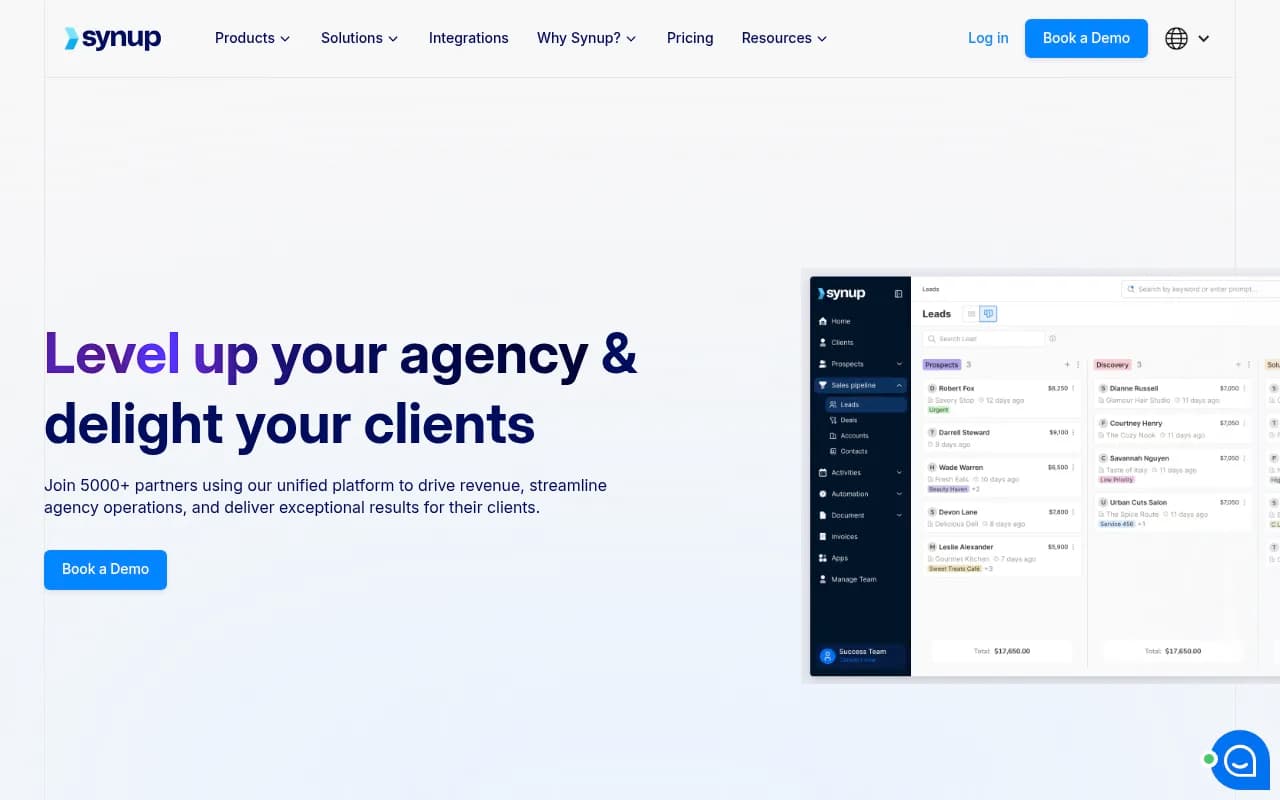
Both sit between the SMB tools and the enterprise suites. Rio SEO and Partoo play in similar territory for larger brands.

Birdeye, SOCi, Chatmeter and Reputation: reviews first
If reviews are your main lever, and for branded prompts they matter. Promptwatch Data shows reviews rising to 5.6% of ChatGPT citations on branded prompts, more than three times their share overall (Sep 28 to Oct 4, 2026). Birdeye targets brands with 100 to 10,000+ locations and its AI Search covers brand mentions, citation sources and accuracy issues across ChatGPT, Claude, Perplexity, Gemini, AI Overviews, AI Mode and Grok. Pricing is by location count via a form.
SOCi (demo-only pricing, with a Genius Local Search Agent), Chatmeter and Reputation cover similar ground with different emphases on local marketing automation and reputation.
A note of caution: Birdeye's own "15 best tools" list is vendor-written and leans toward Birdeye. Treat it as a source for feature claims, not rankings.
Local Falcon and geo-grid trackers
Local Falcon is the specialist for map visibility. It scored 5 out of 5 on geo-grid in the HackerNoon comparison and does nothing on listings or reviews. Starter is $24.99/mo for 7,500 credits, where one credit is one map pin, and AI scans on AI Overviews, AI Mode, Gemini, ChatGPT and Grok draw on the same credits.
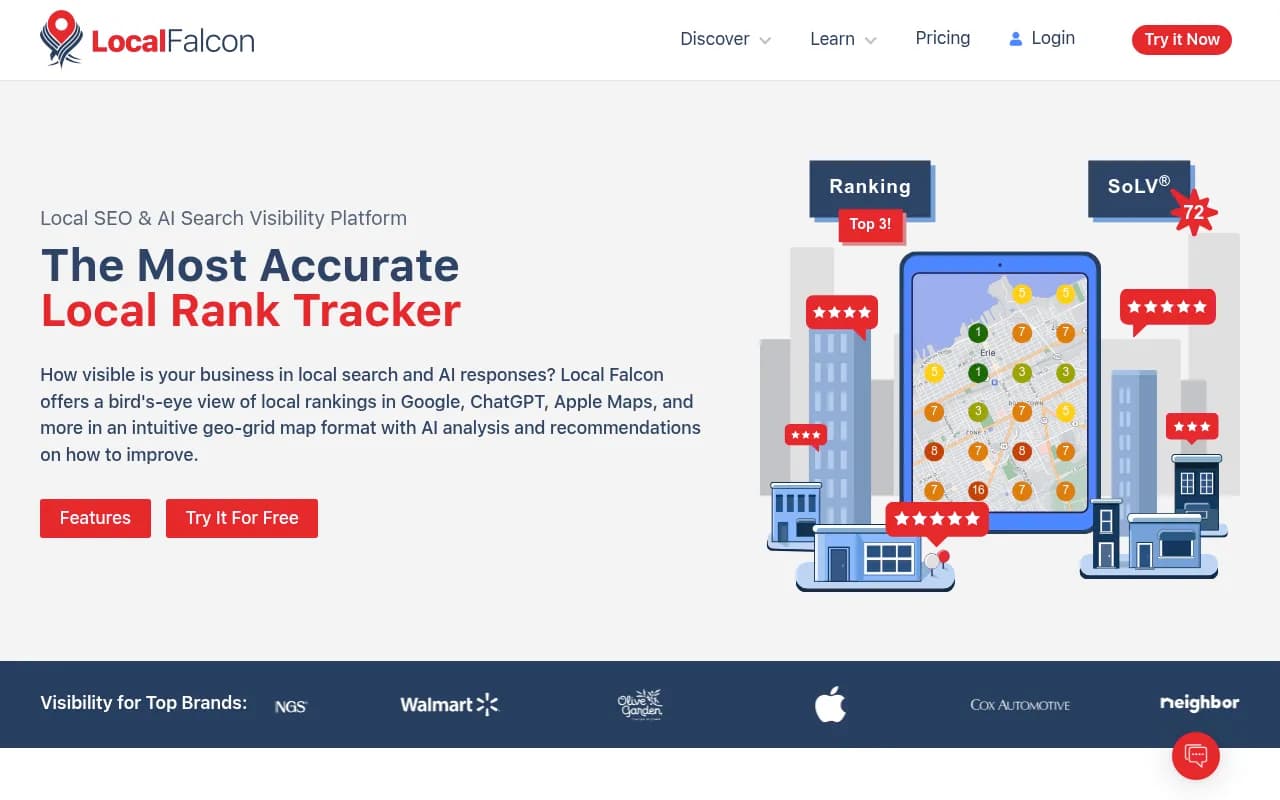
It is a diagnostic tool. Use it to see where a branch shows up across a neighborhood, then fix the cause elsewhere. Local Rank Tracker is a similar, simpler option.
SEO suites and generic AI trackers
Whitespark and Moz Local are strong on citations; Whitespark scored 5 on listings but only 1 on value at 20 profiles in the HackerNoon scoring. Semrush Local lands at the same 19 out of 30.
Generic AI trackers such as Otterly, Peec, Profound and AthenaHQ can track prompts with a city name in them, but none of them were built around branch-level workflows. Reference prices from the same Sep 2026 source: Otterly Premium $489 for 400 prompts, Peec Advanced $495 for 350 prompts, Semrush AI Visibility Toolkit $99 for 25 prompts. They are fine for brand-level tracking. They are awkward when a regional manager wants only their own stores.
Otterly.AI


Profound

For wider browsing, the GEO software directory at bestgeosoftware.com lists many more options.
Pricing models: the part nobody reads
The same 25-location brand tracking about 250 prompts gets very different bills depending on how the vendor meters things.
| Model | Examples | Gets expensive when |
|---|---|---|
| Per location band | BrightLocal, Synup | You open new branches |
| Per location | LocalClarity ($16 per location per month) | You open new branches, fast |
| Per prompt | Otterly, Peec, Uberall | You track more questions per branch |
| Per credit | Local Falcon, AthenaHQ | You scan often or over wide grids |
For that 25-location example, the smallest plans that cover it ran $156 to $499/mo: BrightLocal at $156, Otterly Premium at $489 (or $787 with Gemini and AI Mode add-ons), Peec Advanced at $495, Synup Pro at $499. Treat those as list prices from a source that sells a competing managed service, and check them before budgeting.
What the data says about where to focus
Promptwatch's citation data points to a few practical priorities for multi-location brands:
- Location and landing pages are citation surfaces. Product pages took 22.4% of ChatGPT citations and landing pages 16.8% in Promptwatch's content-type data (Sep 28 to Oct 4, 2026). A thin, templated location page is a wasted slot.
- Third parties often outrank brands. In travel prompts, Skyscanner, Going and Tripadvisor led ChatGPT citations, and in automotive prompts marketplaces like Autotrader and Cars.com outranked every car brand. Your listings on those platforms need to be right.
- Freshness varies by format. In the content half-life study, landing pages and docs stayed cited longest while news lost half its pages within 36 days. Evergreen location pages are a safer bet than news-style posts.
- Social is channel-specific. ChatGPT drew 0.46% of citations from social platforms, while AI Overviews drew 12.2% (Promptwatch Data, Sep 28 to Oct 4, 2026). Local social profiles matter more for Google surfaces.
No Promptwatch report covers local queries directly, so treat these as directional rather than proof about "near me" prompts. More research is at promptwatch.com/data.
Designing location-level prompts
Whatever tool you choose, prompt design decides whether the data is useful. A workable starting set per location:
- Category plus place: "best pediatric dentist in [neighborhood]"
- Near me: "urgent care open now near me" (needs real location targeting)
- Branded: "[Brand] [city] reviews" and "is [Brand] [city] open on Sunday"
- Comparison: "[Brand] vs [local competitor] in [city]"
Ten per location is a reasonable ceiling for most chains. Group branches into clusters (dense urban, suburban, rural) and sample rather than tracking every branch equally on day one.
A sensible stack by brand size
| Brand profile | Suggested combination |
|---|---|
| 5 to 25 locations, tight budget | BrightLocal for listings, reviews and basic AI tracking, plus Promptwatch Essential for deeper AI visibility |
| 25 to 200 locations | Synup or Uberall for operations, Promptwatch Business for local targeting and content |
| 200+ locations, heavy compliance | Yext or Birdeye for data and reputation, Promptwatch for AI visibility, crawlers and content action |
| Agency managing many small clients | Promptwatch Agency plans plus BrightLocal or Synup per client |
If you would rather hand the strategy to people, 1001 SEO Media runs local SEO and AI search programs and uses Promptwatch for the AI visibility side.
How to run a 30-day pilot
- Pick 10 to 15 representative locations across strong, average and weak performers.
- Write 8 to 10 prompts per location using the patterns above.
- Run two tools side by side: one operational, one AI visibility.
- Check crawler access to location pages before blaming content.
- Compare what each AI engine says against your actual hours and services, and log the errors.
- Fix the worst data errors at the source first, then rewrite the weakest location pages.
- Re-measure after four weeks and see which locations moved.
Bottom line
Buy the operational tool that fits your branch count and data complexity, then add an AI visibility layer that can show you what to fix. For most brands that means BrightLocal, Synup, Uberall or Yext on the listings side, and Promptwatch where you need location-targeted AI tracking, crawler diagnostics and content that actually gets published. Verify every price on the vendor's page before you commit, because several of these changed within a single month of the research behind this guide.