Key takeaways
- InSpace.io sells a managed content service (NOVA), priced by pages per month from $1,000 to $6,900+. Its pricing page doesn't mention prompt tracking, so most "alternatives" fall into two groups: pure monitors and monitor-plus-execution platforms.
- B2B SaaS buyers ask three kinds of prompts: alternatives, versus, and constraint-based ("with SOC 2 and Salesforce sync"). Prompt count is the binding constraint when you pick a tool.
- Entry prices range from roughly $20 to $800 a month. Cheap trackers cover 15 to 50 prompts, and a realistic B2B set is 80 to 450.
- Tracking alone doesn't fix anything. Pick a platform that shows cited sources and helps you act on gaps.
- Attribution is still fuzzy. Pair mention-rate tracking with self-reported "how did you hear about us" data.
What InSpace.io is, and why that changes the question
Before comparing alternatives, get the category right. InSpace is not a prompt tracker. It sells NOVA, an AI SEO and GEO content automation and managed-delivery service. The published plans are priced by output:
| Plan | Monthly list price | Output |
|---|---|---|
| Stratosphere | $1,000 | 10 pages a month |
| Milky Way | $1,700 | 20 pages a month |
| Universe | $3,000 | 40 pages a month |
| Multiverse | From $6,900 | Custom volume, 4+ countries |
Discounts of 10 to 30% apply for longer terms and upfront payment. Nothing on the pricing page talks about prompts tracked, and I couldn't find independent coverage of InSpace as a monitoring product. So if you landed here because you want to see which buyer-research prompts mention you and your rivals, you're really shopping for a different thing.
That gives you two sensible directions:
- Pure monitoring tools that tell you where you show up and where you don't.
- Monitoring plus execution tools that also help produce the content or citations that close the gap.
If you want a service that writes pages for you, InSpace stays on your shortlist. If you want the measurement layer, read on.
Why buyer-research prompts need their own test
G2 surveyed 1,076 B2B software buyers in March 2026 and reported that 51% start research with an AI chatbot more often than Google. A vendor tracker you pick should handle how those buyers actually phrase things:
| Prompt shape | Example | Why it matters |
|---|---|---|
| Alternatives | "alternatives to [your competitor]" | Catches buyers already unhappy elsewhere |
| Versus | "[you] vs [competitor]" | Late stage, shaped by whichever pages the model cites |
| Constraint | "CRM with SOC 2 and Salesforce sync" | Narrow, high intent, easy to miss |
| Category | "best CRM for B2B teams" | Broad, competitive |
A realistic starter set is about 80 prompts: 16 alternatives prompts (eight rivals, two phrasings each), 12 versus prompts, 16 use-case and role prompts, and the rest category and constraint queries. Mid-market teams with several product lines and ICPs will land at 150 to 450. That count is what rules out the cheapest plans, because 15 or 25 prompts won't cover even one product line.
Query fanouts: what the model actually searches
Your tracked prompt is not what ChatGPT searches for. Promptwatch Data's query fanout report shows ChatGPT's internal searches are short and keyword-style: average query length fell from about 117 characters in December 2025 to the high 80s by February and March 2026, and about 53 characters in April. The practical read is that a long buyer prompt becomes something like "X alternatives" or "X vs Y" behind the scenes. Pages with headings that read like those queries tend to be the ones that match. Treat the report's fanout averages carefully, though. It reports 1.0 to 2.15 searches per response on average, while also saying a single prompt can trigger 3 to 8 or more.
Where software citations actually come from
Promptwatch Data's software prompts report (Sep 28 to Oct 4, 2026) is useful for deciding what to fix first. GitHub (1.2%), learn.microsoft.com (0.98%) and G2 (0.73%) lead ChatGPT's software citations. Docs and help centers earn the largest source-type share at 2.64%, vendor sites 2.01%, and review sites and analysts 1.57%. Vendor sites plus docs together earn about 3x the share of review sites. The takeaway: keep docs crawlable, keep G2 and Capterra profiles current, and treat your own site as the main citation source. A tracker that shows cited URLs lets you check this against your own category.
Pricing snapshot
Entry prices below come from a third-party tracker (industry-lens.com, reviewed Oct 27, 2026) that didn't test the accounts. Confirm against each vendor's page before buying.
| Tool | Entry price | What you get | Best for |
|---|---|---|---|
| Rankscale | $20/mo annual; $99 monthly | Agency-oriented tracking | Agencies on a budget |
| Otterly.AI | $29/mo | Lite: 15 prompts | Easy self-serve start |
| LLM Pulse | €49/mo | 50 prompts, 5 models | SaaS teams, unlimited seats |
| LLMrefs | $79/mo | 500 prompts | Large prompt sets |
| Peec AI | €85/mo | 50 prompts, 3 models, 1 project | Competitor and category tracking |
| Semrush AI Toolkit | $199/mo | 50 tracked prompts | Teams already on Semrush |
| Ahrefs Brand Radar | $199/mo | Custom prompts plus a pre-collected index | Teams already on Ahrefs |
| Scrunch AI | $250/mo | Core: 125 prompts | Mid-market monitoring |
| AthenaHQ | $295/mo | Starter tier | Monitoring plus optimization |
| Promptwatch | $95/mo | 50 prompts, all models, site audit, content gaps | Monitoring plus action |
| Profound | On request | Enterprise analytics, sales-led | Large enterprises |
The best alternatives, grouped by job
Monitoring plus action
Promptwatch is the one I'd look at first if your complaint about InSpace is that you want to see the data yourself, not just receive pages. It tracks real ChatGPT, Google AI Overviews, Gemini, Perplexity and Copilot interfaces, shows prompt volumes and difficulty, and breaks out comparison and alternatives prompt types. It also has IP-verified AI crawler logs, which most trackers lack, so you can see whether the bots reading your docs hit errors. The Action Board and content gap analysis point at what to write, and on Business the Content Agent can draft and publish to Webflow, Framer or WordPress. Essential is $95/mo for 50 prompts and every model, Professional $245/mo for 150 prompts, and Business $579/mo for 350 prompts. Confirm on promptwatch.com/pricing.

That is the stack InSpace sells as a service, but with the measurement exposed. Fair caveat: Promptwatch's content automation sits on higher tiers, and a fully hands-off managed service is a different purchase.
Focused monitors for competitor prompts
Peec AI comes up repeatedly in B2B comparisons because it is strong on competitor and category fit. At about €85/mo (verify on its site) the Starter plan caps at 50 prompts, 3 models and 1 project, with extra models as add-ons. That cap matters. Ask what happens when you exceed it before signing.

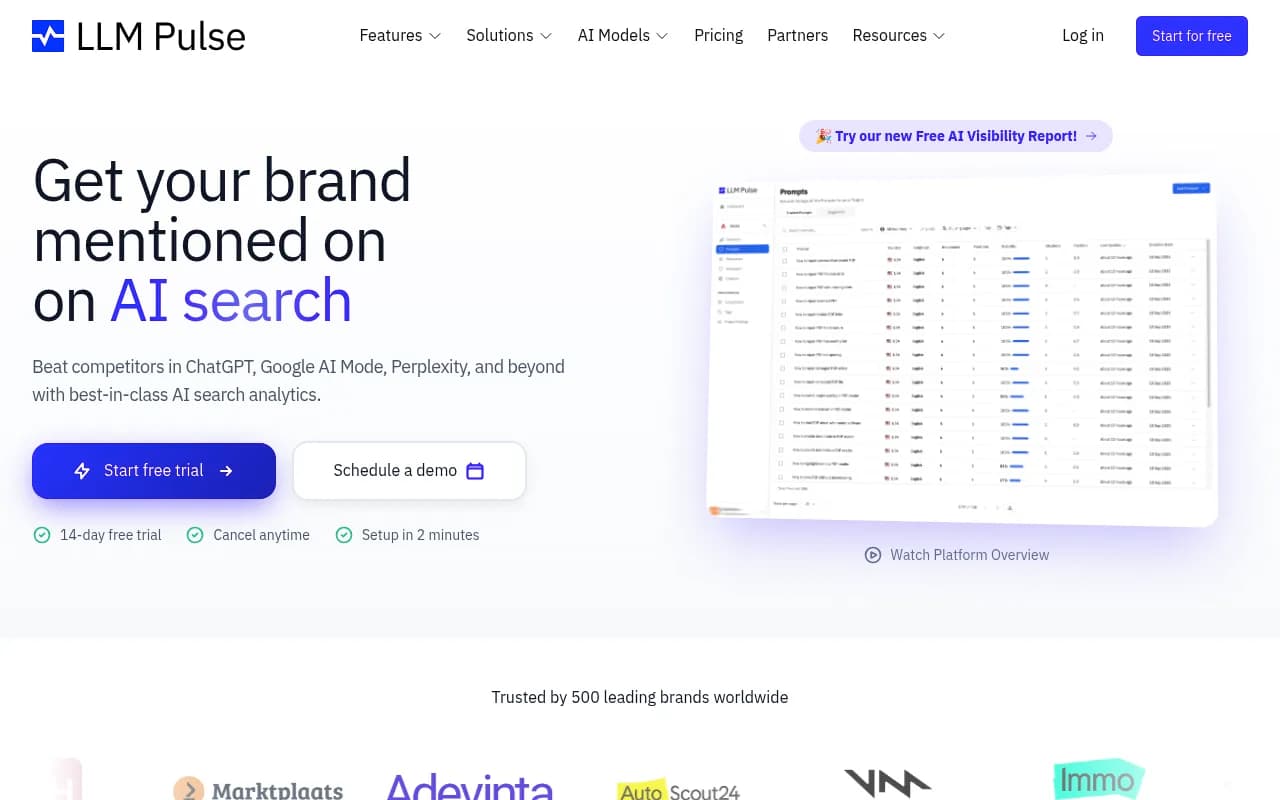
LLM Pulse is built with SaaS in mind: category and feature prompt tracking with competitor mention breakdown, unlimited team members, and Starter at €49/mo for 50 prompts across five models. Its own FAQ suggests 10 to 15 prompts per ICP or product-line cluster, which is a sensible rule. Note that LLM Pulse publishes that ranking itself, so it is self-interested.
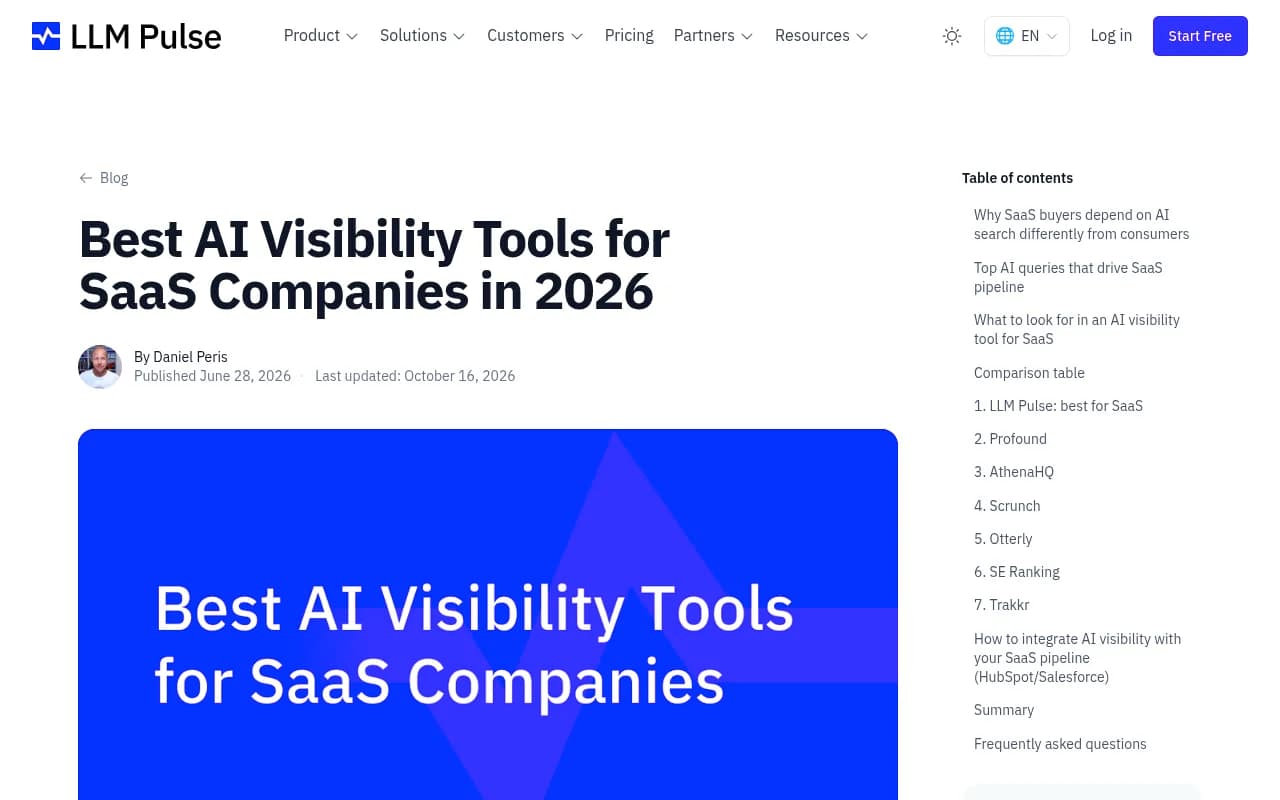
Otterly.AI is the easiest to buy without a sales call, and at $29/mo the Lite plan is among the cheapest entry points. But Lite is only 15 prompts, which won't cover a full alternatives set, and some community voices question its attribution and business impact.
Otterly.AI

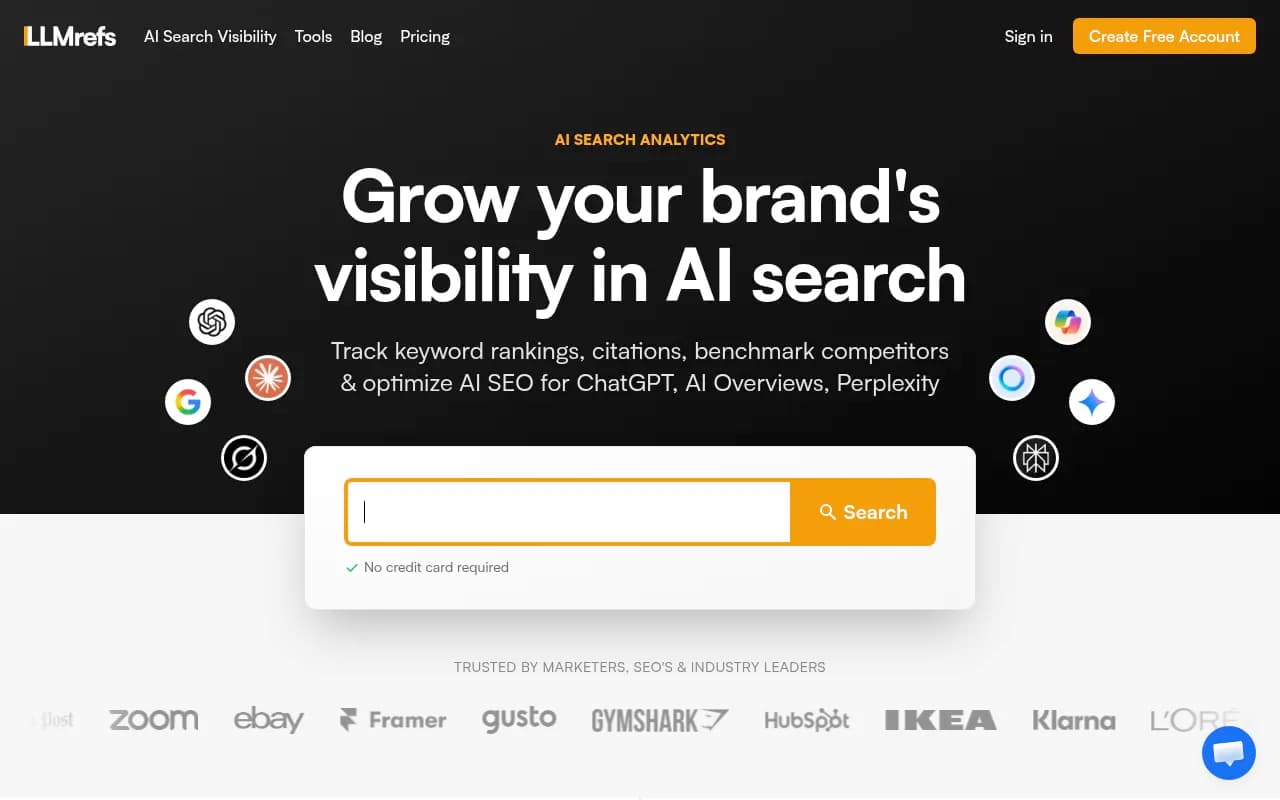
LLMrefs is worth a look when volume is your constraint: $79/mo for 500 prompts on monthly billing.
LLMrefs
Enterprise depth
Profound is the deepest analytics product in most roundups: citation and sentiment monitoring, prompt volumes, crawler analytics and GA4 attribution. The trade-off is complexity and cost. It is sales-led, so expect a demo, and it suits teams with dedicated analytics and engineering resources.
Profound

Scrunch AI (Core from $250/mo, 125 prompts) and AthenaHQ (from $295/mo) sit in the middle. Both are solid monitors, though neither goes as far on execution.


If you already pay for an SEO suite
Semrush's AI Toolkit ($199/mo, 50 prompts) and Ahrefs Brand Radar ($199/mo standalone) let you compare AI visibility against keywords and pages you already track. The catch is fixed prompt sets and shallower AI-specific data. With Ahrefs, confirm whether your niche questions are in its pre-collected index or need custom tracking.

Monitoring tied to execution
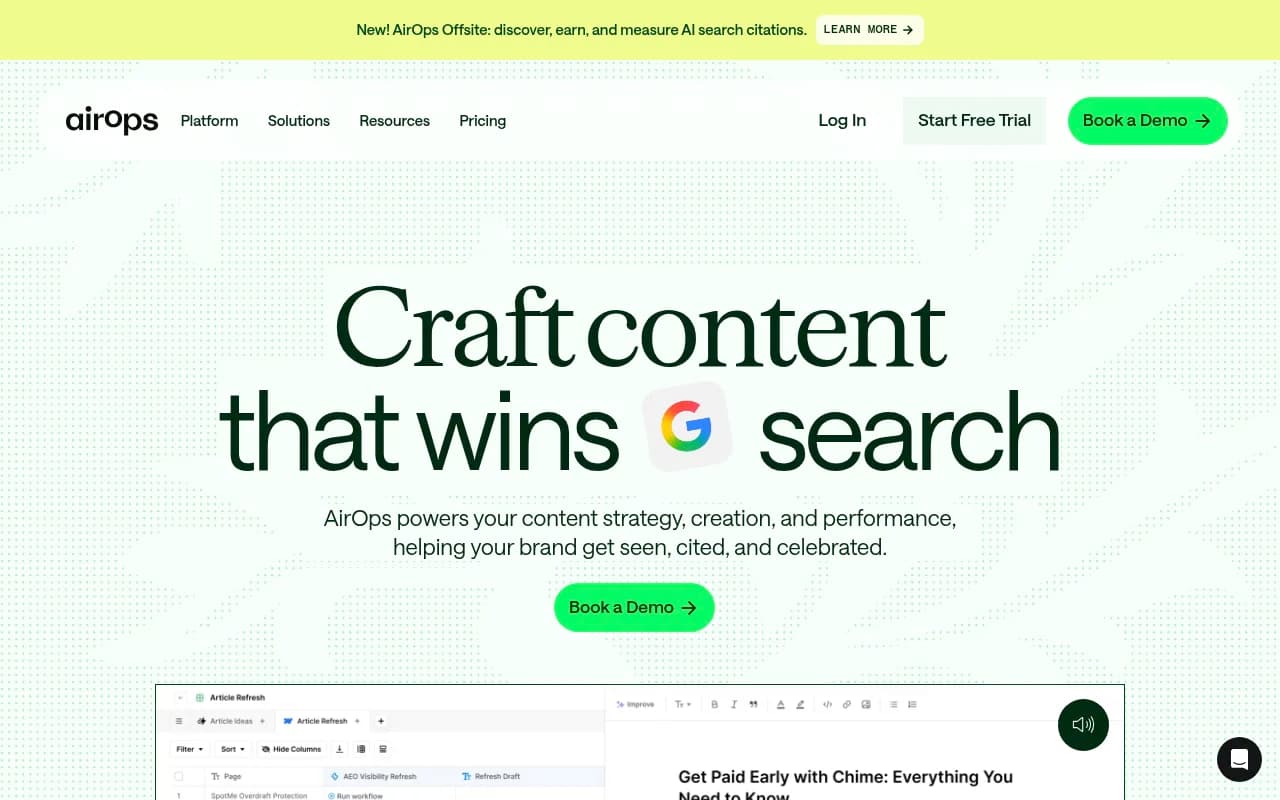
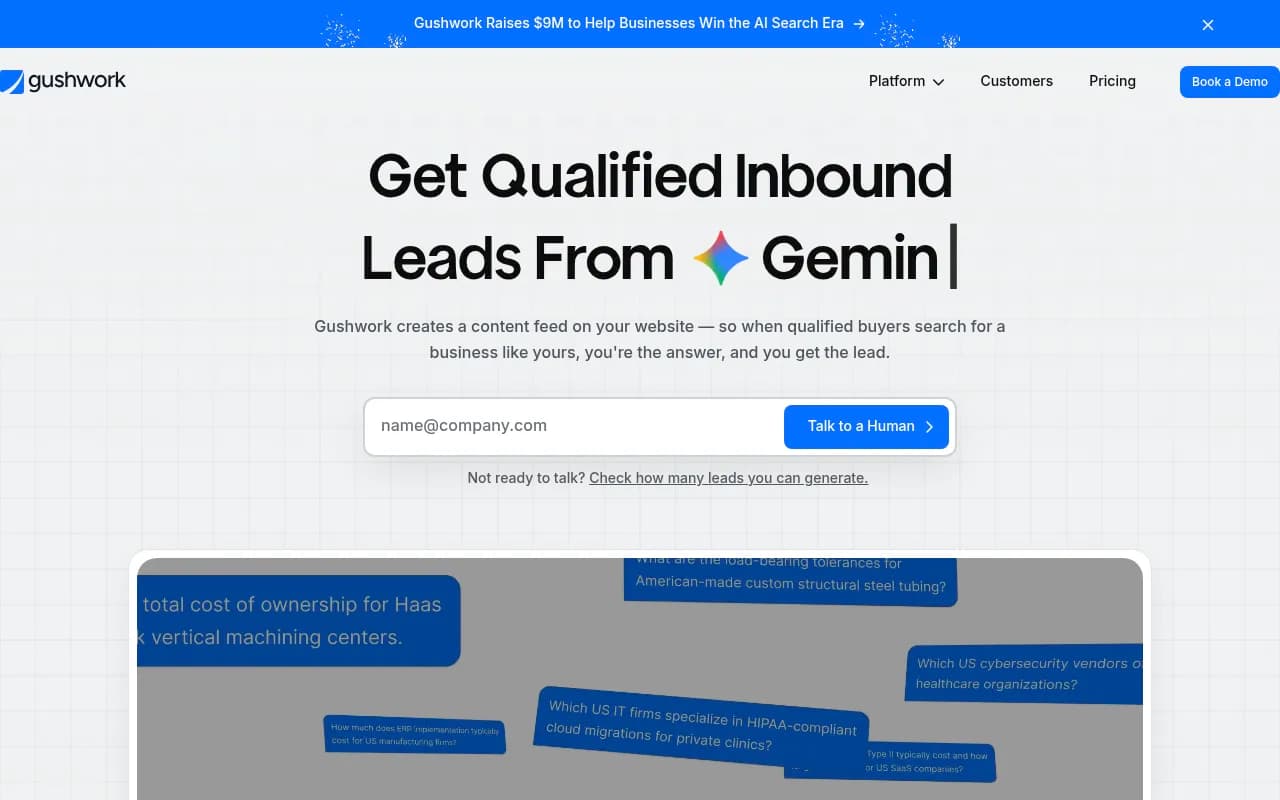
SearchEye (Pro $99/mo, 100 prompts, 3 sites) matches citation gaps to a network of 50,000+ publications for placements, with publisher spend billed separately. Standard plans cover four answer engines. Its ranking of itself in its own listicle should be read as marketing. AirOps and Gushwork are closer to InSpace in spirit: they produce content at volume, with less emphasis on tracking.
Gushwork
For more options, the GEO software directory at bestgeosoftware.com lists dozens of trackers.
How to choose
| If you need... | Pick... |
|---|---|
| Monitoring plus content and crawler data in one place | Promptwatch |
| Strong competitor and category prompts at a modest price | Peec AI |
| SaaS-specific tracking, many seats | LLM Pulse |
| A big prompt set for little money | LLMrefs |
| Enterprise analytics and a sales process | Profound |
| One more line item in your SEO suite | Semrush or Ahrefs Brand Radar |
| Pages written and delivered for you | Stay with InSpace, or look at AirOps and Gushwork |
Run this test in every demo
Industry-lens suggests a buying check that I'd copy:
- Run a real buying prompt, such as "alternatives to [competitor] for a 200-person SaaS company", on every engine you plan to monitor.
- Open an answer that mentions a competitor and confirm the tool shows the cited source pages.
- Ask what happens when you exceed the prompt or model allowance.
- Ask whether your niche questions are already in a pre-collected index or need custom tracking.
If a vendor can't show cited URLs, you can see that you're losing but not why.
Attribution: what you can and can't prove
Nobody can tie a mention in a chatbot to revenue cleanly yet. Use several proxies together:
| Proxy | What it tells you | What it can't |
|---|---|---|
| AI referral sessions in analytics | Clicks that carried a referrer | People who saw you and typed the URL later |
| "How did you hear about us?" with an AI option | Self-reported influence | Recall is fuzzy |
| "Found us in ChatGPT" tag in CRM notes | Whether AI is in the deal | Depends on reps logging it |
| Mention rate on your 80 prompts, monthly | Whether you're gaining ground | Revenue |
| Branded search and direct traffic trend | Possible downstream demand | Anything causal |
A tool with visitor analytics for AI-referred traffic narrows the first row. The rest you build yourself.
My take
I wouldn't treat InSpace as something to replace one-for-one. If it's working as your content engine, keep it and add a tracker so you can see whether those pages get cited. If you're paying $1,000+ a month mainly hoping to improve AI visibility without a view of the prompts, buy a $95 to $250 monitor first and let the data tell you what to write. Start with 50 to 80 prompts across the three shapes, check them weekly, and check pricing pages before committing, since most figures here come from aggregators.