Key takeaways
- InSpace.io is an SEO and GEO platform built around NOVA, which researches, writes, publishes, and re-optimizes pages for Google and AI answers. It is not the desk-booking product with a similar name that shows up on Capterra and G2.
- Pricing runs from roughly $700 to $2,100 per month for self-serve tiers, with a custom Multiverse plan from $6,900. The discounts depend on 1-year or 2-year terms.
- The case studies (+21% to +1,582%) are vendor-picked and mostly from small and mid-sized businesses. We found no independent reviews to cross-check them.
- It fits SMEs that want SEO done for them. It fits poorly if you want control over every draft, or if you need deep AI visibility measurement.
First, a naming mix-up to clear up
Search for "inspace review" and you will hit a wall of results about desk booking, meeting rooms, and visitor management. Capterra, G2, and Software Advice all list an "inspace" workplace tool starting at a few dollars per user per month. That is a different company.
InSpace.io, the subject of this review, sells autonomous SEO and generative engine optimization (GEO). If you landed here after seeing a $3.99 per user price, that price is not for this product. Keep that in mind when you read third-party rating snippets, because the 4.1 Capterra score and the ease-of-use numbers belong to the booking software.
That also means something awkward for this review: we could not find independent G2, Trustpilot, or Reddit reviews of InSpace.io itself. Most of what follows rests on the vendor's own pages, and I will flag where that matters.
What InSpace.io actually does
The pitch is simple. NOVA, the company's autonomous AI platform, reads your whole site, decides which pages need to win, does the work, and keeps improving them. The homepage frames the goal as being found in Google and in AI answers at the same time.
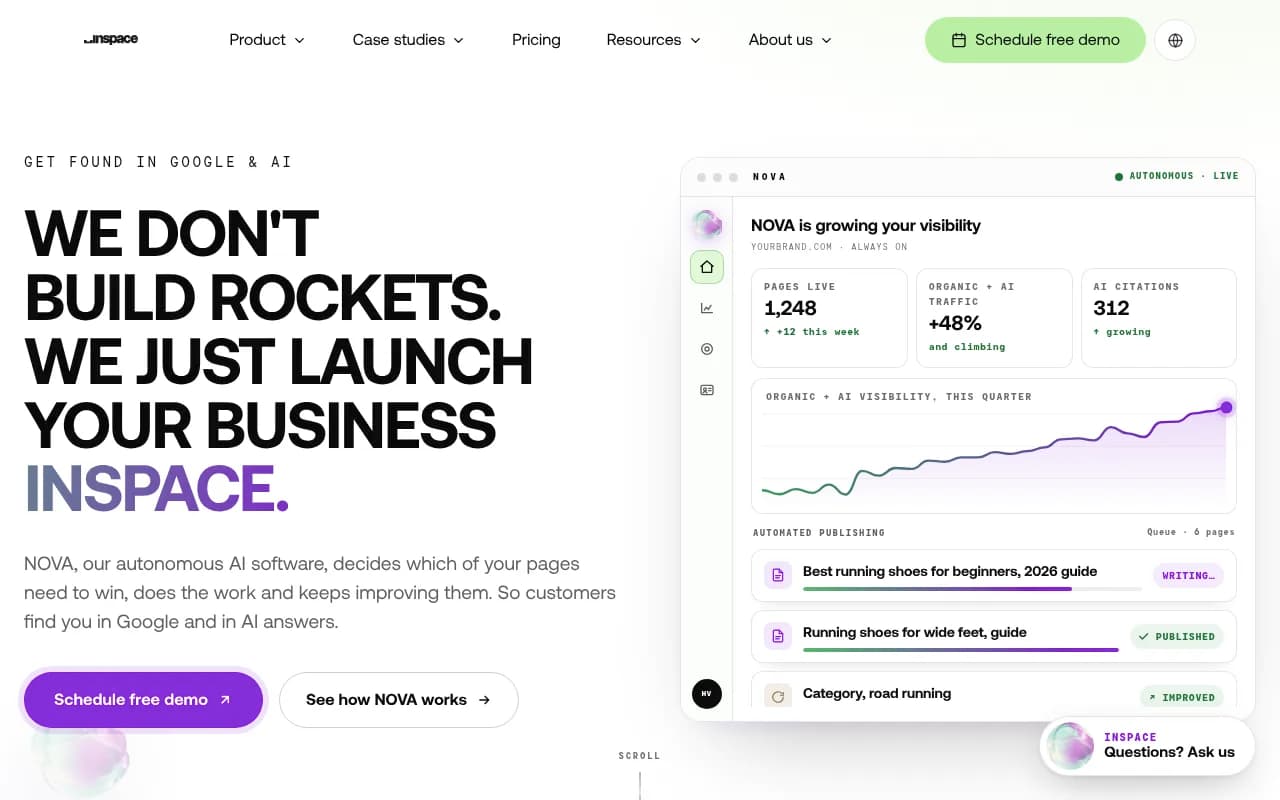
According to the NOVA product page, the workflow is a loop: find the opportunity, choose the page, improve it, measure, and re-optimize. For each page it decides between several moves:
- optimize an existing page
- strengthen a weak one
- consolidate overlapping pages
- prevent keyword cannibalization
- fix internal links
- create a new page
It publishes into your CMS, and the vendor says humans check every page. The homepage describes the split as software doing the engine work, with a personal Customer Success Manager backed by a team of 20+ specialists doing regular check-ins.
The one-page-for-both claim
InSpace says a single page should serve both Google and AI assistants like ChatGPT, Perplexity, and Gemini, so you do not need a separate GEO tool. There is a logic to that. Pages that rank and pages that get cited overlap a lot. But it is also a convenient claim for a vendor whose product does not appear to include dedicated AI visibility measurement. More on that below.
Multi-market approach
The site is available in English, Dutch, German, and French, and the vendor says it is live in 32 countries. The pitch is that strategy gets rethought per market rather than translated. The self-reported numbers are 500+ active customers and 37,856 pages built and optimized. Treat those as vendor claims.
Pricing in 2026
Plans are priced by monthly page volume. You choose a 1-year or 2-year term and pay monthly, yearly upfront (save 10%), or two years upfront (save 20%). The pricing page says discounts stack to up to 30% off. The scraped pricing text was ambiguous about exactly which price maps to which term, so I read the figures as list price down to the maximum discount. Confirm on inspace.io/pricing before you budget.
| Plan | List price per month | Max discounted | Pages per month | What you get |
|---|---|---|---|---|
| Stratosphere | $1,000 | $700 | 10 | Long-tail and question-focused informational articles, personal onboarding |
| Milky Way (most popular) | $1,700 | $1,190 | 20 | Cluster-optimized product category hubs, conversion-focused service pages, onboarding |
| Universe | $3,000 | $2,100 | 40 | Location-based landing pages, automated content scaling, dedicated content strategist |
| Multiverse | From $6,900 | Custom | Custom | Local SEO and GEO per market and language, country-level reporting, for 4+ countries |
At list price that works out to roughly $100 per page on Stratosphere, $85 on Milky Way, and $75 on Universe. That is my own arithmetic from the plan figures.
The lock-in question
The discounts require a term commitment. I could not find cancellation terms. If you are weighing a 2-year deal, ask about exit conditions in writing before signing, because SEO results can take months to show and you will want to know what happens if they do not.
The case studies: what to believe
The homepage shows a scrolling wall of results. DevTalent at +1,582%, SolidBuild at +1,497%, ExteriorWash at +961%, down to CanopyShade at +21%. The headline says "Measured, not promised" and points to case files.
I would read these carefully:
- They are selected by the vendor, so you are seeing the best of 500+ customers, not the median.
- Percentage gains on small baselines are easy to produce. A site going from 200 to 3,000 monthly visits is a +1,400% story and a modest business outcome.
- The metric is mostly organic traffic. Revenue, leads, and AI citations get far less airtime.
- The testimonials on the NOVA page are brand-supplied, and many clients are Dutch SMEs.
That does not mean the results are fake. It means you should ask for the baseline, the time period, and the starting domain strength for the three cases closest to your situation. A free demo is available through Calendly, and there is a free tech scan tool.
Does the page mix match how AI cites content?
This is where I have a real opinion. The plans lean on different page types, and page type matters for AI citations.
Promptwatch Data looked at ChatGPT citations from Sep 28 to Oct 4, 2026. Product pages were 22.4% of classified citations, landing pages 16.8%, and listicles 13.6%. Together, product and landing pages made up 39%. For commercial prompts, product pages hit 26.0% and landing pages 20.6%.
How-tos were 8.7% and general articles 6.1% in that same period. Longevity matters too: Promptwatch's content half-life report found that landing pages and docs stay cited longest, while news lost half its cited pages within 36 days.
Apply that to InSpace's tiers. Milky Way and Universe, with category hubs, service pages, and location landing pages, sit squarely on the page types ChatGPT cites most. Stratosphere, built around long-tail informational articles, targets the smaller and shorter-lived slice. If AI citations matter to you, I would not buy the entry plan for that purpose.
Strengths
- It is a done-for-you model. If nobody on your team has time for SEO, a system that decides, writes, and publishes is the draw.
- The workflow covers more than writing. Consolidation, cannibalization prevention, and internal linking are the parts that content generators usually skip.
- Plan structure is clear. You pay for page volume and know what each tier targets.
- Multi-language and multi-market support is built in, which small agencies and exporters will like.
- Human check-ins are part of the deal rather than an upsell.
Weaknesses and open questions
- No independent reviews. The only trust signals are the vendor's own.
- No evidence of content quality at scale. We could not verify how much human review actually happens on each page.
- Pricing is steep for a small site. $700 to $1,000 a month for 10 pages is a lot if your site has 30 pages total.
- Term commitments, with unclear cancellation language.
- Limited AI visibility measurement. The site shows illustrative dashboards with AI citations, but nothing I found describes crawler logs, prompt-level tracking, or traffic attribution from AI platforms at the depth dedicated tools offer.
- Less control. If you want to approve every sentence, an autonomous platform is the wrong shape.
Who InSpace.io fits
It fits a small or mid-sized business, often a services company or ecommerce store, that has a site, wants more organic traffic, and does not want to hire a content team or manage freelancers. The Dutch SME customer base suggests this is where the product has the most traction.
It also fits agencies-of-one who want a production engine behind a few client sites, though the pricing leaves little margin.
It fits poorly if:
- you are a large enterprise with strict brand and legal review
- you need granular reporting on AI citations, sentiment, and competitor share
- you want to keep content creation in-house and just need guidance
- your site is tiny and a $700+ monthly commitment would be most of your marketing budget
Alternatives worth comparing
The right alternative depends on whether you want content production, content guidance, or visibility measurement.
| Need | Tool | Notes |
|---|---|---|
| Autonomous or semi-autonomous content at scale | Search Atlas, Gushwork, Byword | Different degrees of automation, generally lower monthly cost |
| Content optimization with human writers | Surfer SEO, Clearscope, Frase | You write, the tool guides |
| AI visibility tracking and optimization | Promptwatch | Measures and acts on AI search presence |
| Traditional SEO suite | Semrush, Ahrefs | Broad toolkit, you do the work |
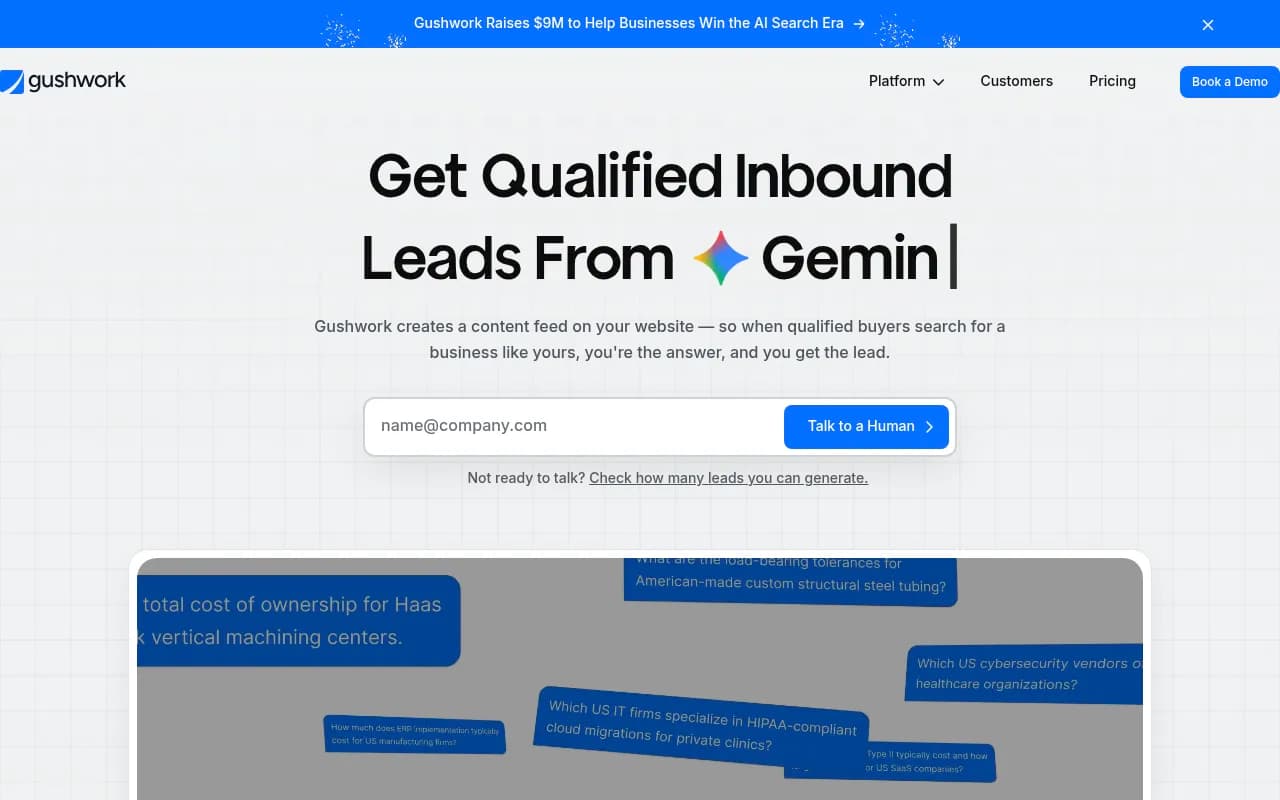
For hands-off content with a lighter price tag, look at tools like Search Atlas and Gushwork.

Gushwork
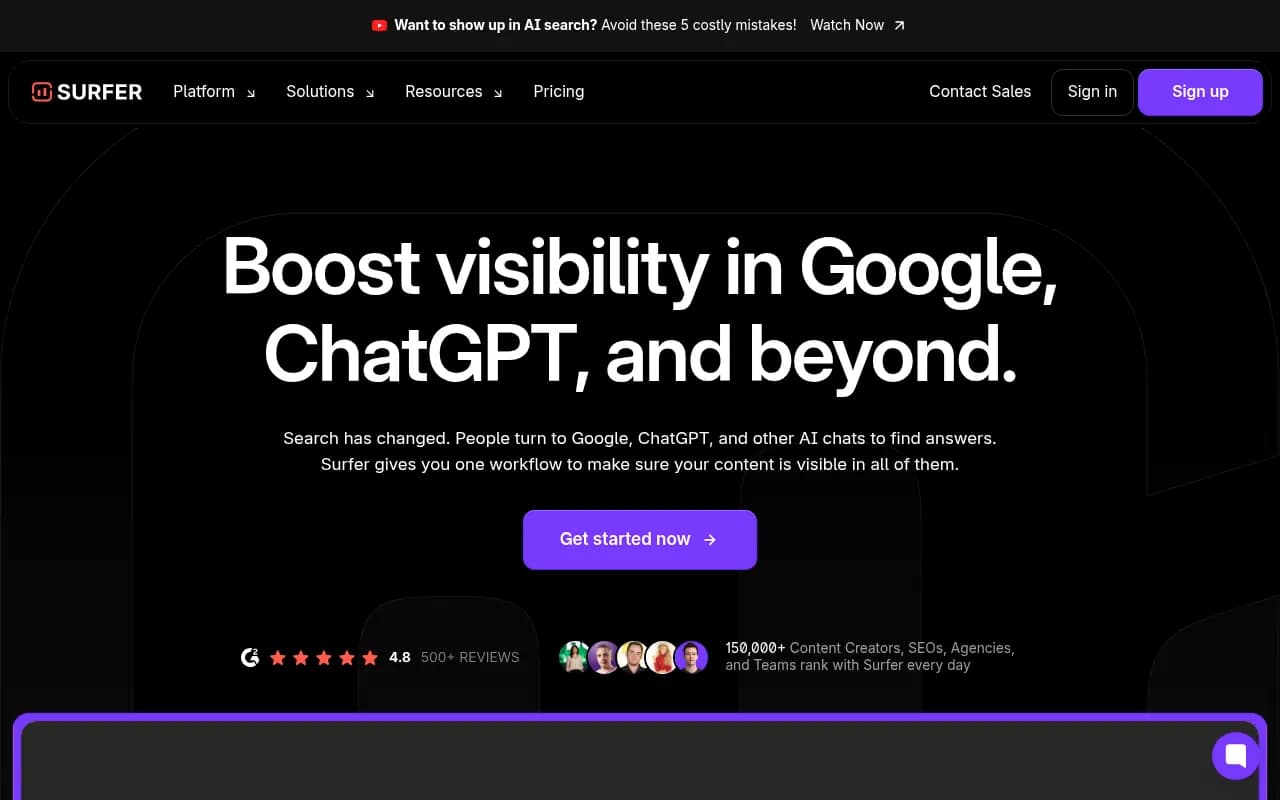
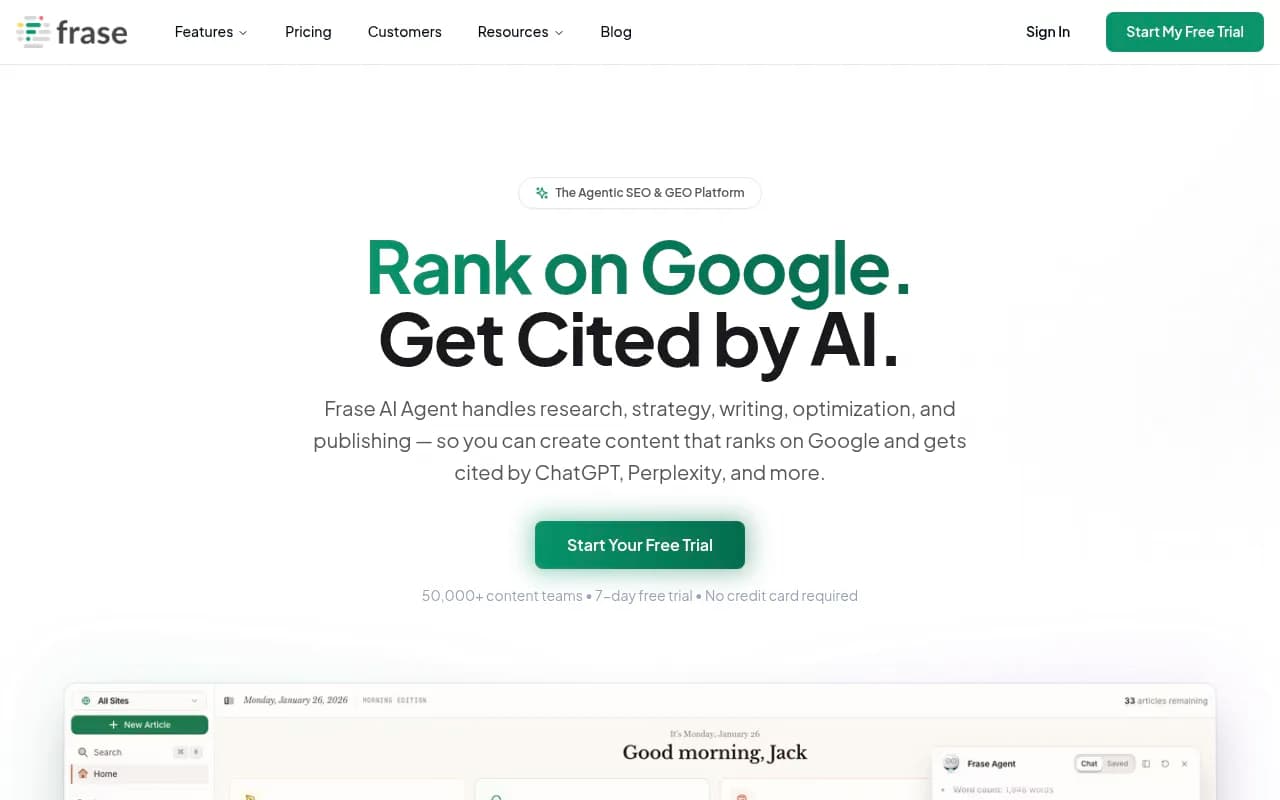
If you want to keep writing in-house but need briefs and scoring, the usual picks are Surfer SEO and Frase.
Broader SEO suites remain the default for research and auditing.

If AI visibility is the real goal
This is the gap I would think hardest about. InSpace says one page serves both Google and AI. Maybe so, but you still need to see whether AI systems are actually crawling, citing, and sending traffic to those pages. A platform like Promptwatch tracks how brands appear across ChatGPT, Google AI Overviews, Perplexity, and others, shows crawler activity, and ties it to traffic, so you could pair it with any content production approach and check what is working.

For a wider view of options, the GEO software directory at bestgeosoftware.com lists dozens of platforms.
Questions to ask before you sign
- What were the baseline traffic and timeframe for the three case studies closest to my industry?
- How many humans review each page, and what do they check?
- Which CMSs do you publish to, and can I approve before anything goes live?
- How do you measure AI citations, and can I see the raw data?
- What are the cancellation terms on 1-year and 2-year plans?
- What happens to the pages if I leave? Do I keep everything?
- How do you prevent thin or duplicate content when producing 20 to 40 pages a month?
The last one matters. Producing dozens of pages monthly on a small site can create the very cannibalization problem NOVA claims to prevent.
Verdict
InSpace.io is a credible concept sold at a premium price, with thin independent evidence. The product logic is sound: let software handle the repetitive SEO decisions, and keep humans around for oversight. The wins on the homepage are real in the sense that someone got them, but they are a curated sample.
If you are an SME owner who wants SEO off your plate and can absorb $700 to $2,100 a month, request the demo, push on the questions above, and ask for reference calls with customers in your niche. Start with a 1-year term if you can, not 2. If you want to keep control, measure AI visibility properly, or spend less, assemble a lighter stack from the tools above instead.