Key takeaways
- InSpace lists four tiers: Stratosphere ($1,000/mo), Milky Way ($1,700/mo), Universe ($3,000/mo) and Multiverse (from $6,900/mo, custom).
- Prices are list prices. Paying yearly upfront saves 10%, and a 2-year term paid upfront saves up to 30%.
- InSpace is a done-for-you content and SEO service powered by its NOVA engine plus specialists. It is not a self-serve visibility tracker, so comparing it directly to a $29 or $99 GEO tool is apples to oranges.
- The pricing page states page volumes and content types per tier, but not prompt monitoring, AI engines tracked, or a reporting dashboard for the three self-serve plans.
- If you want to measure AI visibility, you will likely pair any content service with a tracker such as Promptwatch, Otterly.AI or Peec AI.
What InSpace actually sells
InSpace describes its offer as AI SEO for SMEs. NOVA, its in-house engine, automates content, structure and publishing for Google and for AI answer engines like ChatGPT and Gemini, while senior specialists guide strategy and quality.
That framing matters for pricing. Most GEO tools you read about in 2026 charge for tracking: prompts, engines, markets. InSpace charges for output: pages per month. You are buying execution, closer to an agency retainer than a software seat.
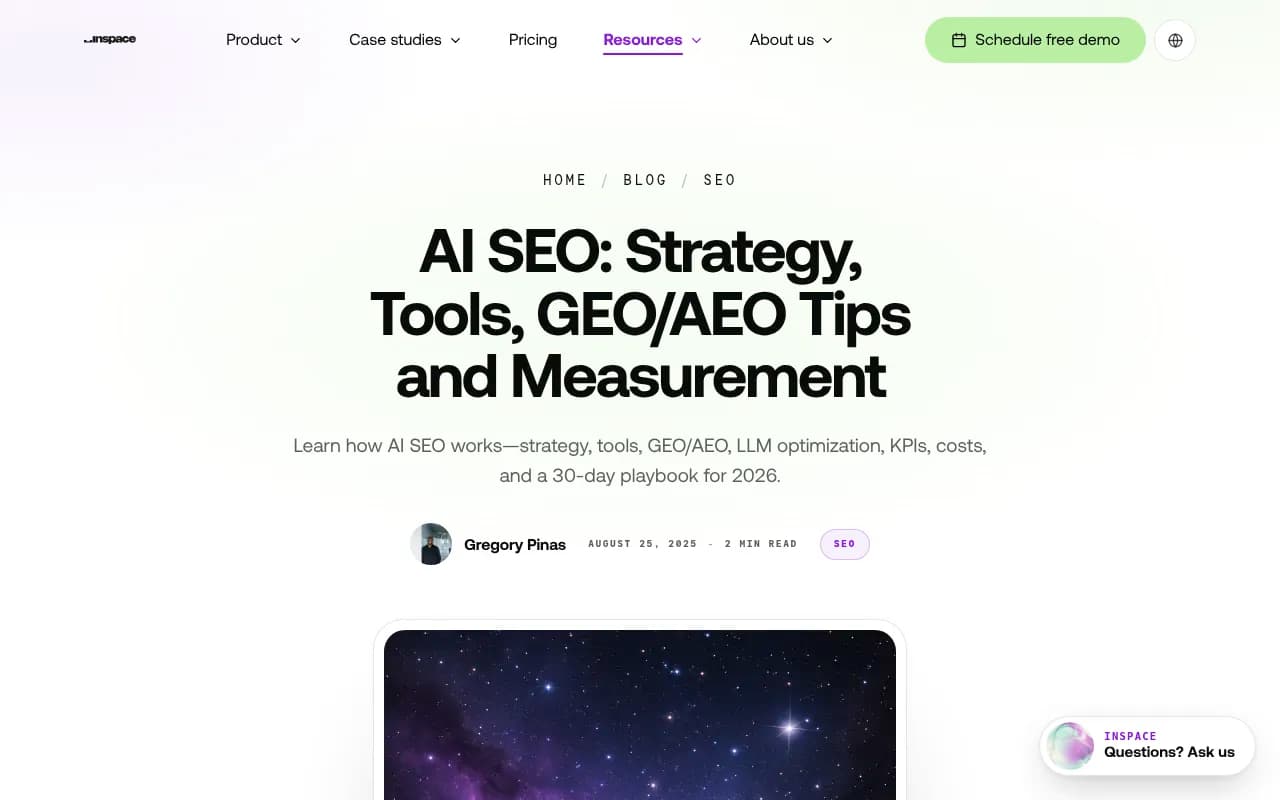
One warning before the numbers. An older InSpace blog post says packages "begin at 600 per month" with no currency. The live pricing page starts at $1,000/mo list, or $700/mo with the maximum discount. Treat the $600 figure as outdated, and confirm everything at inspace.io/pricing before you budget.
InSpace pricing tiers in 2026
| Tier | List price (USD/mo) | Pages per month | Main content types | Extras |
|---|---|---|---|---|
| Stratosphere | $1,000 | 10 | Long-tail, question-focused informational articles | Personal onboarding |
| Milky Way (most popular) | $1,700 | 20 | Everything in Stratosphere, plus category hubs and conversion-focused service pages | Personal onboarding |
| Universe | $3,000 | 40 | Everything in Milky Way, plus location-based landing pages and automated content scaling | Dedicated content strategist |
| Multiverse | From $6,900 | Custom | Local SEO and GEO strategy per market and language | International coordination, reporting by country |
Stratosphere
The entry plan is 10 pages a month of informational content that answers customer questions. It suits a small site that needs a steady stream of blog-style articles. At $1,000 list, that works out to roughly $100 a page before discounts.
Milky Way
The plan InSpace marks as most popular doubles the volume to 20 pages and adds category hubs and service pages built to convert. Per-page cost drops to about $85. This is the first tier where the content touches money pages, not only top-of-funnel articles.
Universe
Universe adds 40 pages a month, location-based landing pages and a dedicated content strategist. At $3,000 list it is about $75 a page. It makes sense for businesses with many service areas or a large catalog to cover.
Multiverse
Multiverse is for companies operating in four or more countries. It adds local SEO and GEO strategy per market and language, tailored content, coordination across regions and reporting by country. You start with an intake call with InSpace specialists and receive a custom proposal, from $6,900/mo.
How the discounts work
The page has two toggles: contract length (1 or 2 years) and payment timing (monthly, yearly upfront, or 2 years upfront). InSpace says discounts stack and reach "up to 30%."
| Tier | List (monthly) | Yearly upfront (about 10% off) | Mid discount (about 20% off) | Max discount (about 30% off) |
|---|---|---|---|---|
| Stratosphere | $1,000 | $900 | $800 | $700 |
| Milky Way | $1,700 | $1,530 | $1,360 | $1,190 |
| Universe | $3,000 | $2,700 | $2,400 | $2,100 |
The scraped page is ambiguous about which toggle combination produces the middle rung, so check the toggles yourself before you quote a number to your finance team. The 30% rate also means paying two years upfront, which is a real commitment for a service whose results take months to show.
What is not on the pricing page
This is where I would push before signing. For the three self-serve tiers the page states page volume and content types. It does not list:
- a tracking dashboard or prompt-monitoring allowance
- the number of AI engines tracked
- the number of markets covered (outside Multiverse)
InSpace publishes articles on combined SEO and GEO results, so reporting of some kind exists. Ask for a sample report and for exactly how AI-answer visibility is measured. If the answer is a vague visibility claim, you will want your own tracker.
Does the content mix match what AI cites?
Stratosphere is mostly informational articles. Promptwatch Data's report on which content types ChatGPT cites most (Sep 28 to Oct 4, 2026) shows product pages at 22.4% of classified citations, landing pages at 16.8% and listicles at 13.6%. How-tos were 8.7% and general articles 6.1%.
For commercial prompts, product pages took 26.0% and landing pages 20.6%, and those top four types made up almost 70% of citations. So the entry tier covers a smaller share of what ChatGPT tends to cite. Milky Way's category hubs and service pages and Universe's location pages line up better with the cited types. It is a reasonable argument for skipping Stratosphere if AI citations are the goal, though it is my reading, not an InSpace claim.
How InSpace compares with GEO tools
GEO tools mostly fall into two camps: trackers that tell you whether AI mentions you, and platforms that also help you fix it. InSpace sits in a third spot: a managed service that produces the content. Prices below come from the vendors' published pages as reported in third-party roundups checked in 2026, so confirm before buying.
| Option | Model | Entry price | What you get |
|---|---|---|---|
| InSpace | Done-for-you service | $1,000/mo list | 10 to 40 pages a month, onboarding or strategist |
| Promptwatch | Visibility and optimization platform | Free Explore; Essential $95/mo | Tracking, crawler logs, content tools, Content Agent on Business |
| Otterly.AI | Monitoring | $29/mo | 15 prompts, four engines included |
| Peec AI | Analytics | About $95/mo | 50 prompts, three engines, unlimited seats |
| Semrush AI Visibility Toolkit | SEO suite add-on | $99/mo | 25 prompts per user licence |
| Rankability | Agency content plus tracking | $97/mo | Content workflows and AI tracking |
| Profound | Enterprise | Custom | Up to nine engines on Enterprise |
The gap is obvious: a tracker is 10 to 30 times cheaper than InSpace, but none of the cheap ones write your pages. Think of the real comparison as InSpace versus a tracker plus a writer, whether that writer is a freelancer, an in-house marketer or an AI platform.
Trackers: Otterly.AI and Peec AI
Otterly.AI starts at $29/mo for 15 prompts and is the usual first purchase for teams wanting a baseline. Google AI Mode, Gemini and Claude are paid add-ons on some plans.
Otterly.AI

Peec AI suits agencies and multi-market teams, with unlimited seats and country settings.

Platforms that act: Promptwatch
Promptwatch is the one in this group that covers the measure-and-fix loop. It tracks the real interfaces of ChatGPT, Google AI Overviews, Gemini, Perplexity and others, shows IP-verified AI crawler logs and AI-referred traffic, and has content gap analysis. On the Business plan ($579/mo) the Content Agent plans, writes and publishes to WordPress, Webflow or Framer. Entry is $95/mo for Essential, and there is a free Explore plan with ChatGPT only.

If you already buy content from InSpace or anyone else, the useful role for a platform like this is checking whether the pages get crawled, cited and clicked.
SEO suite add-ons: Semrush
Semrush's AI Visibility Toolkit costs $99/mo for 25 prompts per user licence, which suits teams already living in Semrush.
Content-plus-tracking: Rankability
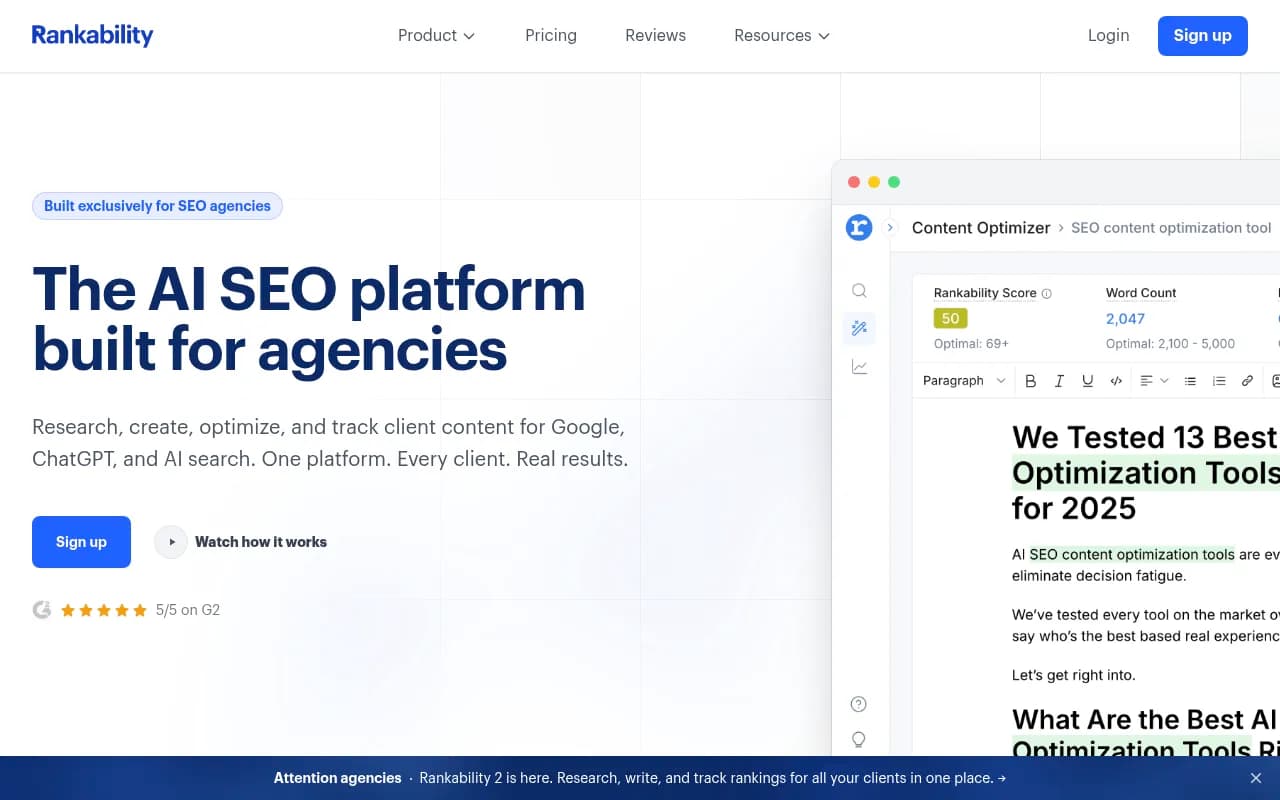
Rankability bundles content research, writing and AI tracking from $97/mo, with unlimited client workspaces. It is the closest software analogue to what InSpace delivers as a service, though you do the operating.
Enterprise: Profound
Profound is custom-priced and aimed at enterprise teams with established content operations.
Profound

For a wider look at the category, the GEO software directory at bestgeosoftware.com lists more options.
Which InSpace tier makes sense
- Stratosphere if you have a small site, little content, and mainly need informational coverage. Expect to add product or landing page work separately.
- Milky Way if you want category hubs and service pages alongside articles. It is the sensible default and probably why InSpace flags it as most popular.
- Universe if you serve many locations or need 40 pages a month and want a named strategist.
- Multiverse if you operate in four or more countries and need per-market GEO strategy.
And skip the service entirely if you only want to know how you show up in AI answers. A $29 to $95 tracker answers that question, and you can decide later whether to pay someone to act on it.
Questions to ask before you sign
- How is visibility in ChatGPT, Gemini and AI Overviews measured, and can I see a sample report?
- Which CMS does NOVA publish to, and do I approve pages before they go live?
- What happens to published content if I cancel after a 2-year prepaid term?
- Are discounts tied to prepayment, and is there a refund path?
- How are product and landing pages handled on the entry tier?
Bottom line
InSpace's pricing is simple on the surface: pay per page volume, save up to 30% by committing. The tradeoff is that you are paying agency-style money for output, with little published about measurement. If you go ahead, pair it with an independent tracker so you can see whether the content shows up in AI answers. If you are weighing it against a software-only route, price the tracker, the writing and the time it takes to ship, then compare that total to $1,000 to $3,000 a month.