
Key takeaways
- AthenaHQ's paid entry plan is $295 a month for roughly 3,600 credits, and one credit is one AI response. A prompt run across many engines burns credits fast.
- For B2B SaaS, the prompts that matter most are commercial ones like "best CRM for startups" and "X vs Y". Product pages, landing pages, listicles and comparison pages are what ChatGPT cites for them.
- Peec AI, Otterly.AI and Rankscale are the budget picks. Profound and Scrunch sit higher. Semrush and Ahrefs make sense if you already pay for them.
- Monitoring is the easy part. The harder question is whether a tool helps you publish the pages that win comparison prompts, then checks whether they got crawled and cited.
- Prices in this space change monthly. Confirm everything on the vendor's pricing page before you buy.
Why B2B SaaS teams look past AthenaHQ
AthenaHQ is a decent platform. It tracks how ChatGPT, Perplexity, Google AI Overviews, Gemini, Claude and others describe your brand, and it suggests actions. The reasons teams leave are fairly consistent across the roundups I read:
- The jump from the free plan (a one-time grant of about 300 credits) straight to $295 a month.
- Credit metering. A prompt tracked across 8 to 11 engines spends that many credits per run, so a 50-prompt panel gets thin quickly. Top-ups are about $100 per 1,250 credits.
- Key features, like the ACE Citation Engine, are Enterprise-only, and there are no server-side AI crawler logs or MCP server.
- A preference for keeping AI tracking inside an SEO suite they already own.
- The realization that the gap is execution, not measurement.
That last one is the one I would weigh most. Almost every B2B SaaS team can find out they are missing from "best project management tool for agencies". Far fewer can ship the content that fixes it each week.
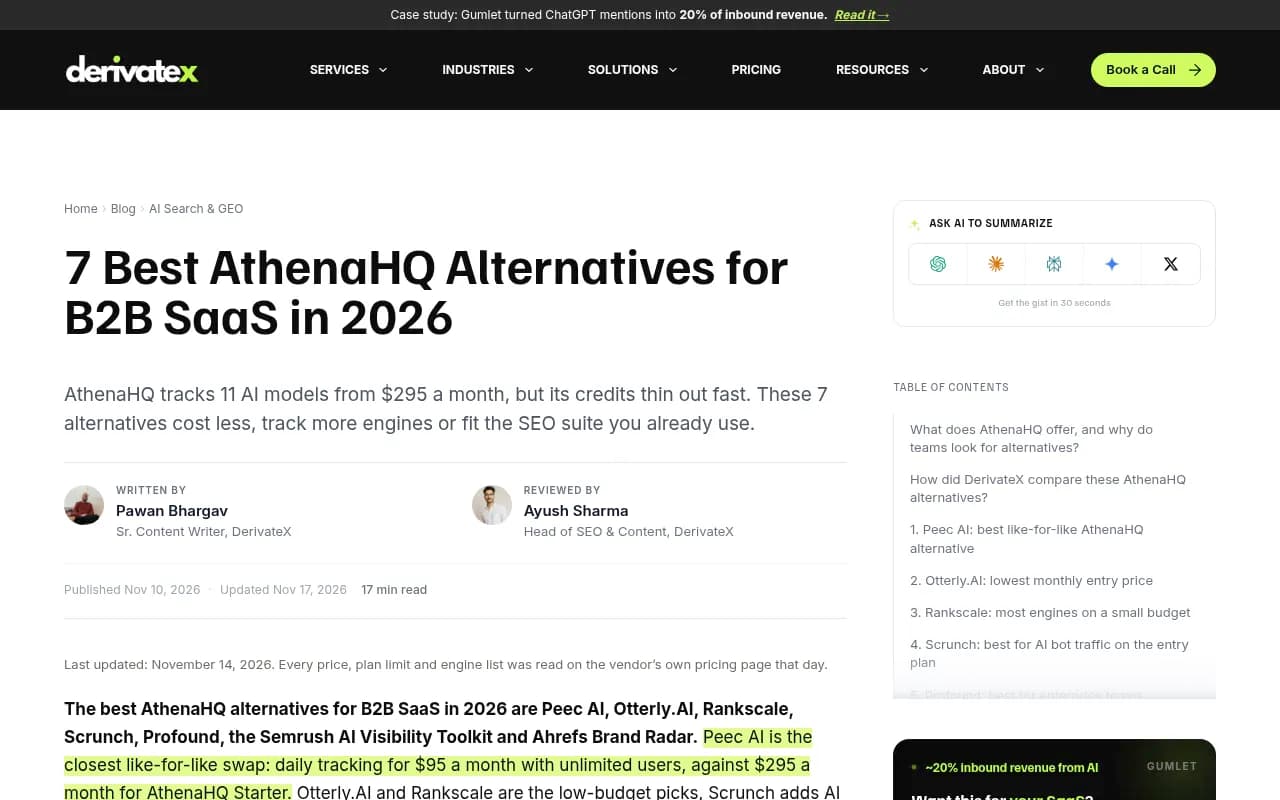
The DerivateX roundup above (updated Nov 17, 2026) is a useful price reference, though like most roundups here it is vendor-adjacent, so treat rankings with some salt.
What comparison and 'best X' prompts actually need
B2B buyers do not ask AI "what is [your brand]". They ask things like "best help desk software for a 50-person team" or "Tool A vs Tool B for SOC 2 compliance". Those are commercial prompts, and the sources AI pulls from look different than for informational ones.
Promptwatch Data looked at ChatGPT citations from Sep 28 to Oct 4, 2026. Across commercial prompts (the "best CRM for..." type):
| Content type | Share of ChatGPT citations, commercial prompts | Share, all prompts |
|---|---|---|
| Product pages | 26.0% | 22.4% |
| Landing pages | 20.6% | 16.8% |
| Listicles | 15.0% | 13.6% |
| Comparison pages | 7.9% | 5.9% |
Those four types make up almost 70% of commercial citations. Three practical consequences follow for a SaaS team:
- Your product pages need clear pricing, specs and target buyer, so a model can compare you to rivals without guessing.
- You need to appear in the third-party "best of" roundups ChatGPT cites. That is an offsite job, and your tool should show you which roundups get cited.
- You should publish your own comparison pages. Promptwatch's data puts comparisons at 7.9% of commercial citations, noticeably more than their share across all prompts.
Freshness matters too. In Promptwatch's content half-life data, news lost half its cited pages in about five weeks, while landing pages and docs held most of theirs for months. Evergreen comparison and landing pages are a better bet than a one-off news post.
One more detail that changes how you test tools: almost half of ChatGPT responses cite 10 or more unique domains (Promptwatch Data, Sep 28 to Oct 4, 2026). A comparison prompt is a crowded answer. Position and share of voice against named competitors matter more than a simple yes/no mention.
What to check before you switch
A short checklist, drawn from the roundups and from how these tools differ in practice:
- Pricing model. Flat prompt allowance or credits? Tenpoint Labs frames it well: which tool's metering fits the prompt panel you would actually run?
- Competitor tracking. Can you track "X vs Y" prompts and see which competitors the AI picks instead?
- Source visibility. Does it show which pages and third-party roundups are cited?
- Crawler access. Server-side logs tell you whether AI bots can read your pricing and comparison pages at all.
- Execution. Do recommendations turn into published content, or do you get a dashboard and a to-do list?
- Traffic attribution. Can you tie AI referrals to pipeline? AthenaHQ does this through GA4, which is one of its real strengths.
- A real trial. Test on your own prompts. MentionBird's advice to shortlist two or three tools and test them is sound.
Also know that every platform runs its own prompt panel, so scores do not compare across tools. Pick one and trend it over time.
AthenaHQ alternatives compared
Prices below come from the DerivateX, Tenpoint Labs and Promptwatch comparison posts, published between August and November 2026. They change often.
| Tool | Entry price | Engines | Best for B2B SaaS when... |
|---|---|---|---|
| AthenaHQ | $295/mo (about 3,600 credits) | 8 to 11, depending on source | You want GA4-based traffic attribution |
| Peec AI | $95/mo, 50 prompts daily, unlimited seats | 3 (more are paid add-ons) | You want a lean like-for-like swap |
| Otterly.AI | From about 29 EUR/mo (16 prompts) | 4, with add-ons | You are proving the need on a tiny budget |
| Rankscale | From $17/mo billed yearly | 17+ | You need many engines cheaply |
| Scrunch | About $250/mo | 4 to 8, 9 on Enterprise | You care about AI bot traffic as a channel |
| Profound | Enterprise, custom | 9+ | You are enterprise and buy through sales |
| Semrush / Ahrefs | Add-on or included in paid plans | Varies | You already pay for the suite |
| Promptwatch | $95/mo Essential | All supported models | You want to track and fix the gaps |
The shortlist
Promptwatch, for teams that need to fix gaps
Promptwatch is the one on this list built around the full loop rather than the dashboard. For comparison prompts that matters, because the work is writing and publishing pages, not staring at a score. It tracks real AI interfaces, shows which pages and third-party sources get cited, and has content gap analysis that maps your pages against the prompts AI answers. On Business, the Content Agent writes and publishes to WordPress, Webflow or Framer, and every published page then shows up in crawler logs, citation tracking and AI traffic.

A few details B2B SaaS teams tend to care about: query fan-outs show the exact web searches AI runs for a prompt, personas let you prompt like a CFO versus a developer, and Brand Narrative surfaces the claims AI repeats about you and rivals ("expensive for small teams", say). IP-verified AI crawler logs tell you whether bots can even read your pricing page, which AthenaHQ lacks.
Pricing, per the pricing page: Essential is $95/mo (50 prompts, 6,000 responses, daily tracking), Professional is $245/mo and adds crawler logs, content gap analysis and AEO articles, and Business at $579/mo adds the automated Content Agent, Fact Check and faster tracking. There is a 7-day free trial on monthly billing. To see how it differs from AthenaHQ directly, read Promptwatch vs AthenaHQ. Honest caveat: AthenaHQ's GA4 and Shopify attribution is good, and the Content Agent needs the Business tier.
Peec AI, the closest like-for-like

Peec AI is the simplest swap: $95 a month for 50 prompts tracked daily on 3 engines, with unlimited users. Claude and DeepSeek are Enterprise-only. It is clean monitoring. If your team already knows what to write and just needs a scoreboard, it is hard to beat on price. If you need crawler logs or content generation, you will need other tools alongside it. See Promptwatch vs Peec.
Otterly.AI and Rankscale, the budget picks
Otterly.AI

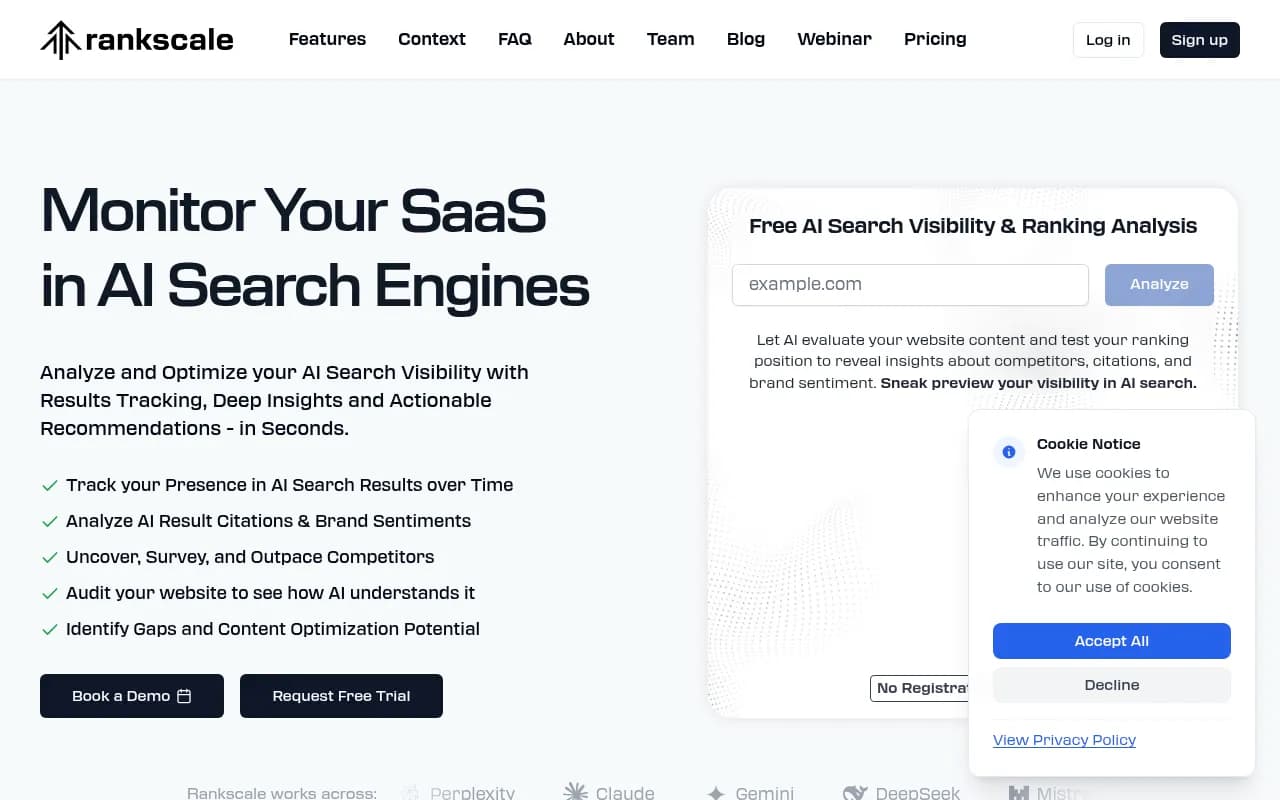
Otterly.AI has the lowest monthly entry (about 29 EUR for 16 prompts), but 16 prompts will not cover a B2B comparison panel with competitor variants. Gemini, AI Mode and Claude are add-ons. Rankscale starts at $17 a month billed yearly and covers 17+ engines. Both are good for validating the need before committing real budget.
Scrunch, for AI bot traffic
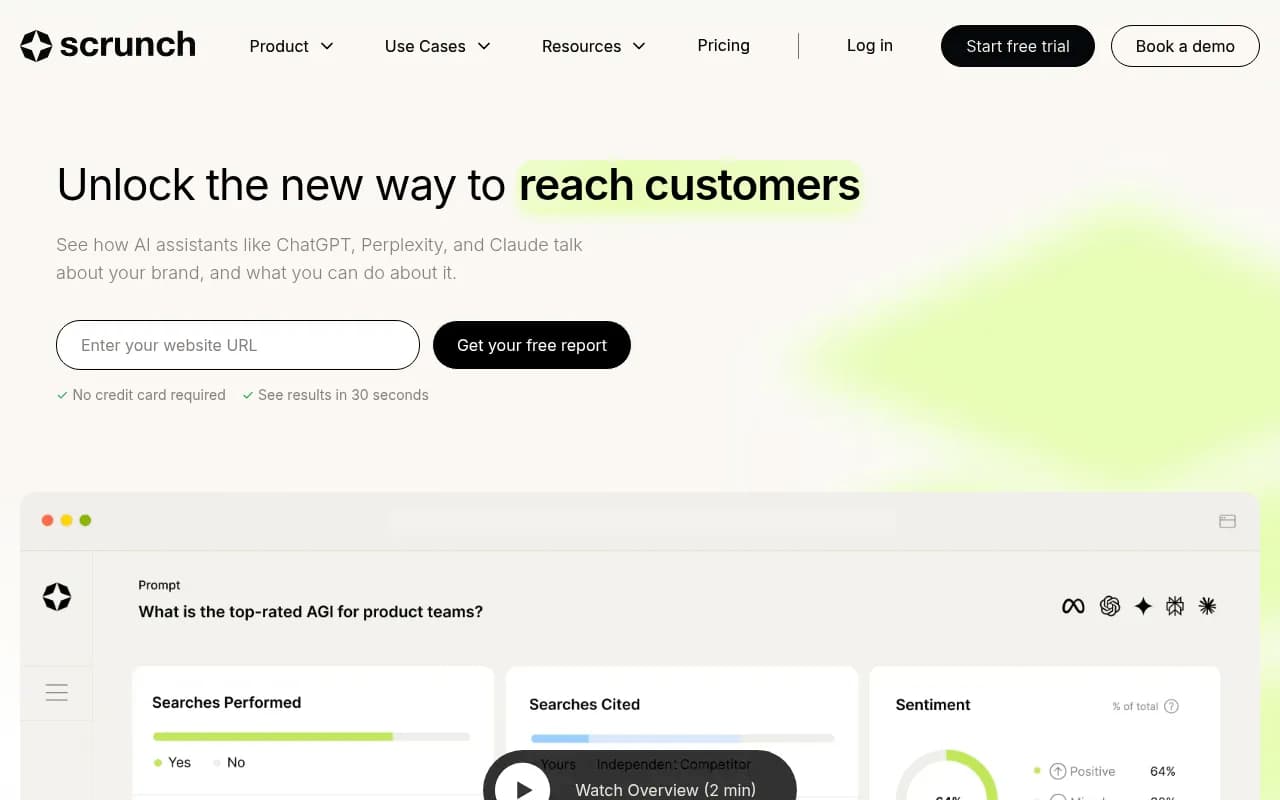
Scrunch is about $250 a month and treats AI agent traffic as its own channel. Tenpoint Labs notes Enterprise adds API access, SSO and a dedicated account team. Note that Scrunch removed a tier in September 2026, so older comparisons describe plans you can no longer buy.
Profound, for enterprise
Profound

Profound's pricing page now lists only a tailored Enterprise plan per Tenpoint Labs, though other roundups still quote self-serve tiers. That inconsistency is itself a lesson: check the live page. It fits large teams that want prompt demand data and buy through sales.
Semrush and Ahrefs Brand Radar, if you already pay
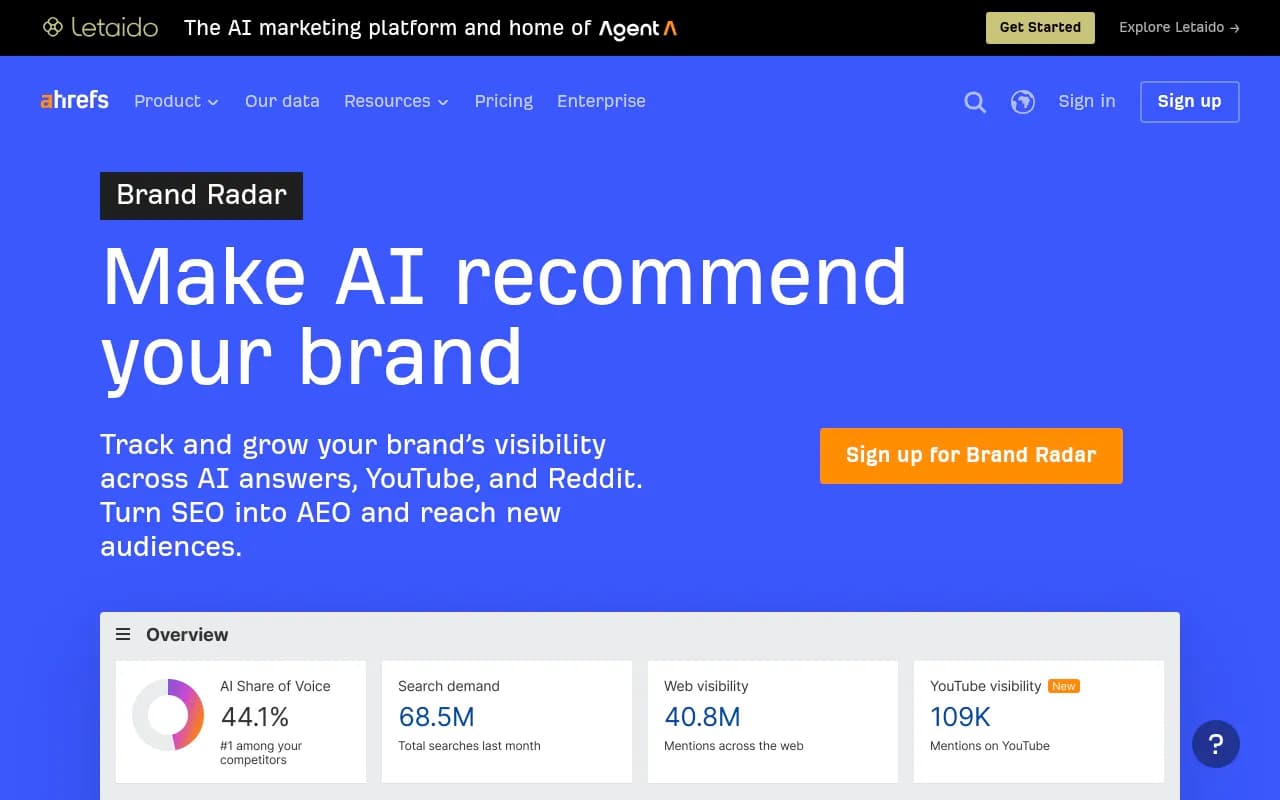
Ahrefs includes Custom Prompts free in paid plans, which makes it the cheapest entry for existing customers. The Semrush AI Visibility Toolkit is similar logic. The tradeoff is depth: these are SEO suites adding AI tracking, so expect less on crawler logs and content execution.
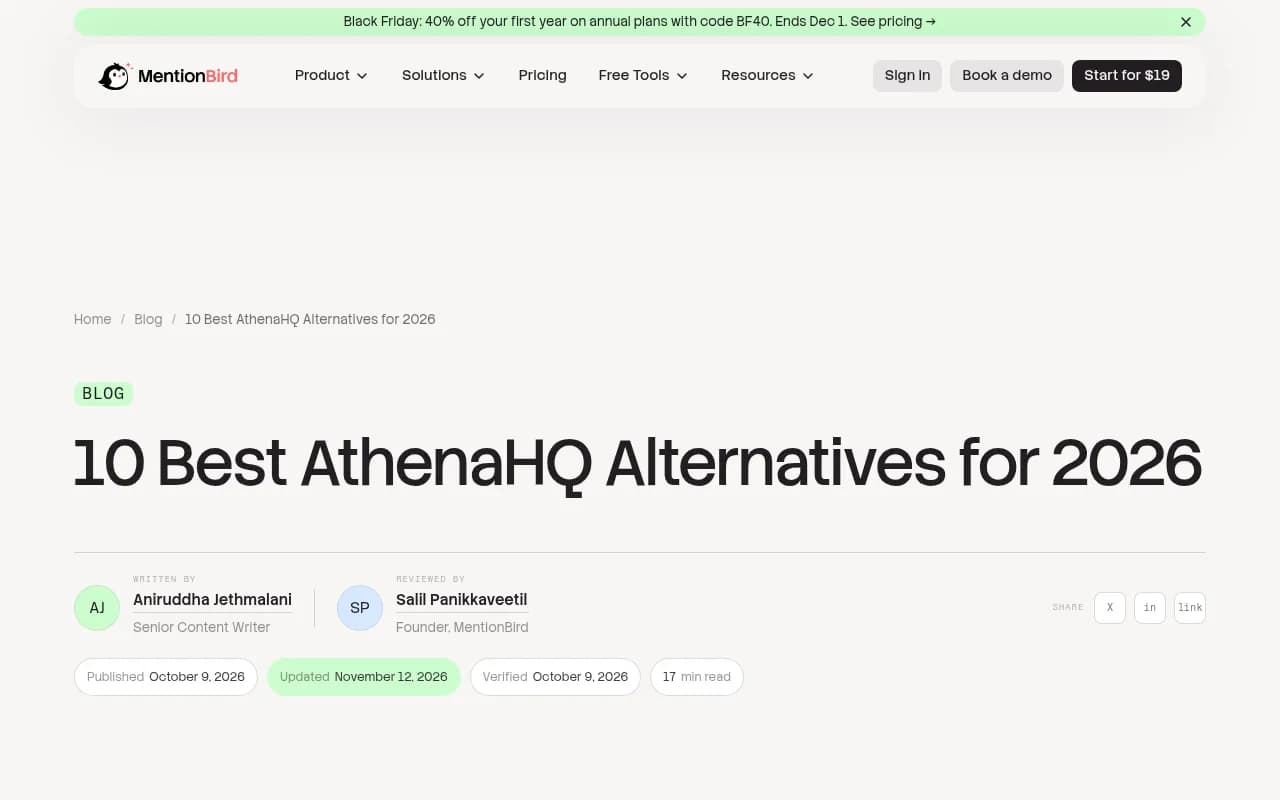
MentionBird, shown above, covers ten more options including Visby, Quattr and AirOps. Note that it lists itself first, as most vendor-authored roundups do.
How to test a tool on comparison prompts
Do this during a trial, on your own data:
- Build a panel of 30 to 50 prompts: "best [category] software", "best [category] for [segment]", "[you] vs [competitor]", and "[competitor] alternatives".
- Add two or three personas if the tool supports them, since a buyer and a practitioner phrase things differently.
- Run it daily for a week and look at position and share of voice against named competitors, not only mention rate.
- Open the citation list for your three worst prompts. Which listicles and comparison pages are being cited, and are you in them?
- Check whether the tool can tell you if AI bots can crawl your pricing and comparison pages.
- Ask yourself whether you could act on the output tomorrow. If not, it is a dashboard.
The ChatGPT query fan-out generator is a free way to see what searches a model might run behind a comparison prompt, and the free AI visibility report gives a baseline before you pay for anything.
Which one should you pick
- Tight budget and still proving the need: Otterly.AI or Rankscale.
- You want a cheap, clean scoreboard with unlimited seats: Peec AI.
- You already pay for Ahrefs or Semrush: try their AI add-ons first.
- You want to close gaps with published content and measure the result: Promptwatch.
- Enterprise with procurement and SSO needs: Profound or Scrunch Enterprise, or Promptwatch Enterprise.
If you want to browse beyond this list, the GEO software directory covers more tools in the category.
FAQ
What is the cheapest AthenaHQ alternative?
Rankscale starts at $17 a month billed yearly, and Otterly.AI at about 29 EUR a month. Ahrefs Brand Radar prompts are included in paid Ahrefs plans.
Does AthenaHQ have a free trial?
It has a free Essential plan with a one-time grant of about 300 credits, not a full-product trial.
Which content types win 'best X' prompts?
In Promptwatch Data for Sep 28 to Oct 4, 2026, product pages (26.0%), landing pages (20.6%), listicles (15.0%) and comparison pages (7.9%) made up almost 70% of ChatGPT's commercial-prompt citations.
Can I trust the roundups?
Mostly no, not blindly. Most are written by vendors who rank their own product first, and prices shift monthly. Use them to build a shortlist, then verify on vendor pricing pages and test with your own prompts.