Key takeaways
- AI search visibility in the DACH region requires multi-language support (German, Austrian German, Swiss German), regional persona targeting, and coverage of AI models popular in German-speaking markets
- Most monitoring-only platforms fall short for DACH because they track English prompts by default and lack the ability to act on gaps they find
- The platforms that matter most for DACH in 2026 are those that combine prompt tracking in German, competitor benchmarking, and content optimization in one workflow
- Promptwatch is the only platform in this comparison rated as a "Leader" across all categories, with explicit multi-language and multi-region support including German-language prompt tracking
Why DACH is a different challenge for AI visibility
Most AI visibility guides treat the market as if it's one thing. It isn't. If you're a brand operating in Germany, Austria, or Switzerland, you're dealing with a set of compounding challenges that generic English-first platforms weren't built for.
First, the language. German-language prompts behave differently from their English equivalents. "Welche Versicherung ist die beste?" surfaces different AI citations than "What is the best insurance?" -- even when you're asking the same question. AI models trained heavily on English data can produce inconsistent results for German queries, and the citation patterns often diverge significantly.
Second, the AI model mix. ChatGPT and Perplexity dominate globally, but in DACH markets you also need to care about Google AI Overviews (which have rolled out across German-language Google), Copilot (strong enterprise adoption in Germany), and Gemini. DeepSeek has gained traction in some technical communities. A platform that only monitors ChatGPT and Perplexity is leaving most of the picture blank.
Third, the competitive landscape. DACH brands compete against each other in German-language AI responses, but they also compete against international brands whose German-language content happens to be well-structured. Knowing who's winning in German-language AI responses -- and why -- requires region-specific competitor heatmaps, not just global rankings.
Fourth, compliance. Germany in particular has strict data handling expectations. Brands operating under DACH compliance requirements need to know where their data is processed and how vendor agreements are structured.
None of this means you need a DACH-only tool. It means you need a platform that was built with regional flexibility in mind, not one that bolted on a language selector as an afterthought.
What to look for in a DACH-ready AI visibility platform
Before getting into specific tools, here's the framework I'd use to evaluate any platform for DACH use:
German-language prompt tracking. Can you run prompts in German and get accurate, model-specific responses? Does the platform distinguish between standard German, Austrian German, and Swiss German if that matters for your market?
Regional persona configuration. Can you simulate a user in Munich, Vienna, or Zurich? AI responses can vary by geography even within the same language, especially for local recommendations and regulated categories like finance, healthcare, and insurance.
Multi-model coverage. At minimum: ChatGPT, Google AI Overviews, Gemini, Perplexity, Copilot, and Claude. Bonus points for Grok, DeepSeek, and Meta AI.
Competitor benchmarking in-region. Can you track how your German-language competitors appear in AI responses, not just your own brand?
Content gap analysis and optimization. Monitoring tells you where you're invisible. Optimization tools help you fix it. For DACH brands, this means generating German-language content briefs grounded in actual prompt data.
Crawler and citation analysis. Which pages are AI models actually reading on your site? Are there crawl errors affecting German-language pages specifically?
The top platforms for DACH AI visibility in 2026
Promptwatch
Promptwatch is the most complete platform for DACH brands that want to move beyond monitoring into actual optimization. It supports multi-language and multi-region tracking out of the box, which means you can run German-language prompts, configure personas for specific DACH cities, and track how AI models respond to queries from a German-speaking user's perspective.

What separates Promptwatch from most competitors is the action loop. It doesn't just show you that you're invisible for "beste Hausratversicherung" -- it shows you which competitors are being cited for that prompt, what content those competitors have that you don't, and then helps you generate the content to close the gap. The Answer Gap Analysis is particularly useful for DACH teams because it surfaces the exact German-language prompts where competitors are winning.
The AI Crawler Logs feature is something most platforms lack entirely. You can see which pages on your site AI crawlers are actually visiting, how often, and whether they're encountering errors on your German-language pages specifically. For brands with multilingual sites, this is genuinely useful -- it tells you whether your hreflang setup is working from an AI crawler perspective, not just a traditional SEO one.
Pricing starts at $99/month for the Essential plan (1 site, 50 prompts). For DACH agencies managing multiple clients, the Business plan at $579/month covers 5 sites and 350 prompts, with custom agency pricing available.
Profound
Profound is the strongest dedicated monitoring platform for enterprise teams. It covers 9+ AI engines and has solid reporting infrastructure, which makes it popular with larger DACH brands that need to show AI visibility data to leadership.
Profound

The limitation for DACH use is that Profound is primarily a monitoring tool. It shows you where you're visible and where you're not, but it doesn't help you fix the gaps. For a German marketing team that needs to produce content in response to what they find, Profound requires a separate content workflow. It also doesn't have Reddit or YouTube tracking, which matters because German-language Reddit communities and YouTube channels do influence AI citations in some categories.
Profound works best for DACH enterprise teams with dedicated content teams who can act on monitoring data independently.
Otterly.AI
Otterly.AI is a monitoring-focused platform that tracks brand mentions across ChatGPT, Perplexity, and Google AI Overviews. It's one of the more accessible entry points for DACH teams that are just starting to track AI visibility.
Otterly.AI

The honest assessment: Otterly.AI is good at showing you data. It's not built to help you act on it. There's no content generation, no crawler logs, and no prompt volume data to help you prioritize which German-language queries are worth pursuing. For a DACH brand that wants to understand the basics of where they stand, it's a reasonable starting point. For a team that wants to improve their position, you'll quickly hit its ceiling.
Peec AI
Peec AI focuses on AI search visibility tracking for marketing teams. It has a clean interface and covers the major AI models.

For DACH specifically, Peec AI's multi-language support is functional but not deep. You can track German-language prompts, but the platform doesn't offer the regional persona configuration or competitor heatmaps that make DACH-specific analysis meaningful. It's a solid monitoring tool for teams that primarily operate in English and want some German-language coverage on the side.
SE Ranking
SE Ranking is an all-in-one SEO platform that has added AI visibility features. For DACH teams already using SE Ranking for traditional SEO, the AI visibility module is a convenient addition.
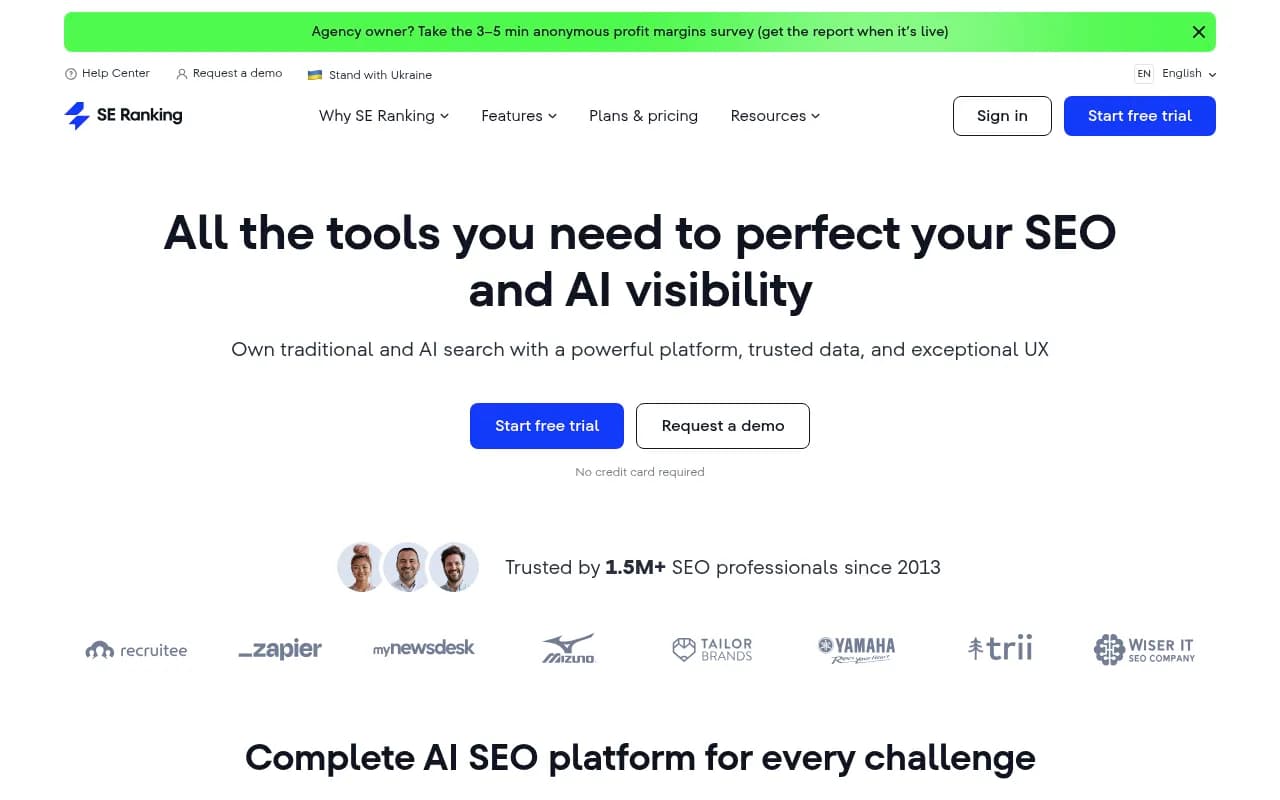
The AI visibility features are newer and less mature than dedicated platforms. SE Ranking's strength is in traditional rank tracking and site audits, and the AI visibility layer sits on top of that foundation. For DACH teams that want one platform for both traditional SEO and AI monitoring, it's worth considering. For teams that need deep AI visibility analysis, it's not the primary choice.
Semrush
Semrush has added AI search tracking capabilities through its AI Toolkit. For DACH teams already standardized on Semrush for SEO, this is the path of least resistance.
The limitation is that Semrush uses fixed prompts rather than custom prompt tracking. You can't easily configure German-language prompts for your specific DACH market context. The AI tracking features are also less granular than dedicated platforms -- you get visibility data, but not the prompt volume estimates, difficulty scores, or crawler logs that help you prioritize and act. Semrush is a reasonable choice if you're already paying for it and want basic AI visibility data alongside your existing SEO workflow.
Ahrefs (Brand Radar)
Ahrefs launched Brand Radar as its AI visibility tracking feature. Like Semrush, it's most useful for teams already in the Ahrefs ecosystem.
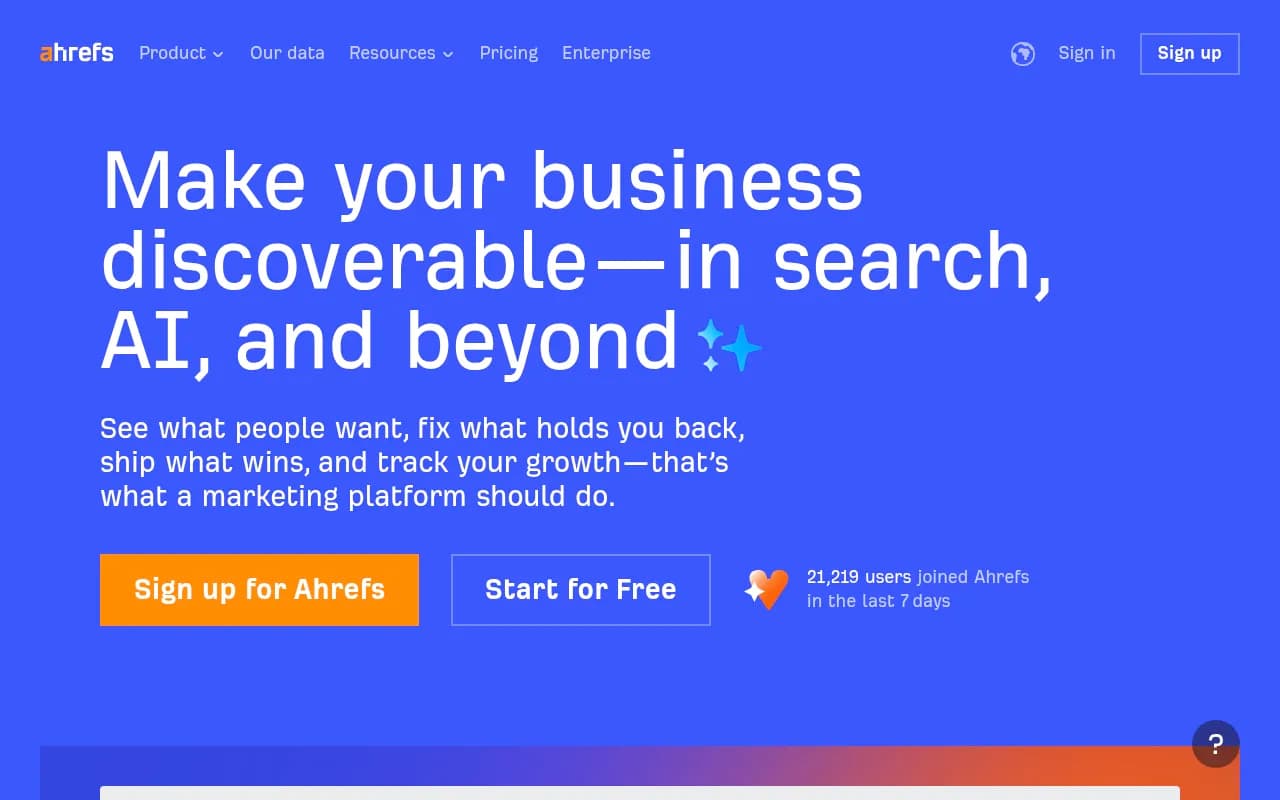
Brand Radar has fixed prompts and no AI traffic attribution, which limits its usefulness for DACH teams trying to connect AI visibility to actual business outcomes. It covers the major AI models and provides brand mention tracking, but it's not designed for the kind of regional, language-specific analysis that DACH markets require.
Rankscale
Rankscale is an agency-focused AI visibility tracking platform with daily tracking across ChatGPT, Claude, Perplexity, and Google AI Overviews.
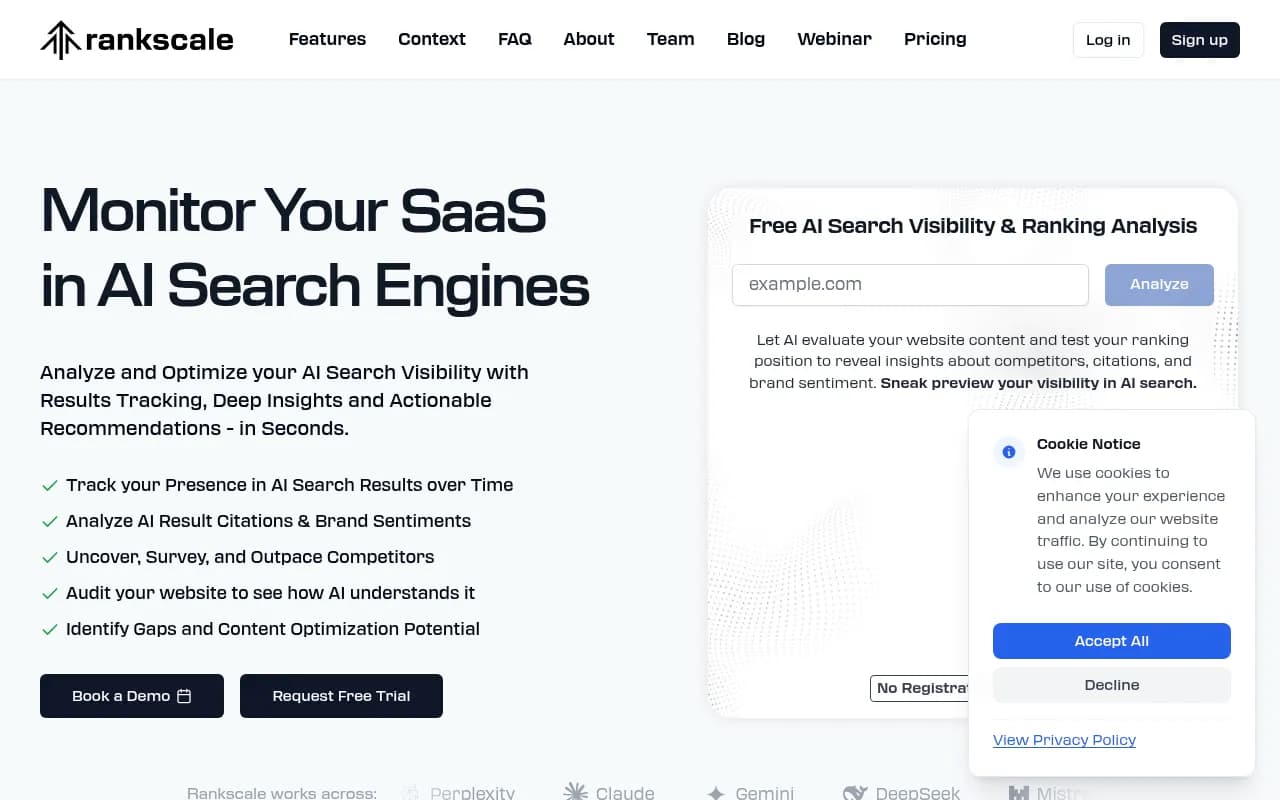
For DACH agencies managing multiple clients, Rankscale's agency-oriented structure is practical. It handles multi-client reporting reasonably well. The gap is in optimization -- like most monitoring platforms, it shows you data but doesn't help you fix what it finds. German-language support is available but not a core focus of the product.
Sistrix
Sistrix deserves a mention specifically for DACH markets because it's one of the few SEO platforms with deep historical data on German, Austrian, and Swiss search markets. It has added some AI visibility features, though these are less developed than its traditional SEO capabilities.
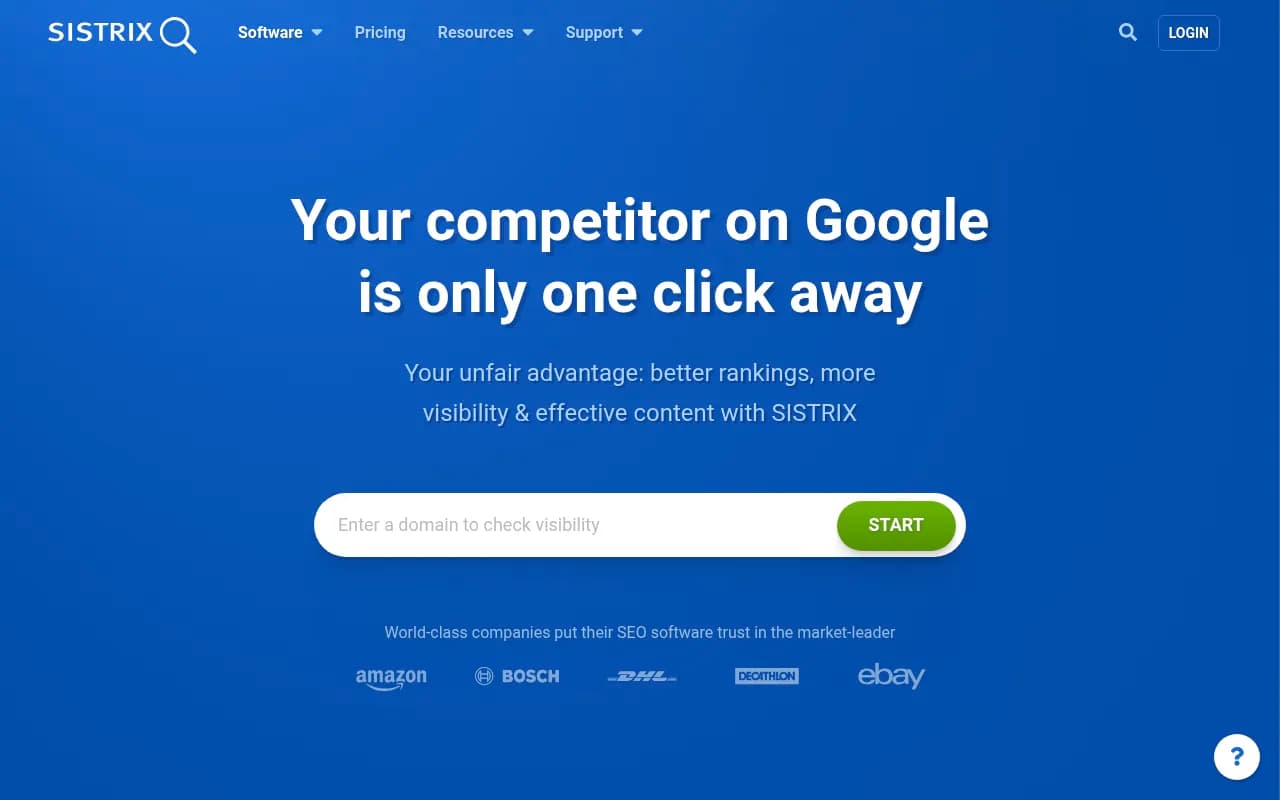
For DACH teams that want a platform with genuine regional expertise and strong traditional SEO foundations, Sistrix is worth considering as a complement to a dedicated AI visibility tool. It won't replace a platform like Promptwatch for AI-specific tracking, but its DACH market knowledge is genuinely useful context.
Platform comparison
| Platform | German-language prompts | Regional personas | Multi-model coverage | Content generation | Crawler logs | Best for |
|---|---|---|---|---|---|---|
| Promptwatch | Yes | Yes (city-level) | 10 models | Yes | Yes | DACH teams wanting full optimization |
| Profound | Partial | Limited | 9+ models | No | No | Enterprise monitoring |
| Otterly.AI | Partial | No | 3 models | No | No | Basic monitoring |
| Peec AI | Partial | No | 4 models | No | No | Simple tracking |
| SE Ranking | Partial | No | 4 models | Limited | No | Teams already on SE Ranking |
| Semrush | Limited (fixed prompts) | No | 3 models | No | No | Existing Semrush users |
| Ahrefs Brand Radar | Limited (fixed prompts) | No | 3 models | No | No | Existing Ahrefs users |
| Rankscale | Partial | No | 4 models | No | No | Agencies |
| Sistrix | Yes (traditional SEO) | Yes (DACH focus) | Limited AI | No | No | DACH SEO complement |
How to actually set up DACH AI visibility tracking
Getting useful data out of any of these platforms for DACH requires some setup work. Here's what I'd recommend regardless of which tool you choose.
Define your German-language prompt set. Don't just translate your English prompts. Think about how a German-speaking customer actually asks questions in your category. "Welche CRM-Software ist am besten für mittelständische Unternehmen?" is a real German-language prompt. "What is the best CRM for SMEs?" translated into German is not the same thing -- the phrasing, formality level, and context differ.
Configure separate tracking for Germany, Austria, and Switzerland. If your brand operates across all three markets, the AI responses can differ. Swiss users may get different Google AI Overview results than German users. Austrian regulatory context can affect how AI models frame recommendations in financial or healthcare categories.
Track competitors in-region. Your German competitors are the ones you need to benchmark against in German-language AI responses. Add the top 5-10 DACH competitors in your category and track how often they appear versus your brand.
Set up crawler monitoring for your German-language pages. If you have a multilingual site with German-language content under /de/ or a separate domain, make sure your crawler monitoring is configured to watch those pages specifically. AI crawlers may behave differently on multilingual sites, and you want to catch indexing issues early.
Connect visibility to traffic. German-language AI citations should eventually show up as referral traffic from AI sources. Connecting your visibility tracking to your analytics helps you understand which AI-driven citations are actually sending users to your site.
The DACH-specific content gap problem
Here's something most AI visibility guides don't address: the content gap for German-language AI responses is often larger than for English. There's simply less high-quality German-language content on many topics, which means AI models either fall back to English sources, cite lower-quality German content, or produce responses with less citation diversity.
This is actually an opportunity. A brand that produces genuinely useful, well-structured German-language content on topics relevant to their category has a real shot at being cited in AI responses, even against larger competitors, because the competition for German-language citations is less intense than for English.
The practical implication: if you're running AI visibility tracking for a DACH brand, pay close attention to the prompts where no German-language sources are being cited. Those are the highest-opportunity gaps. Tools like Promptwatch's Answer Gap Analysis can surface these systematically -- showing you the prompts where competitors are visible but you're not, and where the content to fill the gap simply doesn't exist yet in German.
Pricing overview
| Platform | Starting price | Free trial |
|---|---|---|
| Promptwatch | $99/month | Yes |
| Profound | ~$200+/month | Yes |
| Otterly.AI | ~$49/month | Yes |
| Peec AI | ~$79/month | Yes |
| SE Ranking | ~$65/month | Yes |
| Semrush | ~$140/month | Yes |
| Ahrefs | ~$129/month | Yes |
| Rankscale | Custom | Yes |
| Sistrix | ~$100/month | Limited |
Which platform should DACH teams choose?
For most DACH marketing teams, the decision comes down to what you need to do with the data.
If you need to monitor and optimize -- tracking German-language prompts, finding content gaps, generating German-language content to fill them, and tracking results -- Promptwatch is the most complete option. The multi-language support, regional persona configuration, and content generation capabilities are built for exactly this use case.
If you're an enterprise team with a dedicated content team and you primarily need deep monitoring and reporting, Profound is a strong choice, though you'll need a separate content workflow.
If you're already heavily invested in Semrush or Ahrefs and just want basic AI visibility data alongside your existing SEO work, the built-in AI features of those platforms are a reasonable starting point -- just go in knowing their limitations for DACH-specific tracking.
If you're a DACH-focused agency managing multiple clients, Promptwatch's agency pricing and multi-site support, combined with its content generation capabilities, makes it the most efficient option for delivering AI visibility results at scale.
The one thing I'd avoid: choosing a platform based on price alone and then discovering six months later that it only tracks English prompts or doesn't support the AI models your German-speaking customers actually use. The setup cost of switching platforms mid-campaign is higher than the price difference between tiers.