Key takeaways
- Most AI visibility tools are monitoring dashboards -- they show you where you're invisible but don't help you fix it
- Promptwatch is the only platform in this comparison that covers the full loop: gap analysis, AI content generation, and traffic attribution
- Profound and Scrunch AI have strong enterprise tracking features but come at higher price points with no Reddit tracking or content generation
- Search Party is built around agency workflows but lacks prompt volume metrics and content gap analysis
- For agencies managing multiple clients, the combination of white-label reporting, multi-site support, and actionable optimization tools is what separates the leaders from the trackers
Why agencies have different needs than in-house teams
Running AI visibility for a single brand is one thing. Doing it across 10, 20, or 50 clients is something else entirely.
In-house teams can afford to spend hours interpreting dashboards and manually figuring out what to do next. Agencies can't. You need tools that surface the right insight quickly, show clients something they can understand, and -- ideally -- help you act on what you find without switching to five other platforms.
That's the lens through which this comparison is written. Not "which tool has the most features" but "which tool actually makes agency work faster and more defensible."
The four platforms covered here -- Promptwatch, Profound, Scrunch AI, and Search Party -- represent different philosophies about what AI visibility tooling should do. One of them goes significantly further than the others.
What to look for in an agency AI visibility tool
Before the rankings, here's the criteria that actually matters for agency use:
- Multi-site management: Can you track multiple clients from one account without paying per-seat fees that destroy margins?
- Prompt coverage: How many AI engines does it monitor? ChatGPT and Perplexity are table stakes -- what about Claude, Gemini, Grok, DeepSeek, Copilot, Meta AI?
- Actionability: Does the tool tell you what to do, or just what's happening?
- Content gap analysis: Can it show you which prompts competitors rank for that your client doesn't?
- Content generation: Can it help you create the content that closes those gaps?
- Traffic attribution: Can you connect AI visibility to actual website traffic and revenue?
- Reporting: White-label exports, Looker Studio integration, API access?
- Crawler logs: Does it show you how AI bots are actually crawling your clients' sites?
Keep these in mind as we go through each platform.
The four platforms, ranked
1. Promptwatch -- best overall for agencies
Promptwatch is the only platform in this comparison that was built around optimization, not just observation. That distinction matters more for agencies than anyone else, because clients don't pay retainers to hear "here's where you're invisible." They pay to get visible.

The core workflow is what Promptwatch calls the Action Loop:
- Find the gaps: Answer Gap Analysis shows exactly which prompts competitors appear in that your client doesn't. Not vague topic suggestions -- specific prompts, with visibility scores and competitor data attached.
- Create content that ranks in AI: A built-in AI writing agent generates articles, listicles, and comparisons grounded in citation data from 880M+ analyzed citations. This isn't generic content -- it's engineered around what AI models actually cite.
- Track the results: Page-level tracking shows which pages are being cited, by which AI models, and how often. Traffic attribution (via code snippet, GSC integration, or server log analysis) closes the loop from visibility to revenue.
For agencies specifically, a few things stand out. Promptwatch monitors 10 AI engines: ChatGPT, Perplexity, Google AI Overviews, Google AI Mode, Claude, Gemini, Meta/Llama, DeepSeek, Grok, Mistral, and Copilot. That's the broadest coverage in this comparison.
The AI Crawler Logs feature is something most competitors lack entirely. You can see exactly which AI bots (GPTBot, ClaudeBot, PerplexityBot) are hitting your client's site, which pages they're reading, what errors they're encountering, and how frequently they return. When a client asks "why isn't ChatGPT citing us?" -- this is how you start answering that question with data instead of guesses.
Reddit and YouTube tracking is another differentiator. AI models frequently cite Reddit threads and YouTube videos in their responses. Promptwatch surfaces which discussions are influencing AI recommendations in your client's category -- a channel most competitors ignore.
Pricing for agencies: Professional at $249/mo covers 2 sites with 150 prompts and 15 articles. Business at $579/mo covers 5 sites with 350 prompts and 30 articles. Custom agency and enterprise plans are available. There's a free trial.
The Looker Studio integration and API make client reporting straightforward without rebuilding dashboards from scratch every month.
Best for: Agencies that want to deliver measurable AI visibility improvements, not just reports.
2. Profound -- best for enterprise-level tracking depth
Profound is a dedicated AI visibility tracker with strong data depth. It maps when and how AI assistants surface a brand, with solid coverage across ChatGPT, Perplexity, Claude, Gemini, and Google AI Overviews.
Profound

Where Profound earns its place in the top tier: the granularity of its tracking data. You get detailed breakdowns of brand mention frequency, context, and sentiment across AI engines. For enterprise clients who want to understand their AI presence comprehensively, Profound delivers.
The gaps become apparent when agencies need to do something with that data. Profound doesn't have content generation capabilities, so the workflow after "here's where you're invisible" is entirely manual. There's also no Reddit or YouTube tracking, no ChatGPT Shopping monitoring, and no AI crawler logs.
Pricing sits at the higher end of the market, which can compress agency margins when managing multiple clients. It's a strong choice for large brands with dedicated in-house teams who can act on the data -- less ideal when you need the tool to do more of the heavy lifting.
Best for: Enterprise brands with internal content teams who need deep tracking data.
3. Scrunch AI -- solid monitoring with good competitive intelligence
Scrunch AI focuses on tracking when AI answers recommend your brand and where competitors are appearing instead. The competitive intelligence angle is genuinely useful for agency pitches and client reporting.
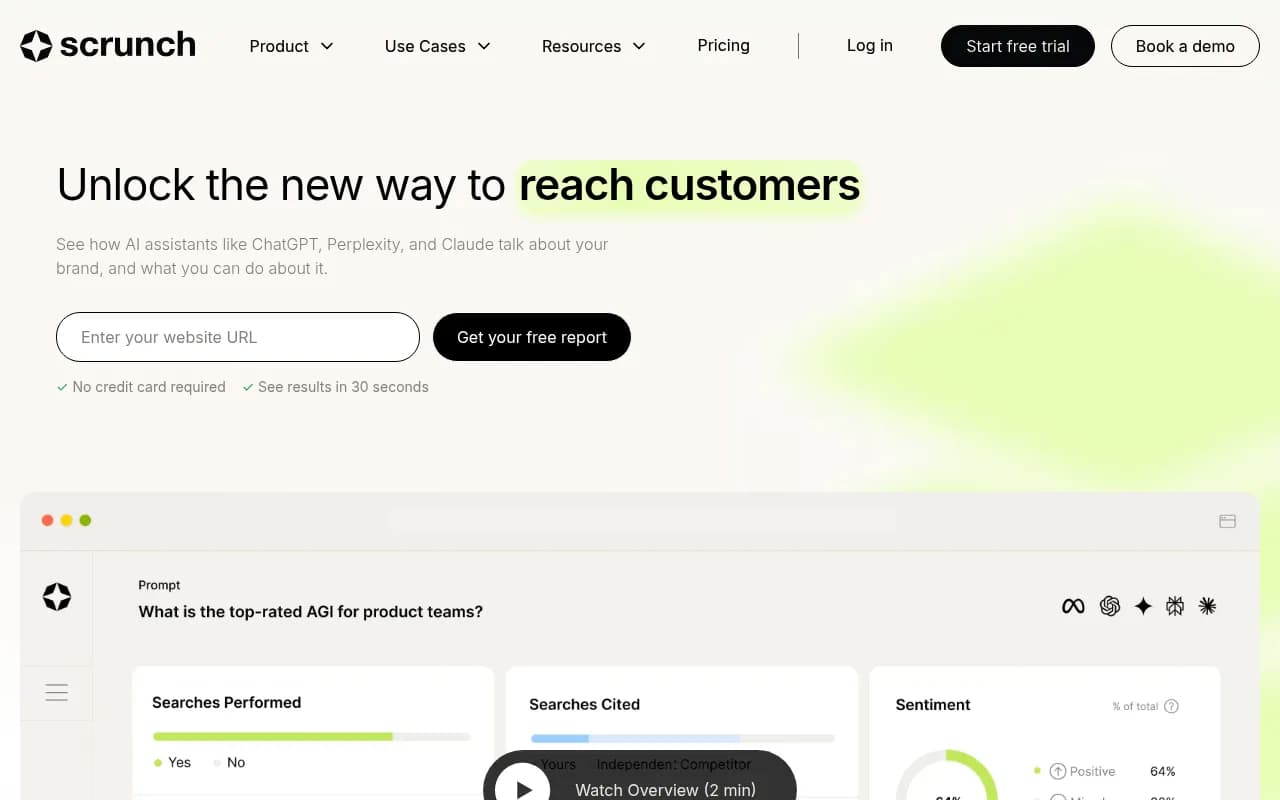
The platform covers major AI engines and provides snapshots of AI-generated responses, which is helpful for audits and showing clients concrete evidence of their visibility (or lack of it). The competitive heatmap-style views make it easy to show a client "here's where your competitors are winning."
Like Profound, Scrunch doesn't cross into content optimization territory. It can tell you what's wrong but not help you fix it. There's no content generation, no crawler logs, and no traffic attribution to connect visibility metrics to business outcomes.
For agencies, the reporting capabilities are reasonable but not exceptional. If a significant portion of your value proposition is "we'll improve your AI visibility," you'll need additional tools to actually deliver on that.
Best for: Agencies focused on competitive benchmarking and client reporting, with separate content production workflows.
4. Search Party -- agency-oriented but limited on depth
Search Party positions itself specifically for agencies, which is worth noting. The platform is built around agency workflows and client management rather than being an enterprise tool retrofitted for agency use.
Search Party
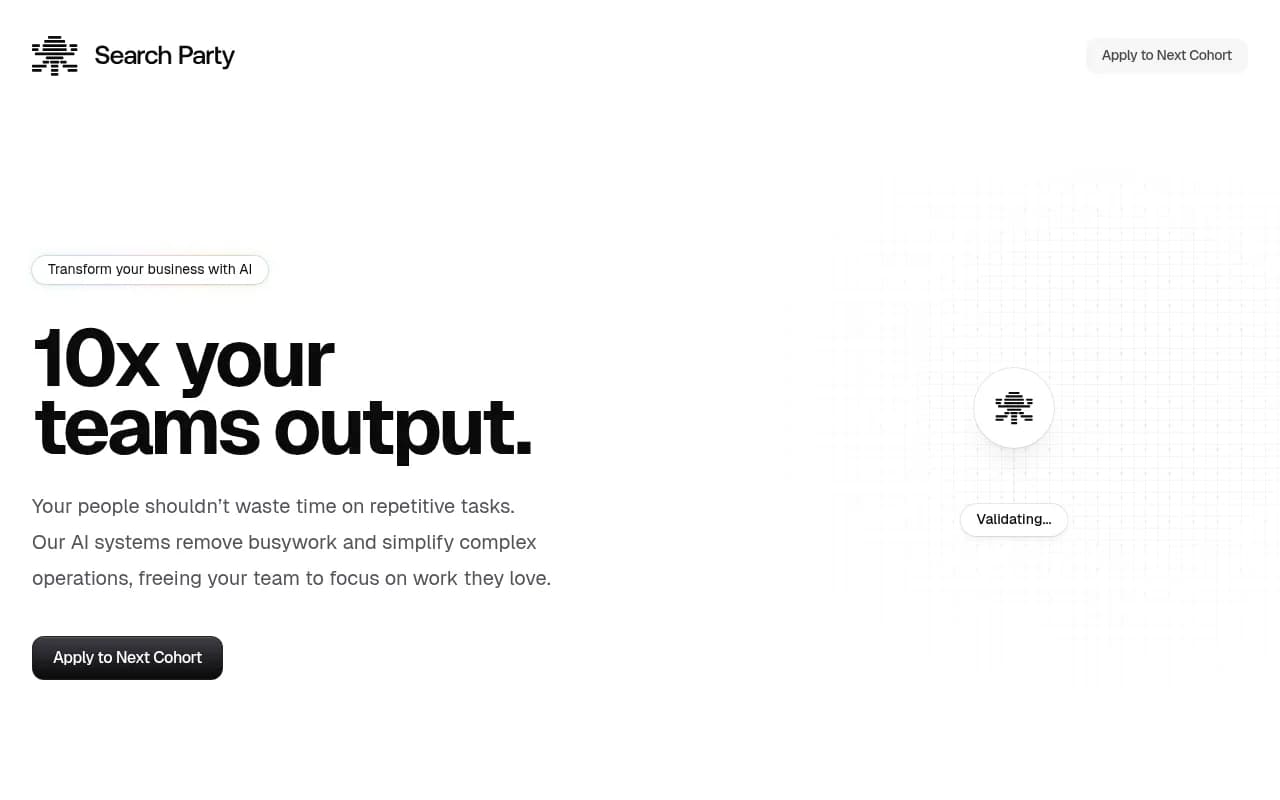
The agency-first orientation shows in the interface and reporting structure. Where it falls short is in the data layer. Prompt volume metrics are limited, so prioritizing which prompts to target for a client requires more guesswork than it should. There's no content gap analysis, which means you can't systematically identify where competitors are visible and your client isn't.
Content generation isn't part of the platform, and traffic attribution is absent. For agencies trying to demonstrate ROI on AI visibility work, that's a meaningful gap.
It's not a bad tool -- the agency-focused UX is genuinely thoughtful -- but the feature set doesn't match the ambition of what agencies are being asked to deliver for clients in 2026.
Best for: Smaller agencies doing basic AI visibility monitoring who prioritize ease of use over depth.
Head-to-head comparison
| Feature | Promptwatch | Profound | Scrunch AI | Search Party |
|---|---|---|---|---|
| AI engines monitored | 10 | 5+ | 5+ | 4+ |
| Answer gap analysis | Yes | No | No | No |
| AI content generation | Yes | No | No | No |
| AI crawler logs | Yes | No | No | No |
| Reddit/YouTube tracking | Yes | No | No | No |
| ChatGPT Shopping tracking | Yes | No | No | No |
| Traffic attribution | Yes | No | No | No |
| Prompt volume/difficulty | Yes | Limited | Limited | Limited |
| Multi-site management | Yes | Yes | Yes | Yes |
| White-label/API | Yes | Partial | Partial | Yes |
| Competitive heatmaps | Yes | Yes | Yes | Limited |
| Free trial | Yes | Yes | Limited | Yes |
| Starting price (agency) | $249/mo | Higher | Higher | Custom |
The monitoring-only problem
There's a pattern worth naming directly. Most AI visibility tools -- including Profound, Scrunch, and Search Party -- are monitoring dashboards. They run queries against AI engines, record the results, and show you charts. That's genuinely useful. But it's step one of a three-step process.
Step two is figuring out what content to create to close the gaps. Step three is creating it, publishing it, and tracking whether it worked.
Most tools leave steps two and three entirely to you. That's fine if you have a large content team and a clear strategy. For agencies managing multiple clients simultaneously, that's a lot of manual work stacked on top of the monitoring.
Promptwatch is the only platform here that covers all three steps natively. The Answer Gap Analysis handles step two. The AI writing agent handles step three. The page-level tracking and traffic attribution close the loop.
That's not a small difference. It's the difference between a reporting tool and an optimization platform.
Which tool should your agency use?
If you're managing AI visibility for clients and you need to show measurable improvement -- not just dashboards -- Promptwatch is the clear choice. The combination of gap analysis, content generation grounded in real citation data, crawler logs, and traffic attribution gives you everything you need to deliver results and prove them.
If you're working with a large enterprise client who has an in-house content team and needs deep tracking data, Profound is worth evaluating. The data quality is strong even if the actionability isn't.
If competitive benchmarking is a core part of your agency's pitch and you need to show clients how they stack up against competitors in AI search, Scrunch AI's competitive intelligence features are solid.
If you're a small agency just getting started with AI visibility and you want something built for agency workflows without a steep learning curve, Search Party is approachable -- just know you'll hit its limits as client expectations grow.
The market for AI visibility tooling is moving fast. In 2026, the tools that will matter most aren't the ones with the prettiest dashboards -- they're the ones that help you take action on what you find. That's the bar worth measuring against.