Key takeaways
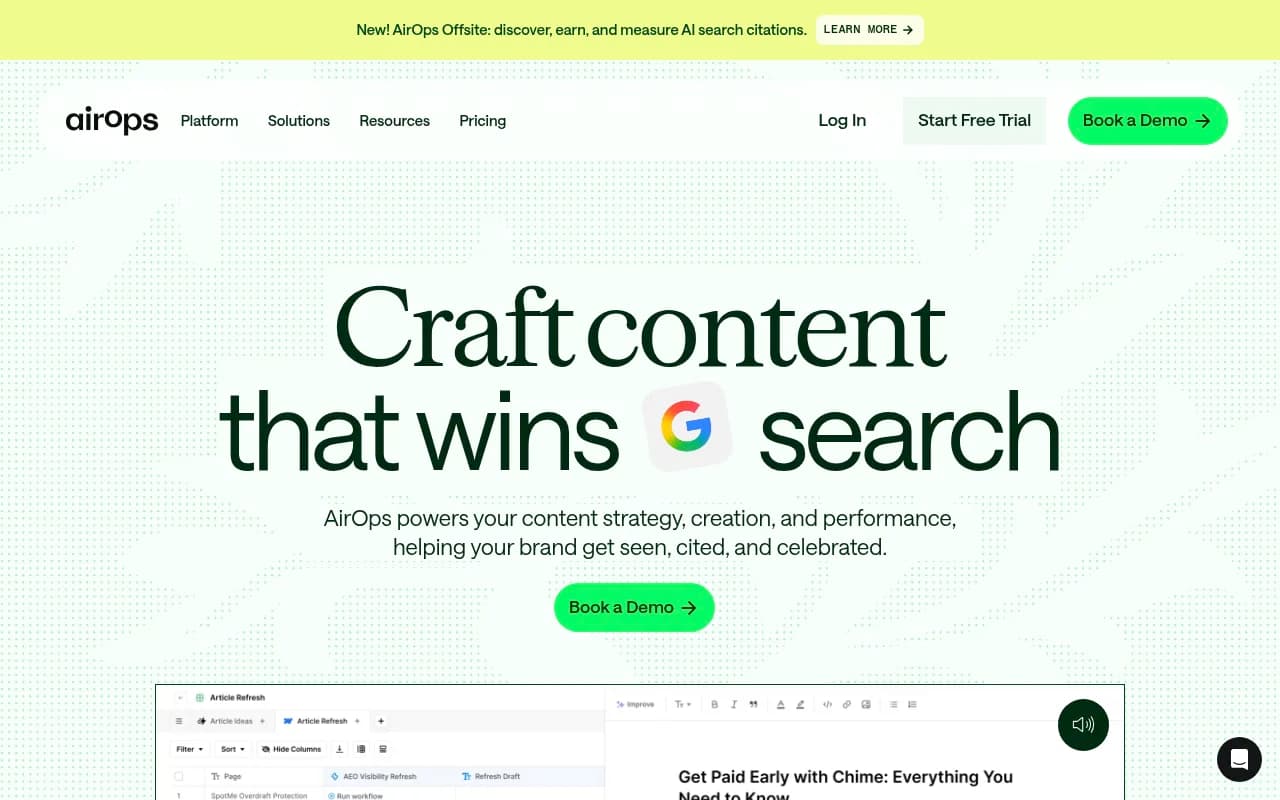
- AirOps excels at AI-powered content workflows but has limited visibility into how your content performs in AI search engines like ChatGPT, Perplexity, and Google AI Overviews.
- The best alternatives in 2026 combine content generation with real AI visibility tracking — not just one or the other.
- Promptwatch is the only platform rated a "Leader" across all GEO categories, offering content generation grounded in 880M+ real citation data points plus full tracking and traffic attribution.
- Several strong alternatives exist for specific use cases: Jasper for brand-consistent marketing copy, Surfer SEO for traditional SEO + content optimization, and Profound or AthenaHQ for enterprise-grade monitoring.
- Most monitoring-only tools (Otterly.AI, Peec.ai, SE Visible) show you data but leave you to figure out what to do with it — a real limitation if you want to actually improve your AI visibility.
AirOps has built a loyal following among content teams that want to run AI workflows at scale. It's genuinely good at what it does: building pipelines, automating research, generating content in bulk. But there's a gap that's become harder to ignore in 2026.
AirOps doesn't tell you whether any of that content is actually getting cited by ChatGPT. It doesn't show you which prompts your competitors are winning. It doesn't log when Perplexity crawls your site or flag the pages that AI models keep ignoring.
That gap matters more now than it did two years ago. AI search engines handle hundreds of millions of queries every day, and being cited in those answers is quickly becoming as valuable as ranking on page one of Google. If your content platform can't close the loop between "we published this" and "AI models are now recommending us," you're flying blind.
These nine alternatives each address that gap in different ways. Some are full-stack platforms that generate content and track AI visibility. Others are specialized tools that do one thing exceptionally well. Here's an honest look at each.
The 9 best AirOps alternatives in 2026
1. Promptwatch
Promptwatch is the most complete answer to the problem AirOps doesn't solve. Where AirOps focuses on content production workflows, Promptwatch is built around a specific loop: find the gaps in your AI visibility, create content engineered to fill them, and track whether it works.
The Answer Gap Analysis is what makes this genuinely different. It shows you the exact prompts where competitors are getting cited but you're not — not vague topic suggestions, but specific questions AI models are answering without mentioning your brand. From there, the built-in writing agent generates articles, listicles, and comparisons grounded in real citation data from over 880 million citations analyzed. This isn't generic AI writing; it's content built to get picked up by ChatGPT, Claude, Perplexity, and others.
The tracking side is equally serious. Page-level visibility scores, AI crawler logs showing which pages GPTBot and ClaudeBot are reading, prompt volume and difficulty scoring, Reddit and YouTube citation tracking, and traffic attribution through GSC integration or server log analysis. You can actually connect AI visibility to revenue.
For teams that want to do more than monitor — teams that want to fix things — Promptwatch is the most capable option in this space.
Pricing: Essential at $99/mo, Professional at $249/mo, Business at $579/mo. Free trial available.

2. Jasper
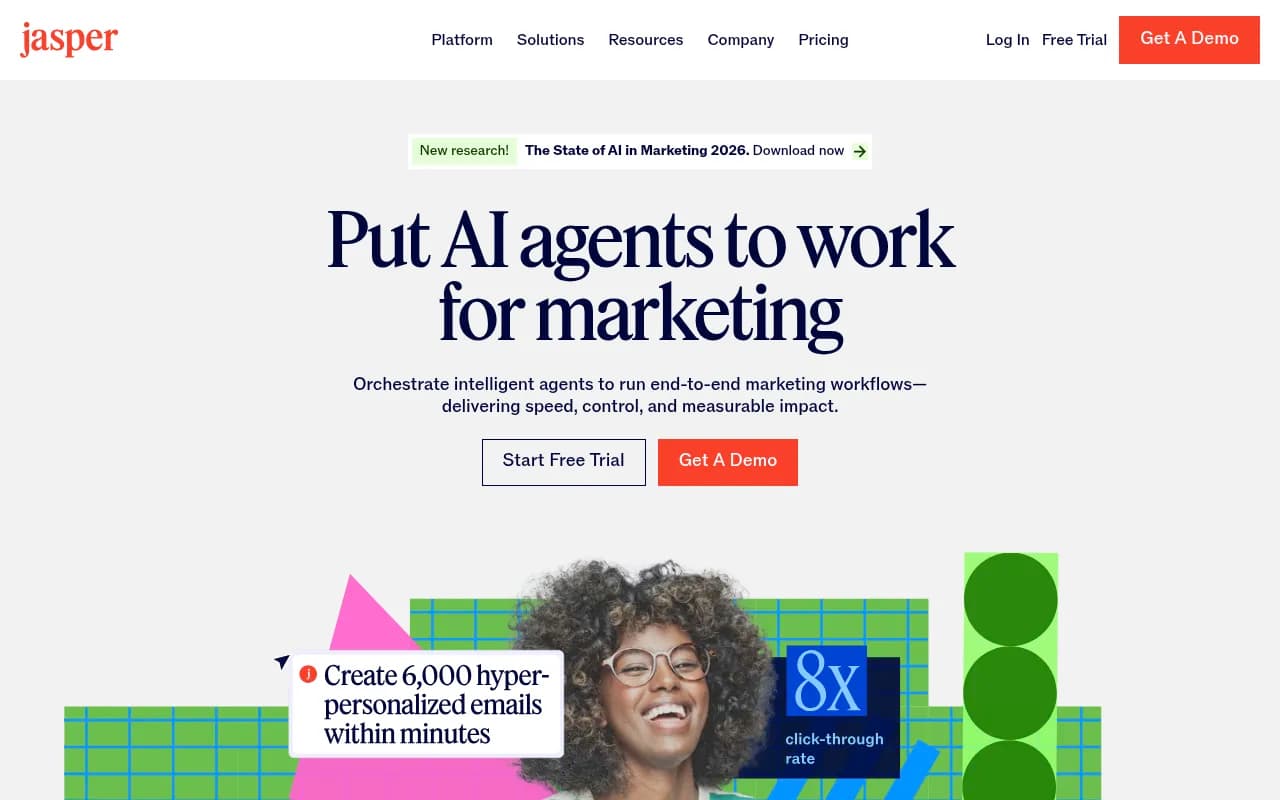
Jasper sits closest to AirOps in terms of what it actually does: it's a marketing content platform with AI agents, brand voice controls, and content pipelines. If your main frustration with AirOps is the quality or brand consistency of generated content rather than visibility tracking, Jasper is worth a serious look.
It handles long-form articles, ad copy, email sequences, and social content — all within a brand voice framework that keeps output consistent across a large team. The agent capabilities let you automate multi-step workflows, which is where it competes most directly with AirOps.
Where it falls short: Jasper doesn't track AI visibility. It won't tell you if the content it generates is being cited by Perplexity or showing up in Google AI Overviews. It's a content production tool, not a GEO platform. If you need both, you'd have to pair it with a separate tracking tool.
3. Surfer SEO
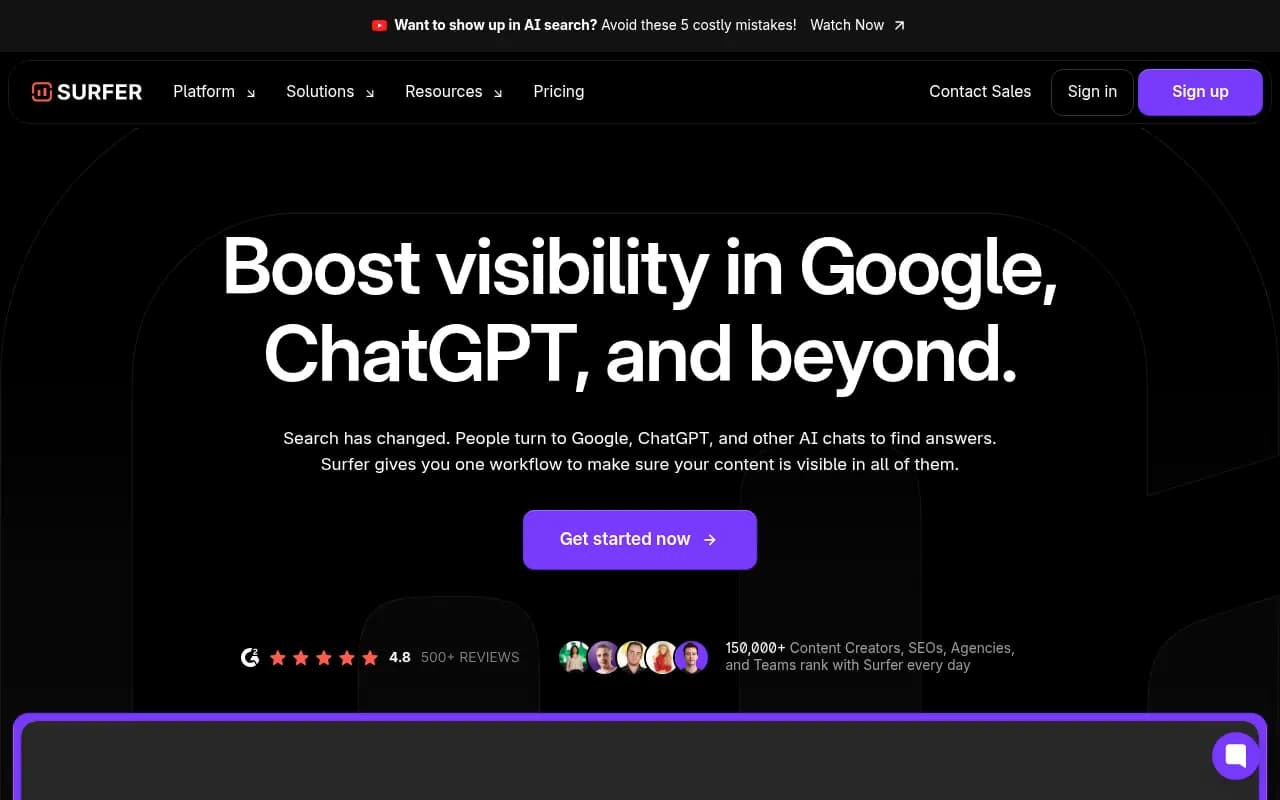
Surfer occupies an interesting middle ground. It's primarily a content optimization platform for traditional Google SEO — keyword density, NLP terms, content scores — but it has added AI visibility tracking features that make it relevant to this conversation.
The content editor is genuinely excellent for teams that want data-driven guidance while writing. Surfer analyzes top-ranking pages and tells you what topics, headings, and terms to include. The AI writing features generate first drafts based on that analysis.
The AI tracking features are newer and less mature than dedicated GEO platforms. Surfer is better thought of as a traditional SEO tool that's adding AI visibility features, rather than a platform built for AI search from the ground up. Still, for teams that primarily care about Google rankings and want some AI visibility data as a bonus, it's a strong option.
4. Semrush
Semrush is the 800-pound gorilla of SEO platforms, and in 2026 it has expanded into AI visibility tracking through its AI Visibility Toolkit. The breadth of data here is hard to match: keyword research, backlink analysis, site audits, competitive intelligence, and now AI search monitoring under one roof.
The limitation is that Semrush's AI tracking uses fixed prompts rather than letting you define your own. That's a meaningful constraint — your customers don't search with Semrush's preset questions, they search with their own language. The platform also lacks AI traffic attribution, so you can see AI visibility data but can't easily connect it to actual site traffic or revenue.
For large teams that are already deep in the Semrush ecosystem and want to add AI visibility without switching platforms, the AI Toolkit is a reasonable addition. For teams building a GEO strategy from scratch, the fixed-prompt limitation is frustrating.
5. Profound
Profound is an enterprise-grade AI visibility platform that tracks brand mentions across ChatGPT, Perplexity, and nine other AI search engines. It's built for larger organizations that need serious monitoring infrastructure: detailed share-of-voice data, competitive benchmarking, and prompt-level tracking across multiple markets.
The feature set is strong. Profound covers more AI models than most competitors and provides the kind of structured reporting that enterprise marketing teams need. The pricing reflects this — it's positioned at the higher end of the market.
The gap is on the content side. Profound monitors well but doesn't help you create content to improve what you're seeing. If your AI visibility scores are low, Profound tells you that clearly. What to do about it is left to you. Pairing it with a content tool is necessary for teams that want to actually move the needle.
Profound

6. AthenaHQ
AthenaHQ takes a similar approach to Profound: solid monitoring, competitive analysis, and AI visibility tracking across major LLMs. It's particularly strong on the analytics side, with detailed breakdowns of how AI models are describing your brand and which competitors are winning specific prompt categories.
Like Profound, AthenaHQ is monitoring-focused. The platform shows you where you stand but doesn't generate content or provide specific recommendations for what to publish. It's a diagnostic tool, not a treatment. Teams that already have strong content production capabilities and just need better visibility data will find it useful.

7. Otterly.AI
Otterly.AI is one of the more accessible entry points into AI visibility tracking. It monitors brand mentions across ChatGPT, Perplexity, and Google AI Overviews, with a clean interface that's easy to set up and understand.
The honest assessment: Otterly is a monitoring dashboard. It shows you data. It doesn't have crawler logs, content generation, traffic attribution, or prompt volume scoring. For small teams or individuals who want a basic read on their AI visibility without a large investment, it's fine. For teams that want to actually improve their visibility, it's a starting point at best.
Otterly.AI

8. Search Atlas
Search Atlas takes a different angle — it's an AI-powered SEO automation platform that focuses on fixing and publishing content at scale. It combines keyword research, content generation, and technical SEO tools in a way that's more action-oriented than most monitoring platforms.
The AI visibility tracking features are present but not the primary focus. Search Atlas is better understood as a content and SEO automation tool that has added AI search features, similar to Surfer's positioning. Teams that want to scale content production with some AI visibility data built in will find it useful. Teams that need deep GEO analytics will likely need to supplement it.

9. Writesonic
Writesonic is primarily an AI writing platform — blog posts, landing pages, ad copy, social content — with a focus on speed and volume. It's a direct competitor to Jasper in many ways, with a generally lower price point and a slightly different feature emphasis.
For teams leaving AirOps because they want better content quality or a simpler workflow, Writesonic is worth evaluating. The AI article writer is capable, and the platform has added some SEO optimization features.
Like Jasper, Writesonic doesn't track AI visibility. It's a content production tool, and a good one, but it doesn't close the loop between publishing and appearing in AI search results. Teams that need that connection will need to pair it with a dedicated GEO platform.

How these tools compare
Here's a quick reference for the key dimensions that matter when choosing an AirOps alternative:
| Tool | Content generation | AI visibility tracking | Crawler logs | Traffic attribution | Best for |
|---|---|---|---|---|---|
| Promptwatch | Yes (citation-grounded) | Yes (10 AI models) | Yes | Yes (GSC, server logs) | Full GEO optimization loop |
| Jasper | Yes (brand voice) | No | No | No | Brand-consistent content at scale |
| Surfer SEO | Yes (SEO-optimized) | Partial | No | No | Traditional SEO + some AI data |
| Semrush | Partial | Yes (fixed prompts) | No | No | Teams already in Semrush ecosystem |
| Profound | No | Yes (enterprise) | No | No | Enterprise AI visibility monitoring |
| AthenaHQ | No | Yes | No | No | Competitive AI visibility analysis |
| Otterly.AI | No | Basic | No | No | Entry-level AI monitoring |
| Search Atlas | Yes | Partial | No | No | Content automation + SEO |
| Writesonic | Yes | No | No | No | High-volume content production |
What to actually look for when switching from AirOps
The right replacement depends on why you're leaving AirOps in the first place. A few questions worth answering before you commit:
Is your problem content quality or content visibility? If AirOps is producing content that doesn't rank in AI search, the issue might be that the content isn't engineered for AI citation — not that it's poorly written. A platform that analyzes real citation data before generating content (like Promptwatch does) addresses this differently than one that just writes faster.
Do you need to prove ROI? Most monitoring tools show you visibility scores but can't connect them to traffic or revenue. If your leadership team needs to see that GEO efforts are driving business results, you need traffic attribution built into the platform. Very few tools offer this.
Are you monitoring or optimizing? There's a meaningful difference between knowing your AI visibility score and knowing what to do to improve it. Monitoring-only platforms (Otterly.AI, Peec.ai, SE Visible) answer the first question. Platforms with content gap analysis and generation capabilities answer both.
How many AI models matter to your audience? Some tools track only ChatGPT and Perplexity. Others cover 10+ models including Google AI Overviews, Claude, Gemini, Grok, DeepSeek, and Copilot. If your customers use a range of AI tools, narrow coverage is a real limitation.
The bottom line
AirOps is a capable content workflow platform, but it was built for a world where Google rankings were the primary goal. That world still exists, but it's sharing space with AI search engines that now handle a significant share of information queries.
The platforms that make the most sense as alternatives in 2026 are the ones that treat content generation and AI visibility tracking as two sides of the same problem. Promptwatch is the clearest example of that approach — it's built specifically around the loop of finding gaps, creating content to fill them, and tracking whether it works. The other tools on this list each do parts of that well, but most require you to assemble your own stack to get the full picture.
If you're evaluating alternatives, start by being honest about what AirOps is actually failing to do for you. The answer will point you toward the right replacement faster than any feature comparison.