Key Takeaways
- ZoomInfo dominates enterprise prospecting with 100M+ verified contacts, deep buyer intent signals, and advanced filtering -- but starts at $15K/year and requires annual contracts
- Apollo combines contact data, email sequencing, and CRM sync in one platform for $49-$149/month -- best value for mid-market teams that need outreach automation built-in
- Cognism specializes in GDPR-compliant European data with mobile numbers and email verification -- critical for teams targeting EU markets where data quality matters more than volume
- Clay transforms prospecting with AI-powered data enrichment, waterfall lookups across 50+ providers, and workflow automation -- ideal for growth teams building custom prospecting systems
- The right choice depends on your market (US vs EU), team size (SMB vs enterprise), and workflow (database lookup vs enrichment automation)
What Makes a B2B Prospecting Tool Worth Using
B2B prospecting tools solve a simple problem: finding the right people to sell to without spending hours on manual research. The average B2B conversion rate sits at 2.7%. Cold email reply rates hover around 5.8%. These numbers tell you that most prospecting fails because teams target the wrong accounts at the wrong time.
The best prospecting platforms give you three things: accurate contact data (emails and phone numbers that actually work), enrichment capabilities (filling in missing information about leads you already have), and workflow automation (connecting prospecting to your actual sales process). Tools that only deliver one or two of these create gaps in your workflow.
This guide compares four platforms that represent different approaches to B2B prospecting: ZoomInfo (enterprise database), Apollo (all-in-one sales platform), Cognism (GDPR-compliant data), and Clay (AI-powered enrichment). Each excels in specific scenarios. Your choice depends on budget, market, and how your team actually works.
ZoomInfo: Enterprise-Grade Data and Buyer Intent
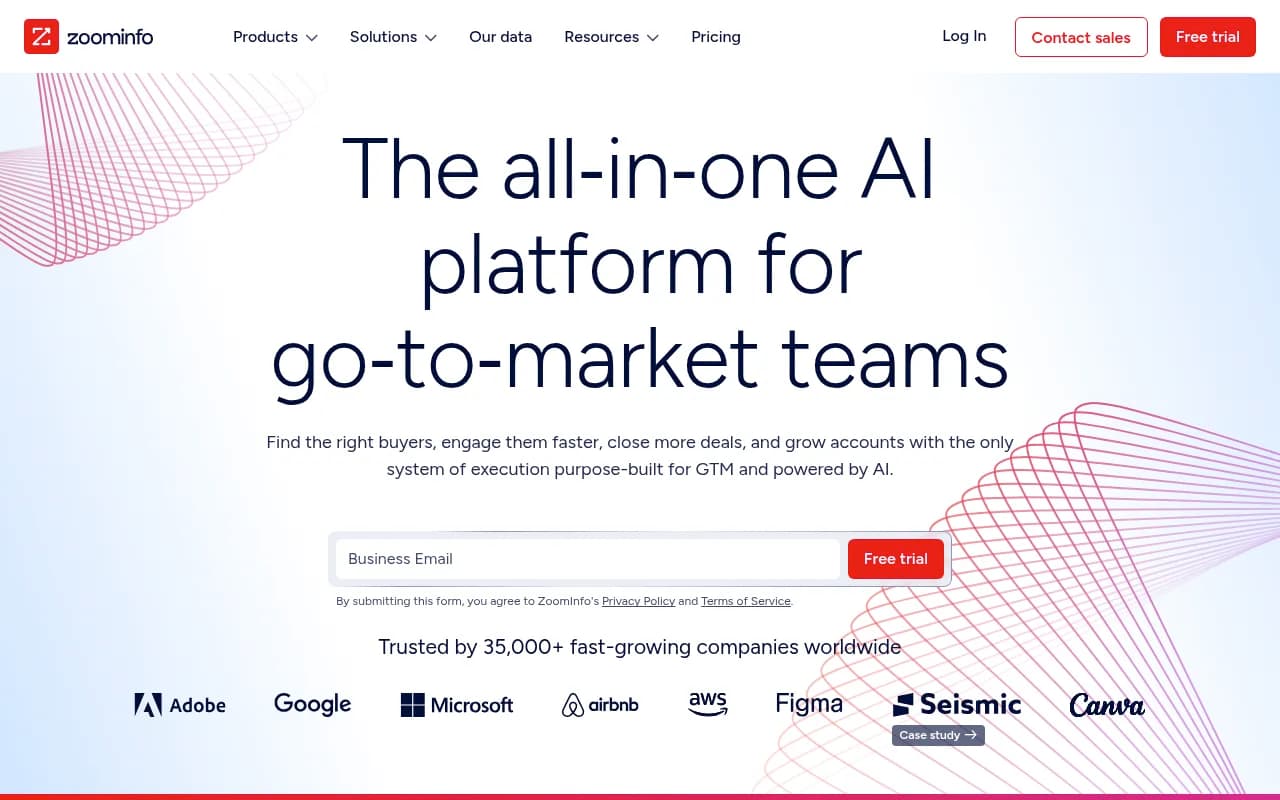
ZoomInfo built its reputation on data accuracy and depth. With over 100 million verified business contacts and 14 million company profiles, it's the largest B2B database available. Enterprise sales teams use ZoomInfo when they need comprehensive account intelligence and can afford the premium price tag.
What ZoomInfo Does Well
The platform combines contact data with buyer intent signals -- tracking which companies are actively researching solutions in your category. This intent data comes from monitoring web behavior, content consumption, and technology adoption patterns across millions of sites. When a prospect company shows buying signals, ZoomInfo surfaces them in your dashboard.
Advanced filtering lets you build highly specific prospect lists. Search by company size, revenue, technology stack, job function, seniority level, and dozens of other criteria. The data quality is consistently high -- ZoomInfo verifies contacts through multiple sources and updates records regularly.
Integrations with Salesforce, HubSpot, Outreach, and other sales tools mean data flows directly into your existing workflow. The Chrome extension lets reps enrich LinkedIn profiles and company websites with one click.
Where ZoomInfo Falls Short
Pricing starts around $15,000 per year with annual contracts required. Small teams and startups can't justify this cost. The platform is built for enterprise sales organizations with dedicated SDR teams.
The learning curve is steep. ZoomInfo packs in hundreds of features, filters, and data points. New users spend weeks figuring out how to build effective searches and workflows. The interface feels overwhelming compared to simpler alternatives.
European data coverage lags behind US data. GDPR restrictions limit what ZoomInfo can collect and share for EU contacts. Teams targeting European markets often supplement ZoomInfo with regional providers.
Who Should Use ZoomInfo
ZoomInfo makes sense for enterprise B2B companies selling high-ticket products with long sales cycles. If you're running account-based marketing campaigns targeting Fortune 5000 companies, the depth of data and intent signals justifies the cost. Sales teams with 10+ reps get enough value to offset the price.
Skip ZoomInfo if you're a startup, small team, or targeting SMB customers. The platform is overkill for simple prospecting needs and the annual contract locks you in before you know if it works for your process.
Apollo: All-in-One Sales Intelligence and Engagement
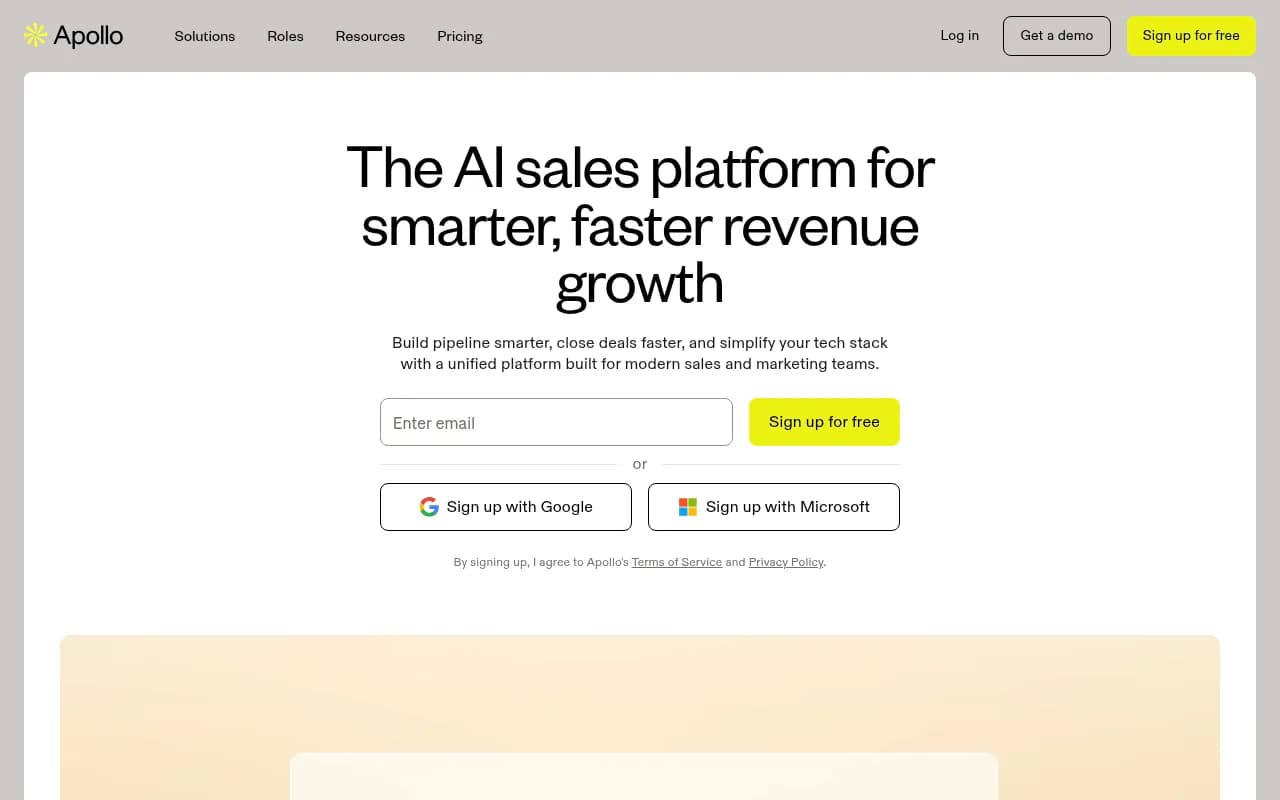
Apollo positions itself as the complete sales platform -- combining contact data, email sequencing, phone dialing, and analytics in one tool. It's the middle-ground option: more affordable than ZoomInfo, more feature-rich than basic databases.
What Apollo Does Well
The database includes 275 million contacts and 73 million companies. Data quality is solid for US contacts, though not quite ZoomInfo-level. Apollo verifies emails before you send, reducing bounce rates.
The built-in sales engagement platform eliminates the need for separate tools like Outreach or SalesLoft. Create email sequences, track opens and clicks, log calls, and manage your pipeline without leaving Apollo. This integration saves time and reduces tool sprawl.
Bidirectional CRM sync with Salesforce and HubSpot keeps data consistent across systems. Enrichment happens automatically -- when a lead enters your CRM, Apollo fills in missing fields like job title, company size, and contact information.
Pricing is transparent and accessible. The free plan includes 50 mobile credits and 10 email credits per month. Paid plans start at $49/user/month (Basic) and go up to $149/user/month (Professional). No annual contracts required.
Where Apollo Falls Short
Data accuracy varies. While US contacts are generally reliable, international data (especially Europe and Asia) has more gaps and outdated information. Teams report higher bounce rates compared to ZoomInfo.
The engagement features are functional but basic. Power users coming from dedicated sales engagement platforms like Outreach or Salesloft notice missing capabilities -- limited A/B testing, simpler automation rules, fewer analytics.
Customer support is hit-or-miss. Response times vary and some users report difficulty getting help with technical issues or data quality problems.
Who Should Use Apollo
Apollo works best for mid-market B2B companies that want prospecting and outreach in one platform. If you're a team of 3-15 reps selling to US companies, Apollo delivers the most value per dollar. The combination of data and engagement tools means you can prospect, sequence, and close deals without juggling multiple subscriptions.
Skip Apollo if you need best-in-class data accuracy (go with ZoomInfo) or you're targeting European markets (use Cognism). Also skip it if you already have a sales engagement platform you love -- paying for Apollo's engagement features when you won't use them wastes money.
Cognism: GDPR-Compliant European B2B Data
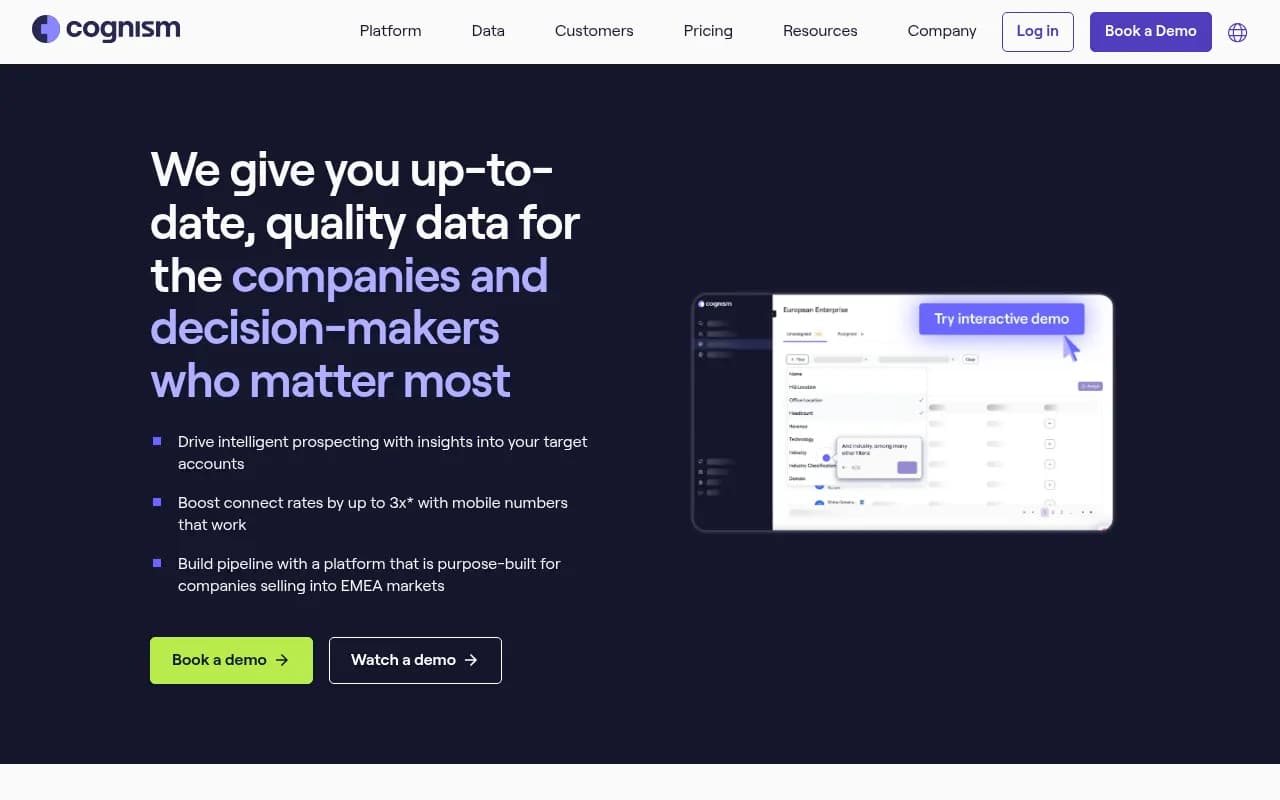
Cognism specializes in European contact data with full GDPR compliance. While ZoomInfo and Apollo focus on the US market, Cognism built its database specifically for teams selling into Europe.
What Cognism Does Well
The European data quality is exceptional. Cognism maintains 47 million EMEA contacts with verified mobile numbers and email addresses. This matters because GDPR makes it harder to collect and verify European contact information -- most US-based providers have sparse, outdated EU data.
Mobile phone numbers are Cognism's differentiator. The platform provides direct dials for decision-makers, not just generic company switchboard numbers. Sales reps report 3-4x higher connect rates using Cognism mobile numbers compared to other providers.
Email verification happens in real-time. Cognism checks deliverability before you download a contact, reducing bounce rates and protecting your sender reputation. The "Catch-All" email detection identifies risky addresses that might accept mail but never reach the recipient.
Compliance tools are built-in. Cognism automatically suppresses contacts who've opted out and provides audit trails for GDPR requirements. This reduces legal risk for European sales teams.
Where Cognism Falls Short
US data coverage is weaker. While Cognism has expanded its North American database, it doesn't match ZoomInfo or Apollo for US contact volume or accuracy. Teams selling primarily to American companies should look elsewhere.
No built-in sales engagement platform. Cognism is purely a data provider -- you'll need separate tools for email sequences, calling, and pipeline management. This adds complexity and cost compared to all-in-one platforms like Apollo.
Pricing is opaque. Cognism doesn't publish rates publicly and requires custom quotes. Based on user reports, expect to pay $10,000-$30,000 per year depending on team size and data volume.
Who Should Use Cognism
Cognism is the clear choice for B2B teams targeting European markets. If more than 30% of your prospects are in the EU, the data quality and GDPR compliance justify the premium price. Sales teams that rely on phone prospecting (not just email) benefit most from the verified mobile numbers.
Skip Cognism if you're focused on the US market or need an all-in-one platform with engagement tools included. The specialized European focus is valuable for the right teams but unnecessary for purely domestic sellers.
Clay: AI-Powered Data Enrichment and Workflow Automation
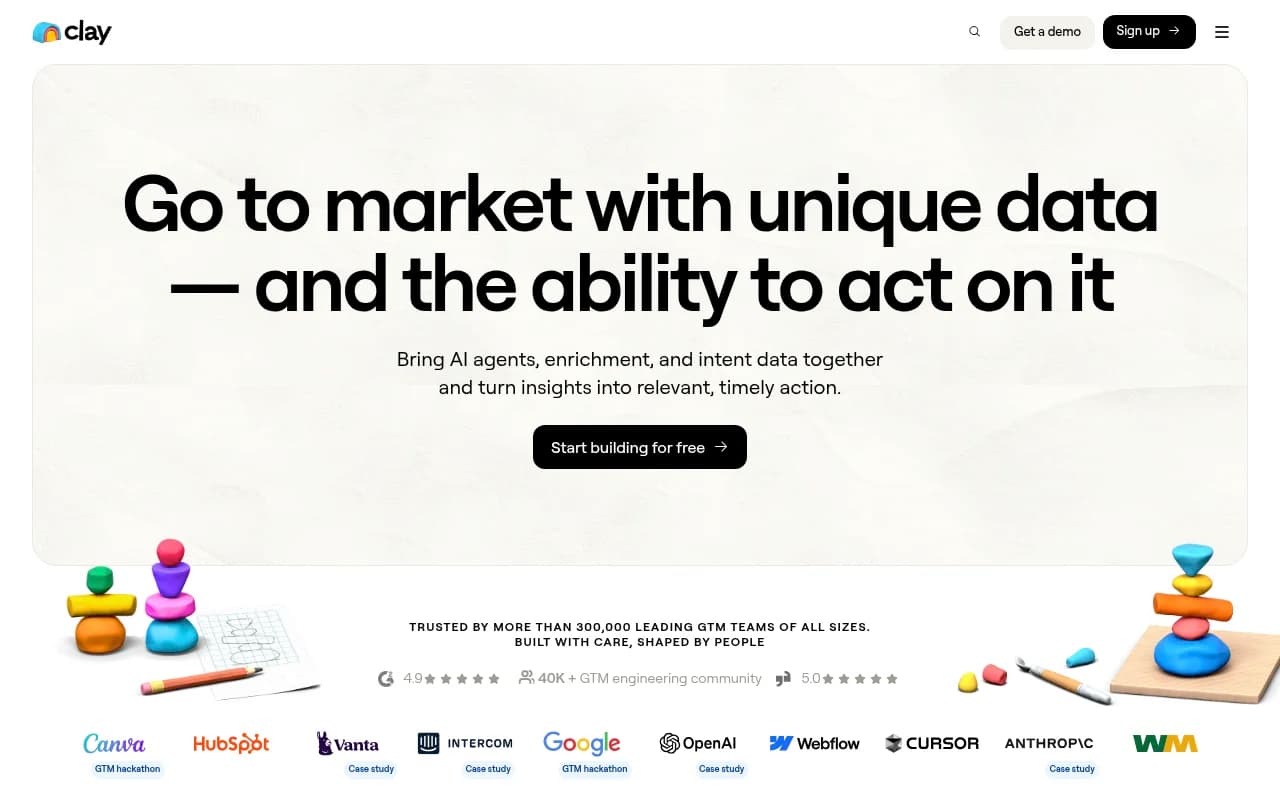
Clay takes a different approach to prospecting. Instead of being a contact database, it's a data enrichment and workflow platform that pulls information from 50+ providers (including Apollo, ZoomInfo, and others). Think of it as the automation layer that sits on top of your data sources.
What Clay Does Well
Waterfall enrichment is Clay's killer feature. Instead of relying on a single data provider, Clay checks multiple sources in sequence until it finds the information you need. For example: check Apollo first, if no email found try Hunter, then Clearbit, then RocketReach. This dramatically improves data coverage -- you get contacts that no single provider could deliver alone.
AI-powered research automates manual prospecting tasks. Clay can visit company websites, extract information, analyze LinkedIn profiles, and generate personalized outreach messages. This turns hours of manual research into minutes of automated workflows.
The spreadsheet-like interface makes it accessible to non-technical users. Build complex enrichment workflows using familiar rows, columns, and formulas. No coding required, though developers can use JavaScript for advanced logic.
Integrations connect to 50+ data providers, CRMs, and outreach tools. Clay becomes the central hub where you enrich data from multiple sources, then push clean records to Salesforce, HubSpot, or your email tool.
Where Clay Falls Short
Clay is not a database. You need to bring your own lead lists or use Clay's integrations to pull data from other providers. This means you're paying for Clay plus the underlying data sources -- costs add up quickly.
The learning curve is moderate. While the interface is intuitive, building effective enrichment workflows requires understanding how different data providers work and how to chain them together. New users spend time experimenting before they get reliable results.
Pricing is based on credits, not seats. You pay per enrichment action -- checking an email, finding a phone number, running an AI research task. Heavy users burn through credits quickly. Plans start at $149/month for 12,000 credits, but serious prospecting teams often need the $800/month plan or higher.
Who Should Use Clay
Clay is ideal for growth teams and agencies that need maximum flexibility. If you're building custom prospecting workflows, combining multiple data sources, or doing deep account research, Clay's automation capabilities save massive time. Marketing teams that need to enrich inbound leads before routing them to sales also benefit.
Skip Clay if you want a simple, all-in-one solution. The platform requires more setup and ongoing management compared to Apollo or ZoomInfo. Small teams without dedicated ops resources may find it overwhelming.
Head-to-Head Comparison: Which Tool Wins for Your Use Case
Data Quality and Coverage
Winner: ZoomInfo for US enterprise contacts. The verification process and update frequency are unmatched. Cognism wins for European data.
Apollo delivers solid quality for the price but has more outdated records and gaps. Clay's quality depends entirely on which providers you connect -- it's only as good as your data sources.
Pricing and Value
Winner: Apollo for mid-market teams. The $49-$149/month plans include both data and engagement tools, making it the most cost-effective complete solution.
ZoomInfo and Cognism require $10K-$30K annual commitments. Clay's credit-based pricing can get expensive for high-volume users. For small teams on a budget, Apollo delivers the most value.
Ease of Use
Winner: Apollo for simplicity. The interface is intuitive and you can start prospecting within minutes of signing up.
ZoomInfo has the steepest learning curve due to feature complexity. Clay requires understanding enrichment workflows. Cognism is straightforward but limited in scope.
European Market Coverage
Winner: Cognism by a wide margin. The GDPR-compliant data and verified mobile numbers make it the only serious option for EU-focused teams.
ZoomInfo and Apollo have weak European coverage. Clay can access European data through Cognism integration, but you're paying for both platforms.
Workflow Automation
Winner: Clay for teams that need custom enrichment and research workflows. The ability to chain multiple data sources and automate research tasks is unmatched.
Apollo includes basic automation within its engagement platform. ZoomInfo and Cognism focus on data delivery, not workflow automation.
Sales Engagement Features
Winner: Apollo as the only platform with built-in email sequencing, calling, and pipeline management.
ZoomInfo, Cognism, and Clay require separate engagement tools. This adds cost and complexity but gives you more flexibility to choose best-in-class solutions.
Making Your Decision: A Practical Framework
Choose ZoomInfo if:
- You're an enterprise sales team (10+ reps) selling high-ticket B2B products
- You need deep account intelligence and buyer intent signals
- Your target market is primarily US-based large companies
- You have budget for $15K+ annual contracts
- Data accuracy is more important than cost
Choose Apollo if:
- You're a mid-market team (3-15 reps) looking for an all-in-one solution
- You want prospecting data and sales engagement in one platform
- You're targeting US companies and need solid data quality at reasonable prices
- You prefer monthly billing without annual commitments
- You want to minimize tool sprawl and simplify your sales stack
Choose Cognism if:
- More than 30% of your prospects are in Europe
- You need GDPR-compliant data with verified mobile numbers
- Phone prospecting is a core part of your sales process
- You're willing to pay premium prices for European data quality
- Compliance and legal risk management matter to your organization
Choose Clay if:
- You're a growth team or agency building custom prospecting workflows
- You need to combine data from multiple providers for maximum coverage
- You want to automate manual research tasks with AI
- You have the technical resources to build and maintain enrichment workflows
- Flexibility and customization are more important than simplicity
Beyond the Big Four: Other Tools Worth Considering
While ZoomInfo, Apollo, Cognism, and Clay dominate the B2B prospecting landscape, several other platforms fill specific niches:
Lusha offers a simpler, more affordable alternative to ZoomInfo with a focus on direct dials and email addresses. Good for small teams that need basic contact data without enterprise complexity.
LeadIQ specializes in prospecting workflows for SDR teams, with Chrome extension-based capture and automated list building. Works well for teams that prospect heavily from LinkedIn.
Clearbit focuses on real-time data enrichment for inbound leads rather than outbound prospecting. Marketing teams use it to qualify and route website visitors.
Hunter provides email finding and verification at very low cost. Best for small teams or individuals who only need email addresses, not full contact profiles.
For teams looking to optimize their visibility in AI search engines while prospecting, tools like Promptwatch can help track how your brand appears when prospects research solutions using ChatGPT, Claude, or Perplexity.
Implementation Tips: Getting Value From Your Prospecting Tool
Buying a prospecting tool is easy. Actually using it effectively requires planning and process:
Start with your ICP. Define exactly who you're targeting before you start searching databases. Company size, industry, job titles, technologies used, and geographic location. The more specific your criteria, the better your results.
Test data quality before committing. Most platforms offer free trials or starter plans. Export a sample of 50-100 contacts and verify them manually. Check email deliverability, phone number accuracy, and job title correctness. This reveals real-world quality before you sign an annual contract.
Integrate with your CRM immediately. Prospecting tools deliver the most value when data flows automatically into Salesforce, HubSpot, or your CRM. Manual exports and imports waste time and create data quality issues.
Build repeatable workflows. Document your prospecting process -- which filters you use, how you qualify accounts, what triggers outreach. This lets you scale prospecting across your team and maintain consistency.
Monitor and optimize. Track which data sources and prospecting methods generate the best results. If ZoomInfo contacts convert better than Apollo contacts, adjust your workflow. If certain job titles never respond, stop targeting them.
Combine multiple approaches. The best prospecting strategies use databases (for scale), enrichment (for quality), and intent signals (for timing). Don't rely on a single tool or method.
The Future of B2B Prospecting: AI and Intent Signals
B2B prospecting is shifting from static databases to dynamic, AI-powered systems. Three trends are reshaping how teams find and engage prospects:
AI-powered research automation is replacing manual prospecting tasks. Tools like Clay use AI to visit websites, analyze content, and generate personalized outreach messages. This turns hours of research into minutes of automated workflows.
Intent data is becoming table stakes. Knowing which companies are actively researching solutions in your category is more valuable than having their contact information. Platforms that combine contact data with buying signals (like ZoomInfo) deliver better results than pure databases.
Multi-source enrichment is the new standard. No single data provider has complete, accurate information. The best prospecting workflows pull data from multiple sources (waterfall enrichment) to maximize coverage and quality.
Teams that adopt these approaches early gain a significant advantage. The gap between companies using modern prospecting tools and those relying on manual research is growing wider every quarter.
Final Recommendation
For most B2B teams, Apollo offers the best combination of data quality, features, and value. The all-in-one platform eliminates the need for separate prospecting and engagement tools, simplifying your sales stack while keeping costs reasonable. Start with Apollo unless you have specific needs that require a specialized solution.
Upgrade to ZoomInfo when you're an enterprise team with budget for premium data and need deep account intelligence. Choose Cognism if you're targeting European markets where GDPR compliance and data quality matter more than cost. Pick Clay if you're a growth team building custom workflows and need maximum flexibility.
The right prospecting tool depends on your market, team size, and workflow. But the wrong tool -- or no tool at all -- guarantees you'll waste time chasing bad-fit prospects while your competitors close deals with qualified accounts. Choose wisely, implement thoroughly, and measure results ruthlessly.