Key takeaways
- Most GEO platforms only monitor your own brand mentions -- competitor analysis is a separate, often missing capability
- The most useful competitor features are prompt-level gap analysis (which questions competitors answer that you don't) and heatmaps comparing visibility across multiple AI models
- Platforms that combine competitor tracking with content generation close the loop: you see the gap, then fix it
- Promptwatch, Profound, AthenaHQ, Semrush, Otterly.AI, Peec.ai, ScrunchAI, and Conductor are the eight platforms worth evaluating in 2026
- Price and depth vary significantly -- some tools are monitoring-only dashboards, others help you act on what you find
Why competitor analysis in GEO is harder than it sounds
Traditional SEO competitor analysis is relatively straightforward. You check who ranks for a keyword, pull their backlinks, see their domain authority. The data is structured and consistent.
AI search doesn't work that way. When someone asks ChatGPT "what's the best project management tool for remote teams," the model doesn't return a ranked list of URLs -- it generates a narrative, sometimes citing sources, sometimes not. Your competitor might appear in that answer without a single backlink pointing to the cited page. Or they might be mentioned positively in a response that never cites any source at all.
This makes competitor analysis genuinely difficult. You need to track what AI models say across hundreds or thousands of prompts, identify patterns in who gets mentioned and who doesn't, and then figure out why -- what content, what sources, what signals are driving those mentions.
A few platforms have gotten serious about this. Most haven't.
The 8 platforms worth looking at
1. Promptwatch
Promptwatch is the most complete option for competitor analysis in AI search right now. The core feature is Answer Gap Analysis: you run a set of prompts relevant to your category, and the platform shows you exactly which prompts your competitors appear in that you don't. Not just "competitor X has higher visibility" -- the specific questions where they're winning and you're invisible.

What makes this genuinely useful is that Promptwatch doesn't stop at showing you the gap. The built-in AI writing agent generates content specifically designed to close those gaps -- articles, listicles, and comparisons grounded in citation data from 880M+ analyzed citations. The content isn't generic; it's built around the specific prompts where you're losing.
The competitor heatmap feature lets you compare your visibility against multiple rivals across different AI models simultaneously. So you can see, for instance, that you're competitive on Perplexity but getting outranked on ChatGPT for a specific prompt cluster. That's the kind of granularity that actually informs strategy.
Pricing starts at $99/month (Essential), with the Professional tier at $249/month adding crawler logs, multi-location tracking, and more prompt capacity. A free trial is available.
2. Profound
Profound is an enterprise-focused platform that covers 9+ AI search engines and has solid competitor tracking features. You can set up competitor monitoring alongside your own brand and see comparative visibility scores over time.
Profound

Where Profound is strong: data depth and enterprise integrations. It's built for large teams that need to report on AI visibility across multiple brands and markets. The competitor analysis is more dashboard-oriented -- you see trends and scores rather than prompt-level gaps. That's useful for executive reporting but less useful if you're trying to figure out what content to create next.
Profound doesn't have built-in content generation, so you'll need to take insights elsewhere to act on them.
3. AthenaHQ
AthenaHQ focuses on how AI models frame and describe brands -- not just whether you appear, but how you're characterized. The competitor angle here is interesting: you can compare the narrative tone and sentiment applied to your brand versus competitors across different AI engines.

If your concern is brand perception in AI answers (are you described as "affordable" while a competitor is described as "premium"?), AthenaHQ is worth a look. The platform also has a recommendation engine that suggests actions based on what it finds.
The limitation is that AthenaHQ is primarily a monitoring and analysis tool. It doesn't generate content or close the loop from insight to action. For teams that want to understand the competitive narrative landscape, it's useful. For teams that want to act on it quickly, you'll need additional tools.
4. Semrush
Semrush has been adding AI search features to its existing SEO platform, and the competitor analysis angle is familiar to anyone who's used it for traditional SEO. The AI Toolkit lets you track brand mentions across AI engines and compare against competitors.
The honest assessment: Semrush's AI features are a useful addition for teams already using it for SEO, but they're not purpose-built for GEO. The prompts used for monitoring are fixed rather than fully customizable, which limits how precisely you can analyze competitor visibility in your specific niche. There's also no AI traffic attribution, so you can't connect AI visibility changes to actual site traffic.
For teams that want one platform for traditional SEO and basic AI monitoring, Semrush makes sense. For teams where AI search visibility is a primary concern, a dedicated GEO platform will go deeper.
5. Otterly.AI
Otterly.AI is a monitoring-focused platform that tracks brand and competitor mentions across ChatGPT, Perplexity, and Google AI Overviews. The interface is clean and the setup is fast -- you can be tracking competitors within minutes.
Otterly.AI

The competitor analysis is straightforward: you add competitor brands and see how their mention rates compare to yours across different prompts and AI engines. It's good for a quick competitive snapshot and for teams that need something simple without a steep learning curve.
The trade-off is depth. Otterly.AI doesn't have prompt gap analysis, content generation, or crawler logs. It shows you the competitive picture but doesn't help you change it. For teams just getting started with GEO monitoring, it's a reasonable entry point.
6. Peec.ai
Peec.ai covers the major AI engines (ChatGPT, Perplexity, Claude) and includes competitor tracking as part of its monitoring dashboard. The platform is positioned at small-to-mid-size teams that want AI visibility data without enterprise pricing.

The competitor features let you benchmark your mention rate against a set of rivals and see which AI models favor which brands. It's solid basic monitoring. Like Otterly.AI, it doesn't extend into content optimization or gap analysis -- the data is informative but you're on your own for the "what do I do about this" part.
7. ScrunchAI
ScrunchAI takes an interesting angle by incorporating influencer and content signal analysis alongside standard brand tracking. The idea is that AI models don't just cite brand websites -- they're influenced by what's being said about brands across the broader web, including content from influencers and publishers.
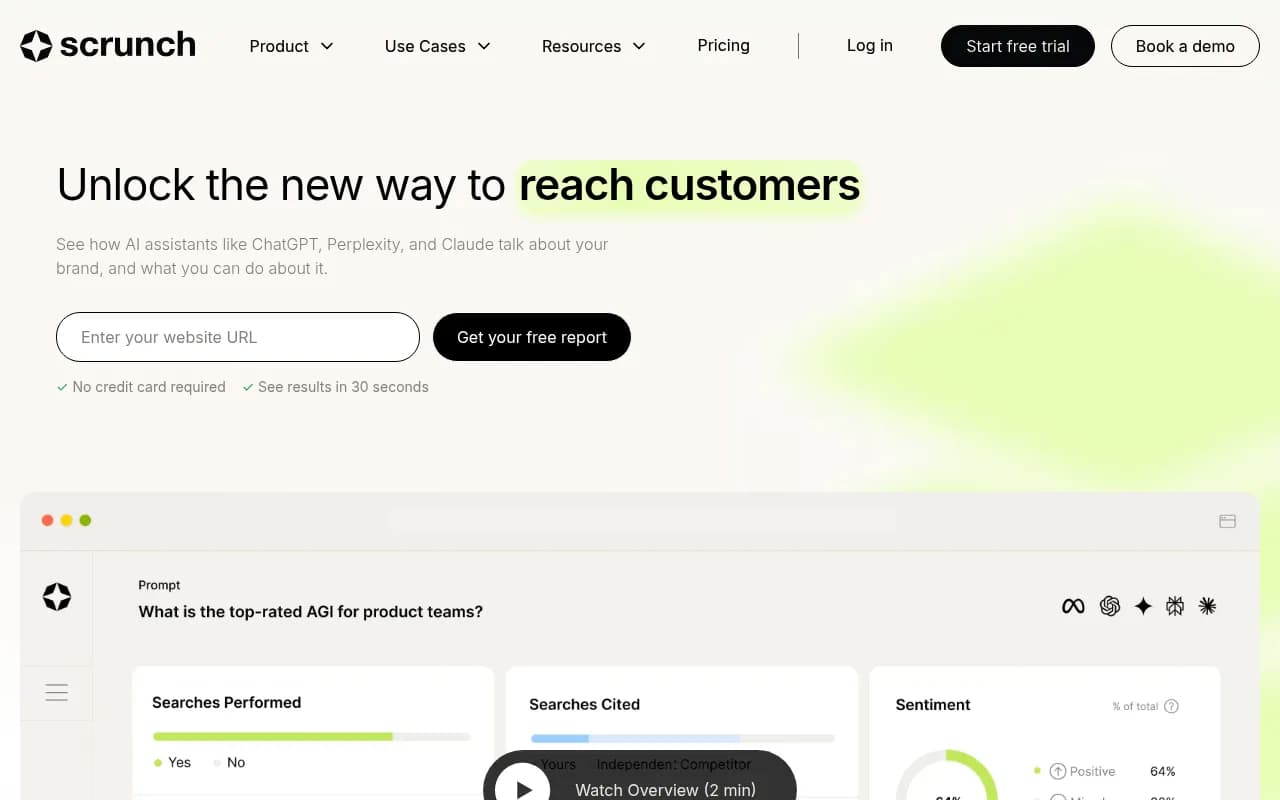
For competitor analysis, this means you can see not just that a competitor appears more often in AI answers, but which content signals might be driving that visibility. That's a more nuanced picture than pure mention tracking. The platform is newer and less established than some others on this list, but the signal-analysis angle is genuinely differentiated.
8. Conductor
Conductor bridges traditional SEO and AI search, with brand authority and citation tracking built into a platform that many enterprise SEO teams already use. The competitor analysis features let you compare citation patterns and brand authority signals across AI engines.
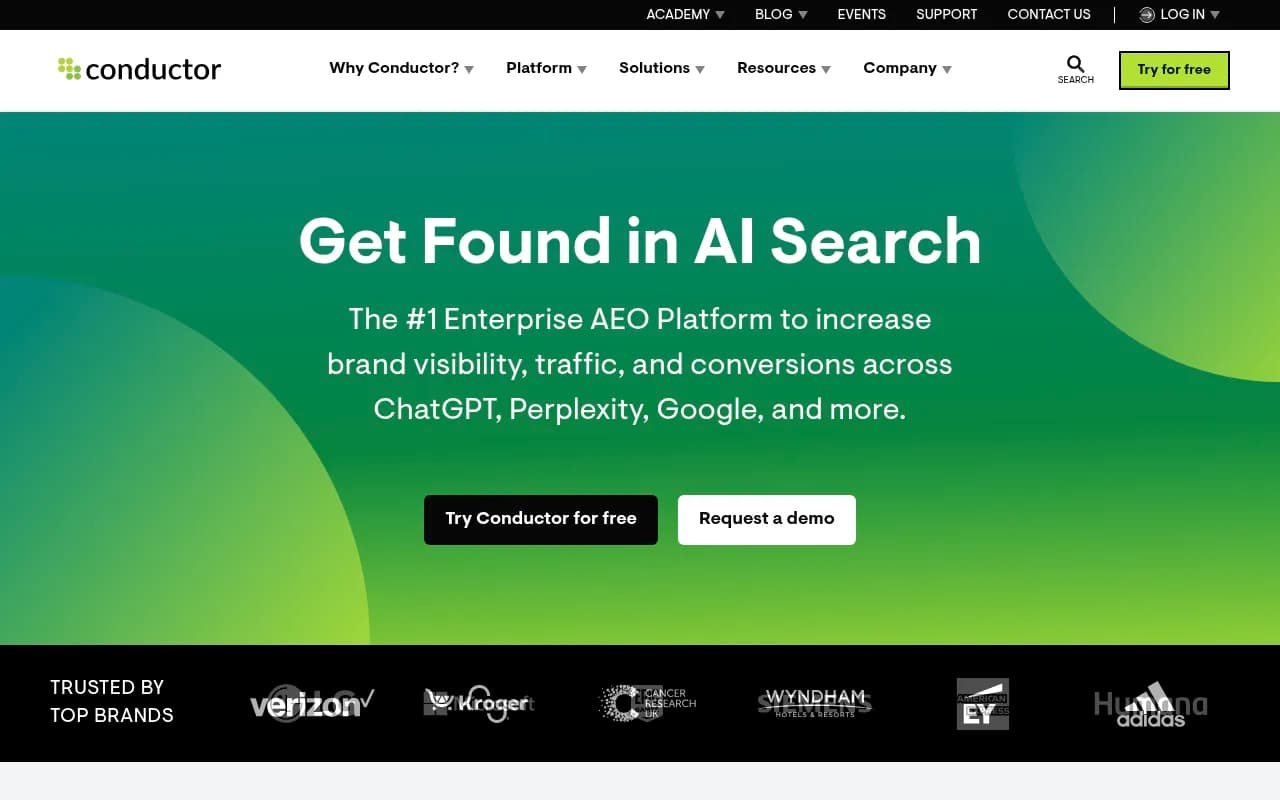
It's a reasonable choice for large organizations that want AI search visibility to sit alongside their existing SEO workflows rather than in a separate tool. The depth of AI-specific competitor analysis is more limited than dedicated GEO platforms, but the integration with traditional SEO data can surface useful cross-channel insights.
How these platforms compare
| Platform | Competitor heatmaps | Prompt gap analysis | Content generation | Crawler logs | Pricing from |
|---|---|---|---|---|---|
| Promptwatch | Yes | Yes | Yes | Yes | $99/mo |
| Profound | Yes | Limited | No | No | Enterprise |
| AthenaHQ | Yes (narrative focus) | Limited | No | No | Custom |
| Semrush | Basic | No (fixed prompts) | No | No | $139/mo |
| Otterly.AI | Yes | No | No | No | $49/mo |
| Peec.ai | Yes | No | No | No | $49/mo |
| ScrunchAI | Yes (signal-based) | Limited | No | No | Custom |
| Conductor | Yes | Limited | No | No | Enterprise |
The pattern is clear: most platforms stop at showing you the competitive picture. Promptwatch is the only one that also helps you act on it.
What to actually look for in a GEO competitor analysis tool
Prompt-level granularity
Aggregate visibility scores are almost useless for strategy. What you need is prompt-level data: which specific questions is your competitor appearing in that you're not? A platform that shows you "competitor X has 67% visibility vs your 43%" tells you there's a problem. A platform that shows you the 40 specific prompts where they're winning tells you what to do about it.
Multi-model coverage
Different AI engines have different citation patterns. A competitor might dominate on Perplexity because they've been cited heavily in Reddit threads that Perplexity indexes, while you're stronger on Claude because you have more structured content. If your platform only tracks one or two AI engines, you're missing this dimension entirely.
Source attribution
Knowing that a competitor appears more often is one thing. Knowing why -- which pages, which third-party sources, which Reddit discussions are driving their visibility -- is what lets you replicate or counter their strategy. Look for platforms that show citation sources, not just mention counts.
The action gap
This is the biggest differentiator in the market right now. Most platforms are monitoring dashboards. They show you data and then leave you to figure out what to do with it. The more useful tools connect the competitive insight to content creation -- showing you the gap and helping you close it.
Which tool is right for your situation
If you're a marketing or SEO team that wants to take AI search seriously and actually improve your competitive position, Promptwatch is the most complete option. The combination of competitor heatmaps, prompt gap analysis, and built-in content generation means you're not just watching competitors win -- you're doing something about it.
If you're at an enterprise with complex reporting needs and existing SEO tooling, Profound or Conductor might integrate more smoothly into your workflow, even if they require more manual effort to act on insights.
If you're just starting out and want basic competitive monitoring without a significant investment, Otterly.AI or Peec.ai will give you a reasonable starting point. Just go in knowing you'll eventually hit the ceiling of what monitoring-only tools can do.
The GEO space is moving fast. Platforms that were monitoring-only a year ago are adding optimization features. But the gap between tools that show you data and tools that help you act on it is still significant -- and that gap is where competitive advantage lives.