Key takeaways
- Publishers need more than a mention tracker. The jobs that matter are citation tracking, AI crawler visibility, referral traffic attribution, and content gap analysis.
- News content has the shortest shelf life in AI answers. Promptwatch Data shows half of news pages ChatGPT cited on July 6, 2026 were gone from its citations after 36 days, while docs, landing pages and comparisons hold on for months.
- Social citations vary wildly by engine. Google AI Overviews drew 12.2% of citations from social platforms in late September, ChatGPT just 0.46%.
- Most tools on the market are still monitoring dashboards. Pick one that shows crawler activity and traffic, not just brand mentions.
- Budget ranges from about $29 a month for light monitoring to several hundred a month for full-stack platforms. Always check current pricing yourself.
Why publishers need a different GEO shortlist
Most "best GEO tools" lists are written for SaaS marketers. They ask: does the AI mention my product when someone asks for the best CRM? That is a fair question for a software company. A publisher's questions are different.
A publisher wants to know whether its articles get cited as sources. It wants to know which AI crawlers are reading the archive, and whether any are being blocked by accident. And it wants to know whether any of that turns into visits, subscribers or ad impressions.
That changes what you should look for. A tool that only tells you "your brand was mentioned in 14% of prompts" is of limited use to a newsroom. You need page-level data.
I also want to be upfront about a gap. The research behind this guide did not turn up publisher-specific tooling like paywall or licensing products, or pay-per-crawl bot management. Those are a separate category from GEO tools and I haven't evaluated them here. What follows covers visibility tracking and optimization.
What the data says about how AI treats publisher content
Before picking tools, it helps to know what you are measuring. A few findings from Promptwatch Data are worth keeping in mind.
News decays quickly
In Promptwatch's content half-life study, researchers took every page ChatGPT cited on July 6, 2026 and tracked it to October 4. Almost a quarter of news pages were never cited again after day zero. Half were gone after 36 days, and only 41% were still cited at day 60. Just 77% of news pages were cited again at any later point, against 93% of docs.
Compare that with landing pages (78% still cited at 30 days) and comparisons (72%). Listicles held 60% at day 60. Product pages, reviews and how-tos sat around 55% at day 60, with half-lives of 74 to 77 days.
The practical read for a media brand: breaking news gives you a short burst of visibility. Evergreen explainers, buyer's guides and reference pages keep earning citations for months. A GEO tool should help you see which of your pages are in which group.
Social platforms matter differently per engine
For social media citations by AI model from Sep 28 to Oct 4, 2026, Promptwatch found ChatGPT drew only 0.46% of its citations from social platforms, down from 5.8% in the earlier report. Reddit fell from 5.19% to 0.09%. Google AI Overviews, by contrast, pulled 12.2% of citations from social, with YouTube at 4.28% and Facebook at 2.38%. Perplexity sat at 2.7%.
If your outlet runs a YouTube channel or Facebook presence, that matters for AI Overviews. For ChatGPT, your own site and third-party publishers carry the load. This is also why a tool that tracks several engines separately beats one that blends them.
Crawlers are your front door
Promptwatch's AI crawler traffic data (IP-verified, June 8 to Sep 6, 2026) put OpenAI at 79.8% of verified AI crawler requests in the week of Aug 31 to Sep 6, down from 94.8% in early June. The report's advice is simple: check robots.txt, CDN and WAF rules for each provider. If a provider is a big share of the overall mix but near zero in your own logs, you are probably blocking it.
Many publishers have blocked AI bots deliberately. That is a business decision. But plenty block them by accident through a WAF rule nobody remembers. You need logs to know which one applies to you.
What to look for in a GEO tool as a publisher
Five capabilities separate a useful tool from a vanity dashboard.
- Engine coverage. ChatGPT, Google AI Overviews, AI Mode, Perplexity, Gemini and Copilot at minimum. Real-interface data is better than API-only data, because user-facing answers can differ.
- Citation tracking at the URL level. Which of your articles get cited, for which prompts, and where in the source list.
- Crawler logs. Verified AI bot visits to your site, with errors.
- Traffic attribution. Visits and conversions from AI platforms, so you can show editors and sales teams a number.
- Action, not just reporting. Content gap analysis or a task list that tells your team what to write or fix.
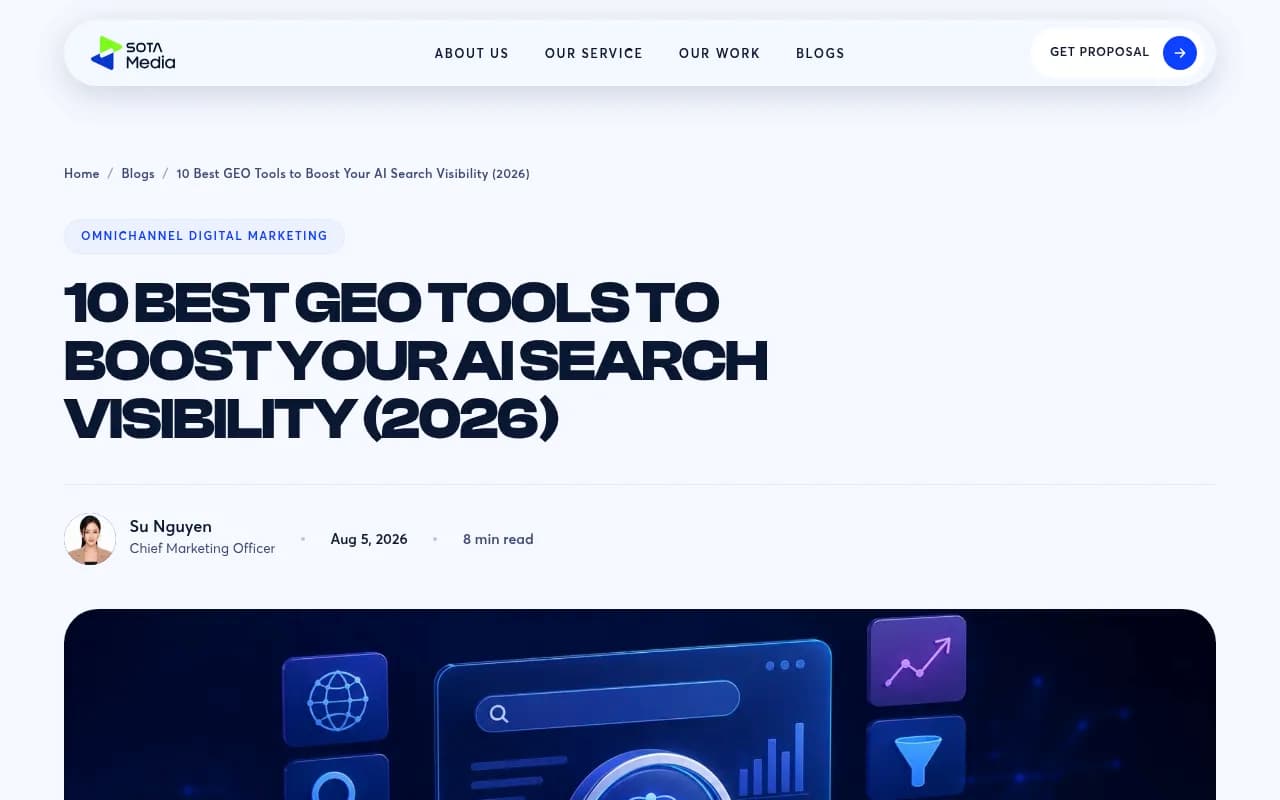
SOTA Media's August 2026 roundup makes a similar point: most tools in the category are still monitoring dashboards, and only a handful pair tracking with content or structured-data recommendations.
The shortlist at a glance
Prices below come from vendor and third-party roundups, including a table in Goodie's October 2026 guide. That guide is vendor-written, so treat its ranking with caution, and verify every price on the vendor's own page.
| Tool | Best for | Starting price (reported) | Crawler logs | Content/action features |
|---|---|---|---|---|
| Promptwatch | Newsrooms and media groups wanting tracking plus action | Free tier; paid from $95/mo | Yes, IP-verified | Content gap analysis, Content Agent, Action Board |
| Profound | Large enterprise monitoring | Not verified | Not verified | Monitoring-led |
| Semrush AI Visibility Toolkit | Teams already on Semrush | $99/mo per domain | No | Limited |
| Ahrefs Brand Radar | SEO teams who want AI data beside backlinks | $199/mo per AI index plus base plan | No | Limited |
| Peec AI | Agencies, multi-market brands | About $95/mo | No | Monitoring-led |
| Otterly.AI | Budget monitoring | $29/mo | No | Monitoring-led |
| Scrunch AI | Brand safety, hallucination detection | $250/mo | Not verified | Some |
| AthenaHQ | Mid-size teams | Not verified | Not verified | Some |
The tools, one by one
Promptwatch
Promptwatch is the one I would put at the top for publishers, mostly because it covers the parts publishers care about that monitoring-only tools skip. It tracks the real interfaces of ChatGPT, Google AI Overviews, AI Mode, Gemini, Perplexity, Copilot and others, and it has IP-verified AI crawler logs that filter out spoofed bots. For a newsroom that is the feature that settles the "are we blocking GPTBot by accident" argument.

Three other pieces fit editorial teams well:
- Citation Trends classifies each citation by content type and shows ramp-up, peak and decay per cited page, which maps directly onto the news-versus-evergreen split above.
- Reddit, YouTube and LinkedIn citation reports show which social posts and videos AI cites, including your own channels.
- The Content Agent and Action Board turn gaps into a to-do list and can draft and publish to WordPress, Webflow or Framer, with a review inbox so editors stay in control.
Visitor analytics ties AI referrals to actual traffic. Pricing runs from a free Explore tier (ChatGPT only, 10 prompts) through Essential at $95 a month, Professional at $245 and Business at $579. The Content Agent sits on Business and Enterprise. Confirm current numbers at promptwatch.com/pricing.
A caveat: if all you want is a cheap weekly check on brand mentions, this is more platform than you need.
Profound
Profound is an enterprise AI visibility platform that tracks brand mentions across ChatGPT, Perplexity and many other engines. It suits big organizations with budget and a dedicated analyst. I could not verify its pricing in the research for this guide, so ask for a quote. In comparisons it tends to be monitoring-heavy, with less on crawler logs or automated content production.
Profound

Semrush AI Visibility Toolkit
If your SEO team already lives in Semrush, the toolkit is the path of least resistance. It reportedly starts at $99 a month per domain and covers ChatGPT, AI Overviews, AI Mode, Gemini and Perplexity. The tradeoff is shallower AI-specific data, such as no crawler logs, since the product is an add-on to a traditional suite.
Ahrefs Brand Radar
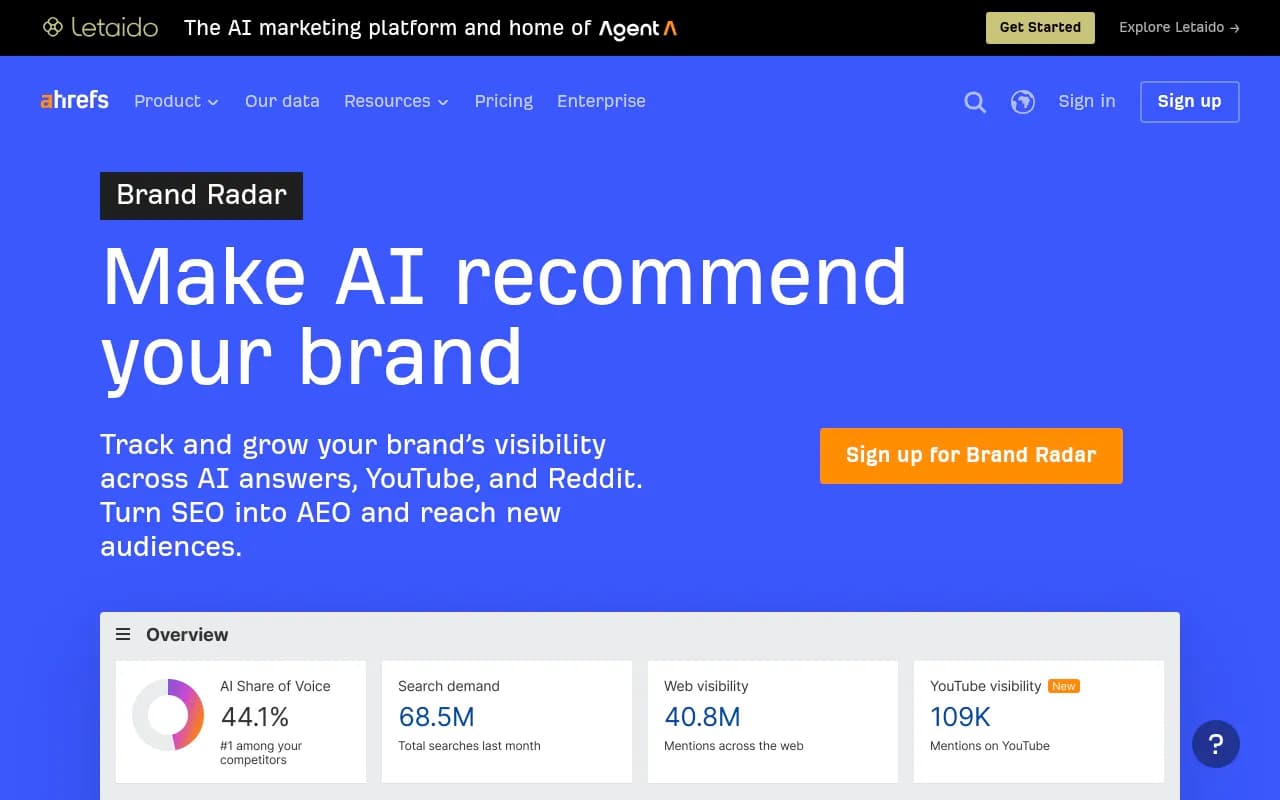
Brand Radar pairs AI mention data with the backlink and keyword data Ahrefs is known for. It is reportedly $199 a month per AI index on top of an Ahrefs plan, which adds up fast for a media group with several titles. It is good for answering "which pages rank well but never get cited" only if you stitch the data together yourself.
Peec AI
Peec is popular with agencies and multi-market brands. Reported pricing is around $95 a month ($80 billed annually), with a cap of three engines per plan. That cap is a real limit for a publisher who wants to compare ChatGPT, AI Overviews and Perplexity side by side with Gemini and Copilot.

Otterly.AI
Otterly is the budget entry point at about $29 a month, covering four engines with paid add-ons for Gemini, AI Mode and Claude. Good for a small local publisher that wants a pulse check. You will outgrow it if you need page-level optimization.
Otterly.AI

Scrunch AI
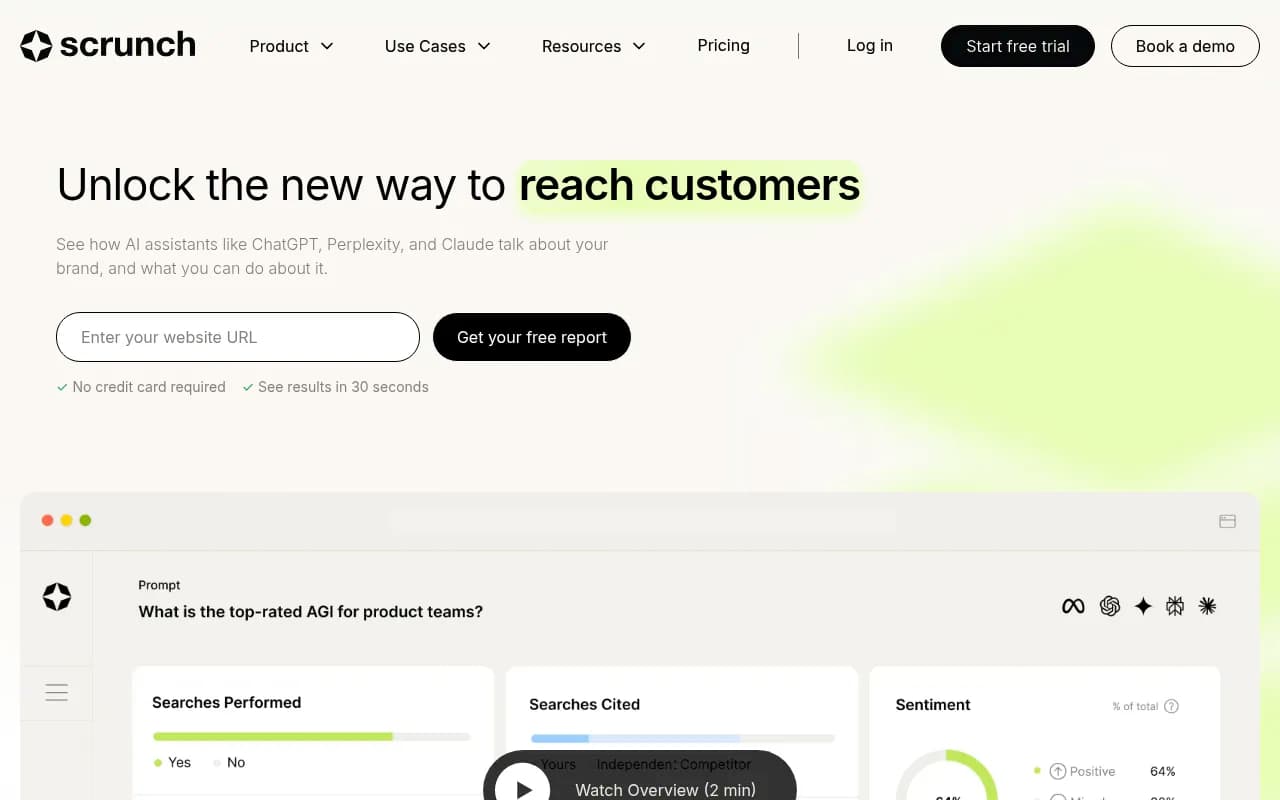
Scrunch leans toward brand safety and hallucination detection, starting around $250 a month. That angle is relevant to publishers whose reputation depends on being quoted accurately. If an AI answer misattributes a story or invents a quote from your outlet, you want to catch it.
AthenaHQ
AthenaHQ appears in most 2026 roundups as a monitoring and optimization option for mid-size teams. Pricing was not verified in the research, so request a demo and compare engine coverage before committing.

A note on vendor-written rankings
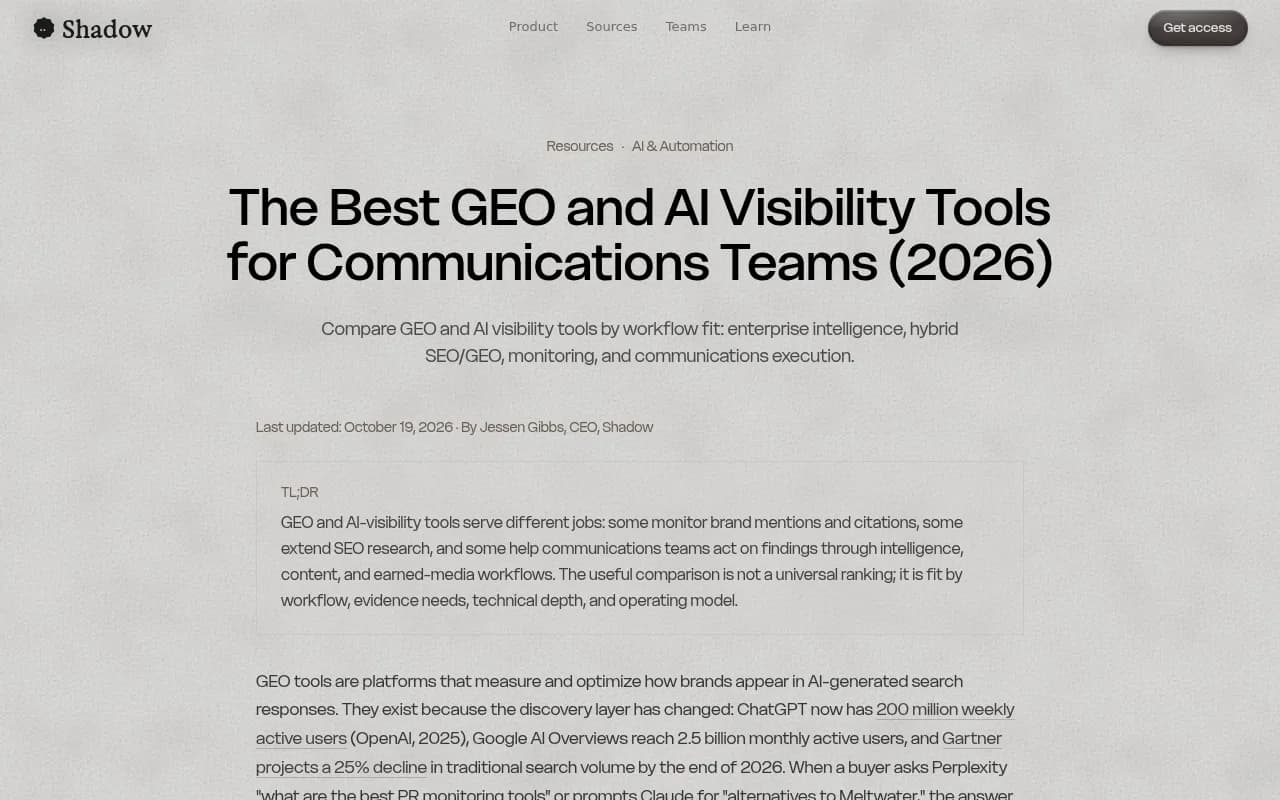
Several of the roundups out there are written by the vendors they rank. Goodie's guide ranks Goodie first. That does not make it useless; its table is a handy price reference. But when a page is a sales asset, weigh it like one. Shadow's October 2026 guide takes a different, workflow-based approach for communications teams, arguing the useful comparison is fit by workflow and evidence needs rather than a universal ranking. I agree with that framing.
How to choose: a simple decision path
If you are a single-title or local publisher
Start with a free or low-cost tier. Promptwatch's free Explore plan or a $29 Otterly plan lets you see whether AI engines even cite you. Check your robots.txt at the same time.
If you run a mid-size digital outlet
You need page-level citations, crawler logs and traffic attribution. A tool like Promptwatch Essential or Professional covers that. Add Semrush or Ahrefs only if your SEO team already pays for them.
If you are a media group with multiple brands
Look for multi-project support, white-label or client reporting, API access and security certifications. Promptwatch is ISO/IEC 27001 certified and GDPR compliant, which tends to matter in procurement. Profound is the other name to put in the demo queue.
If you sell sponsored content or affiliate reviews
Product pages were the most cited content type in ChatGPT in Promptwatch's Sep 28 to Oct 4, 2026 data (22.4% of citations), followed by landing pages and listicles. Promptwatch's content type breakdown is worth reading if your commercial content looks like that.
Practical steps once you have a tool
- Audit crawler access. Compare which AI bots show in your logs against the provider mix in the public data. Fix accidental blocks, keep the deliberate ones.
- Split your archive into news and evergreen. Expect news to spike and fade. Put your refresh effort into evergreen explainers, comparisons and guides, which hold citations longest.
- Publish original data. Firebrand's 2026 best-practice guide recommends original insights or data that LLMs may cite or summarize. For publishers, that means proprietary surveys, datasets and investigations.
- Match social effort to the engine. YouTube, Facebook and Instagram for AI Overviews. LinkedIn and Reddit for Perplexity. Don't count on Reddit threads to get you into ChatGPT, and leave X out of your AI search plans, per Promptwatch's guidance.
- Track revenue, not mentions. Connect AI referrals to subscriptions or ad revenue, so the budget conversation has a number in it.
Where to find more tools
If none of the above fits, the GEO software directory lists a wider set of platforms, and the AI rank tracker directory covers pure tracking tools.
Bottom line
Publishers should buy for page-level citations, crawler logs and traffic attribution, then judge anything else as a bonus. For most newsrooms that points to a platform like Promptwatch, with Semrush or Ahrefs as sensible add-ons for teams already invested in them, and Otterly or Peec for lighter budgets. Re-check pricing and engine coverage before you sign; the category changes monthly.