Key takeaways
- AI search engines like ChatGPT, Perplexity, and Google AI Overviews are now a primary research channel for logistics buyers — if your brand isn't cited, you're losing deals before the conversation starts.
- Most supply chain companies have no idea how they appear (or don't appear) in AI-generated answers. GEO tools fix that.
- The best tools don't just monitor mentions — they help you identify content gaps and create content that AI models will actually cite.
- Promptwatch is the most complete option for logistics brands that want to go beyond tracking and actually improve their AI visibility.
- A handful of lighter monitoring tools work well for teams just getting started or with smaller budgets.
Why logistics companies need to care about AI visibility right now
Here's something most supply chain marketing teams haven't fully reckoned with yet: when a procurement manager at a mid-sized manufacturer asks ChatGPT "what's the best freight visibility platform for cross-border shipments," your brand either shows up or it doesn't. There's no page two. There's no bidding on keywords. The AI either knows about you or it doesn't.
This is the core problem that Generative Engine Optimization (GEO) tools are built to solve. And in logistics and supply chain — an industry that's been pouring money into AI-powered operations tools — the marketing side has lagged badly behind.
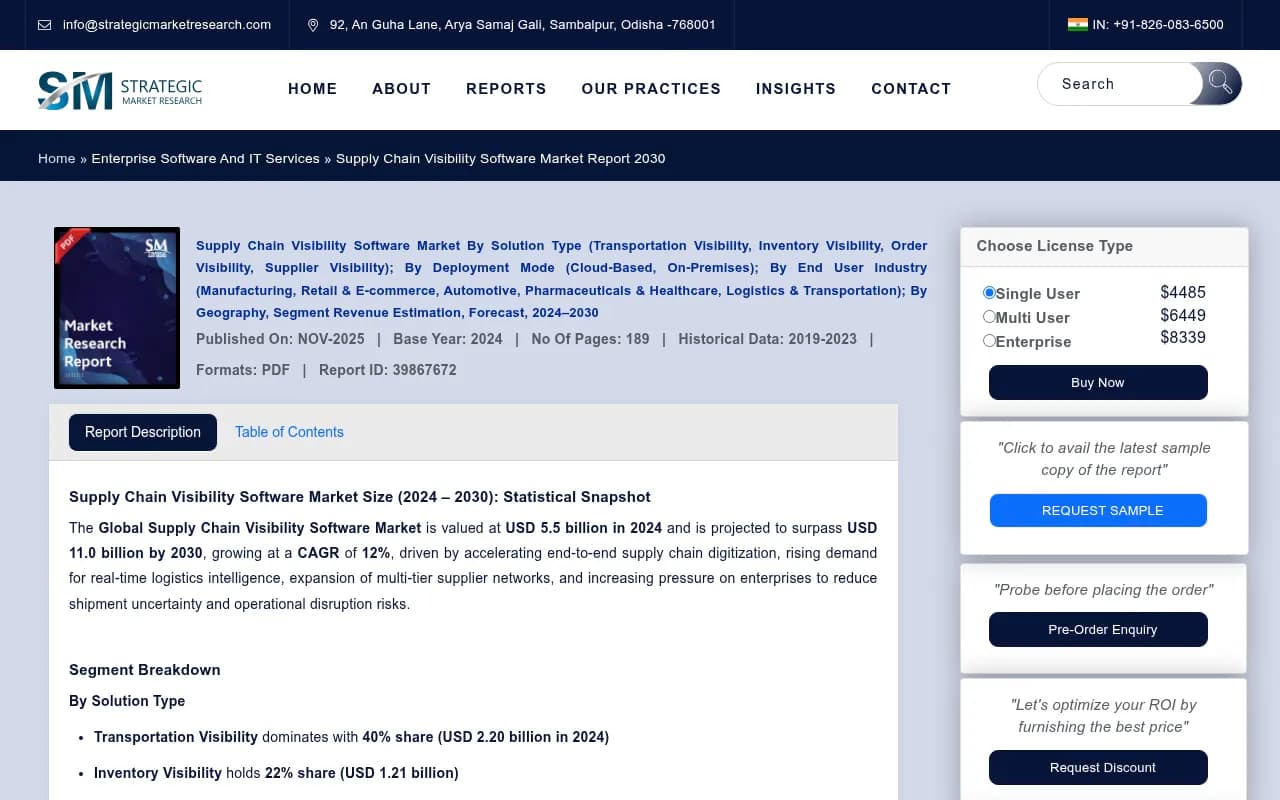
According to Strategic Market Research's 2026 supply chain visibility software market report, AI-enabled predictive visibility platforms are improving ETA accuracy by up to 33%. The operational side of logistics is deeply invested in AI. But the marketing side? Most teams are still measuring success by Google rankings while their buyers are getting answers from LLMs.
The shift matters because AI search works differently from traditional search. Google ranks pages. AI models synthesize answers from sources they've learned to trust. Getting cited in those answers requires a different strategy: structured, authoritative content that directly answers the questions buyers are actually asking.
GEO tools help you figure out what those questions are, whether you're showing up in the answers, and what to do when you're not.
What makes logistics a unique GEO challenge
Before jumping into tools, it's worth understanding why logistics and supply chain is a harder GEO problem than, say, a SaaS company selling project management software.
The buying process is long and technical. Buyers ask complex, multi-part questions: "What's the difference between a TMS and a supply chain visibility platform?" or "Which freight forwarders have the best track record for pharmaceutical cold chain?" These aren't simple keyword queries. They're the kind of questions where AI models synthesize answers from multiple sources — and if you're not one of those sources, you're invisible.
The competitive landscape is crowded and fragmented. You're competing not just with direct competitors but with industry publications, analyst reports, Reddit threads, and YouTube explainer videos. AI models cite all of these. Your GEO strategy needs to account for the full citation ecosystem.
Buyers trust third-party validation heavily. In logistics, a mention in a Gartner review, a FreightWaves article, or a supply chain subreddit carries real weight. AI models pick up on this. Tools that track offsite citations — not just your own website — are especially valuable here.
The GEO tools worth considering for logistics brands
Promptwatch — the most complete option
Promptwatch is the platform I'd recommend first for any logistics or supply chain brand that's serious about AI visibility. It's not just a monitoring dashboard — it's built around a full optimization loop.

Here's why that matters for logistics: you can track exactly which prompts your competitors are being cited for (things like "best real-time freight visibility software" or "top supply chain risk management platforms") and see the specific content gaps on your own site. The Answer Gap Analysis shows you what AI models want to answer but can't find on your website. That's genuinely useful intelligence, not just a vanity metric.
The Content Agents feature then helps you create articles, comparisons, and listicles grounded in real prompt data — the exact format that AI models tend to cite. For a logistics company trying to rank in ChatGPT for queries about TMS platforms, freight visibility, or supply chain risk, this is the fastest path from invisible to cited.
Promptwatch also tracks AI crawler logs in real time, so you can see when GPTBot or ClaudeBot hits your site, which pages they read, and whether those pages eventually get cited. Most logistics marketing teams have no idea their site is being crawled by AI agents — let alone whether those crawls are converting to citations.
It monitors 10 AI models including ChatGPT, Perplexity, Google AI Overviews, Claude, Gemini, and Grok. Pricing starts at $99/month for the Essential plan (1 site, 50 prompts).
Profound — strong for enterprise logistics teams
Profound

Profound is a solid choice for larger logistics companies with dedicated SEO or marketing intelligence teams. It covers 9+ AI search engines and has a clean interface for tracking brand mentions and share of voice across models. The reporting is polished enough for executive dashboards.
Where it falls short for logistics specifically: it doesn't have content generation capabilities, so you'll still need a separate workflow to act on what you find. It's a monitoring platform, not an optimization platform. For a freight tech company trying to move fast, that gap matters.
Otterly.AI — good for getting started
Otterly.AI

Otterly.AI is a lighter-weight monitoring tool that tracks brand mentions across ChatGPT, Perplexity, and Google AI Overviews. If you're a smaller logistics company or a 3PL that just wants to know whether you're showing up in AI answers at all, it's a reasonable starting point.
It won't tell you what to do with the data, and it doesn't have crawler logs or content generation. But the interface is simple, setup is fast, and it's cheaper than the full-featured platforms. Think of it as a visibility check rather than a full GEO strategy.
AthenaHQ — monitoring with good competitive context

AthenaHQ does a decent job of showing competitive AI visibility — useful if you want to benchmark yourself against other freight visibility platforms or TMS vendors. The competitive heatmaps help you see who's winning for specific prompts and why.
Like most monitoring-only tools, it stops at the data. You'll need to take the insights elsewhere to actually improve your visibility.
Peec AI — budget-friendly tracking

Peec AI is a straightforward AI visibility tracker that works well for teams with limited budgets. It covers the main AI search engines and gives you a basic sense of where you stand. For a regional freight broker or a niche logistics software company that wants to dip a toe into GEO without a big commitment, it's worth considering.
ScrunchAI — for teams that want clean reporting
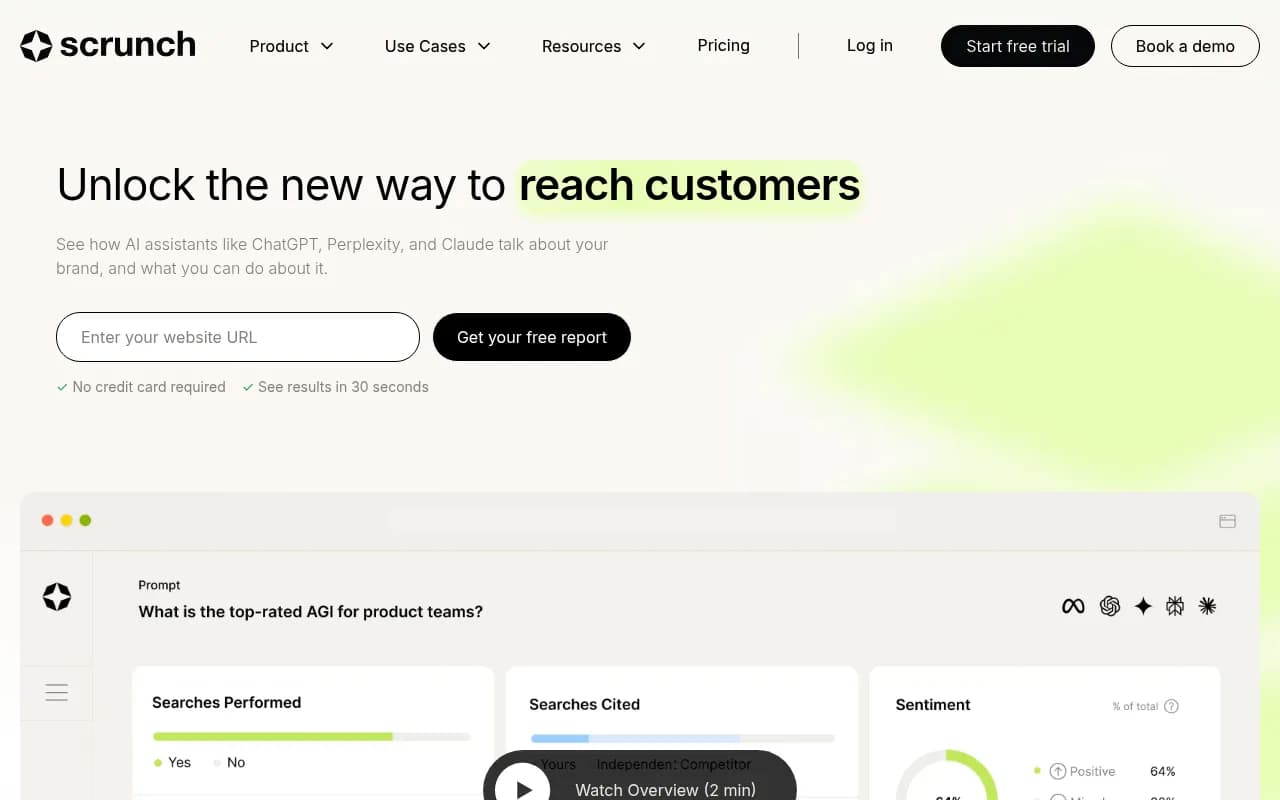
Scrunch AI focuses on brand mention tracking across LLMs with reasonably clean reporting. It's a decent option for logistics companies that need to report AI visibility metrics to leadership without a lot of manual work. The data export capabilities are useful for teams that want to pull GEO metrics into their existing dashboards.
Comparison: GEO tools for logistics brands
| Tool | AI models tracked | Content generation | Crawler logs | Competitor analysis | Best for |
|---|---|---|---|---|---|
| Promptwatch | 10 | Yes (Content Agents) | Yes | Yes (Answer Gap) | Full GEO optimization |
| Profound | 9+ | No | No | Yes | Enterprise monitoring |
| Otterly.AI | 3 | No | No | Basic | Getting started |
| AthenaHQ | Multiple | No | No | Yes | Competitive benchmarking |
| Peec AI | Multiple | No | No | Basic | Budget tracking |
| ScrunchAI | Multiple | No | No | Basic | Reporting & dashboards |
What to actually track as a logistics brand
Most GEO tools let you input custom prompts to monitor. For logistics and supply chain, the prompts that matter most fall into a few categories:
Category/comparison queries — "best supply chain visibility software," "top TMS platforms for mid-market manufacturers," "freight visibility tools compared." These are the queries where buyers are actively evaluating options. If you're not cited here, you're not in the consideration set.
Problem-based queries — "how to reduce detention and demurrage costs," "how to improve ETA accuracy," "supply chain disruption management tools." These are earlier in the buying journey but shape which brands buyers trust.
Specific use case queries — "cold chain visibility software," "cross-border freight tracking," "last-mile delivery visibility for e-commerce." The more specific the prompt, the more likely a well-targeted piece of content can win a citation.
Competitor comparison queries — "Fourkites vs project44," "[your brand] vs [competitor]." AI models answer these directly, and the answer often shapes buyer perception before they ever visit your website.
The content gap problem in logistics GEO
Here's the uncomfortable truth for most logistics marketing teams: the reason you're not showing up in AI answers isn't because the AI doesn't know your brand exists. It's because your website doesn't have content that directly answers the questions buyers are asking.
AI models cite sources that give clear, specific, authoritative answers. A product page that says "our platform provides real-time visibility across your supply chain" doesn't answer "what's the best way to reduce buffer inventory with predictive ETA tools." A detailed article that explains the methodology, cites specific data points, and compares approaches? That gets cited.
This is where the gap between monitoring tools and optimization platforms becomes concrete. A tool that shows you're not being cited for "supply chain risk management software" is useful. A tool that shows you exactly what content you'd need to create to start getting cited — and then helps you create it — is what actually moves the needle.
Promptwatch's Answer Gap Analysis does the first part. The Content Agents handle the second. For logistics companies that don't have large content teams, this combination is particularly valuable.
Offsite citations matter more in logistics than most industries
In logistics, AI models don't just cite vendor websites. They cite Gartner reviews, FreightWaves articles, supply chain subreddits, YouTube explainers from industry analysts, and LinkedIn posts from practitioners. This is especially true for competitive queries where buyers are looking for third-party validation.
Most GEO tools only track citations to your own domain. Promptwatch tracks offsite citations too — Reddit threads, YouTube videos, third-party listicles, and external brand mentions that are driving AI visibility outside your own site. For a logistics company trying to understand why a competitor keeps getting cited, this is often where the answer lives.
If a competitor is getting cited because they're consistently mentioned in r/supplychain threads or because a FreightWaves article ranks well in AI training data, you need to know that. It changes your strategy from "create more content on our website" to "get mentioned in the right external sources."
Practical steps to get started
If you're a logistics or supply chain brand starting from zero on GEO, here's a reasonable sequence:
-
Audit your current AI visibility. Pick 10-15 prompts that represent how your buyers actually search. Run them through ChatGPT, Perplexity, and Google AI Overviews manually. Note who gets cited and who doesn't. This takes an hour and is genuinely eye-opening.
-
Set up a tracking tool. Even a basic tool like Otterly.AI or Peec AI will give you a baseline. If you're serious about optimization, start with Promptwatch — the crawler logs alone will show you things about how AI engines interact with your site that you'd never find otherwise.
-
Identify your biggest content gaps. What questions are buyers asking that your website doesn't answer? The Answer Gap Analysis in Promptwatch surfaces these automatically. If you're doing it manually, compare what AI models cite for your target prompts against what's actually on your site.
-
Create content that answers specific questions. Not product pages. Not generic thought leadership. Specific, structured articles that answer the exact queries you want to rank for. Include data, comparisons, and clear recommendations — the format AI models prefer.
-
Track the results. Watch for AI crawlers hitting your new content. Monitor whether citations increase. Adjust based on what's working.
The logistics industry is early enough in the GEO curve that brands willing to invest now will build a significant advantage. The companies that figure this out in 2026 will be the ones that buyers find — and trust — when they ask AI what platform to use.
Bottom line
GEO isn't optional for logistics and supply chain brands anymore. Buyers are using AI search to evaluate platforms, compare vendors, and shortlist solutions. If you're not in those answers, you're not in the deal.
The tools range from basic monitoring (Otterly.AI, Peec AI) to full optimization platforms (Promptwatch). Where you start depends on your budget and how seriously you want to compete. But the direction is clear: track where you stand, find the gaps, create content that fills them, and watch your citations grow.
For most logistics brands, Promptwatch is the right tool for the job — not because it's the flashiest, but because it's the only platform that closes the loop from "we're invisible" to "we're cited."