Key takeaways
- Cybersecurity buyers increasingly use AI search engines like ChatGPT, Perplexity, and Google AI Overviews to shortlist vendors -- if you're not cited, you don't exist in their research process.
- GEO (Generative Engine Optimization) tools track whether and how AI models mention your brand, which competitors they recommend instead, and what content gaps are causing you to be invisible.
- The best tools for cybersecurity teams go beyond monitoring: they show you exactly which prompts you're missing and help you create content that closes those gaps.
- Promptwatch is the most complete platform in 2026, covering monitoring, content gap analysis, AI content generation, and crawler logs -- all in one place.
- Cybersecurity-specific considerations include tracking threat-category prompts, compliance-adjacent queries, and the Reddit/forum discussions that heavily influence AI model training data.
Why cybersecurity brands have an AI visibility problem
Think about how a security team at a mid-sized company evaluates endpoint detection tools in 2026. They don't start with a Google search. They open ChatGPT or Perplexity and ask something like "what are the best EDR solutions for a 500-person company?" or "compare CrowdStrike vs SentinelOne vs Carbon Black."
The AI model generates an answer. It cites three or four vendors. The human reads it, maybe asks a follow-up, and walks away with a shortlist. Your brand either made that list or it didn't.
This is the core problem. Traditional SEO tells you where you rank on a results page. It says nothing about whether ChatGPT recommends you when a CISO asks for firewall vendors, or whether Perplexity cites your threat intelligence blog when someone asks about ransomware defense strategies. Those are completely different questions, and they require completely different tools.
The cybersecurity space makes this especially tricky for a few reasons:
- The buyer vocabulary is highly technical. Prompts vary wildly between a security analyst asking about SIEM tools and a CFO asking "what security software do I need for my company."
- Trust signals matter more than in most categories. AI models tend to cite vendors with strong third-party coverage -- analyst reports, security community forums, CVE databases, and Reddit threads on r/netsec.
- The category is fragmented. There are dozens of sub-verticals (endpoint, cloud security, identity, SIEM, threat intel, compliance) and AI models treat each one differently.
If you're a cybersecurity vendor and you haven't audited your AI visibility by now, you're almost certainly invisible for a significant portion of the prompts your buyers are actually using.
What to look for in a GEO tool for cybersecurity
Not all GEO tools are built the same, and the differences matter more in a technical vertical like cybersecurity. Here's what separates useful from useless:
Prompt coverage that matches how security buyers actually search. Generic tools let you track a handful of branded prompts. That's fine for awareness, but cybersecurity buyers use highly specific, category-level queries. You need a tool that can track things like "best SIEM for compliance" or "top threat intelligence platforms for enterprise" -- not just your brand name.
Multi-model tracking. Security professionals use different AI tools. Some prefer Perplexity for research depth. Others use ChatGPT for quick vendor comparisons. A GEO tool that only monitors one or two models will miss significant portions of your audience.
Content gap analysis, not just monitoring. Knowing you're invisible is step one. Knowing why you're invisible -- which specific topics, angles, and questions your content doesn't answer -- is what actually lets you fix it. Most tools stop at the alert. The ones worth paying for show you the gap and help you close it.
Crawler and citation logs. AI models crawl your website before they cite it. Understanding which pages they're reading, which ones they're ignoring, and where they're encountering errors is critical for technical optimization. This is especially relevant for cybersecurity companies with complex site structures, gated research, and heavy JavaScript rendering.
Competitor visibility. You need to know not just your own visibility score but who's beating you and for which prompts. In cybersecurity, a competitor owning the "best XDR for SMB" prompt category is a real revenue problem.
The top GEO tools for cybersecurity in 2026
Promptwatch
Promptwatch is the most complete platform available in 2026 for teams that want to do more than just watch a dashboard. It covers all ten major AI models (ChatGPT, Perplexity, Claude, Gemini, Google AI Overviews, Grok, DeepSeek, Copilot, Meta AI, Mistral), which matters for cybersecurity because your buyers are spread across all of them.
What makes it particularly useful for security vendors is the full action loop it supports. The Answer Gap Analysis shows you exactly which prompts competitors are being cited for that you're not -- specific, actionable gaps like "ransomware recovery best practices" or "zero trust implementation guide for mid-market." From there, Content Agents generate articles and briefs grounded in real prompt data, not generic SEO filler. Then page-level tracking shows when your new content gets crawled and cited.
The AI Crawler Logs are genuinely valuable for cybersecurity sites. Many security vendors have complex site architectures -- gated research reports, JavaScript-heavy product pages, compliance documentation -- and the crawler logs show exactly which pages AI engines are reading, which ones they're skipping, and why. That's something most competitors don't offer at all.
Promptwatch also tracks Reddit and YouTube, which is significant for cybersecurity. Discussions on r/netsec, r/sysadmin, and r/cybersecurity directly influence what AI models recommend. Knowing which threads are driving citations gives you a channel most vendors completely ignore.

Profound
Profound is the strongest pure-monitoring option for enterprise cybersecurity teams with large analytics budgets. It covers 9+ AI search engines and provides solid competitive benchmarking. The reporting depth is good, and it's well-suited to teams that need to present AI visibility data to leadership.
The limitation is that it stops at the data. Profound doesn't help you create content to close the gaps it identifies, and it doesn't offer crawler logs or Reddit tracking. For a cybersecurity vendor that needs to move from insight to action, that's a meaningful gap. It also requires a sales call to get started, which slows things down.
Profound

Otterly.AI
Otterly is a reasonable starting point if you're new to GEO and want to understand the basics before committing to a more complete platform. It tracks brand mentions across ChatGPT, Perplexity, and Google AI Overviews, and the entry price ($29/month) is low enough to experiment with.
For cybersecurity specifically, the prompt limit at entry tiers is a real constraint. You need to track a lot of category-level queries across multiple sub-verticals, and 15 prompts won't get you far. It also lacks crawler logs, content generation, and Reddit tracking -- so it's a monitoring-only tool.
Otterly.AI

Semrush AI Toolkit
If your team is already standardized on Semrush for keyword research and rank tracking, the AI Toolkit is a natural add-on. It integrates AI visibility monitoring into the interface you already use, which reduces friction.
The downside for cybersecurity teams is that Semrush uses fixed prompt sets rather than letting you define the specific queries your buyers are using. Security buyers ask highly specific questions, and a fixed prompt library will miss a lot of them. There's also no content generation or crawler logs.
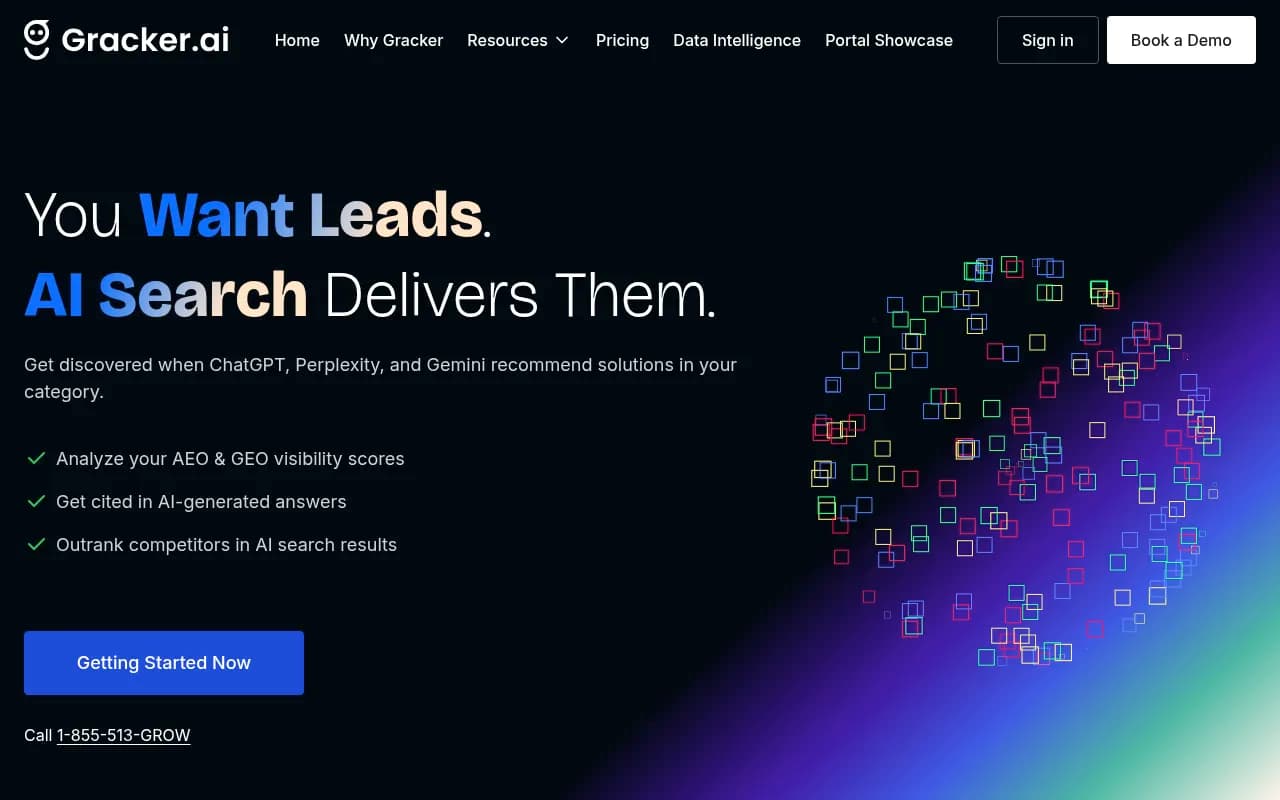
Gracker AI
Gracker AI is worth mentioning specifically for cybersecurity because it's built with security-adjacent content in mind. It combines answer engine optimization with AI visibility tracking and has been used by security-focused content teams. It's not as full-featured as Promptwatch, but if you're a smaller security vendor looking for something purpose-built for the space, it's worth evaluating.
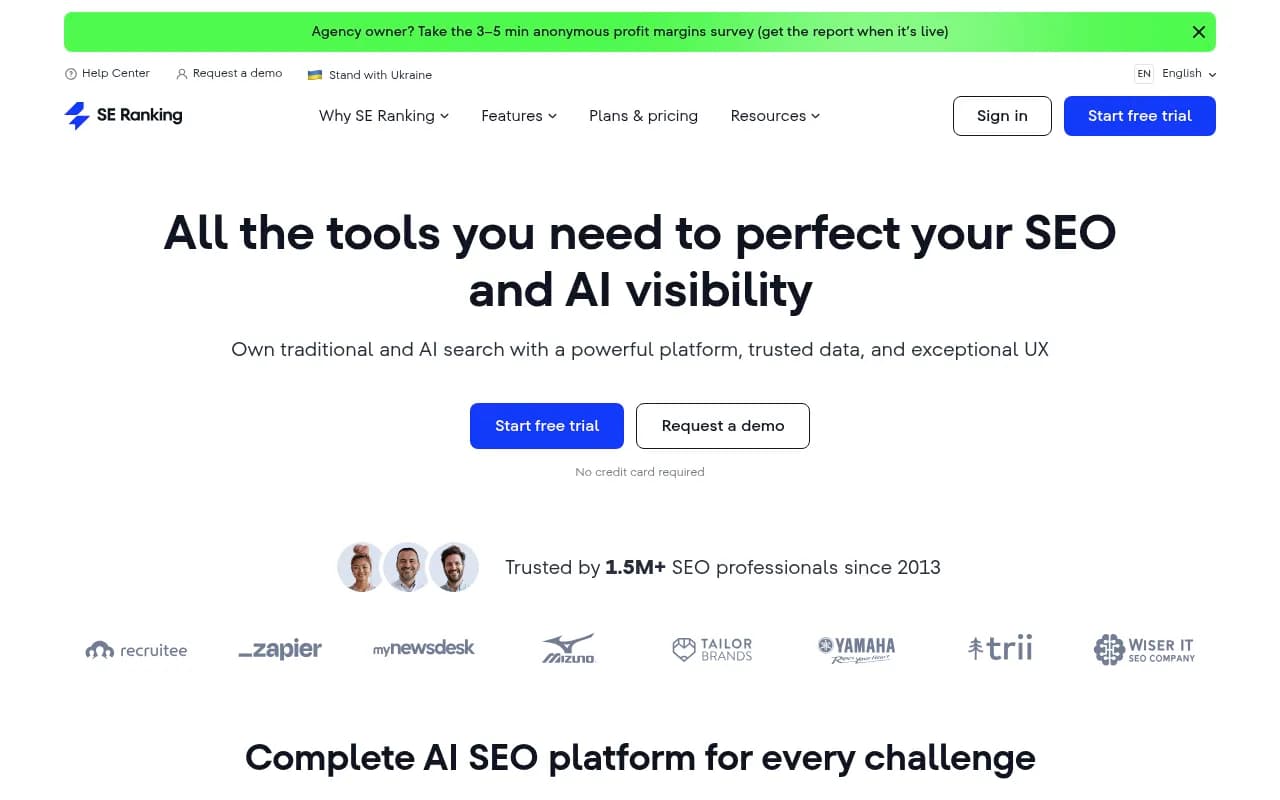
SE Ranking (SE Visible)
SE Ranking's AI visibility module (SE Visible) tracks brand mentions in AI search engines alongside traditional rank tracking. For cybersecurity teams that want both traditional SEO and AI visibility in one platform, it's a cost-effective option. It won't replace a dedicated GEO tool for serious AI optimization work, but it's useful for teams that want a single reporting interface.
Tool comparison table
| Tool | AI models covered | Content generation | Crawler logs | Reddit tracking | Prompt customization | Starting price |
|---|---|---|---|---|---|---|
| Promptwatch | 10 (all major) | Yes | Yes | Yes | Yes | $99/mo |
| Profound | 9+ | No | No | No | Yes | $399/mo |
| Otterly.AI | 3 | No | No | No | Yes | $29/mo |
| Semrush AI Toolkit | 3-4 | No | No | No | Limited (fixed) | $99/mo add-on |
| Gracker AI | 5+ | Partial | No | No | Yes | Custom |
| SE Ranking (SE Visible) | 3-4 | No | No | No | Yes | $52/mo |
The cybersecurity-specific GEO strategy
Tracking visibility is only half the job. Here's how to actually improve it in a cybersecurity context.
Map your sub-verticals to prompt categories
Cybersecurity is not one market. A company selling cloud security posture management (CSPM) tools needs to track completely different prompts than one selling email security or identity governance. Before you set up any GEO tool, map your product categories to the specific questions buyers ask at each stage of their research.
For example:
- Awareness stage: "what is zero trust security?" / "how do companies protect against ransomware?"
- Evaluation stage: "best SIEM tools for enterprise" / "top EDR solutions compared"
- Decision stage: "CrowdStrike vs Palo Alto Cortex XDR" / "[your brand] reviews"
Each category needs its own prompt set in your tracking tool.
Prioritize third-party citation sources
AI models don't just read your website. They synthesize from analyst reports (Gartner, Forrester), security community forums, GitHub repositories, CVE databases, and review platforms like G2 and Gartner Peer Insights. Getting cited in those sources -- especially the ones AI models trust -- is often more impactful than optimizing your own pages.
Promptwatch's offsite citation analysis shows you which external sources are driving AI visibility for you and your competitors. That tells you exactly where to focus your PR and community efforts.
Fix your crawler accessibility issues
Many cybersecurity vendors have websites that are hard for AI crawlers to read. Gated research reports, JavaScript-heavy product pages, and overly aggressive bot-blocking rules all reduce AI model access to your content. Before you invest heavily in new content, audit what AI crawlers can actually see on your existing site.
This is where crawler logs become essential. They show you which pages GPTBot, ClaudeBot, and PerplexityBot are visiting, which ones they're bouncing from, and whether they're encountering errors. Fix the technical issues first -- new content won't help if the crawlers can't read it.
Invest in community presence
Reddit discussions on r/netsec, r/sysadmin, r/cybersecurity, and r/netsecstudents are heavily cited by AI models when answering security questions. This isn't something most cybersecurity marketing teams think about, but it's a real lever. Genuine participation in these communities -- answering questions, sharing research, contributing to discussions -- builds the kind of third-party signal that AI models use to assess credibility.
The same applies to security-focused YouTube channels. If your team produces technical content (threat analysis, product walkthroughs, security tutorials), AI models are increasingly citing video content in their responses.
Track sentiment, not just mentions
Being mentioned by an AI model isn't always good. If ChatGPT recommends you but notes that your pricing is opaque or your support is poor, that's a problem. GEO tools that track the sentiment and context of AI mentions -- not just whether you appear -- give you a more complete picture of how your brand is being positioned.
A note on the monitoring-only trap
Most GEO tools in 2026 are monitoring dashboards. They show you a visibility score, maybe a competitor comparison, and send you an alert when something changes. That's useful, but it's not optimization.
The cybersecurity market moves fast. New threat categories emerge, new competitors enter, and buyer vocabulary shifts. A tool that just shows you where you stand today doesn't help you get ahead of those changes.
The platforms worth investing in are the ones that close the loop: find the gaps, generate content that addresses them, and track whether that content actually gets cited. That's the difference between a reporting tool and an optimization platform.
For cybersecurity teams serious about AI visibility, that distinction matters more than price.
Bottom line
If you're a cybersecurity vendor and you haven't started tracking your AI visibility, you're already behind. Buyers are using ChatGPT and Perplexity to build vendor shortlists right now, and the brands being recommended are the ones that invested in GEO six months ago.
The good news is that cybersecurity is still early enough in the AI visibility race that catching up is possible. The brands that move now -- tracking the right prompts, fixing their crawler accessibility, building third-party citation signals, and creating content that directly answers buyer questions -- will own significant AI search real estate before the market consolidates.
Start with a tool that does more than monitor. The gap between knowing you're invisible and actually fixing it is where most teams get stuck.