Key takeaways
- Niche and long-tail industries face a specific GEO problem: AI models often have thin training data for their category, making prompt selection and gap analysis more important than raw monitoring volume.
- Most GEO tools are optimized for high-volume, well-known categories. A handful go deeper with custom prompt tracking, content generation, and crawler logs that actually help you fix visibility gaps.
- The difference between a monitoring tool and an optimization platform matters more in niche markets, where you can't just "wait for the algorithm to notice you."
- Tools like Promptwatch that combine gap analysis, content generation, and AI crawler logs are better suited for niche use cases than pure trackers.
- Prompt difficulty scoring and query fan-outs are especially valuable for long-tail industries, where the right prompt framing can mean the difference between zero citations and consistent mentions.
Why niche industries have a GEO problem that most tools don't solve
If you work in commercial HVAC, specialty insurance, industrial coatings, or veterinary software, you've probably noticed that most GEO content and tools talk about "your brand" as if you're a consumer product that ChatGPT already knows about. For many niche B2B and specialist markets, that's not the reality.
AI models like ChatGPT, Perplexity, and Gemini were trained on internet data that skews heavily toward consumer categories, popular SaaS, and well-covered industries. If your category has thin coverage in training data, the model may not cite anyone reliably, or it may cite the one or two players who happened to get mentioned in trade publications that made it into the training corpus.
This creates a specific opportunity. In niche markets, the citation landscape is less crowded. A single well-structured piece of content that directly answers a specialist prompt can dominate AI responses in a way that would be nearly impossible in, say, "project management software."
But you need the right tools to find those prompts, track whether you're being cited, and actually create content that fills the gaps. Most GEO tools were built for the opposite scenario: large brands with broad visibility who want to monitor dozens of head terms. They're not wrong, they're just not built for you.
Here's what to look for, and which tools actually deliver for niche and long-tail use cases.
What makes a GEO tool work for niche industries
Before comparing specific platforms, it's worth being clear about what "works for niche" actually means. There are four things that matter more in specialist markets than in broad consumer categories.
Custom prompt tracking. You need to define your own prompts, not pick from a preset library. In niche industries, the prompts that matter are often highly specific: "What's the best ERP for specialty chemical manufacturers?" or "Which platforms do veterinary practices use for appointment scheduling?" Generic prompt libraries won't have these. You need a tool that lets you build and track your own prompt set from scratch.
Prompt volume and difficulty data. In long-tail markets, not all prompts are worth pursuing. Some are asked by real users at meaningful volume; others are theoretical. Tools that give you volume estimates and difficulty scores help you prioritize the prompts where winning actually matters.
Content gap analysis and generation. Knowing you're not cited is only useful if you can do something about it. In niche markets, the content gap is often real: the page that should answer the prompt simply doesn't exist on your site. Tools that can identify what's missing and help you create it are worth significantly more than pure monitors.
AI crawler logs. Understanding whether AI crawlers are even visiting your site matters a lot in niche markets where your domain authority may be lower and your content less frequently linked. If GPTBot or ClaudeBot isn't crawling your key pages, you have a technical problem to fix before any content work will pay off.
The tools worth considering
Promptwatch
Promptwatch is the most complete option for teams that want to move from "we're not being cited" to "here's the content we need to create." It tracks 10 AI models including ChatGPT, Perplexity, Claude, Gemini, Grok, and Google AI Overviews, and lets you define your own prompts rather than relying on preset categories.

For niche industries, the most useful features are the Answer Gap Analysis, which shows exactly which prompts competitors are appearing for that you're not, and the Content Agents, which generate articles, comparisons, and briefs grounded in actual prompt data and citation patterns. The AI Crawler Logs show which pages GPTBot, ClaudeBot, and other AI crawlers are visiting, how often, and whether those visits are translating into citations. In a niche market where your domain may have limited crawl history with AI engines, this is genuinely useful diagnostic data.
Prompt volume estimates and difficulty scores help you prioritize. If you're in specialty insurance, you might find that "best errors and omissions insurance for consultants" has meaningful prompt volume and low competition, while "specialty insurance market overview" is too vague to win. That kind of prioritization is hard to do without data.
Pricing starts at $99/month for the Essential plan (1 site, 50 prompts, 5 articles). The Professional plan at $249/month adds crawler logs, state/city tracking, and 150 prompts. For most niche brands, the Professional tier is the right starting point.
Profound
Profound is a strong enterprise-grade monitoring platform. It tracks brand mentions across 9+ AI engines with solid reporting depth, and it's a reasonable choice for larger organizations that need compliance-friendly dashboards and detailed visibility reporting.
Profound

Where it falls short for niche use cases: it's primarily a monitoring platform. It will tell you whether you're being cited, but it doesn't help you figure out what content to create or generate it for you. For a niche brand that needs to build visibility from scratch, that's a meaningful limitation. It's also priced for enterprise budgets, which may not fit smaller specialist businesses.
Peec AI
Peec AI is a clean, accessible monitoring tool that tracks brand mentions across the main AI engines. It's easier to get started with than most platforms and has reasonable pricing for smaller teams.

The limitation is the same as most monitoring-only tools: it shows you where you're not visible but doesn't help you fix it. For a niche brand that already has a content team and just needs tracking data, it can work. For a brand that needs to build AI visibility from zero, it's a starting point, not a complete solution.
Otterly.AI
Otterly.AI covers ChatGPT, Perplexity, and Google AI Overviews with a straightforward interface. It's one of the more accessible entry points into AI visibility monitoring.
Otterly.AI

It's monitoring-only, with no content generation, no crawler logs, and no gap analysis. For niche industries where the main challenge is figuring out what content to create, this is a significant gap. Worth considering if budget is tight and you just want basic citation tracking.
AthenaHQ
AthenaHQ has a solid monitoring feature set with good model coverage. It tracks brand mentions and provides competitive comparisons across AI engines.

Like Peec and Otterly, it stops at monitoring. There's no content optimization or generation capability, which matters when you're trying to build AI visibility in a category where the content doesn't exist yet.
ZipTie
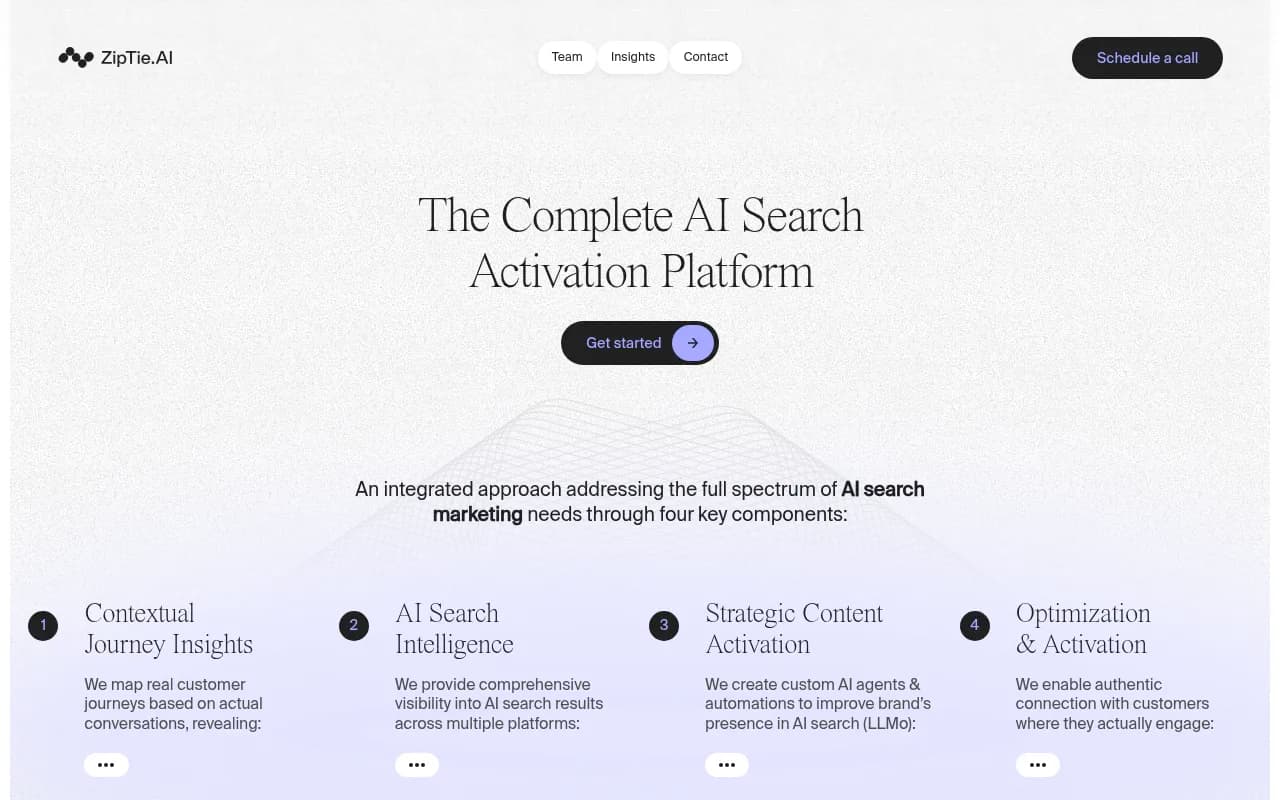
ZipTie positions itself as a deeper analysis platform for AI visibility. It has more analytical depth than basic trackers and is worth a look for teams that want to understand citation patterns in detail.
Frase
Frase is primarily an SEO content research and writing tool that has added AI visibility monitoring. If your team is already using Frase for content workflows, the AI tracking integration makes sense. It's one of the few tools that pairs monitoring with content creation in a single workflow.
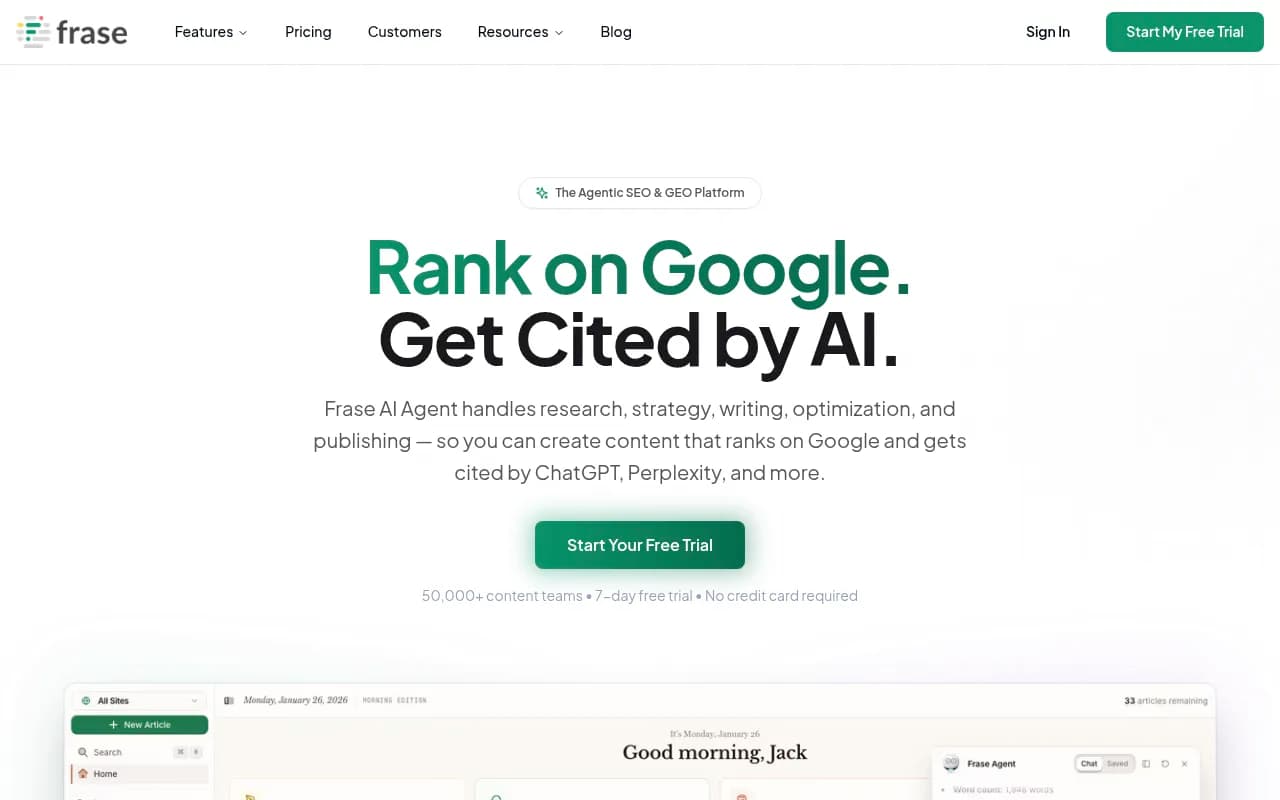
The monitoring depth is less than dedicated GEO platforms, but the content workflow integration is genuinely useful. For niche brands that need to create a lot of content to build AI visibility, the ability to go from "gap identified" to "article drafted" in one tool has real value.
SE Ranking
SE Ranking is a traditional SEO platform that has added AI visibility features. It's a reasonable choice for teams that want to manage traditional SEO and AI monitoring in one place, and the pricing is accessible.
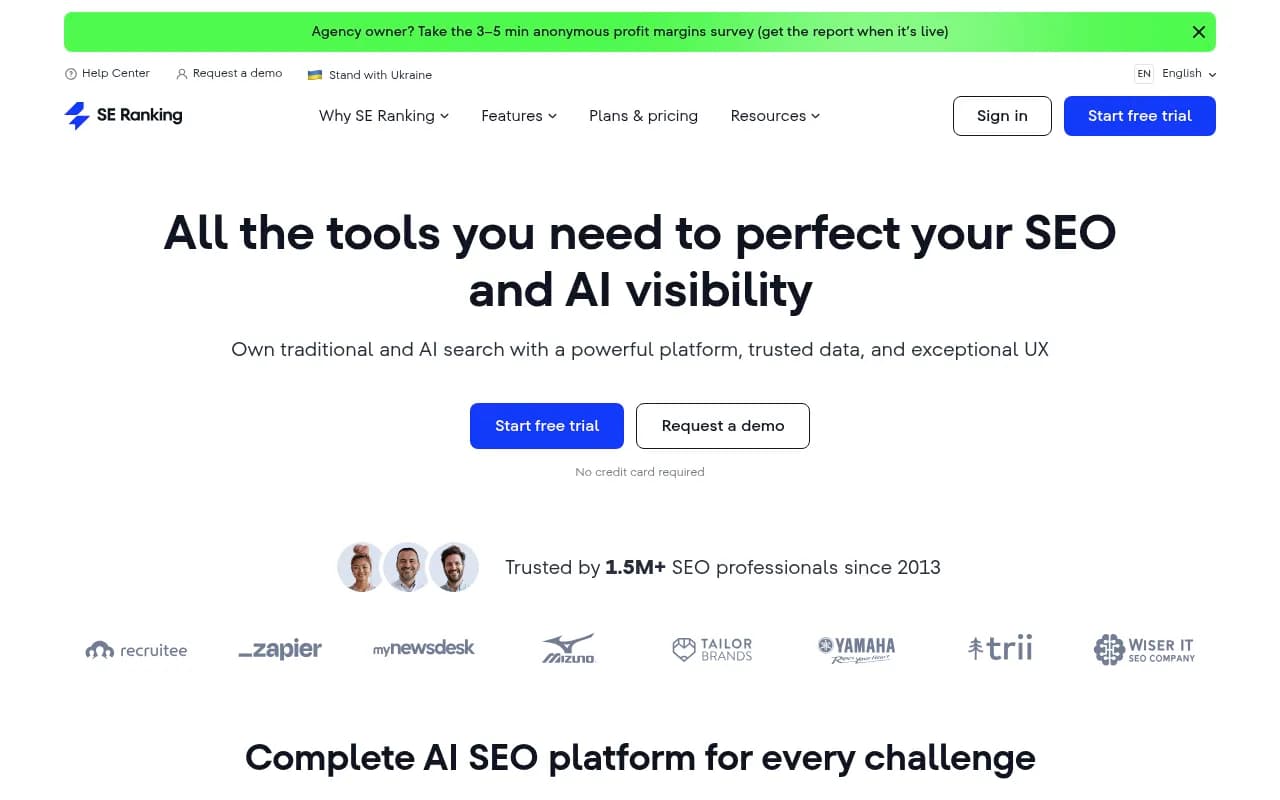
The AI visibility features are less mature than dedicated GEO platforms, but if you're already paying for SE Ranking and want to add basic AI monitoring without another subscription, it's a practical option.
Scrunch AI
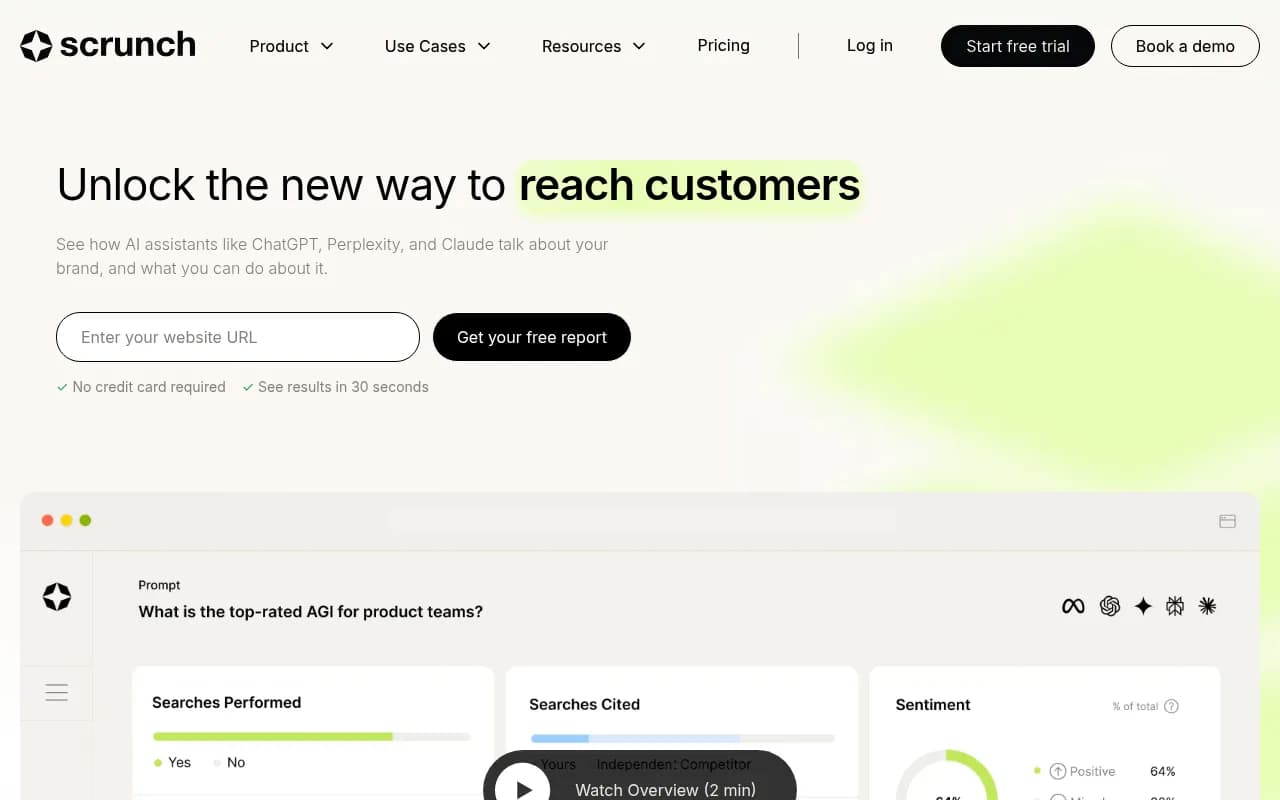
Scrunch AI tracks brand mentions across LLMs with a focus on visibility scoring and competitive benchmarking.
Rankshift
Rankshift focuses on tracking brand visibility across ChatGPT, Perplexity, and AI search with a clean interface suited for smaller teams.

Feature comparison
| Tool | Custom prompts | Prompt volume data | Content generation | AI crawler logs | Competitor heatmaps | Starting price |
|---|---|---|---|---|---|---|
| Promptwatch | Yes | Yes | Yes (Content Agents) | Yes | Yes | $99/mo |
| Profound | Yes | Limited | No | No | Yes | Enterprise |
| Peec AI | Yes | No | No | No | Basic | ~$49/mo |
| Otterly.AI | Yes | No | No | No | Basic | ~$49/mo |
| AthenaHQ | Yes | No | No | No | Yes | Mid-market |
| ZipTie | Yes | Limited | No | No | Yes | Mid-market |
| Frase | Limited | No | Yes (SEO-focused) | No | No | $15/mo |
| SE Ranking | Yes | No | Basic | No | No | $52/mo |
How to approach GEO for a niche industry
The process looks different from broad-market GEO. Here's a practical sequence that works for specialist categories.
Start with prompt discovery, not brand monitoring
In a niche market, the first question isn't "is my brand being cited?" It's "what are people actually asking AI about my category?" Start by mapping the prompts your ideal customers might use. Think in terms of job-to-be-done: "What software do [specific role] use for [specific task]?" or "How do I choose a [specific service provider] for [specific situation]?"
Tools like Promptwatch's prompt intelligence features can help you find prompt volume and difficulty data for your category. In niche markets, you'll often find that the high-value prompts have surprisingly low competition because nobody has bothered to create content specifically targeting them.
Audit what AI models actually know about your category
Before creating content, it's worth understanding what AI models currently say when asked about your category. Run your target prompts manually in ChatGPT, Perplexity, and Gemini. Note who gets cited, what sources are referenced, and whether your brand appears at all. This gives you a baseline and often reveals surprising gaps: categories where AI models give vague or unhelpful answers because good content simply doesn't exist.
Check whether AI crawlers are visiting your site
If you're on a Professional or higher Promptwatch plan, the AI Crawler Logs will show you whether GPTBot, ClaudeBot, PerplexityBot, and other AI crawlers are visiting your key pages. In niche markets, it's not uncommon to find that AI crawlers have never visited your most important content. This is a technical problem that needs fixing before content work will pay off.
Create content that directly answers the gaps
This is where most niche brands underinvest. The content that gets cited in AI responses tends to be specific, authoritative, and directly structured around the question being asked. Generic "about us" pages and broad category overviews rarely get cited. What gets cited is content that answers a specific question better than anything else available.
For niche industries, this often means creating content that would feel almost too specific for traditional SEO: "How specialty chemical manufacturers should evaluate ERP systems" rather than "ERP software guide." AI models reward specificity because they're trying to give users precise answers.
Track and iterate
Once you've published content targeting specific prompts, track whether citation rates improve. Page-level tracking in tools like Promptwatch shows which pages are being cited, how often, and by which models. The timeline from publish to crawl to citation is typically 2-8 weeks, so give it time before concluding something isn't working.
The niche industry advantage
Here's the thing that doesn't get said enough: niche industries actually have an advantage in GEO that they don't have in traditional SEO. In traditional SEO, you're competing against every well-funded company that has invested in content for years. In AI visibility, the playing field is much more level because most niche categories are underserved.
If you're in specialty veterinary equipment, industrial filtration, or B2B compliance software, there's a good chance that AI models currently give mediocre answers to questions in your category because the training data is thin and nobody has done the work to create citation-worthy content. That's not a problem, it's an opening.
The brands that move now, build the content, get crawled, and start accumulating citations will have a structural advantage that compounds over time. The ones that wait until their category is crowded will face the same uphill battle they've been fighting in traditional SEO for years.
The tools exist. The prompts are there to be found. The content gap is real and fillable. For niche industries, 2026 is probably the best window you'll get.
Bottom line
For most niche and long-tail brands, the right GEO tool is one that goes beyond monitoring to help you actually build visibility. Promptwatch is the strongest option for this because it combines prompt intelligence, gap analysis, content generation, and crawler logs in a single platform. Profound is worth considering for enterprise teams that need deep monitoring and compliance reporting. Frase makes sense if you're already in that ecosystem and want content creation integrated with monitoring.
Pure monitoring tools like Otterly.AI, Peec AI, and AthenaHQ are fine starting points if budget is the constraint, but they'll leave you with data and no clear path to acting on it. In niche markets where you need to build visibility from scratch, that's a significant limitation.
The most important thing is to start. AI visibility compounds, and the brands that begin tracking and creating content now will be much harder to displace in 12 months than they are today.