Key takeaways
- AI search engines like ChatGPT, Perplexity, and Google AI Overviews are now a primary way people discover nonprofits, causes, and mission-driven organizations -- and most nonprofits have no idea if they're showing up.
- Generative Engine Optimization (GEO) is the discipline of making sure your organization appears in AI-generated answers, not just traditional search results.
- The tools vary enormously: some only monitor (they show you data), while others help you act on it by generating content and closing visibility gaps.
- Budget matters here. Nonprofits need tools that deliver real value without enterprise price tags -- several solid options exist in the $0-$249/month range.
- The most important thing isn't picking the "best" tool -- it's picking one and actually starting to track your AI visibility before your cause gets crowded out by better-optimized competitors.
Why nonprofits need to care about AI visibility right now
When someone asks ChatGPT "which organizations are doing the most to fight food insecurity in Chicago?" or "what's the best nonprofit for ocean conservation?", one of two things happens: your organization gets mentioned, or it doesn't.
That's the new reality. According to SparkToro's analysis of Similarweb clickstream data from early 2026, about 68% of Google searches now end without a click. ChatGPT reached roughly 900 million weekly active users in February 2026. Google's AI Overviews reach an estimated 2 billion people monthly. The answer IS the destination -- and if your nonprofit isn't cited in that answer, you're losing donors, volunteers, and advocates to organizations that are.
This isn't a problem that traditional SEO solves. Ranking #3 on Google for "food bank Chicago" doesn't guarantee ChatGPT will mention you when someone asks for recommendations. AI models synthesize information from across the web, weigh credibility signals differently than search algorithms, and often surface organizations that have clear, structured, authoritative content -- not just high domain authority.
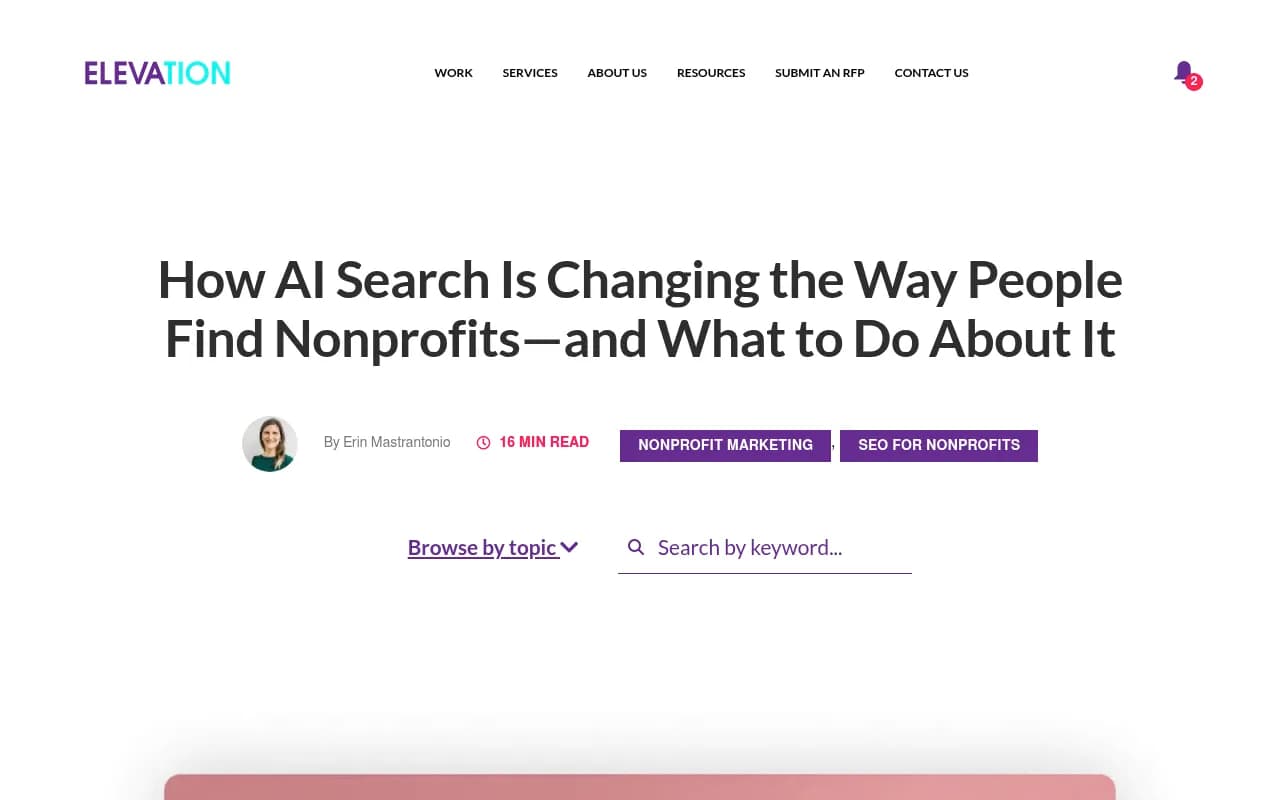
For mission-driven organizations, this creates a specific kind of urgency. You're often competing against larger, better-funded organizations for the same donor attention. If a potential major donor asks an AI assistant which nonprofits to support in your space, and your organization doesn't appear, that's a missed opportunity that's hard to recover from.
The good news: most nonprofits haven't started tracking AI visibility yet. That means there's a real window to get ahead.
What GEO tools actually do (and what they don't)
Before comparing tools, it's worth being clear about what you're buying.
Most GEO and AI visibility tools fall into one of two categories:
Monitoring tools track how often your brand, organization, or cause gets mentioned in AI-generated responses. They run queries across ChatGPT, Perplexity, Google AI Overviews, and other models, then report back on citation rates, sentiment, and competitor comparisons. This is genuinely useful -- you can't improve what you can't measure.
Optimization platforms go further. They not only show you where you're invisible, but help you figure out why and what to do about it. They surface content gaps (topics AI models want to answer but can't find on your site), generate briefs or articles to fill those gaps, and track whether new content starts getting cited over time.
For nonprofits, the distinction matters because monitoring without action is just expensive anxiety. You need to know you're invisible AND have a path to fix it.
The tools: honest recommendations for nonprofits
Promptwatch -- best for nonprofits that want to monitor AND fix
Promptwatch is the most complete end-to-end platform in this space. It tracks your organization's visibility across 10 AI models (ChatGPT, Perplexity, Google AI Overviews, Claude, Gemini, Grok, DeepSeek, Meta AI, Copilot, Mistral), shows you exactly which prompts competitors appear for that you don't, and then helps you create content to close those gaps.

For a nonprofit, the Answer Gap Analysis feature is particularly useful. It shows you the specific questions AI models are being asked about your cause area -- "best nonprofits for refugee resettlement," "how to donate to climate organizations," "which food banks accept volunteer groups" -- and which of those your site currently answers. The Content Agents can then generate articles, FAQs, and comparison pieces grounded in real prompt data.
The AI Crawler Logs are something most tools don't offer at all: real-time visibility into when AI crawlers like GPTBot visit your site, which pages they read, and whether those pages are getting cited. For a nonprofit trying to understand why certain program pages aren't being surfaced, this is invaluable.
Pricing starts at $99/month (Essential), with the Professional plan at $249/month adding crawler logs and more prompts. Not free, but genuinely the most actionable option for organizations that want results, not just reports.
Otterly.AI -- good starting point for smaller nonprofits
Otterly.AI is one of the more approachable monitoring tools on the market. It tracks brand mentions across ChatGPT, Perplexity, and Google AI Overviews, and the interface is clean enough that a non-technical communications manager can use it without much training.
Otterly.AI

The limitation is that it's monitoring-only. You'll see where you're not showing up, but Otterly won't tell you what to do about it. For a small nonprofit with a part-time digital team, that might be fine -- getting visibility data is the first step, and you can act on it manually. But if you want a tool that helps you close the gap, you'll need something more.
Peec AI -- solid mid-tier monitoring with decent competitor tracking
Peec AI sits in a similar space to Otterly but with slightly stronger competitor benchmarking features. You can set up prompts relevant to your cause area and see how your organization stacks up against peer organizations or larger nonprofits in the same space.

For nonprofits that want to benchmark against similar organizations -- say, comparing your visibility to five other environmental nonprofits -- Peec AI's reporting makes that reasonably straightforward. It doesn't generate content or provide optimization guidance, but the monitoring data is solid.
ZipTie -- deeper analysis for data-focused teams
ZipTie positions itself as a deeper analysis platform. It goes beyond simple citation counts to give you more granular data about how AI models are describing your organization, what context they're placing you in, and how responses vary across models.
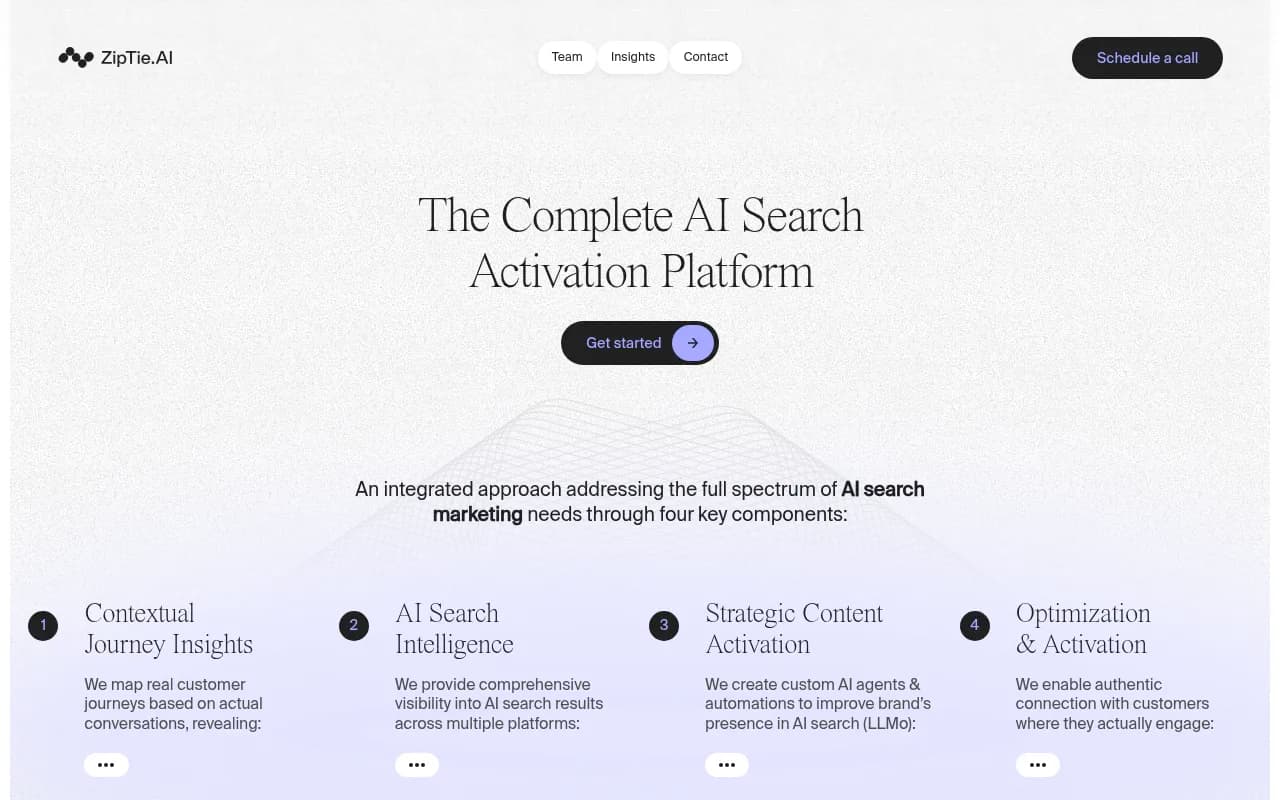
For a nonprofit communications team that wants to understand not just "are we mentioned?" but "how are we being described?", ZipTie offers more nuance. Sentiment and framing matter for mission-driven organizations -- you want to know if AI models are accurately representing your work, not just that they're mentioning your name.
Profound -- enterprise-grade, worth knowing about
Profound is one of the stronger enterprise monitoring platforms. It covers 9+ AI search engines with deep reporting and compliance features. The research data from Frase's 2026 comparison rates it as the strongest dedicated monitor for enterprise teams.
Profound

For most nonprofits, Profound will be overkill and overpriced. But if you're a large national organization with a dedicated digital team and complex reporting needs -- think Red Cross, UNICEF, or a major university foundation -- Profound's depth is worth the investment.
Semrush -- for nonprofits already invested in traditional SEO
If your organization is already using Semrush for traditional SEO, the AI Toolkit add-on is a reasonable way to extend into AI visibility monitoring without adopting an entirely new platform.
The honest caveat: Semrush's AI monitoring uses fixed prompts rather than the dynamic, real-user-facing query tracking that purpose-built GEO tools offer. It's better than nothing, and the integration with your existing keyword and content data is convenient. But if AI visibility is a serious priority, you'll eventually want a dedicated tool alongside it.
Frase -- for nonprofits that want to write their way to visibility
Frase takes a different angle: it pairs AI visibility monitoring with content research and writing tools in one workflow. If your nonprofit has a content team that's already producing blog posts, program pages, and impact reports, Frase helps you align that content with what AI models are actually looking for.
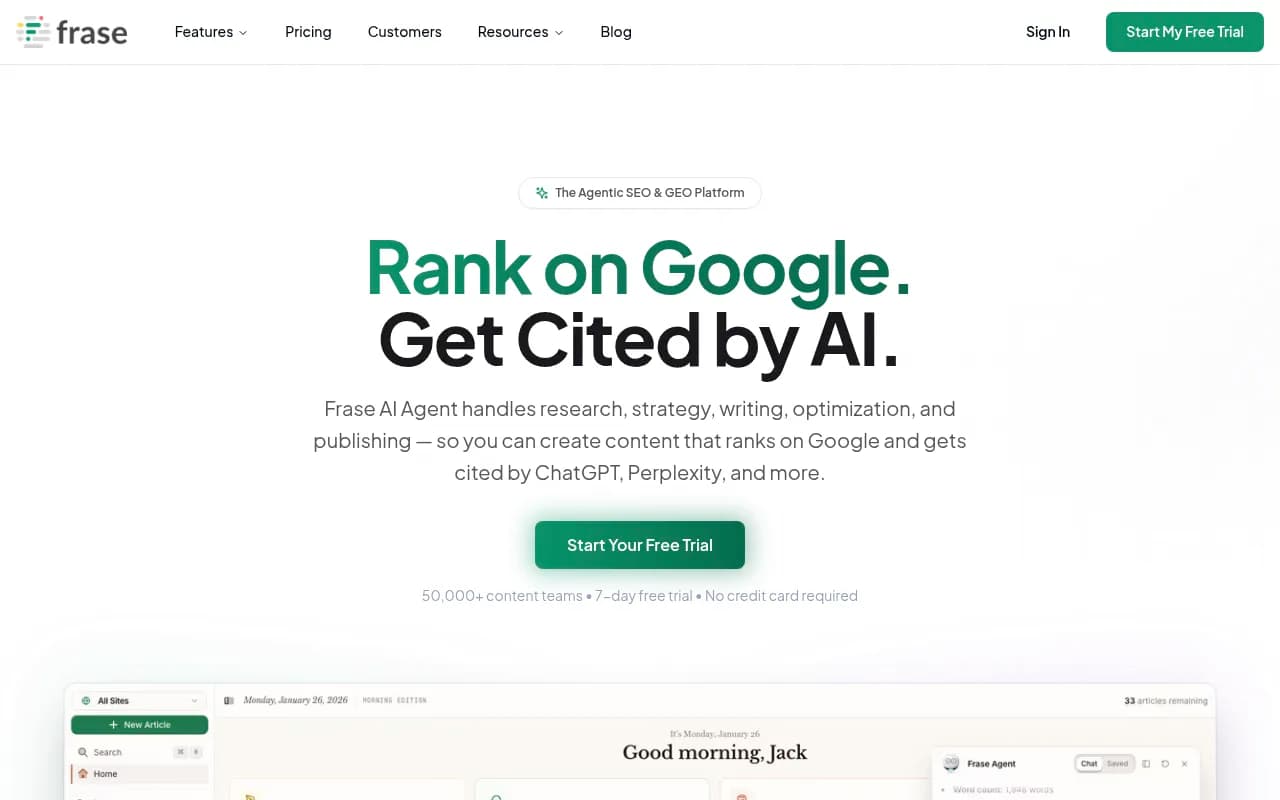
The monitor-and-fix workflow is genuinely useful for content-heavy organizations. You identify which AI-facing queries your content doesn't address, then use Frase's writing tools to create content that does. It's not as deep on the monitoring side as Promptwatch or Profound, but the content creation integration is strong.
Comparison table: GEO tools for nonprofits
| Tool | AI models covered | Monitoring depth | Content optimization | Crawler logs | Starting price | Best for |
|---|---|---|---|---|---|---|
| Promptwatch | 10 | Deep | Yes (AI content agents) | Yes | $99/mo | Nonprofits wanting full action loop |
| Otterly.AI | 3-4 | Basic | No | No | ~$49/mo | Small nonprofits, first-time tracking |
| Peec AI | 4-5 | Medium | No | No | ~$79/mo | Competitor benchmarking |
| ZipTie | 4-5 | Deep | No | No | Custom | Sentiment and framing analysis |
| Profound | 9+ | Very deep | Limited | No | $500+/mo | Large national organizations |
| Semrush AI Toolkit | 3-4 | Basic-medium | Limited | No | Add-on to Semrush | Teams already on Semrush |
| Frase | 3-4 | Basic | Yes (content writing) | No | $15/mo | Content-focused teams |
What nonprofits should actually track
Not all prompts are equal. Before you set up any tool, spend 30 minutes thinking about the specific questions your target audiences are asking AI assistants. These typically fall into a few categories:
Discovery prompts -- "Which nonprofits work on X?" or "Best organizations for Y cause." These are high-stakes because they directly influence donation and volunteering decisions.
Credibility prompts -- "Is [your organization] legitimate?" or "What does [your organization] do?" AI models often answer these from your About page, annual reports, and third-party coverage. If those sources are thin or outdated, your credibility framing suffers.
Action prompts -- "How can I volunteer for X?" or "Where should I donate to help with Y?" These are often where nonprofits lose out because their program pages don't clearly answer the question in a way AI models can parse.
Comparison prompts -- "What's the difference between [your org] and [competitor org]?" If you're not creating content that addresses these comparisons, AI models will construct their own answer from whatever they can find -- which may not favor you.
Start with 10-15 prompts that matter most to your mission, then expand from there. Most tools let you set up custom prompt monitoring, and this targeted approach will tell you more than tracking 200 generic queries.
Practical GEO tactics for nonprofits with limited budgets
Even before you invest in a paid tool, there are things you can do today:
Audit your existing content for AI-readability. AI models prefer content that directly answers questions. If your program pages are written in vague mission-speak ("we empower communities to thrive"), rewrite them to clearly state what you do, who you serve, and what outcomes you achieve. Specificity gets cited.
Claim your organization on third-party platforms. AI models pull from Charity Navigator, GuideStar/Candid, Wikipedia, and major news outlets. Make sure your profiles on these platforms are complete, accurate, and up to date. A thin Charity Navigator profile can hurt your AI visibility more than a thin website.
Create FAQ content. Structured Q&A content is disproportionately cited by AI models. A page that directly answers "How does [your org] use donations?" or "What percentage of funds go to programs?" is more likely to be surfaced than a general About page.
Get mentioned in credible external sources. AI models weight third-party citations heavily. Press coverage, guest posts on reputable sites, and mentions in sector publications all contribute to your AI visibility. This is the nonprofit equivalent of link-building, but for the AI era.
Monitor manually first. Before spending money on a tool, spend a week asking ChatGPT, Perplexity, and Google AI Overviews the prompts you care about. Screenshot the responses. This gives you a baseline and helps you understand what you're actually dealing with before committing to a platform.
The budget question: what can nonprofits actually afford?
This is real. Most nonprofits operate with tight marketing budgets, and a $500/month enterprise GEO platform isn't realistic for a 10-person organization.
Here's a practical tiered approach:
Under $100/month: Start with Otterly.AI or Peec AI for basic monitoring. Combine with manual prompt testing and content improvements based on what you find. This gets you visibility data without breaking the budget.
$100-$250/month: Promptwatch's Essential or Professional plan gives you the full action loop -- monitoring, gap analysis, and content generation -- at a price that's comparable to many email marketing tools nonprofits already pay for. The ROI case is straightforward: one major donor acquisition from improved AI visibility pays for years of the subscription.
$250+/month: If you're a larger organization with a dedicated digital team, Profound or a full Promptwatch Business plan gives you the depth and multi-site tracking you need.
One note: several of these tools offer nonprofit discounts if you ask. It's worth emailing their sales teams directly -- this is an underused tactic.
The bottom line
AI search is already changing how people find nonprofits. The organizations that figure this out in 2026 will have a real advantage in donor acquisition, volunteer recruitment, and public awareness over the next several years.
The tools exist. The tactics are learnable. The main thing standing between most nonprofits and better AI visibility is simply starting -- picking a tool, setting up 10-15 prompts, and seeing where you actually stand. That first audit is almost always surprising, and almost always motivating.
Start there.