Key takeaways
- AI search engines like ChatGPT, Perplexity, and Google AI Overviews now shape brand perception before traditional media coverage does -- PR teams need visibility into what these models say about their clients.
- GEO (Generative Engine Optimization) tools track how brands appear in AI-generated answers, which prompts trigger mentions, and which competitors are getting cited instead.
- The most useful tools for PR and comms go beyond simple monitoring -- they show you why a brand is or isn't being cited, and what content changes would fix it.
- Monitoring-only tools are fine for awareness, but teams that want to actually move the needle need platforms with content gap analysis and optimization capabilities.
- Promptwatch is the only platform rated as a "Leader" across all GEO categories in 2026, combining tracking, gap analysis, and AI content generation in one workflow.
Why PR teams need to care about AI visibility right now
Something changed in how brands get discovered, and it happened faster than most comms teams noticed.
When a journalist, analyst, or potential customer wants background on a company, they're increasingly asking ChatGPT or Perplexity before they open a browser tab. When a prospect is evaluating vendors, they're asking an AI assistant to compare options. When a crisis hits, the AI's summary of your brand is often the first thing stakeholders read.
Traditional media monitoring tools -- Meltwater, Brandwatch, Cision -- are built to track what journalists and social media users say. They're good at that. But they don't tell you what ChatGPT says when someone asks "what are the best [your category] companies?" or "is [your brand] trustworthy?" Those answers are being generated right now, and most PR teams have no idea what they contain.
That's the gap GEO tools fill. They query AI engines systematically, track how brands appear in responses, and in the better platforms, tell you what to do about it.
This guide covers the tools that matter most for PR and communications work specifically -- not just generic SEO use cases.
What to look for in a GEO tool for PR use cases
PR and comms teams have slightly different needs than SEO teams. Here's what actually matters:
Prompt coverage that matches real PR scenarios. You need to track prompts like "who are the leading companies in [space]," "what do people say about [brand]," and "compare [brand] vs [competitor]." Not just keyword rankings.
Sentiment and framing, not just mentions. Being mentioned isn't enough. Is the AI describing your brand positively? Is it repeating an old crisis narrative? Is it citing a competitor's press release instead of yours?
Multi-model coverage. ChatGPT and Perplexity behave differently. A brand might rank well in one and be invisible in another. You need visibility across all the major models your audiences use.
Citation source tracking. When AI engines do mention your brand, what are they citing? A competitor's comparison page? An old news article? A Reddit thread? Knowing the source tells you where to focus your content and earned media efforts.
Competitor benchmarking. In PR, you're always fighting for share of voice. The same logic applies in AI search -- you want to know if a competitor is being recommended instead of you, and why.
Content gap analysis. The best tools don't just show you the problem. They show you which topics and questions AI models want answered that your content doesn't cover.
The best GEO tools for PR and communications teams in 2026
Promptwatch -- best overall for end-to-end AI visibility
Promptwatch is the most complete platform in this space. It's used by 1,480+ brands and agencies, and it's the only tool in a 2026 comparison of 12 GEO platforms to be rated a "Leader" across every category.
What makes it relevant for PR specifically: it doesn't just tell you where you're invisible. It shows you exactly which prompts competitors are appearing in that you're not, then helps you create the content to close those gaps. For a comms team managing brand narrative, that's the difference between knowing you have a problem and being able to fix it.
The AI Crawler Logs feature is particularly useful for PR teams -- you can see which pages AI engines are actually reading when they generate responses about your brand. If they're pulling from an outdated press release or a negative review site instead of your owned content, you can see that and act on it.
It monitors 10 AI models including ChatGPT, Perplexity, Google AI Overviews, Claude, Gemini, Grok, and DeepSeek. Pricing starts at $99/month.

Profound -- best for enterprise PR teams
Profound is built for large organizations that need deep monitoring across AI platforms. It covers brand visibility, citations, and competitive intelligence at a level of depth that suits enterprise PR teams managing complex, multi-stakeholder narratives.
The tradeoff is price and complexity -- it's more than most mid-market comms teams need. But for a Fortune 500 brand managing reputation across multiple markets, Profound's enterprise-grade data is hard to argue with.
Profound

Otterly.AI -- best for quick daily monitoring
Otterly.AI is a clean, straightforward monitoring tool. You set up your brand and competitor prompts, and it tracks how you appear across ChatGPT, Perplexity, and Google AI Overviews. The interface is simple enough that a PR coordinator can use it without needing SEO expertise.
The limitation is that it stops at monitoring. There's no content gap analysis, no crawler logs, no content generation. It's a good starting point if you just need to know what AI engines are saying about your brand day to day.
Otterly.AI

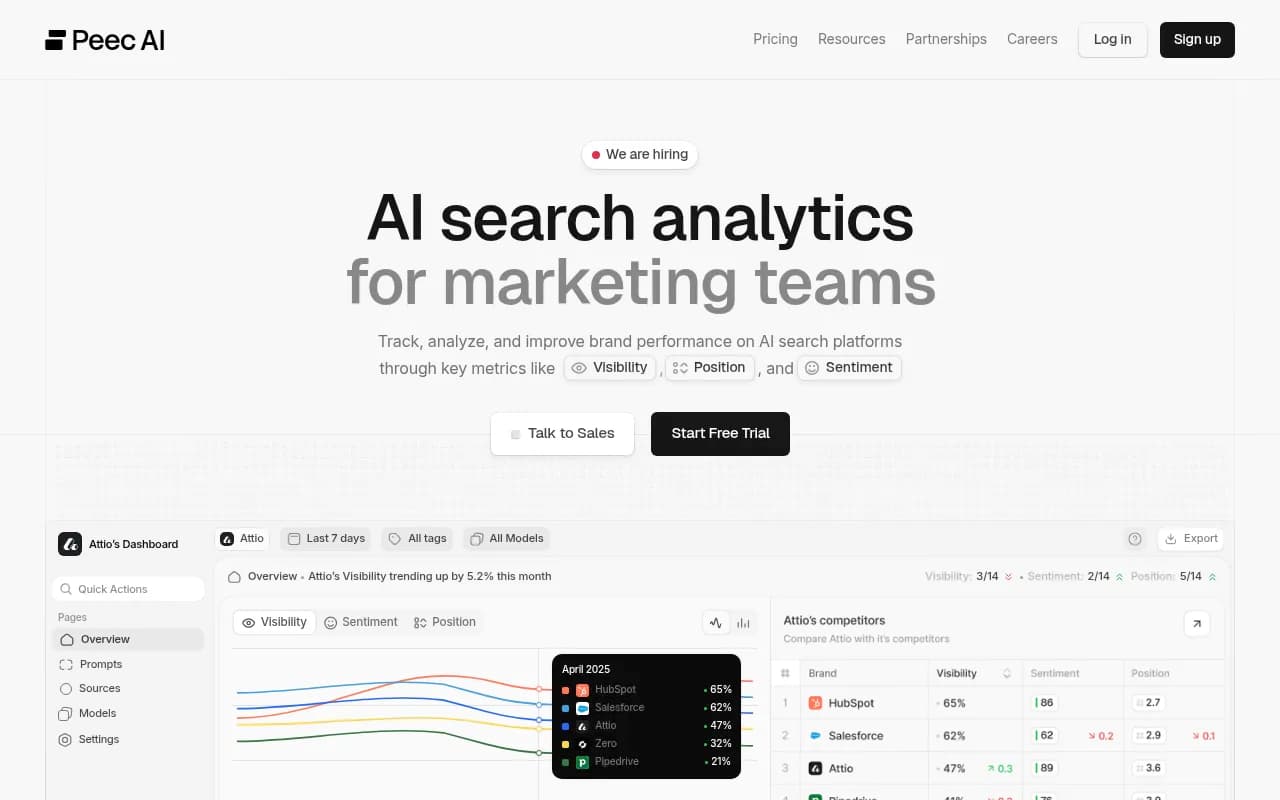
Peec AI -- best for competitive share-of-voice tracking
Peec AI is focused on brand and competitor tracking over time. For PR teams that care about share of voice -- specifically, whether your brand is gaining or losing ground against competitors in AI-generated answers -- Peec gives you a clear picture.
It tracks mentions, citations, and prompt performance across models. Less powerful than Promptwatch for optimization, but solid for the monitoring side.
Evertune -- best for Fortune 500 brand narrative management
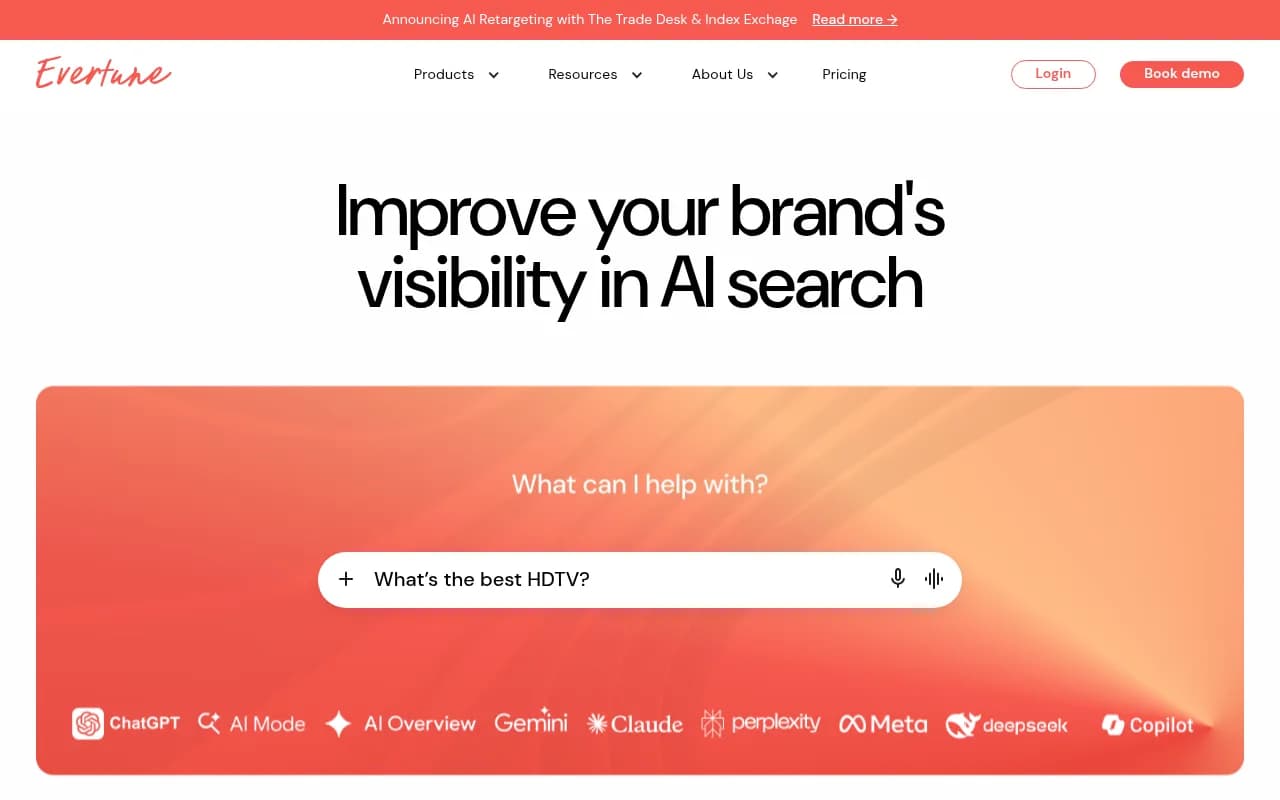
Evertune positions itself at the enterprise end of the market, with a focus on how AI models portray brands, not just whether they mention them. For PR teams managing complex brand narratives -- especially in regulated industries -- that distinction matters.
It's one of the few platforms that puts real emphasis on sentiment and framing within AI responses, which is exactly what comms teams need.
Meltwater -- best for integrating AI visibility with traditional media monitoring
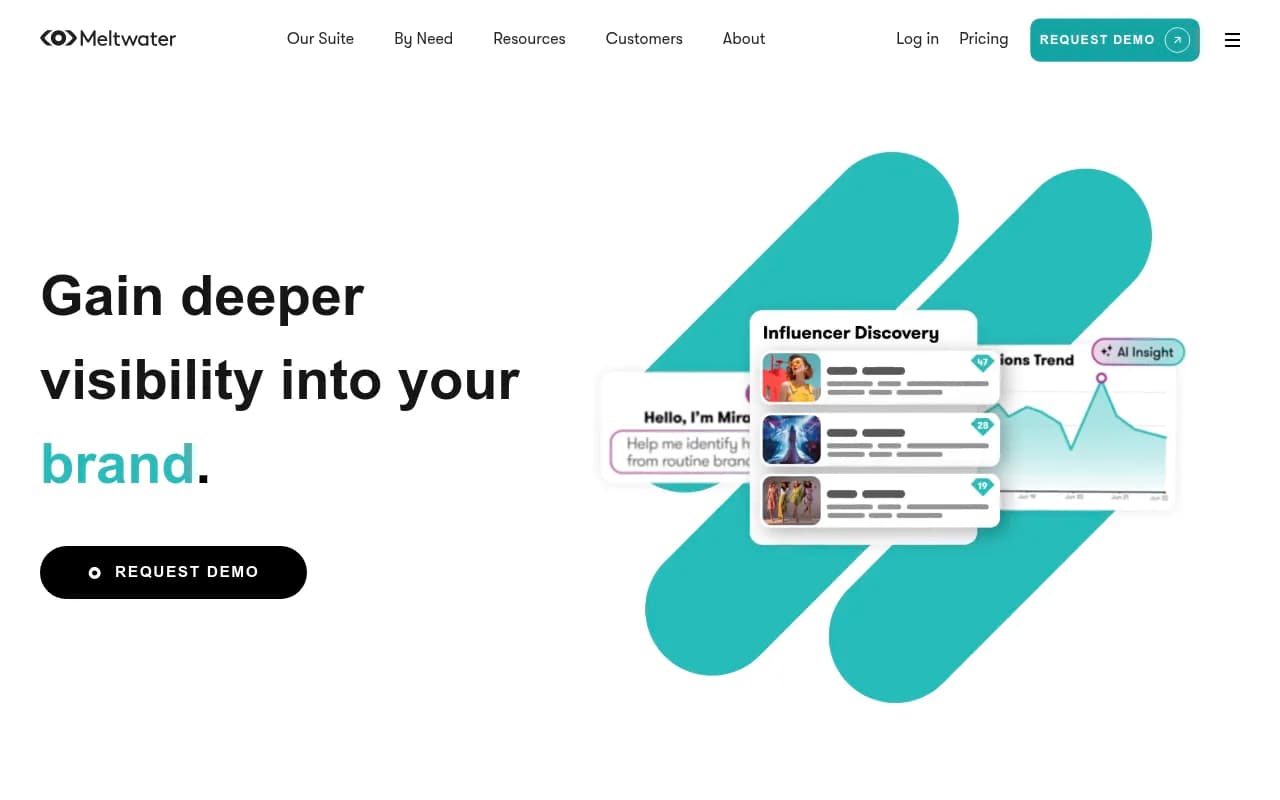
Meltwater is already in the stack for many PR teams. Its AI visibility features aren't as deep as dedicated GEO platforms, but if you're already using it for media monitoring and social listening, having AI mention tracking in the same dashboard has real workflow value.
It won't replace a dedicated GEO tool for teams that need to optimize their AI presence. But for teams that just want a first layer of AI awareness alongside their existing monitoring, it's a reasonable option.
Brand24 -- best for budget-conscious teams starting out
Brand24 has added AI mention tracking to its traditional brand monitoring capabilities. It's affordable, easy to set up, and covers the basics. For smaller PR teams or agencies that want to start tracking AI visibility without a big investment, it's a sensible entry point.
ZipTie -- best for deep citation analysis
ZipTie focuses specifically on AI citation monitoring -- tracking which sources AI engines are pulling from when they generate responses about your brand or industry. For PR teams, this is genuinely useful: if you can see that AI models are citing a competitor's blog post instead of your press release when answering a key question, you know exactly where to focus your content efforts.
Semrush -- best for teams that want AI visibility alongside traditional SEO
Semrush has been building out AI visibility features within its existing platform. For PR teams that already use Semrush for keyword research and competitor analysis, the AI tracking features add useful context without requiring a separate tool.
The limitation: Semrush uses fixed prompts rather than custom ones, which makes it less flexible for PR-specific scenarios. But as a supplementary layer for teams already in the Semrush ecosystem, it works.
CisionOne -- worth mentioning for PR-native workflows
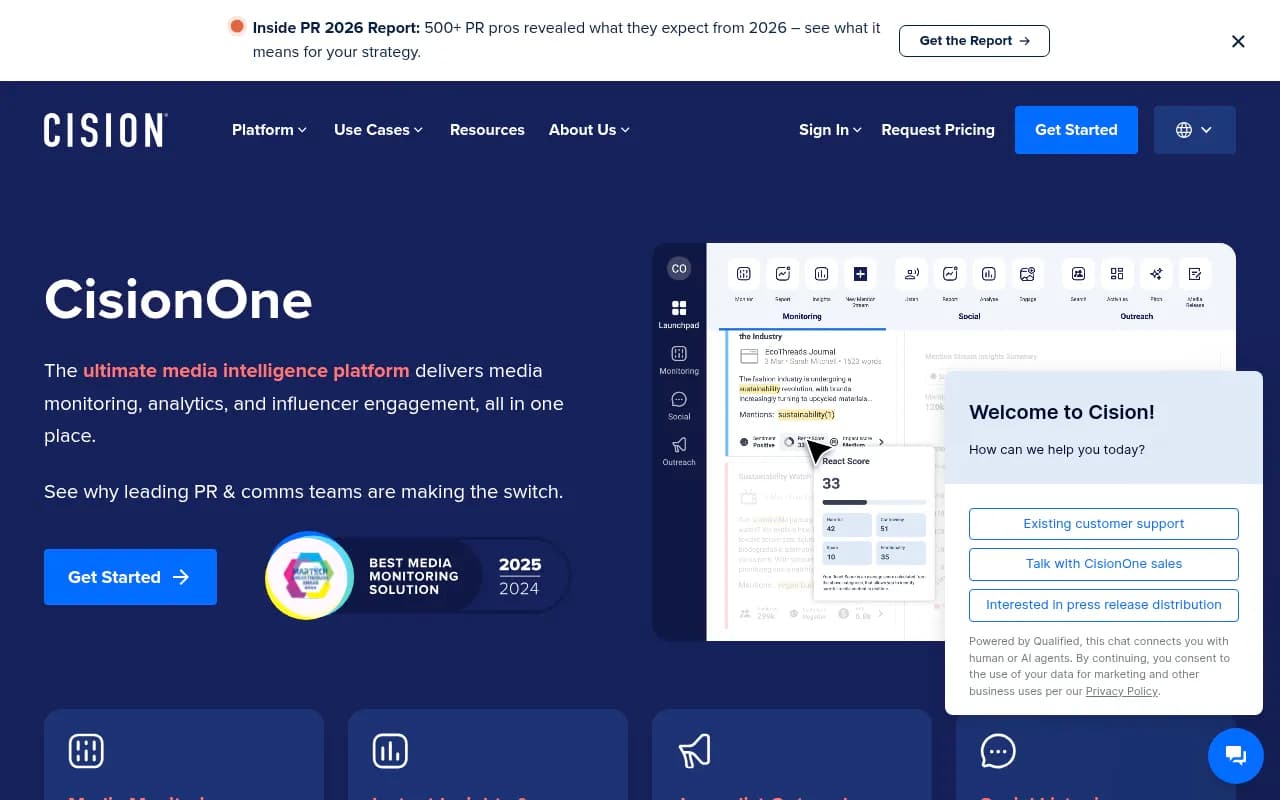
Cision isn't a GEO tool, but it's worth including because it's where most PR teams live. CisionOne is starting to incorporate AI visibility signals into its earned media platform. It won't give you the depth of a dedicated GEO tool, but it means AI visibility is increasingly visible within the PR workflow rather than requiring a separate login.
Tool comparison: GEO platforms for PR and comms teams
| Tool | AI models tracked | Content gap analysis | Citation source tracking | Content generation | Best for |
|---|---|---|---|---|---|
| Promptwatch | 10 | Yes | Yes | Yes | End-to-end optimization |
| Profound | 9+ | Limited | Yes | No | Enterprise monitoring |
| Otterly.AI | 3 | No | No | No | Simple daily monitoring |
| Peec AI | Multiple | No | Limited | No | Competitive share of voice |
| Evertune | Multiple | Limited | Yes | No | Brand narrative management |
| ZipTie | Multiple | No | Yes | No | Citation deep dives |
| Meltwater | Limited | No | No | No | Integrated media monitoring |
| Brand24 | Limited | No | No | No | Budget monitoring |
| Semrush | Fixed prompts | No | No | No | SEO + AI combo |
How to actually use these tools in a PR workflow
Knowing which tools exist is one thing. Knowing how to work them into a real comms workflow is another. Here's how the best PR teams are using GEO tools in practice.
Start with a brand audit
Before you can improve anything, you need a baseline. Run your brand name through a GEO tool and see what AI engines actually say about you. Are you being mentioned at all? What's the framing? Which competitors are appearing in the same responses?
This is also useful for client onboarding if you're an agency. A GEO audit gives you concrete data to show a client where they stand in AI search -- often a more compelling conversation starter than traditional SEO metrics.
Map your key PR prompts
Think about the questions your target audiences are actually asking AI engines. Not keyword research -- actual questions. "Who are the most trusted [category] companies?" "What happened with [brand] and [issue]?" "Which [product type] does [AI engine] recommend?"
Build a prompt library around these questions and track them consistently. This is where tools like Promptwatch's Prompt Intelligence feature earn their keep -- you can see which prompts have the highest volume and which are winnable.
Track competitor citations
When a competitor appears in an AI response and you don't, the question isn't just "why them?" It's "what are they doing that I'm not?" Citation source analysis tells you whether they're winning because of a well-placed press release, a strong Wikipedia entry, a Reddit thread, or a piece of owned content.
That intelligence directly informs your earned media and content strategy. If AI engines are citing a competitor's industry report, you know what to publish next.
Connect AI visibility to crisis monitoring
This is underused. If your brand is involved in a controversy, AI engines will incorporate that into their responses -- sometimes for months after the news cycle has moved on. Traditional media monitoring will tell you when coverage dies down. GEO tools tell you whether the AI narrative has actually shifted.
For reputation management, that distinction is significant. A brand might have excellent recent press coverage but still be described negatively in AI responses because the models are weighting older content. You need to know that.
Use content gaps to brief your content team
The most actionable output from a GEO tool is a list of questions AI engines are being asked about your industry that your content doesn't answer. That's a direct brief for your content team -- or for AI content generation tools if you're moving fast.
Platforms like Promptwatch generate content briefs grounded in real prompt data, which means the output is actually calibrated to what AI engines want to cite, not just what sounds good.
What most PR teams get wrong about AI visibility
The biggest mistake is treating AI visibility as a monitoring problem rather than a content problem. You can track every AI mention in real time, but if your brand keeps getting overlooked, the fix isn't more monitoring -- it's better content that AI engines can actually find and cite.
The second mistake is focusing only on your brand name. AI engines don't just respond to direct brand queries. They respond to category questions, comparison questions, and problem-solution questions. If you're not visible in those, you're missing most of the opportunity.
The third mistake is treating all AI engines as equivalent. ChatGPT, Perplexity, and Google AI Overviews pull from different sources, weight content differently, and serve different user intents. A strategy that works for one won't automatically work for another.
The PR teams getting this right are the ones treating AI visibility as a core part of their measurement framework -- not an experiment, not a side project, but a tracked metric that sits alongside share of voice, sentiment scores, and media coverage volume.
Choosing the right tool for your team
If you're a large brand or agency that needs to actually move the needle -- not just observe it -- Promptwatch is the strongest option. The combination of monitoring, gap analysis, and content generation in one workflow is what separates it from the monitoring-only tools that dominate this space.
If you're just starting out and want to understand what AI engines are saying about your brand before committing to a full platform, Otterly.AI or Brand24 give you a low-cost entry point.
If you're an enterprise PR team managing complex narratives at scale, Profound or Evertune are worth evaluating alongside Promptwatch.
The one thing to avoid: picking a tool based on the prettiest dashboard and then using it only for monthly reports. The teams getting real value from GEO tools are the ones checking them weekly, building prompt libraries that reflect real audience behavior, and connecting the data directly to their content and earned media strategies.
AI search isn't coming. It's already here, and it's already shaping how your brand is perceived. The question is whether you're measuring it.