Key takeaways
- Profound is a solid enterprise AI visibility platform, but its pricing, limited content optimization features, and single-model starter tier push many teams to look elsewhere.
- Promptwatch is the strongest all-around alternative -- it goes beyond monitoring to help you find content gaps, generate AI-optimized content, and track results across 10+ AI models.
- Peec AI and Otterly.AI are good options for teams that primarily need prompt-level monitoring without the full optimization stack.
- AthenaHQ and Scrunch AI are worth considering for larger enterprise use cases, though both sit at higher price points.
- The core question when choosing: do you need a monitoring dashboard, or a platform that helps you actually improve your AI visibility?
Profound has built a real reputation in the AI visibility space. It was one of the earlier platforms to take AI search seriously as a distinct channel, and its enterprise-grade compliance story (SOC 2 Type II, HIPAA) still matters to certain buyers. But "one of the first" doesn't mean "best for everyone," and in 2026 the market has matured enough that teams have genuinely good alternatives to consider.
The most common complaints about Profound: it's expensive for what you get at lower tiers (the Starter plan only monitors ChatGPT), the platform is heavy and takes time to set up, and it doesn't help you do much with the data beyond looking at it. If your team wants to understand why you're invisible in AI answers and then actually fix it, Profound leaves you to figure that part out yourself.
This guide compares the best Profound alternatives in 2026 -- what each one does well, where it falls short, and which type of team it's best suited for.
Why teams look for Profound alternatives
Before getting into the tools, it's worth being specific about what drives people away from Profound:
- The Starter plan monitors only ChatGPT. If you want Perplexity, Google AI Overviews, or Claude, you're on a higher tier.
- Pricing is enterprise-oriented. Teams that don't need HIPAA compliance or SOC 2 are paying for features they'll never use.
- It's a monitoring platform. Profound tells you where you appear and where you don't. It doesn't help you create content that would make you appear more.
- The interface can feel heavy for smaller teams who just want to track a handful of prompts and act on the data.
None of this makes Profound a bad tool. But it does mean there's a real market for alternatives that are either more affordable, more actionable, or both.
The best Profound alternatives in 2026
1. Promptwatch -- best overall alternative
If the main thing you want from Profound is "understand my AI visibility and improve it," Promptwatch is the most complete answer on the market right now.
Most AI visibility tools -- including Profound -- are monitoring dashboards. They show you where you appear, where competitors appear, and how often. That's useful, but it stops short of helping you do anything about it. Promptwatch closes that loop.
The platform's Answer Gap Analysis shows you exactly which prompts your competitors are visible for that you're not -- not as a vague observation, but as a specific list of topics, questions, and angles that AI models want to answer but can't find on your site. From there, a built-in AI writing agent generates articles, listicles, and comparisons grounded in real citation data (880M+ citations analyzed). This isn't generic content -- it's built around what actually gets cited by ChatGPT, Claude, Perplexity, and other models.
Then you track the results. Page-level tracking shows which pages are being cited, how often, and by which AI models. Traffic attribution (via code snippet, GSC integration, or server log analysis) connects visibility gains to actual revenue.
A few things Promptwatch has that Profound doesn't: AI crawler logs (real-time logs of ChatGPT, Claude, and Perplexity crawling your site), Reddit and YouTube citation tracking, ChatGPT Shopping monitoring, and prompt volume and difficulty scores so you can prioritize which prompts are worth targeting.
It monitors 10 AI models: ChatGPT, Perplexity, Google AI Overviews, Google AI Mode, Claude, Gemini, Meta/Llama, DeepSeek, Grok, Mistral, and Copilot.
Pricing starts at $99/month for the Essential plan (1 site, 50 prompts, 5 articles). Professional is $249/month (2 sites, 150 prompts, 15 articles, crawler logs). Business is $579/month (5 sites, 350 prompts, 30 articles). A free trial is available.

2. Peec AI -- best for prompt-level analytics
Peec AI is a well-funded option (reportedly $29M raised) that focuses on prompt-level AI search analytics. Where Profound gives you a broad dashboard view of brand visibility, Peec AI goes deeper on individual prompts -- showing you which sources AI models cite for specific queries and helping you understand where to publish to get picked up.
It's a good fit for marketing teams that want to be methodical about which prompts they target and why. The agency workspace features also make it worth a look if you're managing multiple clients.
The main limitation: Peec AI is still primarily a monitoring and analytics tool. It doesn't generate content or provide the kind of gap analysis that tells you what to build next.

3. Otterly.AI -- best budget entry point
Otterly.AI starts at $29/month, which makes it one of the most accessible options in this space. It covers brand monitoring across ChatGPT, Perplexity, and Google AI Overviews, and has a Semrush integration that's useful if you're already in that ecosystem.
For teams that just want to know whether their brand is showing up in AI answers -- without needing deep analytics or content tools -- Otterly is a reasonable starting point. It's also worth noting that Otterly has a set of free GEO tools that let you test the waters before committing.
The trade-off is that Otterly is genuinely basic. No crawler logs, no content generation, no traffic attribution. It's a monitoring dashboard, and a lightweight one at that.
Otterly.AI

4. AthenaHQ -- best for enterprise GEO programs
AthenaHQ positions itself as a full GEO platform with AI visibility tracking, workflow automation, and revenue attribution. It's aimed squarely at enterprise teams running structured GEO programs, and it shows in the feature set.
Compared to Profound, AthenaHQ is more focused on the optimization side -- helping teams build and execute GEO strategies rather than just report on visibility. That said, it's primarily a monitoring and workflow tool rather than a content generation platform, so you'd still need to bring your own content creation process.
Pricing is enterprise-tier, and the platform requires more setup than lighter-weight alternatives.

5. Scrunch AI -- best for large enterprise teams
Scrunch AI is another enterprise-focused option, with a feature set that includes AI search visibility tracking across multiple models, competitive analysis, and reporting tools built for large organizations.
It's a credible alternative to Profound for teams that need enterprise-grade infrastructure and don't mind paying for it. Like most tools in this tier, it's strong on monitoring and reporting but doesn't offer the kind of content gap analysis or AI writing assistance that Promptwatch provides.

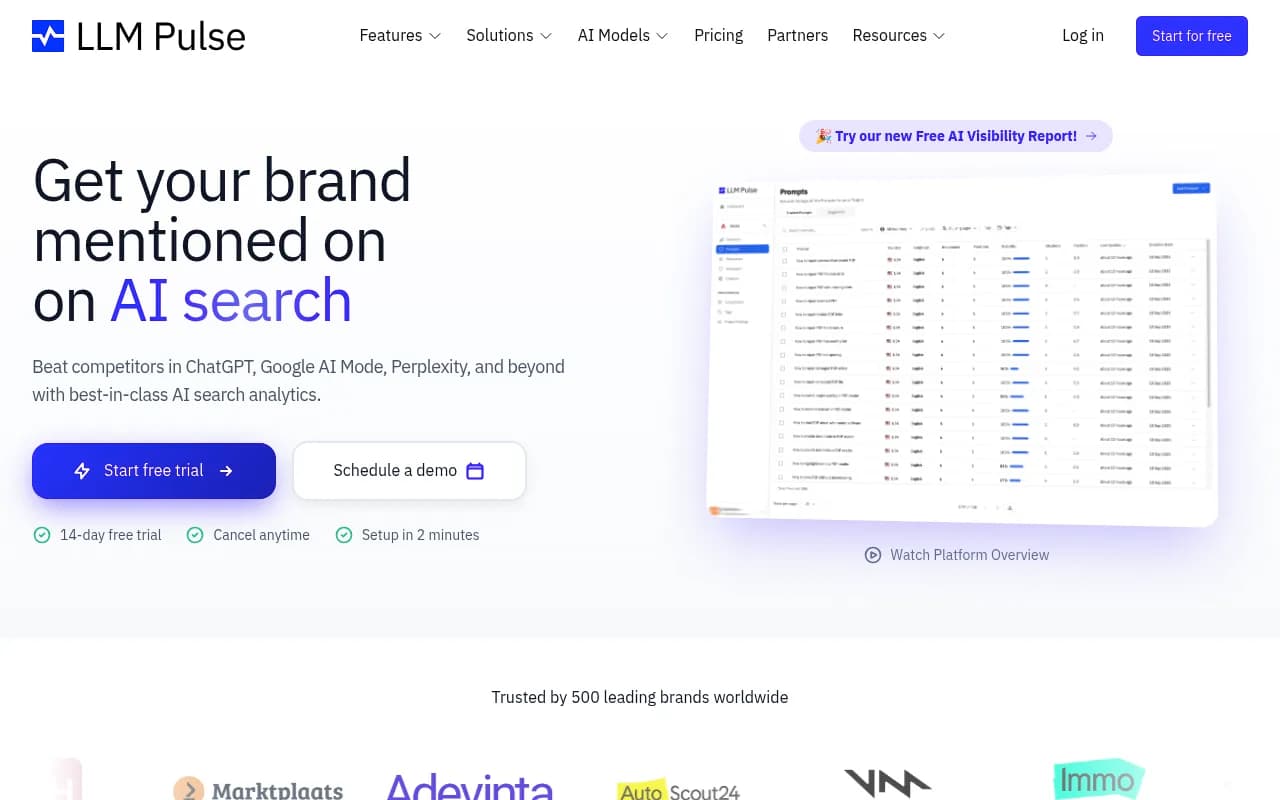
6. LLM Pulse -- best for price-per-prompt value
LLM Pulse is a bootstrapped platform that has carved out a niche by offering competitive pricing with unlimited seats -- a meaningful differentiator for agencies and larger teams that hit Profound's seat limits. It also includes brand sentiment analysis and app store tracking, which are genuinely useful features that most competitors don't offer.
Starting at €49/month, it's significantly cheaper than Profound for comparable prompt coverage. The trade-off is that it's a newer platform with a smaller track record, and the feature set is still maturing.
7. Nightwatch -- best for teams that want AI + traditional SEO in one place
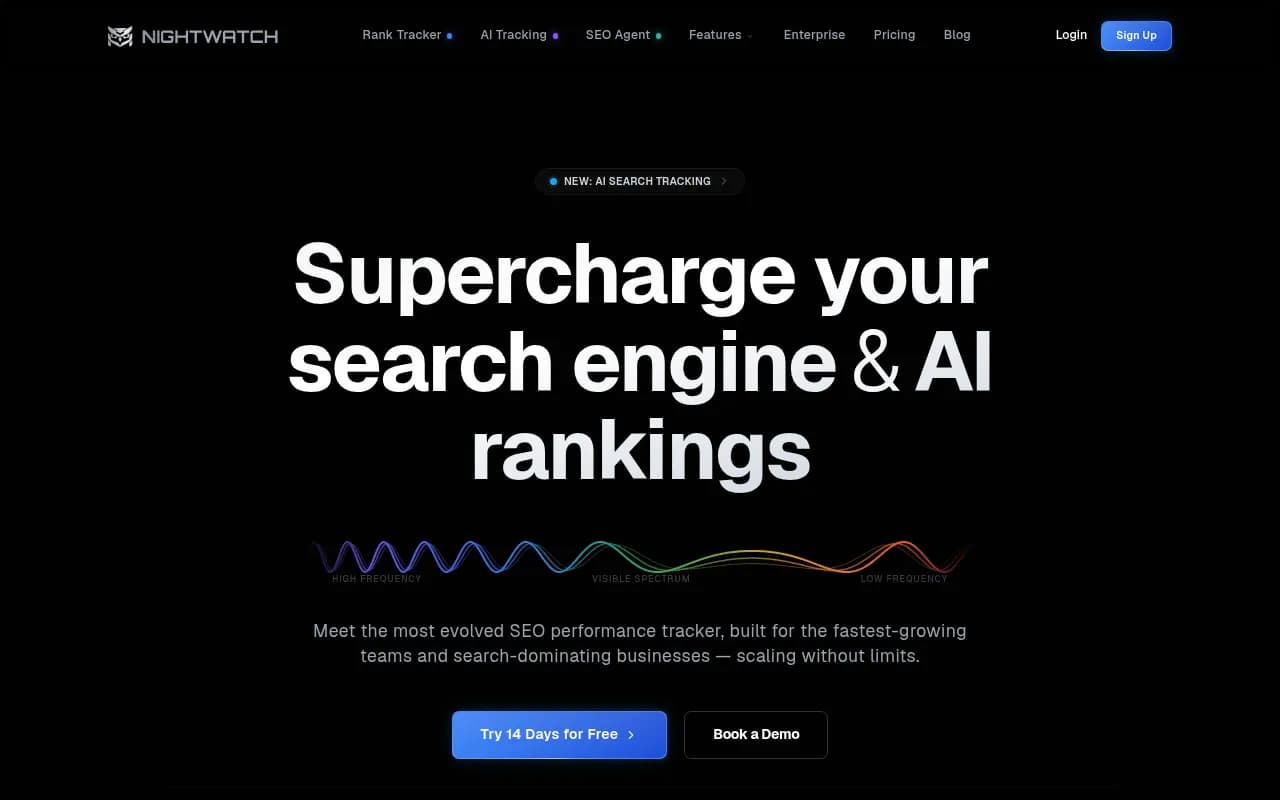
Nightwatch has expanded from traditional rank tracking into AI search monitoring, giving teams a single platform for both. If you're already using Nightwatch for SEO and want to add LLM monitoring without adopting an entirely new tool, this is a natural fit.
It covers LLM monitoring, search engine tracking, prompt research, and sentiment analysis. The pricing is accessible compared to Profound, and the interface is clean and familiar for anyone used to rank trackers.
8. SE Ranking -- best for SEO teams adding AI visibility
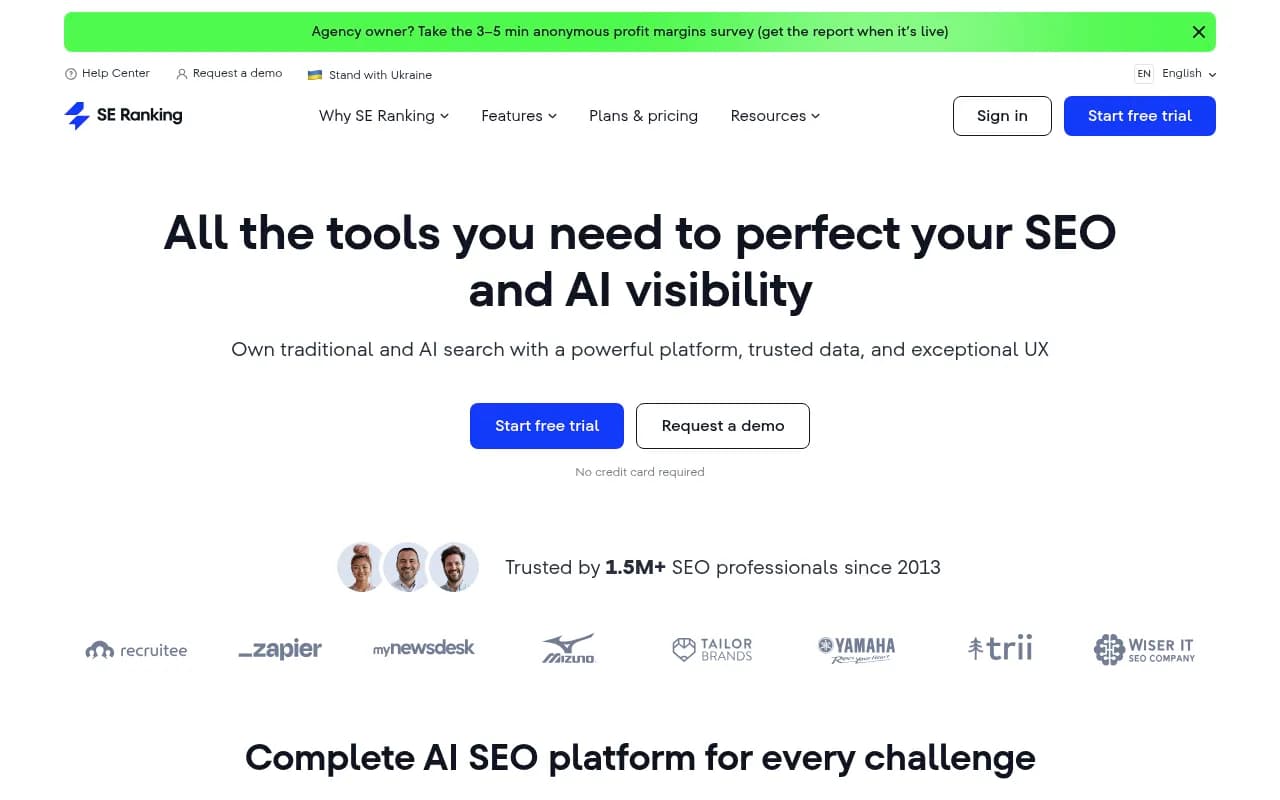
SE Ranking is a well-established SEO platform that has added AI Overviews tracking and AI search monitoring to its existing suite. For teams that want to manage traditional SEO and AI visibility from one place, it's a practical option.
It's not as deep on AI-specific features as dedicated GEO platforms, but the breadth of the platform (rank tracking, site audits, content tools, competitor analysis) makes it a strong value proposition for teams that don't want to manage multiple subscriptions.
9. ZipTie -- best for visual answer-level auditing
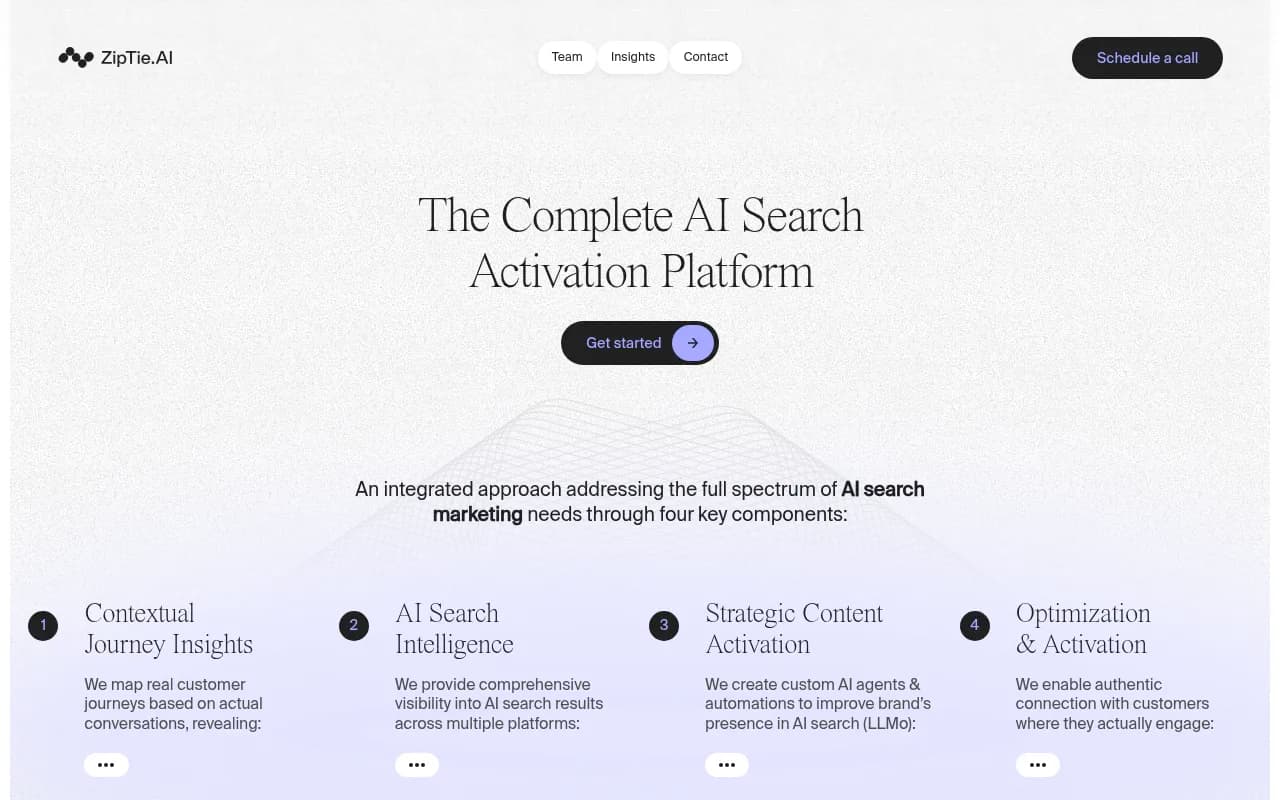
ZipTie takes a different approach to AI visibility -- it focuses on deep, visual auditing of AI-generated answers across AI Overviews, ChatGPT, and Perplexity. If you want to understand exactly what AI models are saying about your brand and why, ZipTie's answer-level analysis is genuinely useful.
It's more of a research and audit tool than an ongoing monitoring platform, which makes it a good complement to other tools rather than a standalone replacement for Profound.
10. Semrush -- best for teams already in the Semrush ecosystem
Semrush has added AI search tracking capabilities to its platform, including some AI Overviews monitoring. For teams already paying for Semrush, it's worth exploring what's available before adding a separate AI visibility subscription.
The honest caveat: Semrush's AI search features use fixed prompts and don't offer the depth of dedicated GEO platforms. It's a starting point, not a full solution.
Head-to-head comparison
| Tool | Starting price | AI models covered | Content generation | Crawler logs | Reddit/YouTube tracking | Best for |
|---|---|---|---|---|---|---|
| Promptwatch | $99/mo | 10 | Yes (built-in AI writer) | Yes | Yes | End-to-end AI visibility + optimization |
| Profound | $99/mo | 1 (Starter), 9+ (higher tiers) | No | No | No | Enterprise compliance + monitoring |
| Peec AI | €85/mo | 3 base | No | No | No | Prompt-level analytics |
| Otterly.AI | $29/mo | 4 base | No | No | No | Budget monitoring |
| AthenaHQ | Enterprise | Multiple | No | No | No | Enterprise GEO programs |
| Scrunch AI | Enterprise | Multiple | No | No | No | Large enterprise teams |
| LLM Pulse | €49/mo | 5 (10+ Enterprise) | No | No | No | Price-per-prompt value |
| Nightwatch | Accessible | Multiple | No | No | No | AI + traditional SEO combined |
| SE Ranking | Varies | Limited | No | No | No | SEO teams adding AI tracking |
| Semrush | Varies | Limited (fixed prompts) | No | No | No | Existing Semrush users |
How to choose the right tool
The most useful question to ask isn't "which tool has the most features?" It's "what do I actually need to do with this data?"
If you need to monitor AI visibility and report on it to stakeholders, most tools on this list will do the job. Profound, Peec AI, and AthenaHQ are all credible choices depending on your budget and company size.
If you need to improve your AI visibility -- not just measure it -- the options narrow quickly. Most platforms stop at monitoring. Promptwatch is the clearest choice if you want to close the loop between "we're invisible for this prompt" and "we now have content that gets cited."
If budget is the primary constraint, Otterly.AI at $29/month or LLM Pulse at €49/month give you basic monitoring without a large commitment.
If you're an agency managing multiple clients, look carefully at seat limits and workspace features. Profound's seat limits can become a real friction point. LLM Pulse's unlimited seats and Peec AI's agency workspaces are worth factoring in.
If you're already invested in a traditional SEO platform, check whether SE Ranking or Semrush covers enough of your AI visibility needs before adding a dedicated tool.
The bottom line
Profound is a legitimate platform, but it's built for a specific buyer: enterprise teams with compliance requirements and budget to match. For everyone else -- growth-stage companies, agencies, SEO teams, marketing teams trying to actually improve their AI visibility -- there are better-fitting options in 2026.
Promptwatch stands out because it's the only platform that treats AI visibility as something to be improved, not just measured. The combination of gap analysis, content generation, and result tracking makes it a different category of tool compared to monitoring dashboards. If you're evaluating Profound alternatives, that's the comparison worth spending time on.