Key takeaways
- Search Party is an AI automation consultancy, not a GEO/AEO tracking platform -- if you need to monitor and improve brand visibility in ChatGPT, Perplexity, or Google AI Overviews, you need a different tool entirely.
- Promptwatch is the only platform in this comparison rated as a "Leader" across all GEO categories -- it goes beyond monitoring to help you find content gaps, generate AI-optimized content, and track results.
- Most alternatives (Peec AI, AthenaHQ, Otterly.AI) are monitoring-only dashboards -- useful for tracking, but they won't help you fix what's broken.
- Profound and Scrunch AI have strong enterprise feature sets but come with higher price points and no built-in content generation.
- For agencies managing multiple clients, the combination of multi-site support, white-label reporting, and content generation tools matters more than raw prompt volume.
Why agencies are looking beyond Search Party
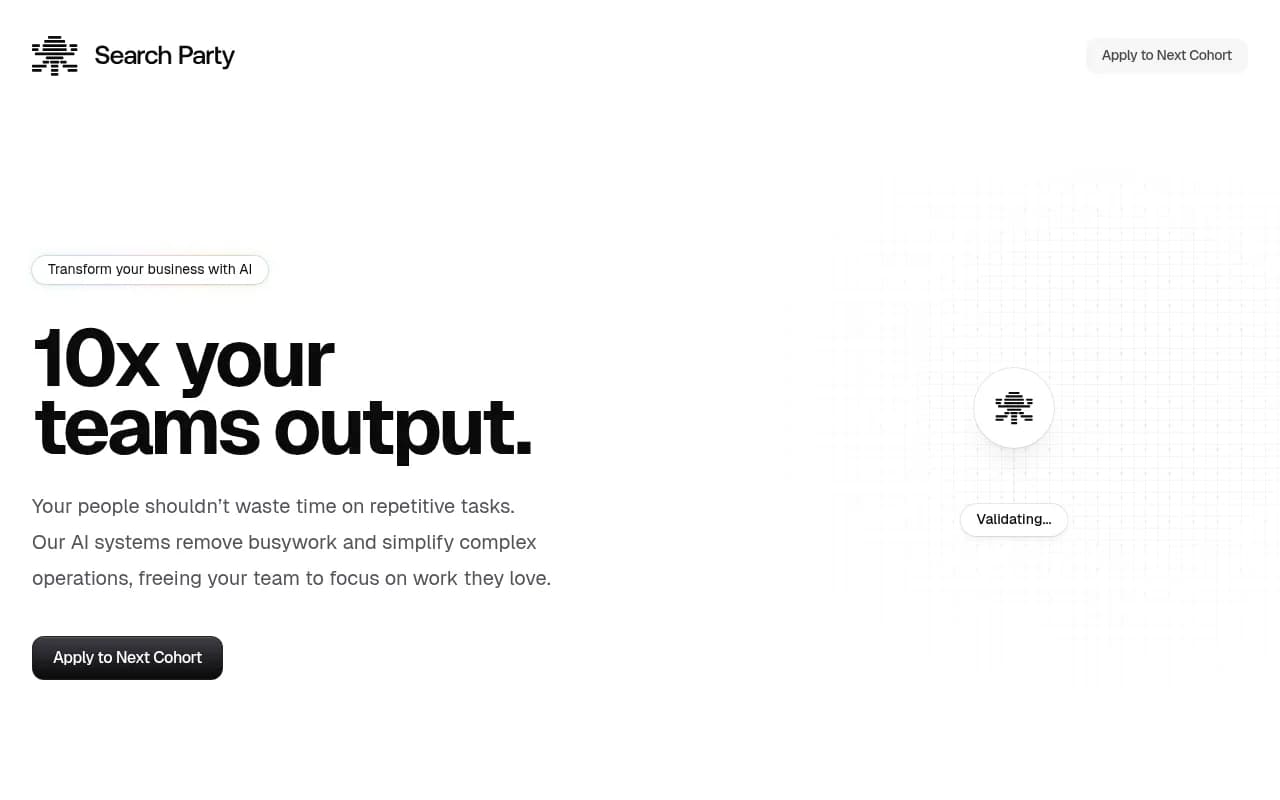
Search Party is an AI automation consultancy. It engineers custom workflows, eliminates manual busywork, and helps teams move faster with AI. That's genuinely useful -- but it's not what most agencies mean when they search for "GEO tools."
Generative Engine Optimization (GEO) is about making your clients' brands visible in AI-generated answers. When someone asks ChatGPT "what's the best project management tool for agencies?" you want your client to be cited. That requires tracking which prompts mention your client, understanding why competitors get cited instead, and creating content that AI models actually want to reference.
Search Party doesn't do any of that. So if you landed here looking for a GEO platform for agency work, here's what actually exists in 2026.
Search Party
The GEO platform landscape in 2026
The market has split into two camps. On one side: monitoring-only dashboards that show you visibility scores, citation counts, and competitor comparisons. On the other: optimization platforms that take you from "we're invisible" to "we're getting cited" with content gap analysis and AI content generation.
Most tools are in the first camp. Only a few have crossed into the second.
Here's a quick comparison before we go deeper:
| Platform | Starting price | AI models covered | Content generation | Crawler logs | Best for |
|---|---|---|---|---|---|
| Promptwatch | $99/mo | 10+ (ChatGPT, Claude, Perplexity, Gemini, Grok, DeepSeek, Copilot, Meta AI, and more) | Yes (built-in AI writer) | Yes | Agencies wanting full optimization loop |
| Profound | $99/mo | 1 on Starter, 10+ on Growth+ | No | No | Enterprise dashboards and compliance |
| Peec AI | $85/mo | 3 base + add-ons | No | No | Global brands, multilingual tracking |
| Scrunch AI | $250/mo | 4 on Core, 9+ on Enterprise | No (AXP in pilot) | No | Enterprise content audits |
| AthenaHQ | $295/mo | 8+ | No | No | Mid-market growth teams |
| Otterly.AI | $29/mo | ChatGPT, AI Overviews, AI Mode, Perplexity, Gemini, Copilot | No | No | SMBs on a budget |
| LLM Pulse | €49/mo | 5 (10+ Enterprise) | No | No | Teams wanting unlimited seats |
1. Promptwatch -- best overall for agency GEO
Promptwatch is the platform that agencies keep landing on once they realize monitoring alone doesn't move the needle. It's used by 6,700+ brands and agencies including Booking.com and Center Parcs, and in a 2026 comparison of 12 GEO platforms, it was the only tool rated as a "Leader" across every category.
The core difference from every other tool on this list: Promptwatch is built around an action loop, not just a dashboard.
It starts with Answer Gap Analysis -- you see exactly which prompts your competitors are getting cited for that you're not. Not vague "you're missing coverage in this topic cluster" suggestions, but specific prompts with volume estimates and difficulty scores. Then the built-in AI writing agent generates articles, listicles, and comparisons grounded in 880M+ real citations analyzed. This isn't generic SEO content -- it's engineered to get cited by ChatGPT, Claude, Perplexity, and others. Then you track results at the page level: which pages are being cited, how often, and by which models.
For agencies specifically, the multi-site support (up to 5 sites on Business, more on Agency/Enterprise), Looker Studio integration, and API access make client reporting manageable. The AI crawler logs feature is something most competitors lack entirely -- you see exactly which AI crawlers are hitting your clients' sites, which pages they're reading, and what errors they're encountering.
Pricing: Essential $99/mo (1 site, 50 prompts, 5 articles), Professional $249/mo (2 sites, 150 prompts, 15 articles, crawler logs), Business $579/mo (5 sites, 350 prompts, 30 articles). Agency and Enterprise plans available with custom pricing. Free trial available.

2. Profound -- best for enterprise dashboards
Profound has built a strong reputation in the enterprise segment. It won G2's Winter 2026 Leader badge and covers 10+ AI platforms on its Growth plan and above. The Conversation Explorer feature lets teams dig into how AI models are actually responding to prompts -- useful for understanding the "why" behind visibility scores.
Where it falls short for agencies: the Starter plan only covers ChatGPT, which limits usefulness for clients who care about Perplexity or Google AI Overviews. There's no built-in content generation, so you're still doing the optimization work manually. And the compliance features (SOC 2, HIPAA) that enterprise teams love add cost that smaller agencies don't need.
If you're running GEO for a healthcare or finance client with strict compliance requirements, Profound is worth a serious look. For most agency work, the monitoring-only approach means you'll need other tools to actually act on what you find.
Profound

3. Peec AI -- best for multilingual and global brands
Peec AI's standout feature is language coverage: 115+ languages with daily data refresh. If you're running GEO for clients with international audiences, that matters. The platform uses UI scraping rather than API calls, which means it captures what users actually see in AI interfaces rather than what the API returns -- a meaningful distinction for accuracy.
The base plan covers ChatGPT, Perplexity, and Google AI Overviews, with other platforms available as add-ons. That add-on structure can push costs up quickly if a client needs broad coverage. Like most tools in this category, Peec AI is monitoring-focused -- it shows you where you stand but doesn't help you improve.
Starting at $85/mo with a 14-day free trial.

4. Scrunch AI -- best for enterprise content audits
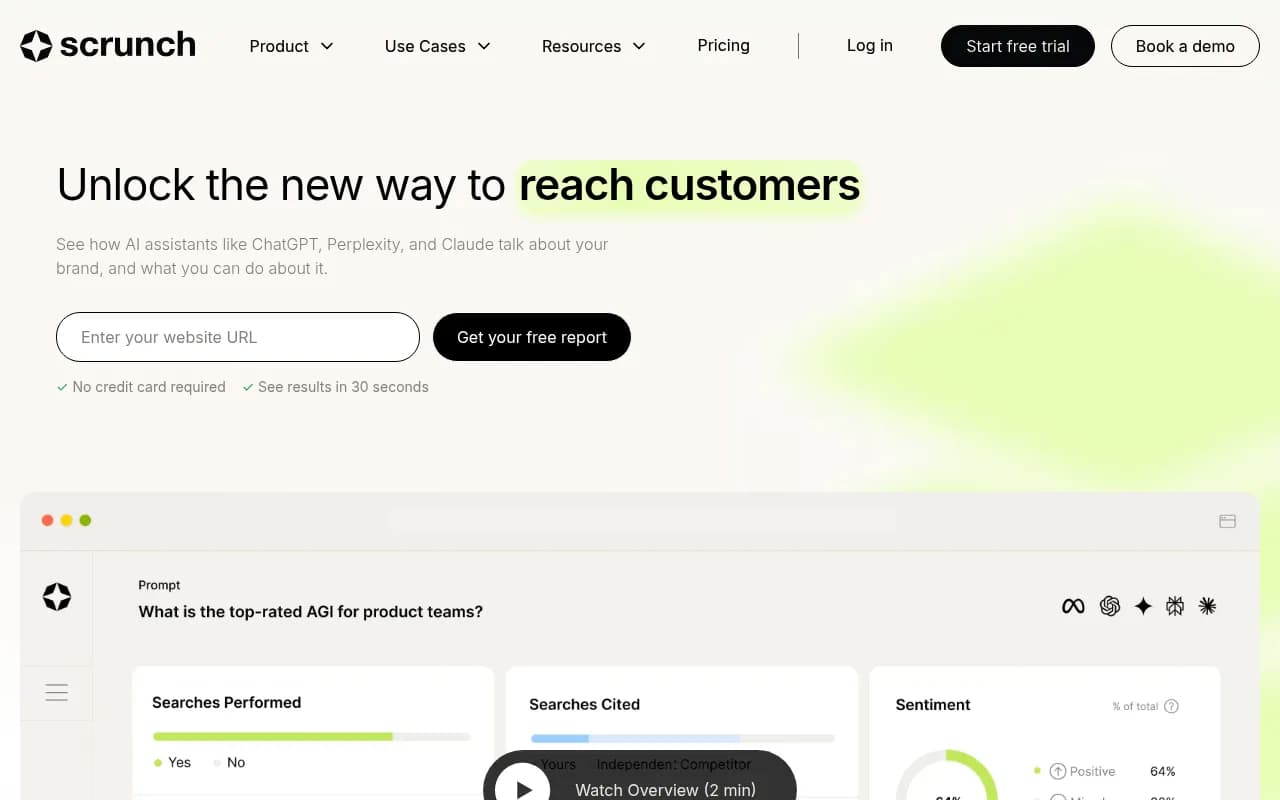
Scrunch AI positions itself as an "Agent Experience Platform" (AXP) -- the idea being that as AI agents increasingly make purchasing decisions on behalf of users, your brand needs to be optimized for agent discovery, not just human search. It's a compelling framing, though the AXP feature itself remains in limited pilot as of 2026.
What Scrunch does well today: broad AI coverage (9+ platforms on Enterprise), SOC 2 compliance, and content audit capabilities that help enterprise teams understand what's on their site and how AI models perceive it. The 3-day data refresh is slower than some competitors, and the starting price of $250/mo with no free trial makes it a hard sell for agencies doing initial client discovery.
The monitoring-only critique applies here too. Reviews consistently note that Scrunch identifies problems clearly but leaves the fixing to you.
5. AthenaHQ -- best for YC-backed growth teams
AthenaHQ is Y Combinator-backed and has documented case studies showing 10x citation growth for some clients. It covers 8+ AI platforms including ChatGPT, Perplexity, Google AI Overviews, AI Mode, Gemini, Claude, Copilot, and Grok. The interface is clean and the reporting is solid.
At $295/mo starting price, it's one of the more expensive monitoring-only options. There's no content generation, no crawler logs, and no Reddit or YouTube tracking. The 67% discount on the first month helps with initial evaluation, but the ongoing cost is high relative to what you get compared to Promptwatch at a similar price point.
For growth-stage companies with budget to spend and a team that can act on monitoring data independently, AthenaHQ is a reasonable choice. For agencies that need to show clients a clear path from "invisible" to "cited," the lack of optimization tools is a gap.

6. Otterly.AI -- best budget option
Otterly.AI starts at $29/mo and covers ChatGPT, Google AI Overviews, AI Mode, Perplexity, Gemini, and Copilot. It earned a Gartner Cool Vendor designation and has a 4.9/5 rating from users. For small agencies or freelancers doing initial GEO work for clients, it's a low-risk way to get started.
The limitations are predictable at this price point: no crawler logs, no visitor analytics, no content generation, and no Reddit or YouTube tracking. It's a monitoring dashboard, and a good one, but you'll hit its ceiling quickly if a client wants to move from tracking to improving.
Otterly.AI

7. LLM Pulse -- best for unlimited seats
LLM Pulse starts at €49/mo and includes unlimited seats, which makes it attractive for agencies with large teams where per-seat pricing would otherwise add up. It covers 5 AI models on the base plan (10+ on Enterprise) and includes brand sentiment tracking -- a feature some competitors charge extra for.
The trade-off: it's a newer platform with less data depth than Promptwatch or Profound, and like most options here, it's monitoring-focused without content generation capabilities.
8. Semrush -- best if you're already in the ecosystem
Semrush has added AI search tracking to its existing platform, which is convenient if you're already paying for traditional SEO features. The AI Toolkit covers some prompt monitoring and brand mention tracking in AI engines.
The honest assessment: Semrush's AI features use fixed prompts rather than custom prompt sets, which limits how precisely you can track what matters for a specific client. There's no AI traffic attribution, no crawler logs for AI bots, and the depth of AI-specific analysis is thinner than dedicated GEO platforms. It's a reasonable starting point if you're already a Semrush customer, but not a reason to choose Semrush over a dedicated tool.
9. Ahrefs -- best for traditional SEO teams adding GEO
Ahrefs Brand Radar gives traditional SEO teams a way to start tracking AI visibility without switching platforms. Similar caveats to Semrush apply: fixed prompts, no AI traffic attribution, and the GEO features are clearly secondary to the core SEO product.
If your agency's primary work is traditional SEO and you want to add basic AI visibility reporting to client dashboards, Ahrefs Brand Radar is a low-friction way to do it. If GEO is becoming a core service, you'll want a dedicated platform.
How to choose the right tool for your agency
The right choice depends on what you're actually trying to deliver for clients.
If you're selling GEO as a managed service -- where you're responsible for improving visibility, not just reporting on it -- you need a platform with content generation and gap analysis built in. Promptwatch is the only option in this comparison that covers the full loop: find gaps, create content, track results.
If you're selling GEO reporting as an add-on to existing SEO retainers, a monitoring-only tool might be sufficient. Otterly.AI at $29/mo or Peec AI at $85/mo can generate the visibility reports clients want without a large platform investment.
If you're working with enterprise clients who have compliance requirements, Profound (SOC 2, HIPAA) or Scrunch AI (SOC 2) are worth the premium.
If you're managing international clients with multilingual audiences, Peec AI's 115+ language support is hard to match.
A few practical questions to ask before committing to any platform:
- Does it cover the AI models your clients' customers actually use? (ChatGPT and Perplexity are table stakes; Google AI Overviews matters for most B2C clients)
- Can you track multiple client sites without paying per-seat fees that make the economics unworkable?
- Does it show you what to fix, or just what's broken?
- Is there a free trial, or are you committing thousands of dollars before you've seen the data?
The GEO market is moving fast. Tools that were monitoring-only six months ago are adding optimization features. But right now, in mid-2026, the gap between platforms that track and platforms that help you act is still significant -- and that gap is where most agencies either win or lose client renewals.
For agencies that want to own the full GEO workflow rather than just reporting on it, Promptwatch remains the clearest choice. For everything else, the comparison table above should point you in the right direction.