Key takeaways
- Most brands have no idea whether ChatGPT or Claude mentions them -- and the gap between visible and invisible brands is widening fast.
- There are two types of tools in this space: monitoring-only dashboards that show you data, and full optimization platforms that help you act on it.
- The most important features to look for are multi-model coverage, prompt customization, citation source analysis, and content gap identification.
- Tools like Promptwatch go beyond tracking to show you exactly which content is missing and help you create it.
- Budget matters: free and entry-level tools exist, but they tend to cover fewer models and lack the depth needed for competitive markets.
Why tracking AI brand mentions is no longer optional
Here's a scenario that's playing out for thousands of brands right now: a potential customer opens ChatGPT and types "what's the best project management tool for remote teams?" ChatGPT generates a confident, detailed answer. It mentions three or four tools. Yours isn't one of them.
That customer never visits your site. They never see your ads. They just... go with one of the tools the AI recommended.
This is the new reality of brand discovery. AI models -- ChatGPT, Claude, Perplexity, Google's AI Overviews, Gemini -- have become the first stop for millions of buying decisions. They synthesize information, make recommendations, and present answers without sending users anywhere. If you're not in those answers, you're invisible to a growing chunk of your market.
The discipline of understanding and improving this visibility has a name: Generative Engine Optimization (GEO). And the tools that make it possible are what this guide is about.
What these tools actually do
Before diving into specific tools, it helps to understand what you're actually buying. AI brand monitoring tools work by running queries (called "prompts") against AI models and recording what comes back. They track whether your brand appears, how often, what's said about you, and which sources the AI cites.
The better tools go further. They compare your visibility against competitors, identify prompts where rivals appear but you don't, analyze which web pages and sources AI models actually pull from, and -- in some cases -- help you create content designed to fill those gaps.
There's a meaningful split in the market:
Monitoring-only tools show you where you stand. They're useful for awareness but leave you figuring out what to do next on your own.
Optimization platforms close the loop. They identify gaps, help you create content to address them, and track whether that content improves your visibility over time.
Which type you need depends on your goals and resources. If you just want a dashboard to report on AI visibility to stakeholders, monitoring is fine. If you're trying to actually improve your position, you need the full loop.
The tools worth knowing about in 2026
Full optimization platforms
Promptwatch is the most complete platform in this category. It covers 10 AI models (ChatGPT, Claude, Perplexity, Gemini, Grok, DeepSeek, Copilot, Meta AI, Google AI Overviews, and Mistral), and its core differentiator is the action loop: find gaps, create content, track results.
The Answer Gap Analysis feature shows you exactly which prompts competitors rank for that you don't -- not as a vague insight, but as a specific list of content you're missing. The built-in AI writing agent then generates articles grounded in citation data from 880M+ analyzed citations. Page-level tracking shows which pages are being cited by which models, and traffic attribution connects AI visibility to actual revenue.
It also has AI Crawler Logs -- real-time logs of when ChatGPT, Claude, Perplexity, and others crawl your site, which pages they read, and what errors they hit. Most competitors don't have this at all.

Profound is a strong enterprise option with solid multi-model coverage and a clean interface. It's priced higher than Promptwatch and lacks some features like Reddit tracking and ChatGPT Shopping monitoring, but it's a credible choice for large teams with dedicated budgets.
Profound

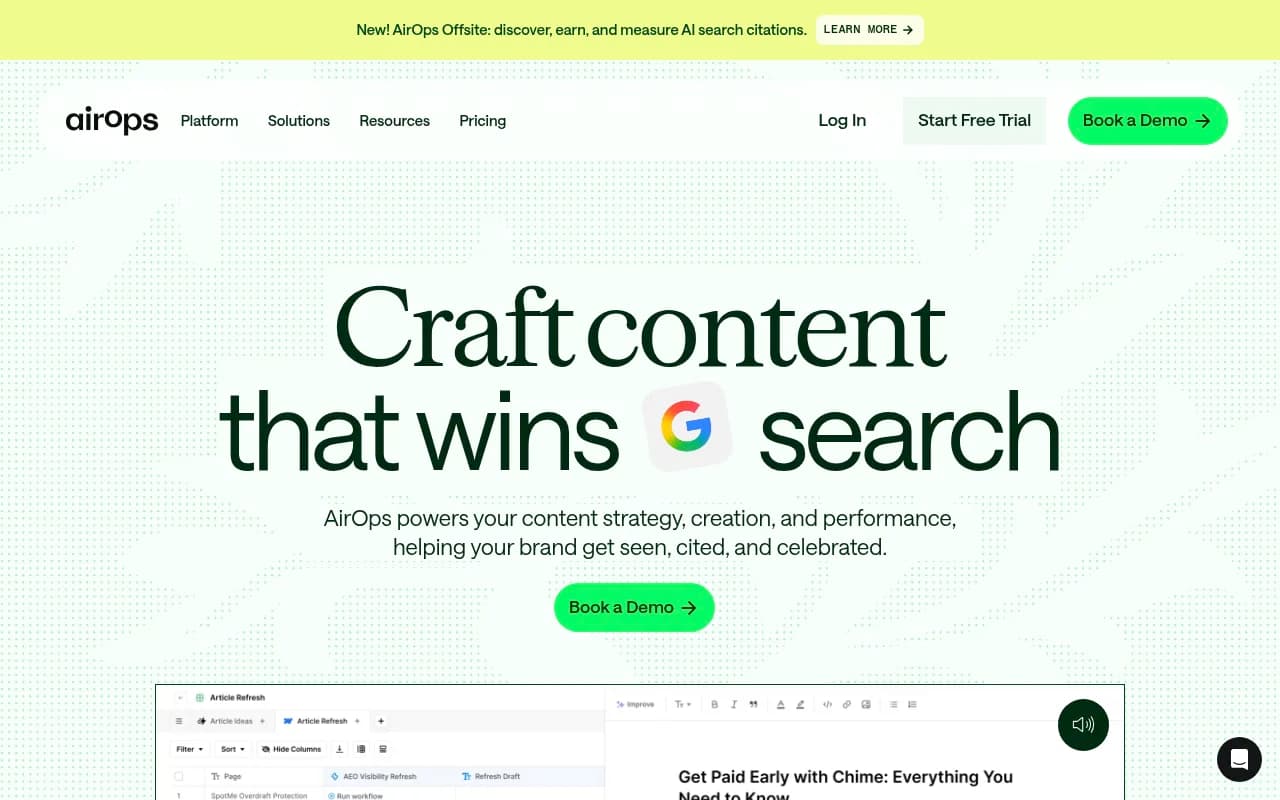
AirOps takes a content engineering angle -- it's built around creating content that ranks in AI search, with tracking layered on top. Good for teams that are already content-heavy and want AI visibility baked into their workflow.
Monitoring-focused tools
Otterly.AI is one of the more established names in this space. It tracks brand mentions across ChatGPT, Claude, Gemini, and Perplexity with a clean interface and a free tier that's genuinely useful for getting started. The limitation is that it stops at monitoring -- there's no content gap analysis or generation.
Otterly.AI

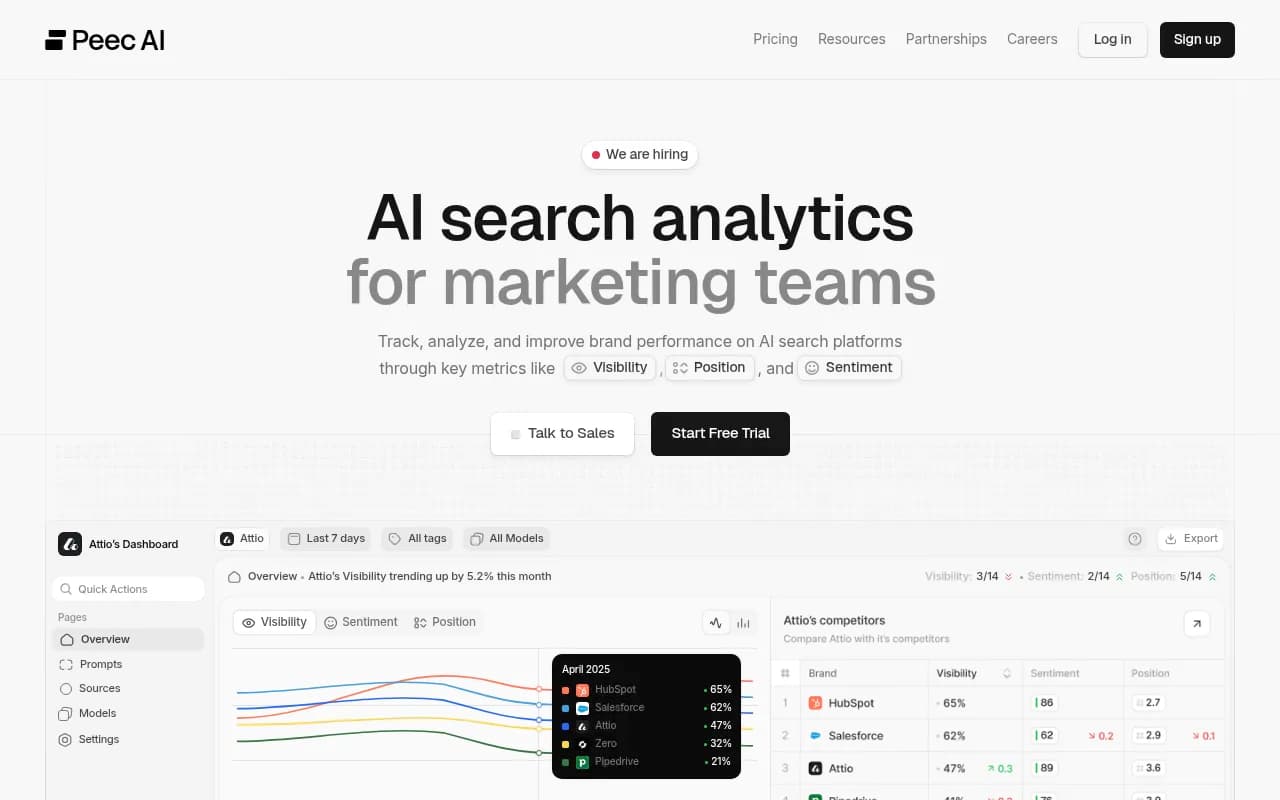
Peec AI covers the major models and is reasonably priced. It's a solid choice if you want straightforward visibility tracking without the complexity of a full optimization platform. Like Otterly, it doesn't help you fix what it finds.
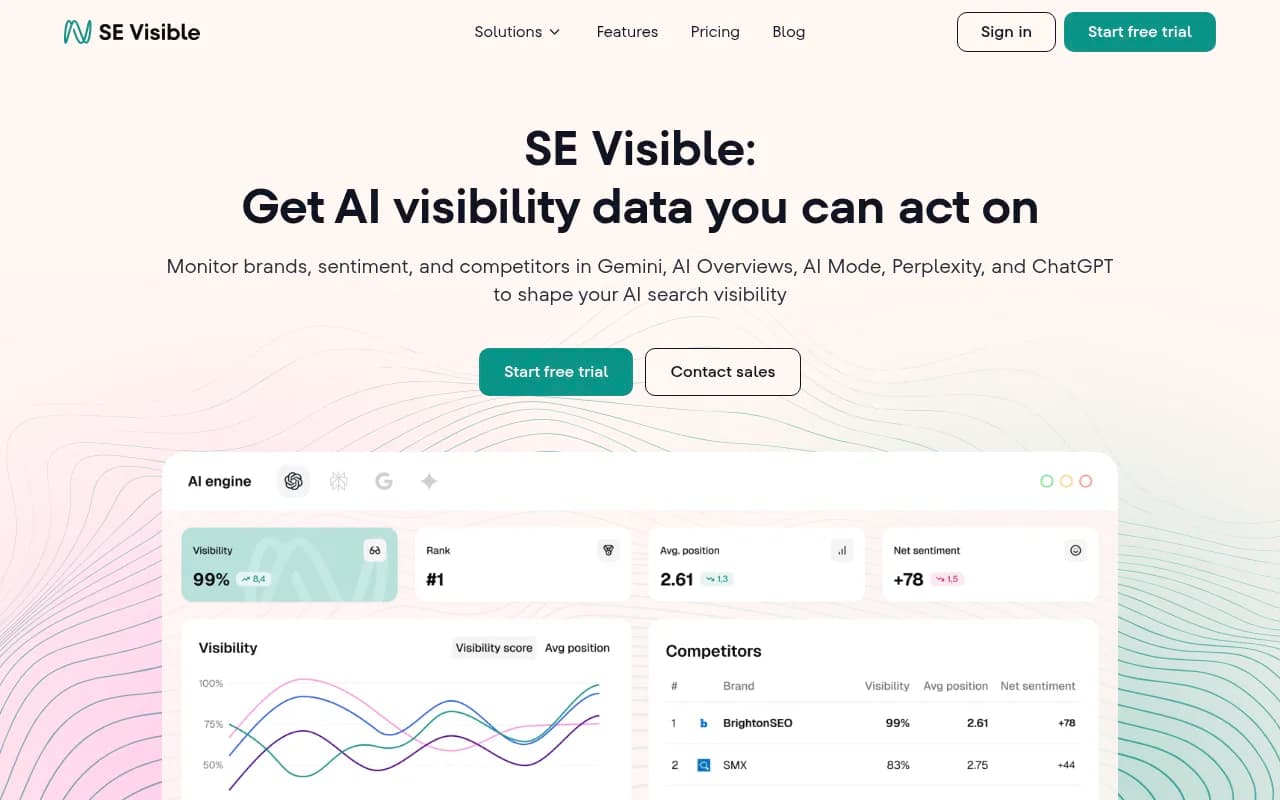
SE Visible (from SE Ranking) integrates AI visibility tracking into a broader SEO platform. If you're already using SE Ranking for traditional SEO, this is a natural add-on. The AI tracking is competent but not the deepest in the market.
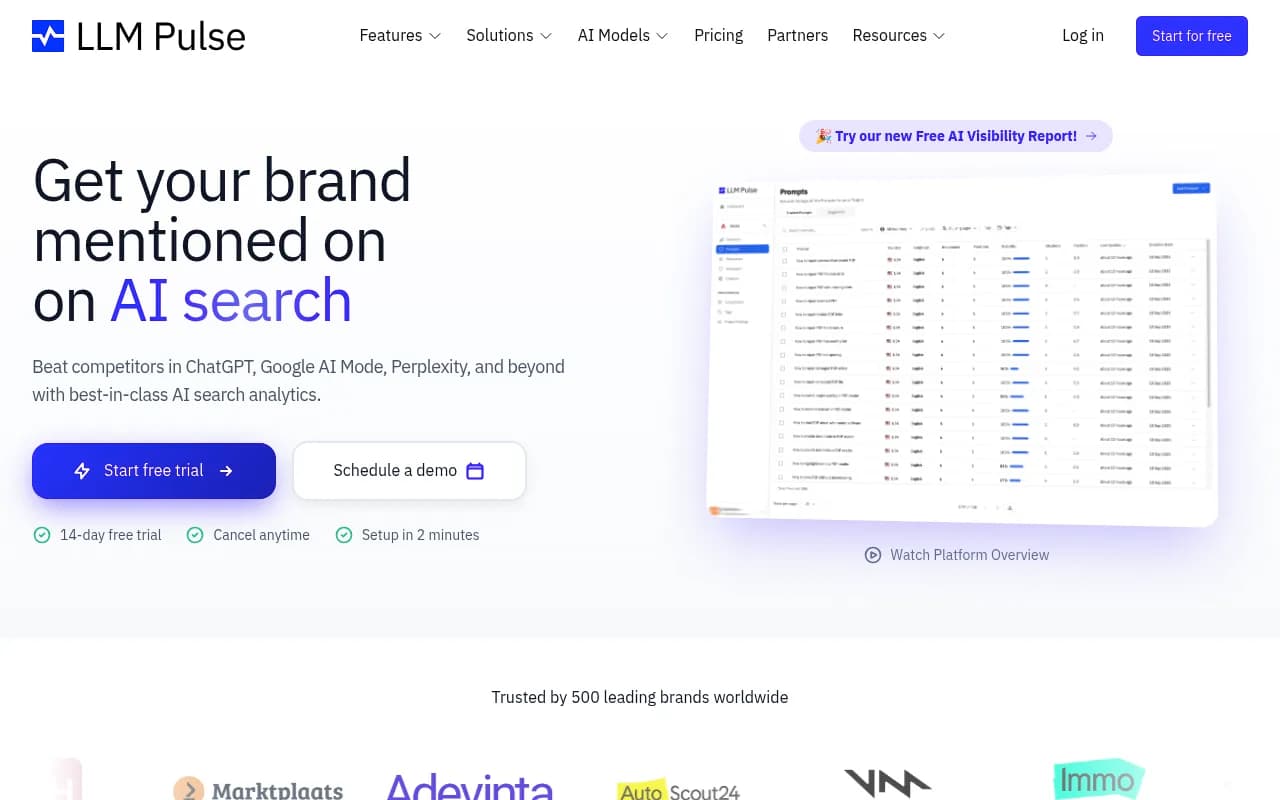
LLM Pulse is a focused tracker for ChatGPT, Perplexity, and a handful of other models. It's simpler than the enterprise options and works well for smaller teams or brands just getting started with AI visibility.
Rankshift covers ChatGPT, Perplexity, and AI search with a clean interface. Worth considering if you want a lightweight tool without a steep learning curve.

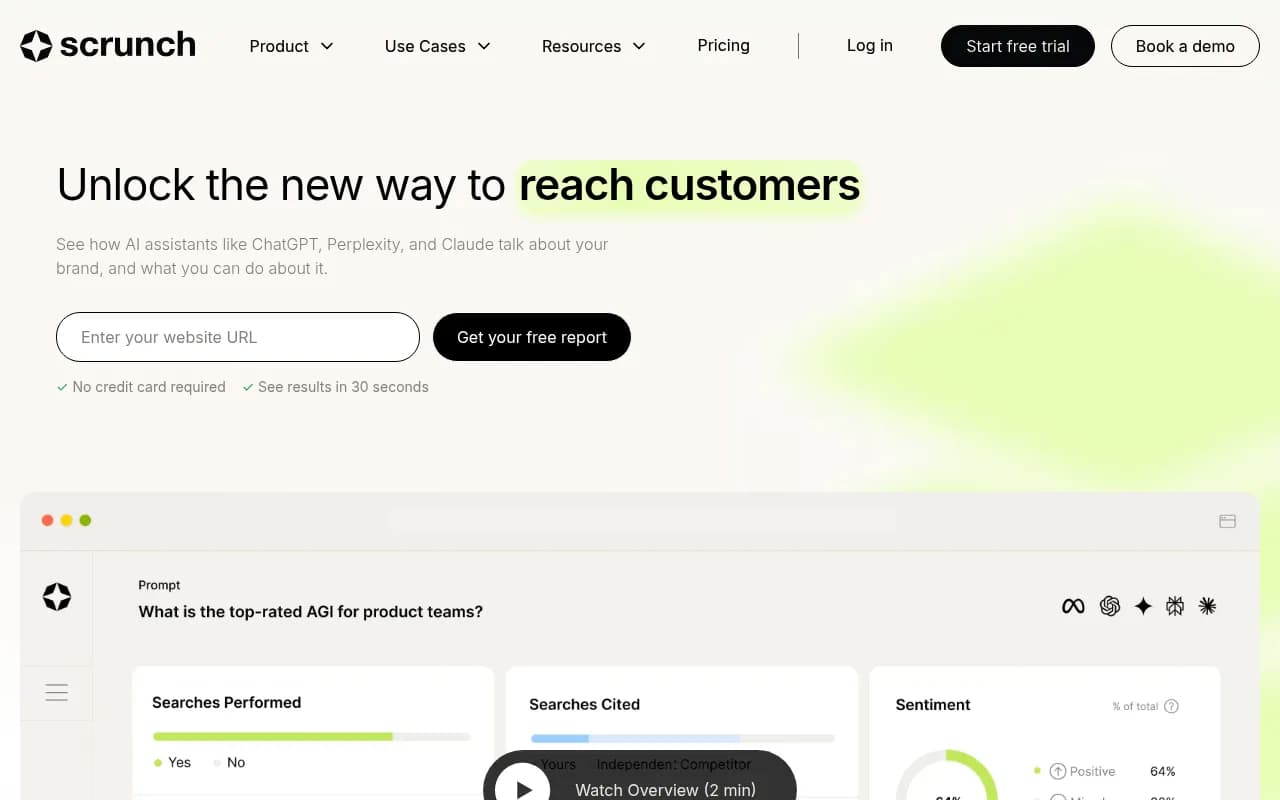
Scrunch AI offers AI search visibility tracking with a reasonable feature set. It's positioned toward agencies and teams managing multiple brands.
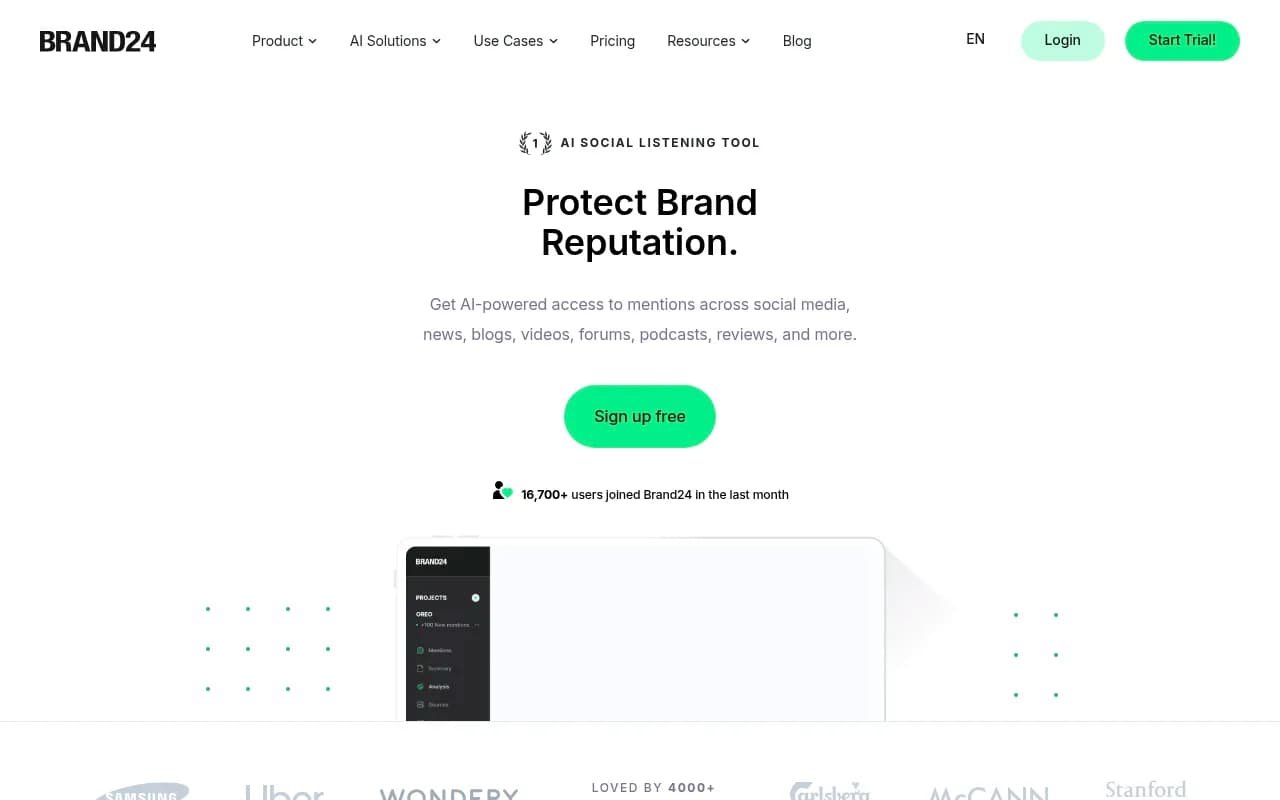
Brand24 has added AI brand visibility tracking to its existing social listening platform, covering seven AI models including ChatGPT, Gemini, Claude, and Perplexity. If you're already using Brand24 for social monitoring, the AI layer is a convenient addition. It's not as deep as dedicated GEO platforms, but the integration is useful.
AthenaHQ is monitoring-focused with a clean interface. It tracks visibility across the major models but doesn't offer content optimization or generation capabilities.

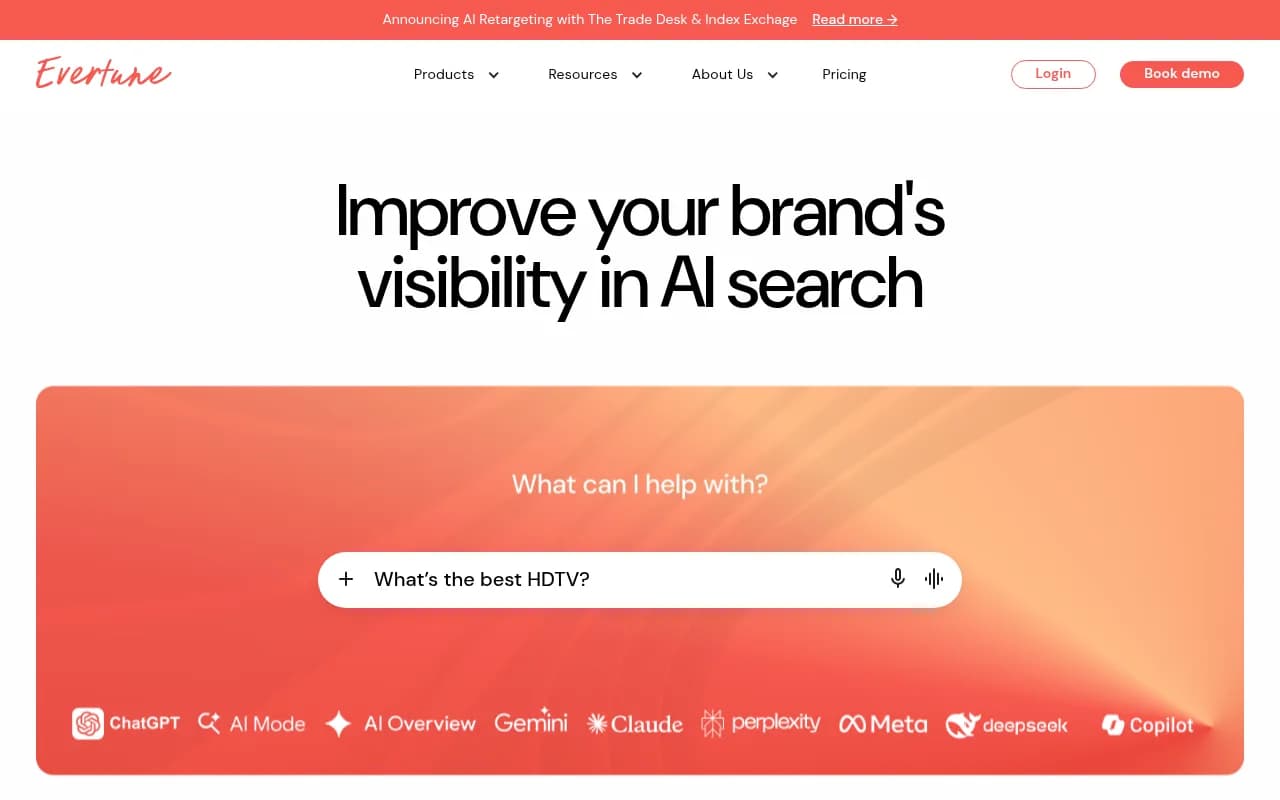
Evertune is positioned toward enterprise and Fortune 500 brands, with strong GEO insights and competitive analysis. Higher price point, but the data depth is there for large organizations.
Feature comparison table
| Tool | Models covered | Content generation | Citation analysis | Crawler logs | Reddit/YouTube tracking | Starting price |
|---|---|---|---|---|---|---|
| Promptwatch | 10 (incl. ChatGPT, Claude, Perplexity, Gemini, Grok, DeepSeek) | Yes (built-in AI writer) | Yes (880M+ citations) | Yes | Yes | $99/mo |
| Profound | 9+ | No | Yes | No | No | Higher |
| Otterly.AI | ChatGPT, Claude, Perplexity, Gemini | No | Limited | No | No | Free tier available |
| Peec AI | ChatGPT, Claude, Perplexity | No | No | No | No | Low |
| AirOps | Multiple | Yes (content focus) | Yes | No | No | Mid |
| SE Visible | ChatGPT, Perplexity, others | No | Limited | No | No | Bundled with SE Ranking |
| LLM Pulse | ChatGPT, Perplexity, others | No | No | No | No | Low |
| Brand24 | 7 models | No | No | No | Yes (social) | Mid |
| Evertune | Multiple | No | Yes | No | No | Enterprise |
| AthenaHQ | Multiple | No | No | No | No | Mid |
How to choose the right tool for your situation
You're just getting started
If you've never tracked AI visibility before and want to understand the basics before committing budget, start with a free tier. Otterly.AI has a usable free plan. Promptwatch offers a free trial. Run a few prompts relevant to your category, see where you stand, and use that data to justify further investment.
You're a marketing team at a mid-size company
You probably need more than basic monitoring. The key question is whether you have content resources to act on what you find. If you do, a platform with gap analysis and content generation (like Promptwatch) will give you a much faster path to improvement. If you're purely in reporting mode, a monitoring tool is fine for now -- but you'll eventually want to close the loop.
You're an agency managing multiple clients
Look for multi-site support, white-label options, and API access. Promptwatch's agency and enterprise tiers are built for this. Scrunch AI and Rankshift also have agency-oriented features. The ability to export data into Looker Studio or custom reports matters a lot when you're presenting to clients.
You're an enterprise brand
You need depth, reliability, and integration. Promptwatch (Business or Enterprise tier), Profound, and Evertune are the main contenders. Evaluate them on model coverage, data freshness, traffic attribution capabilities, and how well they integrate with your existing analytics stack.
What to actually look for when evaluating tools
Model coverage
The obvious one, but worth being specific about. ChatGPT and Claude are table stakes. Perplexity matters for research-oriented queries. Google AI Overviews and Google AI Mode are increasingly important for search traffic. Grok, DeepSeek, and Mistral are smaller but growing. The more models you cover, the more complete your picture.
Prompt customization
Generic prompts like "what is [brand]?" tell you almost nothing useful. You want to test the prompts your actual customers are asking -- "best [category] tool for [use case]", "compare [your brand] vs [competitor]", "how do I solve [problem]". Tools that let you define and organize custom prompts give you far more actionable data.
Citation and source analysis
When an AI model mentions your brand (or doesn't), it's pulling from somewhere. Knowing which pages, domains, Reddit threads, or YouTube videos are being cited tells you where to focus your optimization efforts. This is one of the most underrated features in the category.
Competitor benchmarking
Knowing your visibility score in isolation is less useful than knowing how you compare to the three competitors you actually care about. Look for tools that let you track competitor visibility alongside your own, ideally with heatmaps showing who's winning for each prompt.
Traffic attribution
This is where most tools fall short. Tracking AI visibility is one thing. Connecting it to actual website traffic and revenue is another. Tools that offer traffic attribution -- whether through a code snippet, Google Search Console integration, or server log analysis -- let you prove ROI and prioritize which prompts actually drive business.
Freshness and query frequency
AI models update their knowledge and behavior over time. A snapshot from three months ago may not reflect current reality. Check how often the tool re-runs queries and how fresh the data is.
A practical setup for most teams
If you're building an AI brand monitoring setup from scratch, here's a reasonable approach:
-
Define 20-50 prompts that represent how your target customers actually search. Include category queries ("best [type of tool]"), comparison queries ("X vs Y"), and problem-based queries ("how do I [solve problem]").
-
Pick 3-5 competitor brands to track alongside your own. You want to know when they appear and you don't.
-
Choose a tool that covers at least ChatGPT, Claude, Perplexity, and Google AI Overviews. These four account for the majority of AI search volume for most categories.
-
Run a baseline audit to understand where you currently stand. Note which prompts you appear in, which you don't, and what the AI says about you when you do appear.
-
Identify your biggest gaps -- the high-value prompts where competitors appear and you don't. These are your content priorities.
-
Create content to fill those gaps. This might mean new articles, updated existing pages, or publishing on third-party sites that AI models tend to cite. Tools with built-in content generation can accelerate this significantly.
-
Track changes over time. AI visibility doesn't shift overnight. Give it 4-8 weeks after publishing new content before expecting to see movement.
Common mistakes to avoid
Tracking too few prompts. Ten prompts gives you a very narrow view. You need enough coverage to see patterns -- which topics you're strong on, which you're missing entirely.
Ignoring the sources AI cites. If ChatGPT is citing a competitor's blog post for a query you care about, that's your target. Write something better and more comprehensive on the same topic.
Treating AI visibility as a vanity metric. It only matters if it connects to traffic and revenue. Make sure your setup includes some form of attribution.
Only tracking your brand name. The most valuable queries are category and comparison queries, not "what is [your brand]?" queries. Those are already won. The competitive battle is in the broader category.
Setting and forgetting. AI model behavior changes. New competitors enter the space. Prompts that mattered six months ago may be less relevant now. Review and update your prompt set quarterly.
The bottom line
Tracking AI brand mentions is no longer a nice-to-have. For any brand operating in a competitive category, it's a basic requirement for understanding where customers are discovering you -- and where they're discovering your competitors instead.
The tools range from simple free-tier trackers to full optimization platforms. The right choice depends on your goals: if you just need visibility data for reporting, a monitoring tool works. If you want to actually improve your position, you need a platform that closes the loop between finding gaps and fixing them.
The market is moving fast. Brands that build this capability now will have a meaningful head start over those that wait.