Key takeaways
- ChatGPT cites roughly 5 sources per web-search answer, so "rank" is really a scarce yes-or-no outcome, not a position from 1 to 10. Read tracker output as trends.
- Entry prices range from about $29/mo (Otterly.AI) to $500+/mo for enterprise platforms. Vendor pages disagree with third-party roundups, so confirm before you buy.
- Accuracy depends on data collection. Trackers that capture the real ChatGPT interface tell you more than ones that call the API.
- Monitoring-only tools answer "was I mentioned?" A smaller group also helps you fix the gap and measure the traffic. Pick based on whether you need the second part.
What ChatGPT rank tracking actually measures
Google gives you a position. ChatGPT does not. It breaks a question into sub-searches, pulls sources, writes one answer, and names a handful of brands. So a ChatGPT rank tracker runs your target prompts on a schedule and logs whether you were mentioned, whether you were cited with a link, who else showed up, and how you were described.
The scarcity matters. According to Promptwatch Data on average sources per response, ChatGPT cites about 5 sources per web-search answer, while Google AI Overviews and Perplexity cite about 10. With five slots, you are in or you are out. A "position 7" concept does not fit.
Query fan-outs complicate it further. Promptwatch's fan-out data shows a single prompt can trigger 3 to 8+ searches, and the search queries ChatGPT runs differ from what the user typed. Tools that show the fan-out queries let you see what ChatGPT actually looked for.
Why results move overnight
ChatGPT changes behavior abruptly, and your tracker will show it:
- On August 8, 2026, ChatGPT started using the site: operator at scale, jumping from ~0.4% to ~17% of fan-out queries (report).
- reddit.com's share of ChatGPT citations fell from ~4% to ~0.5% on August 14, 2026 (report).
- Average citations per response dropped across models around the GPT-5.3 rollout on March 4, 2026 (report).
If your visibility dips on one of those days, it may be the platform and not your content. A good tracker lets you compare against competitors and against the whole dataset so you can tell the difference.
How to judge accuracy
Price and engine count are easy to compare. Accuracy is harder, and it is where tools differ most. Ask these questions:
- Does it capture the real ChatGPT interface or the API? User-facing answers, citations, and shopping results can differ from API output. Interface capture is closer to what your customers see.
- How many runs per prompt? ChatGPT answers vary run to run. One daily sample is noisy. Trends over weeks are reliable, single-day swings are not.
- Can it do location and language? A prompt asked from Amsterdam in Dutch is a different prompt from one asked in New York in English.
- Does it separate mentions from citations? Being named without a link and being cited as a source mean different things for traffic.
- Does it connect to traffic? A mention count that never meets your analytics is a vanity number.
I would weight the first and last questions most. A tracker that cannot tell you whether any of this produces visits is a thermometer, not a plan.
The 10 tools compared
Pricing below comes from vendor and third-party comparison pages of mixed dates, some verified in mid-2026. Treat every number as a starting point and check the vendor's pricing page.
| Tool | Starting price | ChatGPT coverage | Other engines | Best for |
|---|---|---|---|---|
| Promptwatch | Free tier; $95/mo Essential | Real UI, with volumes, fan-outs, crawler logs | 10+ live interfaces plus API models | Teams that want to fix visibility, not just watch it |
| Profound | $99/mo Starter (ChatGPT only, 50 prompts); higher tiers much more | Yes | 10+ on enterprise tiers | Enterprise compliance needs |
| Peec AI | $95/mo Starter | Yes, 1 of 3 chosen from a pool | Extra models cost $30-$140/mo each | Clean dashboards, citation share |
| Otterly.AI | $29/mo (15 prompts, 4 engines) | Yes | Gemini and AI Mode as add-ons | Budget monitoring, agencies |
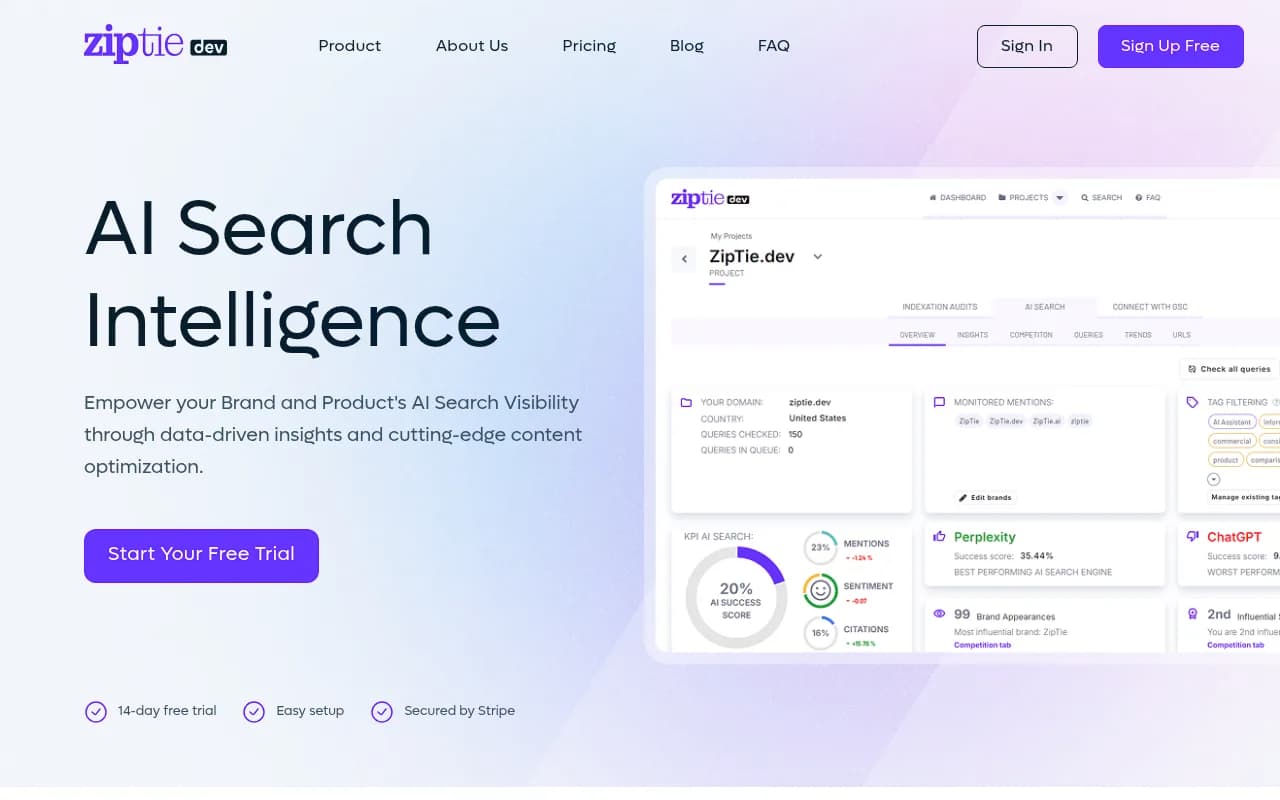
| ZipTie | ~$69/mo | Yes | Perplexity and more | Clear next actions |
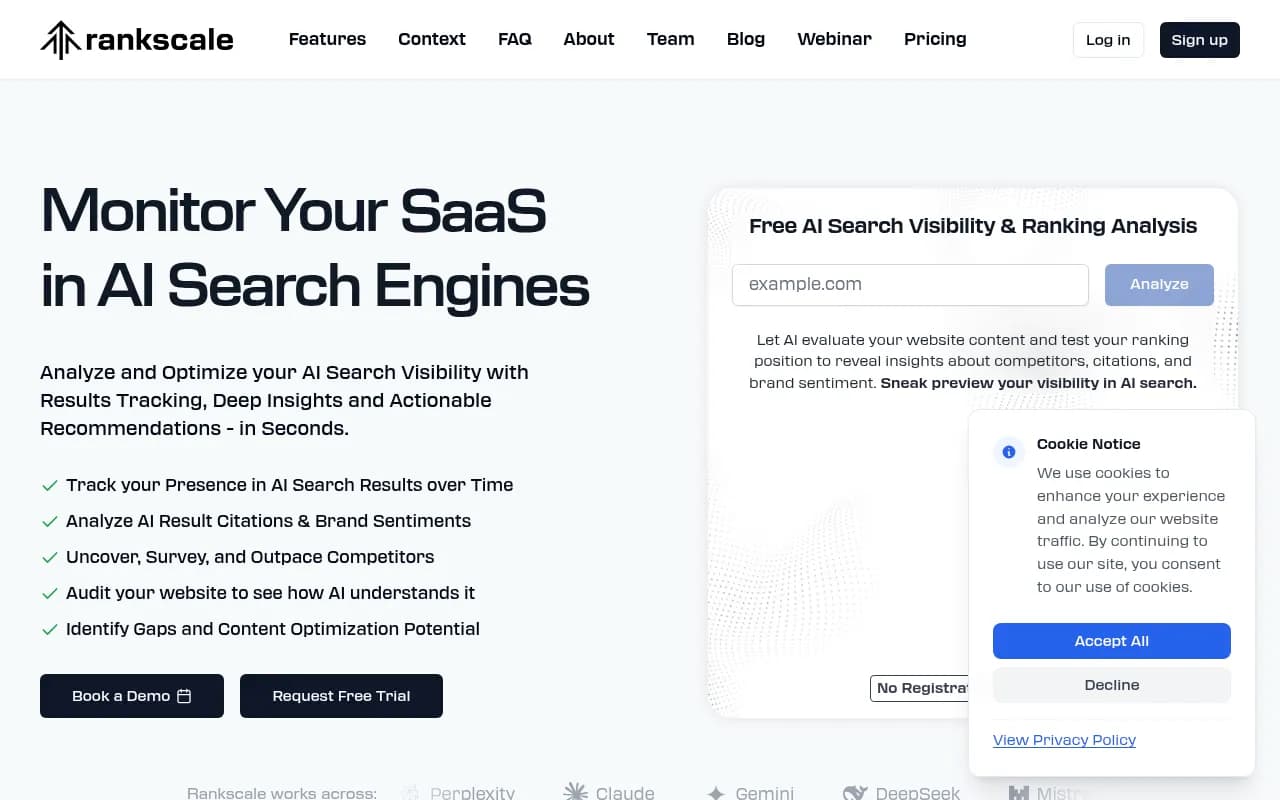
| Rankscale | ~$17-$20/mo entry; Pro $99/mo | Yes | 17+ engines | Budget multi-model tracking |
| Rankshift | ~€77/mo | Competitor benchmarking | 9 models | Competitive analysis |
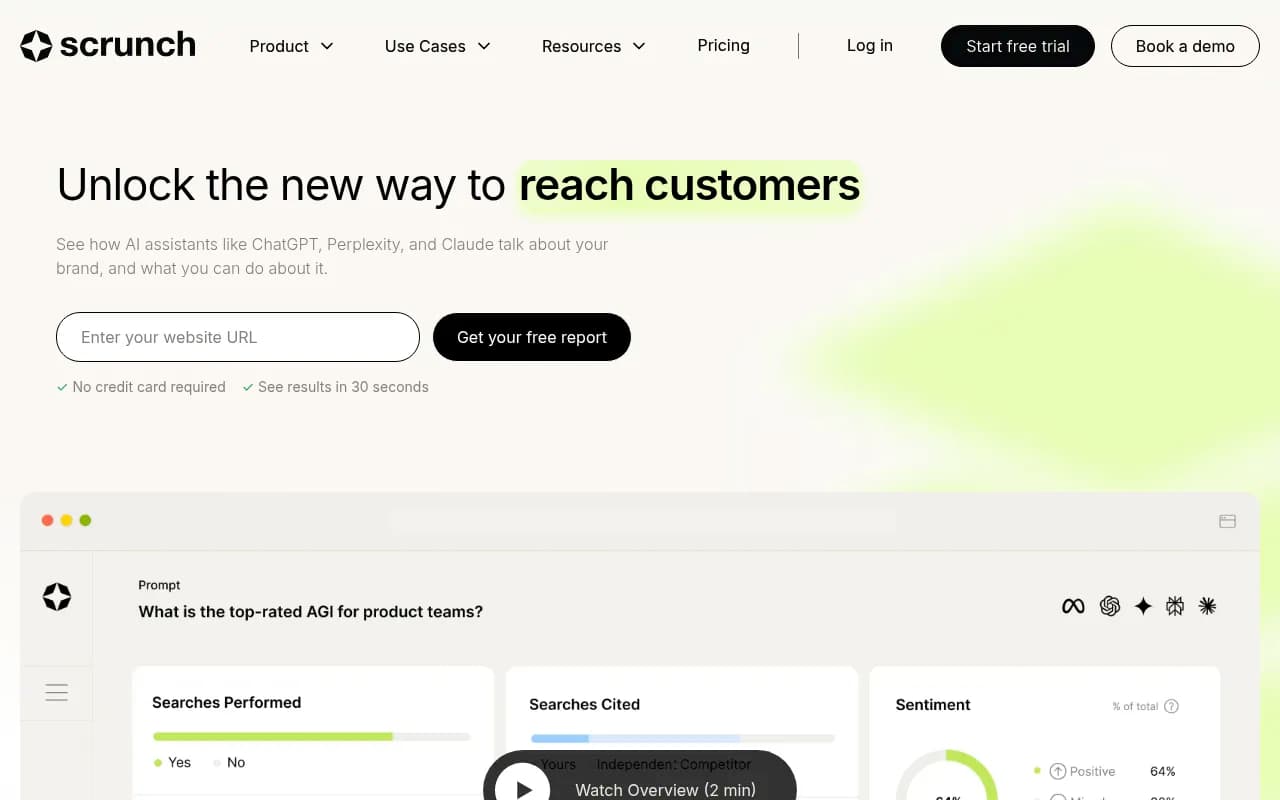
| Scrunch AI | $250-$500/mo | Yes | Multiple | Larger teams |
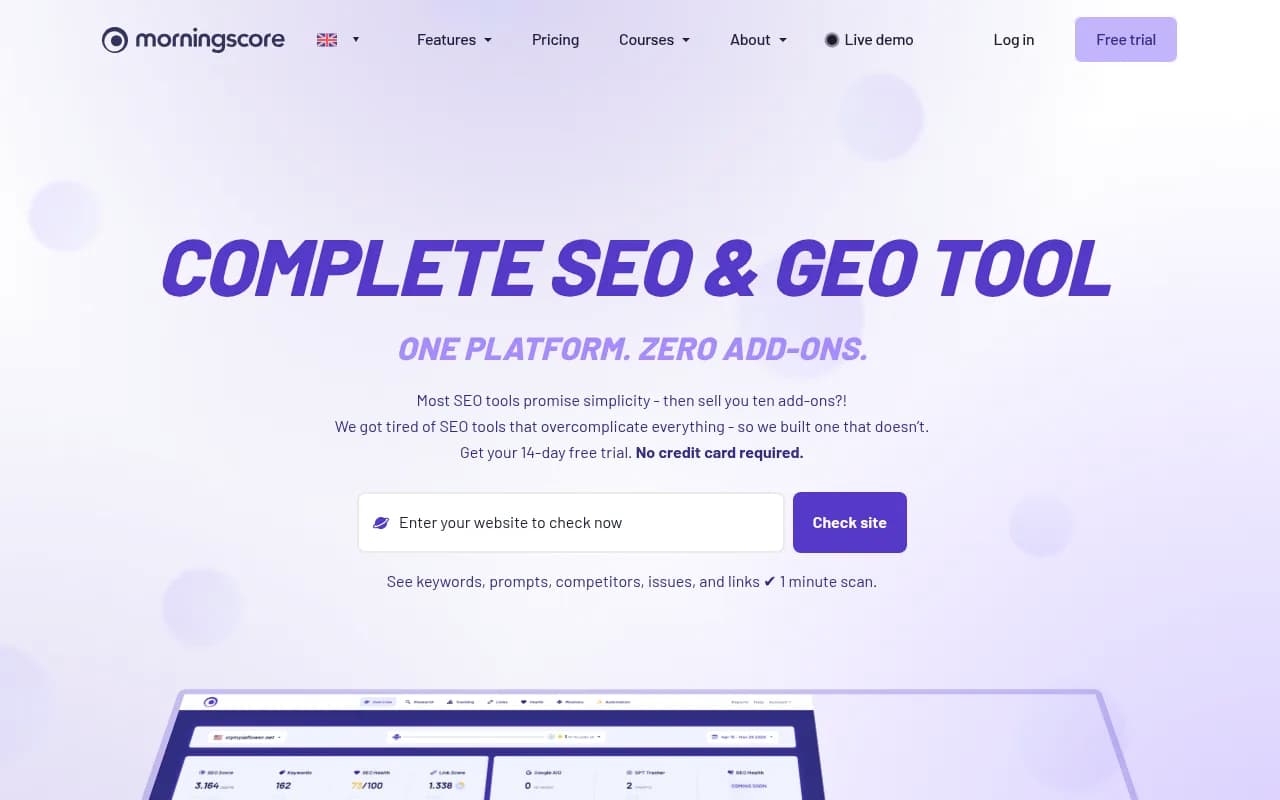
| Morningscore | ~$49/mo | Yes | Several | Startups, non-technical teams |
| AI Rank Checker | ~$0.13 per check | On-demand ChatGPT | Limited | One-off audits |
Several entry prices in the research data conflict. Profound appears at $99/mo in some roundups and $499/mo in others, which likely reflects different tiers and dates. Peec AI's $95 start is consistent across sources, but add-on models raise the real cost. Check the plan you would actually use.
Tool by tool
Promptwatch
Promptwatch is the one I would start with if the goal is to grow AI-driven traffic and not just report on it. It tracks real ChatGPT, Google AI Overviews, AI Mode, Gemini, Perplexity, Copilot and others in the actual user interfaces, per country and language. Beyond mentions, it shows prompt volumes and difficulty, query fan-outs, and IP-verified AI crawler logs, so you can see whether ChatGPT's crawlers even reach your pages.
The part most trackers skip is action. Its Content Agent plans, writes and publishes content against visibility gaps, and the Action Board gives a prioritized to-do list. Visitor analytics then tie AI referrals to conversions. It is rated 4.7/5 on G2. Paid plans start at $95/mo, with a free Explore plan limited to ChatGPT and 10 prompts.

The trade-off: if you only want a cheap weekly mention count, you will not use most of it.
Profound
Profound targets enterprises that need compliance and wide engine coverage. Starter is reported at $99/mo for ChatGPT only with 50 prompts, and broader tiers climb into the thousands. It has deep data, but it costs more and lacks some of the action tooling.
Profound

Peec AI
Peec AI is popular for clear dashboards and a citation share metric. Starter is $95/mo (50 prompts, 3 models, 1 country), Pro $245/mo, Advanced $495/mo. The catch is add-on pricing: extra models run $30-$140/mo each, so a multi-engine setup costs more than the headline.

Otterly.AI
Otterly.AI starts at $29/mo for 15 prompts across 4 engines. Standard is $189/mo and Premium $489/mo. Google AI Mode and Gemini are paid add-ons. Good for agencies watching many small brands, light on optimization.
Otterly.AI

ZipTie
ZipTie focuses on analysis and recommended actions for ChatGPT and Perplexity, around $69/mo in the roundups I reviewed.
Rankscale
Rankscale is the budget multi-model pick. LLM Pulse's roundup lists €17/mo billed yearly and 17+ engines, while Leapd's lists a Pro tier at $99/mo with 4,800 responses and Looker Studio. Different tiers, same tool.
Rankshift
Rankshift leans toward competitive benchmarking, from around €77/mo with weekly refresh.

Scrunch AI
Scrunch starts at roughly $250/mo annual or $300 monthly, with Growth at $417-$500. It does not publish an exact platform count.
Morningscore
Morningscore mixes SEO and AI visibility in a beginner-friendly interface at about $49/mo. A fit for startups that do not want to learn a specialist tool.
AI Rank Checker
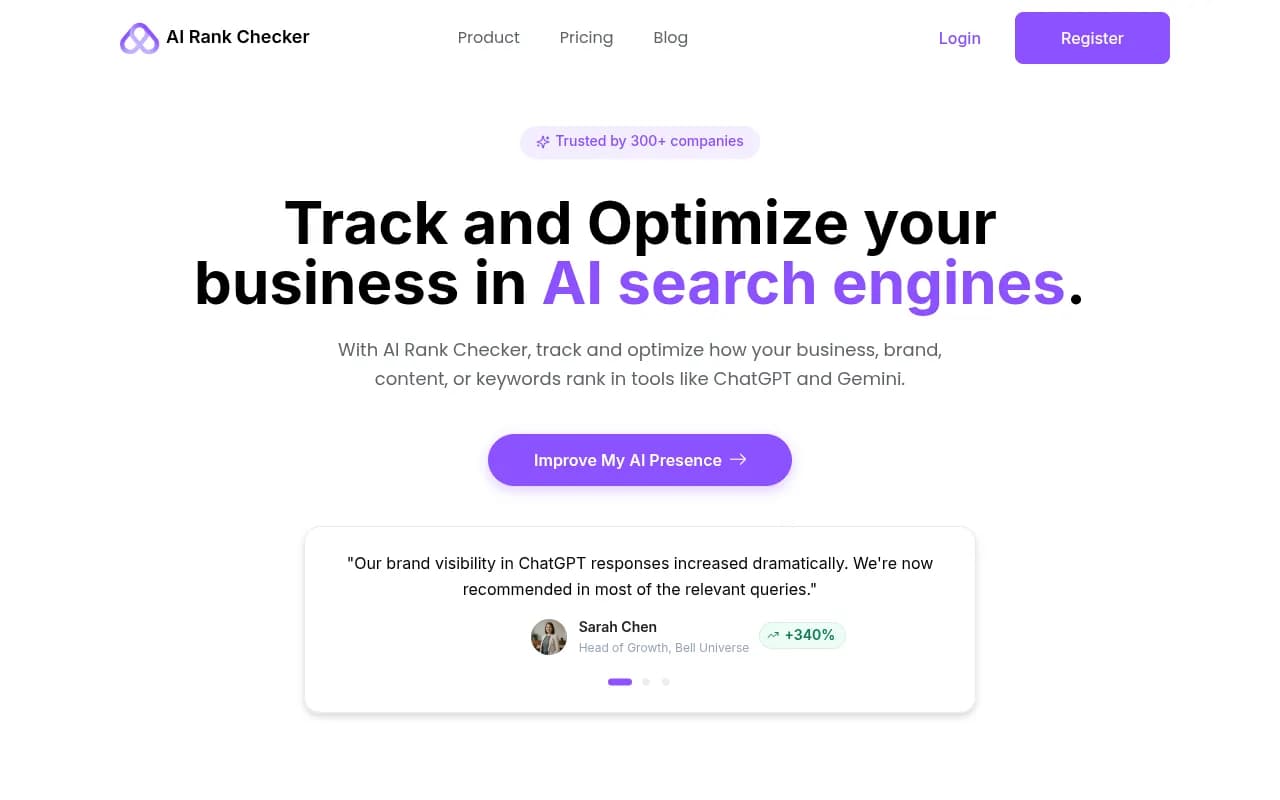
AI Rank Checker charges per check, about $0.13 per ChatGPT keyword check. Useful for a consultant doing a one-off audit, and expensive if you run daily monitoring.
Picking by situation
| Your situation | Likely fit |
|---|---|
| Want to track and then fix visibility, with traffic attribution | Promptwatch |
| Enterprise with security reviews | Profound or Promptwatch (ISO/IEC 27001) |
| Tight budget, many brands | Otterly.AI, Rankscale |
| Already pay for an SEO suite | Check Semrush or SE Ranking add-ons, but read the real AI cost |
| One-off audit | AI Rank Checker, or a free visibility report |
What the data says about where to spend effort
Tracking is only useful if it points somewhere. A few findings from Promptwatch's research shape what you do with the numbers:
- Product pages are the most cited content type in ChatGPT at 22.4% of citations (Sep 28 to Oct 4, 2026), followed by landing pages and listicles (report).
- Landing pages and docs stay cited longest, while news lost half its pages within 36 days (half-life report).
- Mid-authority sites (DR 46-75) earned almost half of ChatGPT citations in August 2026, so you do not need a giant domain (report).
- ChatGPT got only 0.46% of its citations from social platforms in late September 2026, versus 12.2% for AI Overviews (report).
That last one is a good example of why engine-specific tracking matters. A social strategy that helps in AI Overviews does little in ChatGPT now.
Common mistakes
- Treating one day of data as truth. Look at trends over weeks.
- Tracking only branded prompts. Competitor comparison and organic prompts show where you lose.
- Ignoring crawlability. If AI crawlers hit errors on your pages, no amount of content helps. Crawler logs expose this.
- Buying on headline price. Add-on engines, prompt caps and response limits change the real bill.
- Skipping the traffic check. Connect results to analytics so you know mentions turn into visits.
Where to look next
If you want to browse beyond these ten, the AI rank tracker directory at ai-rank-tools.com lists more options, and the GEO software directory at bestgeosoftware.com covers the wider category.
Bottom line
Pick the cheapest tool only if mention counts are all you need. If you want to know why you are missing from answers and get help fixing it, choose a platform with crawler data, traffic attribution and content workflows, and run a trial on your real prompts before committing. Re-check pricing on each vendor's page first, since the numbers above come from mixed sources and dates.