Key takeaways
- AI-generated content doesn't automatically hurt your SEO — but thin, generic, or unedited AI output frequently does
- The damage shows up in multiple ways: ranking drops, reduced click-through rates, lower dwell time, and brand trust erosion
- A proper diagnosis involves auditing your content quality, checking technical signals, and reviewing how AI search engines perceive your site
- Recovery requires more than deleting bad pages — you need to replace them with content that actually answers real questions
- In 2026, visibility in AI search engines (ChatGPT, Perplexity, Google AI Overviews) matters as much as traditional Google rankings, and the two require different strategies
The promise was simple: use AI to write faster, publish more, and rank higher. For a while, it seemed to work. Then the traffic started dropping.
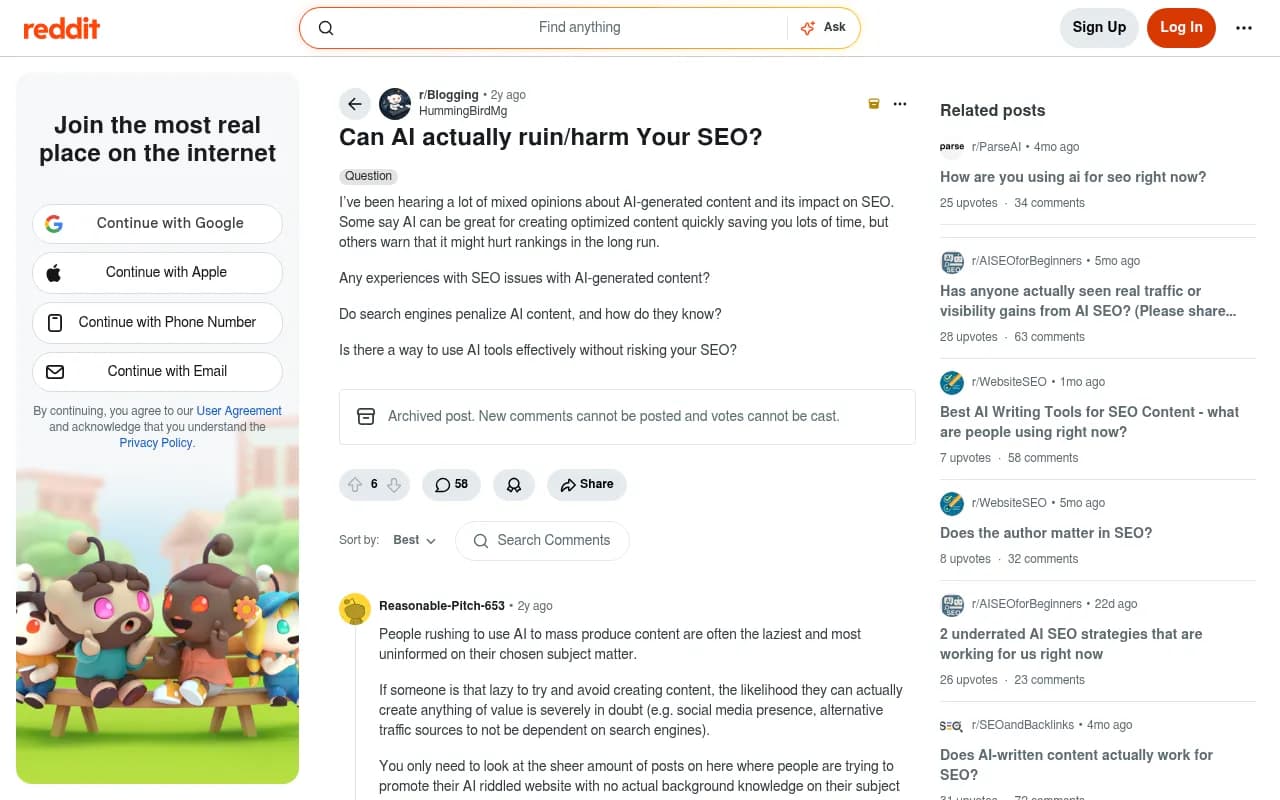
If you've been using AI content tools at scale and your organic performance has slipped, you're not alone. The r/Blogging community has been debating this for over a year, with real cases of sites that published hundreds of AI-generated articles and watched their rankings quietly collapse. The frustrating part is that the damage isn't always obvious at first. It creeps in.
This guide walks through how to tell if AI content hurt your site, what specifically went wrong, and how to actually fix it — not just patch it.
What "AI content damage" actually looks like
Before you can fix anything, you need to understand the failure modes. Not all AI content problems are the same.
Thin content at scale
The most common issue. AI tools are excellent at generating plausible-sounding text quickly. The problem is that "plausible-sounding" and "genuinely useful" are not the same thing. When you publish 50 articles that all cover the same topic from slightly different angles, using similar phrasing and structure, Google notices. So do readers.
Google's helpful content system specifically targets pages that feel written for search engines rather than people. AI-generated content that lacks original research, real examples, or genuine expertise tends to trigger exactly this kind of assessment.
Factual errors and hallucinations
AI models confidently state things that are wrong. If those errors made it into your published content, you may have pages with incorrect statistics, outdated information, or fabricated citations. Beyond the SEO risk, this is a brand trust problem. One reader who catches a glaring factual error is unlikely to trust anything else on your site.
Keyword stuffing and unnatural phrasing
Early AI writing tools (and some current ones, when prompted poorly) over-optimize. They repeat target phrases in ways that feel mechanical, use headers that read like keyword lists, and produce sentence structures no human would naturally write. Google has gotten very good at detecting this pattern.
Duplicate and near-duplicate content
AI tools trained on similar data tend to produce similar outputs. If you used the same tool with similar prompts across multiple pages, you may have near-duplicate content competing against itself — or worse, matching content that already exists elsewhere on the web.
Loss of brand voice
This one doesn't show up in rankings directly, but it matters. If your site sounds like it was written by a committee of robots, visitors notice. Bounce rates go up, time-on-page goes down, and those behavioral signals feed back into how search engines evaluate your content.
How to diagnose the damage
Step 1: Check your traffic timeline
Open Google Search Console or Google Analytics and look at your organic traffic over the past 12-24 months. Identify any significant drops and correlate them with dates.
Cross-reference those dates with:
- Google algorithm updates (the March 2024 core update and the subsequent helpful content updates hit AI-heavy sites hard)
- When you started publishing AI content at scale
- Any changes to your publishing frequency
If the traffic drop lines up with a major algorithm update and you were publishing a lot of AI content around that time, that's a strong signal.
Step 2: Audit your content quality
This is the uncomfortable part. You need to actually read your AI-generated pages and ask honest questions:
- Does this page answer the question better than the top 3 results on Google?
- Is there anything on this page that couldn't be found on a dozen other sites?
- Are there any factual claims that need verification?
- Does this sound like a real person who knows this topic?
Tools like Screaming Frog can help you crawl your site and identify pages with thin content (low word count, high similarity scores, missing structured data).
For content quality scoring, platforms like Clearscope and MarketMuse can benchmark your pages against what's actually ranking and flag where you're falling short.

Step 3: Check your technical signals
AI content problems sometimes come with technical baggage. Run a full site audit looking for:
- Pages with high crawl rates but low engagement (Google is visiting but users aren't staying)
- Cannibalization — multiple pages targeting the same keyword
- Internal linking gaps where AI-generated pages aren't connected to your core content
- Missing or auto-generated meta descriptions that don't reflect the actual page content

Step 4: Look at how AI search engines see you
Here's the part most site owners miss entirely. In 2026, your visibility in ChatGPT, Perplexity, and Google AI Overviews is a separate problem from your Google rankings — and AI-generated content can hurt you there too.
AI search engines pull from sources they trust. If your site is full of generic, undifferentiated content, you won't get cited. Worse, if your content contains errors, you may get cited for the wrong reasons.
Tools like Promptwatch can show you which prompts your competitors are being cited for that you're not, and which of your pages are actually being referenced by AI engines.

The five specific ways AI content damages SEO
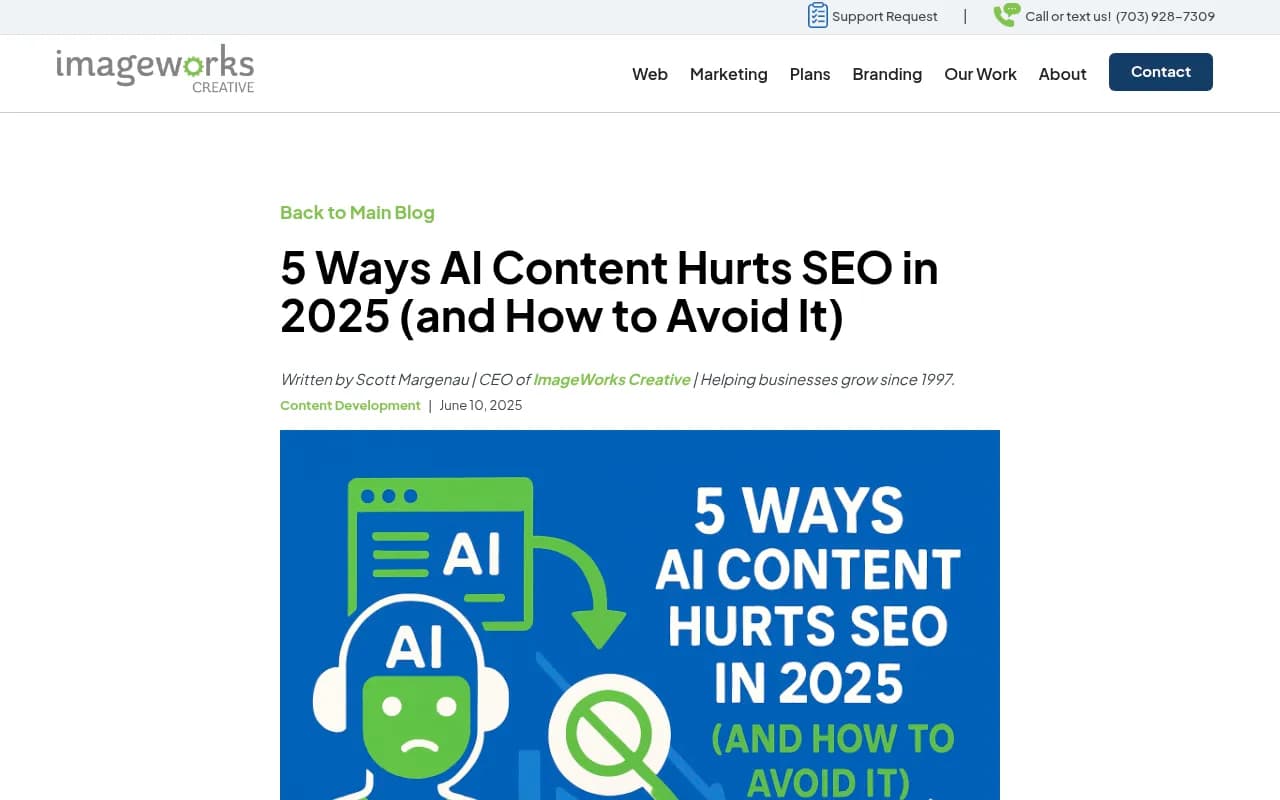
Based on what's actually happening to sites in 2026, here are the failure modes worth understanding in detail.
1. Helpful content system penalties
Google's helpful content classifier runs continuously and can suppress entire domains, not just individual pages. If a significant portion of your site is AI-generated content with low value, the whole site can be affected — not just the bad pages. This is why deleting a few articles often doesn't fix the problem.
2. E-E-A-T signals eroding
Experience, Expertise, Authoritativeness, and Trustworthiness. AI content struggles with the first one most: experience. It can't describe what it's actually like to use a product, make a mistake and learn from it, or give advice based on real-world application. Pages that lack these signals get deprioritized in competitive niches.
3. Zero-click and AI Overview exclusion
Even if your page ranks on page one, Google AI Overviews may cite a competitor instead of you. This happens when your content is structurally correct but doesn't provide the kind of direct, authoritative answer that AI systems prefer. Generic AI content almost never gets cited in AI Overviews.
4. Engagement metrics decline
If readers land on your page and leave immediately because the content doesn't actually help them, that behavioral signal matters. Dwell time, scroll depth, and return visits all feed into how Google evaluates your content's quality over time.
5. Brand trust damage
This is harder to measure but real. If a reader finds an error on your site, or notices that your content reads identically to five other sites, they won't come back. They won't link to you. They won't share your content. The compounding effects of lost trust are worse than any single ranking drop.
How to fix it: a practical recovery plan
Triage first
Not all AI content is equally bad. Before you start deleting or rewriting everything, categorize your pages:
| Category | Description | Action |
|---|---|---|
| High traffic, high quality | AI-assisted but genuinely useful | Keep, monitor |
| High traffic, low quality | Getting clicks but not helping users | Rewrite urgently |
| Low traffic, high quality | Good content that isn't ranking yet | Improve promotion and internal links |
| Low traffic, low quality | Thin, generic, or inaccurate | Delete or consolidate |
| Duplicate/near-duplicate | Multiple pages on same topic | Consolidate into one strong page |
The worst thing you can do is delete everything at once. That creates its own set of problems. Prioritize the pages that are getting traffic but not converting, and the pages where you know the content is factually weak.
Rewrite with a human-first approach
When you rewrite AI content, the goal isn't to make it "sound less like AI." The goal is to make it genuinely more useful. That means:
- Adding original research, data, or examples that aren't available elsewhere
- Including your actual perspective or experience with the topic
- Answering the question more directly and completely than competing pages
- Removing filler paragraphs that exist to hit word counts but add nothing
Tools like Surfer SEO and Frase can help you understand what topics and subtopics the top-ranking pages cover, so your rewrites are structurally competitive.
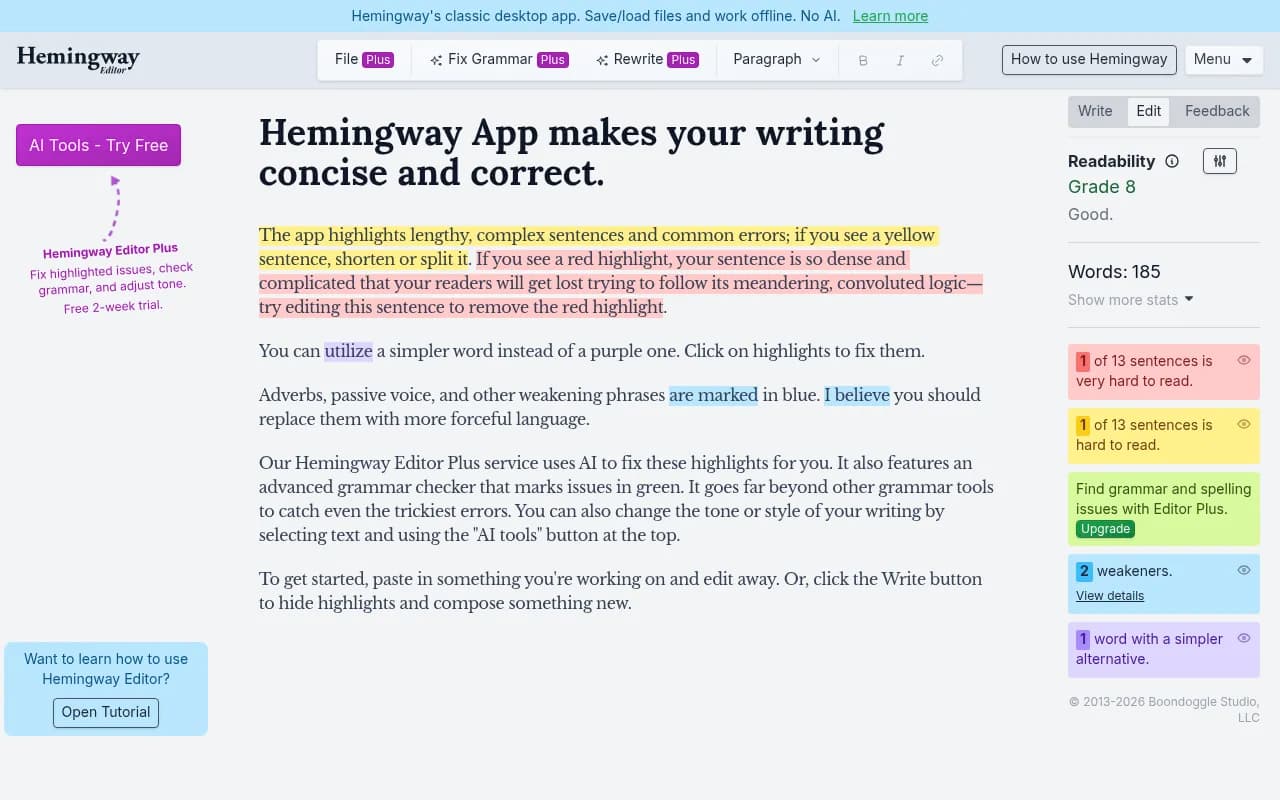
For the actual writing and editing, Grammarly and Hemingway Editor are useful for catching the mechanical phrasing patterns that AI content tends to produce.

Fix your content structure
AI-generated content often has structural problems that hurt both readability and SEO. Common issues:
- Headers that are too generic ("Introduction", "Conclusion", "Benefits")
- No clear answer to the primary question in the first 100 words
- Missing structured data (FAQ schema, how-to schema, article schema)
- No internal links to related content on your site
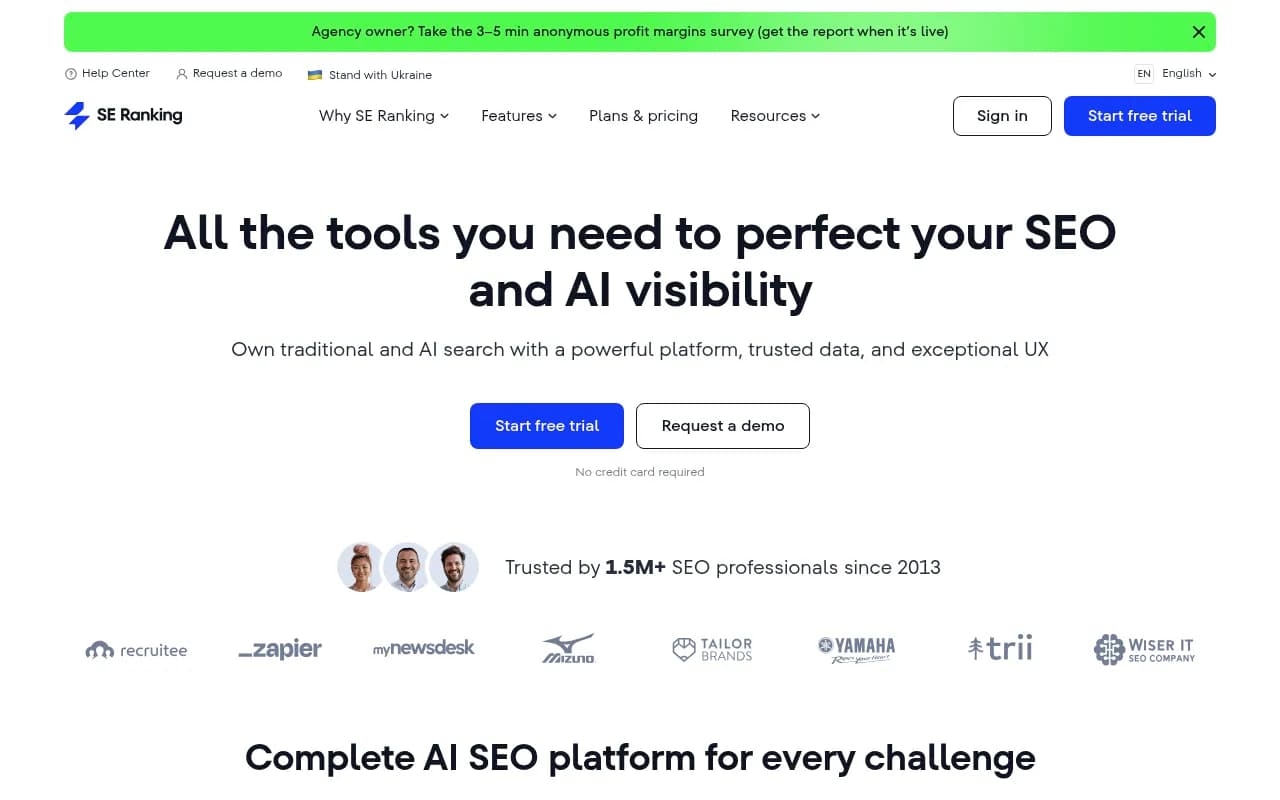
Run your pages through a tool like SE Ranking or Semrush's on-page checker to get specific recommendations.
Consolidate duplicate content
If you published multiple AI-generated articles on similar topics, consolidate them. Pick the strongest one, incorporate the best elements from the others, and redirect the weaker pages to the consolidated version. This concentrates your link equity and signals to Google that you have one authoritative resource on the topic rather than several mediocre ones.
Rebuild your E-E-A-T signals
This takes time, but it's the most durable fix. Practical steps:
- Add author bios with real credentials and links to social profiles
- Include original research, surveys, or case studies
- Get cited by authoritative sources in your industry
- Update your About page to clearly explain who you are and why you're qualified to write about your topics
- Add "last updated" dates to pages and actually keep them current
Optimize for AI search citations
Traditional SEO recovery gets you back in Google. But if you want to appear in ChatGPT, Perplexity, and Google AI Overviews, you need a different approach.
AI engines tend to cite content that:
- Directly answers specific questions
- Uses clear, factual language without hedging
- Comes from domains with established authority
- Is structured in a way that's easy to parse (clear headers, bullet points, concise paragraphs)
Understanding which prompts and questions your target audience is asking AI engines — and whether your content answers them — is where platforms like Promptwatch become useful. The answer gap analysis shows you exactly which questions AI models are answering with competitor content instead of yours.
For tracking your recovery across both traditional and AI search, Semrush and Ahrefs cover the traditional side, while tools like Otterly.AI and Profound handle AI-specific visibility.
Otterly.AI

Profound

What to do differently going forward
The lesson from the AI content wave isn't "don't use AI." It's "don't use AI as a replacement for thinking."
The sites that are doing well in 2026 use AI tools to speed up research, generate outlines, draft first passes, and handle repetitive formatting tasks. They don't use AI to replace the expertise, original perspective, and genuine helpfulness that makes content worth reading.
A few principles that hold up:
- Publish less, but make each piece genuinely better than what's already ranking
- Use AI for the parts of content creation that are genuinely mechanical (formatting, metadata, internal link suggestions)
- Keep a human in the loop for anything that requires judgment, experience, or accuracy
- Treat your content as a product that needs maintenance, not a factory output
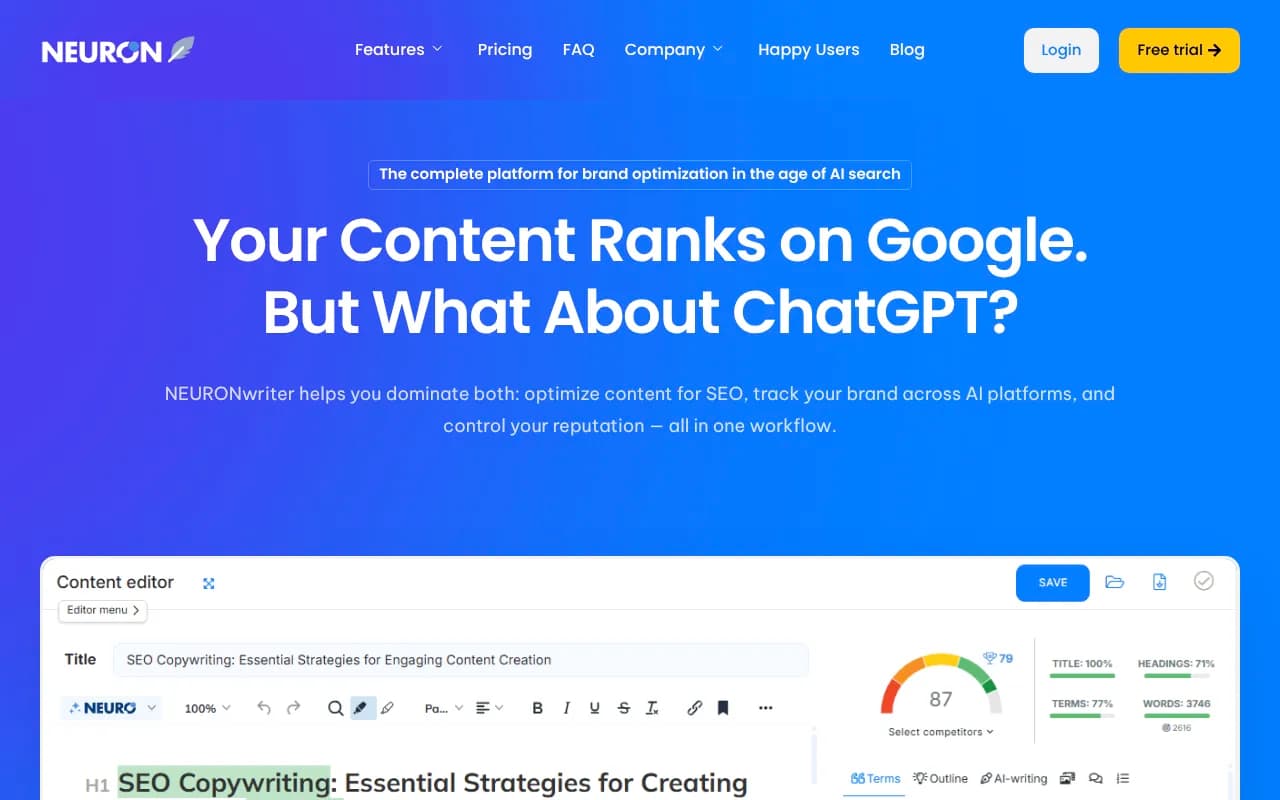
For ongoing content quality, tools like NeuronWriter and Clearscope help you optimize existing content against current search results rather than just publishing and hoping.
The recovery from AI content damage is real and achievable. It takes a few months of consistent work, not a quick fix. But sites that do the work — auditing honestly, rewriting thoroughly, and rebuilding their authority — do recover. The ones that don't are usually the ones that keep publishing the same low-quality content and wonder why nothing changes.