Key takeaways
- Start with a locked list of 20 to 50 prompts, split by intent (commercial, informational, branded). Each intent is cited from a different content mix.
- ChatGPT cites a lot of domains per answer, so track your position and how you are described, not just a yes/no on citation.
- Platform behavior changes overnight. A weekly manual audit is a fine start, but continuous monitoring catches shifts that one-off checks miss.
- Citations are only half the picture. Pair them with AI crawler logs and referral traffic to see whether a citation does anything for the business.
- Pick a tool after you have a baseline, not before.
What "tracking ChatGPT citations" actually means
When ChatGPT answers with search on, it runs a handful of web searches behind the scenes, reads what comes back, and writes a response with linked sources. Tracking citations means recording, over time, which of those sources are yours, which are competitors', and which are third parties talking about you.
Two things get confused constantly. A citation is a linked source in the answer. A mention is your brand named in the text, with or without a link. You need both columns in your sheet, because a brand that is mentioned but never cited usually has a content or crawlability problem, while a brand that is cited but described poorly has a reputation problem.
Google Search Console will not help you here. It does not break out ChatGPT at all, so you need your own measurement setup. Here is how I would build it.
Step 1: Build a locked prompt list
Write down the 20 to 50 questions a buyer in your category actually asks. Pull them from sales calls, support tickets, People Also Ask boxes and your own Search Console queries. Then lock the list. If you keep swapping prompts, week-over-week changes mean nothing.
Segment by intent
Promptwatch Data's ChatGPT citation share by content type report (Sep 28 to Oct 4, 2026) shows why this matters. Product pages were 22.4% of classified citations overall and landing pages 16.8%. But the mix shifts by intent:
| Prompt intent | Top cited types in that week |
|---|---|
| Commercial | Product pages 26.0%, landing pages 20.6%, listicles 15.0%, comparisons 7.9% |
| Informational | Product pages 19.1%, landing pages 13.9%, listicles 13.6%, how-tos 10.7% |
| Branded | Product pages 23.3%, landing pages 22.8%, reviews 5.6%, FAQ 4.8% |
So tag every prompt as commercial, informational or branded (a fourth tag for competitor comparisons is useful too). When you later find a citation gap, the tag tells you what kind of page to build.
Keep it honest about volume
One prompt tells you very little. ChatGPT answers vary run to run, so judge yourself on the pattern across the whole list, not on any single answer.
Step 2: Decide what you record for each answer
A spreadsheet column set that has worked for me:
- Prompt, intent tag, date, model and whether search was on
- Whether your brand is mentioned (yes/no) and how it is described
- Whether your domain is cited, and which URL
- Your position in the source list
- Other domains cited in the same answer
- Query fan-outs, if you can see them
The co-cited domains column matters more than people expect. Promptwatch Data's unique domains per response report found that 47.6% of ChatGPT responses cite 10 or more domains (Sep 28 to Oct 4, 2026), and only 6% cite three or fewer. For organic prompts with no brand named, 52.5% cite 10 or more. Brand-specific prompts are tighter: the most common count is 5 domains, so the source list is short and the review sites and forums on it carry real weight.
That is a crowded answer. Being one of ten sources is a different job than being one of three, and your sheet should show which situation you are in.
Step 3: Run a manual baseline first
Before paying for anything, run the list by hand for a week or two.
- Open ChatGPT with search enabled, in a clean session.
- Paste each prompt, wait for the full answer.
- Record the columns above. Screenshot anything surprising.
- Repeat weekly for your top 20 prompts at minimum.
It is tedious, and you will hate it by prompt 15. That is the point. You learn what the data looks like, which columns you actually use, and what you want from a tool. It also gives you a baseline to compare a vendor's numbers against.
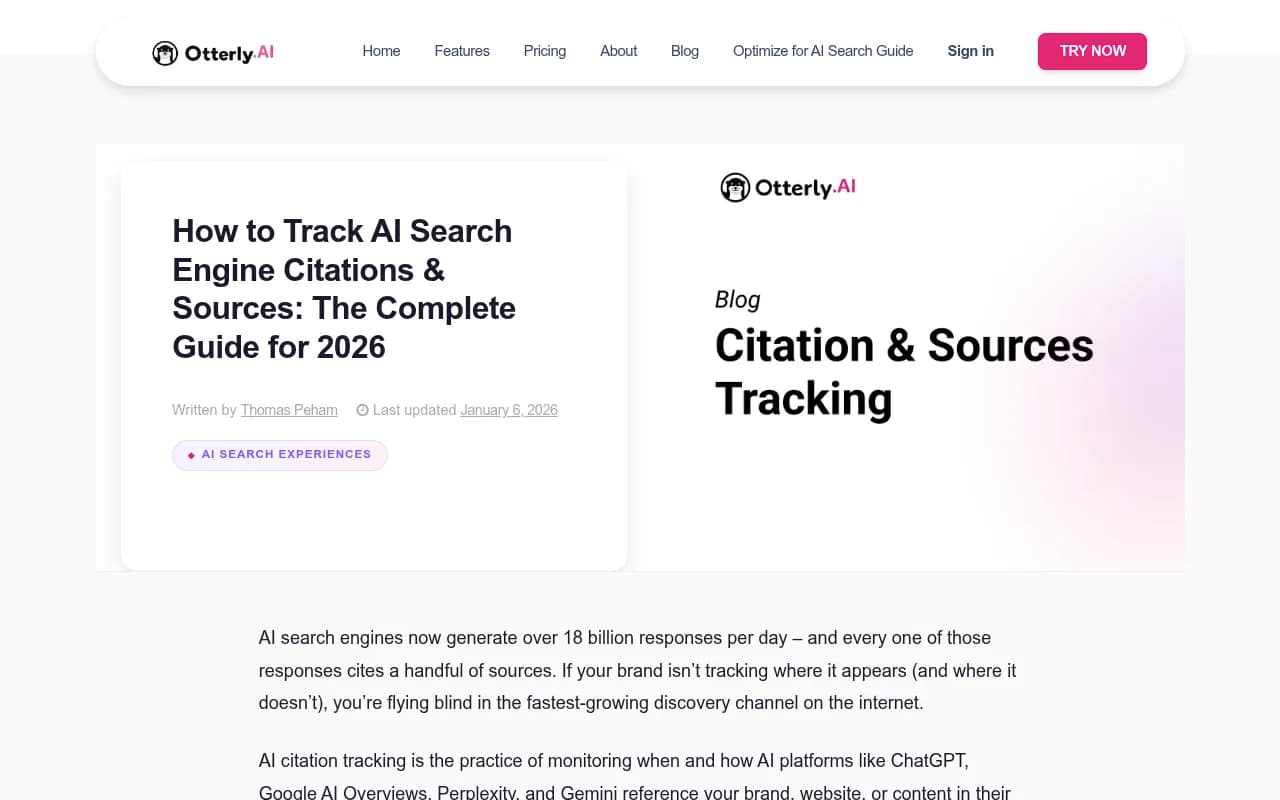
Otterly's guide above is a reasonable reference for the manual template and the KPI definitions, though keep in mind it is written by a vendor.
Step 4: Move to a dedicated tracking tool
Manual checks stop scaling around 50 prompts across several engines. Look for these things when you evaluate tools:
- Coverage of the real ChatGPT interface, not only API calls. User-facing answers and citations can differ from API output.
- A prompt library with grouping by topic and intent.
- Competitor benchmarking on the same prompts.
- A clear split between citations and text-only mentions.
- Source URL analysis, so you can see which of your pages earn citations and which never do.
- Country and language control if you sell in more than one market.
Tool options
Promptwatch tracks ChatGPT and other engines through their real interfaces, with prompt volumes, difficulty scores and query fan-outs. It also goes past monitoring: IP-verified AI crawler logs, visitor analytics for AI-referred traffic, and a content agent that drafts and publishes pages against the gaps it finds. If you want the tracking tied to actual fixes, that is where it earns its place.

OtterlyAI is the cheaper entry point, with prompt monitoring, link citation analysis and competitor benchmarking. Its own blog lists plans starting around $29 per month, but check the pricing page since I have not verified current numbers.
Otterly.AI

Profound targets enterprise teams and focuses on which pages get referenced and traffic attribution.
Profound

Peec AI is a straightforward prompt tracker for marketing teams.

AthenaHQ and Rankscale also cover multi-engine visibility, with more of an agency or monitoring slant.

For a wider survey, the GEO software directory at bestgeosoftware.com and the rank tracker list at ai-rank-tools.com cover far more options than fit here.
Quick comparison
| Tool | Best for | Beyond tracking |
|---|---|---|
| Promptwatch | Teams that want to fix gaps, not just see them | Crawler logs, AI traffic analytics, content agent, action board |
| OtterlyAI | Small budgets, simple monitoring | Citation link analysis |
| Profound | Enterprise reporting | Traffic attribution |
| Peec AI | Lightweight prompt tracking | Limited |
| Rankscale | Agencies | Multi-client tracking |
Pricing changes often, so confirm on each vendor's site before committing.
Step 5: Pick metrics that locate the problem
A single "citation count" hides what is going wrong. I prefer reading a few metrics together:
- Share of voice across your prompt set. Low means a coverage problem: you are not showing up for enough questions.
- Position in the answer and source list. Late placement is a prominence problem.
- Mentions without citations. ChatGPT knows you but does not use your pages. Usually a content, structure or crawlability problem.
- Sentiment. Cited but described badly is a reputation problem, and the fix lives off your site.
- Platform variance. Compare ChatGPT against Perplexity and Google AI Overviews. They behave differently.
- Citation gaps. Prompts where competitors are cited and you are not. This is your content backlog.
The Promptwatch Data guidance on tracking says the same thing in short form: track position and description, measure across many prompts, and watch which competitors share the answer with you.
Step 6: Watch the sources that vary by platform
Do not assume yesterday's source mix holds today. Two examples from Promptwatch Data:
- reddit.com's share of ChatGPT citations fell from roughly 4% to 0.5% on August 14, 2026, per the Reddit citations report. AI Overviews and AI Mode declined more gradually.
- From Sep 28 to Oct 4, 2026, ChatGPT drew just 0.46% of its citations from social platforms, while Google AI Overviews drew 12.2% (social media citations by AI model).
If your tracking plan counted on Reddit threads to carry you in ChatGPT, that plan broke in August. A separate analysis from Grow by Data saw the same slide in retail and travel prompts, with Reddit's share dropping from double digits in May to near zero by September. Lesson: track each engine separately and do not copy a strategy across them.
Page types age differently
Promptwatch Data's content half-life study followed every page ChatGPT cited on July 6, 2026 for 90 days. Landing pages and docs stayed cited longest, while news lost half its pages within 36 days. If your tracked wins are mostly news posts, expect decay and plan refreshes. Landing pages and docs hold up.
Step 7: Re-baseline when the platform changes
ChatGPT changed its search behavior overnight on August 8, 2026. Per Promptwatch's site: operator report, site:-scoped fan-out queries jumped from about 0.4% to about 17% of all fan-outs, and searches per response rose from roughly 1.08 to 1.83.
Two practical consequences for your setup:
- Any fan-out or keyword mapping built before that date is stale. Re-run it.
- Your own domain is now a retrieval surface, so crawlable, indexed pages matter more.
That is an OpenAI rollout, not something individual sites did, so do not rewrite your whole strategy in response. Do note the date in your log, so a sudden change in your numbers has an explanation.
There is also a longer-term pattern. Promptwatch Data's citation drop report shows average citations per response fell around the GPT-5.3 rollout on March 4, 2026. Keep an annotations column for model updates.
Step 8: Connect citations to crawlers and traffic
A citation count by itself will not convince a finance team. Add two more data sources.
Crawler logs
Check whether OpenAI's bots (GPTBot, OAI-SearchBot, ChatGPT-User) are actually reading your pages, and whether they hit errors. If a page is never crawled, it will not get cited, and no amount of rewriting fixes that. You can pull this from server or CDN logs yourself, or use a platform with IP-verified crawler logs so spoofed bots are filtered out. The AI Bots and Web Crawlers directory is handy for recognizing user agents.
Referral traffic and conversions
Set up analytics so AI referrals are segmented. In Google Analytics, build a channel group matching chatgpt.com and similar referrers.
Google Search Console still matters, since pages that rank organically tend to be the ones that show up in ChatGPT too.
One caveat: a lot of ChatGPT visits arrive without a clean referrer, so your analytics number is a floor, not a ceiling.
Step 9: Turn gaps into actions
Tracking is only useful if it changes what you publish. A simple loop:
- Filter your sheet for prompts where competitors are cited and you are not.
- Open the pages that were cited. Work out whether they won on specificity, structure, authority or freshness.
- Match the prompt's intent to a page type: a commercial prompt probably needs a product or comparison page, not a blog post.
- Write or refresh the page with a direct answer in the first sentence and one idea per section.
- Re-run the prompt in two to four weeks and log the change.
Agencies like Winston Digital Marketing suggest 30 to 90 days for citation share to move if you execute everything. Treat that as an agency estimate, not a benchmark, and judge by your own baseline.
A simple weekly cadence
| When | Task |
|---|---|
| Monday | Review share of voice and position by intent group |
| Midweek | Check crawler errors and new AI-referred sessions |
| Friday | Review citation gaps, add two or three to the content queue |
| Monthly | Re-check prompt list relevance, annotate model changes, refresh decayed pages |
If you would rather hand off the strategy side, an agency such as 1001 SEO Media runs GEO programs built around this kind of tracking.
Common mistakes
- Changing the prompt list every week, which makes trends unreadable.
- Counting mentions as citations, or ignoring the difference.
- Judging ChatGPT by one run of one prompt.
- Tracking only API output when the user interface answers differently.
- Treating Reddit as a ChatGPT strategy after August 2026.
- Reporting citations without crawl or traffic data beside them.
Where to start today
Write your 20 prompts this afternoon, tag each by intent, and run them once by hand. That single sheet is your baseline. Everything else in this guide, from tools to crawler logs, is an upgrade on top of it.
For current citation numbers by industry and platform, the Promptwatch Data hub is updated regularly and is worth bookmarking.