Key takeaways
- Competitor monitoring for SEO is at least four separate jobs: rankings and keywords, backlinks, on-page changes, and visibility inside AI answers. No single tool handles all of them well.
- Daily automation should be alerts and diffs, not dashboards you have to remember to open. If it relies on you running a manual check, it will quietly stop.
- Semrush and Ahrefs cover the classic search side. Page-change tools cover the "what did they just publish" side. AI-visibility platforms cover ChatGPT, Perplexity and AI Overviews.
- A good cadence is a short daily triage, a weekly review of gains and losses, and a monthly strategy pass.
- Always verify pricing on the vendor's page. Plans change often.
Why manual competitor checks fail
Most people start the same way. They open a few competitor tabs on Friday, skim for changes, and make a note. One workflow making the rounds literally tells an AI assistant to visit each open tab and summarize anything new since last week. It works until the day you forget to run it, which is the whole argument for tools that alert you.
The second problem is scope. A competitor can overtake you through a new landing page, a batch of backlinks, a pricing change, or a citation in ChatGPT. Different signals live in different tools. The octolens roundup of 23 monitoring tools makes this point well: competitor monitoring is seven different jobs, not one.
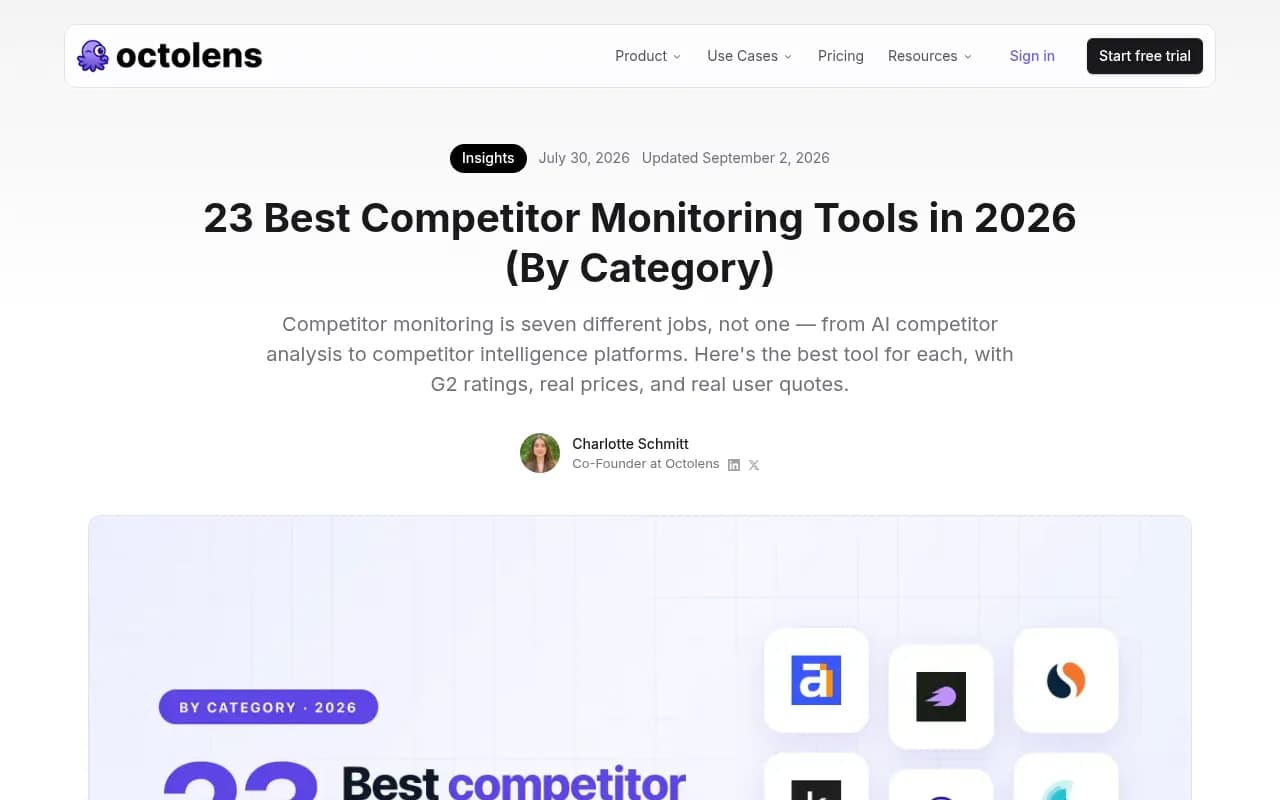
I would rather build a small stack where each tool does one job and sends me something only when it matters. That is what the rest of this guide covers.
What to monitor, and how often
Before picking tools, decide what signals are worth a daily look and what can wait.
| Signal | What changes | Best cadence | Tool type |
|---|---|---|---|
| Keyword rankings | Who gains or loses positions on your target terms | Daily, with alerts | Rank tracker or SEO suite |
| Backlinks | New and lost links to rivals | Weekly | Backlink index |
| Page changes | New pages, pricing, titles, copy | Daily | Page-change monitor |
| Content output | What they publish and how fast | Weekly | Crawler or sitemap watch |
| Paid search | New ad copy and keywords | Weekly | Ad intelligence |
| AI visibility | Who gets cited in ChatGPT, Perplexity, AI Overviews | Daily or weekly | AI visibility platform |
| Brand conversation | Mentions on social and forums | Daily | Social listening |
Not everything deserves daily attention. Rankings and page changes can shift overnight. Backlink profiles move slowly, so a weekly digest is plenty.
Layer 1: rankings and keyword gaps
This is the core of SEO competitor monitoring, and the mature suites are still the best option.
Semrush
Type in a competitor's domain and you get top organic keywords, estimated traffic, paid search spend, ad copy history and backlink profile. Its Position Tracking module is the piece you automate: add your competitors to a project and you get alerts when they gain or lose rankings for your target terms. One agency review noted that tracking against 20 competitors is unusually generous, since many tools cap you at 5 to 10.
Pricing, per Semrush's own page: the SEO plan is $117.33/mo on annual billing ($139 monthly), with 5 websites and 500 keywords tracked daily. The Starter bundle with AI search tracking is $165.17/mo annual ($199 monthly) and adds 50 daily AI prompts. Pro+ is $248.17/mo annual ($299 monthly) with 15 websites and 1,500 daily keywords. Semrush also sells an MCP server and API, which matter if you want to feed competitor data into an AI assistant or your own scripts. Check the pricing page before buying.
Ahrefs
Ahrefs is the pick for backlink and content gap monitoring. Its link index is what many SEOs trust for seeing which sites started linking to a rival this week. Older roundups quote a $29/mo Starter plan as one of the cheapest real entries to competitor SEO data, but I could not verify that figure, so confirm current pricing on their site.

SpyFu, Similarweb and others
SpyFu is strongest on paid search history: competitor ad copy, keyword targeting and estimated spend. Its SEO features are secondary, so pair it with Ahrefs if organic depth matters.
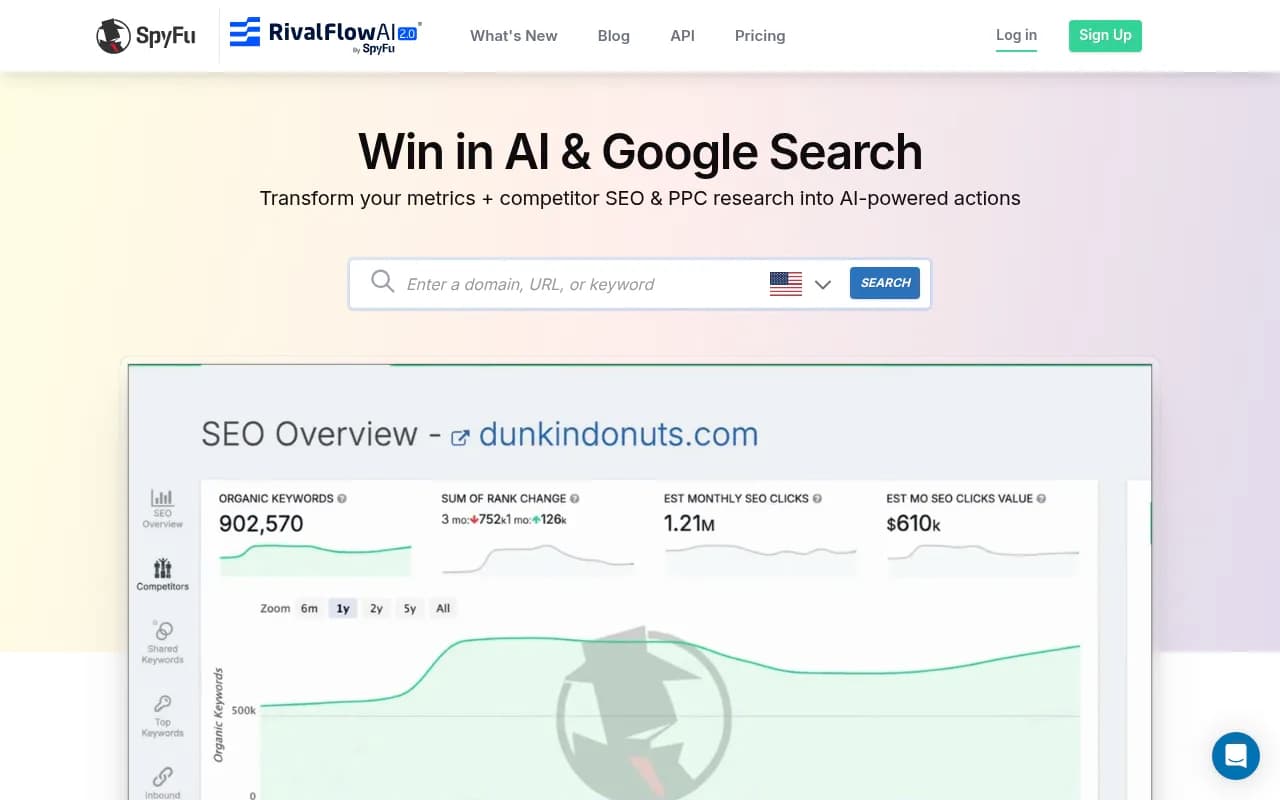
Similarweb adds traffic sources and channel mix across competitors, useful for sizing rivals rather than daily alerts.
If you want a cheaper or more focused rank tracker, [tool:accuranker] and [tool:seomonitor] are worth a look, and [tool:se-ranking] bundles competitor research with tracking at a lower price point.
Free baselines
Google Search Console is free and shows your own side of every comparison: impressions and clicks that you can line up against rival ranking moves.
[tool:ubersuggest] is a free-to-start option for light competitor keyword lookups.
Layer 2: page and content changes
Rank trackers tell you the result. Page monitors tell you the cause. When a rival jumps for a keyword, you want to know they rewrote the page on Tuesday.
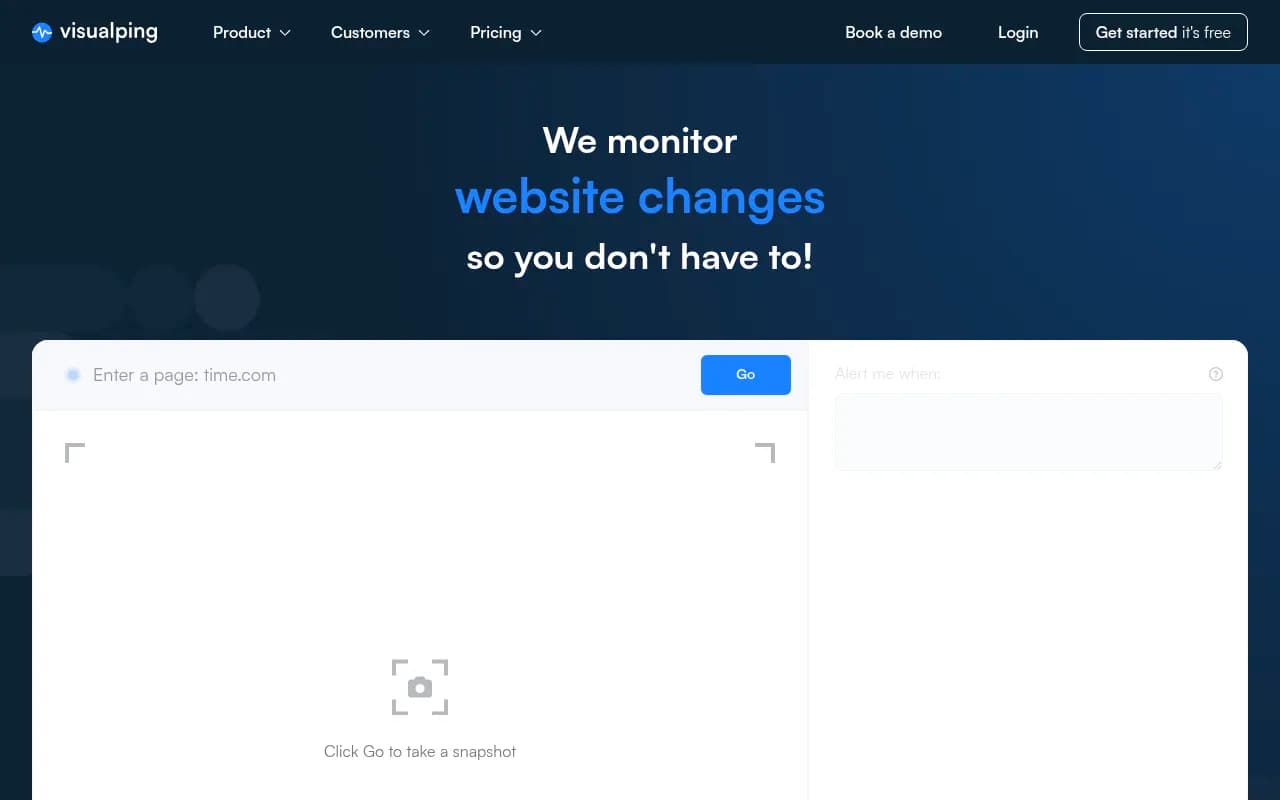
Visualping lets you choose a page, set a check schedule, and describe which changes matter. It emails you when something relevant changes, which suits pricing pages, feature pages and key landing pages.
[tool:page-modified] does similar website change detection. For SEO-specific change tracking on sites you control or crawl, [tool:contentking] watches pages in real time, and you can run scheduled crawls of competitor sites with [tool:screaming-frog] to diff title tags, headings and new URLs week over week.
A cheap trick: subscribe to competitor sitemaps and blog RSS feeds in [tool:feedly]. New URLs show up in your reader the day they are published.
Layer 3: competitive intelligence platforms
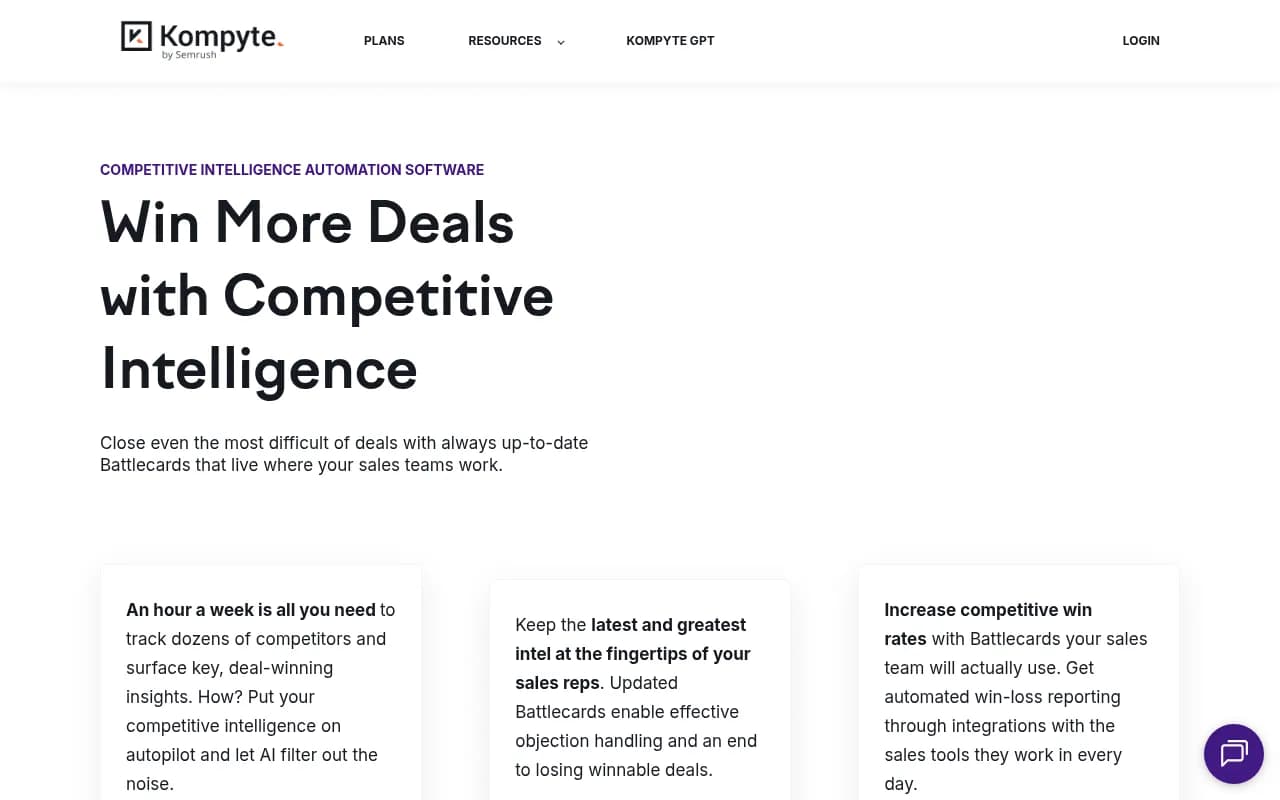
If your team is bigger than the SEO desk, platforms like Klue and Crayon track websites, product pages, reviews, job postings and messaging, and turn changes into battlecards for sales. Crayon's AI flags the significant updates, such as pricing shifts and messaging changes, so you are not reading raw diffs. Kompyte is the "set and forget" option, though its pricing is demo-led.

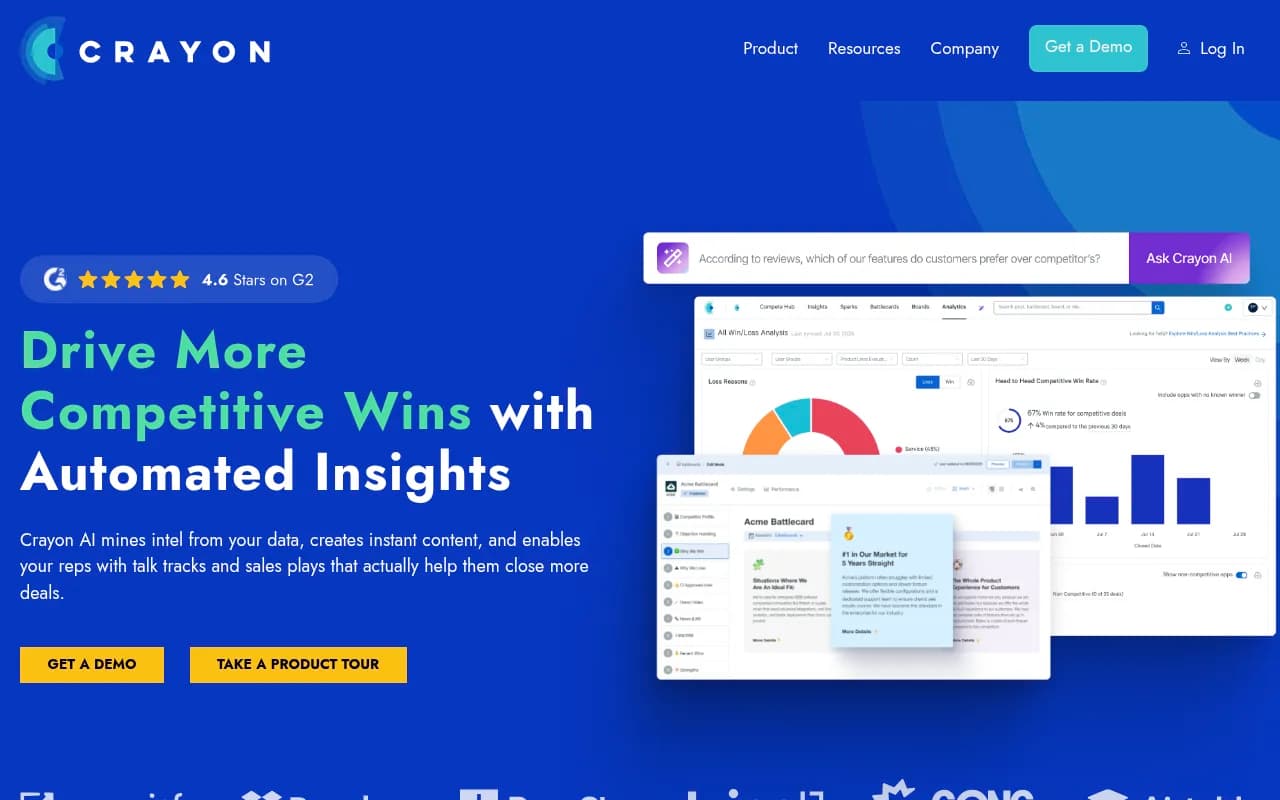
Be honest about whether you need these. They are built for product marketing and sales enablement. A solo SEO or small content team will usually get more from the SEO suite plus a page monitor.
Layer 4: AI visibility monitoring
This is the layer most older competitor monitoring guides skip, and it is where rivals can now beat you without ever outranking you on Google. If ChatGPT recommends a competitor for your category prompt, you lose the click before search starts.
Citation share is also volatile. In Promptwatch Data's ChatGPT citation share report for June 2026, Reddit's share dropped from 6.11% in May to 3.71% in June, and no single domain exceeded 4%. The recommendation from that data: track citation share on a recurring schedule, because a domain's share can halve or double within a month. A one-off snapshot of rivals tells you very little.
What to watch for rivals in AI answers is also fairly specific. In Promptwatch's content type breakdown (Sep 28 to Oct 4, 2026), product pages made up 22.4% of ChatGPT citations, landing pages 16.8% and listicles 13.6%. So when you audit a competitor, look at their product pages, landing pages, comparison pages and listicle placements first. Those are the formats getting cited. The related content half-life report found news pages lose half their citations within about 36 days, while landing pages and docs last longer, so a rival's evergreen pages matter more than their news posts.
For this layer, Promptwatch is the platform I would start with. It runs daily prompt monitors across ChatGPT, Google AI Overviews, Perplexity, Gemini and others, shows which competitors are cited for which prompts, and its Page Tracker lets you watch any competitor URL and see the prompts that cite it. Its heatmaps and competitor comparison dashboards make the weekly review quick, and the Action Board and Content Agent turn gaps into drafted content rather than just charts.

Other trackers exist, mostly monitoring-focused. [tool:otterly-ai], [tool:peec-ai], [tool:profound] and [tool:athenahq] are common names, and Semrush's AI toolkit and Ahrefs Brand Radar add AI tracking to the classic suites. To browse more options, the GEO software directory at bestgeosoftware.com and the AI rank tracking directory at ai-rank-tools.com compare them side by side.
Tool comparison at a glance
| Tool | Main job | Daily alerting | Good for |
|---|---|---|---|
| Semrush | Rankings, keyword gaps, ads | Position Tracking alerts | All-round SEO competitor tracking |
| Ahrefs | Backlinks, content gaps | Link and ranking alerts | Link-building and content teams |
| SpyFu | Paid search history | Limited | PPC competitor research |
| Visualping | Page change detection | Yes, email | Pricing and landing page watching |
| Klue / Crayon | Competitive intelligence | Yes | Product marketing and sales |
| Promptwatch | AI answer visibility | Daily monitors, weekly digest | Citations and share of voice in AI |
| Google Search Console | Your own performance | No | Free baseline |
I did not verify the exact alert configuration for every tool above, so test the alert options in a trial before you commit.
Layer 5: automation glue
The last piece is plumbing. You want signals to land in one place, not five inboxes.
- Send alert emails to a shared Slack channel or a single label in your inbox.
- Use [tool:zapier], [tool:make-formerly-integromat] or [tool:n8n] to route page-change alerts, RSS items and rank movements into a spreadsheet or channel.
- Use [tool:looker-studio] style dashboards or Whatagraph-type reporting to combine rank, traffic and AI visibility for a weekly view. If you want a visual option, [tool:whatagraph] handles multi-source reporting.
- If you are comfortable with APIs, pull Semrush or Promptwatch data on a schedule and let an assistant like [tool:claude] summarize the week's changes.
Keep the stack small. Every extra tool is another feed you will eventually ignore.
A daily, weekly and monthly workflow
Daily: 10 minutes of triage
- Scan the alert channel for rank gains or losses by rivals on your priority keywords.
- Check page-change alerts. Did a competitor change a pricing page, rewrite a top landing page, or publish something new?
- Glance at your AI visibility monitor for sudden drops or a rival suddenly cited for a prompt you own.
- Log anything worth acting on. Do not act on everything.
Weekly: 45 minutes of review
- Review new backlinks won and lost by two or three main competitors.
- List competitor content published this week and note topics you do not cover.
- Compare keyword gaps: terms where two or more rivals rank and you do not.
- Review AI citations: which competitor pages are cited, from which sources, and which prompts you are missing.
- Check paid search for new ad copy or keywords if PPC matters to you.
Monthly: strategy pass
- Reassess who your real competitors are. They are often different in AI answers than in Google results.
- Review share of voice trends over the month rather than reacting to single-day swings.
- Pick two or three content or link actions based on the gaps, and assign owners.
- Prune alerts that did not lead to any action.
Common mistakes
- Tracking too many rivals. Three to five direct competitors beat twenty you never look at.
- Watching vanity numbers. A competitor's traffic estimate is a guess. Their ranking changes and published pages are facts.
- Treating AI visibility as a one-time audit. As the June data shows, citation share moves a lot in a month.
- Reacting without context. A rank drop for a rival might be a Google update affecting everyone.
- Skipping your own data. Pair competitor signals with your Search Console and analytics so you know whether their move actually cost you traffic.
Picking your stack by budget
Lean (under about $150/mo): Google Search Console, Visualping on a handful of key pages, Feedly for competitor blogs, and one SEO suite plan. Add a free AI visibility scan to see where you stand.
Mid-size SEO team: Semrush or Ahrefs for rankings and links, a page monitor, an AI visibility platform with daily monitors, and Zapier or n8n to route alerts into Slack.
Enterprise or multi-team: Add a competitive intelligence platform like Klue or Crayon for sales and product marketing, and an enterprise SEO platform for scale. For wider options, the software directory at surferstack.com lists more tools by category.
Final thoughts
The best competitor monitoring setup is boring. Alerts arrive on their own, the daily check takes minutes, and the weekly review leads to two or three concrete actions. Start with one tool per layer, run it for a month, and cut anything that never changed what you did. Verify pricing on each vendor's page before you buy, since plans in this category change often.