Key takeaways
- Content decay now shows up in two places: Google rankings and AI citations. A good refresh stack watches both.
- Promptwatch's data shows news pages lose half their ChatGPT citations in about 36 days, while product pages, reviews and how-tos hit their half-life at 74 to 77 days. Refresh in that order.
- No single tool does everything. You need detection (what is decaying), optimization (what to change), and execution (publishing the update).
- Surfer, Clearscope, MarketMuse and Frase are strong for on-page rewrites. Promptwatch and AirOps lean toward closing the loop with AI citation data.
- Automation should propose, not publish blindly. Keep a human review step for anything with facts, prices or claims.
Why refreshing old posts matters more in 2026
Every article follows the same arc: it spikes, grows, plateaus and then decays. Slate's 2026 refresh guide describes teams losing 40, 50, sometimes 80% of a page's traffic before anyone notices. Animalz makes the same point in its content refresh strategy post, last updated May 2026: the arc is predictable, so the response should be a process and not a panic.
What changed is that decay now has a second dimension. A page can hold its Google position and still stop being cited by ChatGPT, Perplexity or AI Overviews. AirOps frames this as a swap of signals: where you once watched a position drop in Search Console, you now also watch citation rate decline.

I think this is the part many teams underrate. A refresh program built only on rankings misses the pages AI is quietly dropping.
How fast does content actually decay in AI answers?
Promptwatch Data tracked every page ChatGPT cited on July 6, 2026 for 90 days, split by content type. The content half-life report is the best prioritization input I have seen for refresh work:
| Content type | Still cited after 30 days | Still cited after 60 days | Half-life |
|---|---|---|---|
| News | Fastest decay | 41% | About 36 days |
| Product pages, reviews, how-tos | Mid-range | About 55% | 74 to 77 days |
| Listicles | Higher | 60% | Probably beyond 60 days |
| Comparisons | 72% | 63% | Close to or beyond 90 days |
| Landing pages | 78% | 69% | Close to or beyond 90 days |
| Docs | 76% | 67% | Close to or beyond 90 days |
Note that the report flags the landing page, docs, comparison and listicle half-lives as uncertain, because every line drops in the final week when the tracking window ends. Almost a quarter of news pages are never cited again after day 0.
The companion report on ChatGPT citation share by content type (Sep 28 to Oct 4, 2026) shows where the citations actually sit: product pages at 22.4%, landing pages at 16.8%, listicles at 13.6%, how-tos at 8.7%. Comparisons take 5.9% and news 5.7%.
My reading of the two reports together (this is my interpretation, not a Promptwatch statement):
- Refresh time-sensitive and news-style pages first. Their citations decay in about five weeks.
- Next come product pages, reviews and how-tos, which lose half their citations in roughly 74 to 77 days. Product pages carry the largest citation share, so letting them go stale is expensive.
- Landing pages, docs and comparisons hold longest, but keep prices, features and positioning accurate.
What an automated refresh workflow looks like
Most refresh tools cover one or two of these stages. Few cover all four.
- Detect. Find pages losing clicks, impressions, rankings or citations.
- Diagnose. Compare against current top results and what AI answers are citing.
- Rewrite. Update facts, sections, headings, internal links and structure.
- Publish and verify. Push the update to your CMS and check whether it recovered.
The tools below are grouped by where they are strongest.
Detection tools: finding what is decaying
Google Search Console
Still the baseline. Compare 90-day windows, filter for pages with falling clicks and stable impressions (a CTR problem) versus falling impressions (a ranking problem). It is free and every other tool builds on this data.
Page Modified and Visualping
These solve a narrower problem: knowing when a competitor or a source page changed. Useful when your content depends on someone else's pricing or documentation.
ContentKing
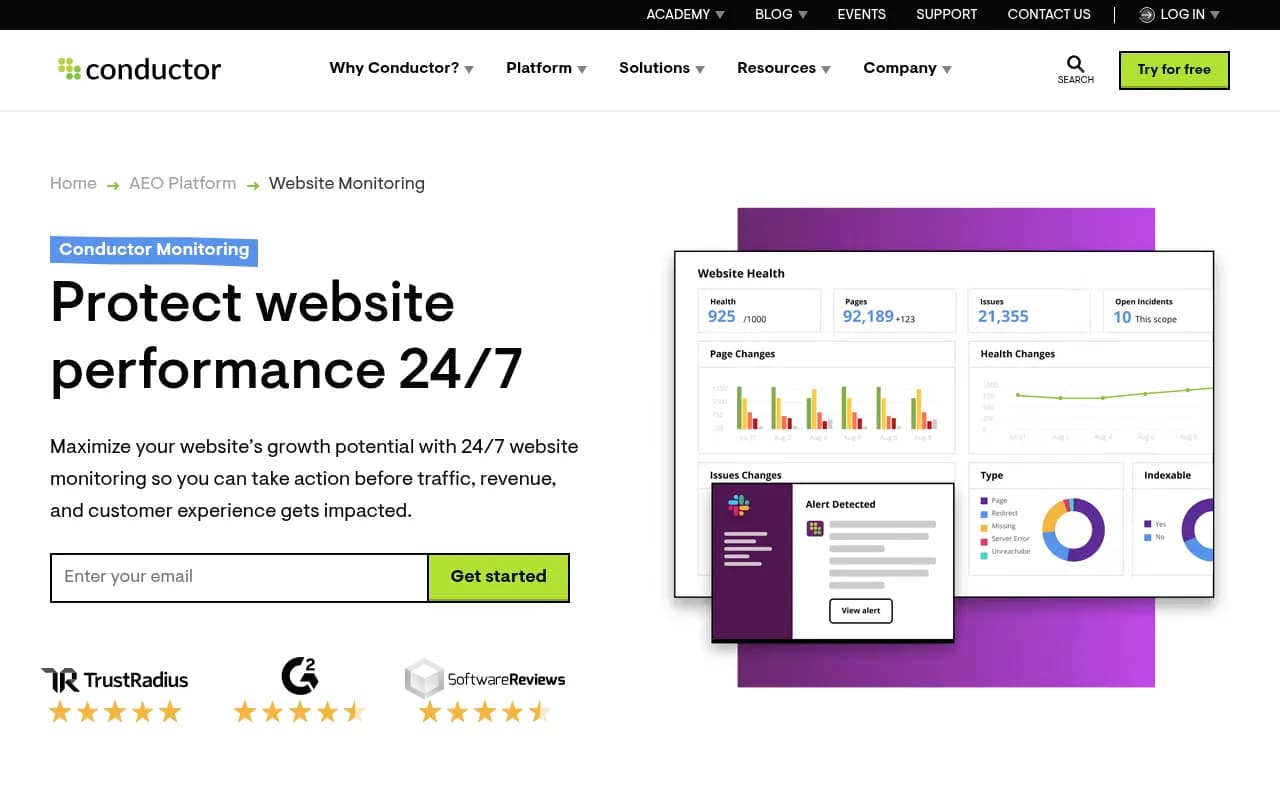
Real-time change tracking on your own site. Handy for catching accidental edits that quietly break a page you just refreshed.
Optimization tools: telling you what to change
These are the workhorses. You paste in or select a URL, they compare it to what ranks, and they score or suggest edits.
Surfer SEO
Surfer's content editor and audit features are the most common choice for refreshes, since it shows which terms and sections your page is missing against the top results. It rewards disciplined use; chasing a 100 score by stuffing terms is a trap.
Clearscope
Clearscope is the editor-friendly option. Its grading is readable by writers who are not SEO specialists, which makes refresh work easier to hand off. It sits at a higher price point.

MarketMuse
MarketMuse leans toward content inventory and topic authority. It is a better fit when you have hundreds of pages and need to decide which clusters to invest in, not just edit one post.
Frase
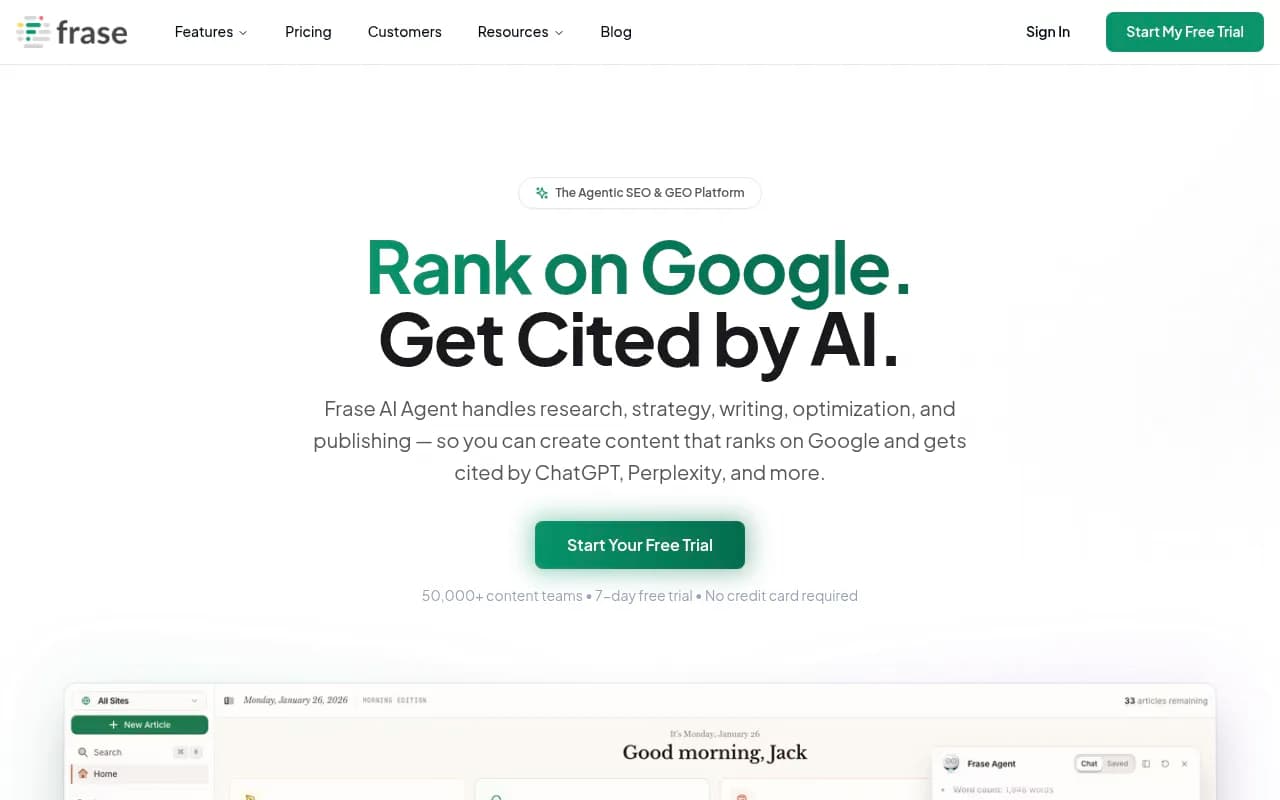
Frase combines research, briefs and writing. It works well for turning a decaying post into an updated brief quickly.
NeuronWriter
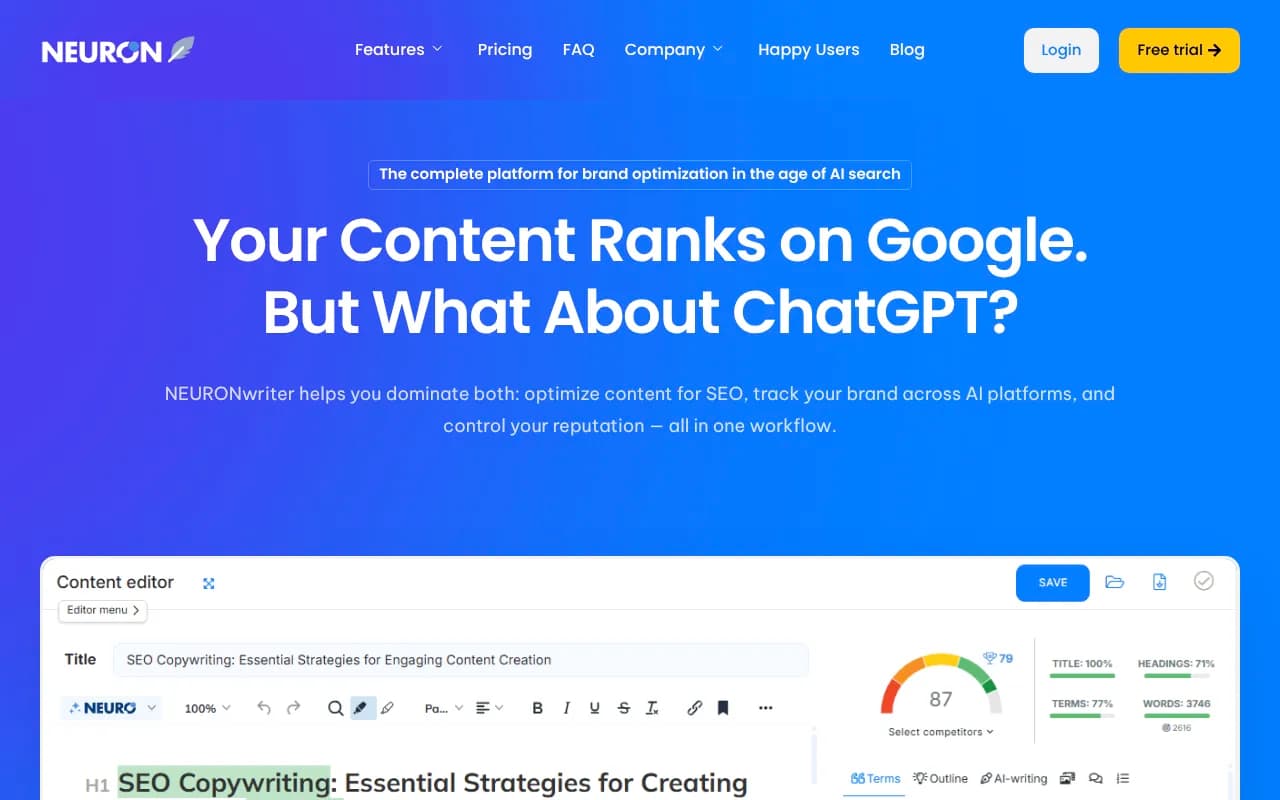
A budget-tier option with SERP analysis, scoring and a draft generator. One roundup I read lists it as the budget pick for automated content tools, and that matches how teams tend to use it.
Semrush Writing Assistant and ContentShake AI
If you already pay for Semrush, the writing assistant gives real-time suggestions inside your editor without another subscription.
Execution tools: automating the rewrite and publish step
This is where "automated" starts to mean something. These tools do more than score a page. They draft updates or push changes.
Promptwatch
Promptwatch approaches refresh from the AI visibility side. Its content gap analysis maps your pages against the prompts AI actually answers, and Content Refresh produces git-diff-style updates for existing pages so you can see exactly what changes. The Content Agent (Business and Enterprise plans) can plan, write and publish to WordPress, Webflow or Framer with a review inbox, and published pages are then tracked through crawls, citations and AI traffic. Underperformers come back as actions on the Action Board.
That last step is the useful one. Most refresh tools stop at "here is a better draft." Promptwatch checks whether the updated page got crawled and cited afterward, using IP-verified AI crawler logs. Pricing starts at $95/mo (Essential) and the Business plan at $579/mo includes the Content Agent; confirm on promptwatch.com/pricing.

AirOps
AirOps is a content engineering platform with workflows you build around refresh jobs. Its own content refresh guide treats citation gains by competitors as a refresh signal, which fits how the product is positioned. Expect some setup time. It rewards teams willing to build workflows.

Search Atlas and MEGA SEO
Both lean into autopilot SEO: detecting issues, generating content and publishing. Useful for small teams with little time, but review output carefully before it goes live.


Content Refresher for WordPress
A WordPress plugin that detects outdated posts and generates refreshed drafts for your approval. Its own blog describes the approval step as central, and I agree with that design: draft automatically, publish manually.
Writesonic, Jasper and Junia AI
General AI writers with refresh-adjacent features. They are better for expanding a thin post than for diagnosing why a good post fell.



Claude and ChatGPT as refresh engines
Many people on forums name Claude as their favorite general model for SEO content work. It handles long posts well, so it is a sensible choice for rewriting sections when you give it the current page, the competing pages and your fact sheet. Pair it with Zapier, n8n or Make if you want to chain it into a pipeline.


Comparison table
| Tool | Best for | Detects decay | Suggests edits | Drafts updates | Tracks AI citations |
|---|---|---|---|---|---|
| Google Search Console | Free baseline data | Yes | No | No | No |
| Surfer SEO | On-page optimization | Limited | Yes | Yes | Limited |
| Clearscope | Editor-friendly grading | No | Yes | No | No |
| MarketMuse | Large inventories | Yes | Yes | Yes | No |
| Frase | Fast briefs | No | Yes | Yes | No |
| NeuronWriter | Budget teams | No | Yes | Yes | No |
| AirOps | Custom workflows | Via workflows | Yes | Yes | Yes |
| Promptwatch | AI citation-led refresh | Yes | Yes | Yes | Yes |
| Search Atlas | Autopilot SEO | Yes | Yes | Yes | Limited |
Capabilities change quickly and I have not verified every feature against current pricing pages, so check each vendor before buying.
Pick a stack by team type
Solo blogger or small site
Google Search Console, plus NeuronWriter or Frase, plus Claude for rewrites. Total cost stays low and you stay in control.
In-house content team
Surfer or Clearscope for editing, MarketMuse if the library is large, and a GEO platform like Promptwatch to see which refreshed pages AI starts citing. For more options, the GEO software directory lists the AI visibility side.
Agency
Client reporting matters as much as the edit. Look for white-label reports and multi-project setups. Promptwatch's agency plans start at $199/mo (Kick-off), though they do not include the Content Agent or AEO articles, so check the plan fit.
A refresh routine that works
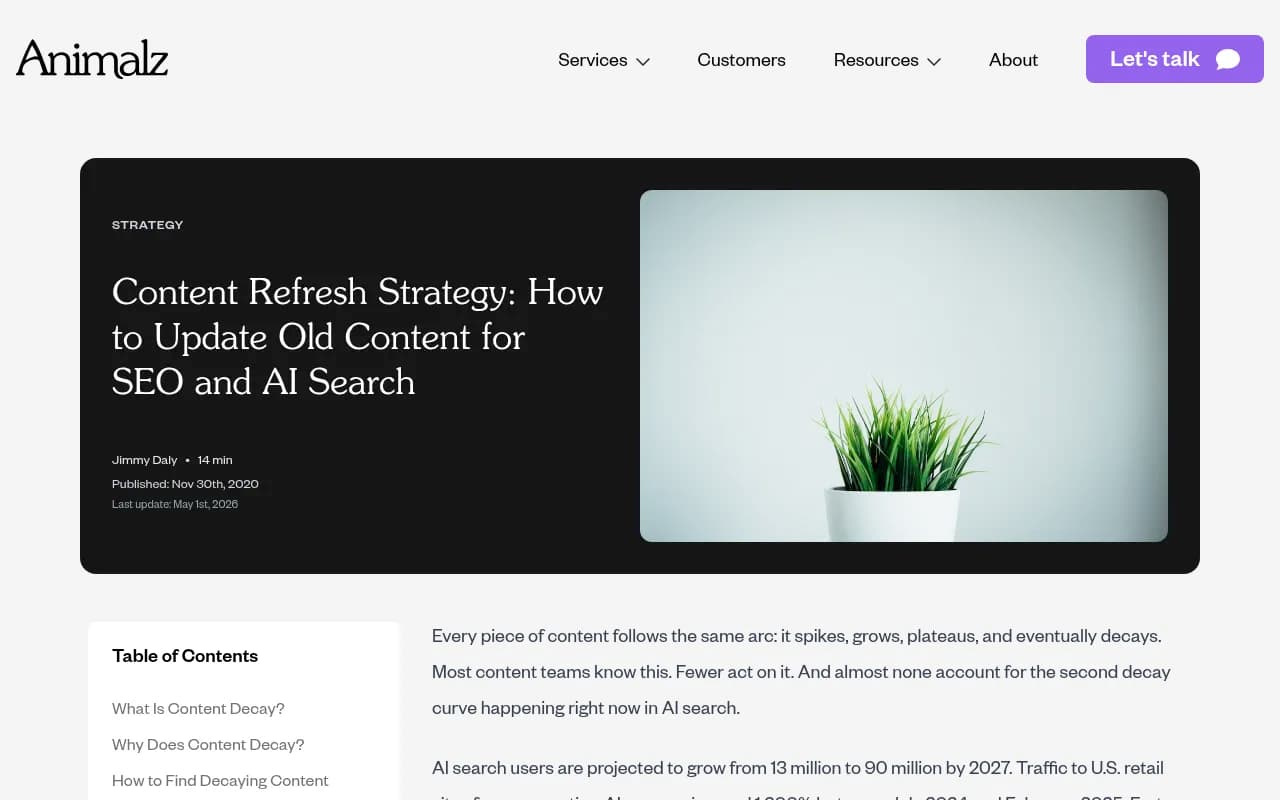
Animalz breaks the process into finding decaying content, refreshing it, and keeping it accurate. Here is how I would operationalize that.
- Monthly: pull Search Console pages with falling clicks. Add pages whose AI citations have dropped, if your tool tracks them.
- Sort by type. News and time-sensitive pages go to the front of the line. Product pages, reviews and how-tos follow.
- Decide: refresh, rewrite or retire. AirOps' guide uses the same three-way split. A refresh updates facts and structure. A rewrite changes the angle. Retire or redirect pages with no future.
- Update what AI reads. Add current stats with sources, a direct answer near the top, clear headings, and a visible updated date that reflects real changes. Do not change the date for cosmetic edits.
- Check crawl access. A refreshed page nobody can fetch will not recover. IP-verified crawler logs, or at minimum your server logs, tell you whether AI bots reached it.
- Measure after 4 to 6 weeks. Compare clicks, rankings and citations against the pre-refresh baseline.
What to change on a refresh
- Outdated stats, screenshots, prices and product names.
- Missing subtopics that current top results cover.
- Weak intros that bury the answer.
- Internal links to newer pages.
- Schema and metadata that no longer match the content.
What not to change
Don't rewrite a page that still ranks well and gets cited just because a score says so. If it works, touch only the facts that went stale. I have seen teams lose a top-three position by overhauling a page that only needed a new year in one table.
Risks of automating refreshes
- Hallucinated facts. AI drafts invent numbers. Check every statistic against a source.
- Homogenization. Optimizers push every page toward the same average of the top results. Add original data or a firsthand point of view.
- Silent damage. Automated publishing without review can overwrite good content. Use a review inbox or approval step.
- False signals. Tweaking dates without changing substance does not fool search engines for long.
Where to start
Start small. Pick your ten most valuable decaying pages, refresh them manually with one optimization tool, and measure. If the lift is real, automate the detection and drafting steps, and keep a human on the publish button. For AI visibility specifically, connect a tracker so you can see whether the refresh moved citations and not only rankings. You can also browse the wider category in the software directory at surferstack.com.