Key takeaways
- Reviews influence ChatGPT local picks indirectly: it seems to read what third-party articles, roundups and review platforms say about you, not necessarily your Google star rating.
- Reviews are only 1.7% of all ChatGPT citations (Sep 28 to Oct 4, 2026), but rise to 5.6% when the prompt names a specific brand, per Promptwatch Data.
- Consumer behaviour is moving fast. BrightLocal's 2026 survey found use of ChatGPT and similar tools for local recommendations rose from 6% to 45%.
- Studies disagree, and identical questions returned identical sources only 8 times in 100. One screenshot proves nothing, so test repeatedly.
- The practical plan: collect reviews on the platforms your category trusts, get mentioned in local editorial, write reviews-friendly service pages, and track mention rate monthly.
The short answer
Yes, but probably not the way most advice claims. The popular version goes: get more Google reviews, raise your rating, and ChatGPT will recommend you. The evidence we have is messier than that.
Ask ChatGPT why it picked a business and it will tell you reviews. Whitespark found exactly this when they followed up local queries with a "why these?" question. But a model explaining itself is not the same as a measurement of what it retrieved. The better question is which pages ChatGPT actually read to build the answer, and whether any of them were review content.
That is what the rest of this guide tries to separate: what is established, what is contested, and what you should test yourself.
Why the question matters now
BrightLocal's Local Consumer Review Survey 2026 (published February 11, 2026) reports that use of ChatGPT and other generative AI tools for local recommendations grew from 6% last year to 45%, making them the third most popular source of business recommendations. Google and Facebook still sit ahead.
The same survey says 52% of consumers look for an average rating of at least 4 out of 5 stars. So reviews clearly decide whether a human picks you. The open issue is whether the same signals reach the AI answer, or whether the AI reads something else entirely.
If you want to track local review trends alongside AI visibility, BrightLocal is a reasonable place to start.
What the evidence says about reviews and ChatGPT
Evidence that reviews matter
- Whitespark reports that when asked why it recommended certain companies, ChatGPT's first answer is that the inclusions are based on reviews.
- Visible Owl's advice for local businesses is a Google rating of 4.8 or higher, a steady flow of new reviews, reviews on two or three sites, reviews that name the job and the town, and a reply to every one. In their Central Texas study, every business in the map results was rated 4.8 or higher. That describes Google's map, not ChatGPT, so treat it as a proxy.
- A LinkedIn post by Marcus Sheridan claims negative Google reviews have a large effect on whether ChatGPT recommends a business. It is a practitioner observation, not a controlled study, and I could not verify it.
Evidence that the link is weaker than it looks
Pluspoint analysed 309 ChatGPT answers on August 10, 2026 with live web search: 210 customer dining questions across 11 US cities, each asked twice, plus 99 owner questions. Their findings cut against the "Google stars feed ChatGPT" story:
| Source type cited in 210 answers | Share of cited domains |
|---|---|
| City and national editorial | 48.9% |
| Small independent sites | 18.6% |
| Review and booking platforms | 11.4% |
| Forums | 10.9% |
| Tourism boards and city portals | 10.3% |
| Google, Bing, Apple or Yelp listing pages | 0 |
Pluspoint says no answer read a Google, Bing, Apple or Yelp listing page to decide its picks. They also describe a local answer as two parts built by different suppliers. The sentence that names businesses draws on third-party articles, roundups and forums. The card beside it, with address and hours, comes from a licensed data feed. In their separate audit, 45 of 56 cards carried a Yelp URL tagged as an OpenAI data feed.
One more number from the same study: your own website is only about 4% of cited links, attributed to Microsoft Advertising.
What Promptwatch Data adds
Promptwatch has no local-specific report, so this is general data, not local-business data. In Promptwatch's content type report (Sep 28 to Oct 4, 2026), review pages were just 1.7% of all ChatGPT citations. Product pages led at 22.4%, followed by landing pages at 16.8% and listicles at 13.6%.
But for branded prompts, where the user names a specific company, reviews rise to 5.6%, more than three times their overall share. That fits how people actually research: they find a shortlist, then ask "is X any good?" Reviews matter most at that second step.
Also, Promptwatch's social citation data shows ChatGPT's social citations fell to 0.46% in the same week, with Reddit down to 0.09%. Google AI Overviews, by contrast, drew 12.2% of its citations from social platforms. And per Promptwatch's Reddit data, reddit.com's share of ChatGPT citations fell from about 4% to 0.5% on August 14, 2026. Any advice about seeding Reddit threads to win ChatGPT local picks is stale.
A claim I would not repeat yet
A Facebook post circulating a figure that ChatGPT recommended just 1.2% of 350,000+ business locations versus 35.9% for Google's map results has no primary source I could find. If it is real, it points to how selective ChatGPT is. Until someone links the study, do not quote it.
Reconciling the conflict
The studies are less contradictory than they appear. A reasonable reading:
- ChatGPT searches the web live and writes a shortlist from businesses several sources agree on.
- Reviews matter as content on third-party pages: a Tripadvisor or Yelp page, a roundup quoting customers, a local article, a forum thread.
- Your Google Business Profile star rating may not be read directly, but it may correlate with everything else that makes you well-covered.
- When someone names your business, review content becomes much more likely to be cited.
That last point deserves attention. Reputation shows up in the follow-up question. A shopper who asks "is Acme Plumbing reliable?" gets an answer assembled from whatever reviews and mentions exist about Acme, good or bad.
The Reddit post in the research notes adds a useful detail: if a customer writes "They fixed my water heater the same day," that sentence tells an AI what you do and how fast. Reviews that describe the job are better raw material than "great service!" This is anecdote, but it matches the logic of how retrieval works.
What to test in 2026
Do not take anyone's word for this, including mine. Here is a test plan you can run in a week or two.
Test 1: Baseline mention rate
Write 15 to 25 prompts a real customer would ask. Include a mix:
- Discovery: "best emergency plumber in [city]"
- Near me style: "family-friendly Italian restaurant near [neighborhood]"
- Comparison: "[your business] vs [competitor]"
- Branded: "is [your business] worth it?"
Run each prompt at least 5 times, not once. Pluspoint found identical questions returned identical sources 8 times in 100, so single runs are noise. Record how often you are named, and in what position.
Test 2: Source audit
For every answer, ask ChatGPT for its sources and write down the domains. Sort them into the buckets from the Pluspoint table: editorial, review platforms, forums, city portals, your own site. You are looking for the gap. If ChatGPT keeps citing a local "best of" roundup you are not in, that roundup is your target, not your Google rating.
Test 3: Review platform comparison
Check which review platforms appear in citations for your category. Travel prompts skew to booking sites (see Promptwatch's travel citation report, where booking and search sites earn more than half of citations). Healthcare skews to government and public health sources (healthcare report). Automotive skews to marketplaces like Autotrader and Cars.com (automotive report). Your category has its own pattern. Invest in reviews on the platforms that actually show up.
Test 4: Review content experiment
Pick two comparable locations or service lines. For one, ask customers for reviews that name the specific job, the dish, the repair or the room. For the other, change nothing. Re-run your prompt set after 6 to 8 weeks. This is slow and imperfect, but it is the cleanest way to isolate the effect.
Test 5: Negative review sensitivity
Run branded prompts for your business and for two competitors with different ratings. Compare how each answer characterises them. If low-rated competitors get hedged language and you do too, that supports the Sheridan claim. If not, it does not.
Test 6: Page specificity
Generic homepages with lines like "quality solutions for all your needs" were reportedly ignored in one Reddit anecdote. Create one clear page per core service, with local detail, and see if mention rate on those service prompts moves. Pluspoint's process also suggests pulling 20 to 50 conversational queries from Search Console to seed your prompt list. Google Search Console is free and has the data.
A practical review strategy
Whatever the test shows, these moves are cheap and help humans too:
- Aim for a healthy rating and steady recent reviews. BrightLocal's data says old reviews don't cut it.
- Spread reviews across two or three trusted sites in your category, not just Google.
- Ask for specifics. Give customers a prompt like "what did we fix, and how fast?"
- Reply to every review, positive and negative.
- Get named in local editorial, roundups and city portals. That is where the evidence says the "sentence" comes from.
- Keep business info consistent everywhere, since the card draws on licensed data feeds.
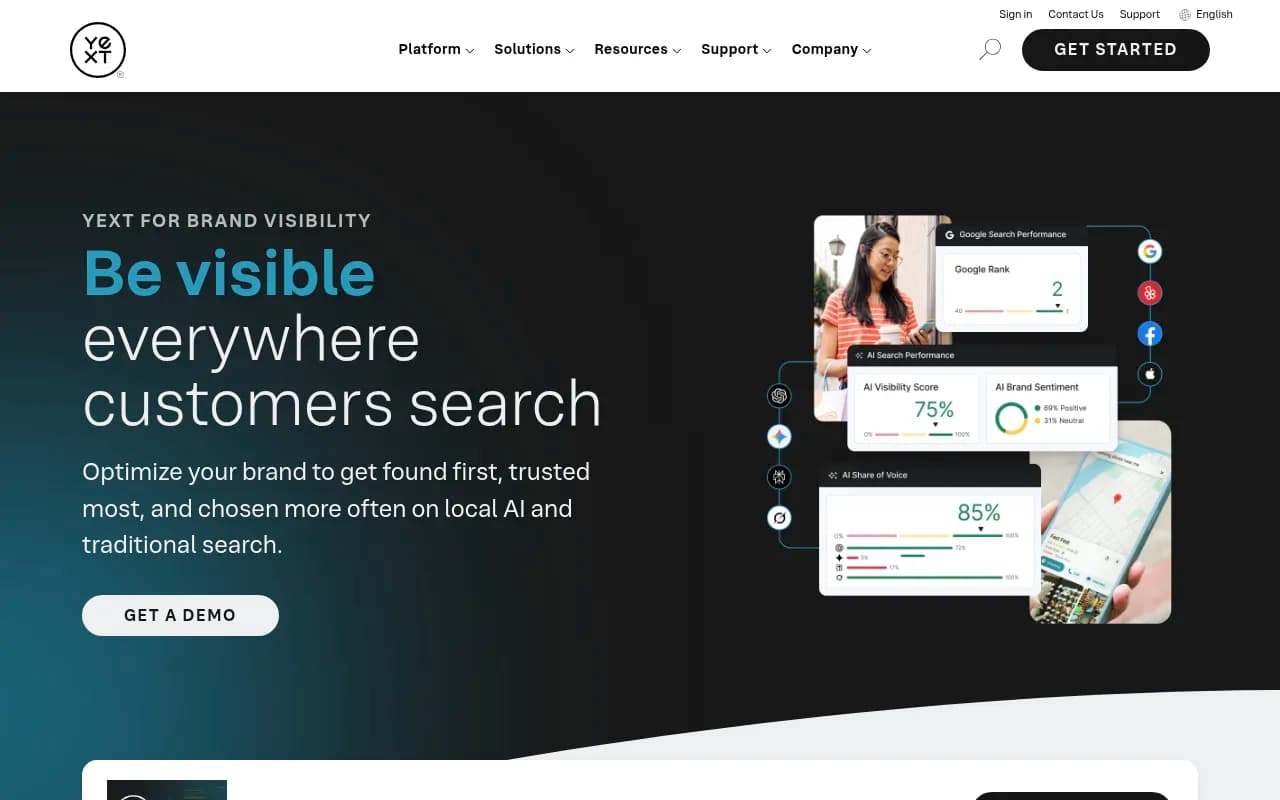
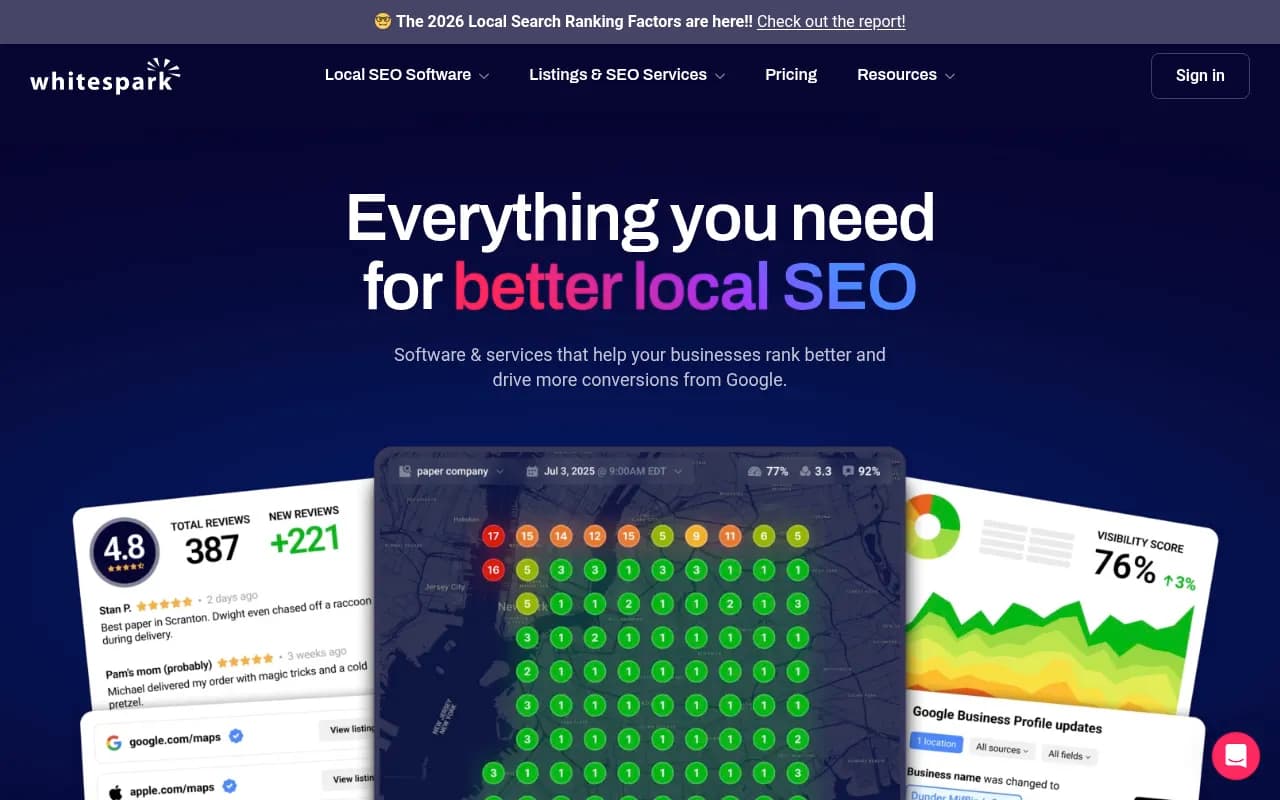
For managing listings and review requests, multi-location teams often use tools like Yext, Birdeye, Whitespark or Trustpilot.
Tools to run the test without a spreadsheet
Manual testing works for the first round. Repeating it monthly across dozens of prompts is where it gets tedious, and where tracking tools help.
| Tool | Best for | Notes |
|---|---|---|
| Promptwatch | Tracking AI answers, citations and AI-referred traffic | Monitors real ChatGPT, AI Overviews and AI Mode interfaces; pin local monitors to exact coordinates on Business plans |
| BrightLocal | Review monitoring and local SEO | Strong on citations and Google Business Profile reviews |
| Whitespark | Local citation building | Good for listing consistency |
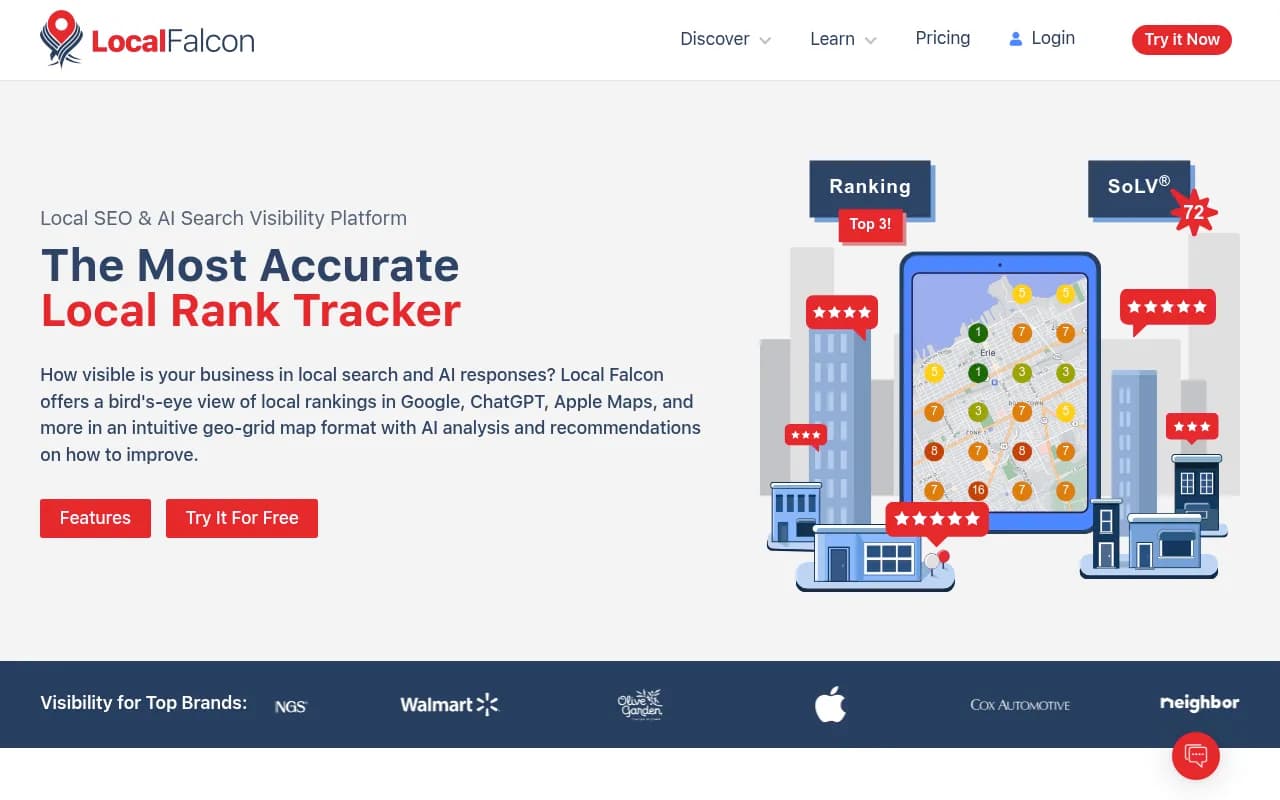
| Local Falcon | Geo-grid rank tracking | Visualises map pack visibility by location |
| Otterly.AI | Basic prompt tracking | Monitoring only |
Promptwatch is the one I would reach for here, because local prompts need to be asked from the right place. It can pin a monitor to exact coordinates so ChatGPT, AI Overviews and AI Mode answer as if asked from that spot, and its crawler logs and citation data show which pages AI actually reads. It also shows which sources are cited for your prompts, which is the audit in Test 2, automated.

Otterly.AI

If you are comparing options, the GEO software directory at bestgeosoftware.com lists many more.
Caveats worth keeping in mind
- ChatGPT changes quickly. Promptwatch Data shows the site: operator jumping from about 0.4% to about 17% of fan-out queries on August 8, 2026 (report). Behaviour you measure in one month may shift the next.
- Content freshness matters. In Promptwatch's half-life data, news lost half its cited pages within 36 days, while landing pages and docs lasted longest. Review roundups probably decay faster than evergreen service pages.
- Ads exist now. Pluspoint notes ChatGPT carries labeled ads, separate from the answer, so you can buy the box but not the answer.
- Most data here is about restaurants or general categories. Your vertical may differ.
What I would do first
Skip the debate about whether Google stars feed ChatGPT. Run the baseline and source audit this week. If the sources are roundups and local editorial, spend your effort on getting included there. If review platforms dominate, push reviews on those specific platforms and ask for descriptive ones. Then re-test monthly, with repeated runs, and let your own numbers decide.
If you want a partner for the local SEO and AI search side of this, 1001 SEO Media works on GEO and local SEO for brands that want to show up in ChatGPT, Gemini and Perplexity answers.
For more on how AI answers cite sources, see the research hub at promptwatch.com/data.