Key takeaways
- AI search engines don't give you a Search Console equivalent — you have to actively track whether your brand appears in their responses
- The core tracking method is prompt-based monitoring: run the queries your customers actually use and record whether your brand gets cited
- Dedicated AI visibility tools automate this at scale, across multiple models, with historical data you can act on
- Monitoring alone isn't enough — you also need to know why you're missing from certain responses and what content would fix it
- Different AI engines behave differently: ChatGPT, Perplexity, and Google AI Overviews each have distinct citation patterns worth understanding separately
The problem with AI search visibility
Traditional SEO has Google Search Console. You log in, see your impressions and clicks, filter by query, and know exactly where you stand. It's not perfect, but it's transparent.
AI search has nothing like that.
When someone asks ChatGPT "what's the best project management tool for remote teams?" or asks Perplexity "which CRM is best for small businesses?", you have no way of knowing whether your brand appeared in the response. You don't get a notification. There's no dashboard. No impressions report. Nothing.
And this matters more every month. ChatGPT alone processes over 10 billion queries per month according to Semrush's 2025 AI search statistics report. Perplexity has grown into a genuine research tool for professionals. Google AI Overviews now appear on a significant share of commercial searches. These aren't niche channels anymore.
So if you're not actively tracking your AI visibility, you're flying blind on a channel that's already sending (or not sending) customers your way.
This guide walks through exactly how to track your brand across the three biggest AI search surfaces: ChatGPT, Perplexity, and Google AI Overviews.
How AI search engines decide who to cite
Before getting into tracking methods, it helps to understand what you're actually measuring.
Each AI engine works differently:
ChatGPT (with web browsing enabled) retrieves content from the web and synthesizes it into responses. It tends to favor authoritative, well-structured pages, third-party mentions (like review sites and listicles), and sources that directly answer the question being asked. The GPT-4o model also powers ChatGPT Shopping, where product and brand recommendations appear in a more structured format.
Perplexity is built around real-time web retrieval. It almost always shows citations alongside its answers, which makes it one of the more transparent AI engines to track. It pulls from a mix of authoritative domains, Reddit discussions, YouTube videos, and news sources. Getting cited in Perplexity often means having clear, direct content that answers specific questions.
Google AI Overviews (and the newer Google AI Mode) draws from Google's existing index. If you rank well for a query traditionally, you have a better shot at appearing in the AI Overview. But it's not a direct correlation — Google's AI layer also synthesizes across multiple sources, and a page that ranks #4 organically might appear in an AI Overview while the #1 result doesn't.
The practical implication: visibility in one AI engine doesn't guarantee visibility in another. You need to track them separately.
Method 1: Manual prompt testing
The simplest starting point is doing it yourself. Pick 20-30 prompts that represent how your customers search, then run them across each AI engine and record the results.
A good prompt list covers:
- Category queries ("best [product type] for [use case]")
- Comparison queries ("X vs Y vs Z")
- Problem-based queries ("how do I solve [specific problem]")
- Brand-specific queries (your brand name, competitor names)
Run each prompt in ChatGPT (with web browsing on), Perplexity, and Google AI Overviews. Note:
- Whether your brand appears at all
- Whether you're cited as a source
- Where in the response you appear (first mention vs. buried)
- Which competitors appear instead
This is tedious at scale, but it gives you a real baseline. The problem is that AI responses are non-deterministic — the same prompt can return different answers on different runs. So manual testing gives you a snapshot, not a reliable trend line.
For anything beyond initial exploration, you need automated tracking.
Method 2: Dedicated AI visibility tracking tools
A growing category of tools now automates the process of running prompts, recording responses, and tracking your brand's appearance over time. Here's a breakdown of the main options worth knowing about.
Full-platform options (track + optimize)
Promptwatch is the most complete option in this category. It tracks your brand across 10 AI models (ChatGPT, Perplexity, Google AI Overviews, Google AI Mode, Claude, Gemini, Grok, DeepSeek, Copilot, and Meta AI), gives you prompt-level visibility scores, and — critically — goes beyond monitoring to help you act on what you find. The Answer Gap Analysis shows which prompts competitors are visible for but you're not, and Content Agents generate articles and briefs designed to close those gaps. It also includes AI crawler logs that show when ChatGPT or Perplexity's crawlers visit your site, which pages they read, and when those pages move from crawl to citation.

Profound is an enterprise-focused platform with strong tracking across 9+ AI engines. It's well-regarded for its depth of data and is a solid choice for larger brands with dedicated SEO teams.
Profound

Otterly.AI covers the monitoring side well — ChatGPT, Perplexity, Google AI Overviews — with clean dashboards and competitor comparison. It's more monitoring-focused than optimization-focused, but it's a capable tracker.
Otterly.AI

AthenaHQ takes a similar monitoring-first approach with good coverage across major AI engines. Strong for teams that want clean visibility data without a lot of extra complexity.

Lightweight and mid-tier options
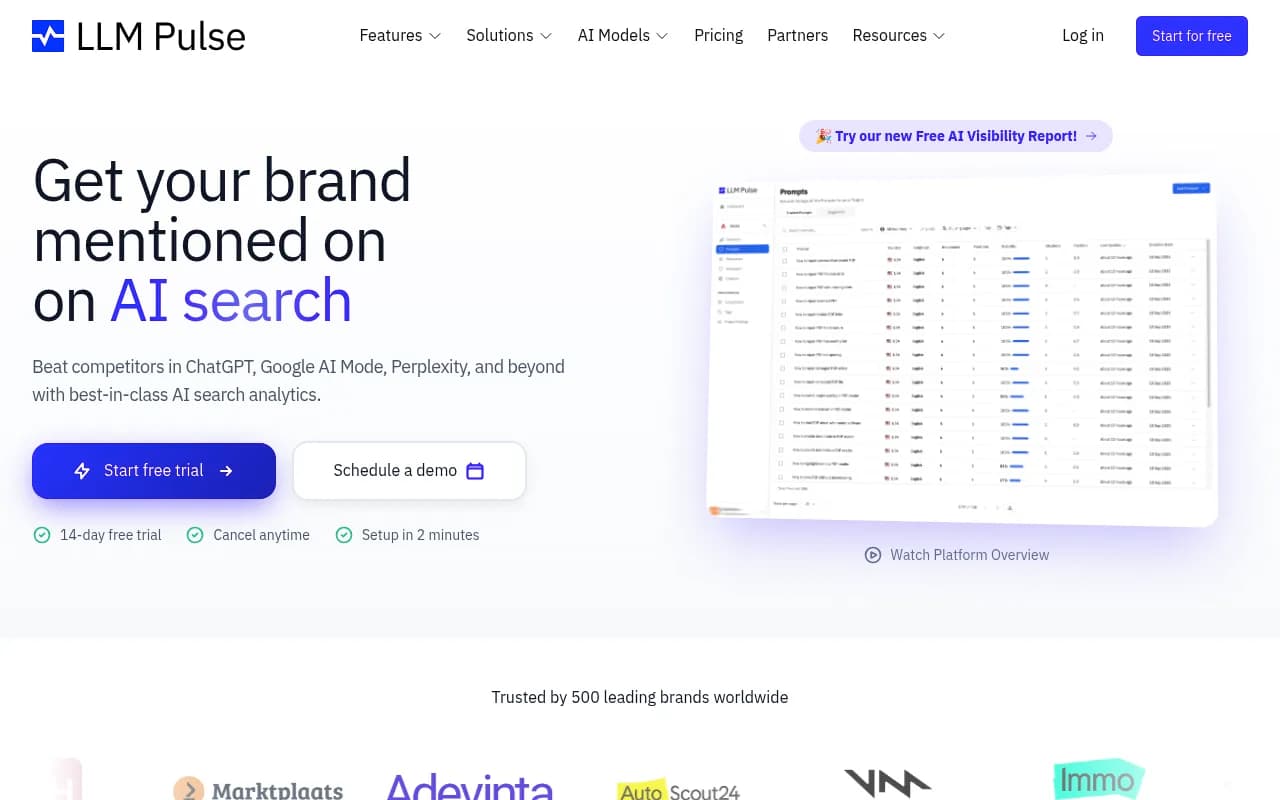
LLM Pulse is a straightforward tracker for brands that want to monitor ChatGPT, Perplexity, and a few other models without a large platform commitment.
Rankshift focuses specifically on tracking brand visibility across ChatGPT and Perplexity, with a simpler interface suited to smaller teams.

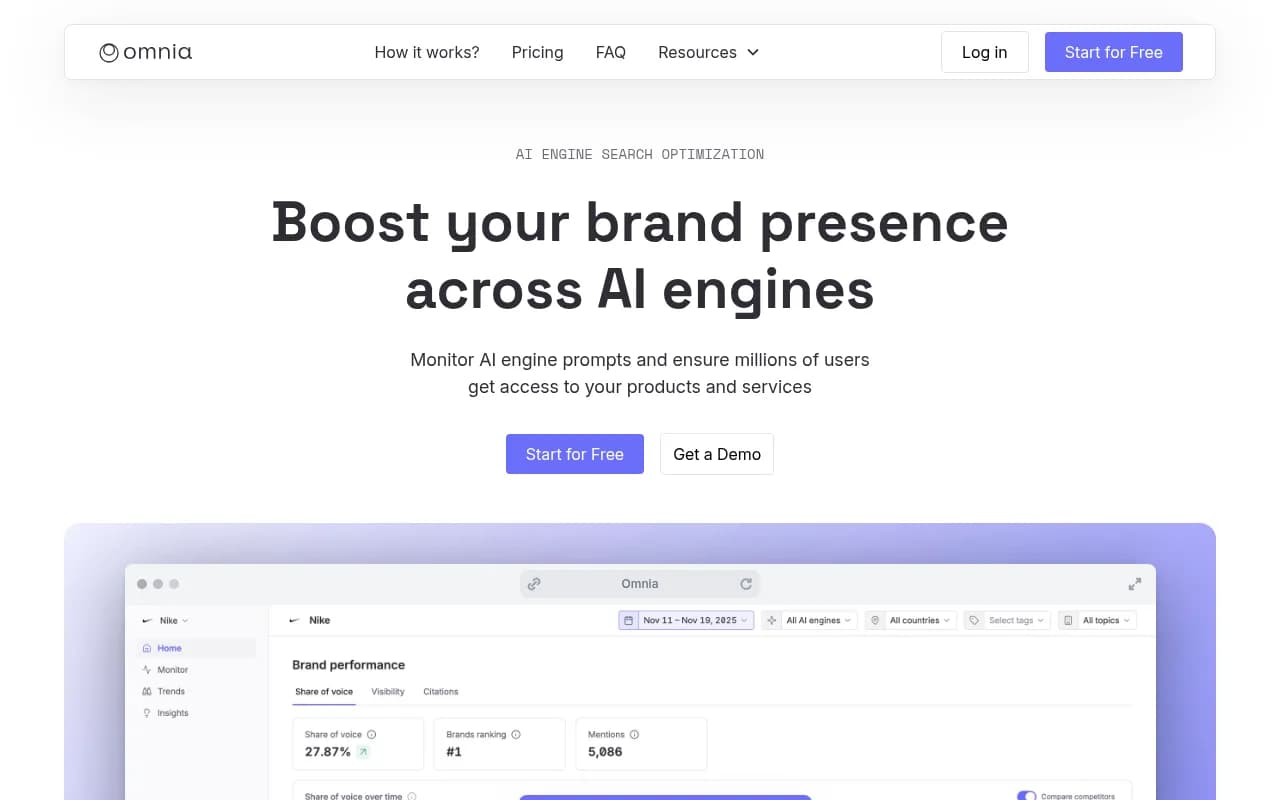
Omnia measures brand presence in AI-generated answers and is worth a look for teams that want something lighter than the enterprise platforms.
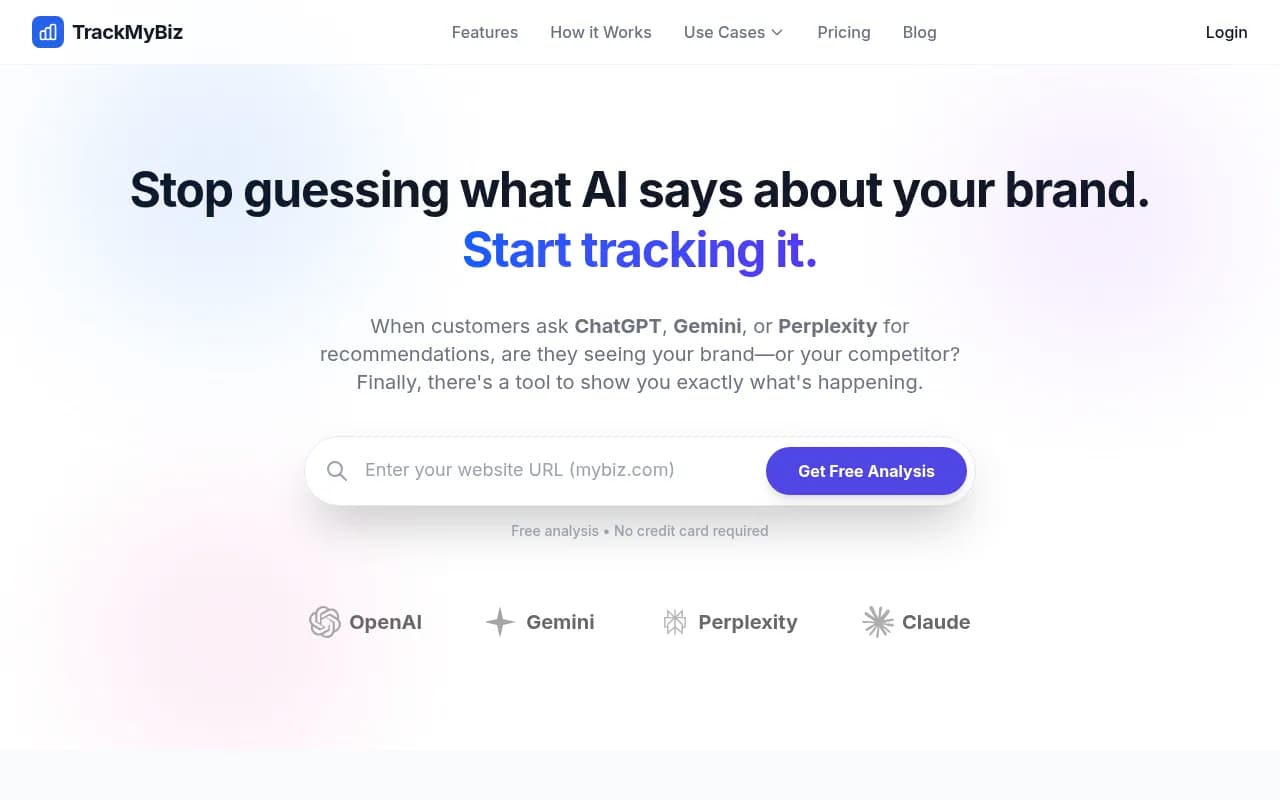
TrackMyBusiness lets you track what ChatGPT, Gemini, and Perplexity say about your brand specifically — useful for reputation monitoring alongside visibility tracking.
Comparison table
| Tool | AI engines covered | Content optimization | Crawler logs | Best for |
|---|---|---|---|---|
| Promptwatch | 10 (ChatGPT, Perplexity, Gemini, Claude, Grok, DeepSeek, Copilot, Meta AI, Google AI Overviews, AI Mode) | Yes (Content Agents + Gap Analysis) | Yes | Teams that want to track AND fix |
| Profound | 9+ | No | No | Enterprise monitoring |
| Otterly.AI | ChatGPT, Perplexity, Google AI Overviews | No | No | Clean monitoring dashboards |
| AthenaHQ | Multiple | No | No | Monitoring-focused teams |
| LLM Pulse | ChatGPT, Perplexity, others | No | No | Lightweight tracking |
| Rankshift | ChatGPT, Perplexity | No | No | Small teams, simple setup |
| Omnia | Multiple | No | No | Brand presence measurement |
Method 3: Tracking Google AI Overviews specifically
Google AI Overviews require a slightly different approach because they're tied to Google's existing search infrastructure.
The most practical way to track them is through a combination of:
- A dedicated AI visibility tool (as above) that specifically monitors Google AI Overviews
- Google Search Console, which now shows some data on AI Overview appearances for your own site
- Traditional rank tracking tools that have added AI Overview detection
Semrush has added AI Overview tracking to its platform, though it uses fixed prompts rather than custom ones. It's useful as a supplement to dedicated GEO tools.
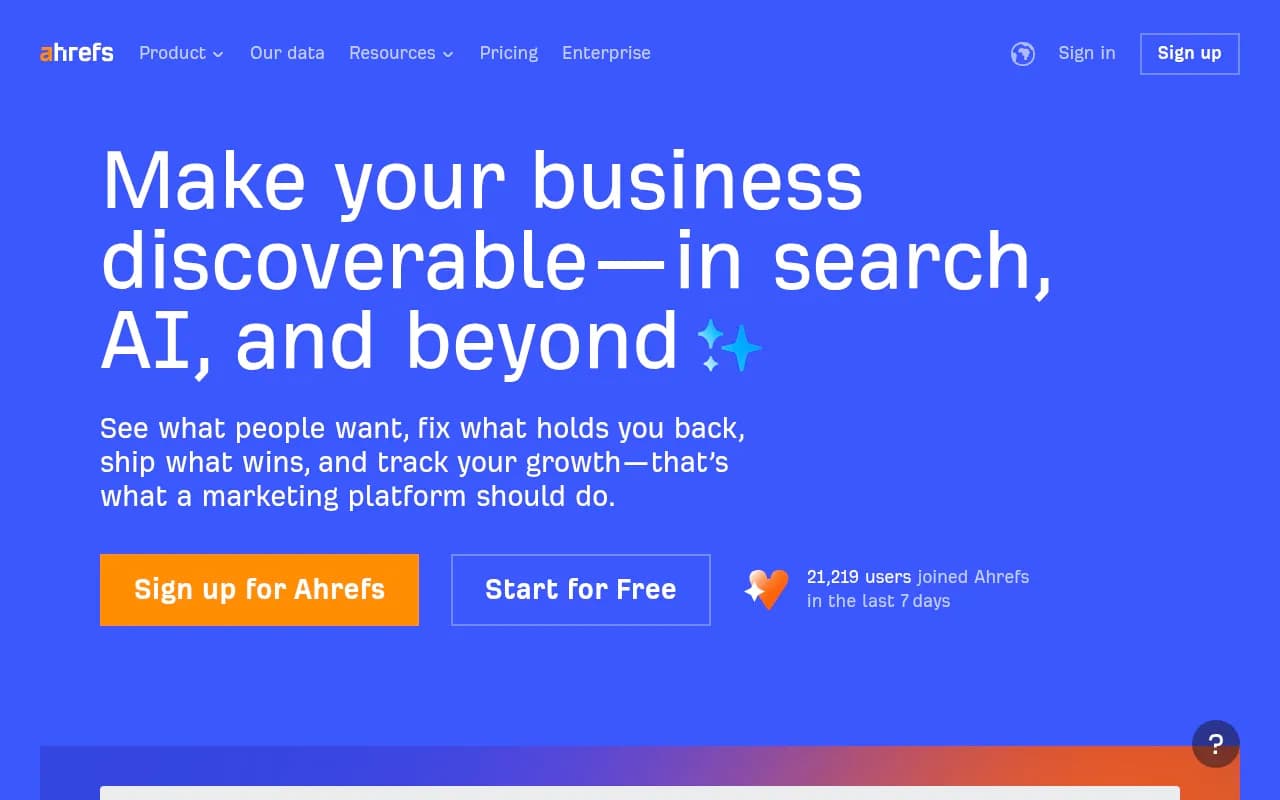
Ahrefs has a Brand Radar feature that covers some AI search visibility, though it also relies on fixed prompts and lacks AI traffic attribution.
For Google AI Overviews specifically, the key insight from practitioners is that traditional SEO signals still matter — but they're not sufficient. A page needs to be well-structured, directly answer the query, and often needs to be cited by other authoritative sources to appear in an AI Overview.
What to actually measure
Once you have tracking set up, you need to know what numbers to pay attention to. Here are the metrics that matter:
Brand mention rate: Out of all the prompts you're tracking, what percentage include your brand in the response? This is your baseline visibility score.
Citation rate: Separate from being mentioned, how often does the AI engine actually link to or cite your content as a source? Citations drive traffic; mentions alone often don't.
Share of voice: How does your mention rate compare to competitors for the same set of prompts? If you appear in 20% of responses but a competitor appears in 60%, that's the gap you need to close.
Sentiment in responses: When your brand does appear, how is it described? Positive, neutral, or negative framing in AI responses can influence purchasing decisions.
Prompt-level breakdown: Which specific prompts are you winning? Which are you losing? This is where the actionable data lives. A high overall visibility score can mask the fact that you're invisible for the highest-intent queries.
Trend over time: Is your visibility improving or declining? AI models update their training data and retrieval behavior, so your visibility can shift without you changing anything. Tracking over time catches these movements.
Why monitoring alone isn't enough
Here's the frustrating reality: most AI visibility tools will tell you that you're invisible for certain prompts. Very few will tell you what to do about it.
The gap between "you're not appearing for this query" and "here's the content that would fix it" is where most teams get stuck. You can see the problem clearly in your dashboard, but translating that into a content action requires knowing:
- What angle the AI engine is looking for
- Which sources it's currently citing and why
- What's missing from your existing content
- What format (listicle, comparison, FAQ, etc.) tends to get cited for this type of query
This is why the most useful tools in this space are the ones that connect monitoring to action. Promptwatch's Answer Gap Analysis, for example, shows you the specific prompts where competitors are visible but you're not, then its Content Agents generate briefs and articles designed to close those gaps using real prompt data, citation patterns, and competitor analysis.
Without that connection, you're left staring at a visibility score with no clear path to improving it.
Practical setup: getting started in a week
If you're starting from zero, here's a realistic first week:
Day 1-2: Build your prompt list. Write down 25-40 prompts that represent how your target customers search. Include category queries, comparison queries, and problem-based queries. Don't just focus on branded terms — the highest-value prompts are often ones where customers don't know your brand yet.
Day 3: Run a manual baseline. Test your top 10 prompts manually in ChatGPT, Perplexity, and Google AI Overviews. Screenshot the responses. This gives you a feel for the landscape before you set up automated tracking.
Day 4-5: Set up a tracking tool. Sign up for a dedicated AI visibility platform. Most have free trials. Input your prompt list, add your domain, and add 2-3 competitors. Let it run its first batch of queries.
Day 6-7: Analyze the gaps. Look at which prompts you're missing from. For each gap, ask: do we have content that answers this? Is it well-structured? Is it being cited anywhere externally? This analysis becomes your content roadmap.
The content side: what actually gets you cited
Tracking is only useful if it leads to action. Based on what practitioners have found works across ChatGPT, Perplexity, and Google AI Overviews, a few content patterns consistently get cited:
- Clear, direct answers to specific questions (not vague thought leadership)
- Comparison content ("X vs Y" or "best tools for X") with concrete recommendations
- List-format content that AI engines can easily extract and reference
- Content that gets mentioned in third-party reviews, Reddit threads, and industry publications
- Well-structured pages with clear headings, definitions, and factual claims
The Reddit and YouTube angle is worth taking seriously. Perplexity in particular pulls from Reddit discussions when they contain useful, specific information. A well-placed comment or post in a relevant subreddit can drive AI citations in ways that traditional link building doesn't.
A note on AI crawler monitoring
One underused tracking method is monitoring which AI crawlers are actually visiting your site. ChatGPT uses GPTBot, Perplexity uses PerplexityBot, and Google's AI systems use various crawlers. Watching your server logs or using a tool that surfaces crawler activity tells you:
- Whether AI engines are even discovering your content
- Which pages they're reading (and which they're ignoring)
- Whether there are technical issues blocking crawling
- How long it takes from crawl to citation
Most traditional SEO tools don't surface this data. Promptwatch's crawler log feature is one of the few that does, connecting the dots from "AI crawler visited this page" to "this page started appearing in citations."
Putting it together
Tracking your brand in ChatGPT, Perplexity, and Google AI Overviews isn't optional anymore. These engines are already influencing purchase decisions, and the brands that understand their AI visibility now will have a meaningful head start over those that figure it out later.
The workflow is straightforward: build a prompt list that reflects real customer queries, set up automated tracking across the AI engines that matter to your audience, measure your brand mention rate and citation rate against competitors, and use the gaps you find to drive content creation.
The tools exist to make this manageable. The question is whether you're using them.