Key Takeaways
- GEO is the new SEO: Generative Engine Optimization adapts your content so AI platforms like ChatGPT, Perplexity, and Claude can understand, extract, and cite it when answering user queries
- AI search is exploding: 27% of U.S. consumers already use AI chatbots instead of traditional search engines, and Gartner predicts 25% of all searches will go through generative AI by 2026
- It's an action loop, not just tracking: The most effective GEO platforms help you find content gaps, generate optimized content, and track results -- not just monitor where you appear
- Citations matter more than rankings: In AI search, being cited as a source is the new first-page ranking. Focus on becoming a trusted reference, not just appearing in results
- Early movers win: Companies investing in GEO now are building visibility advantages that will compound as AI search adoption accelerates
What is Generative Engine Optimization (GEO)?
Generative Engine Optimization (GEO) -- also called AI Search Optimization (ASO), Conversational Search Optimization (CSO), or Large Language Model Optimization (LLMO) -- is the practice of optimizing your digital content so that AI-powered search engines can understand, extract, and cite it when generating responses to user queries.
Unlike traditional SEO, which focuses on ranking in search engine results pages (SERPs), GEO focuses on becoming a cited source within AI-generated answers. When someone asks ChatGPT, Perplexity, Claude, or Google's AI Overviews a question related to your industry, GEO ensures your brand appears in the response.
The fundamental shift: AI engines don't rank websites -- they cite sources. Your goal isn't to appear in position one through ten; it's to be referenced as a trusted authority when AI models generate answers.
Why GEO Matters in 2026: The AI Search Revolution
The way people search for information is fundamentally changing. Here's why GEO should be a priority for your marketing strategy:
The Numbers Don't Lie
- 27% of U.S. consumers are already using AI chatbots instead of traditional search engines (TechRadar, 2025)
- Gartner predicts 25% of all searches will be conducted through generative AI tools by 2026 -- a massive shift from traditional search
- Billions of queries monthly now flow through ChatGPT, Perplexity, Claude, and other AI engines
- The generative AI market reached $67 billion in 2024 and continues explosive growth
Why Users Prefer AI Search
Users are gravitating toward AI search because it offers:
- Natural language interaction: Ask questions the way you'd ask a human expert
- Conversational refinement: Follow-up questions, clarifications, and iterative exploration without clicking through multiple pages
- Synthesized answers: AI models combine information from multiple sources into coherent, comprehensive responses
- Speed and convenience: Get direct answers instead of scanning through ten blue links
- Context retention: AI remembers your conversation history and provides personalized, contextual responses
As AI tools become embedded in voice assistants, business software, mobile devices, and operating systems, users will increasingly rely on generative AI search -- whether they realize it or not.
The Visibility Risk
If your content isn't optimized for AI engines, you risk becoming invisible to a growing segment of your audience. While you've been perfecting your traditional SEO strategy, AI engines have been quietly deciding which brands to cite and recommend. Companies that invest early in GEO are building visibility advantages that will compound as AI search adoption accelerates.
How Generative Engines Work: Understanding the Technology
To optimize for AI search, you need to understand how these engines process and cite content:
The AI Search Process
- Query understanding: The AI model interprets the user's natural language question, identifying intent, context, and required information
- Information retrieval: The model searches its training data, real-time web access (if available), and connected knowledge bases for relevant information
- Source evaluation: AI engines assess credibility, relevance, recency, and authority of potential sources
- Response generation: The model synthesizes information from multiple sources into a coherent, natural language response
- Citation selection: The AI decides which sources to cite, typically favoring authoritative, comprehensive, and well-structured content
What AI Engines Look For
AI models prefer content that is:
- Structured and scannable: Clear headings, logical organization, bullet points, and tables
- Comprehensive: Depth over breadth -- thorough coverage of specific topics
- Authoritative: Demonstrated expertise, credentials, citations, and original research
- Up-to-date: Recent publication dates and current information
- Factual and verifiable: Claims backed by data, research, and credible sources
- Unique: Original insights, proprietary data, and perspectives not available elsewhere
- Accessible: Clear language, defined terminology, and logical flow
The Citation Economy
In AI search, citations are the new currency. Being cited means:
- Your content was deemed authoritative and relevant
- Your brand gains visibility and credibility
- Users may click through to your site for more information
- AI models are more likely to cite you again in future responses
The goal of GEO is to maximize your citation rate across relevant prompts and queries.
GEO vs. SEO: Key Differences and Synergies
While GEO and SEO share common goals -- increasing visibility and driving traffic -- they require different approaches:
Core Differences
| Aspect | Traditional SEO | Generative Engine Optimization (GEO) |
|---|---|---|
| Goal | Rank in top 10 search results | Get cited in AI-generated responses |
| Metric | Position, impressions, clicks | Citation rate, visibility score, AI traffic |
| Content focus | Keywords, backlinks, technical optimization | Comprehensive answers, structured data, authority signals |
| User journey | Click → website → conversion | AI answer → (optional) click → conversion |
| Optimization target | Google's ranking algorithm | Multiple AI models (ChatGPT, Claude, Perplexity, etc.) |
| Competition | Other websites in SERPs | Other cited sources in AI responses |
| Measurement | Google Search Console, rank trackers | AI visibility platforms, citation tracking |
Why Both Matter
GEO doesn't replace SEO -- it complements it:
- SEO foundations help GEO: Well-structured, authoritative content that ranks in Google is more likely to be cited by AI engines
- GEO expands reach: You can be visible in AI search even if you don't rank on page one of Google
- Different audiences: Some users still prefer traditional search; others go straight to ChatGPT or Perplexity
- Compounding benefits: Content optimized for both SEO and GEO maximizes total visibility across all search channels
The smartest strategy in 2026 is to optimize for both traditional and AI search simultaneously.
The GEO Framework: 6-Step Process for AI Search Visibility
Here's a practical, actionable framework for implementing GEO:
Step 1: Audit Your Current AI Visibility
Before optimizing, understand where you stand:
- Track baseline citations: Use AI visibility tools to see how often your brand is currently cited across ChatGPT, Perplexity, Claude, Gemini, and other engines
- Identify prompt gaps: Discover which relevant queries competitors are cited for but you're not
- Analyze competitor citations: See which brands AI engines prefer and why
- Map page-level performance: Understand which specific pages are (or aren't) being cited
Tools like Promptwatch can help you track your brand's visibility across 10+ AI models and identify exactly where you're missing citations.

Step 2: Conduct Answer Gap Analysis
Find the content gaps preventing you from being cited:
- Identify missing topics: What questions are AI engines answering with competitor content instead of yours?
- Analyze citation patterns: What types of content (guides, data, comparisons, tutorials) get cited most often in your industry?
- Discover prompt volumes: Which queries have the highest search volume and lowest competition?
- Map user intent: Understand what users are really asking and what information they need
The most effective GEO platforms don't just show you where you're invisible -- they show you exactly what content you need to create to fix it.
Step 3: Create AI-Optimized Content
Generate content specifically designed to be cited by AI engines:
- Comprehensive resource libraries: Create in-depth guides, tutorials, and reference material that AI engines prefer
- Unique data and insights: Develop proprietary research, original data, and perspectives not available elsewhere
- Structured formats: Use clear headings, bullet points, tables, and logical organization
- Answer-focused writing: Structure content around specific questions and provide direct, complete answers
- Authoritative signals: Include author credentials, citations, data sources, and expert quotes
- Regular updates: Keep content current with the latest information and trends
Some GEO platforms include built-in AI writing agents that generate content grounded in real citation data, prompt volumes, and competitor analysis -- content engineered specifically to get cited by AI models.
Step 4: Optimize Technical Infrastructure
Make it easy for AI crawlers to discover and understand your content:
- Monitor AI crawler logs: Track when ChatGPT, Claude, Perplexity, and other AI crawlers visit your site, which pages they read, and any errors they encounter
- Fix indexing issues: Ensure AI crawlers can access your most important content without barriers
- Implement structured data: Use schema markup to help AI engines understand your content's context and relationships
- Improve site speed: Fast-loading pages are more likely to be crawled and cited
- Mobile optimization: Ensure content is accessible and readable on all devices
Step 5: Build Authority Signals
Establish your brand as a trusted source:
- Earn backlinks: Quality links from authoritative sites signal credibility to AI engines
- Get cited on Reddit: AI models heavily weight Reddit discussions -- participate authentically in relevant communities
- Create YouTube content: Video content influences AI recommendations and provides another citation channel
- Publish original research: Studies, surveys, and data reports are highly citable
- Engage in industry discussions: Comment on relevant topics, contribute to forums, and build thought leadership
Step 6: Track, Measure, and Iterate
GEO is an ongoing process, not a one-time project:
- Monitor citation trends: Track how your visibility scores improve over time
- Measure AI traffic: Connect visibility to actual website traffic and conversions
- Analyze prompt performance: See which prompts drive the most citations and traffic
- Compare competitor visibility: Benchmark your performance against key competitors
- Identify new opportunities: Discover emerging prompts and topics to target
- Refine content strategy: Double down on what works, fix what doesn't
The most effective GEO approach is a continuous cycle: find gaps, create content, track results, repeat.
Essential GEO Tools and Platforms in 2026
Successful GEO requires the right tools to track, analyze, and optimize your AI search visibility:
Comprehensive GEO Platforms
These platforms offer end-to-end solutions for AI search optimization:
Promptwatch -- The market-leading GEO platform used by 6,700+ brands including Booking.com and Center Parcs. Promptwatch is the only platform rated as a "Leader" across all categories in 2026 comparisons. Unlike monitoring-only competitors, Promptwatch helps you take action: Answer Gap Analysis shows exactly which content you're missing, the built-in AI writing agent generates articles engineered to get cited, and comprehensive tracking shows results. Monitors 10 AI models, includes crawler logs, Reddit/YouTube insights, and ChatGPT Shopping tracking. Starting at $99/month.
Profound

Profound -- Enterprise AI visibility platform tracking brand mentions across ChatGPT, Perplexity, and 9+ AI search engines. Strong feature set but higher price point than competitors. Missing Reddit tracking and ChatGPT Shopping capabilities.
Otterly.AI

Otterly.AI -- AI search monitoring platform tracking brand mentions across ChatGPT, Perplexity, and Google AI Overviews. Focuses on monitoring and reporting but lacks content optimization and generation capabilities.
Specialized Tracking Tools
For teams focused primarily on monitoring:

AthenaHQ -- Track and optimize brand visibility across AI search engines. Monitoring-focused platform lacking the content optimization and generation capabilities of more comprehensive solutions.
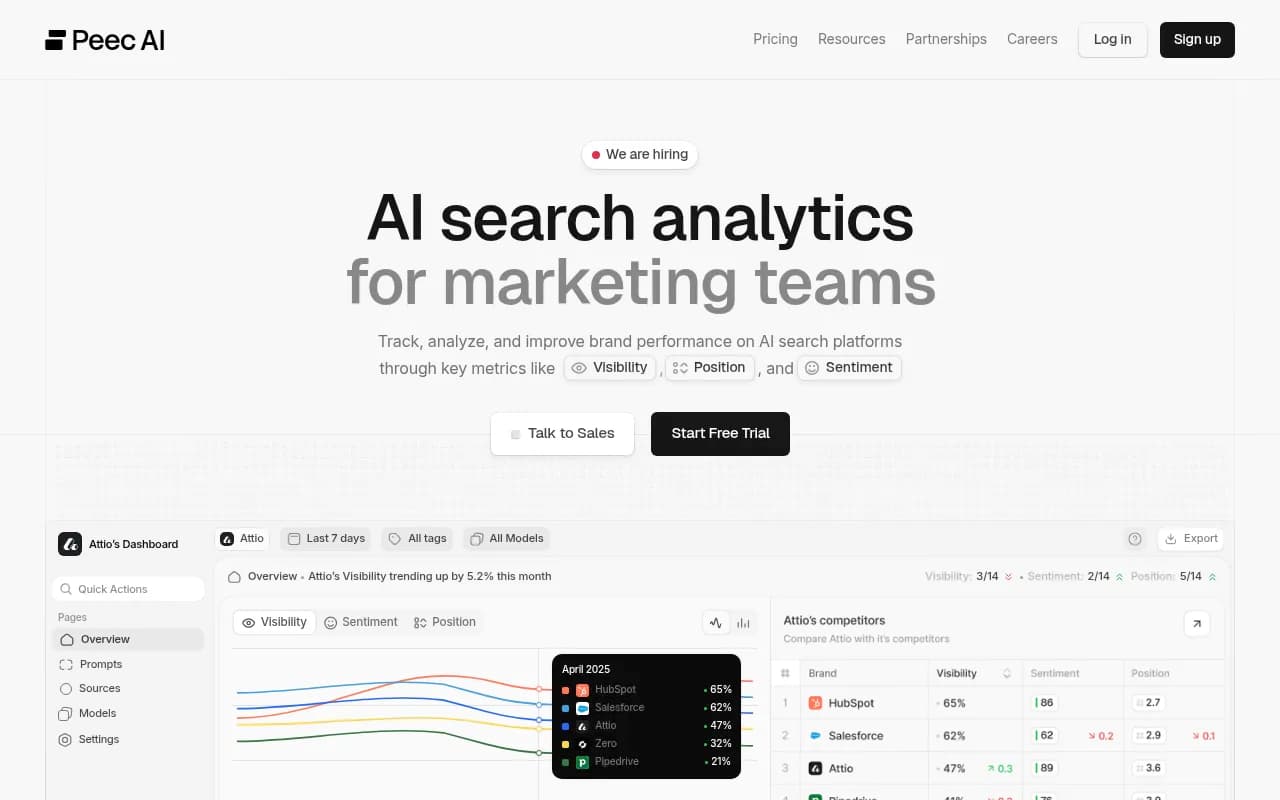
Peec AI -- AI search monitoring and optimization platform. Basic monitoring features without crawler logs, visitor analytics, or content generation.
Traditional SEO Tools with AI Features
Established SEO platforms adding AI search capabilities:
Semrush -- All-in-one digital marketing platform with traditional SEO and emerging AI search capabilities. Uses fixed prompts for AI tracking and lacks the depth of dedicated GEO platforms.
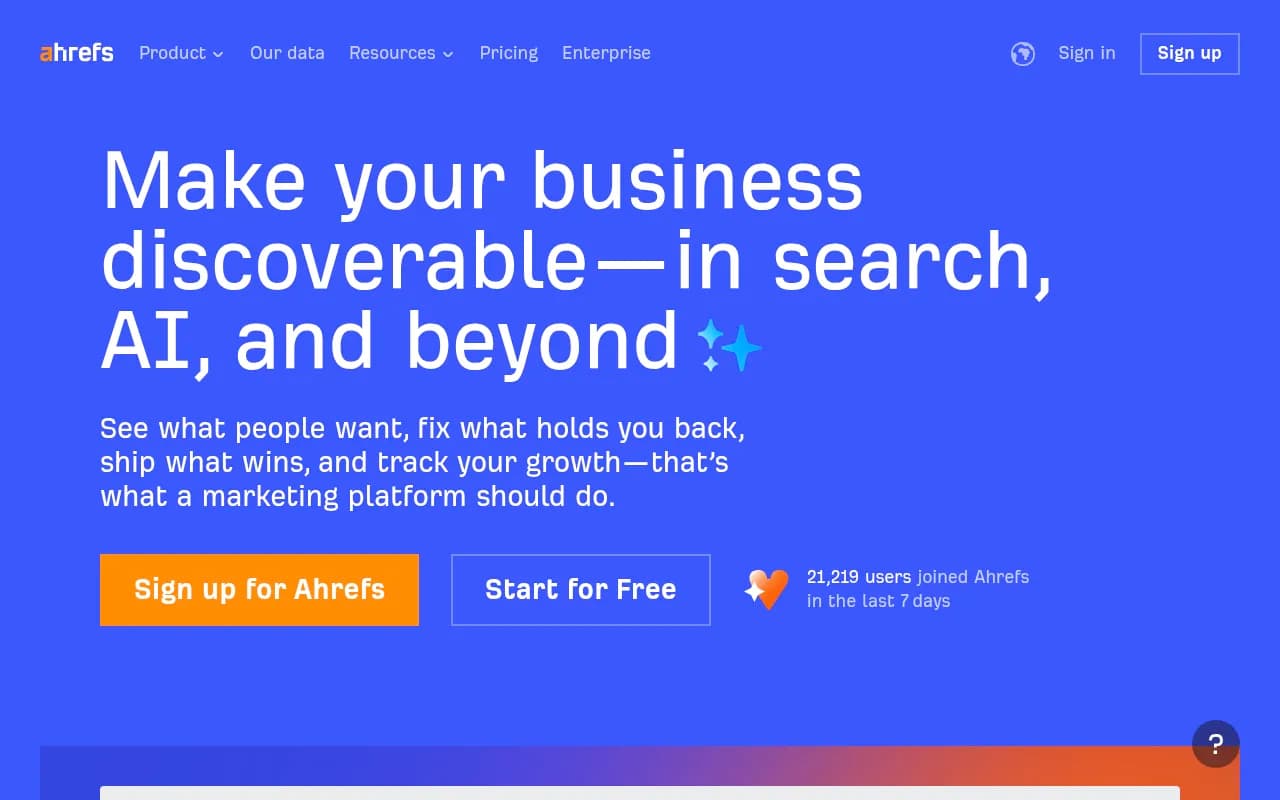
Ahrefs -- Comprehensive SEO platform with Brand Radar for AI search monitoring. Fixed prompts and no AI traffic attribution limit its GEO capabilities.
Content Optimization Tools
For creating AI-optimized content:
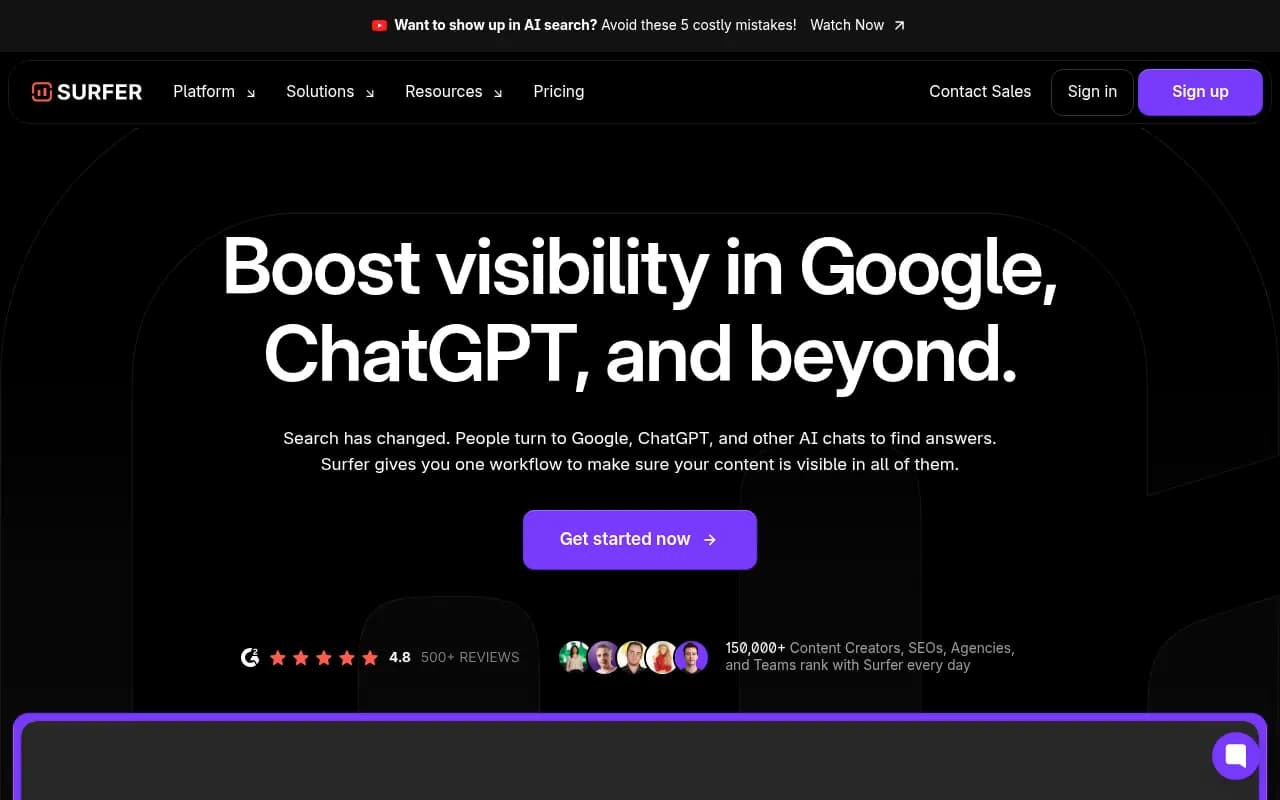
Surfer SEO -- AI-driven SEO content optimization platform that helps create content more likely to be cited by AI engines.
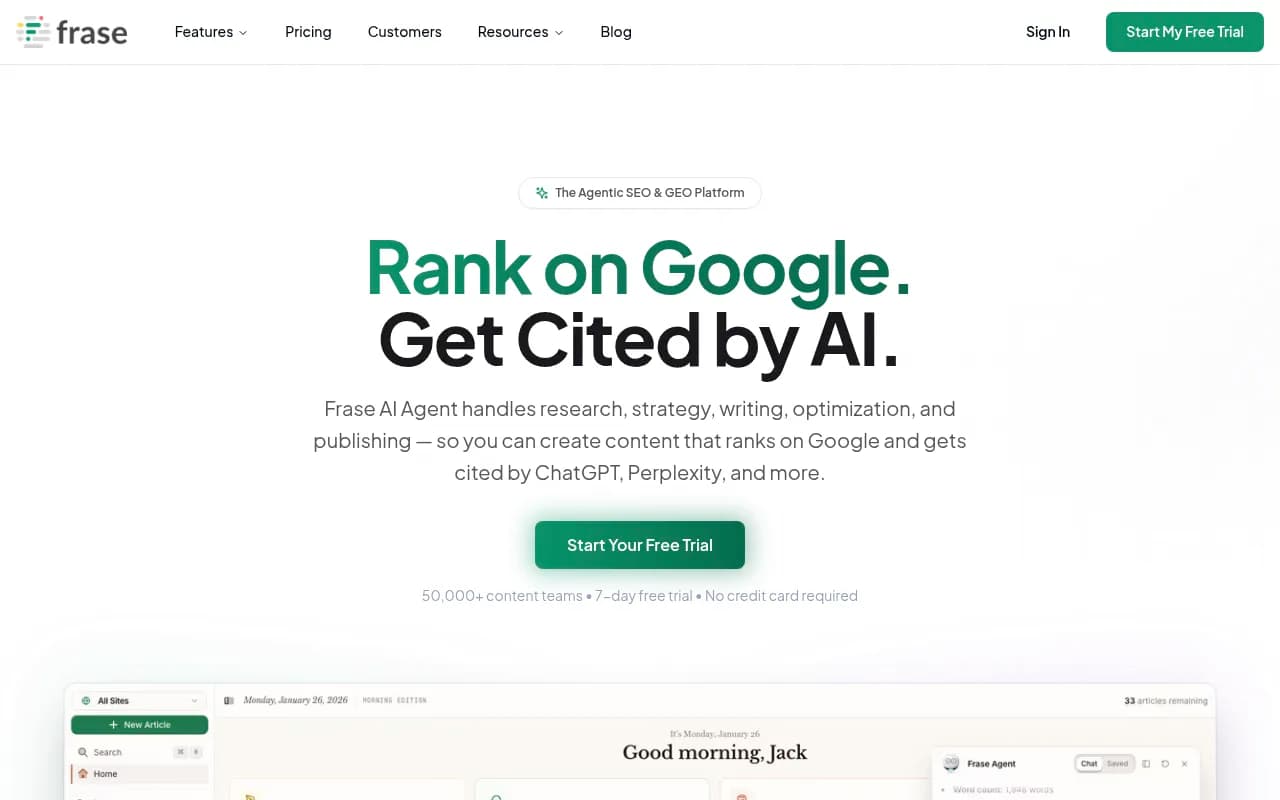
Frase -- AI-powered SEO content research and writing tool for creating comprehensive, answer-focused content.
Common GEO Mistakes and How to Avoid Them
Even experienced marketers make these GEO errors:
Mistake 1: Treating GEO Like Traditional SEO
The problem: Applying keyword-stuffing, link-building, and technical SEO tactics without adapting for AI search.
The fix: Focus on comprehensive answers, unique insights, and structured content that AI engines can easily extract and cite. Think "citability" not "rankability."
Mistake 2: Monitoring Without Action
The problem: Using tracking tools to see where you're invisible but not taking steps to fix it.
The fix: Choose platforms that help you identify content gaps and generate optimized content, not just show you dashboards. The action loop -- find gaps, create content, track results -- is what drives improvement.
Mistake 3: Ignoring AI Crawler Logs
The problem: Not knowing when AI engines visit your site, which pages they read, or what errors they encounter.
The fix: Monitor real-time AI crawler activity to understand how AI engines discover your content and fix indexing issues that prevent citation.
Mistake 4: Creating Generic Content
The problem: Publishing thin, generic content that doesn't differentiate from competitors.
The fix: Develop unique data, original research, and proprietary insights that can't be found elsewhere. AI engines prefer citing distinctive, authoritative sources.
Mistake 5: Focusing on a Single AI Engine
The problem: Optimizing only for ChatGPT while ignoring Perplexity, Claude, Gemini, and other engines.
The fix: Track and optimize across multiple AI models. Different engines have different preferences and user bases.
Mistake 6: Not Connecting Visibility to Revenue
The problem: Tracking citations and visibility scores without measuring actual traffic and conversions.
The fix: Implement traffic attribution (code snippet, Google Search Console integration, or server log analysis) to connect AI visibility to real business outcomes.
AI Search Trends to Watch in 2026
The AI search landscape is evolving rapidly. Here are the trends shaping GEO strategy:
1. Multi-Modal AI Search
AI engines are expanding beyond text to include images, video, and voice. Optimize visual content with descriptive alt text, transcripts, and structured metadata.
2. Personalized AI Responses
AI engines are increasingly tailoring responses based on user history, preferences, and context. Create content that addresses multiple personas and use cases.
3. Real-Time Information Integration
AI models are improving their ability to access and cite current information. Keep content updated and publish timely insights to stay relevant.
4. Shopping and Product Recommendations
ChatGPT Shopping and similar features are making AI engines direct commerce channels. Optimize product information, reviews, and comparisons for AI citation.
5. Local and Regional AI Search
AI engines are getting better at understanding location-based queries. Optimize for multi-language, multi-region visibility with localized content.
6. Reddit and Community Content
AI models heavily weight Reddit discussions and community forums. Participate authentically in relevant communities to build citation opportunities.
7. Agentic AI Search
AI agents that can browse, research, and synthesize information autonomously are emerging. Structure content to be easily discoverable and extractable by AI agents.
Advanced GEO Techniques: Reference-Rate Optimization
Beyond basic GEO, advanced practitioners focus on Reference-Rate Optimization -- maximizing the frequency and quality of citations:
Citation Velocity
Track how quickly you're gaining citations over time. Rapid citation growth signals improving authority and relevance.
Citation Context
Analyze not just whether you're cited, but how prominently and positively. Are you the primary source or a secondary reference? Is the citation context favorable?
Cross-Engine Citation Consistency
Aim for consistent citations across multiple AI engines. Being cited by ChatGPT, Claude, and Perplexity for the same query signals strong authority.
Prompt Fan-Out Analysis
Understand how one core prompt branches into related sub-queries. Optimize for the entire prompt family, not just individual queries.
Competitor Citation Displacement
Identify prompts where competitors are cited and create superior content to displace them. Focus on high-value, winnable prompts.
The Future of GEO: What's Next
As AI search continues to evolve, GEO will become increasingly sophisticated:
- Automated content optimization: AI tools that automatically adapt existing content for maximum citability
- Predictive citation modeling: Platforms that predict which content will be cited before you publish
- Real-time GEO adjustments: Dynamic content optimization based on live AI engine behavior
- Integrated SEO-GEO workflows: Unified platforms that optimize for both traditional and AI search simultaneously
- Attribution and ROI measurement: Better tools for connecting AI visibility to revenue and conversions
The companies that invest in GEO now are building the visibility advantages that will define market leadership in the AI search era.
Getting Started with GEO Today
Ready to optimize for AI search? Here's your action plan:
- Audit your current visibility: Use a GEO platform to understand where you stand across AI engines
- Identify your biggest gaps: Find the high-value prompts where competitors are cited but you're not
- Create comprehensive content: Develop in-depth guides, original research, and unique insights
- Monitor AI crawlers: Track how AI engines discover and access your content
- Build authority signals: Earn backlinks, participate in Reddit, and create video content
- Track and iterate: Measure results, refine your strategy, and continuously improve
The shift from traditional search to AI search is happening now. Companies that adapt early will capture visibility advantages that compound over time. Those that wait risk becoming invisible to a growing segment of their audience.
GEO isn't just another marketing trend -- it's a fundamental shift in how people discover information and make decisions. The question isn't whether to invest in GEO, but how quickly you can start.
Frequently Asked Questions
How long does it take to see GEO results?
Most brands see initial citation improvements within 4-8 weeks of publishing optimized content. Significant visibility gains typically take 3-6 months of consistent effort. Unlike traditional SEO, which can take 6-12 months, AI engines often cite new, high-quality content relatively quickly.
Can I do GEO without expensive tools?
Yes, but it's harder. You can manually test prompts in ChatGPT, Perplexity, and Claude to see if your brand appears. However, dedicated GEO platforms automate tracking across hundreds of prompts and multiple engines, identify content gaps, and measure progress over time -- making optimization far more efficient.
Does GEO replace traditional SEO?
No. GEO complements SEO. Many users still prefer traditional search engines, and strong SEO foundations (authoritative content, backlinks, technical optimization) also help with GEO. The smartest strategy is optimizing for both traditional and AI search simultaneously.
Which AI engines should I prioritize?
Focus on the engines your target audience uses most. For B2B and professional audiences, prioritize ChatGPT, Perplexity, and Claude. For consumer audiences, include Google AI Overviews and Gemini. Track multiple engines to maximize total visibility.
How do I measure GEO ROI?
Connect AI visibility to business outcomes by tracking: 1) Citation rate improvements over time, 2) AI-driven traffic to your website (via code snippet, Google Search Console, or server logs), 3) Conversions from AI traffic, and 4) Brand awareness and authority metrics. The best GEO platforms include traffic attribution features.
What content formats work best for GEO?
AI engines prefer comprehensive guides, original research, data-driven articles, detailed comparisons, and structured tutorials. Content should be well-organized with clear headings, bullet points, and tables. Depth and uniqueness matter more than length alone.
How often should I update content for GEO?
Review and update your most important content quarterly. AI engines favor recent, current information. Add new data, refresh examples, update statistics, and expand sections based on emerging trends and questions.
Can small businesses compete in GEO?
Absolutely. GEO is less dependent on domain authority and backlink profiles than traditional SEO. Small businesses can win citations by creating unique, comprehensive content in their niche -- even if they can't compete with enterprise brands in traditional search rankings.