Key takeaways
- The GEO/AI visibility tool market exploded in 2025-2026, with dozens of new entrants — many of which are monitoring-only dashboards with thin differentiation and unclear business models.
- Platform stability signals to watch: data infrastructure depth, breadth of AI model coverage, whether the tool goes beyond monitoring to optimization, and the size of the paying customer base.
- Tools built around a single feature (e.g., "track your brand in ChatGPT") are the most vulnerable to being commoditized or shut down.
- The most durable platforms in 2026 combine tracking, content gap analysis, and content generation in a single workflow — not just alerts.
- Before committing to any GEO platform, ask: does this tool help me fix what it finds, or just show me the problem?
The GEO platform market in 2026 looks a lot like the early SEO tool market circa 2012. There are a handful of serious platforms with real infrastructure, a larger cluster of "good enough" trackers, and a long tail of tools that launched on a weekend and may not survive the year. The difference is that the stakes are higher now. AI search is eating traditional search traffic fast — SparkToro's analysis of Similarweb clickstream data found that roughly 68% of Google searches ended without a click in early 2026 — and brands that pick the wrong platform and have to migrate in 12 months will lose ground they can't easily recover.
So the question isn't just "which GEO tool has the best dashboard." It's: which platforms are actually built to last?
This guide breaks that down honestly.
Why so many GEO tools launched in 2024-2025
The timing makes sense. ChatGPT crossed 900 million weekly active users in February 2026 (per OpenAI figures reported by TechCrunch). Google's AI Overviews now reach an estimated 2 billion people per month. Perplexity went from a niche research tool to a mainstream search alternative. Suddenly, brands that had never thought about "AI visibility" were asking their marketing teams why they weren't showing up in ChatGPT answers.
That demand spike created a gold rush. Building a basic AI visibility tracker isn't technically hard. You write a set of prompts, query a few LLM APIs, parse the responses for brand mentions, and display the results in a dashboard. A small team can ship that in weeks. And many did.
The problem is that "queryable API + dashboard" is not a business. It's a feature. And as the major platforms — Semrush, Ahrefs, and purpose-built GEO leaders — invest in this space, the thin trackers get squeezed from both sides: commoditized from below by free tools, outcompeted from above by platforms with real data infrastructure.
The stability signals that actually matter
When evaluating whether a GEO platform will still exist (and still be worth using) in 2027, here's what I look at:
Data infrastructure depth
There's a meaningful difference between a tool that queries LLM APIs on a schedule and a tool that has built proprietary infrastructure around how AI models actually behave in real user interfaces. The latter is harder to build, more expensive to maintain, and much harder to replicate.
Real user interface monitoring matters because AI search engines don't always behave the same way through an API as they do when a real user types a query. Shopping recommendations, citation carousels, and AI-generated answer formats can differ. Platforms that only query APIs are missing part of the picture.
Breadth of model coverage
In 2024, tracking ChatGPT and Perplexity was enough. In 2026, you need coverage across ChatGPT, Claude, Gemini, Perplexity, Google AI Overviews, Google AI Mode, Grok, DeepSeek, Copilot, Meta AI, and Mistral — because your customers are using all of them. A tool that only covers two or three models is already behind.
Whether it goes beyond monitoring
This is the biggest differentiator. Most tools in the market are monitoring dashboards. They show you that you're not being cited. They don't help you do anything about it.
The platforms with staying power are the ones that close the loop: find the gap, help you create content to fill it, and track whether that content gets cited. That's a fundamentally more defensible product than a dashboard.
Customer base size and composition
A platform used by 50 companies is fragile. One used by 1,500+ brands including enterprise names has real revenue, real feedback loops, and real incentive to keep investing in the product. When evaluating any GEO tool, look for evidence of a substantial, paying customer base — not just a list of logos on a landing page.
Integration depth
Platforms that connect to your existing stack (Google Search Console, Cloudflare, Vercel, server logs, Looker Studio) are harder to replace. Standalone dashboards with no integrations are easy to swap out.
How the current market breaks down
Here's an honest look at where the major platforms sit on the stability spectrum:
| Platform | Model coverage | Goes beyond monitoring? | Crawler/traffic data | Stability signal |
|---|---|---|---|---|
| Promptwatch | 10+ models | Yes (content gaps + generation) | Yes (AI crawler logs) | 1,480+ brands, enterprise clients |
| Profound | 9+ models | Partial (reporting depth) | Limited | Strong enterprise focus |
| AthenaHQ | Several models | No | No | Monitoring-focused |
| Otterly.AI | 3-4 models | No | No | Limited feature set |
| Peec AI | 3-4 models | No | No | Basic monitoring |
| Semrush AI Toolkit | Several models | Partial (within Semrush) | No | Backed by Semrush platform |
| Ahrefs Brand Radar | Limited | No | No | Fixed prompts, no attribution |
| Search Party | Several models | Partial | No | Agency-oriented |
| Scrunch AI | Several models | No | No | Monitoring-only |
| Brandlight.ai | Several models | Partial | No | Niche positioning |

Profound


Otterly.AI


The platforms most at risk
Single-feature trackers
The tools that do exactly one thing — "see if your brand appears in ChatGPT responses" — are the most exposed. That feature is already available for free in several places, and every major SEO platform is adding it. If a tool's entire value proposition is "we query LLMs and show you the results," it's hard to see a durable business there.
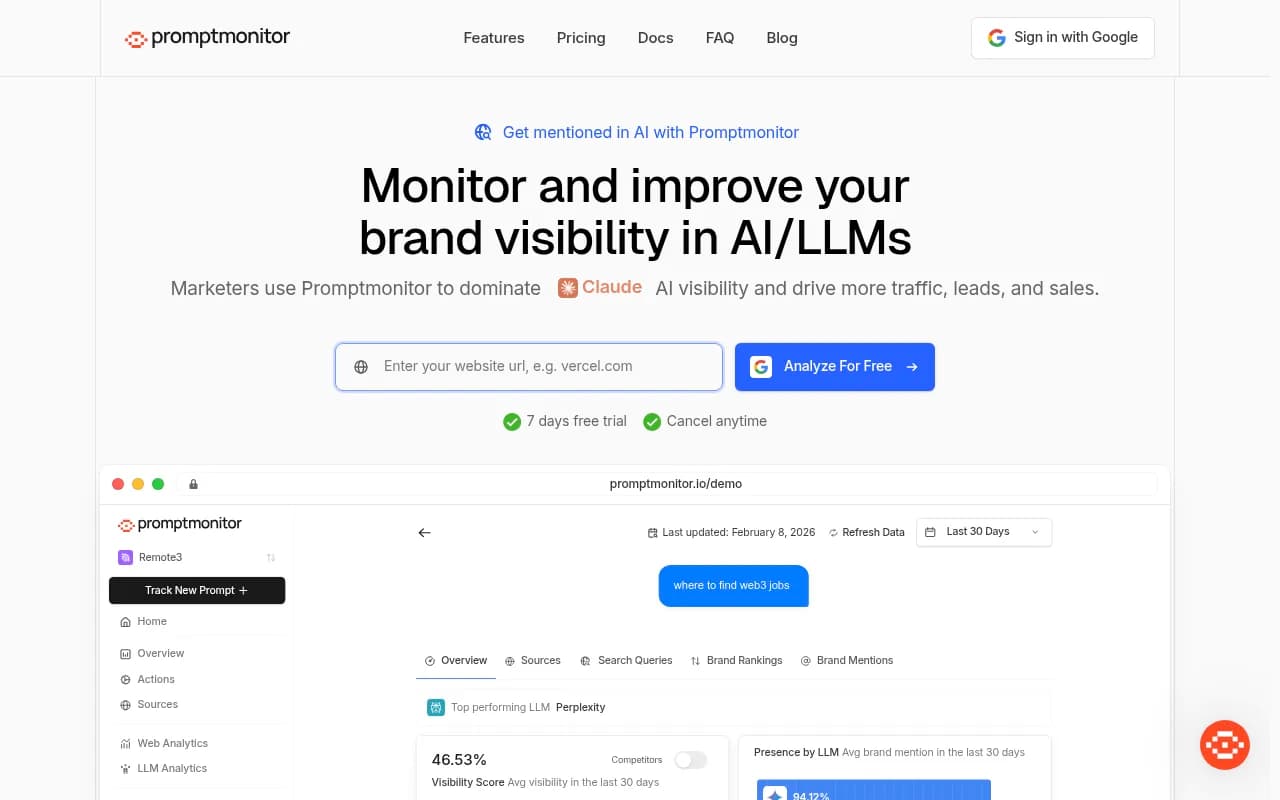
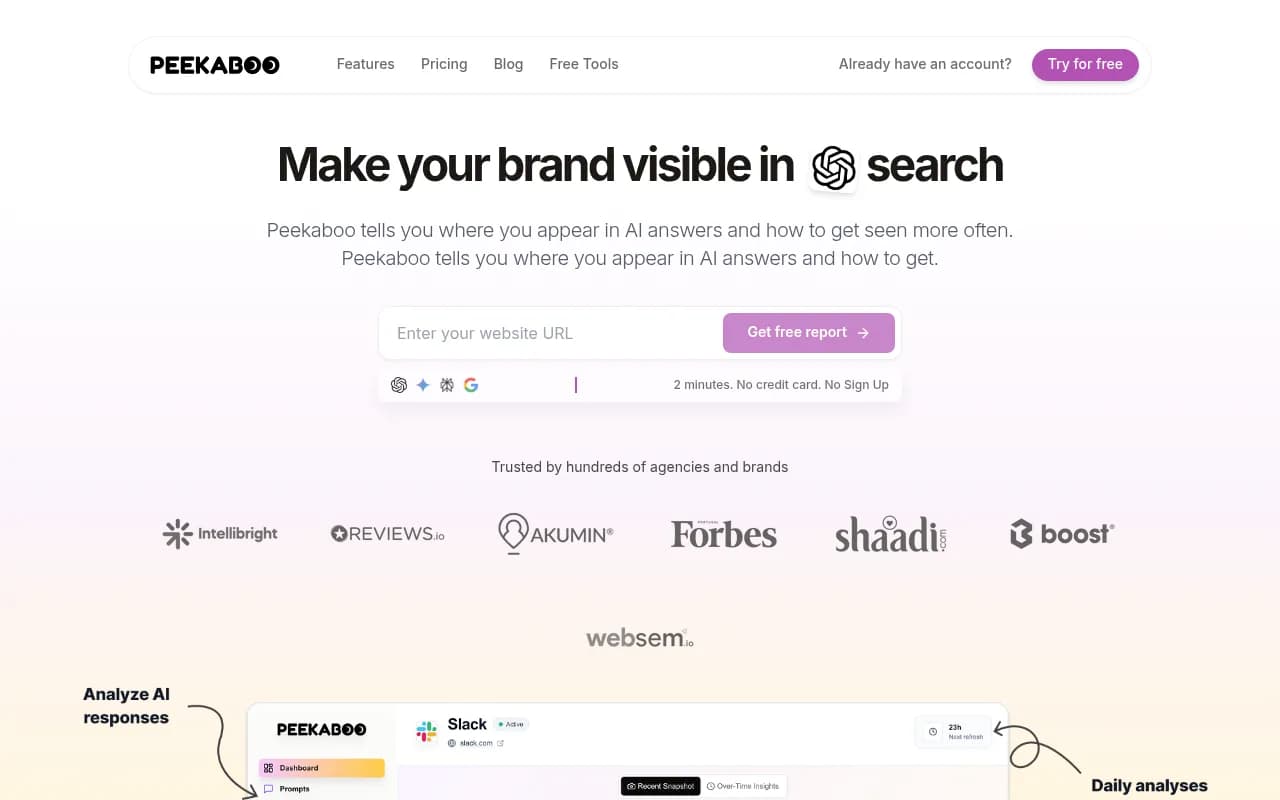
Tools like Promptmonitor, AI Peekaboo, and several others in this category may survive as cheap entry points, but they're unlikely to be the platforms serious marketing teams build long-term programs around.
Tools with no content execution path
A monitoring dashboard that shows you gaps but offers no path to filling them puts the entire burden on your team. You see that a competitor is being cited for "best project management software for remote teams" and you're not — now what? If the tool can't help you create the content to close that gap, you're paying for a problem statement without a solution.
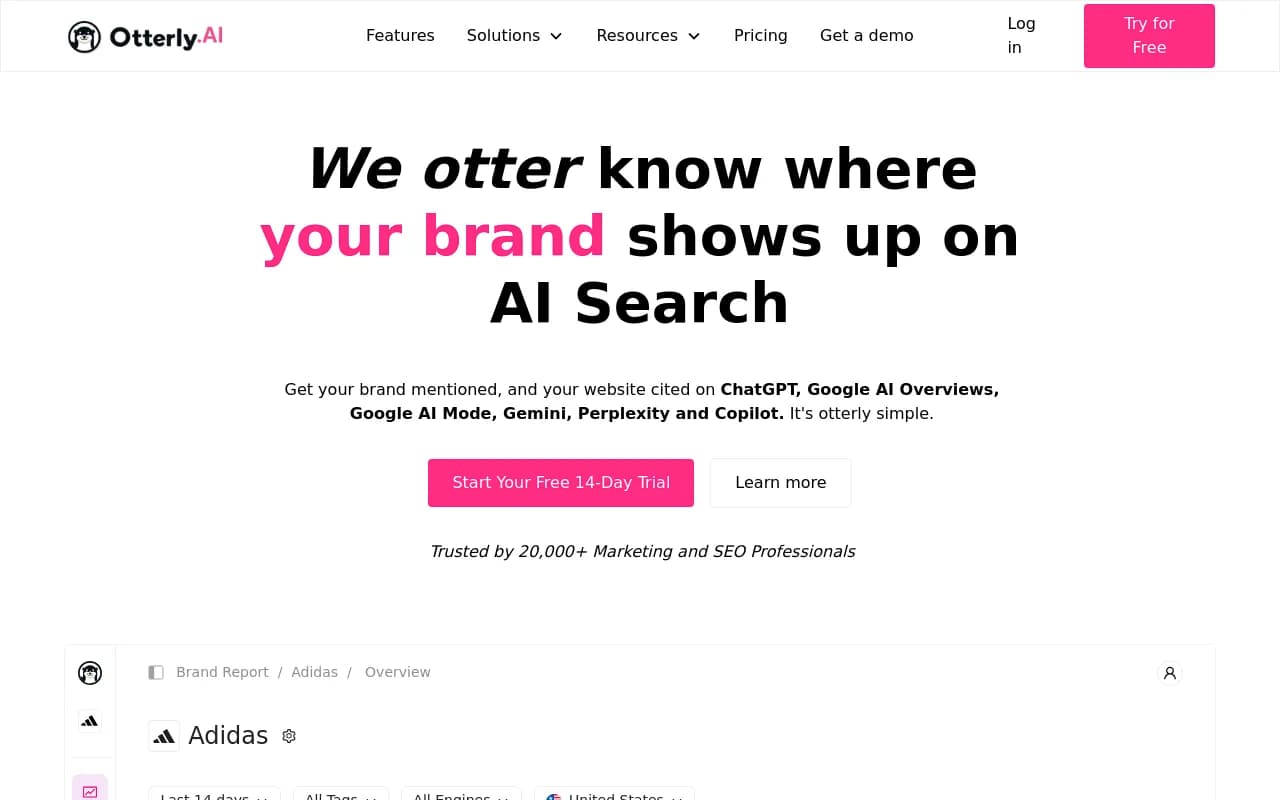
This is where platforms like Otterly.AI and Peec AI hit a ceiling. They're fine for initial awareness, but teams that get serious about GEO quickly outgrow them.
Tools built on thin API access
Some newer entrants are essentially wrappers around LLM APIs with a nice UI. The risk here is twofold: API pricing changes can destroy unit economics overnight, and the underlying models can change their citation behavior with no warning. Platforms with proprietary data collection methods — real browser-based monitoring, crawler log analysis, actual citation tracking — are much more resilient to these changes.
The platforms with real staying power
Full-cycle GEO platforms
The most durable tools in 2026 are the ones that have built an end-to-end workflow: identify which prompts your competitors are winning, understand why (what content they have that you don't), generate content to fill those gaps, and track whether that content gets cited.
Promptwatch is the clearest example of this approach. It's built around what they call an action loop: Answer Gap Analysis shows you exactly which prompts competitors are visible for that you're not, Content Agents generate articles and briefs grounded in real citation data, and page-level tracking shows whether new content actually moves the needle. With 1,480+ brands using the platform and data from 4.5 billion citations, clicks, and prompts processed, it has the infrastructure depth that thin trackers can't replicate.
The other dimension that matters for longevity: Promptwatch tracks AI crawler behavior directly. When GPTBot or ClaudeBot hits your site, you can see which pages they read, what errors they encounter, and how long it takes for a crawled page to become a citation. That's not something you can build in a weekend.
Enterprise-grade monitoring platforms
Profound has built a strong position at the enterprise end of the market. Its reporting depth and multi-stakeholder features make it a reasonable choice for large organizations that need detailed tracking across many prompts and markets. It's more monitoring-focused than Promptwatch, but it has the customer base and investment level to suggest it's not going anywhere.
Profound
For teams already standardized on Semrush, the Semrush AI Toolkit is a pragmatic choice — not because it's the most capable GEO platform, but because it's embedded in a platform with a large, stable business behind it. The risk is that Semrush uses fixed prompts rather than dynamic prompt intelligence, and there's no AI traffic attribution. It's a reasonable addition to an existing Semrush workflow, not a standalone GEO strategy.
Platforms with strong niche positioning
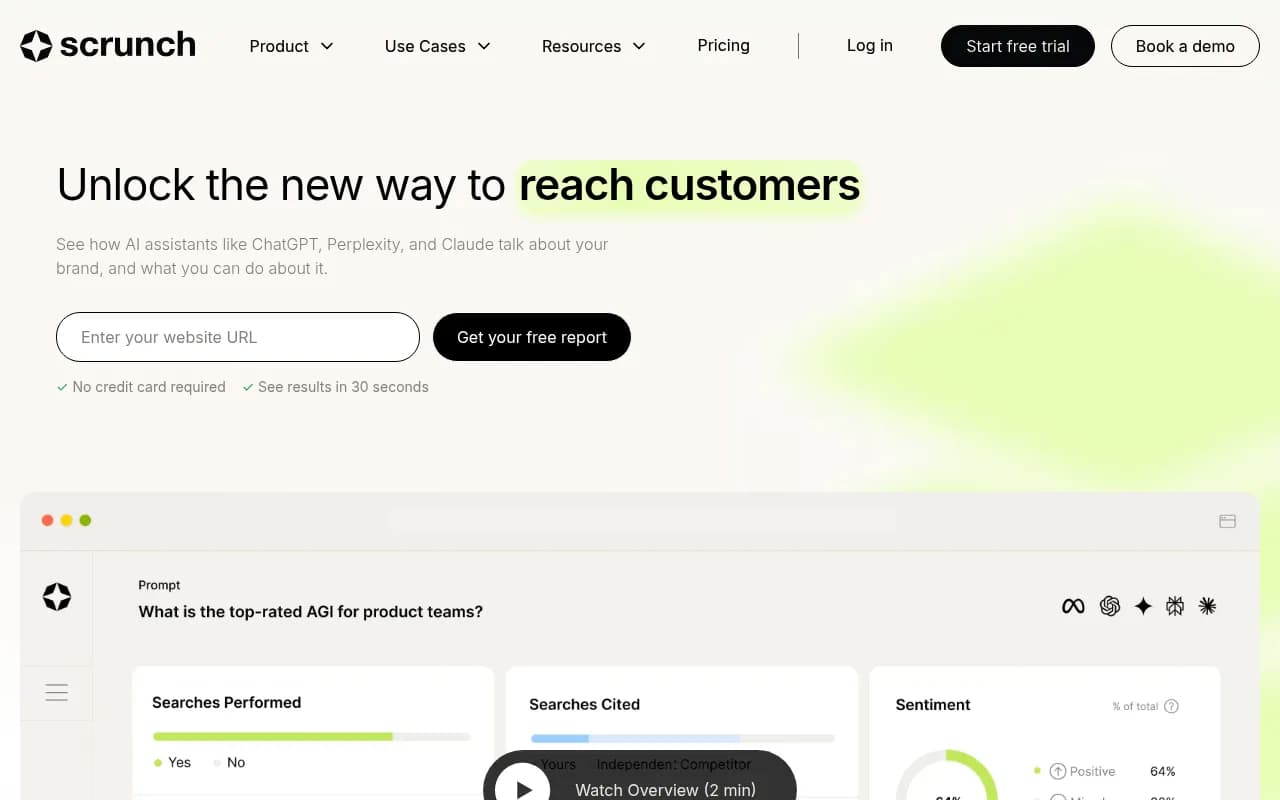
Some tools have found defensible niches that give them more stability than their size might suggest. Scrunch AI and Brandlight.ai have built audiences in specific segments. Search Party has carved out an agency-focused position. These aren't the platforms for teams that want comprehensive GEO programs, but they're not going to disappear either.
Search Party
What "monitoring-only" actually costs you
There's a hidden cost to choosing a monitoring-only platform that doesn't get talked about enough. You pay for the subscription, you get the data, and then you have to figure out what to do with it yourself. That means:
- Someone on your team has to interpret the gap analysis
- Someone has to write a content brief
- Someone has to create the content
- Someone has to track whether it worked
For a team with dedicated GEO resources, that workflow is manageable. For most marketing teams, it means the data sits in a dashboard and nothing changes.
Platforms that integrate content generation directly into the gap analysis workflow compress that cycle significantly. When the tool can show you the gap AND generate a draft article targeting that gap, the time from "we're invisible here" to "we published something" drops from weeks to days.
This isn't a minor convenience feature. It's the difference between a GEO program that actually moves visibility metrics and one that produces monthly reports nobody acts on.
Red flags when evaluating a GEO platform
A few things that should give you pause when looking at any AI visibility tool:
No information about data methodology. If a platform can't explain how it collects data — whether it's API-based, browser-based, or some combination — that's a problem. The methodology determines the accuracy, and accuracy determines whether the data is worth acting on.
Prompt sets you can't customize. Fixed prompt libraries are a limitation, not a feature. Your brand competes in specific contexts, for specific queries, in specific markets. A platform that only tracks pre-built prompts will miss the queries that actually matter to your customers.
No evidence of AI crawler tracking. If a platform can't tell you when GPTBot last visited your site, which pages it read, and whether those pages are being cited, it's missing a critical piece of the picture. You can't optimize for AI crawlers you can't see.
Pricing that doesn't scale. Some tools are priced for experimentation, not for running a real GEO program. If the platform's pricing model breaks at 150 prompts or 5 sites, it's not built for teams that take this seriously.
No customer evidence. Logos on a landing page are easy to fake. Look for case studies, specific customer names, and evidence of enterprise adoption. A platform used by recognizable brands has survived real scrutiny.
How to make the decision
The right platform depends on where your team is in the GEO maturity curve.
If you're just starting out and want to understand your current AI visibility before committing to a full program, a lighter tool can work for initial discovery. But set a 90-day timeline: if you're still just looking at dashboards after three months without a clear path to acting on the data, you've outgrown the tool.
If you're ready to run a real GEO program — tracking prompts systematically, creating content to fill gaps, and measuring the impact on actual traffic — you need a platform that supports the full cycle. Monitoring-only tools will slow you down.
If you're an agency managing GEO for multiple clients, look for platforms with multi-site support, white-label options, and the ability to track results at the client level. The per-site economics matter a lot at agency scale.
The broader point: the GEO platform market will consolidate. Some of the tools that launched in 2024 and 2025 won't exist in 2027. Picking a platform with real infrastructure, a real customer base, and a product that goes beyond monitoring is the best hedge against that consolidation.
The tools that help you find gaps AND fix them are the ones worth building a program around. The ones that just show you the problem are a starting point, not a strategy.