Key takeaways
- The AI visibility market is growing fast but also consolidating fast -- many monitoring-only tools launched in 2024-2025 are already showing signs of stagnation
- Funding runway, team composition, and product roadmap transparency are the three most reliable signals of long-term platform viability
- Monitoring-only tools carry more risk than platforms that combine tracking with content optimization -- the latter have stronger retention and revenue moats
- Watch for red flags like fixed prompt sets, no crawler infrastructure, vague roadmaps, and solo founder teams without technical depth
- Before signing an annual contract, run a structured evaluation across five dimensions: funding, team, roadmap, data infrastructure, and customer base
The AI visibility space has a problem that nobody talks about openly: a lot of the tools in it probably won't exist in 18 months.
Since 2024, dozens of platforms have launched promising to track your brand across ChatGPT, Perplexity, Google AI Overviews, and other AI search engines. Some are genuinely useful. Some are dashboards built on a handful of API calls with a nice UI on top. The challenge is that from the outside, they can look identical.
This matters because AI visibility is no longer optional. The 2026 2X AI Visibility Index found that 96% of B2B companies fail to appear in AI discovery at all. Codeword Agency's strategy team called AI visibility "the biggest 2026 budget ask" for brand and marketing leaders. When you're making a real budget commitment to this category -- and increasingly, you have to -- you need to know the platform you're betting on will still be around, still be improving, and still be worth the subscription fee in two years.
Here's how to evaluate that before you sign anything.
Why platform viability matters more in this category than most
In traditional SEO, switching tools is annoying but manageable. Your keyword rankings don't disappear when you cancel Semrush. Your backlink profile doesn't reset.
AI visibility is different. The value of a good platform compounds over time: historical citation data, prompt tracking baselines, content performance timelines, and crawler log archives all become more useful the longer you've been collecting them. If your platform shuts down or pivots, you lose that history. You start from zero.
There's also the data quality problem. AI models update constantly. The way ChatGPT cites sources in mid-2026 is different from how it behaved in 2024. A platform that isn't actively investing in keeping up with model updates, new AI search surfaces, and evolving citation patterns will give you increasingly stale data -- even if it technically stays online.
So the question isn't just "does this tool work today?" It's "will this tool still be worth paying for in 2027?"
Signal 1: Funding and business model
The first thing to understand is how the company makes money and how long they can sustain operations without it.
What to look for
A platform with a clear, recurring revenue model (subscription tiers, agency plans, enterprise contracts) is more stable than one that's still figuring out monetization. Check whether pricing is publicly listed -- opaque pricing often means the company is still experimenting with what the market will pay.
For venture-backed companies, look at when they last raised and how much. A seed-stage company that raised $500K in early 2024 and hasn't announced a Series A is running on fumes by now. That's not a judgment on the team -- it's math. AI infrastructure is expensive.
For bootstrapped tools, the question is different: do they have enough paying customers to sustain development? A solo developer running a monitoring tool as a side project might be fine for casual use, but you don't want your brand's AI strategy depending on it.
Red flags
- No public pricing (suggests pre-revenue or unstable pricing model)
- Seed funding from 18+ months ago with no follow-on announced
- Free tier that's the primary product, with vague "Pro coming soon" messaging
- Revenue model that depends entirely on one customer segment (e.g., only agencies, no direct brands)
What good looks like
A platform with multiple pricing tiers, a mix of SMB and enterprise customers, and either a clear funding history or evidence of profitability. Customer logos from recognizable brands are a positive signal -- they indicate the platform has passed procurement scrutiny at companies with real vendor evaluation processes.
Signal 2: Team composition and technical depth
The AI visibility category requires a specific combination of skills that's genuinely hard to assemble: LLM infrastructure, web crawling, data engineering, and product design for non-technical marketing users. A team missing any of these will show gaps in the product.
What to look for
Check LinkedIn for the founding team and key hires. You want to see:
- At least one technical co-founder with experience in data infrastructure, crawling, or ML systems
- Product or engineering hires (not just sales and marketing)
- Evidence of domain expertise -- people who worked in SEO, search, or NLP before the AI visibility category existed
A team that's entirely ex-agency or ex-marketing with no engineering depth will struggle to maintain data quality as AI models evolve. Conversely, a pure engineering team with no product intuition often builds tools that are technically impressive but unusable for the marketing teams who need them.
Red flags
- Solo founder with no technical background and no engineering hires visible
- Team page that lists only sales, marketing, and "growth" roles
- Founders who pivoted from an unrelated category in 2023-2024 with no prior search or AI experience
- No engineering blog, GitHub activity, or technical content -- suggests the product isn't being actively developed
What good looks like
A team with complementary skills: someone who understands how LLMs work, someone who understands what marketers actually need, and enough engineering depth to ship features regularly. Regular product updates (changelogs, release notes) are a concrete signal that the team is actively building.
Signal 3: Roadmap transparency and credibility
Every platform will tell you they're building great things. The question is whether their roadmap is credible -- grounded in real technical work and customer feedback -- or just a list of features designed to prevent churn.
What to look for
Ask for a roadmap during your sales conversation. A credible roadmap will:
- Reference specific technical challenges (e.g., "we're building real-time crawler infrastructure for Google AI Mode")
- Include features that are clearly in progress, not just aspirational
- Show evidence of shipping -- if they promised feature X six months ago, is it live?
- Connect to customer feedback ("our enterprise customers asked for multi-region tracking, so we're building it")
A vague roadmap full of buzzwords ("AI-powered insights," "deeper integrations," "enhanced reporting") with no specifics is a sign the team either doesn't have a real plan or doesn't trust you with it.
Red flags
- Roadmap that's entirely monitoring features with no optimization or content capabilities
- Features promised at launch that still aren't live 12+ months later
- No changelog or release history publicly available
- Roadmap that's identical to competitors' feature lists (suggests reactive copying rather than original thinking)
What good looks like
A platform that has already shipped meaningful features beyond basic monitoring. The progression from "we track mentions" to "we help you fix gaps" to "we show you which content changes drove citation improvements" is the right direction. Platforms that are still at step one after 18 months of operation are not moving fast enough.
Signal 4: Data infrastructure quality
This is the most technical dimension to evaluate, but it's also the most important for long-term value. The underlying data quality of an AI visibility platform determines whether the numbers you see actually reflect reality.
The core question: API vs. real user interface
Many AI visibility tools query LLMs through their APIs and report the results as "AI search visibility." The problem is that what an LLM returns via API often differs from what users actually see in ChatGPT, Perplexity, or Google AI Mode. Shopping recommendations, citation carousels, and answer formatting can all differ significantly between API and user-facing outputs.
A platform that only uses API queries is measuring something -- but it might not be measuring what your customers actually experience.
What to look for
Ask vendors directly: "How do you collect data? API queries, browser automation, or both?" The honest answer matters more than the polished one.
Also ask about:
- Crawler log integration: Can the platform show you when AI crawlers (GPTBot, ClaudeBot, PerplexityBot) visit your site? This is a meaningful technical capability that requires real infrastructure.
- Prompt volume data: Does the platform have estimates for how often real users ask specific prompts? Or are they just letting you enter arbitrary queries?
- Historical data depth: How far back does their citation data go? A platform with 18 months of historical data is more valuable than one with 3 months.
Red flags
- No mention of how data is collected (suggests API-only with nothing to hide)
- Fixed prompt sets that you can't customize (means they're not tracking what your customers actually ask)
- No crawler log or AI traffic data
- Visibility scores that can't be explained (black-box metrics with no methodology)
What good looks like
Platforms that track real user-facing AI responses, have genuine crawler log infrastructure, and can show you prompt volume estimates based on real data. Promptwatch, for example, tracks how AI search engines behave in actual user interfaces rather than just through APIs -- which matters because the answers users see often differ from what the API returns.

Signal 5: Customer base and retention signals
A platform's customer base tells you a lot about its long-term viability. Not just the logos on the homepage -- the composition, diversity, and apparent retention of that customer base.
What to look for
- Mix of customer types: agencies, brands, and enterprises all using the platform suggests it's genuinely useful across contexts, not just one niche
- Recognizable customer names: enterprise procurement is slow and thorough -- if a Fortune 500 brand is paying for a platform, it's passed real scrutiny
- Case studies with specific results: "Brand X increased AI citation share by 34% in 90 days" is more credible than "Brand X loves our platform"
- G2, Capterra, or Trustpilot reviews: look at the negative reviews as much as the positive ones -- they'll tell you what the platform consistently fails at
Red flags
- Only agency customers, no direct brands (suggests the platform is too complex or too limited for end users)
- No case studies or results data
- Reviews that all sound the same (possible fake or incentivized reviews)
- High review volume from very recent dates only (suggests a review push, not organic satisfaction)
The monitoring-only trap
One of the most important viability questions to ask is: what does this platform do after it shows you data?
A large portion of the AI visibility tools launched in 2024-2025 are monitoring dashboards. They show you where you appear, where you don't, and how you compare to competitors. That's useful. But it's not sufficient -- and it's also a weak business model.
Monitoring-only tools have a churn problem. Once a customer has seen the data for a few months and understands their baseline, the marginal value of continued monitoring decreases. If the platform can't help you act on what you're seeing, customers eventually ask "why am I still paying for this?"
Platforms that combine monitoring with content gap analysis, content generation, and optimization workflows have much stronger retention -- because the value compounds. Every piece of content you create based on platform data is a reason to keep the subscription active to track its performance.

This is why the monitoring-only category carries more platform risk. Tools like basic trackers may be fine for a quick audit, but if your strategy depends on ongoing optimization, you need a platform that can support the full cycle: find gaps, create content, track results.
A practical evaluation framework
Before signing an annual contract with any AI visibility platform, run through this checklist:
| Dimension | Questions to ask | Red flag |
|---|---|---|
| Funding | When did they last raise? What's their pricing model? | Pre-revenue, no follow-on funding in 18+ months |
| Team | Who are the technical founders/hires? | No engineering depth, solo non-technical founder |
| Roadmap | What shipped in the last 6 months? What's next? | Vague buzzwords, no changelog, no specifics |
| Data infrastructure | API-only or real UI tracking? Crawler logs? | Fixed prompts, no crawler data, black-box metrics |
| Customer base | Who are their customers? What results have they seen? | Only agencies, no case studies, suspicious review patterns |
| Optimization capability | Can they help you fix gaps, not just find them? | Monitoring-only with no content or optimization features |
Which platforms are worth evaluating in 2026
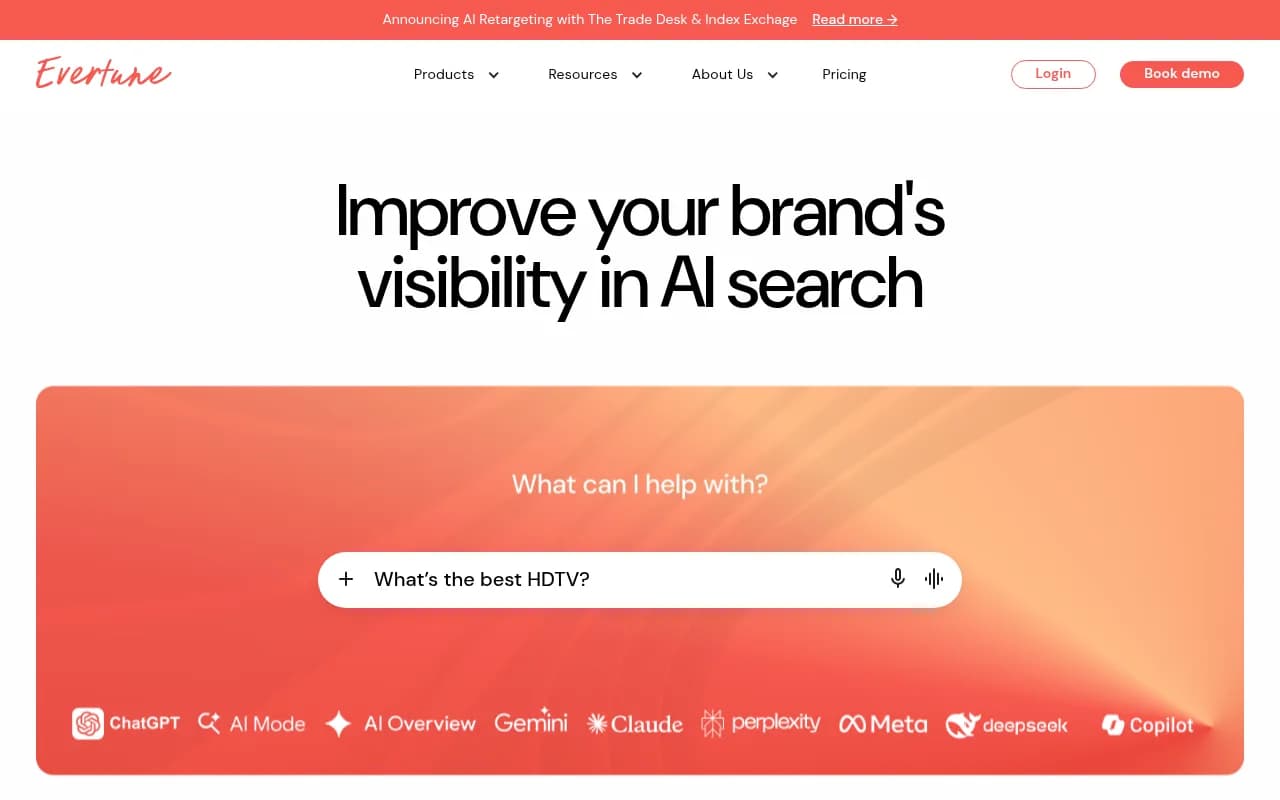
The market has several tiers. At the enterprise end, platforms like Profound and Evertune have strong feature sets and enterprise customer bases.
Profound

In the mid-market, Promptwatch has built a reputation as one of the few platforms that goes beyond monitoring to actually help brands create content that improves AI visibility -- with crawler log infrastructure, content gap analysis, and AI content generation grounded in real prompt data. It's used by 1,480+ brands and agencies including Booking.com and Center Parcs, which is a meaningful signal of enterprise-grade stability.
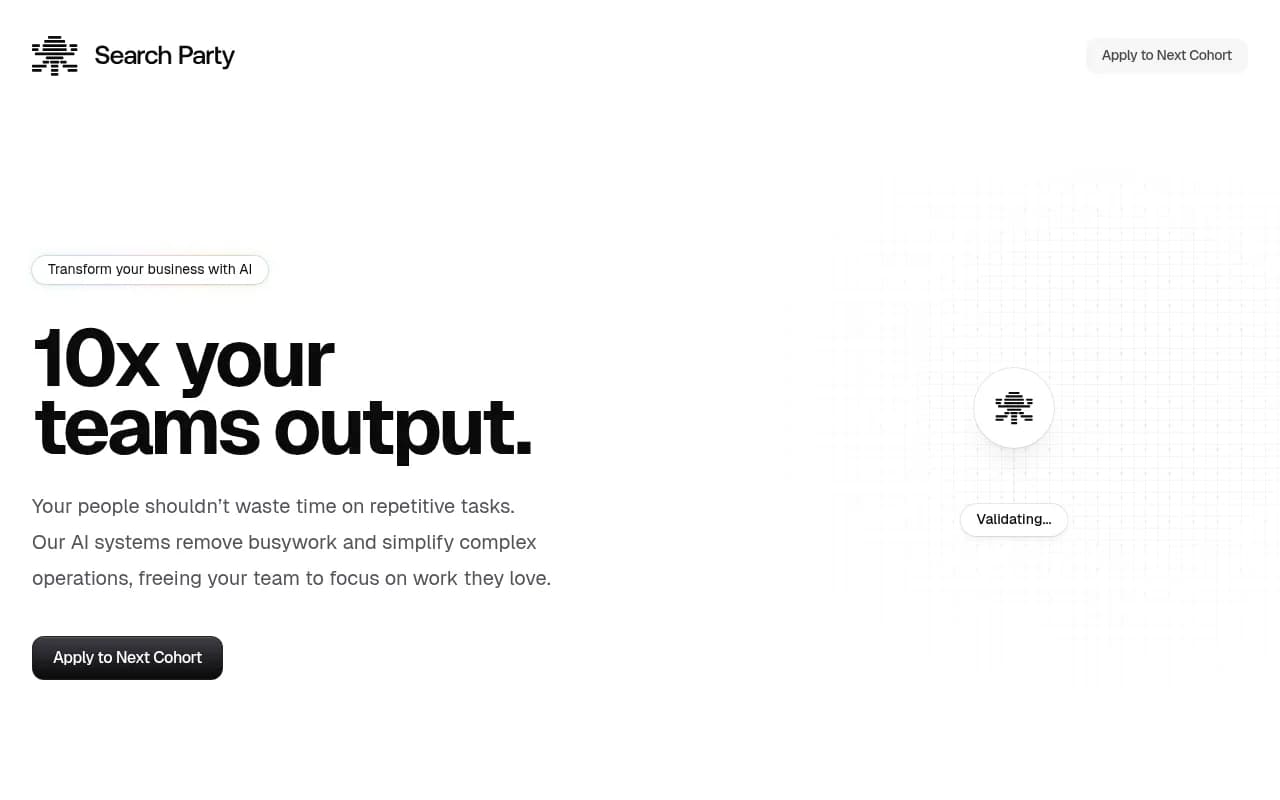
For agencies specifically, Search Party and Peec AI have built agency-oriented workflows, though both are more monitoring-focused.
Search Party

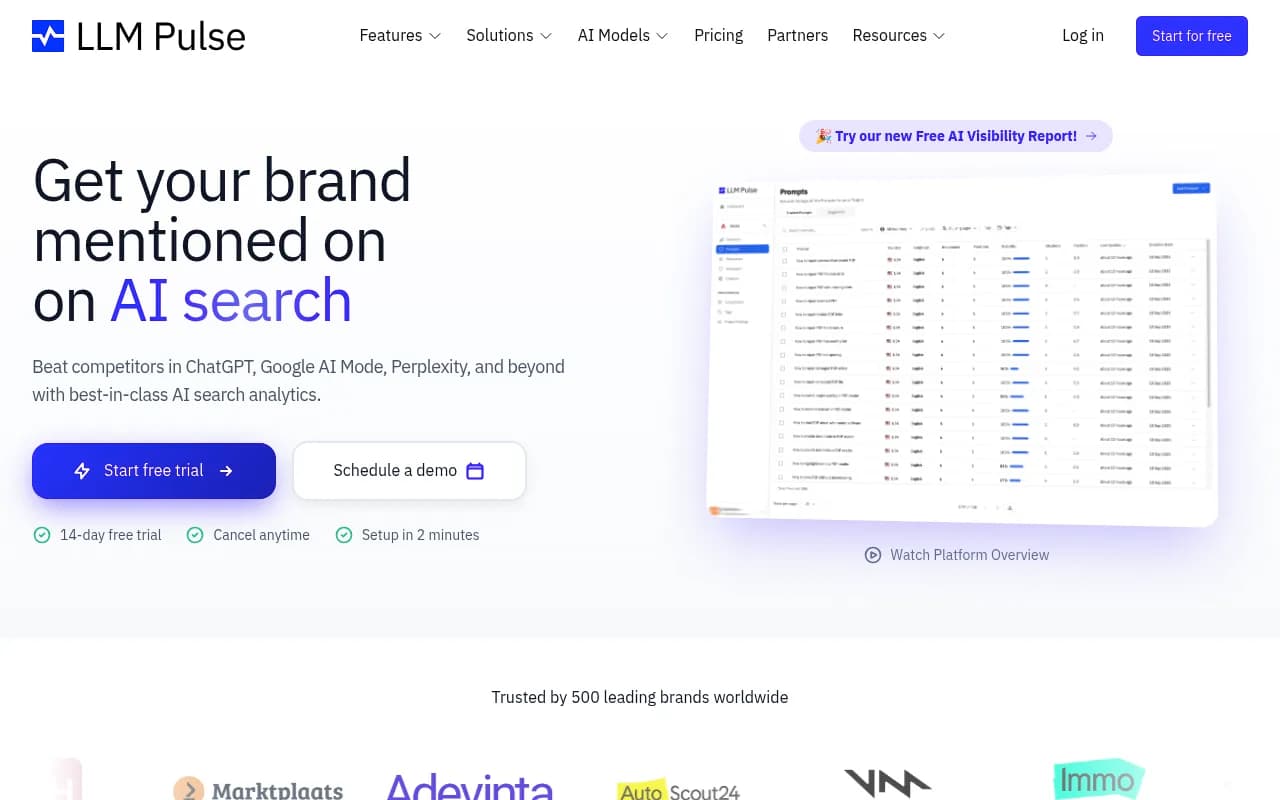
At the lighter end, tools like Otterly.AI, LLM Pulse, and Rankshift are worth evaluating for teams that need basic monitoring without a large budget commitment -- but apply the viability framework above before going annual.
Otterly.AI


The bottom line
The AI visibility category is real, the need is real, and the budget pressure to act on it is real. But not every platform in the space will survive long enough to deliver on its promises.
The safest bets are platforms with clear revenue models, technical teams, shipped roadmaps, and the ability to help you optimize -- not just observe. Monitoring-only tools are a higher-risk bet, not because the data is bad, but because the business model is fragile.
Run the five-signal evaluation above before you commit. Ask vendors the uncomfortable questions. And weight optimization capability heavily -- because a platform that can only show you problems, without helping you fix them, will feel less valuable every month you're subscribed.