Key takeaways
- ChatGPT can surface new content in as little as 3 days, but most businesses see meaningful visibility improvements in 4--12 weeks
- Timeline depends on four main factors: content clarity, brand authority, citation footprint, and how fast AI crawlers index your pages
- ChatGPT traffic converts at roughly 6.7% vs 3.9% for Google Search, so the ranking effort pays off faster than you might expect
- Unlike traditional SEO, there's no single ranking algorithm -- ChatGPT uses a combination of training data, real-time web search, and trust signals
- Tracking your progress requires AI-specific tools, not Google Search Console
The question sounds simple. You publish a new article, a product page, or a comparison guide. Then you wait. But how long?
With Google, there's a rough mental model most SEOs have internalized: new sites take months, established domains can rank in days. With ChatGPT, the mental model doesn't exist yet -- or at least, it's still being built.
So let's build it. Here's what the data from 2026 actually shows about how long it takes to rank in ChatGPT, what variables matter most, and what you can do to compress that timeline.
The honest answer: it ranges from 3 days to 6 months
That's not a cop-out. The range is genuinely that wide, and the reason is that ChatGPT isn't one system -- it's several, layered on top of each other.
When ChatGPT answers a question, it draws from:
- Its training data (a snapshot of the web, updated periodically)
- Real-time web search (when browsing is enabled)
- Bing's index (for web-enabled queries)
- Curated citation sources it has learned to trust
Each of these has a different update cadence. Real-time web search can surface your content within hours if it's indexed by Bing. Training data updates happen on a much longer cycle -- months, not days.
This means the timeline question actually has two sub-questions: how fast can you appear in ChatGPT's browsing-enabled responses, and how fast can you become part of its "default" recommendations when no browsing is used?
The first can happen in days. The second takes longer.
What the 2026 data shows
The 72-hour case
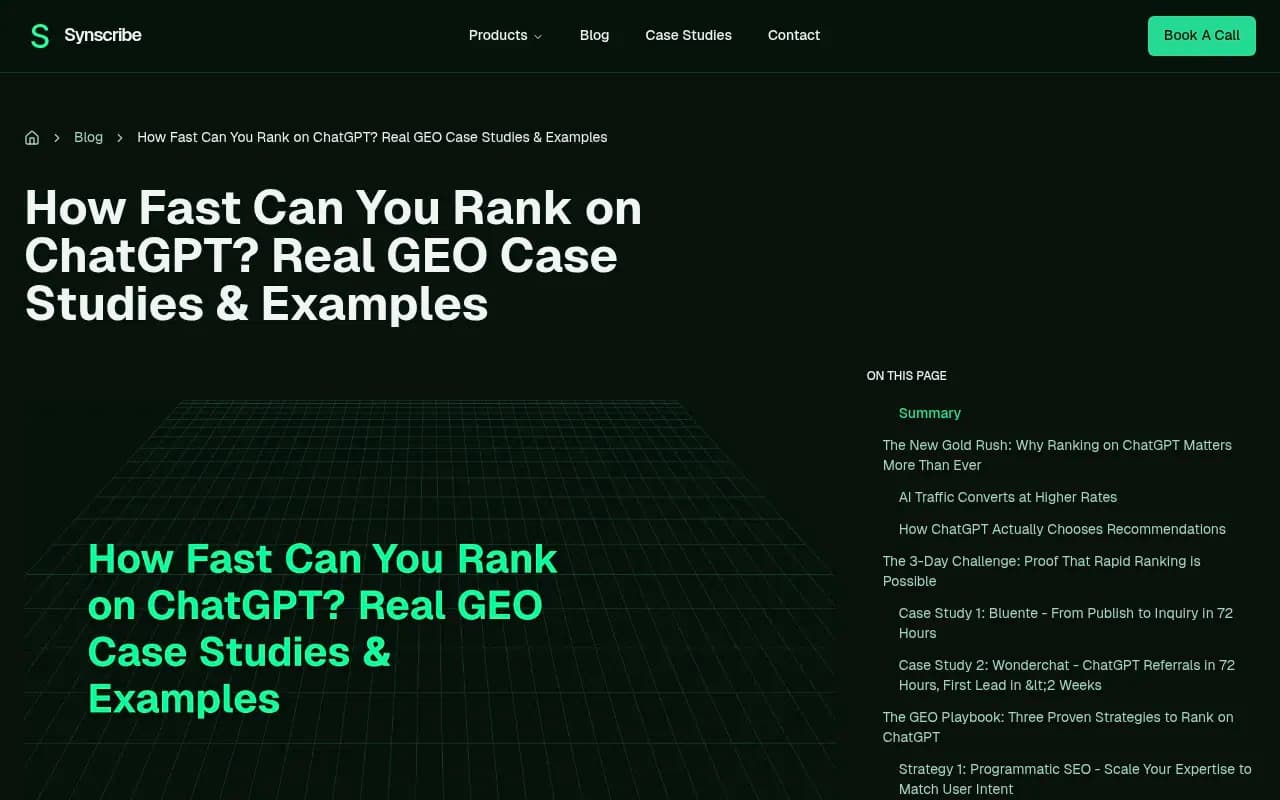
Multiple practitioners have documented ranking in ChatGPT within 72 hours of publishing. One Reddit post in the r/GrowthHacking community described reaching the top of ChatGPT results for a niche in under three days -- without backlinks or domain authority.
The Synscribe GEO case study database shows similar results: B2B SaaS brands appearing in ChatGPT recommendations within 3 days when content was structured specifically for conversational AI queries.
The key in these fast cases: the content answered a specific question clearly, the site was already indexed by Bing, and the query had low competition in AI search.
The 6--10 week baseline
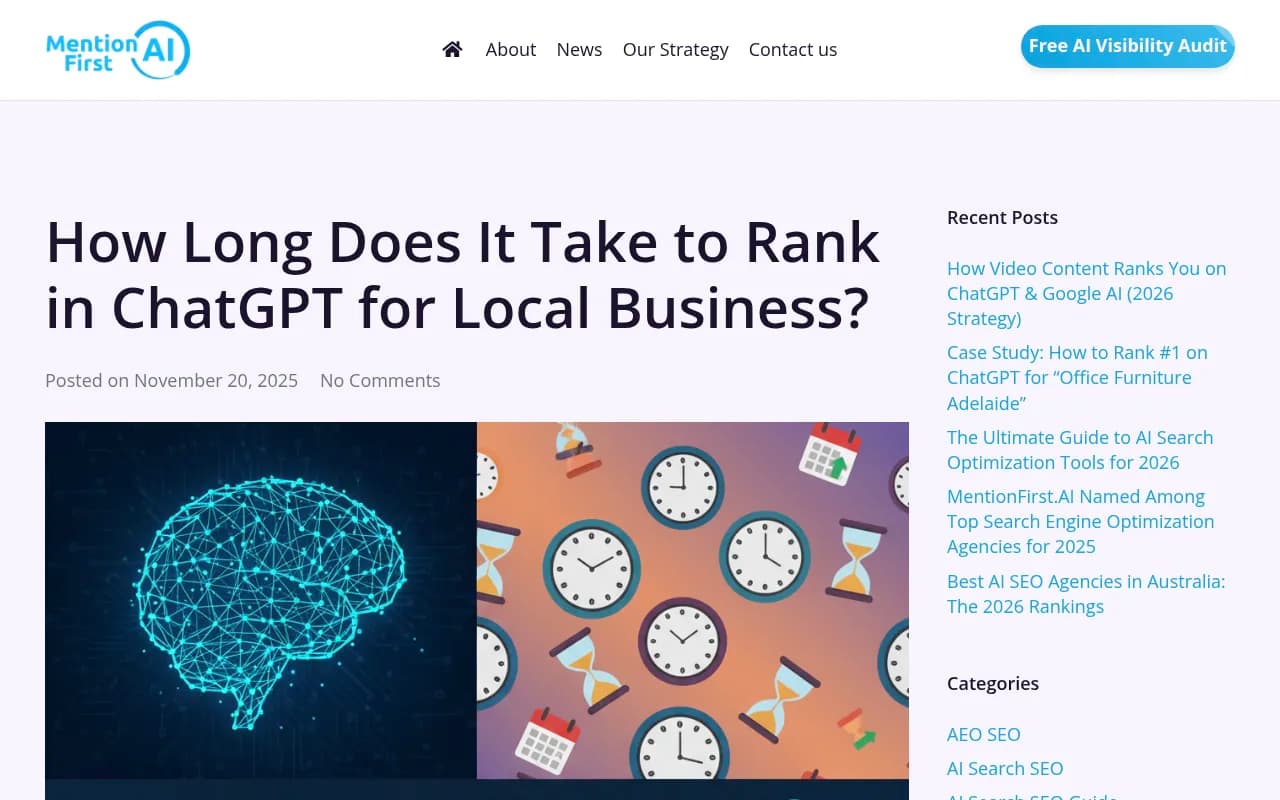
For most businesses with moderate optimization -- decent website, some reviews, partial directory presence -- the realistic timeline is 6 to 10 weeks according to data from Mention First AI. These are businesses that aren't starting from zero but haven't specifically optimized for AI search either.
During this window, ChatGPT starts picking up your content through its browsing layer, cross-references it against other signals (reviews, mentions, third-party citations), and begins including you in relevant responses.
The 3--6 month reality for new or thin sites
If your site is new, has thin content, lacks reviews, or has inconsistent business information across directories, you're looking at 3--6 months before seeing consistent AI visibility. This mirrors traditional SEO timelines, but for different reasons. ChatGPT isn't waiting for PageRank to accumulate -- it's waiting for enough trust signals to confidently recommend you.
The four factors that control your timeline
1. Content clarity and structure
ChatGPT doesn't rank pages -- it understands them. If your content is vague, keyword-stuffed, or structured for humans skimming rather than AI parsing, it takes longer for the model to confidently use it as a source.
Content that ranks fast in ChatGPT tends to:
- Answer a specific question in the first paragraph
- Use clear, conversational language (not SEO jargon)
- Include concrete data points, not just general claims
- Structure information with headers that match how people actually ask questions
The refresh cadence matters too. One practitioner guide recommends a 30-day minimum refresh cycle for pages you want to win in AI answers, with 7--14 days during active optimization pushes. Stale content gets deprioritized.
2. Your citation footprint
ChatGPT doesn't just look at your website. It looks at where else you're mentioned -- third-party reviews, industry directories, Reddit threads, YouTube videos, news articles. The more places your brand appears with consistent, positive signals, the faster it trusts you enough to recommend you.
This is why local businesses with strong Google Business Profiles and consistent NAP (name, address, phone) data across directories tend to rank faster than businesses with a clean website but no external presence.
Inconsistency actively hurts you. If your hours, services, or location differ across platforms, ChatGPT delays recommendations until it can verify accuracy.
3. Domain authority and existing trust signals
An established domain with existing content and backlinks has a head start. ChatGPT has already encountered your site, formed a view of your authority, and is more likely to surface new content quickly.
For new domains, you're building that trust from scratch. The fastest path isn't to mimic traditional SEO -- it's to get cited in places ChatGPT already trusts: Reddit, industry publications, established review platforms.
4. Query competition
Some queries are wide open in AI search. Nobody has written the definitive answer, and the first clear, well-structured piece wins quickly. Other queries have multiple established sources that ChatGPT already relies on -- breaking in takes longer.
This is where prompt intelligence tools become useful. Understanding which queries have low AI competition lets you prioritize content that can rank fast rather than spending months trying to displace entrenched sources.
Promptwatch has a prompt difficulty scoring feature that shows exactly this -- which prompts are winnable quickly vs. which are heavily contested. Worth checking before you decide what to write.

How ChatGPT's indexing actually works (vs. Google)
This is where a lot of confusion comes from. People assume ChatGPT works like Google -- crawl, index, rank. It doesn't.
Google's process: crawl your page, add it to an index, evaluate it against ranking factors, surface it in results. This is deterministic and relatively transparent.
ChatGPT's process: much messier. It combines a frozen training snapshot with real-time retrieval, weights sources based on learned trust signals, and generates responses that synthesize multiple sources rather than linking to a ranked list.
What this means practically:
- Getting indexed by Bing (which powers ChatGPT's web search) is necessary but not sufficient
- Being cited in sources ChatGPT already trusts accelerates your visibility
- There's no "position 1" -- ChatGPT might mention you prominently in one response and not at all in a slightly different version of the same question
The lack of a single ranking position is actually important for how you measure progress. You're not chasing a rank -- you're chasing citation frequency and share of voice across a range of related prompts.
Timeline benchmarks by business type
| Business type | Typical timeline | Key bottleneck |
|---|---|---|
| Established brand, strong content | 3--14 days | Bing indexing speed |
| B2B SaaS with niche focus | 2--6 weeks | Content structure for AI |
| Local business, good reviews | 4--8 weeks | Citation consistency |
| Local business, minimal reviews | 8--16 weeks | Trust signal accumulation |
| New domain, any category | 3--6 months | Domain trust from scratch |
| Highly competitive query | 3--12 months | Displacing established sources |
These are rough benchmarks, not guarantees. The range within each category is wide depending on how aggressively you're optimizing.
What actually speeds things up
Publish content that directly answers AI queries
The fastest wins come from content written around specific conversational questions -- the kind people type into ChatGPT, not the kind they type into Google. "Best project management software for remote teams under 10 people" outperforms "project management software" as a target.
Tools like Promptwatch show you the exact prompts people are using in AI search and which ones your competitors are winning but you're not. That's the gap you want to fill first.
Get cited in third-party sources
One of the fastest ways to accelerate ChatGPT visibility is to appear in sources it already trusts. This means:
- Getting reviewed on G2, Capterra, or Trustpilot
- Being mentioned in relevant Reddit threads (not spam -- genuine participation)
- Earning coverage in industry newsletters or publications
- Publishing data or research that others cite
ChatGPT has learned which sources are credible. Appearing in them transfers some of that credibility to you.
Fix your technical crawlability
If AI crawlers can't read your pages, none of the content work matters. JavaScript-heavy sites, pages behind login walls, or sites that block bots will be invisible regardless of content quality.
Check your robots.txt to make sure you're not accidentally blocking GPTBot (OpenAI's crawler) or ClaudeBot. These are separate from Googlebot, and many sites block them without realizing it.
Build topical depth, not just individual pages
ChatGPT favors sources that cover a topic comprehensively. One great article helps. Ten interconnected articles on related aspects of the same topic helps much more. This is the same logic as topical authority in traditional SEO, but it matters even more for AI search because the model is trying to identify the most knowledgeable source on a topic, not just the best individual page.
How to track whether it's working
This is where most people get stuck. You can't use Google Search Console to track ChatGPT visibility. You need different tools.
The basic approach: manually query ChatGPT with your target prompts every week and note whether your brand appears. This works at small scale but doesn't give you trend data or competitive context.
The better approach: use a dedicated AI visibility tracking platform. A few options worth knowing:
Promptwatch tracks your brand mentions across 10+ AI models including ChatGPT, Perplexity, Claude, and Gemini. It shows you citation frequency, which pages are being cited, and how your visibility changes over time. The AI crawler logs feature is particularly useful here -- you can see exactly when GPTBot and other AI crawlers visit your pages, which helps you understand the lag between publishing and appearing in responses.

Otterly.AI

For a quick comparison of what these tools offer:
| Tool | Models tracked | Content gap analysis | Crawler logs | Traffic attribution |
|---|---|---|---|---|
| Promptwatch | 10+ | Yes | Yes | Yes |
| Rankshift | ChatGPT, Perplexity | No | No | No |
| Otterly.AI | ChatGPT, Perplexity, AI Overviews | No | No | No |
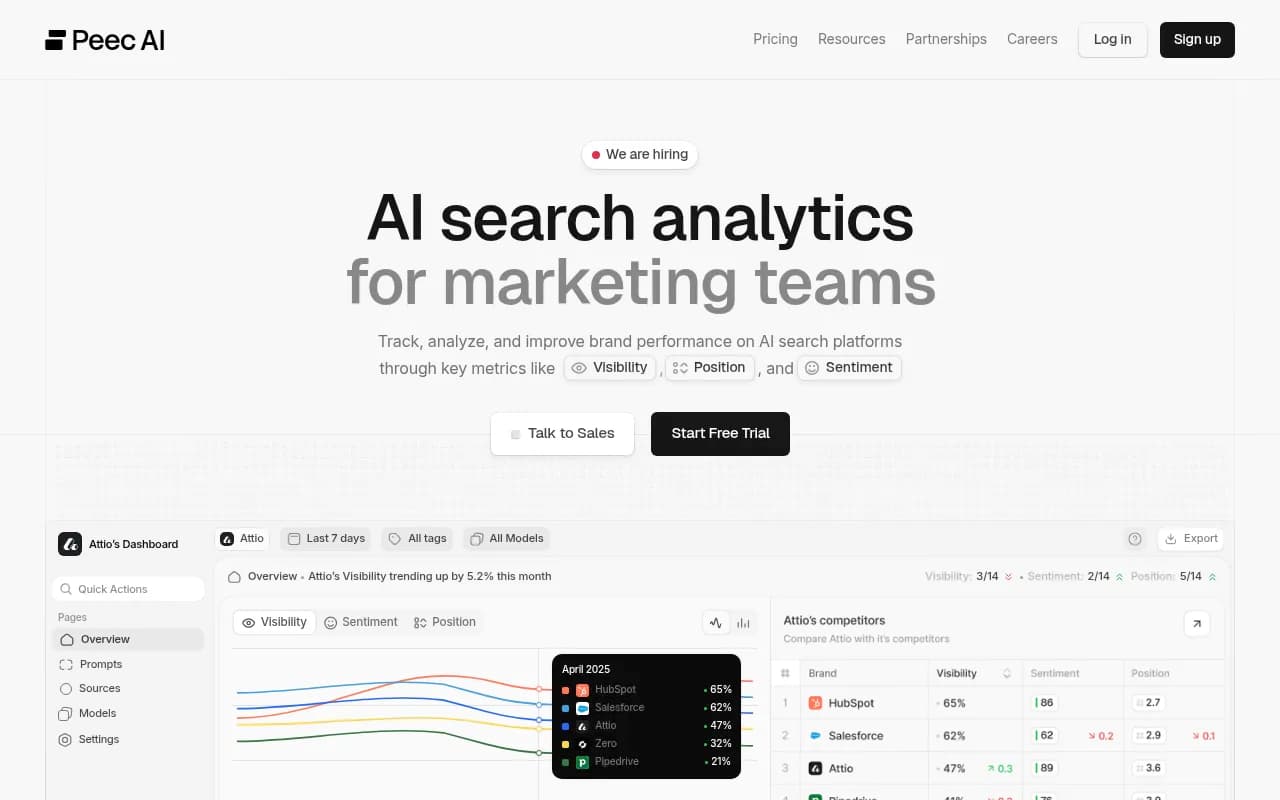
| Peec AI | ChatGPT, Perplexity, Claude | No | No | No |
If you're serious about understanding your timeline and improving it, you need something that shows you the full picture -- not just whether you're mentioned, but why you're not mentioned in the places you should be.
A realistic optimization timeline
Here's what a focused 90-day push looks like for a brand starting from scratch:
Days 1--14: Foundation
- Audit your site for AI crawlability (check robots.txt, fix JavaScript rendering issues)
- Ensure Bing indexing is active (submit sitemap to Bing Webmaster Tools)
- Audit NAP consistency across directories
- Set up AI visibility tracking so you have a baseline
Days 15--45: Content
- Identify 10--20 high-priority prompts where competitors are visible but you're not
- Publish clear, question-answering content targeting those prompts
- Refresh existing pages that are close to ranking but not quite there
- Start building third-party citations (reviews, industry mentions)
Days 46--90: Compound
- Track which new content is getting cited
- Double down on topics where you're gaining traction
- Expand topical depth around your strongest performing areas
- Analyze which AI models are citing you and which aren't -- they have different preferences
By day 90, most brands with a focused effort see measurable improvement in AI citation frequency. Not dominance -- but a clear upward trend.
The conversion argument for doing this now
One number that tends to change people's prioritization: ChatGPT traffic converts at roughly 6.7%, compared to 3.9% for Google Search. That's from ThoughtMetric's analysis of e-commerce conversion data.
The reason makes intuitive sense. Someone who asks ChatGPT "what's the best CRM for a 10-person sales team" and gets your product recommended is further along in their decision process than someone who Googled "CRM software" and clicked your ad. The AI has already done the filtering work.
This means the ROI calculation for AI search optimization is different from traditional SEO. You need less traffic to generate the same revenue. Which also means the 6--10 week timeline to meaningful visibility is worth the investment even if the absolute traffic numbers are smaller than what you'd get from a top Google ranking.
The bottom line
Three days is possible. Six months is also possible. The difference comes down to how well your content answers specific questions, how much trust ChatGPT has already assigned to your domain and your citations, and how competitive the queries you're targeting are.
The good news: unlike traditional SEO, you don't need years of link building to compete. A brand new site with genuinely useful, clearly structured content can appear in ChatGPT recommendations within weeks. The bad news: you can't just repurpose your existing SEO content and expect it to work. AI search rewards directness, specificity, and citation-worthiness -- not keyword density or meta descriptions.
Start tracking now, even if you're not actively optimizing yet. Having a baseline makes everything else measurable.