Summary
- AI search engines (ChatGPT, Perplexity, Claude, Google AI Overviews) now influence 40%+ of product discovery, making visibility tracking non-negotiable for startups in 2026
- Solo founders can monitor AI search presence for under $100/month using specialized tracking platforms, free tools, and manual spot-checks
- The winning approach combines automated monitoring (track what AI engines say about you), manual verification (test prompts yourself), and content optimization (fix gaps AI models expose)
- Free alternatives exist but require significant time investment—paid tools deliver ROI by automating the grunt work and surfacing actionable insights
- The goal isn't just tracking mentions—it's understanding why competitors get cited and you don't, then systematically closing those gaps
Why AI search visibility matters for bootstrapped founders
Traditional SEO still works. Google still sends traffic. But a new discovery layer sits on top of search now, and it's reshaping how customers find products.
When someone asks ChatGPT "What's the best project management tool for remote teams?" or prompts Perplexity with "Show me CRM alternatives to HubSpot," AI engines don't just rank websites—they synthesize answers, cite sources, and make recommendations. If your product isn't in that answer, you're invisible to a growing segment of buyers who never click through to Google.
The shift is measurable. Research from 2026 shows AI-powered search now accounts for over 40% of initial product discovery in B2B software categories. Solo founders who ignore this channel are leaving money on the table.
The problem: most AI visibility platforms were built for enterprise teams with five-figure budgets. Otterly.AI, Profound, and similar tools offer sophisticated tracking but price out bootstrapped founders. The question isn't whether to track AI search visibility—it's how to do it without burning through runway.
The three-layer tracking system that works on $100/month
Solo founders don't need enterprise dashboards. You need a system that tells you three things:
- Are AI engines mentioning your brand at all?
- What prompts trigger citations, and which ones don't?
- Why are competitors getting cited when you're not?
Here's the stack that delivers those answers without requiring a marketing team or a bloated tool budget.
Layer 1: Automated monitoring (the foundation)
Start with a platform that tracks your brand mentions across multiple AI engines automatically. You want daily or weekly snapshots showing:
- Which AI models cite you (ChatGPT, Claude, Perplexity, Gemini, etc.)
- What prompts trigger mentions
- How often you appear vs competitors
- Which pages or sources AI engines reference
Promptwatch is purpose-built for this. At $99/month for the Essential plan, it monitors one site across 50 prompts and tracks 10 AI models—ChatGPT, Perplexity, Claude, Gemini, Google AI Overviews, and more. The platform doesn't just show you mentions; it reveals content gaps by comparing your visibility to competitors and highlighting the exact topics where you're missing.

What makes Promptwatch different from monitoring-only tools: it connects tracking to action. The platform includes an AI writing agent that generates content specifically designed to get cited by AI engines—articles, comparisons, and listicles grounded in 880M+ analyzed citations. You're not just watching the scoreboard; you're actively improving it.
Alternatives in this price range:
- Rankshift ($49/month): Tracks ChatGPT and Perplexity with basic mention counts. Good for pure monitoring but lacks content gap analysis.

- Peec AI (starts at $79/month): Monitors ChatGPT, Perplexity, and Claude. Clean interface but no built-in content generation.

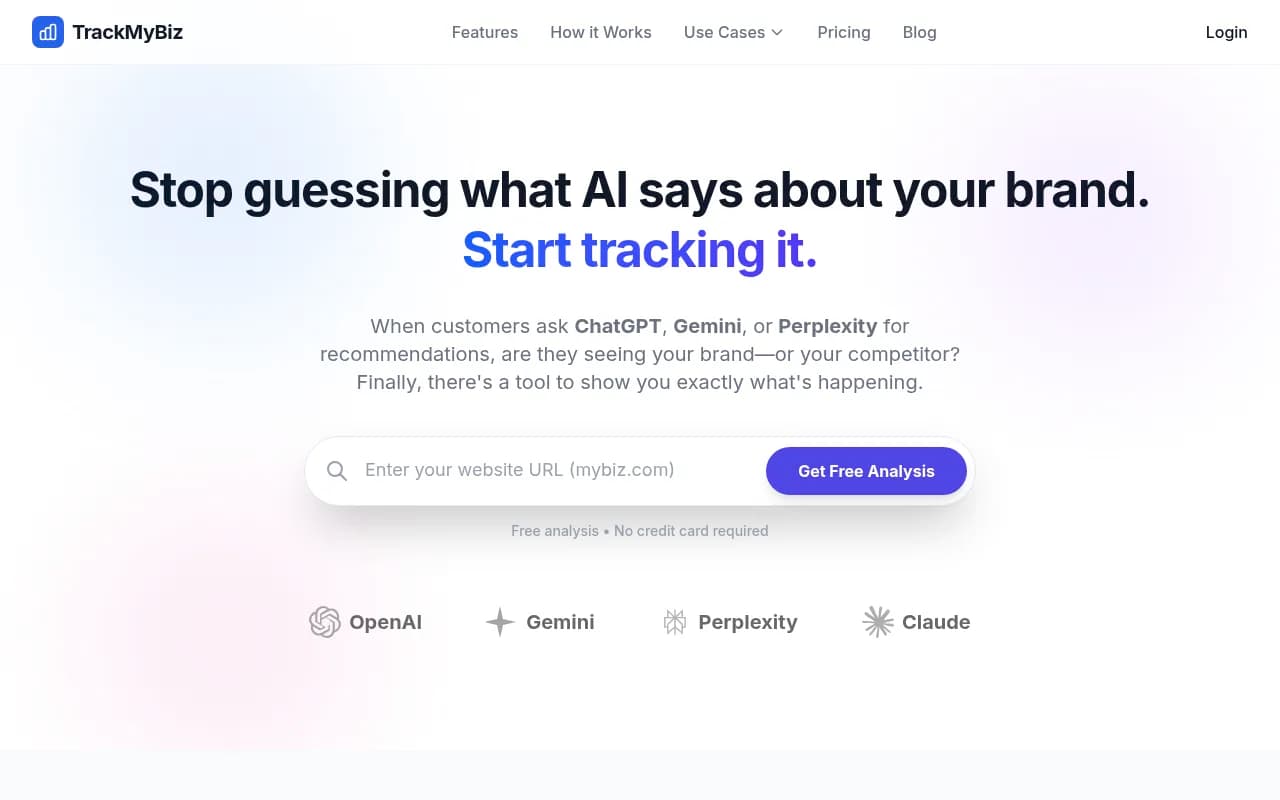
- TrackMyBusiness ($29/month): Budget option covering ChatGPT, Gemini, and Perplexity. Limited to 25 prompts and basic reporting.
For solo founders, the choice comes down to whether you want monitoring alone or monitoring + optimization. If you're just starting and need to understand the landscape, a cheaper tracker works. If you want to actually improve visibility, invest in a platform that shows you what's missing and helps you fix it.
Layer 2: Manual spot-checks (the reality test)
Automated tracking is essential, but AI models are non-deterministic—they don't return identical answers every time. A monitoring platform might show zero mentions for a prompt, but when you test it yourself, your brand appears. Or vice versa.
Set aside 30 minutes weekly to manually test high-value prompts across different AI engines:
- Open ChatGPT, Claude, Perplexity, and Gemini in separate tabs
- Run 5-10 prompts directly related to your product category
- Screenshot any mentions (or non-mentions) that surprise you
- Compare results to what your tracking tool reports
This isn't busywork—it's calibration. Manual testing catches edge cases, reveals prompt variations your tracker might miss, and gives you a gut feel for how AI engines talk about your space.
Example prompts to test:
- "What are the best [your category] tools for [your ICP]?"
- "Compare [your product] vs [top competitor]"
- "Show me alternatives to [dominant player in your space]"
- "What's the cheapest way to [problem your product solves]?"
- "Which [category] tools have the best [your key differentiator]?"
Document patterns. If ChatGPT consistently cites competitors but never you, that's a signal. If Perplexity mentions you for one type of prompt but not another, dig into why.
Layer 3: Competitive intelligence (the gap analysis)
Tracking your own mentions is half the picture. The real insight comes from understanding why competitors get cited when you don't.
Most AI visibility platforms include competitor tracking, but the feature quality varies wildly. Look for tools that show:
- Side-by-side visibility scores (you vs competitors across the same prompts)
- Which specific pages or content pieces AI engines cite for competitors
- Prompt categories where competitors dominate
- Content themes that correlate with high citation rates
Promptwatch's competitor heatmaps do this well—you see exactly which prompts competitors win, which LLMs cite them, and what content they published to earn those citations. That's actionable intelligence: "Competitor X gets cited for 'best CRM for startups' because they published a 3,000-word comparison guide. We don't have that content. Let's create it."
Free alternative: manually search for your top 3 competitors in ChatGPT and Perplexity using the same prompts you tested for yourself. Copy-paste the AI responses into a spreadsheet. Note which competitors appear, what sources AI engines cite, and what angles those sources cover. It's tedious but costs nothing.
The free (but time-intensive) approach
If $100/month isn't in the budget yet, you can cobble together a tracking system using free tools and manual labor. Fair warning: this approach trades money for time. Expect to spend 3-5 hours per week maintaining it.
Step 1: Build a prompt library
Create a spreadsheet with 20-30 prompts relevant to your product. Include:
- Direct product searches ("What is [your product]?")
- Category searches ("Best [category] tools for [use case]")
- Competitor comparisons ("[Your product] vs [competitor]")
- Problem-based searches ("How do I [problem your product solves]?")
- Feature-specific searches ("[Category] tools with [your key feature]")
Step 2: Manual testing routine
Every Monday morning, open ChatGPT (free tier), Claude (free tier), Perplexity (free tier), and Google (for AI Overviews). Run each prompt. Record:
- Does your brand appear? (Yes/No)
- Position in the response (mentioned first, middle, end, not at all)
- What source does the AI cite? (Your website, a review site, a competitor's comparison page, etc.)
- Competitor mentions in the same response
Log everything in your spreadsheet. After 4-6 weeks, you'll have baseline data showing visibility trends.
Step 3: Set up Google Alerts for AI citations
Create Google Alerts for:
- "[Your brand name] ChatGPT"
- "[Your brand name] Perplexity"
- "[Your brand name] AI search"
This won't catch everything, but it surfaces blog posts, Reddit threads, and social media discussions where people mention your brand in the context of AI search. Useful for understanding how your product is being talked about in spaces AI engines crawl.
Step 4: Monitor Reddit and Quora
AI engines cite Reddit and Quora heavily. Set up saved searches on both platforms for:
- Your product category
- Your top competitors
- Problems your product solves
When relevant threads appear, participate authentically. Answer questions, provide value, and mention your product where it genuinely fits. AI engines index these discussions and cite them in responses.
The reality check on free tracking
This approach works, but it doesn't scale. You're manually doing what a $99/month tool automates. The trade-off makes sense in two scenarios:
- You're pre-revenue and genuinely can't afford paid tools yet
- You want to understand the mechanics before investing in automation
Once you're generating revenue, the time you spend on manual tracking costs more than a paid tool. A solo founder's time is worth at least $50/hour. If you're spending 4 hours per week on manual AI search tracking, that's $800/month in opportunity cost. Paying $99/month for automation is the better deal.
What to do with the data once you have it
Tracking visibility is pointless if you don't act on what you learn. Here's the workflow that turns data into results.
Identify your biggest gaps
Look at your tracking data and answer:
- Which high-value prompts return zero mentions of your brand?
- What topics do competitors get cited for that you don't?
- Which AI engines ignore you completely?
- What content types (comparisons, guides, listicles) correlate with citations?
Prioritize gaps based on search volume and buyer intent. A prompt like "best [category] for [your ICP]" with 10,000 monthly searches matters more than a niche query with 50 searches.
Create content that fills the gaps
AI engines cite content that:
- Directly answers the question asked
- Provides specific, factual information (not marketing fluff)
- Includes comparisons, data, and concrete examples
- Comes from a domain with topical authority
If competitors get cited for "best CRM for startups" because they published a detailed comparison guide, you need a comparison guide. If they rank for "how to migrate from [competitor] to [your product]" because they wrote a step-by-step tutorial, you need a tutorial.
Platforms like Promptwatch automate this—the AI writing agent generates content specifically designed to get cited, using real citation data to inform structure and topics. If you're writing manually, study the content AI engines already cite and reverse-engineer the patterns.
Optimize existing content
Sometimes you already have content on a topic, but AI engines don't cite it. Common reasons:
- The content is too shallow (300 words when competitors publish 2,000)
- It's overly promotional (reads like a sales page, not a resource)
- It lacks specifics (vague claims instead of data and examples)
- It's buried on your site (poor internal linking, weak page authority)
Audit your existing content against high-performing competitor pages. Add depth, remove fluff, and make it genuinely useful.
Build topical authority
AI engines favor domains with clear expertise in a topic area. Publishing one article about "project management tools" won't make you an authority. Publishing 20 articles covering project management workflows, tool comparisons, integration guides, and use case breakdowns will.
Map out a content cluster:
- Core pillar page (comprehensive guide to your category)
- 10-15 supporting articles (specific use cases, comparisons, how-tos)
- Internal links connecting everything
This isn't just SEO—it's how you signal to AI engines that your site is a credible source on the topic.
Common mistakes solo founders make with AI visibility tracking
Mistake 1: Tracking vanity metrics instead of outcomes
Seeing your brand mentioned in ChatGPT feels good, but it's meaningless if those mentions don't drive traffic or conversions. Focus on:
- Prompts with high commercial intent ("best [category] for [use case]" beats "what is [category]?")
- Citations that link back to your site (some AI engines cite without linking)
- Visibility in AI engines your ICP actually uses (if your customers don't use Perplexity, tracking it is wasted effort)
Mistake 2: Ignoring the content that actually gets cited
AI engines don't cite your homepage or product pages. They cite blog posts, comparison guides, tutorials, and case studies. If you're only tracking brand mentions without analyzing what content gets cited, you're missing the insight.
Dig into the sources. When a competitor gets cited, what page did the AI engine reference? What format is it? How long? What angle does it take? Replicate the structure, not the content.
Mistake 3: Expecting instant results
AI search visibility compounds slowly. You won't publish one article and start dominating ChatGPT responses overnight. It takes:
- 4-6 weeks for AI engines to crawl and index new content
- 8-12 weeks to see measurable visibility improvements
- 3-6 months to build topical authority that consistently earns citations
Track progress weekly, but judge results quarterly.
Mistake 4: Treating all AI engines the same
ChatGPT, Claude, Perplexity, and Gemini have different citation behaviors:
- ChatGPT favors authoritative domains and recent content
- Perplexity heavily weights Reddit and Quora discussions
- Claude prioritizes depth and factual accuracy
- Gemini integrates Google's knowledge graph and favors structured data
A strategy that works for one engine might flop for another. Track each separately and optimize accordingly.
Tool comparison: What you get at different price points
Here's what AI visibility tracking looks like across budget tiers in 2026:
| Price tier | What you get | Best for | Example tools |
|---|---|---|---|
| Free | Manual testing, Google Alerts, Reddit monitoring | Pre-revenue founders testing the waters | DIY approach |
| $29-49/mo | Basic mention tracking, 1-2 AI engines, limited prompts | Validating whether AI visibility matters for your niche | TrackMyBusiness, Rankshift |
| $79-99/mo | Multi-engine tracking, competitor analysis, content gap insights | Solo founders ready to optimize visibility | Promptwatch, Peec AI |
| $200+/mo | Advanced analytics, team features, API access, white-label reporting | Small teams or agencies managing multiple clients | Profound, Otterly.AI |
For solo founders, the $79-99/mo tier delivers the best ROI. You get automation, actionable insights, and (in Promptwatch's case) content generation tools—everything needed to actually improve visibility, not just watch it.
The workflow that works: A weekly routine
Here's the exact routine that keeps AI search visibility on track without consuming your entire week:
Monday (30 minutes):
- Check your tracking dashboard for new mentions or drops
- Review competitor visibility changes
- Identify 2-3 prompts where you're not showing up but should be
Wednesday (60 minutes):
- Manually test 5-10 high-priority prompts across ChatGPT, Claude, and Perplexity
- Screenshot any surprising results
- Update your prompt library with new variations you discover
Friday (90 minutes):
- Create or optimize one piece of content targeting a visibility gap
- If using Promptwatch or similar, generate an AI-optimized article
- If writing manually, study competitor content that gets cited and reverse-engineer it
That's 3 hours per week. Manageable for a solo founder, and enough to steadily improve visibility over time.
When to upgrade your tracking stack
Start simple. As your startup grows, you'll know it's time to upgrade when:
- You're managing multiple products or domains
- You need to track 100+ prompts instead of 50
- You want deeper analytics (attribution, traffic impact, conversion tracking)
- You're hiring a marketer and need team collaboration features
At that point, move from solo founder tools to platforms like Profound or Semrush's AI visibility features. But in the early days, overbuying tools is a bigger risk than underbuying them.
The bottom line
AI search visibility isn't optional in 2026—it's a discovery channel that influences 40%+ of product research. Solo founders can track and optimize visibility for under $100/month using the right tools and a disciplined weekly routine.
The winning approach: automated monitoring (Promptwatch or similar), manual spot-checks (30 minutes weekly), and systematic content creation (target the gaps competitors exploit). Track progress quarterly, not daily. Focus on high-intent prompts that drive actual business outcomes.
You don't need an enterprise budget or a marketing team. You need a system that shows you where you're invisible, why competitors get cited instead, and what content to create to close the gap. That's the game in 2026.