Key Takeaways
- AI models already cite some of your pages — the goal is to find them, understand why they're being cited, and double down on what's working rather than guessing which content to refresh
- Citation data reveals content gaps — pages that get cited show you the exact topics, formats, and angles AI models trust; use this as a blueprint for refreshing underperforming pages
- Refresh strategy should follow the action loop — identify cited pages, analyze what makes them citation-worthy, apply those patterns to similar content, then track whether citations increase
- Traditional metrics (rankings, traffic) don't predict AI citations — a page can rank #1 in Google but never get cited by ChatGPT; you need visibility tracking tools to see what AI models actually reference
- Bottom-funnel content is stable for now, but won't last — transactional pages still drive clicks today, but as AI agents take over purchase journeys, even commercial intent queries will be answered inside chat interfaces
In 2026, the relationship between content and discovery has fundamentally changed. AI models like ChatGPT, Claude, Perplexity, and Gemini now answer millions of queries that used to send traffic to your website. When someone asks "what's the best project management tool for remote teams?" or "how do I fix a 502 error in Nginx?", they get a synthesized answer with citations — and your content either shows up in that answer or it doesn't.
The problem: most content refresh strategies still optimize for Google rankings and organic traffic, ignoring the reality that AI models are now the primary discovery layer for informational queries. You're refreshing content based on outdated signals (keyword rankings, search volume estimates, CTR) when the real question is: which of your pages do AI models already trust and cite?
This guide shows you how to build a content refresh strategy that starts with citation data — the pages AI models already reference — and uses that intelligence to prioritize what to update, how to update it, and how to measure whether your refreshes actually improve AI visibility.
Why Traditional Content Refresh Strategies Fail in the AI Era
Most content audits follow a predictable pattern:
- Export all URLs from Google Search Console or a crawler
- Filter by traffic decline, low rankings, or outdated publish dates
- Refresh the "low-hanging fruit" — pages that rank #8-#15, hoping to push them into the top 5
- Update stats, add a few paragraphs, republish
- Wait for rankings to improve
This approach made sense when Google was the only discovery channel and rankings directly correlated with traffic. But in 2026, a page can rank #1 in Google and still be invisible in AI search. Why? Because AI models don't just scrape the top 10 results — they synthesize information from dozens of sources, prioritize authoritative citations, and ignore content that lacks entity clarity, structured data, or depth.
According to Search Engine Land's 2024-2025 research, informational query CTR dropped 61% when AI Overviews appear. That means even if your refreshed content climbs to position #3, it may generate zero incremental traffic because users are getting their answers directly from AI-generated summaries.
The new reality: visibility in AI search is determined by citations, not rankings. If ChatGPT, Perplexity, or Claude cite your page when answering a prompt, you're visible. If they don't, you're not — regardless of where you rank in traditional SERPs.
The Citation-First Refresh Framework
Instead of refreshing content based on traffic decline or ranking drops, start with citation data — the pages AI models already trust. Here's the framework:
Step 1: Identify Which Pages AI Models Already Cite
Before you refresh anything, you need to know which of your pages are currently being cited by AI models. This requires tracking tools that monitor how ChatGPT, Perplexity, Claude, Gemini, and other LLMs respond to prompts related to your brand, category, or topics.
Tools like Promptwatch provide page-level citation tracking — you can see exactly which URLs are being referenced, how often, and by which models. This is fundamentally different from traditional SEO tools that only show Google rankings.

What to look for:
- Pages with consistent citations across multiple models — if ChatGPT, Perplexity, and Claude all cite the same page, it's a strong signal that the content has authority and clarity
- Pages cited for high-value prompts — not all citations are equal; a citation for "best CRM for enterprise teams" is more valuable than "what is a CRM?"
- Pages cited despite low Google rankings — these are hidden gems where AI models trust your content even though it doesn't rank well in traditional search
- Citation frequency trends — is a page being cited more or less often over time? Declining citations signal that competitors are publishing better content
If you don't have citation tracking set up yet, you can manually test by prompting ChatGPT, Perplexity, and Claude with queries related to your content and noting which sources they cite. This is time-consuming but gives you directional insight.
Step 2: Analyze What Makes Cited Pages Citation-Worthy
Once you've identified pages that AI models already cite, reverse-engineer why they're being cited. This reveals the content patterns and structural elements that earn trust from LLMs.
Key factors to examine:
Entity clarity: Do the pages clearly define entities (people, products, concepts) with consistent naming and context? AI models prioritize content that disambiguates entities and connects them to related concepts. For example, if you write about "Slack" without clarifying whether you mean the company, the product, or the messaging protocol, models struggle to cite you accurately.
Structured data and schema markup: Pages with proper schema (Article, HowTo, FAQPage, Product, Organization) are easier for AI models to parse and cite. Check whether your cited pages use structured data and whether it's implemented correctly.
Content depth and specificity: AI models favor content that goes deep on a narrow topic rather than surface-level overviews. A 3,000-word guide on "how to configure Nginx reverse proxy for Node.js apps" will get cited more than a generic "Nginx tutorial" that covers 20 topics shallowly.
Authoritative citations and references: Pages that cite credible sources (research papers, official documentation, industry reports) signal authority to AI models. If your cited pages link out to authoritative sources, that's a pattern to replicate.
Freshness signals: Publication date, last updated date, and references to current events or recent data all signal freshness. AI models often prefer recently updated content when synthesizing answers.
Format and structure: Are your cited pages listicles? Step-by-step guides? Comparison tables? The format matters — AI models find it easier to extract and cite content that's clearly structured with headings, lists, and tables.
Answer completeness: Does the page answer the full question, or does it leave gaps that force the model to cite multiple sources? Complete, self-contained answers are more likely to be cited as primary sources.
Document these patterns. If you notice that all your cited pages use FAQ schema, have 2,000+ words, and include comparison tables, that's your blueprint for refreshing underperforming content.
Step 3: Prioritize Refresh Candidates Based on Citation Potential
Now that you understand what makes content citation-worthy, prioritize which pages to refresh. The goal is to find high-potential pages — content that's topically relevant, has some existing authority, but isn't currently being cited.
Prioritization criteria:
Topic overlap with cited pages: If AI models cite your guide on "project management for remote teams" but ignore your guide on "project management for agencies", the latter is a strong refresh candidate. It's in the same category, so you know models are interested in the topic.
Existing backlinks and domain authority: Pages with strong backlink profiles are easier to push into citation territory because they already have authority signals. Use Ahrefs, Semrush, or Moz to identify pages with 10+ referring domains that aren't being cited.
Search volume and prompt volume: Traditional keyword search volume is still useful as a proxy for demand, but prompt volume (how often people ask AI models about a topic) is more predictive of citation value. Tools like Promptwatch provide prompt volume estimates based on real query data.
Competitor citation gaps: If competitors are being cited for prompts where you're not, those are high-priority refresh targets. Use Answer Gap Analysis (available in Promptwatch) to see exactly which prompts competitors are visible for but you're missing.
Commercial intent and funnel stage: Bottom-funnel content (product comparisons, "best X" lists, buying guides) still drives conversions today, but top-of-funnel educational content is where AI citations are most common. Prioritize TOFU content first, then work down the funnel.
Ease of refresh: Some pages need minor updates (new stats, updated examples, schema markup), while others require complete rewrites. Start with quick wins — pages that are 80% of the way there and just need structural improvements or freshness signals.
Create a prioritized list of 20-30 pages to refresh over the next quarter. Focus on pages where small changes can unlock citation visibility.
Step 4: Refresh Content Using Citation-Optimized Patterns
Now comes the actual refresh. This isn't about adding a few paragraphs and updating the date — it's about re-engineering content to be citation-worthy.
Refresh checklist:
Add or improve structured data: Implement schema markup that matches the content type. For how-to guides, use HowTo schema. For listicles, use ItemList. For FAQs, use FAQPage. Validate with Google's Rich Results Test.
Clarify entities and add context: Make sure every entity (product, person, concept) is clearly defined on first mention. Add context that helps AI models understand relationships. For example, instead of "Slack is popular", write "Slack, the team messaging platform owned by Salesforce, is popular among remote teams."
Increase content depth: If your cited pages average 2,500 words, bring underperforming pages up to that level. Add sections that answer related questions, include examples, and provide step-by-step instructions.
Add authoritative citations: Link to official documentation, research papers, and industry reports. This signals to AI models that your content is grounded in credible sources.
Update freshness signals: Change the publication date to today, add a "Last updated" timestamp, and reference recent events or data (e.g., "As of February 2026...").
Improve formatting and scannability: Break up long paragraphs, use descriptive headings (H2, H3), add bulleted lists, and include comparison tables or charts where relevant. AI models extract information more easily from well-structured content.
Answer the full question: Don't leave gaps. If someone asks "how do I set up Nginx as a reverse proxy?", your page should cover prerequisites, step-by-step configuration, common errors, and troubleshooting — not just the config file syntax.
Optimize for personas and use cases: AI models often tailor responses based on user context ("for small businesses", "for developers", "for beginners"). Add sections that address different personas or use cases.
Embed related content: If you have other pages on related topics, link to them internally. This helps AI models understand your content's place in a broader knowledge graph.
Add visual elements: Screenshots, diagrams, and annotated examples make content more useful and citation-worthy. AI models can't "see" images yet, but they parse alt text and captions, which provide additional context.
If you're refreshing at scale, consider using AI writing tools that are trained on citation data. Promptwatch's built-in AI writing agent generates content based on 880M+ analyzed citations, prompt volumes, and competitor analysis — it's not generic SEO filler, but content engineered to get cited.
Step 5: Track Citation Changes Post-Refresh
After publishing refreshed content, monitor whether AI models start citing it more frequently. This is where most content teams fail — they refresh pages but never measure the impact on AI visibility.
What to track:
Citation frequency by model: How often is the refreshed page cited by ChatGPT, Perplexity, Claude, Gemini, etc.? Track this weekly for the first month, then monthly.
Citation position: When your page is cited, is it the primary source (cited first) or a secondary reference? Primary citations are more valuable.
Prompt coverage: How many different prompts now trigger citations to your page? If you refreshed a guide on "project management tools" and it's now being cited for 15 related prompts ("best PM tools for remote teams", "PM tools with Gantt charts", etc.), that's a win.
Citation quality: Are you being cited for high-value, high-intent prompts, or low-value informational queries? Quality matters more than quantity.
Traffic attribution: Use Promptwatch's traffic attribution (code snippet, Google Search Console integration, or server log analysis) to connect AI visibility to actual traffic and conversions. This closes the loop between citations and revenue.
Competitor comparison: How does your citation frequency compare to competitors for the same prompts? Use competitor heatmaps to benchmark your performance.
If a refreshed page isn't gaining citations after 4-6 weeks, revisit the content. You may need to go deeper, add more structure, or target different prompts.
Advanced Tactics: Reddit, YouTube, and Multi-Channel Citation Optimization
AI models don't just cite traditional web pages — they also pull from Reddit threads, YouTube videos, and other platforms. In 2026, a well-placed Reddit comment or YouTube tutorial can drive more AI citations than a blog post.
Reddit optimization: AI models frequently cite Reddit discussions, especially for product recommendations and troubleshooting. Identify subreddits where your target audience asks questions, then contribute genuinely helpful answers with links to your content. Tools like Promptwatch surface Reddit threads that directly influence AI recommendations.
YouTube optimization: Video transcripts are indexed by AI models. If you have YouTube tutorials, make sure they have accurate transcripts, descriptive titles, and timestamps. AI models cite YouTube videos when they provide step-by-step visual guidance that text alone can't convey.
Multi-platform consistency: If your brand is mentioned on Reddit, YouTube, your website, and third-party review sites, make sure the information is consistent. AI models struggle when they encounter conflicting data (e.g., different pricing, feature lists, or descriptions).
Why Bottom-Funnel Content Won't Stay Safe Much Longer
Right now, transactional queries ("buy X", "X pricing", "X vs Y") still drive clicks to websites because users want to complete a purchase or sign up. But this is temporary.
AI agents are evolving to handle the full purchase journey. ChatGPT already has shopping features. Perplexity is testing checkout integrations. Within 12-18 months, users will be able to ask "find me the best CRM for my team and sign me up" and complete the transaction without leaving the chat interface.
When that happens, even bottom-funnel content will need to be optimized for citations. The brands that get recommended by AI agents will be the ones that appear in training data, have strong citation profiles, and maintain consistent information across all platforms.
This is why you need to start building AI visibility now — before the bottom-funnel traffic disappears.
The Action Loop: Find Gaps, Create Content, Track Results
The most effective content refresh strategy isn't a one-time project — it's a continuous loop:
-
Find the gaps: Use Answer Gap Analysis to see which prompts competitors are cited for but you're not. This shows you the exact content your website is missing.
-
Create content that ranks in AI: Generate articles, listicles, and comparisons grounded in real citation data, prompt volumes, and competitor analysis. This isn't generic content — it's engineered to get cited.
-
Track the results: Monitor citation frequency, prompt coverage, and traffic attribution. See which pages are being cited, how often, and by which models. Close the loop by connecting visibility to revenue.
This cycle — find gaps, generate content, track results — is what separates optimization platforms from monitoring-only tools. Most competitors (Otterly.AI, Peec.ai, AthenaHQ, Search Party) stop at step one. Promptwatch is built around taking action.
Tools and Resources for Citation-Driven Content Refresh
To execute this strategy, you'll need:
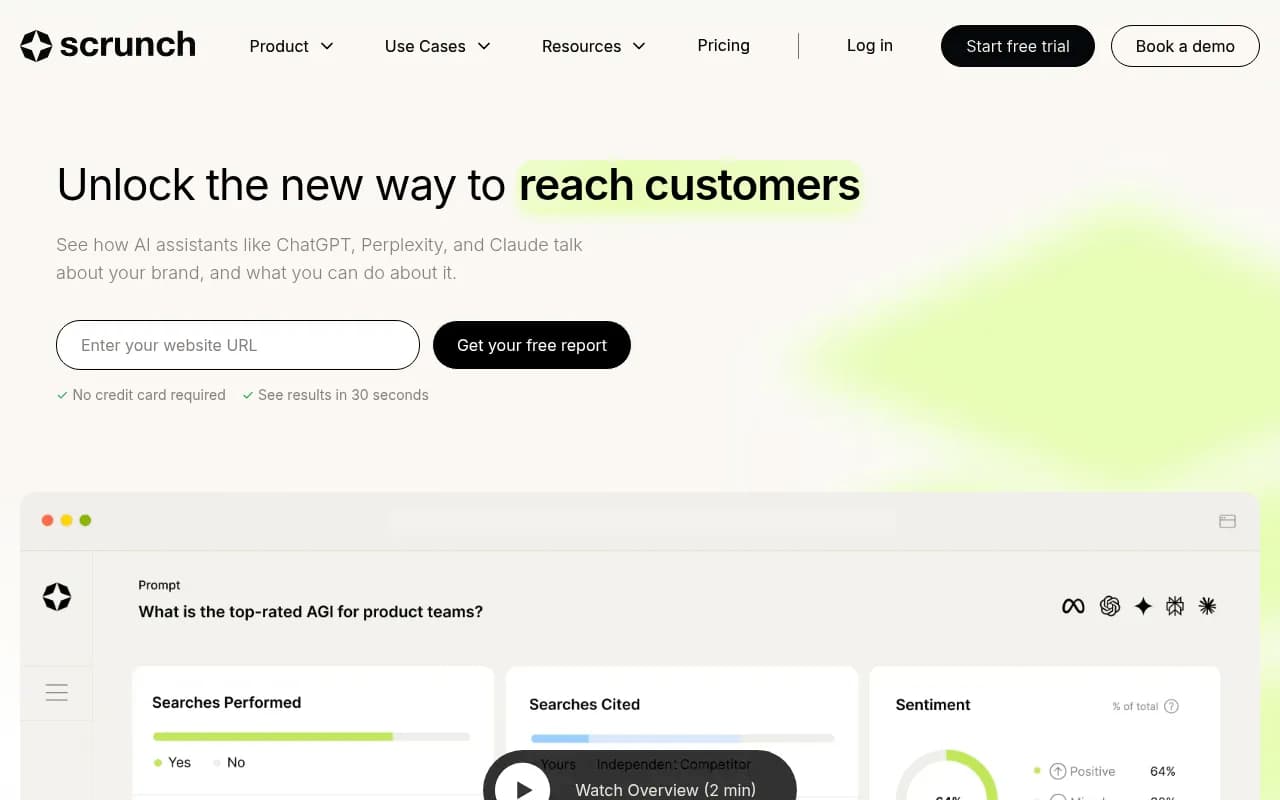
AI visibility tracking: Tools like Promptwatch, Profound, or Scrunch that monitor citations across ChatGPT, Perplexity, Claude, Gemini, and other models.
Profound

Content gap analysis: Identify which prompts competitors are visible for but you're not. Promptwatch's Answer Gap Analysis is purpose-built for this.
AI crawler logs: Real-time logs of AI crawlers (ChatGPT, Perplexity, etc.) hitting your website. See which pages they read, errors they encounter, and how often they return. Most competitors lack this entirely.
Schema markup tools: Google's Rich Results Test, Schema.org documentation, and plugins like Yoast or Rank Math for WordPress.
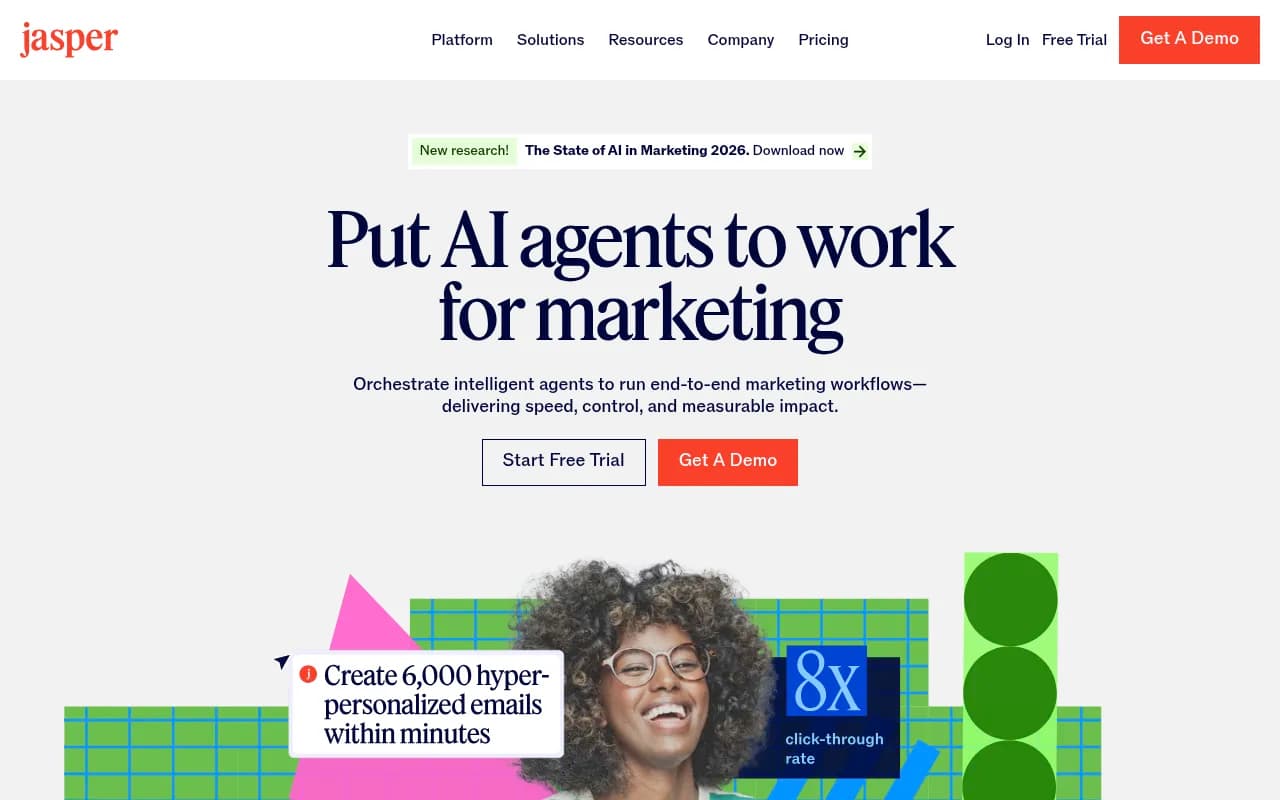
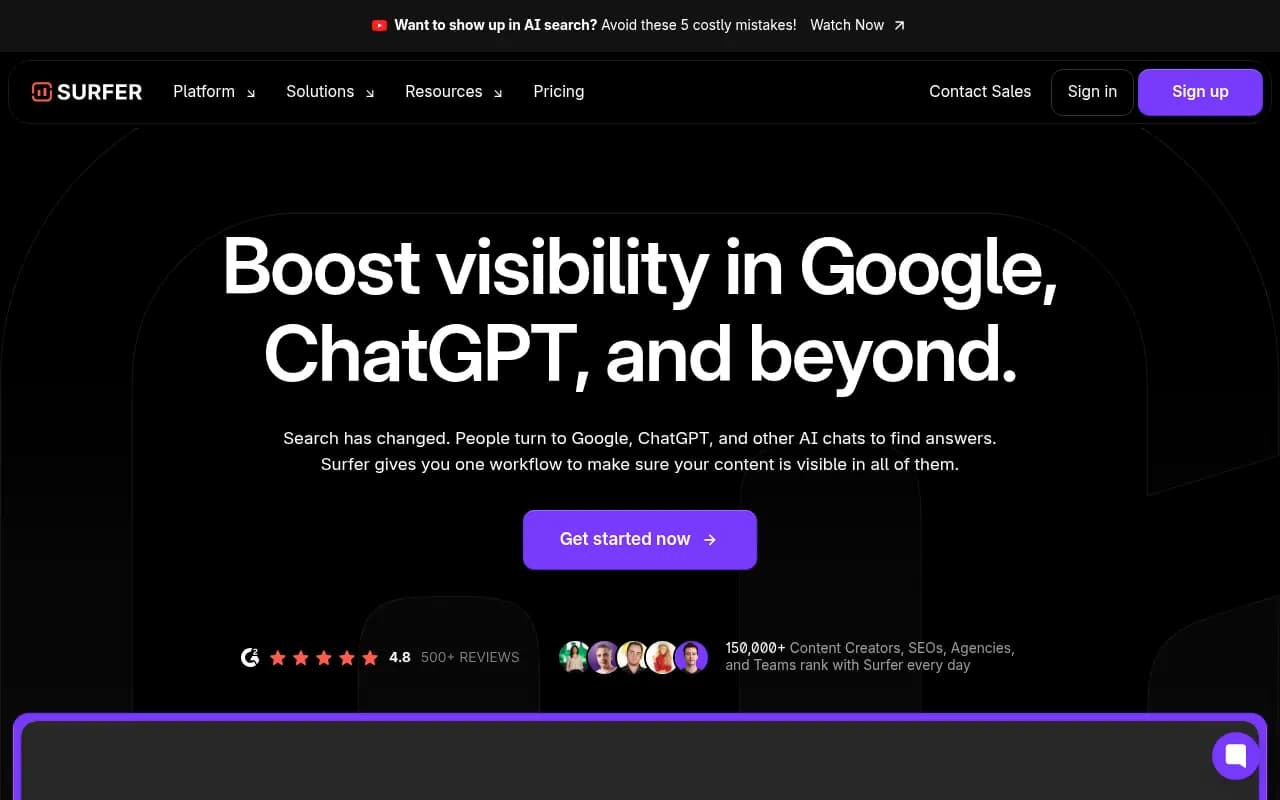
AI writing tools: If you're refreshing at scale, consider tools like Jasper, Surfer SEO, or Promptwatch's built-in AI writing agent.
Traffic attribution: Google Search Console, server log analysis, or Promptwatch's code snippet to connect AI visibility to actual traffic.
Measuring Success: KPIs for AI-Era Content Refresh
Traditional content refresh KPIs (rankings, organic traffic, CTR) are still useful, but they don't capture AI visibility. Add these metrics:
Citation frequency: How often are your pages cited by AI models? Track this by page, by model, and by prompt.
Citation share vs. competitors: What percentage of citations in your category go to you vs. competitors?
Prompt coverage: How many different prompts trigger citations to your content?
Primary citation rate: When cited, how often are you the primary source vs. a secondary reference?
AI-driven traffic: How much traffic comes from users who discovered you via AI search? Use UTM parameters, referrer data, or Promptwatch's attribution tools.
Conversion rate from AI traffic: Do users who discover you via AI search convert at the same rate as traditional organic traffic? Track this in your analytics platform.
Visibility score trends: Overall AI visibility score over time. Are you becoming more or less visible as you refresh content?
Common Mistakes to Avoid
Refreshing based on traffic decline alone: A page can lose Google traffic but still be heavily cited by AI models. Check citation data before deciding to refresh.
Ignoring structured data: AI models rely heavily on schema markup to understand content. Skipping this step means you're invisible to many models.
Optimizing for keywords instead of entities: AI models don't think in keywords — they think in entities and relationships. Shift your mindset.
Refreshing without tracking: If you don't measure citation changes post-refresh, you're flying blind. Set up tracking before you start.
Focusing only on your website: AI models cite Reddit, YouTube, and third-party sites too. Optimize your entire brand footprint, not just your blog.
Waiting for bottom-funnel traffic to decline: By the time transactional queries move to AI agents, it's too late. Start building AI visibility now.
Conclusion: Refresh Smarter, Not Harder
In 2026, content refresh isn't about chasing Google rankings or updating old blog posts because they're "stale". It's about understanding which pages AI models already trust, reverse-engineering what makes them citation-worthy, and applying those patterns to underperforming content.
The brands that win in AI search are the ones that start with citation data, prioritize high-potential pages, refresh strategically, and track results obsessively. This isn't guesswork — it's a systematic, data-driven approach to content optimization.
If you're still refreshing content based on traffic decline and ranking drops, you're optimizing for a discovery channel that's rapidly losing relevance. The future of content strategy is citation-first, AI-native, and action-oriented.
Start by identifying which of your pages AI models already cite. That's your foundation. Everything else builds from there.