Summary
- AI search engines process 3+ billion queries monthly, revealing what features customers ask about before they ever reach your website
- Track which product features appear in ChatGPT, Perplexity, and Claude responses to understand real demand signals
- Use citation analysis to see which competitors get recommended for specific features, then prioritize gaps in your roadmap
- Monitor query patterns and prompt volumes to spot emerging feature requests before they hit traditional feedback channels
- Connect AI visibility data to actual product usage and revenue to validate which features drive real business outcomes
Your customers are asking LLMs about your product features right now. They're typing "best CRM with AI email automation" into ChatGPT, asking Perplexity "which project management tool has the best Gantt chart view," and querying Claude about "accounting software that integrates with Stripe."
These aren't vanity metrics. They're demand signals. When 81% of AI search market share belongs to ChatGPT and traditional Google search volume dropped 25% year over year, the questions people ask LLMs reveal what they actually want to buy.
Most product teams still rely on support tickets, user interviews, and feature request forms. Those channels capture what existing customers complain about. AI search data shows what prospects research before they ever talk to sales.
Why AI search data beats traditional product feedback
Traditional feedback channels have a selection bias problem. You hear from people who already bought your product, figured out how to contact support, and cared enough to complain. You miss everyone who researched your category, didn't find what they needed, and bought from a competitor.
AI search data captures the entire research journey. When someone asks "does [your product] support SSO?" and ChatGPT says no, you just lost a deal. When prospects ask "best [category] for small teams" and your brand doesn't appear in the answer, you're invisible to that segment.
The numbers back this up. Twenty-nine percent of U.S. adults encounter AI-generated search summaries every single day. For high-income buyers -- your core B2B audience -- that number exceeds 40%. If you're not tracking what these users ask and which brands get cited, you're flying blind.
Step 1: Set up AI search visibility tracking
You can't optimize what you don't measure. Start by tracking how often your brand appears in AI-generated answers and which features trigger citations.
Promptwatch monitors 10 AI models including ChatGPT, Perplexity, Claude, Gemini, and Google AI Overviews. The platform tracks which prompts return your brand, which competitors get cited instead, and exactly what features users ask about.

The key difference: most AI visibility tools just show you where you're invisible. Promptwatch shows you what's missing from your product or messaging, then helps you fix it with Answer Gap Analysis. You see the specific prompts competitors rank for but you don't, the features mentioned in those responses, and the content gaps on your website.
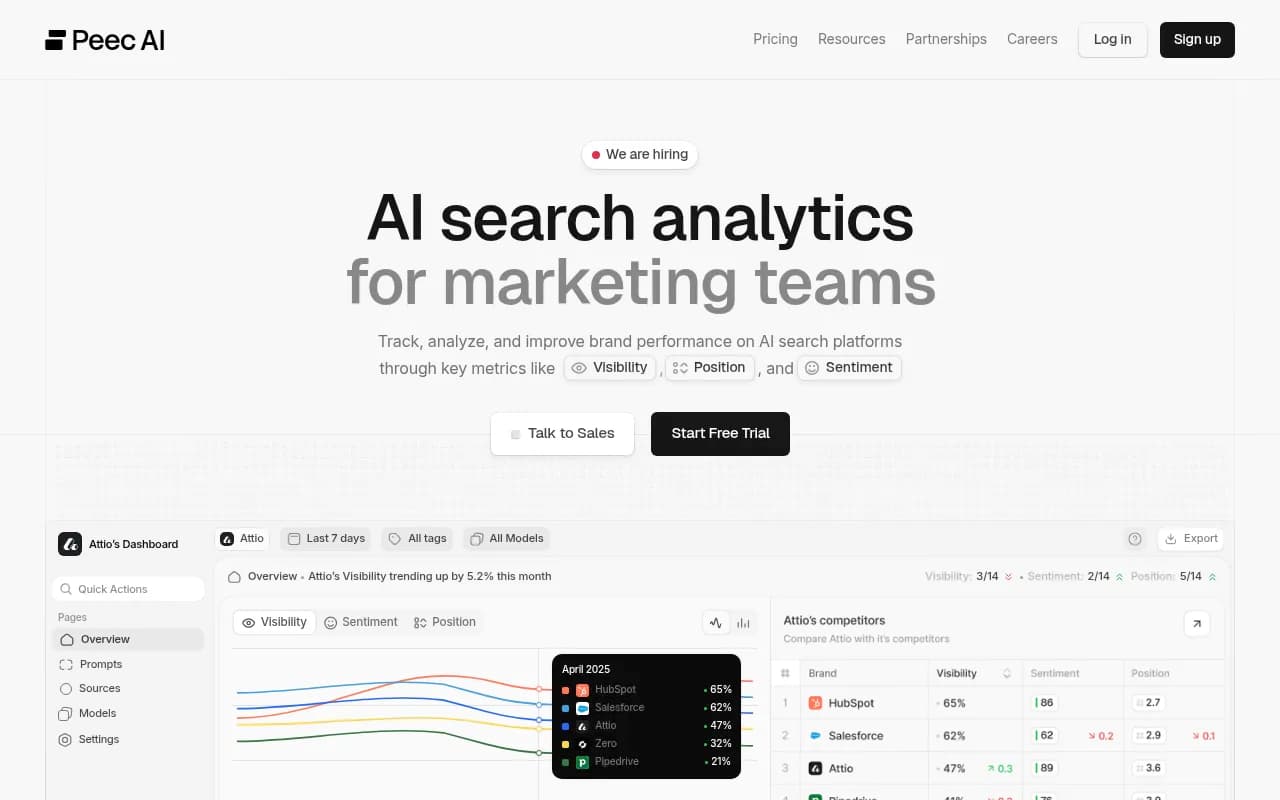
Alternatives like Otterly.AI and Peec.ai offer basic monitoring but lack the content optimization and gap analysis features you need to act on the data.
Otterly.AI

For teams that want deeper citation analysis, Profound tracks 9+ AI engines and provides detailed source breakdowns showing which pages, Reddit threads, and YouTube videos influence AI recommendations.
Profound

Step 2: Identify high-volume feature queries
Once you're tracking AI visibility, analyze which feature-related queries have the highest volume and lowest competition.
Promptwatch provides prompt volume estimates and difficulty scores for each query. You can filter by feature category ("integrations," "reporting," "mobile app") to see which capabilities prospects research most.
Look for patterns:
- High volume, low difficulty: Features many people ask about but few competitors address well. These are quick wins for your roadmap.
- High volume, high difficulty: Established feature categories where you need differentiation, not just parity.
- Rising volume: Emerging features that aren't mainstream yet but show growth momentum.
Example: A project management tool might discover that "Gantt chart mobile editing" has 10x the search volume of "Gantt chart desktop view" but only two competitors get cited for the mobile capability. That's a roadmap signal.
Step 3: Analyze competitor feature citations
When AI models cite competitors for specific features, they're telling you what the market considers best-in-class.
Use citation analysis to map the competitive landscape:
| Feature | Top cited brand | Citation frequency | Your brand rank |
|---|---|---|---|
| SSO integration | Competitor A | 87% | Not cited |
| Mobile offline mode | Competitor B | 72% | #3 (12%) |
| API rate limits | Your brand | 65% | #1 |
| Custom workflows | Competitor C | 58% | Not cited |
This table reveals three things:
- SSO is table stakes -- you're losing deals by not having it
- Your mobile offline mode exists but needs better documentation or marketing
- Your API is a strength worth emphasizing
Promptwatch's competitor heatmaps show exactly this breakdown across LLMs. You see who wins for each prompt and why -- which features they highlight, what content they published, and where they get linked from.
Step 4: Map queries to customer journey stages
Not all feature queries indicate the same level of buying intent. Someone asking "what is SSO" is researching basics. Someone asking "does [your product] support SAML 2.0 with Okta" is evaluating vendors.
Segment queries by intent:
- Educational: "What is [feature]" or "How does [feature] work" -- early research, low intent
- Comparative: "Best [category] with [feature]" or "[Product A] vs [Product B] for [feature]" -- mid-funnel evaluation
- Transactional: "Does [your product] support [specific implementation]" -- high intent, near purchase
Prioritize features that appear in high-intent queries. If prospects ask "does [your product] integrate with Salesforce" 500 times per month and you don't support it, that's revenue you're leaving on the table.
For early-stage queries, the opportunity is different. If many people ask "what is headless CMS" but few ask about your specific product, you have an awareness problem, not a feature gap.
Step 5: Connect AI visibility to product usage data
AI search data tells you what people research. Product analytics tells you what they actually use. The magic happens when you connect the two.
Cross-reference feature queries with usage metrics:
- Features with high AI search volume but low product usage might have poor UX or discoverability issues
- Features with low search volume but high usage are hidden strengths worth promoting
- Features with high search volume and high usage are working -- double down
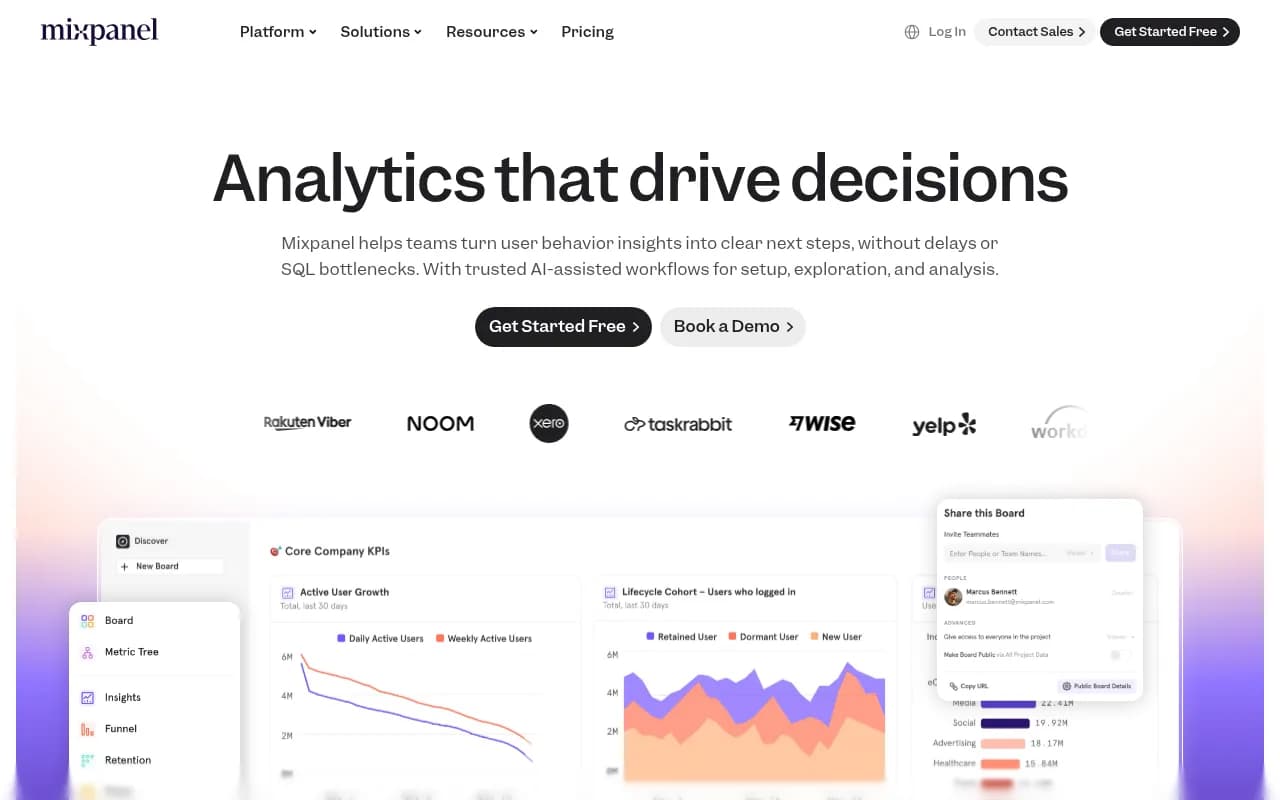
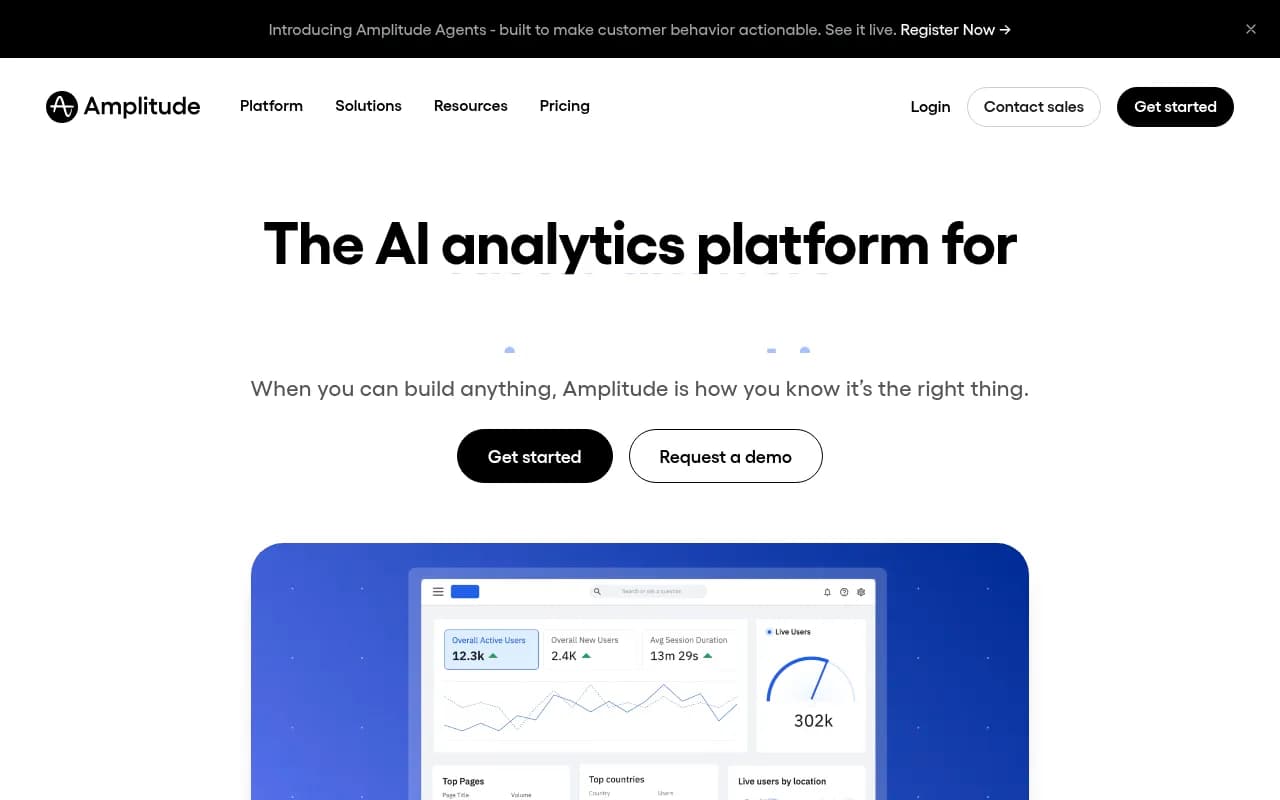
Use tools like Mixpanel or Amplitude to track feature adoption, then overlay AI visibility data from Promptwatch.
Example: If "bulk import" appears in 1,200 monthly AI queries but only 8% of users ever try the feature, investigate why. Is the import UI confusing? Is the feature hard to find? Does it fail on large files? The AI search data identified demand; product analytics reveals the execution gap.
Step 6: Prioritize roadmap items with AI search scoring
Combine multiple signals into a single prioritization score:
AI Search Score = (Query Volume × Intent Weight) + (Competitor Gap × 2) + (Revenue Impact × 3)
- Query Volume: How many people ask about this feature per month
- Intent Weight: 1 for educational queries, 2 for comparative, 3 for transactional
- Competitor Gap: 0 if you're cited as often as competitors, 1-5 based on citation gap
- Revenue Impact: Estimated annual contract value influenced by this feature
This formula surfaces features that combine high demand, competitive weakness, and revenue potential.
Run this calculation quarterly. AI search patterns shift as new tools launch, competitors add features, and market priorities change. A feature that scored low in Q1 might spike in Q2 if a competitor gets acquired or a new regulation creates compliance requirements.
Step 7: Validate with synthetic user research
Before committing engineering resources, validate feature demand with AI-powered user research.
Tools like Synthetic Users and Deepsona let you test feature concepts with AI personas that replicate real customer segments. You can ask "Would you pay $50/month more for [feature]?" and get statistically significant responses in hours, not weeks.
This catches false positives. Just because people ask about a feature doesn't mean they'll pay for it. Synthetic research reveals willingness to pay, preferred implementation approaches, and deal-breaker edge cases.
Combine this with traditional user interviews for features that score high on AI search metrics but feel risky or expensive to build.
Step 8: Monitor post-launch AI visibility changes
After shipping a feature, track how it changes your AI search visibility.
Set up monitoring for:
- Citation frequency: Does your brand now appear in answers for [feature] queries?
- Sentiment: Do AI models describe your implementation positively or mention limitations?
- Competitor displacement: Did you take citation share from competitors?
Promptwatch's page-level tracking shows exactly which product pages get cited, how often, and by which models. If you published a new feature but AI models still cite competitors, you have a content or indexing problem.
Use AI crawler logs to verify that ChatGPT, Claude, and Perplexity are actually reading your updated documentation. If they're not crawling the new pages, AI models can't cite them.
Real example: How one SaaS company reprioritized their roadmap
A B2B analytics platform tracked AI search data for six months and discovered something surprising. Their product team had prioritized building a mobile app based on a few vocal enterprise customers. But AI search data showed only 200 monthly queries about mobile access versus 3,400 queries about "real-time data refresh" and "webhook integrations."
They dug deeper:
- Real-time refresh appeared in 78% of competitor comparison queries
- Webhook integration was mentioned in 65% of "best [category] for developers" prompts
- Mobile app queries came almost entirely from one industry vertical (field services) that wasn't their target market
They shelved the mobile app, shipped real-time refresh in six weeks, and saw their ChatGPT citation rate jump from 12% to 34% for high-intent queries. Revenue from developer-focused accounts increased 40% quarter over quarter.
The mobile app would have taken four months and served a market segment they weren't targeting. AI search data redirected engineering effort toward features that actually drove pipeline.
Common mistakes when using AI search data
Mistake 1: Treating all queries equally
A query with 10,000 monthly volume but zero buying intent is worth less than a query with 100 monthly volume from qualified buyers. Weight by intent and revenue potential, not just raw volume.
Mistake 2: Ignoring citation context
Your brand might appear in AI answers but get cited negatively ("[Product] lacks [feature]"). Track sentiment, not just presence.
Mistake 3: Chasing every feature gap
Competitors will always have features you don't. Prioritize gaps that align with your positioning and target customer. If you're building for small teams, enterprise SSO might not matter.
Mistake 4: Forgetting content optimization
Shipping a feature doesn't guarantee AI visibility. You need documentation, comparison pages, and structured data that AI models can parse and cite. Use schema markup and clear feature descriptions.
Mistake 5: Not connecting to revenue
AI search data is a leading indicator, not a success metric. Track how visibility changes affect pipeline, win rates, and customer acquisition cost. If a feature gets cited but doesn't drive deals, investigate why.
Tools for AI search-driven product decisions
Here's a comparison of platforms that help you track AI visibility and inform roadmap decisions:
| Tool | AI models tracked | Gap analysis | Content generation | Starting price |
|---|---|---|---|---|
| Promptwatch | 10 (ChatGPT, Perplexity, Claude, Gemini, etc.) | Yes | Yes | $99/mo |
| Profound | 9+ | Limited | No | Custom |
| Otterly.AI | 3 (ChatGPT, Perplexity, AI Overviews) | No | No | $49/mo |
| Peec.ai | 3 | No | No | $79/mo |
| AthenaHQ | 5 | No | No | $199/mo |
For teams that want the full action loop -- find gaps, generate content, track results -- Promptwatch is the only platform that combines monitoring with optimization tools. Most competitors stop at showing you the data.
Integrating AI search data into existing product workflows
You don't need to overhaul your entire product process. Start by adding AI search data to existing rituals:
Sprint planning: Review top feature queries and competitor citations before prioritizing the backlog.
Quarterly roadmap reviews: Include AI visibility trends alongside traditional metrics like NPS and feature requests.
Win/loss analysis: When you lose a deal, check if the missing feature appears in AI search queries. If it does, weight it higher.
Competitive intelligence: Track when competitors ship features and how it changes their AI citation rate.
Content planning: Use query data to inform blog topics, documentation updates, and comparison pages.
Most teams can integrate AI search data in 2-3 hours per month. Set up automated reports from your tracking tool, review them in existing meetings, and flag high-priority signals for deeper investigation.
The future of AI search and product development
AI search is moving from answering questions to taking actions. Agentic AI systems don't just recommend products -- they book demos, compare pricing, and negotiate contracts.
By 2026, 75% of corporations will have adopted agentic AI tools. These systems will research your product, evaluate competitors, and make buying recommendations without human intervention.
The implications for product teams:
- Features need machine-readable documentation, not just human-friendly marketing pages
- Pricing and packaging must be structured data that AI agents can parse
- Integration capabilities become table stakes -- AI agents need APIs to connect your product to workflows
- Differentiation shifts from features to implementation quality and support responsiveness
Start preparing now. Track which features AI models cite, optimize your documentation for machine readability, and build the integrations that agentic systems will require.
The product teams that win in 2026 won't just build what customers ask for. They'll build what AI systems recommend.