Key takeaways
- Most AI visibility platforms in 2026 are monitoring-only dashboards — they show you where you're invisible but don't help you do anything about it.
- Profound is the enterprise leader by funding and client roster, but its price point puts it out of reach for most teams.
- Peec AI is the fastest-growing mid-market option, with strong analytics and a clean interface.
- Otterly.AI is the most accessible entry point for teams just getting started with AI search tracking.
- AthenaHQ and Scrunch lean toward technical and content-heavy use cases respectively.
- Rankshift and Search Party serve more specific niches — budget-conscious teams and agencies.
- If you want a platform that monitors and helps you create content to close the gaps, Promptwatch is the only one in this comparison that does both end-to-end.
The AI visibility tools market has exploded. Between mid-2025 and mid-2026, the category attracted over $300M in venture funding, spawned dozens of new entrants, and became a genuine line item in marketing budgets that previously didn't exist. Every major SEO platform bolted on an "AI monitoring" module. A wave of purpose-built startups launched. And now you're staring at eight browser tabs wondering which one is actually worth paying for.
This guide compares seven of the most-discussed platforms in the space right now: Peec AI, Profound, Otterly.AI, AthenaHQ, Scrunch, Rankshift, and Search Party. We'll also bring in Promptwatch where relevant, because it sits in a meaningfully different category from the rest.
Let's get into it.
What these tools actually do (and what most of them don't)
Before the comparisons, a quick framing. AI visibility tools track how often your brand appears in AI-generated answers from engines like ChatGPT, Perplexity, Claude, Gemini, and Google AI Overviews. You define a set of prompts relevant to your business, the tool queries those engines, and you get data on whether you're mentioned, how often, and who's beating you.
That's the core loop. Where platforms diverge is what happens after you see the data.
Most tools stop at the dashboard. They show you a visibility score, a competitor heatmap, and maybe a citation breakdown. That's useful, but it leaves you with a question: "Great, I'm invisible for 40% of my key prompts. Now what?"
Very few platforms answer that question with actual tooling. That gap is the most important thing to understand before you spend money on any of these.
The platforms, one by one
Profound
Profound is the category's current enterprise standard. It raised $155M at a $1B valuation and counts Fortune 500 brands among its clients. The platform covers 9+ AI engines, has strong crawler log access, and offers deep analytics including visitor attribution and competitor benchmarking.
If you're a large brand with a dedicated SEO or AI search team and a budget to match, Profound is probably the most complete monitoring platform available. The data depth is real.
The catch: pricing starts at $499/month and scales significantly for enterprise. For mid-market teams, that's a hard sell when the core output is still a dashboard.
Profound

Peec AI
Peec AI has grown faster than almost any other platform in this space — $29M raised and reportedly over $4M ARR in its first ten months. That kind of traction tells you something real about product-market fit.
The platform focuses on mid-market teams and delivers clean, fast analytics across multiple AI engines. It has solid competitor benchmarking and content suggestions, though the content tooling is more "hint" than "action." The UI is genuinely good, which matters when you're trying to get buy-in from stakeholders who aren't deep in the weeds of GEO.
Pricing is more accessible than Profound, which is a big part of why it's growing so fast. If you're a marketing team that wants credible AI visibility data without enterprise pricing, Peec AI is worth a serious look.

Otterly.AI
Otterly is the most accessible entry point in this comparison. Plans start around $29/month, which means even small teams and solo marketers can afford to start tracking. The platform covers the major AI engines, includes citation analysis, and has a clean competitor monitoring view.
What Otterly does well is making the basics genuinely usable. It's not trying to be Profound. It's trying to give you a clear picture of where you stand, without requiring a data analyst to interpret the output.
The limitations are real: no crawler logs (beta at best), limited visitor analytics, and no content generation. But for a team that's never measured AI visibility before, Otterly is a reasonable place to start.
Otterly.AI

AthenaHQ
AthenaHQ positions itself around technical SEO depth and autonomous agents. It covers the major AI engines, has solid citation and competitor analysis, and is building toward more automated monitoring workflows.
The platform tends to attract teams that are already technically sophisticated — people who think in terms of crawl budgets, schema markup, and structured data. The monitoring is solid. What it lacks is content optimization tooling: there's no gap analysis that tells you what to write, and no generation layer to help you write it.
For a technical SEO team that wants AI visibility data to feed into their existing workflow, AthenaHQ makes sense. For a content or growth team looking for an end-to-end solution, it's only part of the answer.

Scrunch
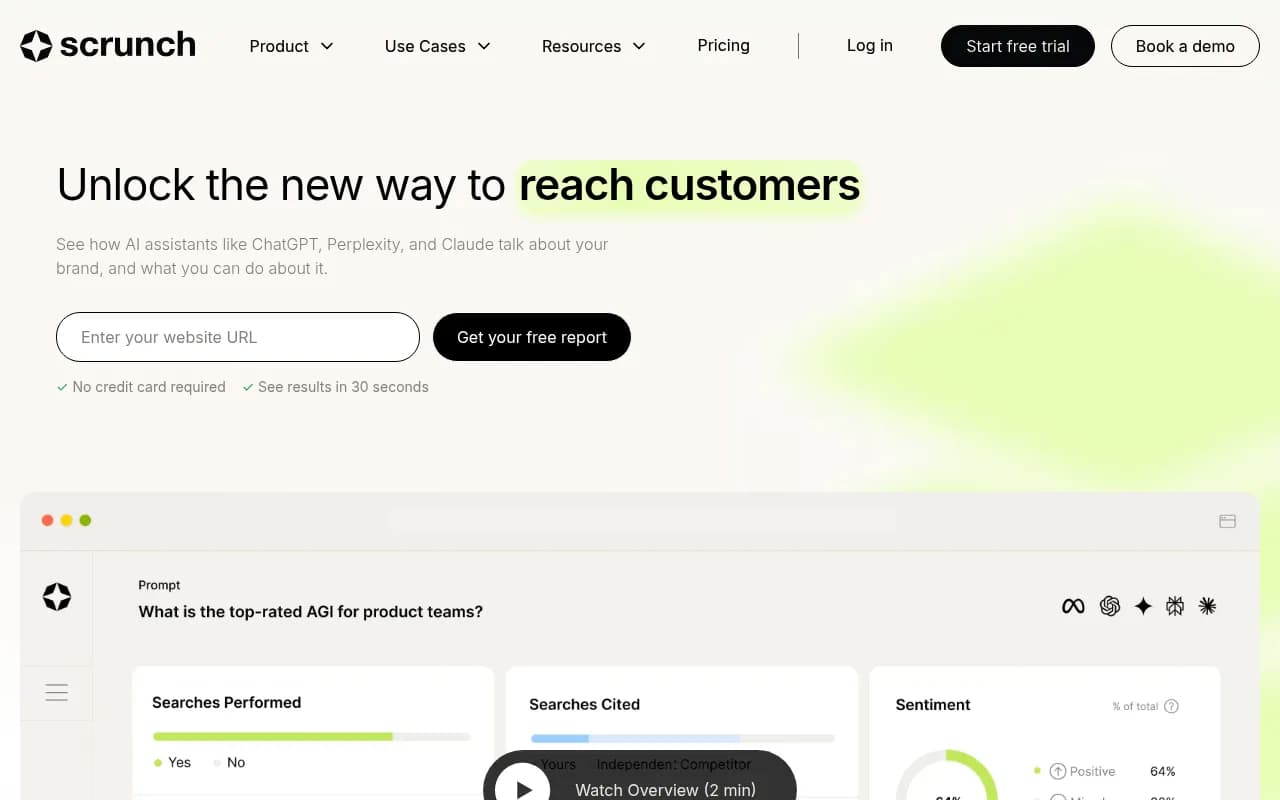
Scrunch sits in an interesting middle position. It has crawler logs, visitor analytics, citation analysis, and some content generation capability — which puts it ahead of most pure monitoring tools. The platform is enterprise-focused and well-funded.
In practice, Scrunch's content generation is more of a feature than a core workflow. It's there, but the platform's identity is still primarily monitoring. Teams that want a monitoring-heavy tool with some content assistance will find it useful. Teams that want a full optimization loop will find it falls short of what they need.
Rankshift
Rankshift is one of the budget challengers in this space. It covers ChatGPT, Perplexity, and other AI search engines, and is positioned as an affordable alternative for teams that can't justify enterprise pricing.
The feature set is narrower than Profound or Peec AI, but the price point is genuinely competitive. If your primary need is basic prompt tracking and brand mention monitoring — and you don't need deep analytics or content tooling — Rankshift gets the job done without a significant budget commitment.

Search Party
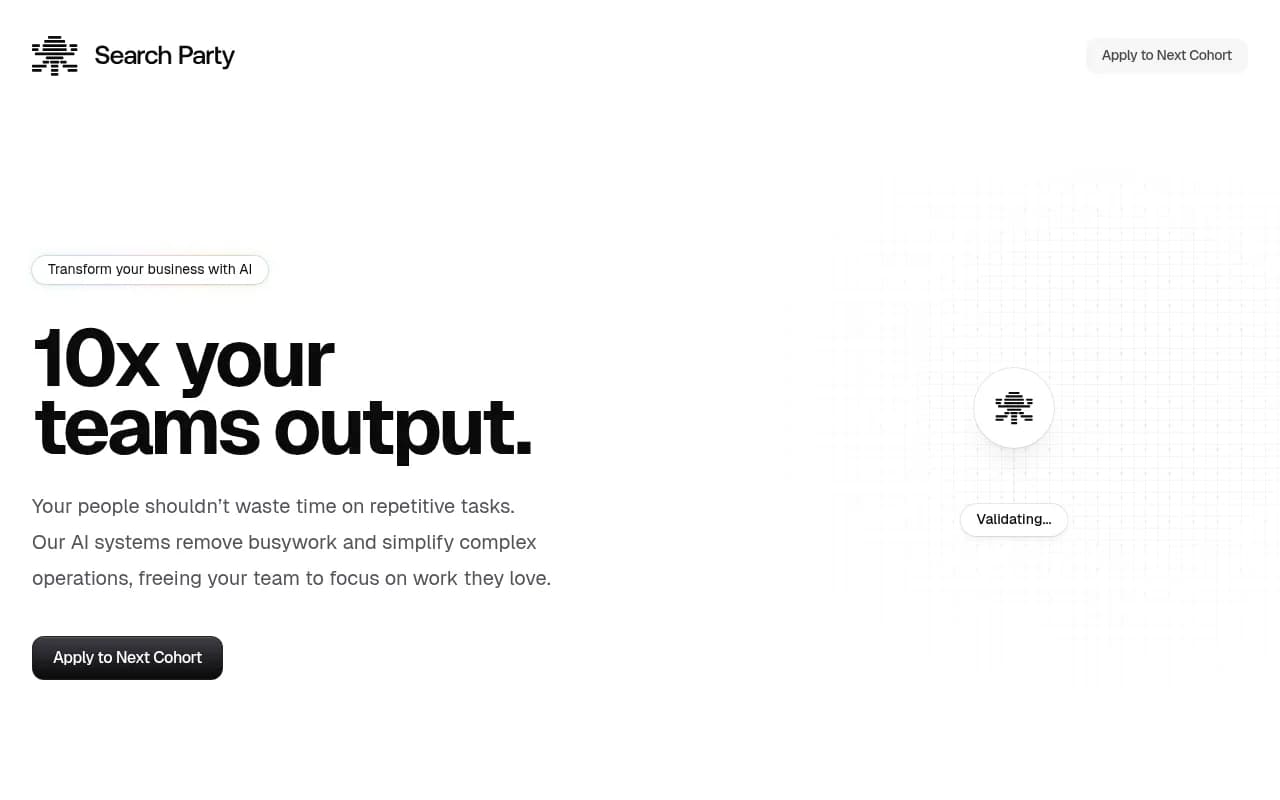
Search Party takes a different angle: it's agency-oriented, with a focus on automating workflows and building custom AI visibility processes for clients. It covers multiple AI engines and has solid tracking, but prompt metrics are limited and there's no content gap analysis.
For agencies that want to offer AI visibility as a service and need a platform that supports multi-client management, Search Party has appeal. For in-house teams, the workflow automation angle is less relevant.
Search Party
Head-to-head feature comparison
Here's how all seven platforms stack up across the features that matter most:
| Platform | AI engines covered | Crawler logs | Content generation | Competitor benchmarking | Prompt volume/difficulty | Pricing starts at |
|---|---|---|---|---|---|---|
| Profound | 9+ | Yes | No | Yes | Limited | ~$499/mo |
| Peec AI | Multiple | No | Suggestions only | Yes | Limited | Mid-market |
| Otterly.AI | Multiple | Beta | No | Yes | No | ~$29/mo |
| AthenaHQ | Multiple | No | No | Yes | No | Enterprise |
| Scrunch | Multiple | Yes | Basic | Yes | No | Enterprise |
| Rankshift | ChatGPT, Perplexity + | No | No | Limited | No | Budget |
| Search Party | Multiple | No | No | Partial | No | Agency pricing |
| Promptwatch | 10 models | Yes (higher plans) | Yes (Content Agents) | Yes | Yes | $99/mo |
The table makes the monitoring-only problem obvious. Six of the seven platforms in this comparison have no meaningful content generation capability. They can tell you you're invisible. They can't help you become visible.
The monitoring-only problem
This is worth dwelling on, because it's the central issue with most of the tools above.
Imagine you run a brand audit and discover your company is mentioned in 12% of relevant AI responses while your top competitor appears in 68%. That's a real, urgent problem. But knowing the number doesn't fix it.
To close that gap, you need to know:
- Which specific prompts you're missing
- What content those AI engines are citing instead of you
- What topics and angles your site is missing entirely
- What to write, and how to write it, to actually get cited
Most platforms give you the first two. Almost none give you the last two.
Promptwatch is built around this full loop. Its Answer Gap Analysis shows you exactly which prompts competitors rank for that you don't. Its Content Agents then generate articles, comparisons, and briefs grounded in that gap data — not generic SEO content, but content engineered around the specific questions AI models are already answering without you. And its page-level tracking shows you when new content gets crawled and cited, so you can see the loop closing.

That's a meaningfully different product from a monitoring dashboard, even a very good one.
Who should use what
Here's a practical breakdown based on team type and budget:
Enterprise brands with large budgets and dedicated AI search teams: Profound is the most complete monitoring platform. If you need the deepest data and have the budget, it's the category leader.
Mid-market marketing teams that want solid analytics without enterprise pricing: Peec AI is the strongest option in this tier. Clean UI, good competitor benchmarking, growing fast for a reason.
Small teams or individuals just starting to measure AI visibility: Otterly.AI is the most accessible entry point. $29/month gets you real data without a significant commitment.
Technical SEO teams that want AI visibility data to feed into existing workflows: AthenaHQ fits this profile. Strong monitoring, technically sophisticated, no hand-holding.
Agencies managing multiple clients: Search Party is built for this. Multi-client management and workflow automation are its strengths.
Teams on a tight budget who just need basic tracking: Rankshift covers the essentials at a price that's hard to argue with.
Teams that want to monitor and fix their AI visibility: This is where the platforms above fall short. Promptwatch is the only option in this comparison with a full optimization loop — gap analysis, content generation, crawler logs, and traffic attribution in one platform.
A note on the broader landscape
The platforms above are not the only options. The AI visibility space now has 30+ tools at various stages of maturity. Some worth knowing about:
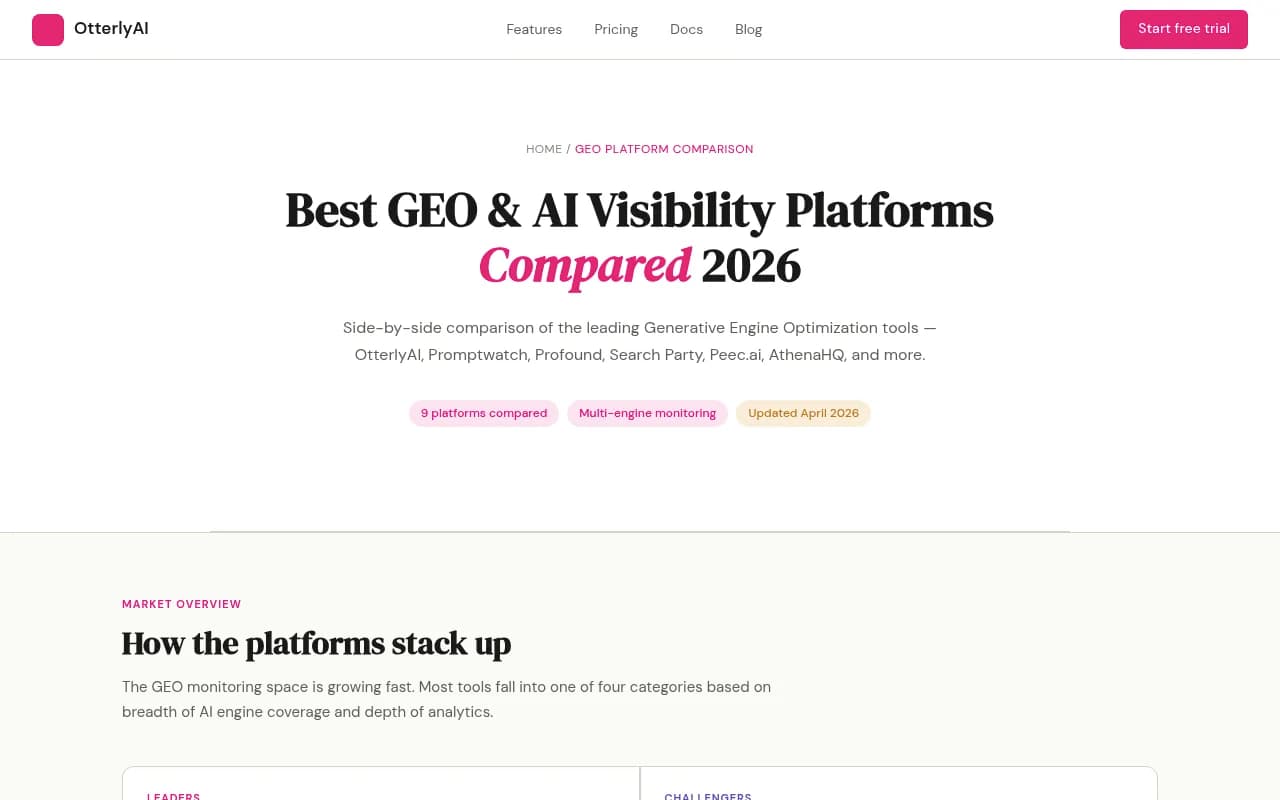
- Evertune targets Fortune 500 brands with deep GEO analytics
- Scrunch (covered above) sits between monitoring and optimization
- Brandlight.ai and Searchable are niche players with more limited feature sets
- Semrush and Ahrefs have bolted AI monitoring onto their existing platforms, but the depth is shallow compared to purpose-built tools
The traditional SEO platforms are worth mentioning because many teams already pay for them. Semrush's AI monitoring uses fixed prompts, which limits its usefulness for custom tracking. Ahrefs Brand Radar has similar constraints and no AI traffic attribution. If you're already paying for these tools, the AI modules are better than nothing — but they're not a substitute for a dedicated platform.
What to look for when evaluating any AI visibility tool
A few questions worth asking before you sign up for anything:
Which AI engines does it actually monitor? Some tools claim broad coverage but only query two or three engines consistently. ChatGPT, Perplexity, Google AI Overviews, and Claude should be table stakes in 2026.
Does it use real user-facing interfaces or just APIs? This matters because AI engines can return different answers through their APIs versus their actual products. Tools that only use APIs may miss what real users see.
Can you define your own prompts? Fixed prompt libraries are a significant limitation. Your business has specific questions customers ask — you need to track those, not a generic set.
What happens after you see the data? If the answer is "you figure it out," that's a monitoring tool, not an optimization platform. Know what you're buying.
Does it track which of your pages are being cited? Page-level citation tracking is what connects AI visibility data to content strategy. Without it, you're optimizing blind.
Is there traffic attribution? The ultimate question is whether AI visibility translates to actual visits and revenue. Very few platforms connect these dots.
The bottom line
The AI visibility tools market is real, growing fast, and genuinely useful — but most platforms are still solving only half the problem. They tell you where you stand. They don't help you improve.
For pure monitoring depth at enterprise scale, Profound leads. For mid-market analytics, Peec AI is the strongest challenger. For accessibility and simplicity, Otterly.AI is hard to beat at its price point.
But if you want a platform that takes you from "I'm invisible for these 40 prompts" to "here's the content that will fix it, and here's proof it's working," the monitoring-only tools in this list aren't built for that. That's a different category of product entirely.