Key takeaways
- Peec.ai is a strong monitoring platform with solid multi-engine tracking, but it stops at data -- the path from "you're invisible here" to "here's the content that fixes it" is still manual.
- Relixir is the most end-to-end option for enterprise teams, combining GEO tracking with content generation and publishing workflows.
- SnowSEO bundles AI visibility tracking with SEO automation, making it a reasonable choice for teams that want one less tool to manage.
- The core question isn't which tool has the best dashboard -- it's which tool shortens the cycle from spotting a gap to shipping a fix.
- If you want the most complete action loop (find gaps, generate content, track results), Promptwatch and Relixir are the two platforms worth evaluating seriously.
The AI visibility monitoring space has a dirty secret: most platforms are very good at telling you that you have a problem, and not very good at helping you solve it.
You set up tracking. You watch your brand appear in 11% of relevant ChatGPT queries. The number doesn't move for six weeks. The dashboard shows you competitors winning prompts you should own. And then... nothing. The tool has done its job. The rest is on you.
That gap between monitoring and publishing is where most teams get stuck. This guide looks at four platforms -- Peec.ai, Whitebox, Relixir, and SnowSEO -- through one specific lens: which one actually closes that gap?
What each platform is trying to do
Before comparing features, it's worth being clear about what each tool is actually built for. They're not all playing the same game.
Peec.ai is a dedicated AI search visibility tracker. Its core job is monitoring how your brand appears across ChatGPT, Perplexity, Gemini, Claude, and Google AI Overviews. It uses UI-level scraping for more realistic results (as opposed to API calls, which can return different responses than what real users see). Pricing starts around €89/month with a 7-day trial.

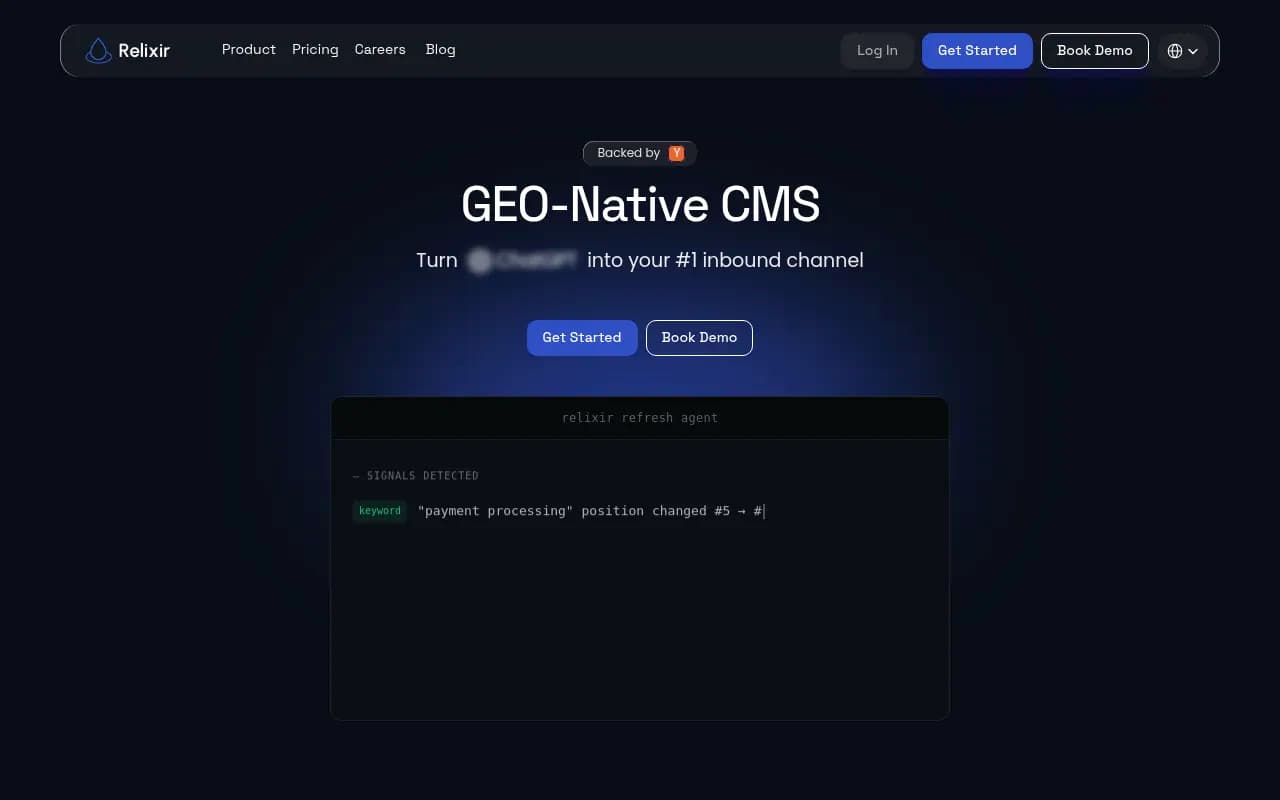
Relixir positions itself as an end-to-end GEO engine for enterprise brands. It's not just tracking where you appear -- it's trying to help you change where you appear through content strategy and publishing workflows.
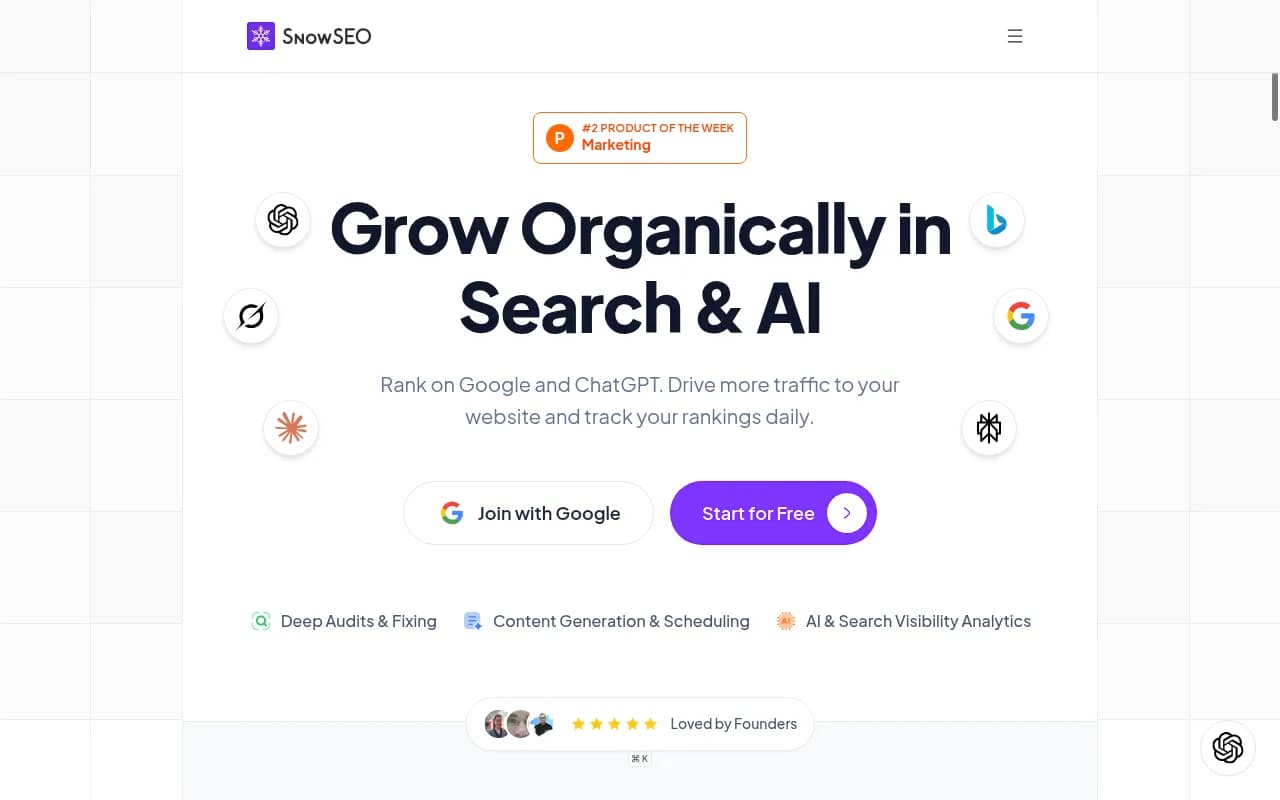
SnowSEO combines AI visibility tracking with SEO automation in one platform. The pitch is consolidation: instead of a separate AI monitoring tool and a separate SEO tool, you get both in one place.
Whitebox (note: not to be confused with the e-commerce fulfillment company of the same name) is a newer entrant focused on GEO content workflows. The emphasis is on the publishing side -- helping teams create content that AI models want to cite.
The monitoring layer: what each tool actually tracks
All four platforms cover the basics -- brand mentions in AI-generated answers, competitor visibility, and some form of share-of-voice metric. But the depth varies considerably.
Peec.ai's tracking is genuinely solid. It covers the major AI engines, uses UI scraping for realistic results, and gives you prompt-level data on where you appear and where you don't. The Listicle Rank Effect research they published in May 2026 (analyzing 200K AI responses across 8 engines) shows they're doing real work on understanding how AI models surface brands -- not just counting mentions.
Relixir's monitoring is enterprise-grade, with multi-engine coverage and the kind of segmentation that larger teams need (by product line, by region, by persona). It's not as nimble as Peec for smaller teams, but the depth is there.
SnowSEO's AI tracking is more basic -- it covers the main engines but doesn't go as deep on prompt-level data or competitive analysis. The trade-off is that you get traditional SEO rank tracking alongside it, which has real value for teams managing both channels.
Whitebox leans harder into the content side than the monitoring side. Its tracking is functional but not the reason you'd choose it.
What's missing across the board
None of these four platforms offer AI crawler logs -- the ability to see which pages ChatGPT, Claude, or Perplexity are actually crawling on your site, how often, and what errors they're hitting. That's a significant blind spot. If AI models aren't reading your content, no amount of content optimization will help.
Reddit and YouTube tracking is also absent from all four. This matters because AI models frequently cite Reddit threads and YouTube videos in their responses. Knowing which discussions are influencing AI recommendations in your category is genuinely useful signal -- and it's a gap in the monitoring layer of all four platforms.
The action layer: from data to published content
This is where the comparison gets interesting, and where the platforms diverge most sharply.
Peec.ai: strong data, manual action
Peec's honest limitation is that it's a thermometer, not a treatment plan. It tells you your brand appears in 12% of relevant queries. It shows you competitors appearing in 34%. It doesn't tell you which specific content gaps are causing the difference, and it doesn't help you create content to close them.
The burden of translation -- from "we're losing this prompt" to "here's the article we need to write" -- falls entirely on the marketer. For a team with a dedicated GEO strategist, that's manageable. For a two-person marketing team, it's a real constraint.
This isn't a knock on Peec specifically. It's the core limitation of the monitoring-only category. As one analysis from Spike AI put it: the teams that win won't have the best dashboards -- they'll have the shortest cycle time from identifying a visibility gap to shipping a fix.
Relixir: the most complete action loop
Relixir is the most serious attempt in this group at closing the monitoring-to-publishing gap. It combines GEO tracking with content strategy recommendations and publishing workflows. The enterprise focus means it's built for teams that need to coordinate content creation across multiple stakeholders -- which is where a lot of GEO programs actually break down.
The limitation is price and complexity. Relixir isn't a tool you spin up in an afternoon. It's a platform you implement, which means it's better suited to companies with dedicated SEO or GEO resources than to lean teams looking for a quick win.
SnowSEO: consolidation over depth
SnowSEO's value proposition is reducing tool sprawl. If you're already paying for a traditional SEO platform and a separate AI visibility tracker, SnowSEO offers a reasonable argument for consolidation. The AI tracking and SEO automation in one place means less context-switching and unified reporting.
The trade-off is that neither capability is best-in-class. The AI tracking isn't as deep as Peec's. The SEO automation isn't as sophisticated as dedicated platforms. But for teams where "good enough at both" beats "excellent at one," it's a legitimate option.
Whitebox: content-first, monitoring-second
Whitebox takes the opposite approach to Peec -- it's more interested in helping you create content that gets cited than in tracking whether you're being cited. That's a coherent philosophy, but it means you're somewhat flying blind on whether the content is actually working. You need either a separate monitoring tool or a willingness to check manually.
Head-to-head comparison
| Capability | Peec.ai | Relixir | SnowSEO | Whitebox |
|---|---|---|---|---|
| Multi-engine AI tracking | Strong (UI scraping) | Strong | Basic | Basic |
| Prompt-level data | Yes | Yes | Limited | No |
| Competitor visibility | Yes | Yes | Yes | Limited |
| Content gap analysis | No | Yes | Limited | Yes |
| AI content generation | No | Yes | Limited | Yes |
| Publishing workflow | No | Yes | No | Yes |
| Traditional SEO tools | No | No | Yes | No |
| AI crawler logs | No | No | No | No |
| Reddit/YouTube tracking | No | No | No | No |
| Best for | Monitoring-focused teams | Enterprise GEO programs | Teams wanting consolidation | Content-first teams |
| Starting price | ~€89/mo | Enterprise pricing | Varies | Varies |
The broader context: where this category is heading
The standalone AI visibility monitoring category is converging toward broader marketing execution platforms. This happened with SEO tools a decade ago -- pure rank trackers got absorbed into platforms that also did content, technical audits, and link analysis.
The same pressure is building here. Teams don't want another dashboard. They want a shorter path from "we're invisible for this prompt" to "we published content that fixes it."
The platforms that will win are the ones that complete the full loop: find the gap, generate the content, track the improvement. Right now, none of the four platforms in this comparison does all three equally well.
Relixir comes closest for enterprise teams. SnowSEO is the most practical for teams that want to consolidate. Peec.ai is the best pure monitoring tool of the four. Whitebox is the most content-focused but the least data-driven.
If you want to see what a complete action loop looks like -- one that includes answer gap analysis, AI-native content generation grounded in citation data, crawler log monitoring, and traffic attribution -- Promptwatch is worth evaluating alongside these four. It's the platform that most explicitly treats monitoring as step one of a three-step cycle, not the end goal.

Which platform should you choose?
The right answer depends on where your team is actually stuck.
Choose Peec.ai if your primary need is accurate, multi-engine monitoring and you have the internal capacity to translate data into content strategy. It's the best pure tracker in this group, and the UI-scraping approach gives you more realistic data than API-based alternatives.
Choose Relixir if you're running a serious enterprise GEO program and need a platform that connects tracking to content creation and publishing. The complexity is real, but so is the capability.
Choose SnowSEO if you're managing both traditional SEO and AI visibility and want to reduce tool sprawl. You'll give up some depth on both sides, but the consolidation benefit is genuine.
Choose Whitebox if you've already solved the monitoring problem (or are willing to handle it separately) and your bottleneck is actually creating content that AI models want to cite.
And if your real problem is the gap between all of these -- the fact that monitoring tells you what's wrong but doesn't help you fix it -- that's the question worth asking before you commit to any platform. The best tool is the one that shortens the cycle from insight to published content, not the one with the most impressive dashboard.